Presented by
Sahil Abbas
Introduction
Types of Gesture
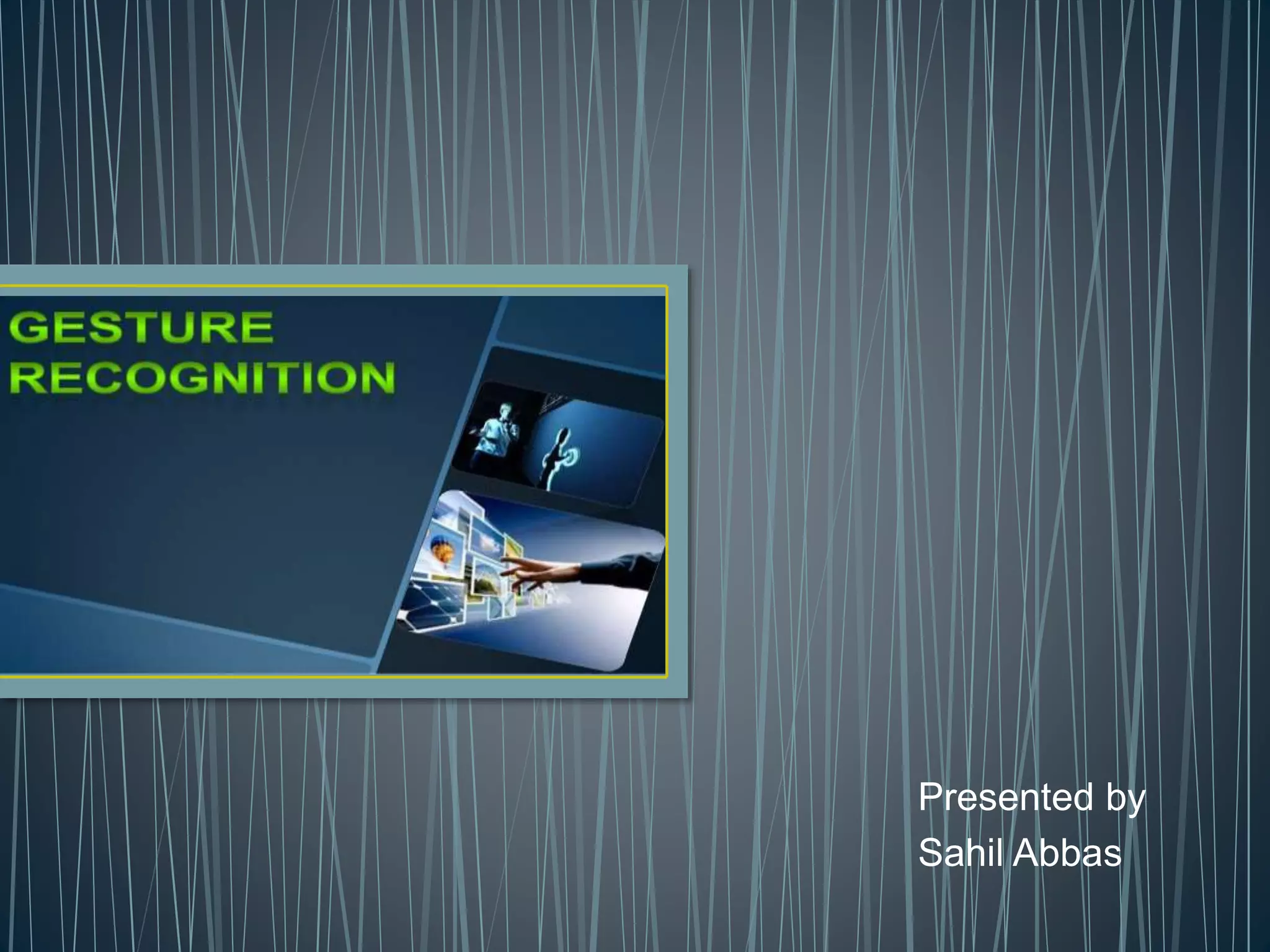
Gesture recognition
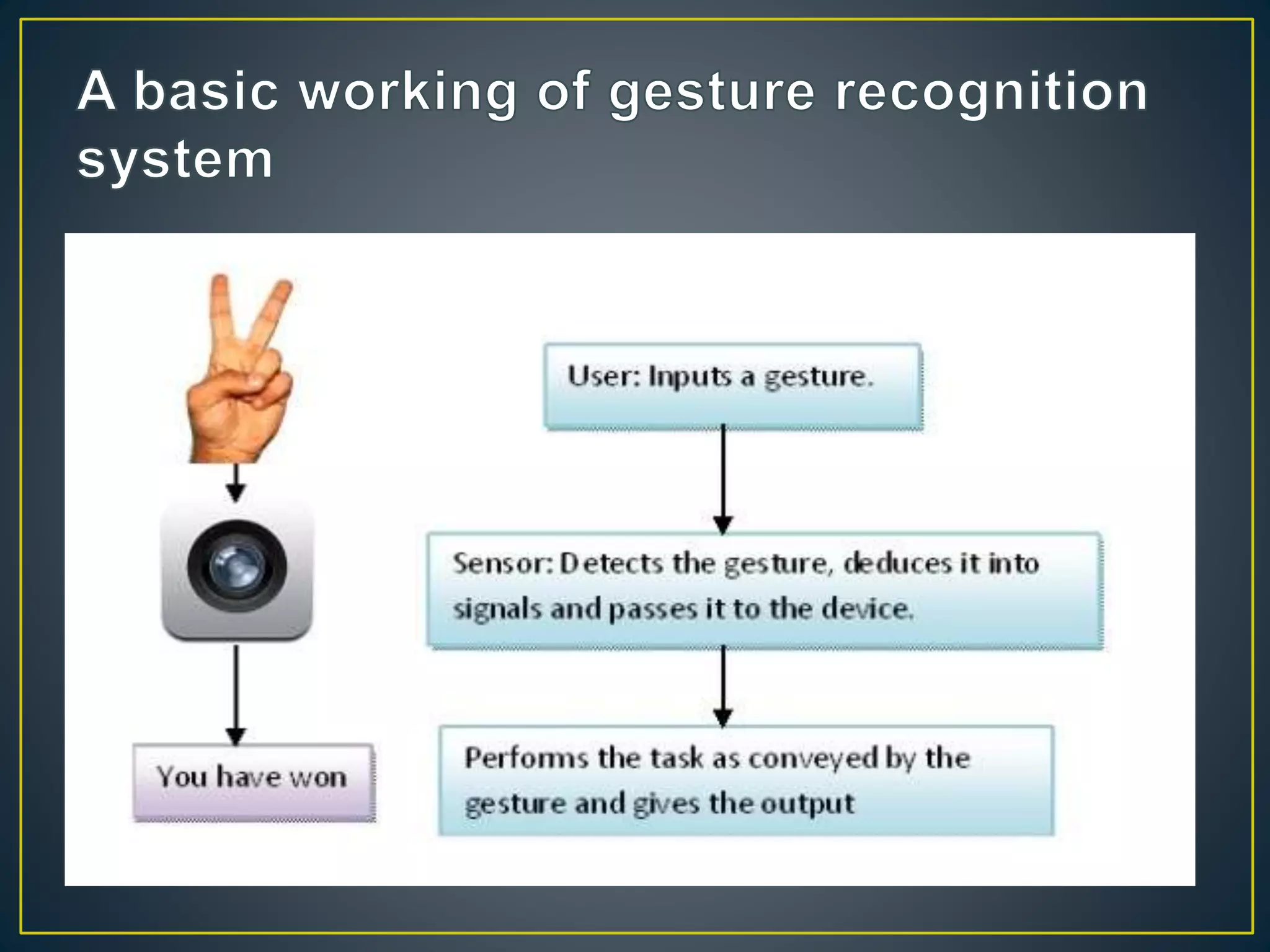
Basic working of gesture recognition system
Types of Gesture Recognition
Types of Gesture Sensing Technology
Input Devices
Uses of Gesture Recognition
Gesture Recognition Challenges
Since the inception of graphical computer
system in April 1981 , interaction with graphical
computer system has evolved over the past
few years to include such interface metaphors
as the mouse and keyboards, pen computing
touch, and recently multi touch . These
enabling developments have allowed
interaction to become more accessible and
natural .
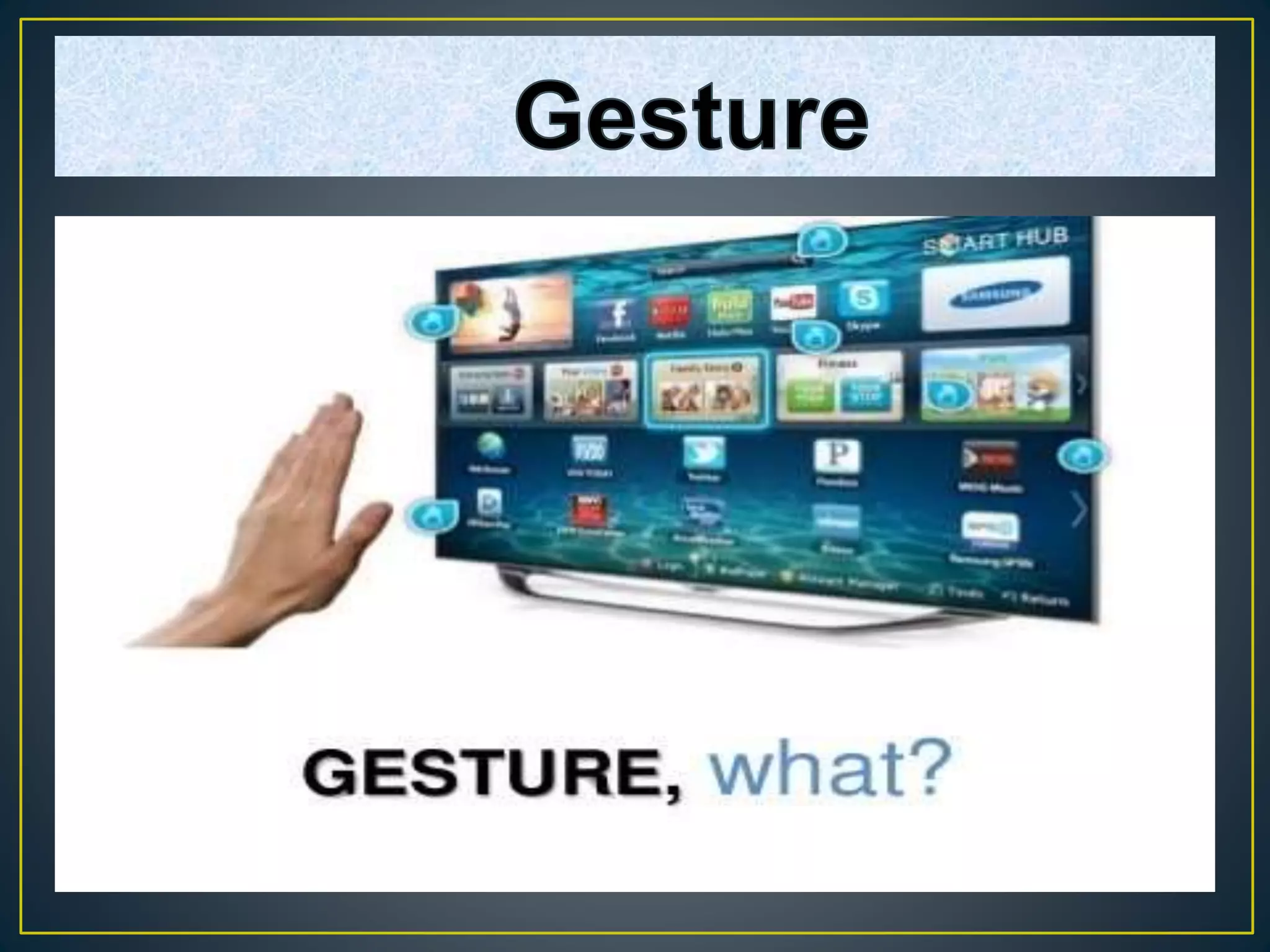
A Gesture is a form of non-verbal communication
in which visible bodily actions communicate
particular message, either in form of speech or
together and in parallel in words.
Gesture includes movement of hands, face and
other parts of body.
Gesture are an important aspect of human
interaction, both interpersonally and in the context
of man-machine interfaces.
Iconic
Iconic Gesture represents objects attributes,
spatial relationships, and actions. For example,
think about how you would describe gesturally a tall
person or a wide river as you were talking about
each of those things.
Deictic, or Pointing
These gestures are pretty basic, connecting
speech to another idea, object of location. For
instance, if you were talking about someone across
the room you might point them.
Metaphoric
Metaphoric gestures put an abstract idea into a
more literal, concrete form. Making your fingers
into a V shape and raising above indicates your
victory or win.
Beat Gestures
Bascially, these just keep the rhythm speech,
and the convey no semantic content whatsoever.
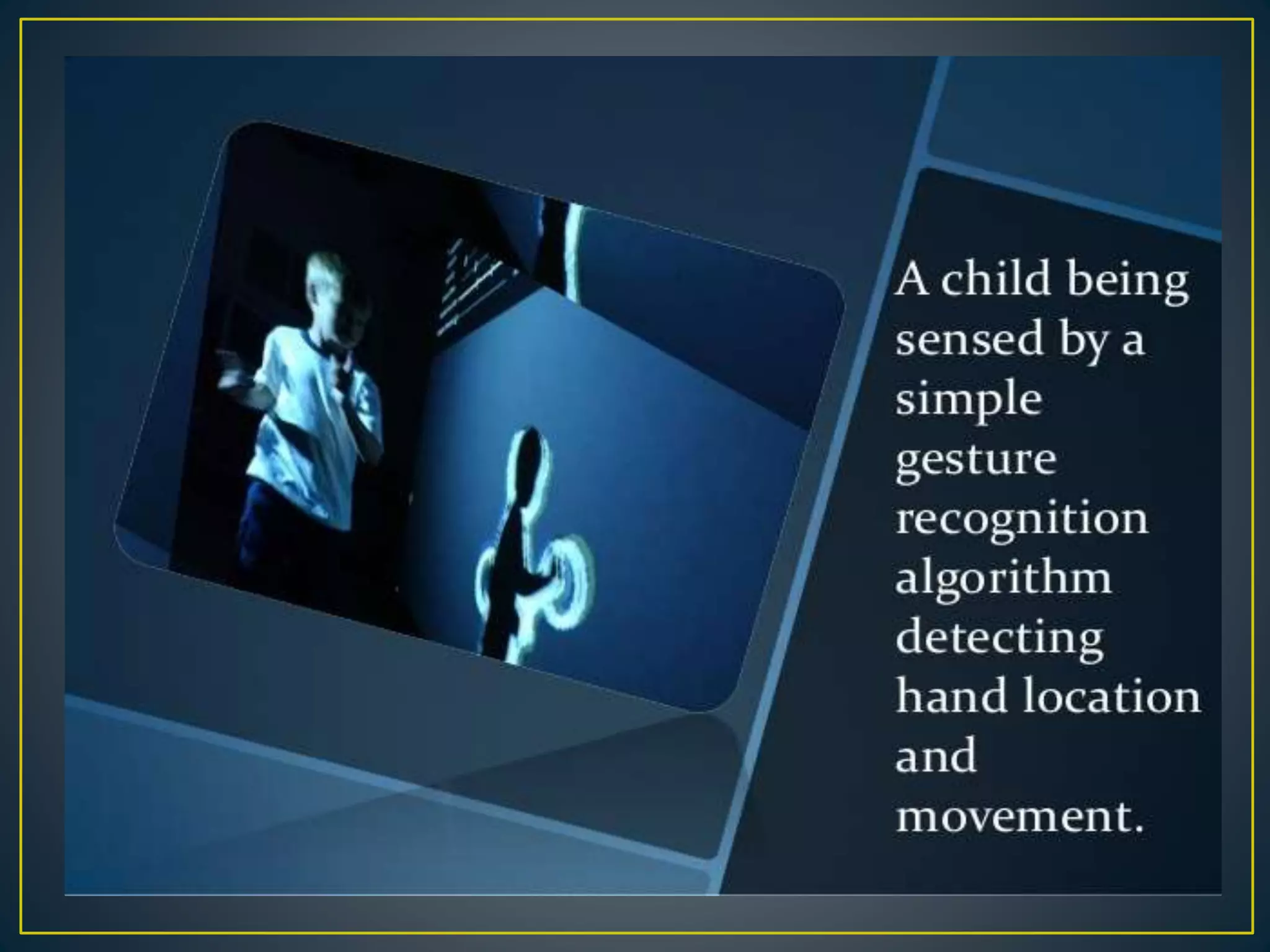
Interface with computers using gestures of the
Human body, typically hand movement.
Gesture recognition is an important skill for Robots
that work closely with Humans.
Gesture recognition is especially valuable in
applications involving interactions Human/Robot
for several reasons.
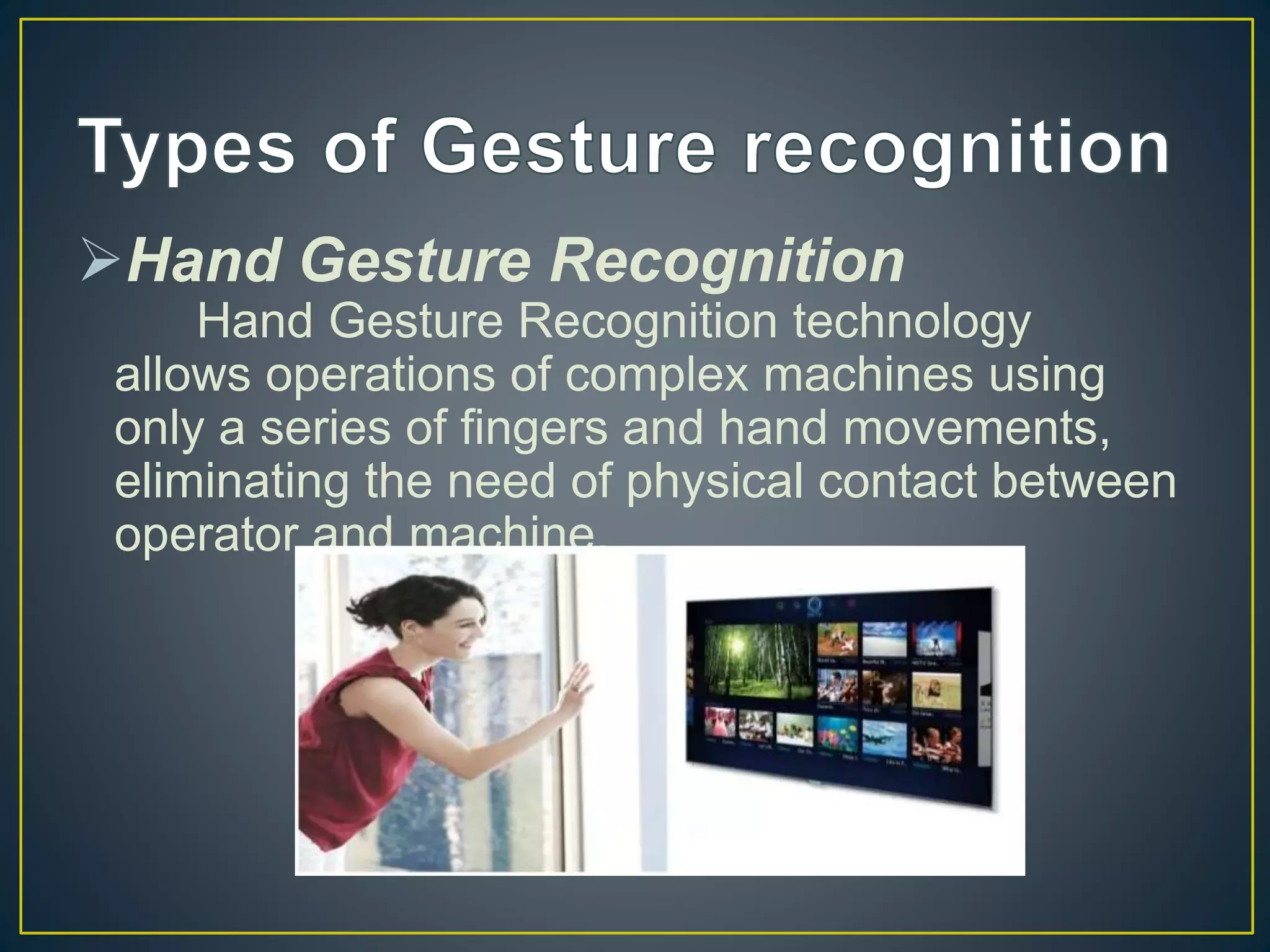
Hand Gesture Recognition
Hand Gesture Recognition technology
allows operations of complex machines using
only a series of fingers and hand movements,
eliminating the need of physical contact between
operator and machine.
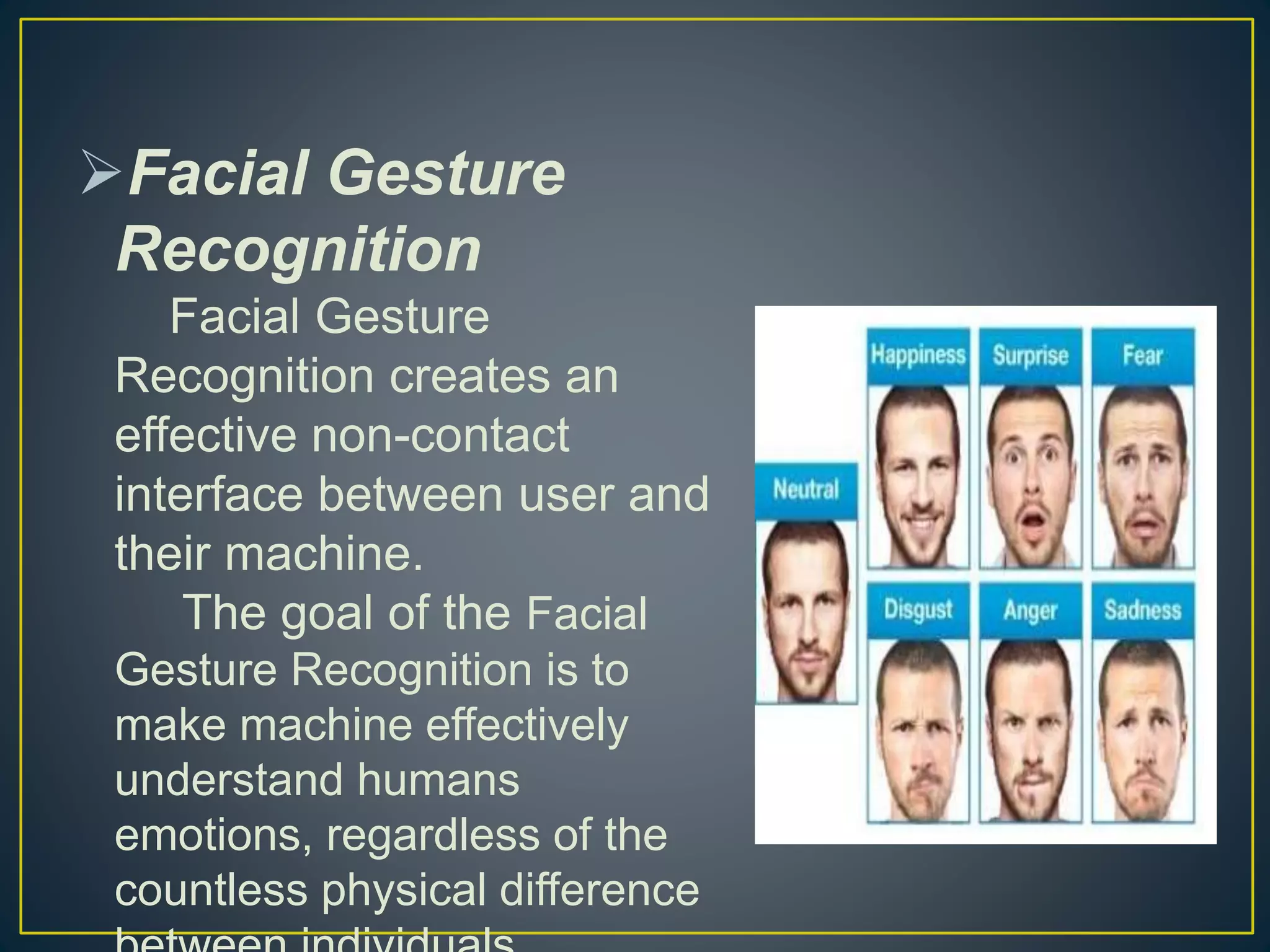
Facial Gesture
Recognition
Facial Gesture
Recognition creates an
effective non-contact
interface between user and
their machine.
The goal of the Facial
Gesture Recognition is to
make machine effectively
understand humans
emotions, regardless of the
countless physical difference
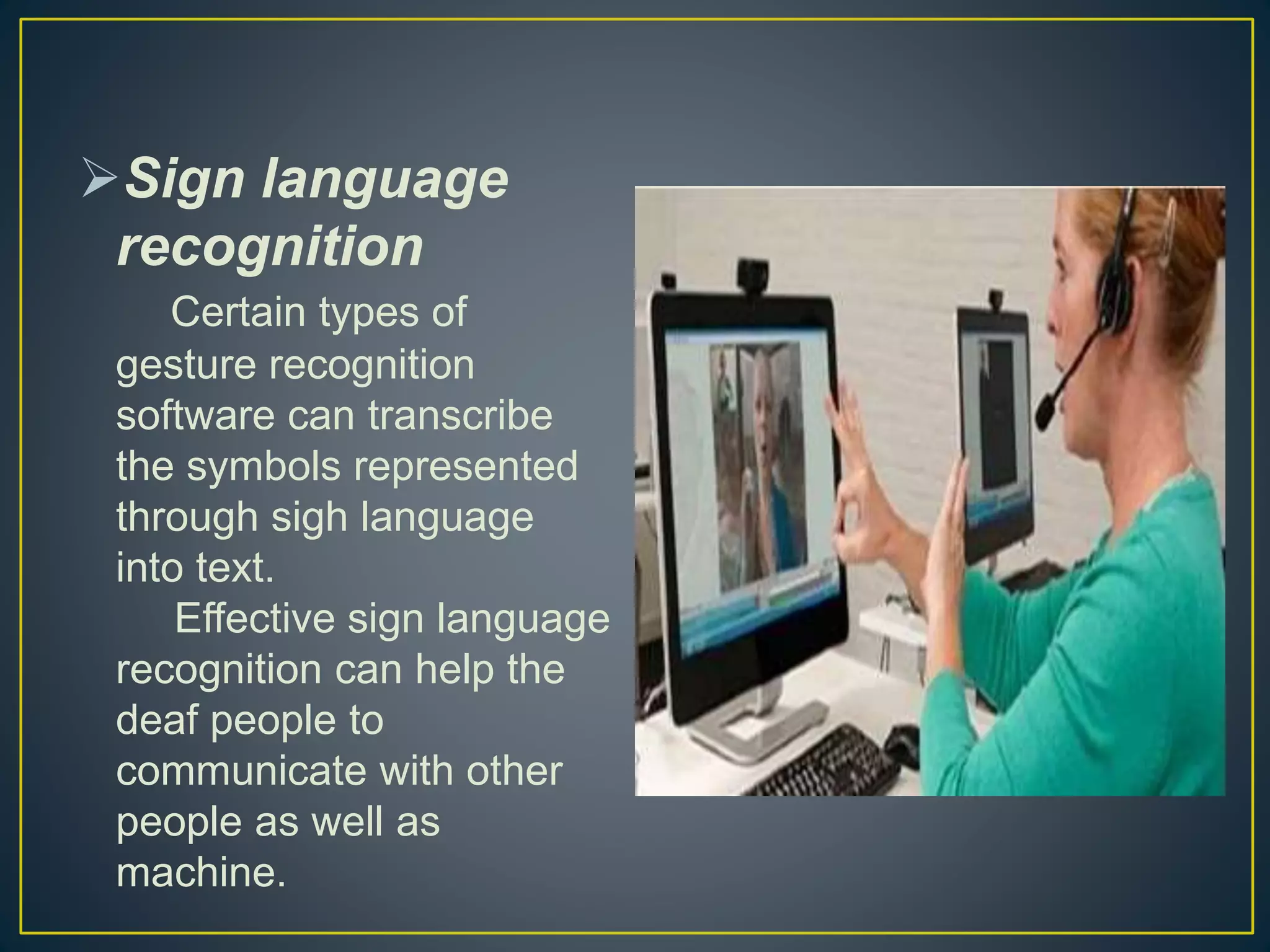
Sign language
recognition
Certain types of
gesture recognition
software can transcribe
the symbols represented
through sigh language
into text.
Effective sign language
recognition can help the
deaf people to
communicate with other
people as well as
machine.
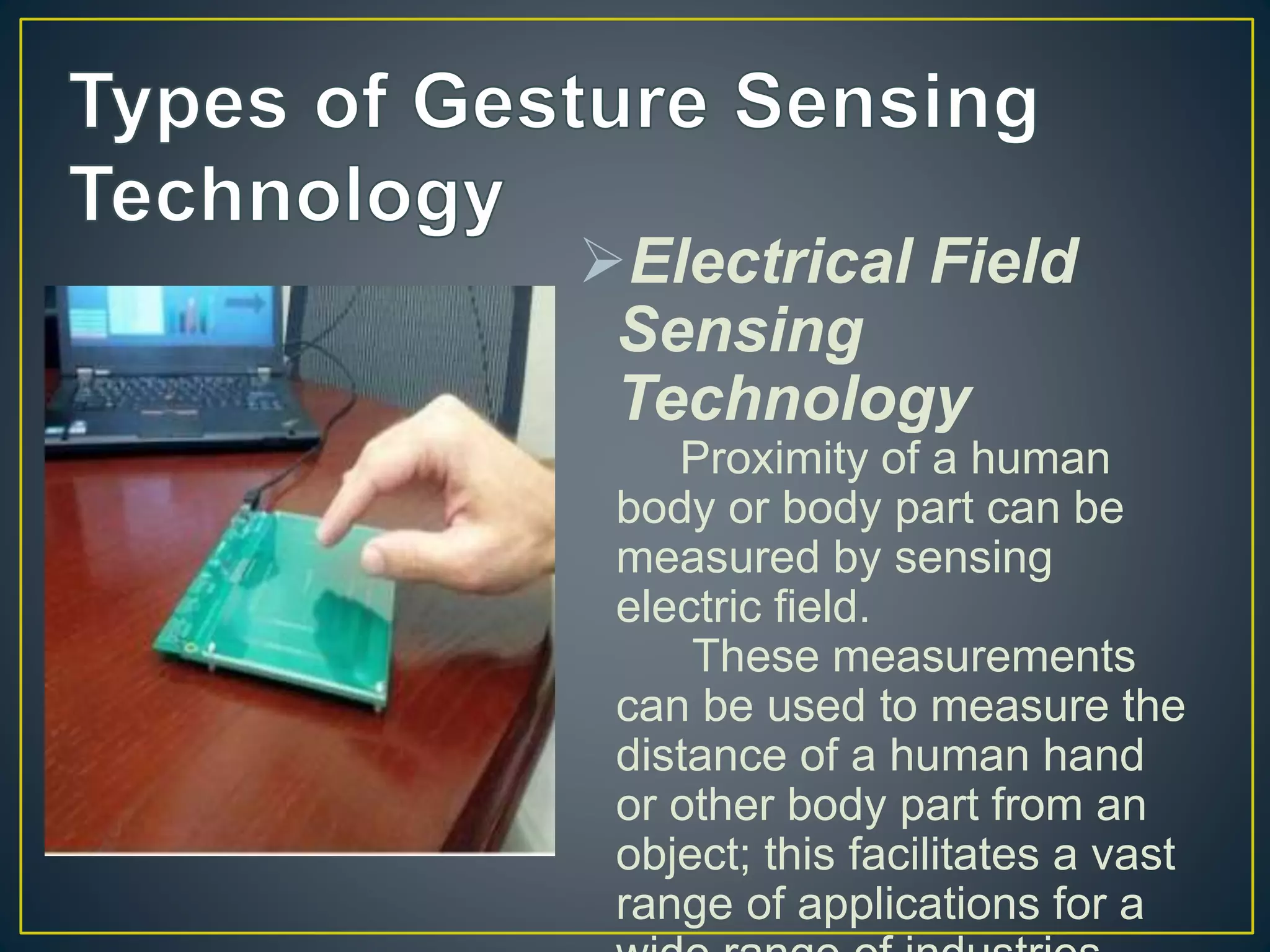
Electrical Field
Sensing
Technology
Proximity of a human
body or body part can be
measured by sensing
electric field.
These measurements
can be used to measure the
distance of a human hand
or other body part from an
object; this facilitates a vast
range of applications for a
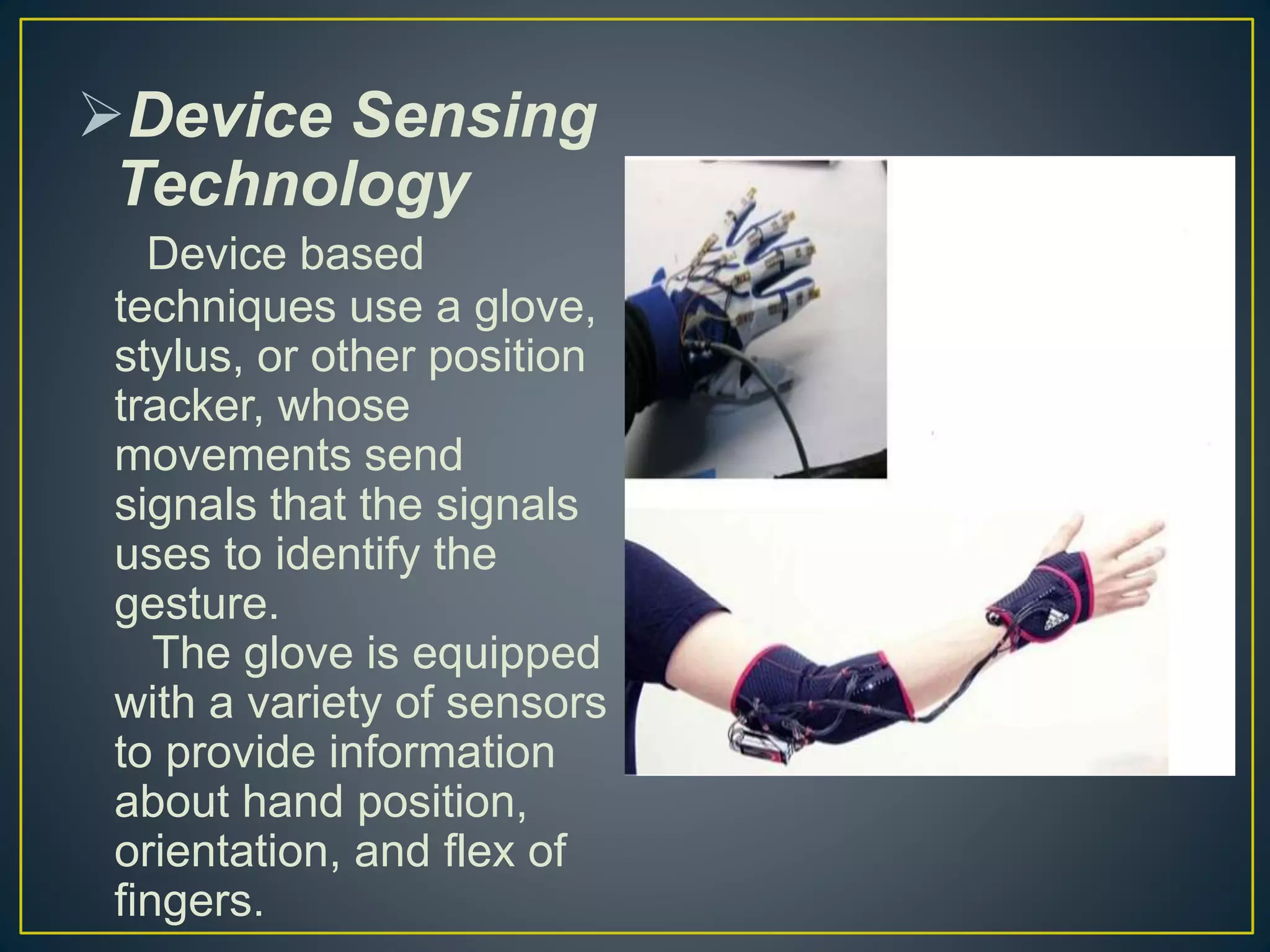
Device Sensing
Technology
Device based
techniques use a glove,
stylus, or other position
tracker, whose
movements send
signals that the signals
uses to identify the
gesture.
The glove is equipped
with a variety of sensors
to provide information
about hand position,
orientation, and flex of
fingers.
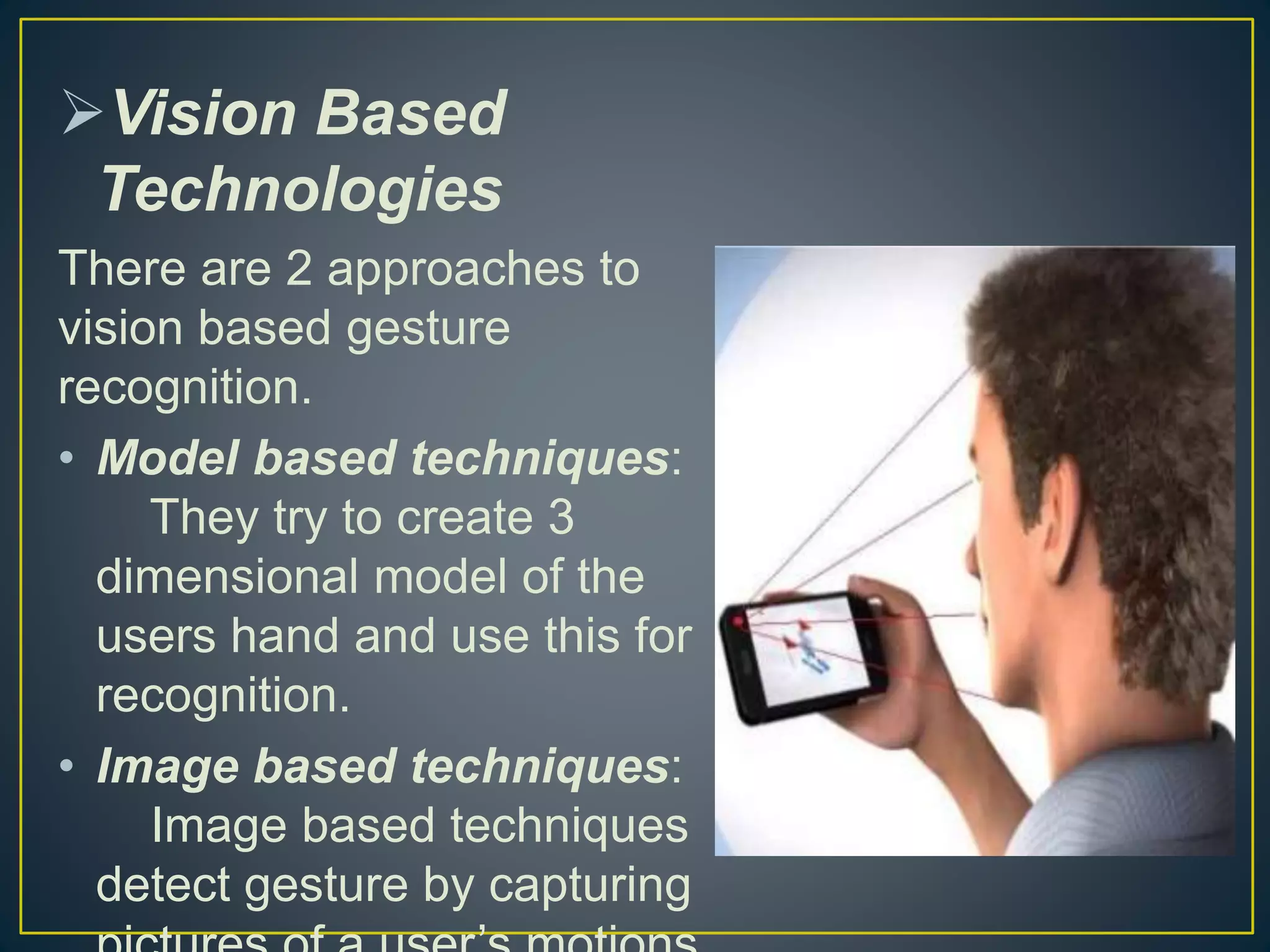
Vision Based
Technologies
There are 2 approaches to
vision based gesture
recognition.
• Model based techniques:
They try to create 3
dimensional model of the
users hand and use this for
recognition.
• Image based techniques:
Image based techniques
detect gesture by capturing
Tools to track a person’s movements:
Wired Gloves
Depth Aware Cameras
Stereo Cameras
Gestures based Controller
Single Camera
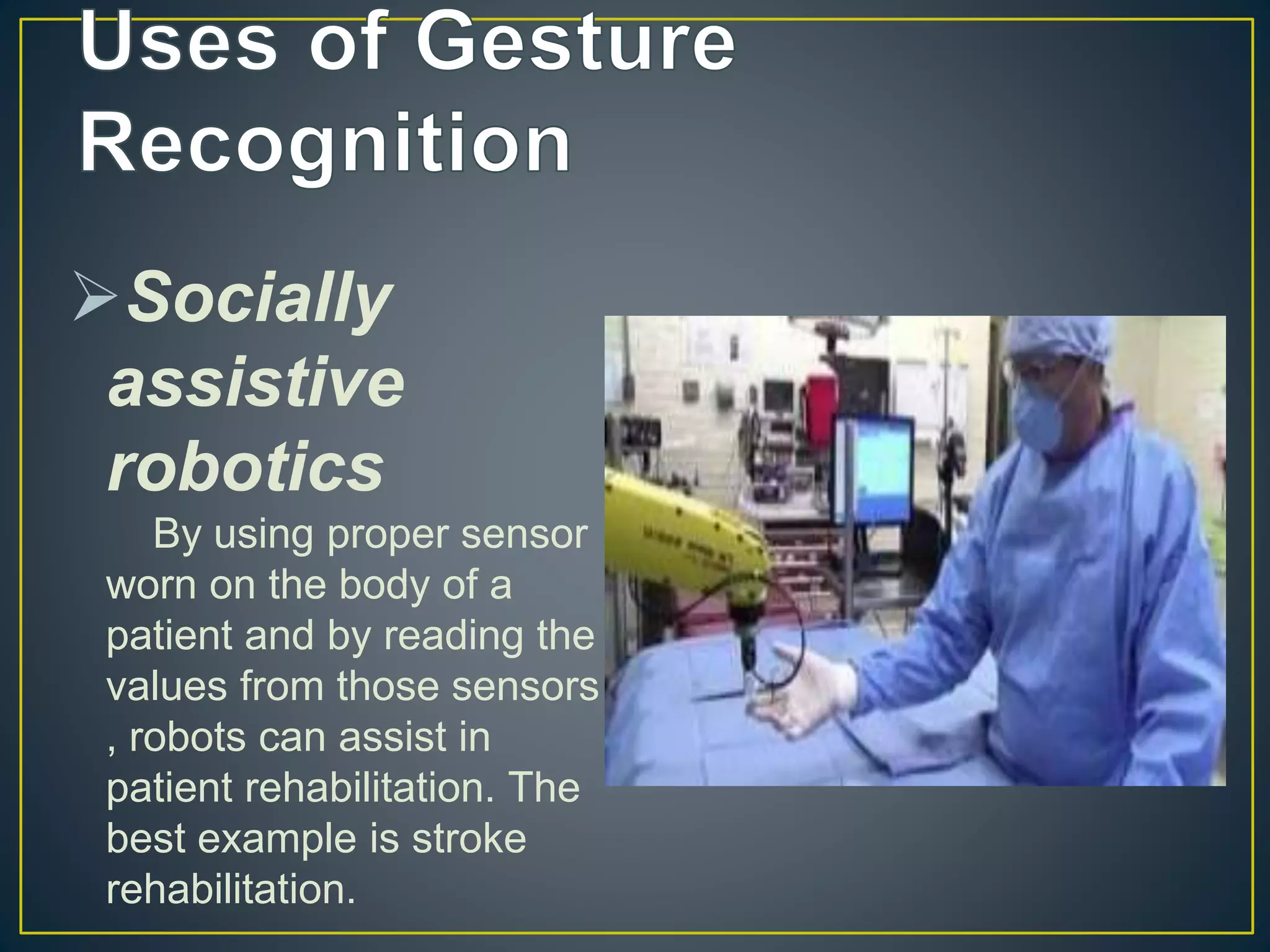
Socially
assistive
robotics
By using proper sensor
worn on the body of a
patient and by reading the
values from those sensors
, robots can assist in
patient rehabilitation. The
best example is stroke
rehabilitation.
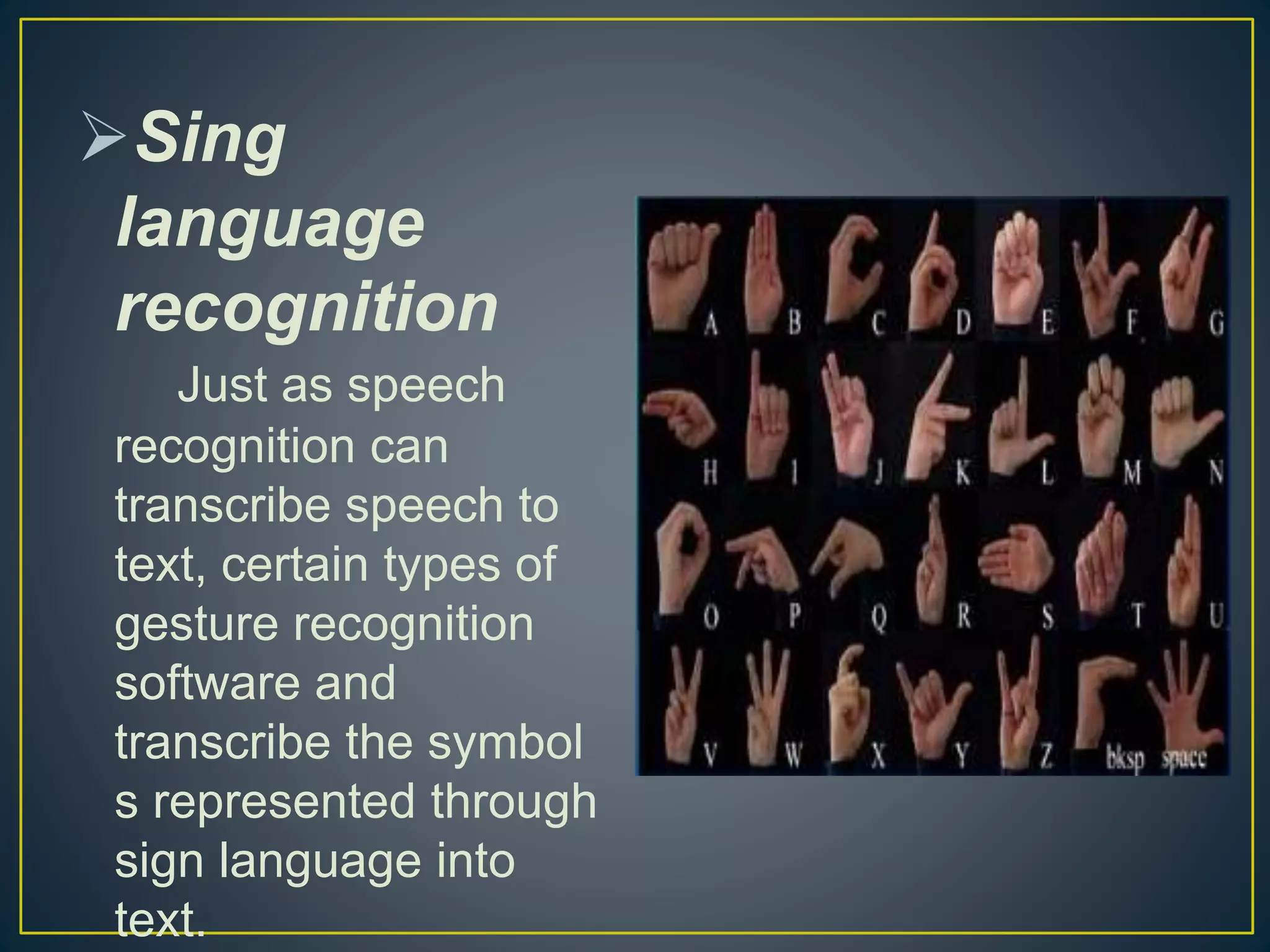
Sing
language
recognition
Just as speech
recognition can
transcribe speech to
text, certain types of
gesture recognition
software and
transcribe the symbol
s represented through
sign language into
text.
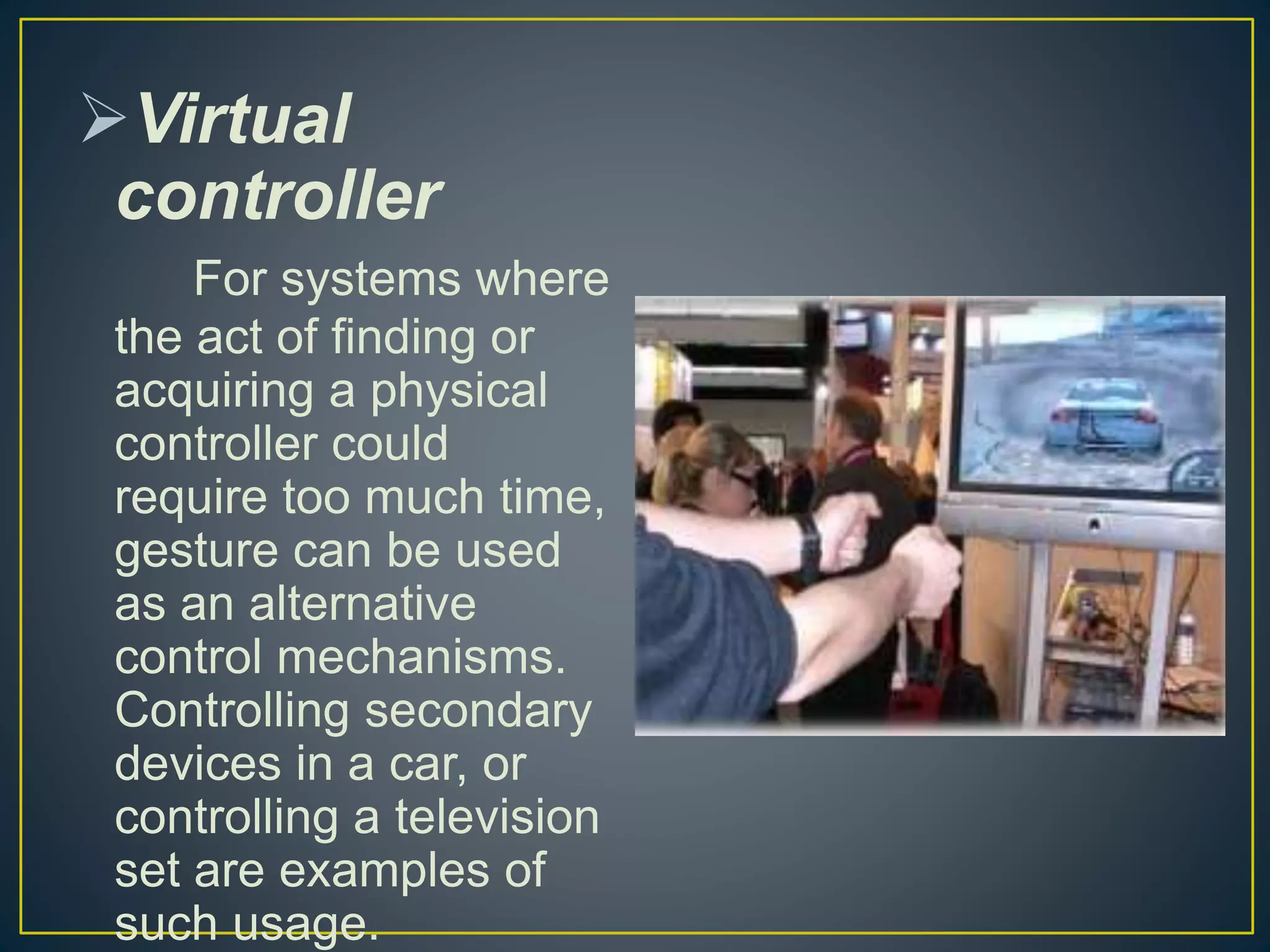
Virtual
controller
For systems where
the act of finding or
acquiring a physical
controller could
require too much time,
gesture can be used
as an alternative
control mechanisms.
Controlling secondary
devices in a car, or
controlling a television
set are examples of
such usage.
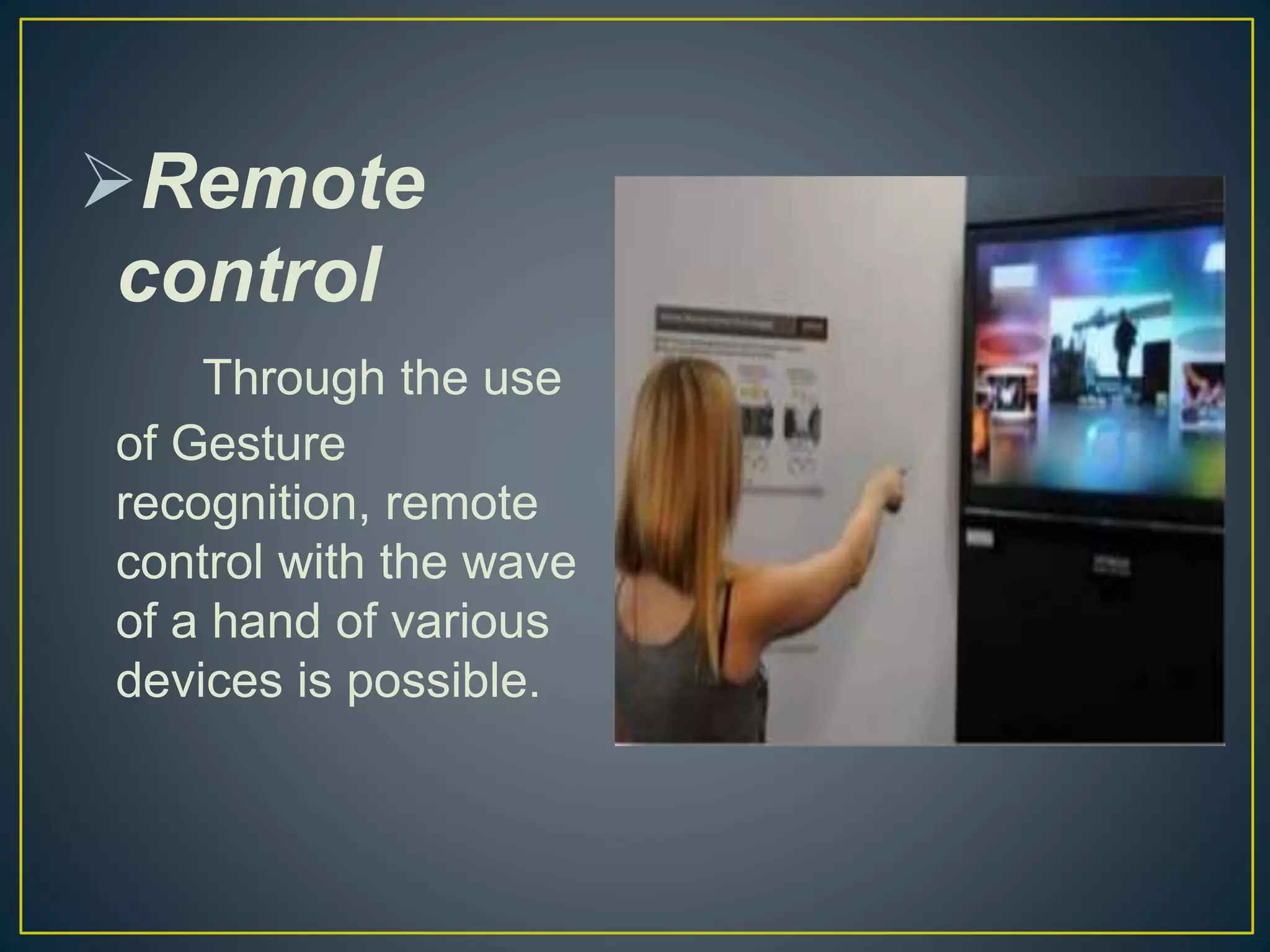
Remote
control
Through the use
of Gesture
recognition, remote
control with the wave
of a hand of various
devices is possible.
Lack of Gesture Language
Different users makes gesture differently,
causing difficulty in identifying motions.
Robustness
Many gesture recognition system do not read
motions accurately or optimally due to factors
like insufficient background light, high
background noise etc.
Gesture recognition technology

Gesture recognition technology

  • 1.
  • 2.
    Introduction Types of Gesture Gesturerecognition Basic working of gesture recognition system Types of Gesture Recognition Types of Gesture Sensing Technology Input Devices Uses of Gesture Recognition Gesture Recognition Challenges
  • 3.
    Since the inceptionof graphical computer system in April 1981 , interaction with graphical computer system has evolved over the past few years to include such interface metaphors as the mouse and keyboards, pen computing touch, and recently multi touch . These enabling developments have allowed interaction to become more accessible and natural .
  • 5.
    A Gesture isa form of non-verbal communication in which visible bodily actions communicate particular message, either in form of speech or together and in parallel in words. Gesture includes movement of hands, face and other parts of body. Gesture are an important aspect of human interaction, both interpersonally and in the context of man-machine interfaces.
  • 6.
    Iconic Iconic Gesture representsobjects attributes, spatial relationships, and actions. For example, think about how you would describe gesturally a tall person or a wide river as you were talking about each of those things. Deictic, or Pointing These gestures are pretty basic, connecting speech to another idea, object of location. For instance, if you were talking about someone across the room you might point them.
  • 7.
    Metaphoric Metaphoric gestures putan abstract idea into a more literal, concrete form. Making your fingers into a V shape and raising above indicates your victory or win. Beat Gestures Bascially, these just keep the rhythm speech, and the convey no semantic content whatsoever.
  • 8.
    Interface with computersusing gestures of the Human body, typically hand movement. Gesture recognition is an important skill for Robots that work closely with Humans. Gesture recognition is especially valuable in applications involving interactions Human/Robot for several reasons.
  • 11.
    Hand Gesture Recognition HandGesture Recognition technology allows operations of complex machines using only a series of fingers and hand movements, eliminating the need of physical contact between operator and machine.
  • 12.
    Facial Gesture Recognition Facial Gesture Recognitioncreates an effective non-contact interface between user and their machine. The goal of the Facial Gesture Recognition is to make machine effectively understand humans emotions, regardless of the countless physical difference
  • 13.
    Sign language recognition Certain typesof gesture recognition software can transcribe the symbols represented through sigh language into text. Effective sign language recognition can help the deaf people to communicate with other people as well as machine.
  • 14.
    Electrical Field Sensing Technology Proximity ofa human body or body part can be measured by sensing electric field. These measurements can be used to measure the distance of a human hand or other body part from an object; this facilitates a vast range of applications for a
  • 15.
    Device Sensing Technology Device based techniquesuse a glove, stylus, or other position tracker, whose movements send signals that the signals uses to identify the gesture. The glove is equipped with a variety of sensors to provide information about hand position, orientation, and flex of fingers.
  • 16.
    Vision Based Technologies There are2 approaches to vision based gesture recognition. • Model based techniques: They try to create 3 dimensional model of the users hand and use this for recognition. • Image based techniques: Image based techniques detect gesture by capturing
  • 17.
    Tools to tracka person’s movements: Wired Gloves Depth Aware Cameras Stereo Cameras Gestures based Controller Single Camera
  • 18.
    Socially assistive robotics By using propersensor worn on the body of a patient and by reading the values from those sensors , robots can assist in patient rehabilitation. The best example is stroke rehabilitation.
  • 19.
    Sing language recognition Just as speech recognitioncan transcribe speech to text, certain types of gesture recognition software and transcribe the symbol s represented through sign language into text.
  • 20.
    Virtual controller For systems where theact of finding or acquiring a physical controller could require too much time, gesture can be used as an alternative control mechanisms. Controlling secondary devices in a car, or controlling a television set are examples of such usage.
  • 21.
    Remote control Through the use ofGesture recognition, remote control with the wave of a hand of various devices is possible.
  • 22.
    Lack of GestureLanguage Different users makes gesture differently, causing difficulty in identifying motions. Robustness Many gesture recognition system do not read motions accurately or optimally due to factors like insufficient background light, high background noise etc.