MONSOONS SOUTH AND EAST ASIA
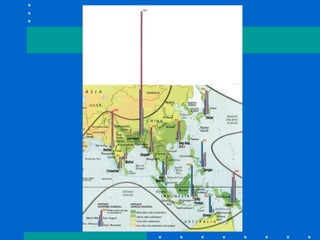
MONSOONS: Seasonal winds of southeast Asia. Blow from the southwest in the summer to create a rainy season. Blow from the northeast in the winter to create a cool, dry season.
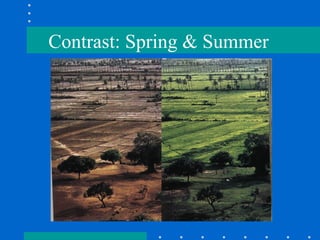
3 Distinct Seasons WINTER:  cool and dry (40-60*F.)  October - February. SPRING:  hot and dry (70-110* F.)  March - June.  (school vacation) SUMMER:  warm and rainy (70-90*F)  July - September.
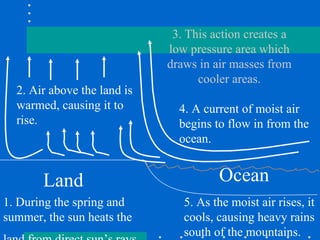
3. This action creates a low pressure area which draws in air masses from cooler areas. 1. During the spring and summer, the sun heats the land from direct sun’s rays.   2. Air above the land is warmed, causing it to rise. 4. A current of moist air begins to flow in from the ocean. 5. As the moist air rises, it cools, causing heavy rains south of the mountains. Land Ocean
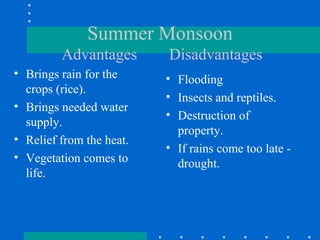
Summer Monsoon  Advantages  Disadvantages Brings rain for the crops (rice). Brings needed water supply. Relief from the heat. Vegetation comes to life. Flooding Insects and reptiles. Destruction of property. If rains come too late - drought.
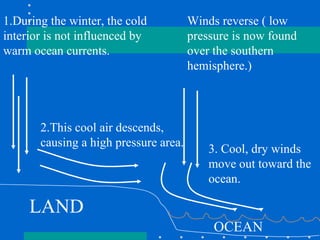
1.During the winter, the cold interior is not influenced by warm ocean currents. 2.This cool air descends, causing a high pressure area. 3. Cool, dry winds move out toward the ocean. Winds reverse ( low pressure is now found over the southern hemisphere.) LAND OCEAN
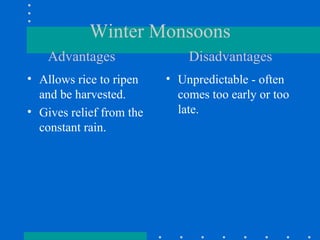
Winter Monsoons Advantages   Disadvantages Allows rice to ripen and be harvested. Gives relief from the constant rain. Unpredictable - often comes too early or too late.
Contrast: Spring & Summer


POPULATION DENSITY: The average number of people per square mile Sparsely populated -- few people per square mile.  (Ex: Plateau of Tibet) Densely populated -- many people per square mile.  (Ex: near the Ganges R.) 2000 census data: U.S.A. = 64 people per sq. mile INDIA = 819 people per sq. mile
 

Monsoons

  • 1.
  • 2.
    MONSOONS: Seasonal windsof southeast Asia. Blow from the southwest in the summer to create a rainy season. Blow from the northeast in the winter to create a cool, dry season.
  • 3.
    3 Distinct SeasonsWINTER: cool and dry (40-60*F.) October - February. SPRING: hot and dry (70-110* F.) March - June. (school vacation) SUMMER: warm and rainy (70-90*F) July - September.
  • 4.
    3. This actioncreates a low pressure area which draws in air masses from cooler areas. 1. During the spring and summer, the sun heats the land from direct sun’s rays. 2. Air above the land is warmed, causing it to rise. 4. A current of moist air begins to flow in from the ocean. 5. As the moist air rises, it cools, causing heavy rains south of the mountains. Land Ocean
  • 5.
    Summer Monsoon Advantages Disadvantages Brings rain for the crops (rice). Brings needed water supply. Relief from the heat. Vegetation comes to life. Flooding Insects and reptiles. Destruction of property. If rains come too late - drought.
  • 6.
    1.During the winter,the cold interior is not influenced by warm ocean currents. 2.This cool air descends, causing a high pressure area. 3. Cool, dry winds move out toward the ocean. Winds reverse ( low pressure is now found over the southern hemisphere.) LAND OCEAN
  • 7.
    Winter Monsoons Advantages Disadvantages Allows rice to ripen and be harvested. Gives relief from the constant rain. Unpredictable - often comes too early or too late.
  • 8.
  • 9.
  • 10.
  • 11.
  • 12.
  • 13.
  • 14.
  • 15.
  • 16.
    POPULATION DENSITY: Theaverage number of people per square mile Sparsely populated -- few people per square mile. (Ex: Plateau of Tibet) Densely populated -- many people per square mile. (Ex: near the Ganges R.) 2000 census data: U.S.A. = 64 people per sq. mile INDIA = 819 people per sq. mile
  • 17.