Downloaded 20 times



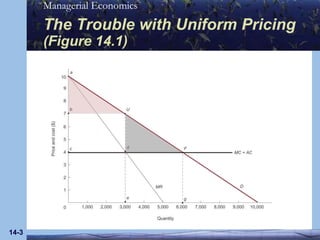
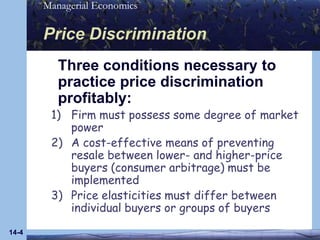

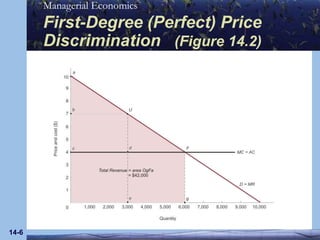

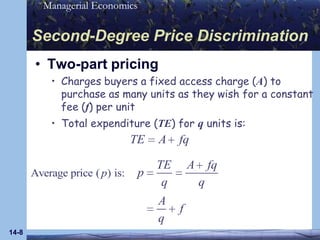
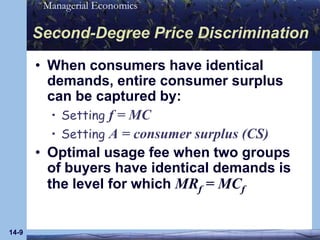
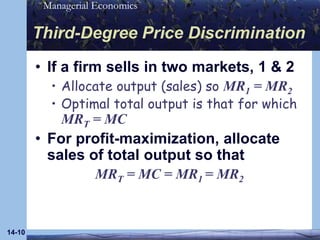


This document discusses different pricing techniques used by firms, including uniform pricing and various forms of price discrimination. It provides details on three types of price discrimination: first-degree, second-degree, and third-degree price discrimination. First-degree discrimination involves setting an individual price for every unit sold. Second-degree discrimination uses quantity discounts or two-part pricing. Third-degree discrimination charges different prices to different groups of customers based on differences in demand elasticities between markets. The goal of price discrimination is for firms to capture more consumer surplus and be more profitable.


![Eco 6th Lecture[1]](https://cdn.slidesharecdn.com/ss_thumbnails/eco6thlecture1-1253256517118-phpapp03-thumbnail.jpg?width=640&height=640&fit=bounds)


