Downloaded 11 times

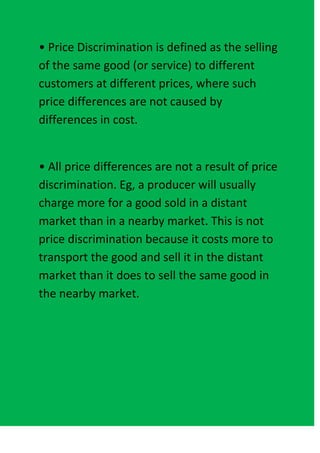
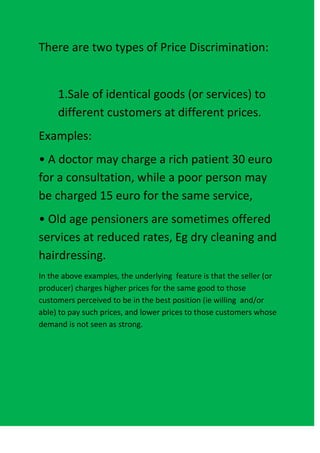
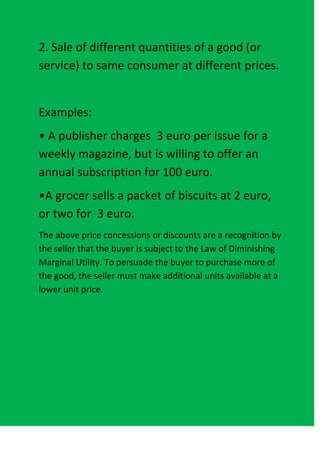
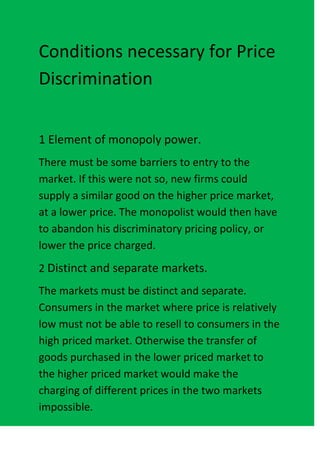
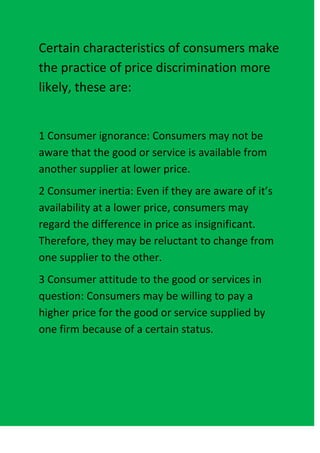
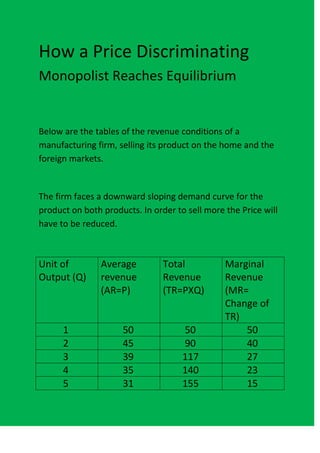


Price discrimination is defined as selling the same good to different customers at different prices when the price differences are not due to differences in costs. There are two types of price discrimination: 1) selling identical goods to different customers at different prices, and 2) selling different quantities of a good to the same consumer at different unit prices. For price discrimination to be possible, there must be some element of monopoly power and distinct markets that prevent resale between markets. Consumer characteristics like ignorance, inertia, and status attitudes make price discrimination more likely. A price discriminating monopolist will set prices in different markets to maximize total revenue.


![Eco 6th Lecture[1]](https://cdn.slidesharecdn.com/ss_thumbnails/eco6thlecture1-1253256517118-phpapp03-thumbnail.jpg?width=640&height=640&fit=bounds)


