MOLECULAR FARMING
Presented by: Iqra Ishfaq
Presented to: Dr. Saiqa Ilyas
Contents
Definition
History
Molecular farming VS molecular Pharming
Why plants are used?
Molecular farming strategy
How molecular farming is done?
Nuclear VS Plastids transformation
Why tobacco plant is important in molecular farming?
Advantages and Disadvantages
Definition
 The use of whole organisms, organs, tissues
or cells, or cell cultures, as bio-reactors for
the production of commercially valuable
products via recombinant DNA techniques.
History
 1995: First plant derived industrial enzymes- alpha
amylase in tobacco.
 1996: First plant derived protein polymer artificial elastin
in tobacco.
 1997: Commercial production of avidin in maize.
 2000: Human GH produced in tobacco chloroplast.
 2003: Commercial production of bovine trypsin in maize.
Difference between Molecular Pharming and
Molecular Farming
The production of active
pharmaceutical
substances in
genetically modified
organisms.
 The use of genetically
modified organisms as
a production platform
for renewable raw
materials.
Why Plants
 Significantly lower production cost.
 Infrastructure and expertise already exists for
planting.
 Plants do not contain known human
pathogens.
 Plant cells can direct proteins to environment
that reduce degradation.
Molecular Farming Strategy
 Clone a gene of interest.
 Transform the host platform species.
 Grow the host species, recover
biomass.
 Purify product of interest.
 Deliver product of interest.
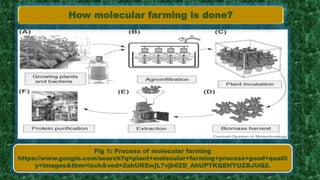
Fig 1: Process of molecular farming
https://www.google.com/search?q=plant+molecular+farming+process+good+qualit
y+images&tbm=isch&ved=2ahUKEwjL7vjb6ZD_AhUPTKQEHYUZBJUQ2.
How molecular farming is done?
Nuclear VS Plastids Transformation
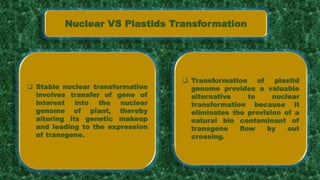
 Stable nuclear transformation
involves transfer of gene of
interest into the nuclear
genome of plant, thereby
altering its genetic makeup
and leading to the expression
of transgene.
 Transformation of plastid
genome provides a valuable
alternative to nuclear
transformation because it
eliminates the provision of a
natural bio contaminant of
transgene flow by out
crossing.
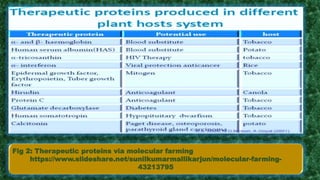
Fig 2: Therapeutic proteins via molecular farming
https://www.slideshare.net/sunilkumarmallikarjun/molecular-farming-
43213795
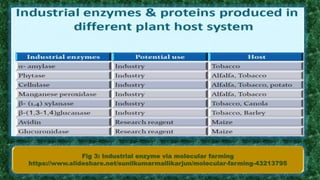
Fig 3: Industrial enzyme via molecular farming
https://www.slideshare.net/sunilkumarmallikarjun/molecular-farming-43213795
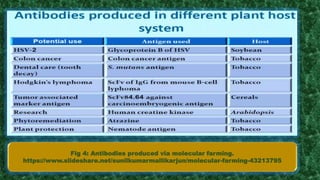
Fig 4: Antibodies produced via molecular farming.
https://www.slideshare.net/sunilkumarmallikarjun/molecular-farming-43213795
 Tobacco plants have been widely used for
molecular farming because the yield of
recombinant proteins is high, and there is an
established infrastructure for agriculture and
downstream processing.
Why tobacco plant?
Advantages Disadvantages
 Production of bioplastics and
biopolymers.
 Production of plant secondary
metabolites.
 Production of starch content in
maize.
 Production of edible vaccine.
 Production or proteins and
enzymes.
 Production of vitamins.
 Time requirement
 Production problem
 If consumed inadvertently,
it could lead to
desensitization of
vaccines.
moleculaar farming.pptx

moleculaar farming.pptx

  • 1.
    MOLECULAR FARMING Presented by:Iqra Ishfaq Presented to: Dr. Saiqa Ilyas
  • 2.
    Contents Definition History Molecular farming VSmolecular Pharming Why plants are used? Molecular farming strategy How molecular farming is done? Nuclear VS Plastids transformation Why tobacco plant is important in molecular farming? Advantages and Disadvantages
  • 3.
    Definition  The useof whole organisms, organs, tissues or cells, or cell cultures, as bio-reactors for the production of commercially valuable products via recombinant DNA techniques.
  • 4.
    History  1995: Firstplant derived industrial enzymes- alpha amylase in tobacco.  1996: First plant derived protein polymer artificial elastin in tobacco.  1997: Commercial production of avidin in maize.  2000: Human GH produced in tobacco chloroplast.  2003: Commercial production of bovine trypsin in maize.
  • 5.
    Difference between MolecularPharming and Molecular Farming The production of active pharmaceutical substances in genetically modified organisms.  The use of genetically modified organisms as a production platform for renewable raw materials.
  • 6.
    Why Plants  Significantlylower production cost.  Infrastructure and expertise already exists for planting.  Plants do not contain known human pathogens.  Plant cells can direct proteins to environment that reduce degradation.
  • 7.
    Molecular Farming Strategy Clone a gene of interest.  Transform the host platform species.  Grow the host species, recover biomass.  Purify product of interest.  Deliver product of interest.
  • 8.
    Fig 1: Processof molecular farming https://www.google.com/search?q=plant+molecular+farming+process+good+qualit y+images&tbm=isch&ved=2ahUKEwjL7vjb6ZD_AhUPTKQEHYUZBJUQ2. How molecular farming is done?
  • 9.
    Nuclear VS PlastidsTransformation  Stable nuclear transformation involves transfer of gene of interest into the nuclear genome of plant, thereby altering its genetic makeup and leading to the expression of transgene.  Transformation of plastid genome provides a valuable alternative to nuclear transformation because it eliminates the provision of a natural bio contaminant of transgene flow by out crossing.
  • 10.
    Fig 2: Therapeuticproteins via molecular farming https://www.slideshare.net/sunilkumarmallikarjun/molecular-farming- 43213795
  • 11.
    Fig 3: Industrialenzyme via molecular farming https://www.slideshare.net/sunilkumarmallikarjun/molecular-farming-43213795
  • 12.
    Fig 4: Antibodiesproduced via molecular farming. https://www.slideshare.net/sunilkumarmallikarjun/molecular-farming-43213795
  • 13.
     Tobacco plantshave been widely used for molecular farming because the yield of recombinant proteins is high, and there is an established infrastructure for agriculture and downstream processing. Why tobacco plant?
  • 14.
    Advantages Disadvantages  Productionof bioplastics and biopolymers.  Production of plant secondary metabolites.  Production of starch content in maize.  Production of edible vaccine.  Production or proteins and enzymes.  Production of vitamins.  Time requirement  Production problem  If consumed inadvertently, it could lead to desensitization of vaccines.