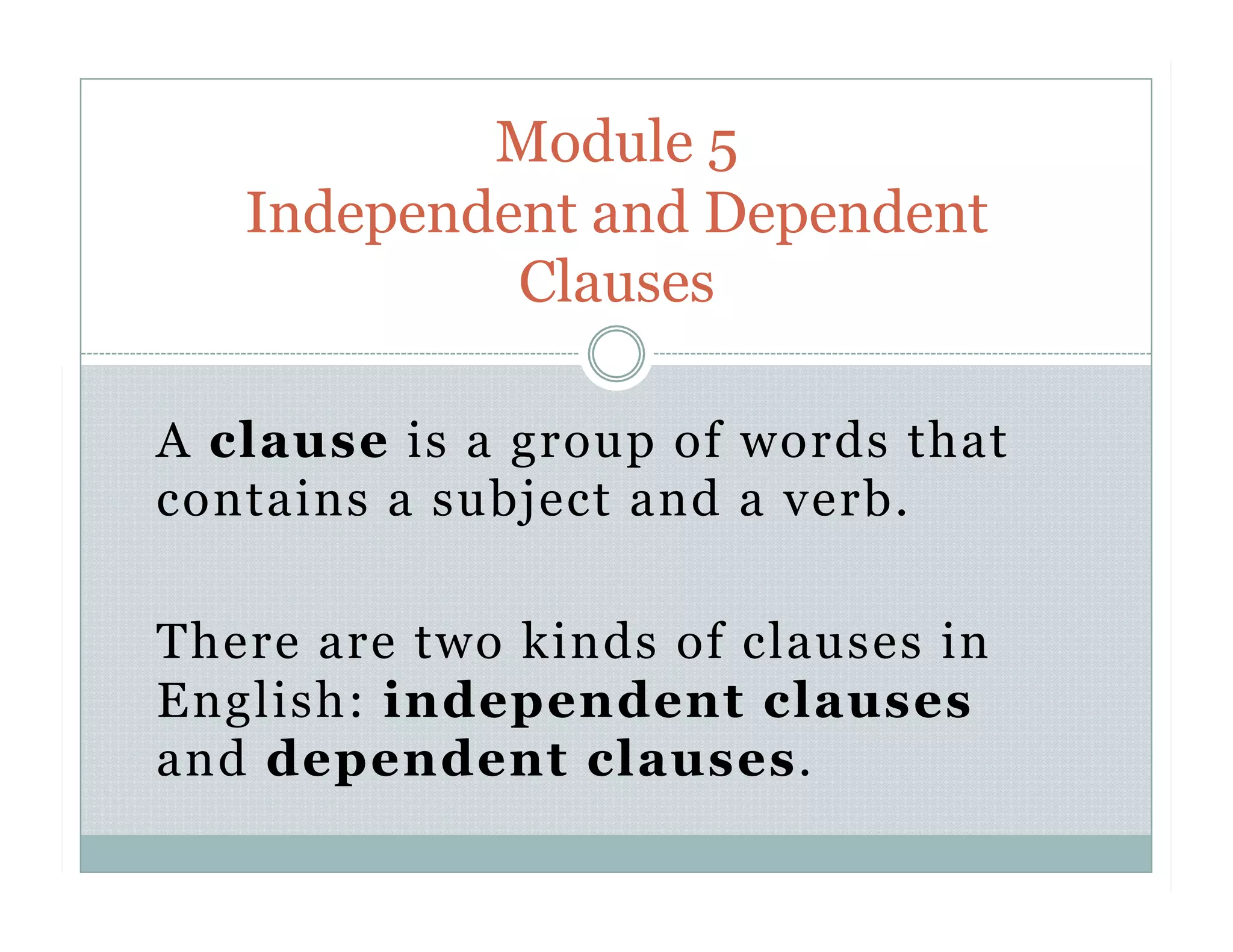
A clause is a group of words that
contains a subject and a verb.
There are two kinds of clauses in
English: independent clauses
and dependent clauses.
Module 5
Independent and Dependent
Clauses
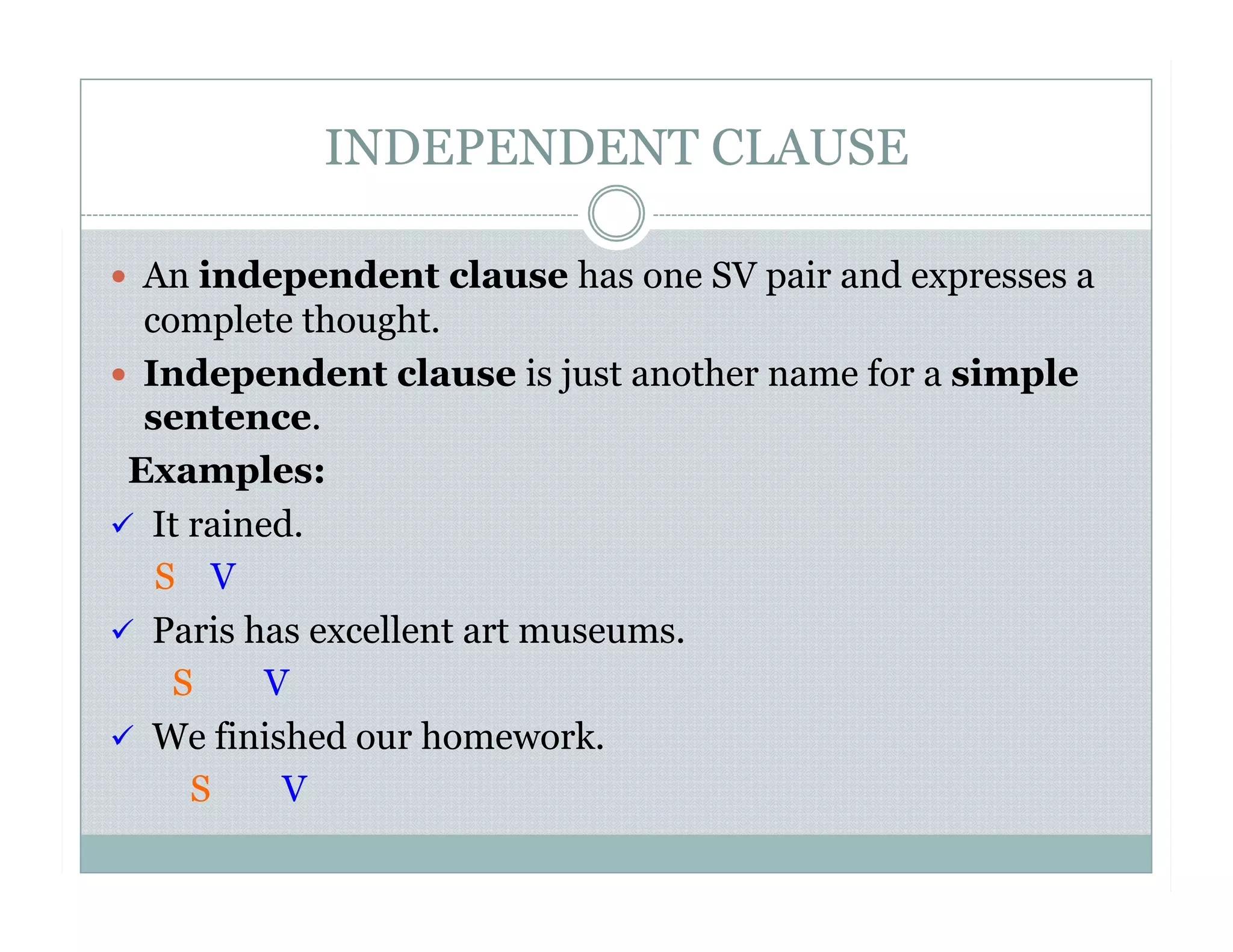
INDEPENDENT CLAUSE
  An independent clause has one SV pair and expresses a
complete thought.
  Independent clause is just another name for a simple
sentence.
Examples:
  It rained.
S V
  Paris has excellent art museums.
S V
  We finished our homework.
S V
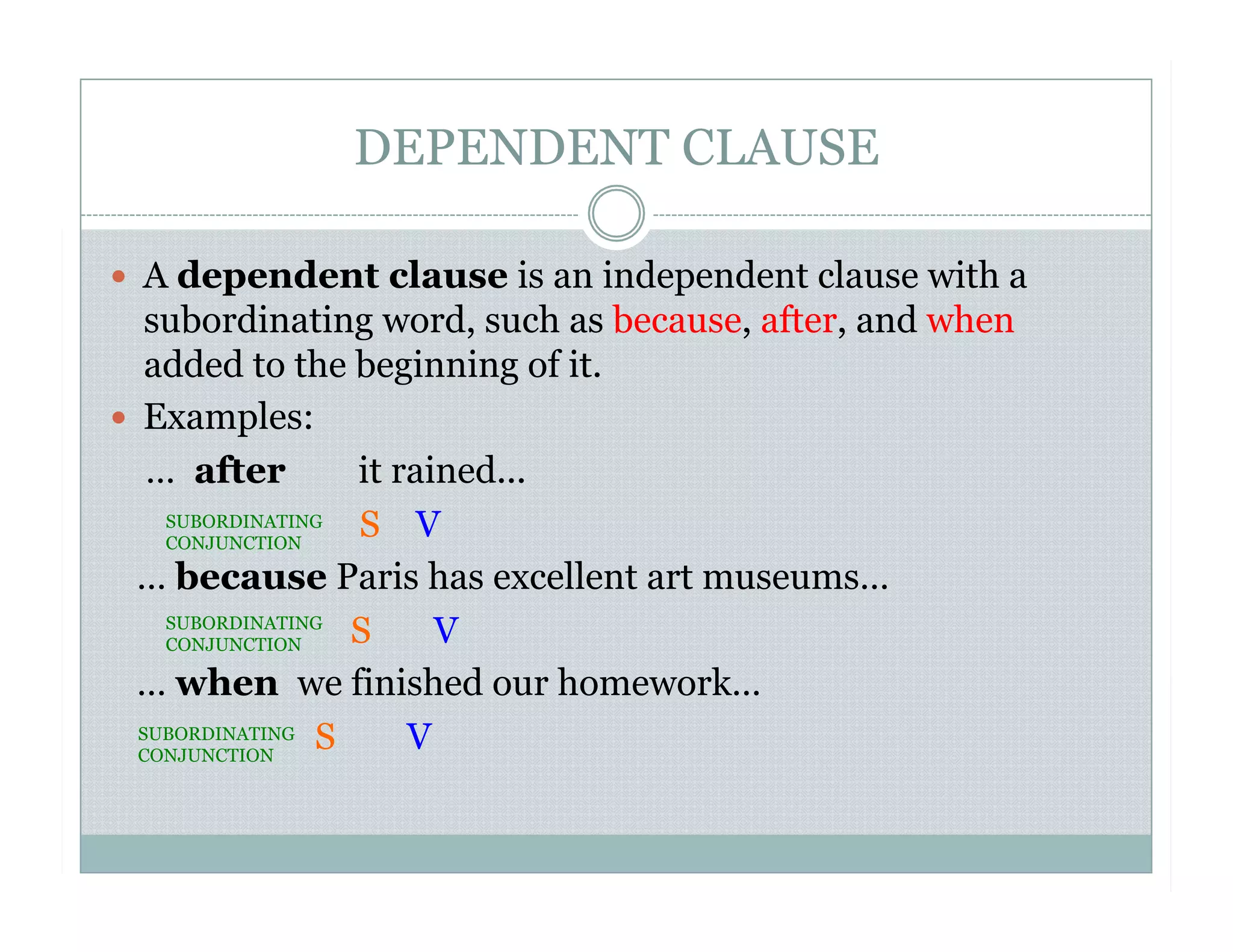
DEPENDENT CLAUSE
  A dependent clause is an independent clause with a
subordinating word, such as because, after, and when
added to the beginning of it.
  Examples:
… after it rained...
S V
… because Paris has excellent art museums…
S V
… when we finished our homework…
S V
SUBORDINATING
CONJUNCTION
SUBORDINATING
CONJUNCTION
SUBORDINATING
CONJUNCTION
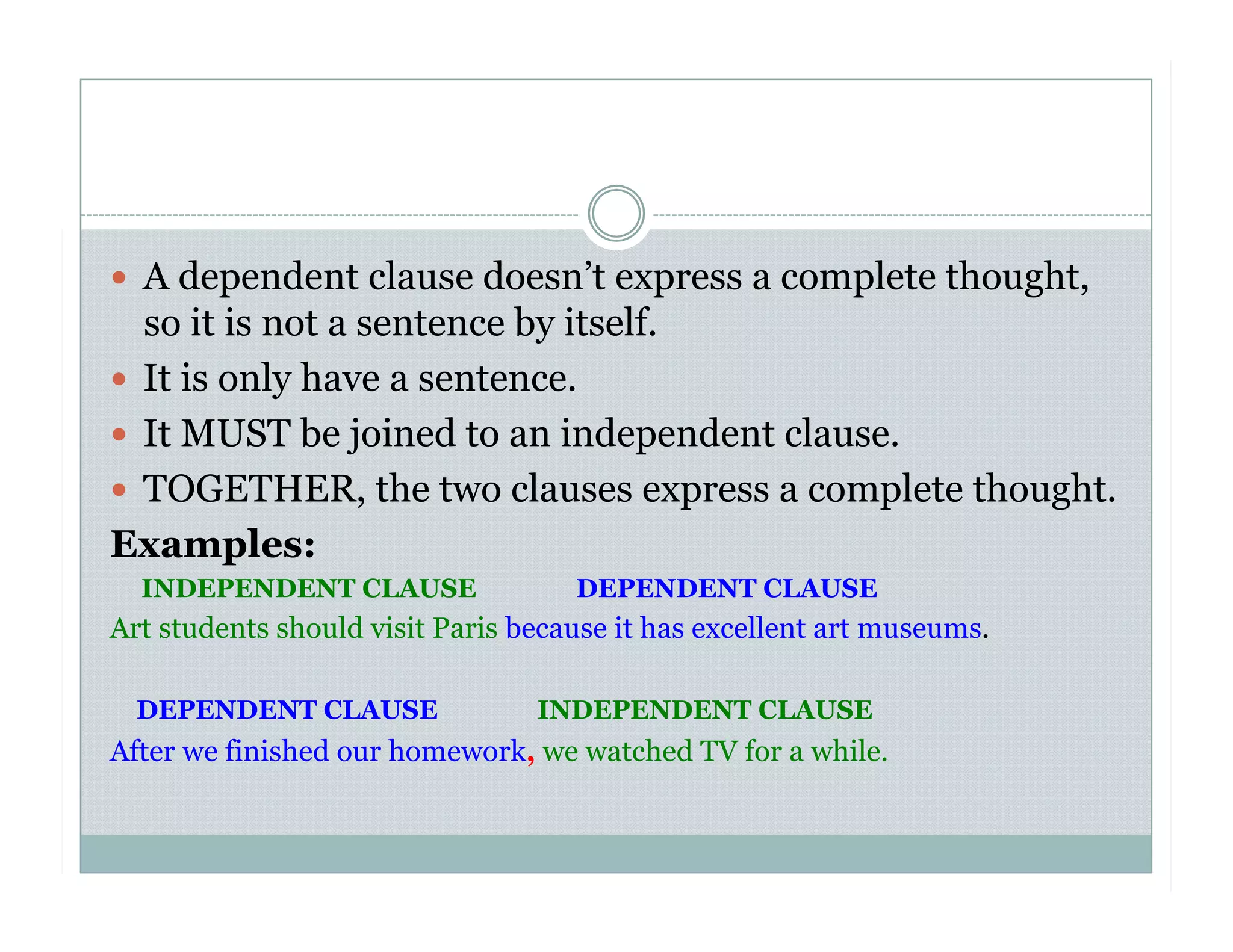
  A dependent clause doesn’t express a complete thought,
so it is not a sentence by itself.
  It is only have a sentence.
  It MUST be joined to an independent clause.
  TOGETHER, the two clauses express a complete thought.
Examples:
INDEPENDENT CLAUSE DEPENDENT CLAUSE
Art students should visit Paris because it has excellent art museums.
DEPENDENT CLAUSE INDEPENDENT CLAUSE
After we finished our homework, we watched TV for a while.
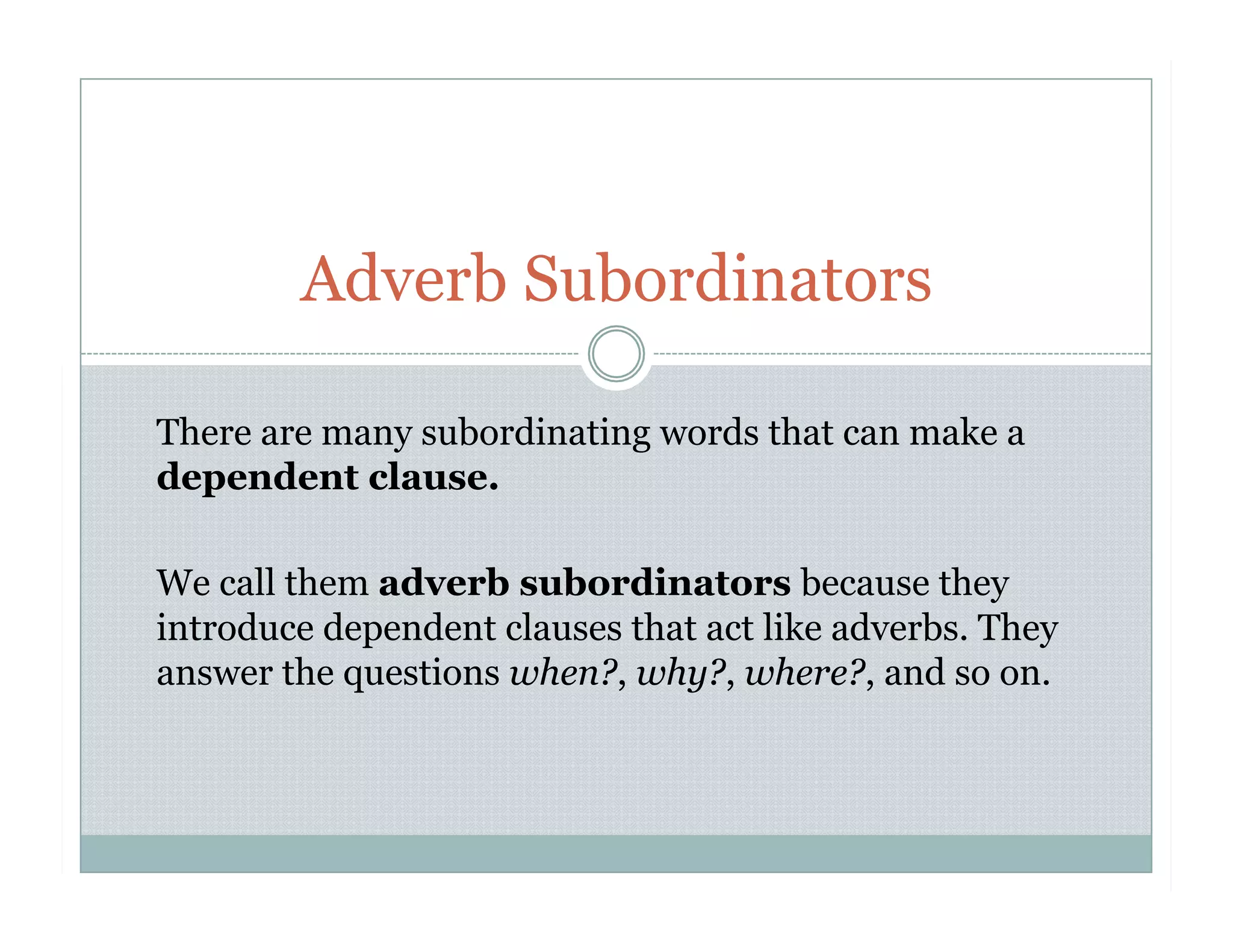
There are many subordinating words that can make a
dependent clause.
We call them adverb subordinators because they
introduce dependent clauses that act like adverbs. They
answer the questions when?, why?, where?, and so on.
Adverb Subordinators
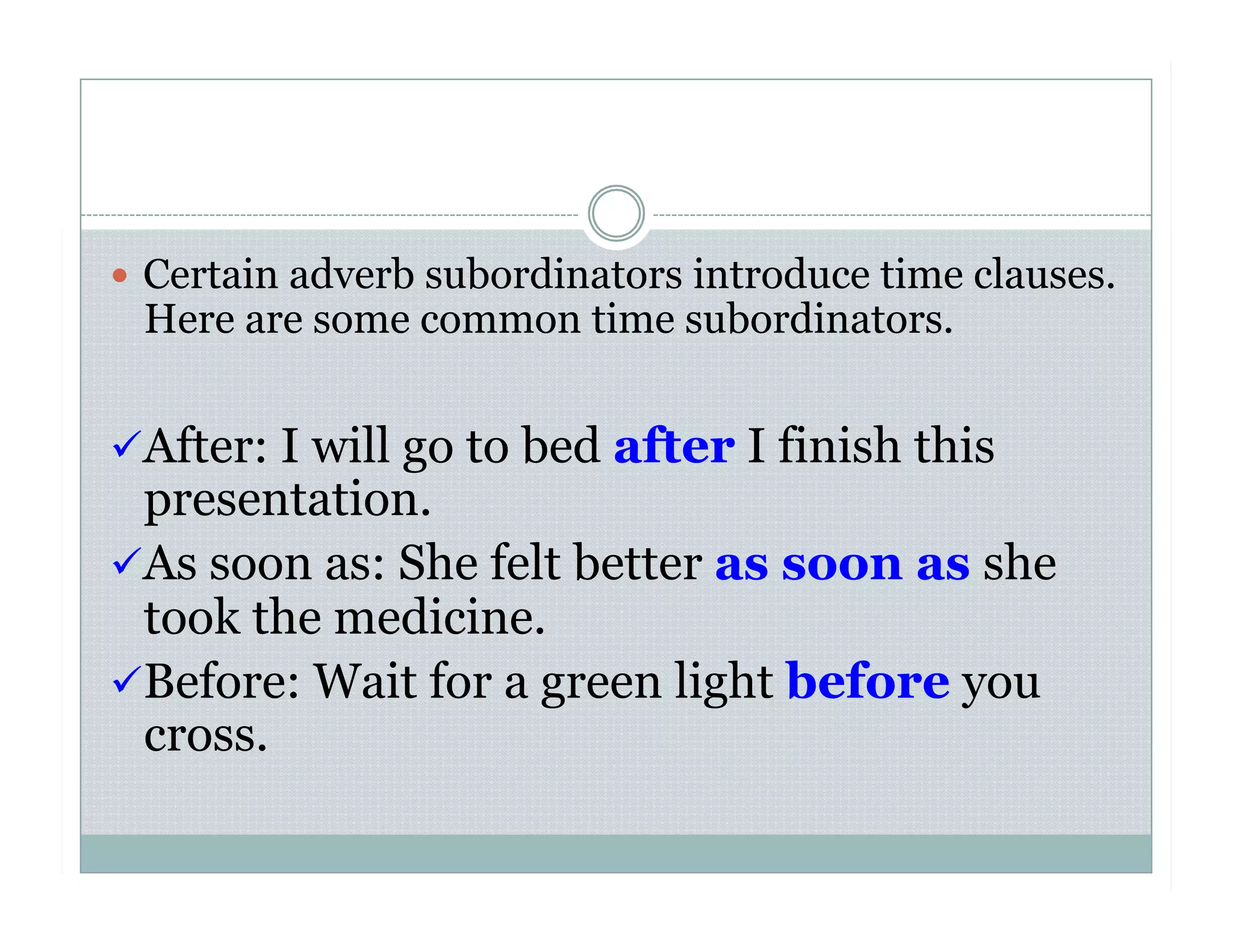
  Certain adverb subordinators introduce time clauses.
Here are some common time subordinators.
 After: I will go to bed after I finish this
presentation.
 As soon as: She felt better as soon as she
took the medicine.
 Before: Wait for a green light before you
cross.
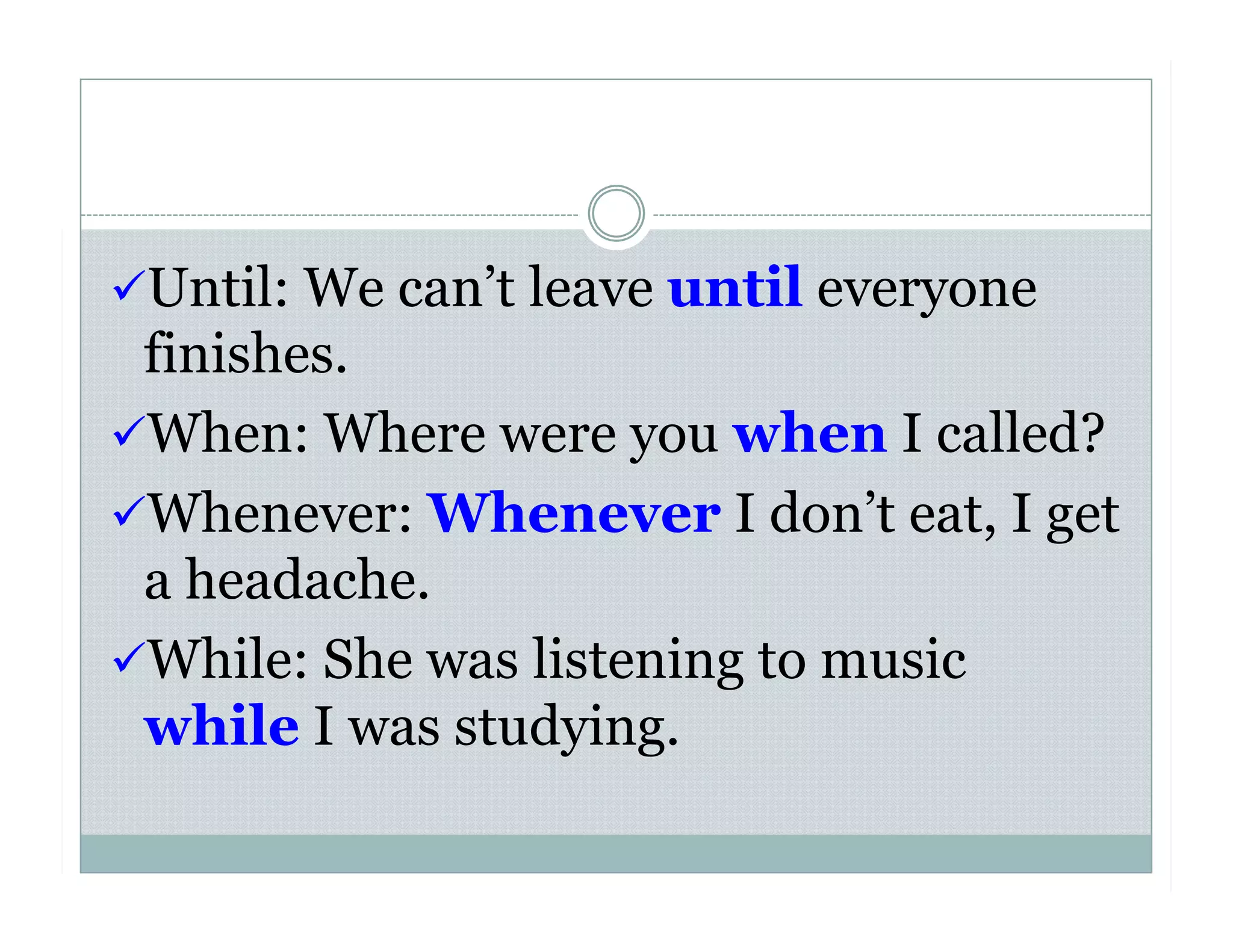
 Until: We can’t leave until everyone
finishes.
 When: Where were you when I called?
 Whenever: Whenever I don’t eat, I get
a headache.
 While: She was listening to music
while I was studying.
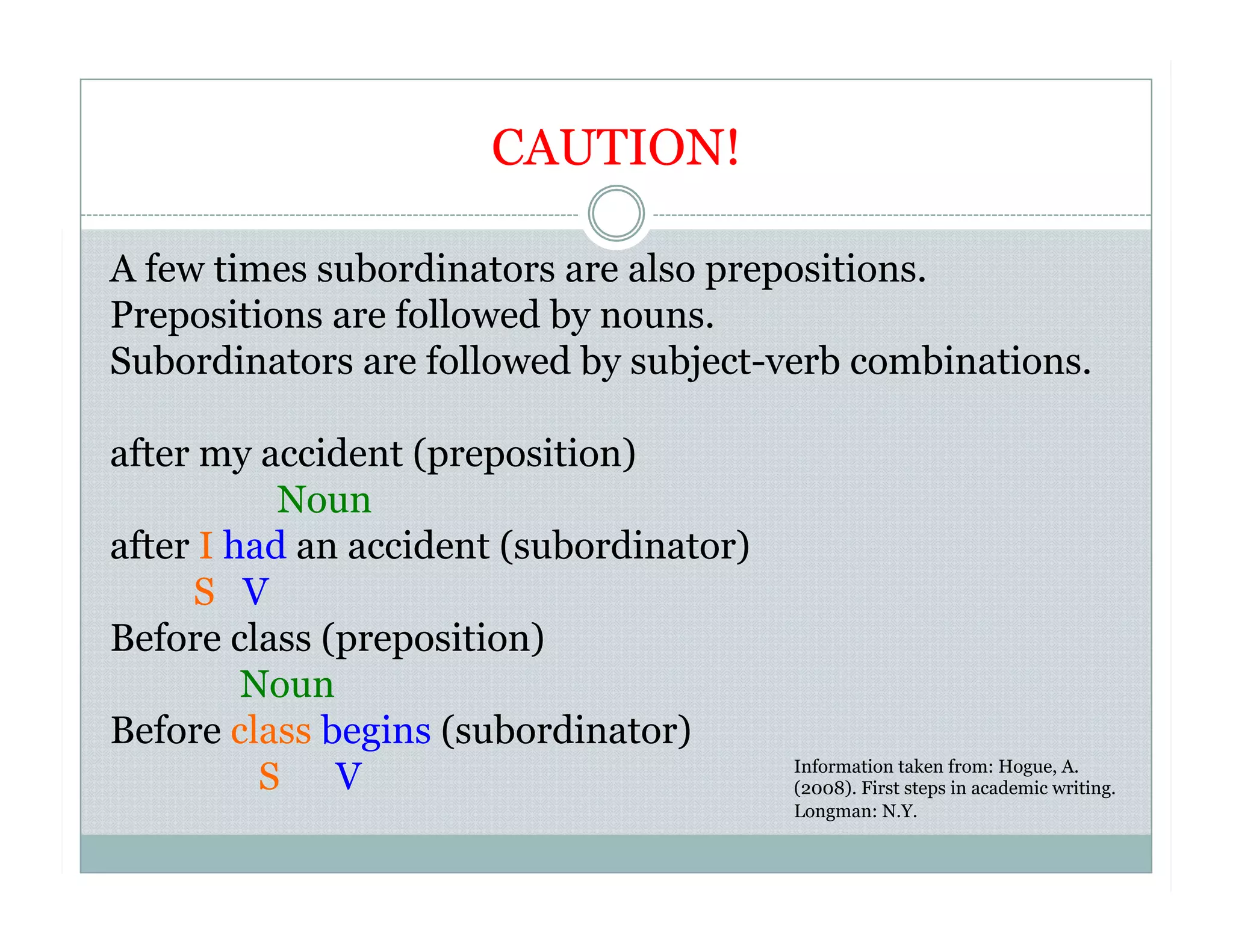
CAUTION!
A few times subordinators are also prepositions.
Prepositions are followed by nouns.
Subordinators are followed by subject-verb combinations.
after my accident (preposition)
Noun
after I had an accident (subordinator)
S V
Before class (preposition)
Noun
Before class begins (subordinator)
S V Information taken from: Hogue, A.
(2008). First steps in academic writing.
Longman: N.Y.

Module 5 lesson 5.1

  • 1.
    A clause isa group of words that contains a subject and a verb. There are two kinds of clauses in English: independent clauses and dependent clauses. Module 5 Independent and Dependent Clauses
  • 2.
    INDEPENDENT CLAUSE   Anindependent clause has one SV pair and expresses a complete thought.   Independent clause is just another name for a simple sentence. Examples:   It rained. S V   Paris has excellent art museums. S V   We finished our homework. S V
  • 3.
    DEPENDENT CLAUSE   Adependent clause is an independent clause with a subordinating word, such as because, after, and when added to the beginning of it.   Examples: … after it rained... S V … because Paris has excellent art museums… S V … when we finished our homework… S V SUBORDINATING CONJUNCTION SUBORDINATING CONJUNCTION SUBORDINATING CONJUNCTION
  • 4.
      A dependentclause doesn’t express a complete thought, so it is not a sentence by itself.   It is only have a sentence.   It MUST be joined to an independent clause.   TOGETHER, the two clauses express a complete thought. Examples: INDEPENDENT CLAUSE DEPENDENT CLAUSE Art students should visit Paris because it has excellent art museums. DEPENDENT CLAUSE INDEPENDENT CLAUSE After we finished our homework, we watched TV for a while.
  • 5.
    There are manysubordinating words that can make a dependent clause. We call them adverb subordinators because they introduce dependent clauses that act like adverbs. They answer the questions when?, why?, where?, and so on. Adverb Subordinators
  • 6.
      Certain adverbsubordinators introduce time clauses. Here are some common time subordinators.  After: I will go to bed after I finish this presentation.  As soon as: She felt better as soon as she took the medicine.  Before: Wait for a green light before you cross.
  • 7.
     Until: We can’tleave until everyone finishes.  When: Where were you when I called?  Whenever: Whenever I don’t eat, I get a headache.  While: She was listening to music while I was studying.
  • 8.
    CAUTION! A few timessubordinators are also prepositions. Prepositions are followed by nouns. Subordinators are followed by subject-verb combinations. after my accident (preposition) Noun after I had an accident (subordinator) S V Before class (preposition) Noun Before class begins (subordinator) S V Information taken from: Hogue, A. (2008). First steps in academic writing. Longman: N.Y.