Prepared By:
• CLAUSE is a string of words
that contains a subject and a
            verb.

 • In grammar, a clause is the
smallest grammatical unit that
         can express a
     complete proposition.
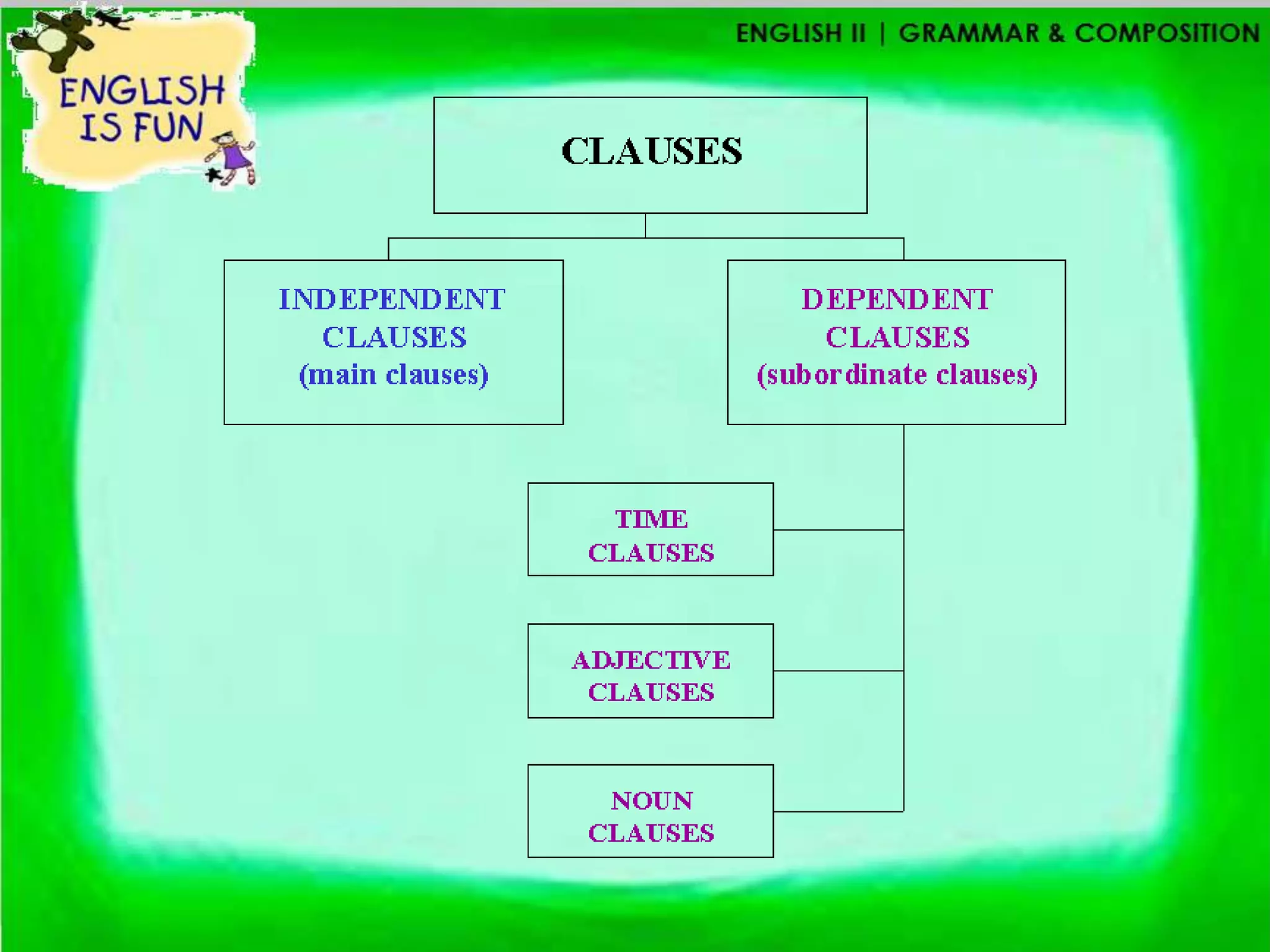
What are the 2
distinctions of CLAUSES?
INDEPENDENT
           CLAUSES
▪ An independent clause is a group of
words that contains a subject and
verb and expresses a complete
thought. An independent clause is a
sentence.
▪ It is a simple sentence that can
stand alone.
INDEPENDENT
CLAUSE MARKERS
       also
   consequently
   furthermore
     however
    moreover
   nevertheless
    therefore
Examples of Simple Sentences
(Independent Clauses):

▪ Mr. Smith arrived at the airport early
this morning.

▪ We must find a new strateghy.

▪ I play basketball.
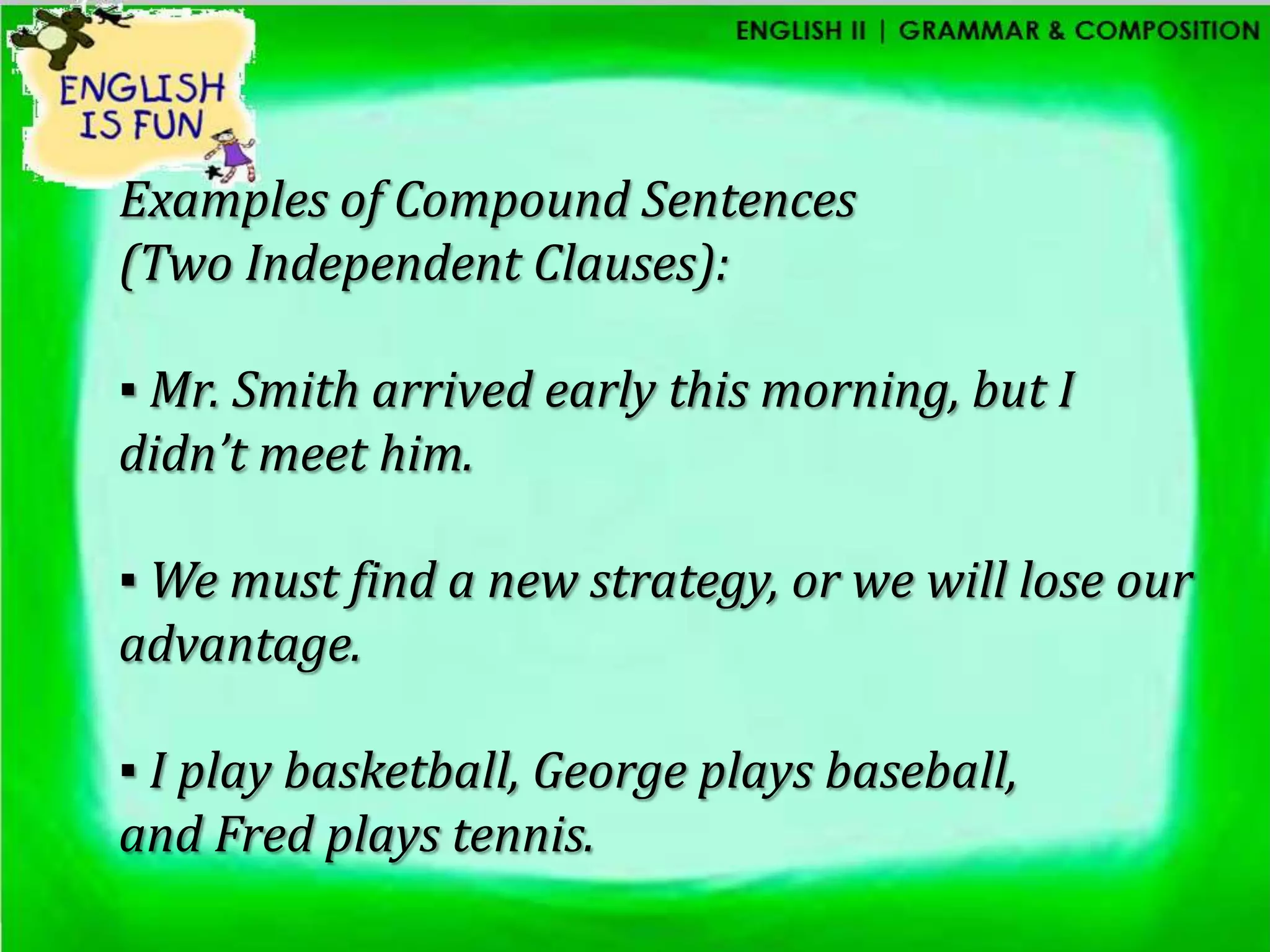
Examples of Compound Sentences
(Two Independent Clauses):

▪ Mr. Smith arrived early this morning, but I
didn’t meet him.

▪ We must find a new strategy, or we will lose our
advantage.

▪ I play basketball, George plays baseball,
and Fred plays tennis.
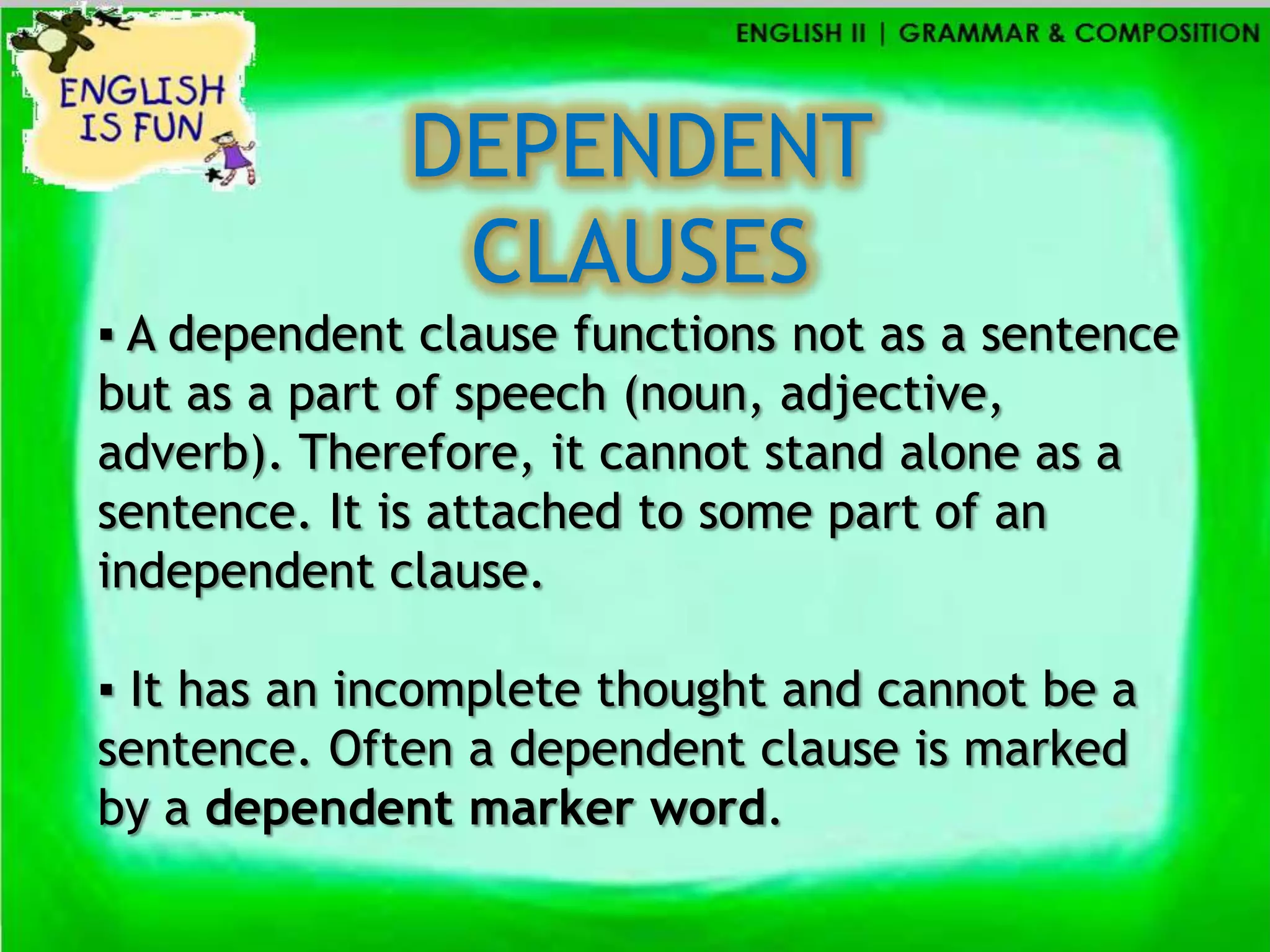
DEPENDENT
              CLAUSES
▪ A dependent clause functions not as a sentence
but as a part of speech (noun, adjective,
adverb). Therefore, it cannot stand alone as a
sentence. It is attached to some part of an
independent clause.

▪ It has an incomplete thought and cannot be a
sentence. Often a dependent clause is marked
by a dependent marker word.
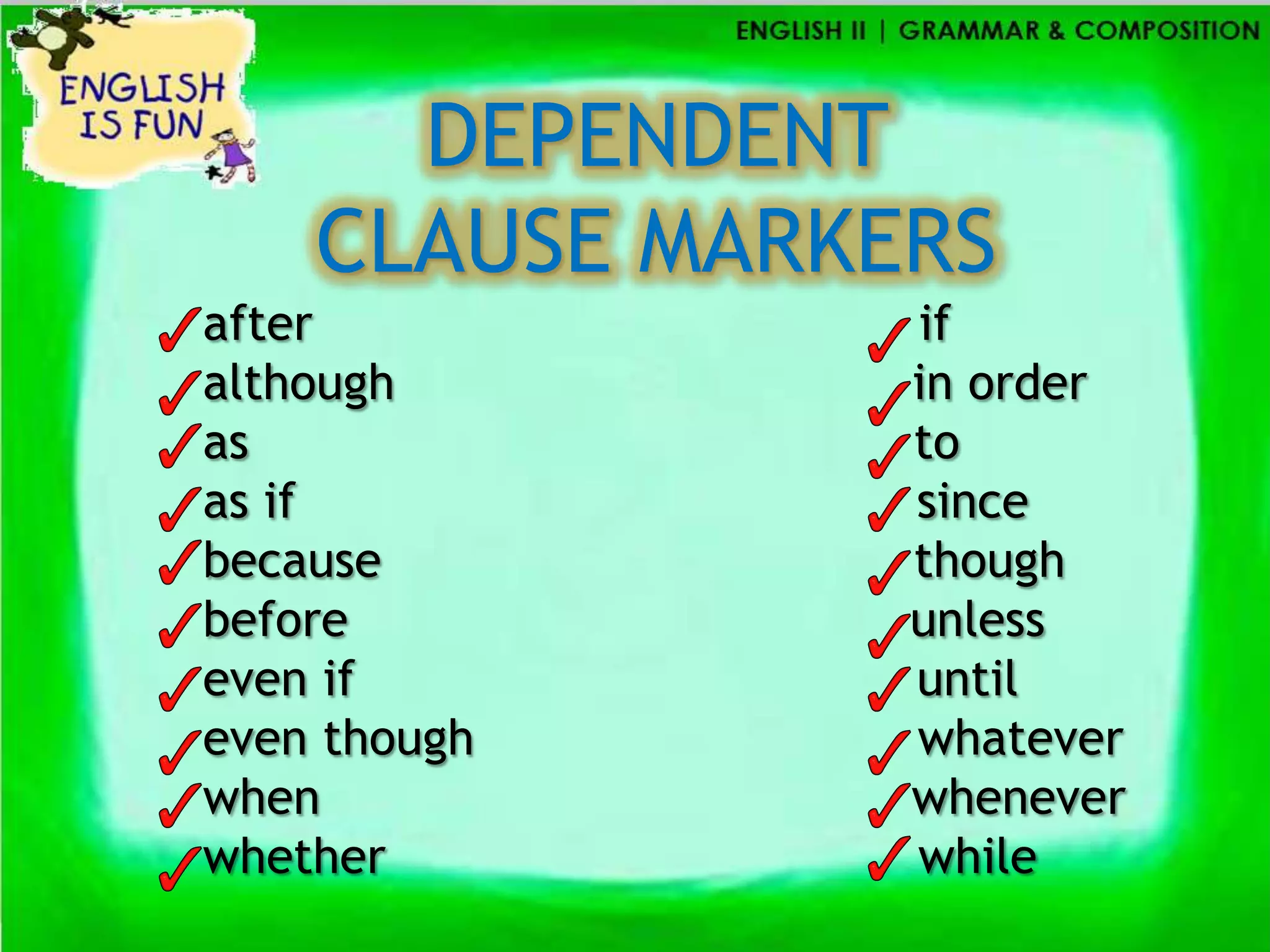
DEPENDENT
    CLAUSE MARKERS
after           if
although        in order
as              to
as if           since
because         though
before          unless
even if         until
even though     whatever
when            whenever
whether         while
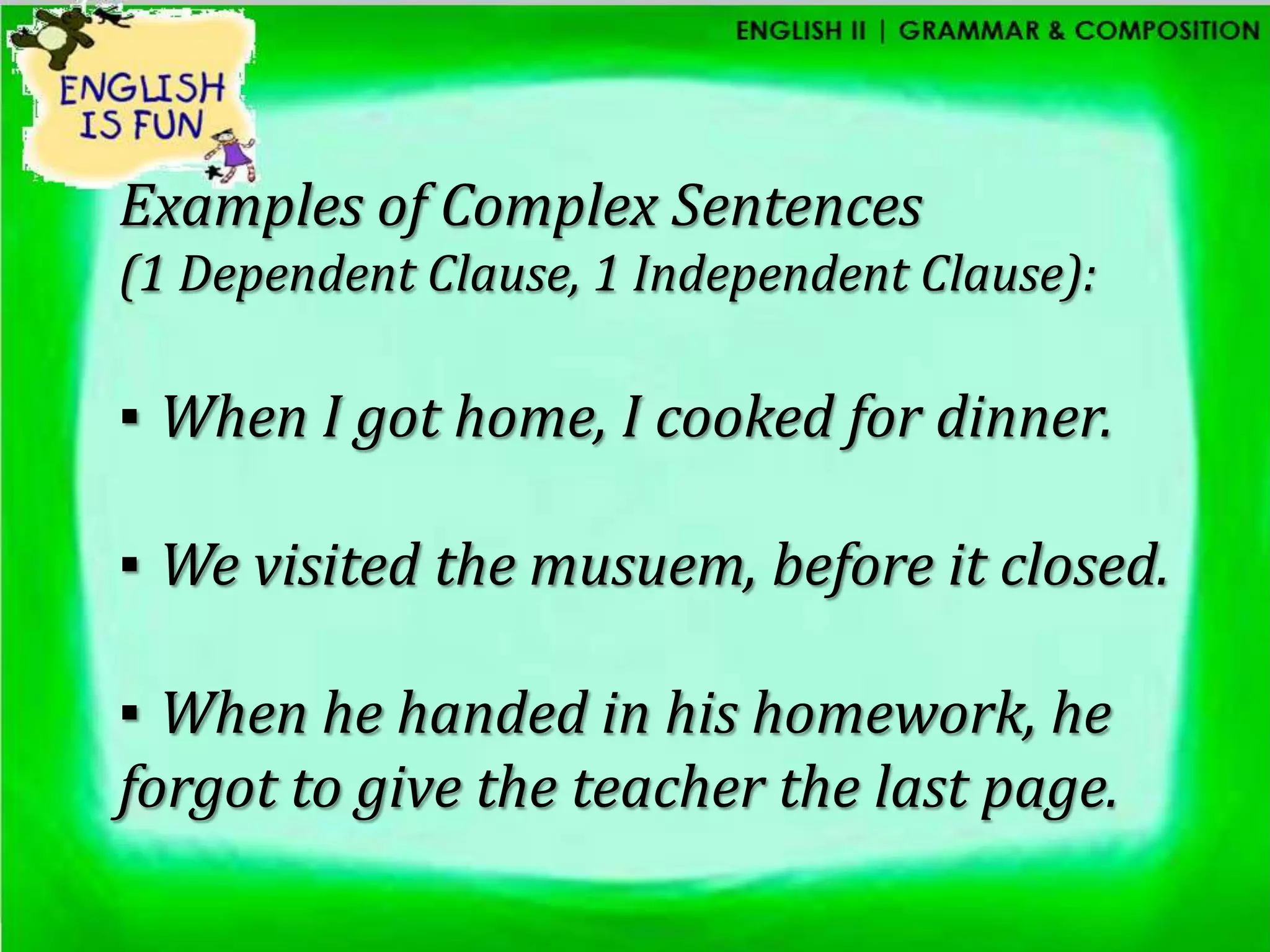
Examples of Complex Sentences
(1 Dependent Clause, 1 Independent Clause):

▪ When I got home, I cooked for dinner.

▪ We visited the musuem, before it closed.

▪ When he handed in his homework, he
forgot to give the teacher the last page.
What are the 3 classifications of
    DEPENDENT CLAUSES?
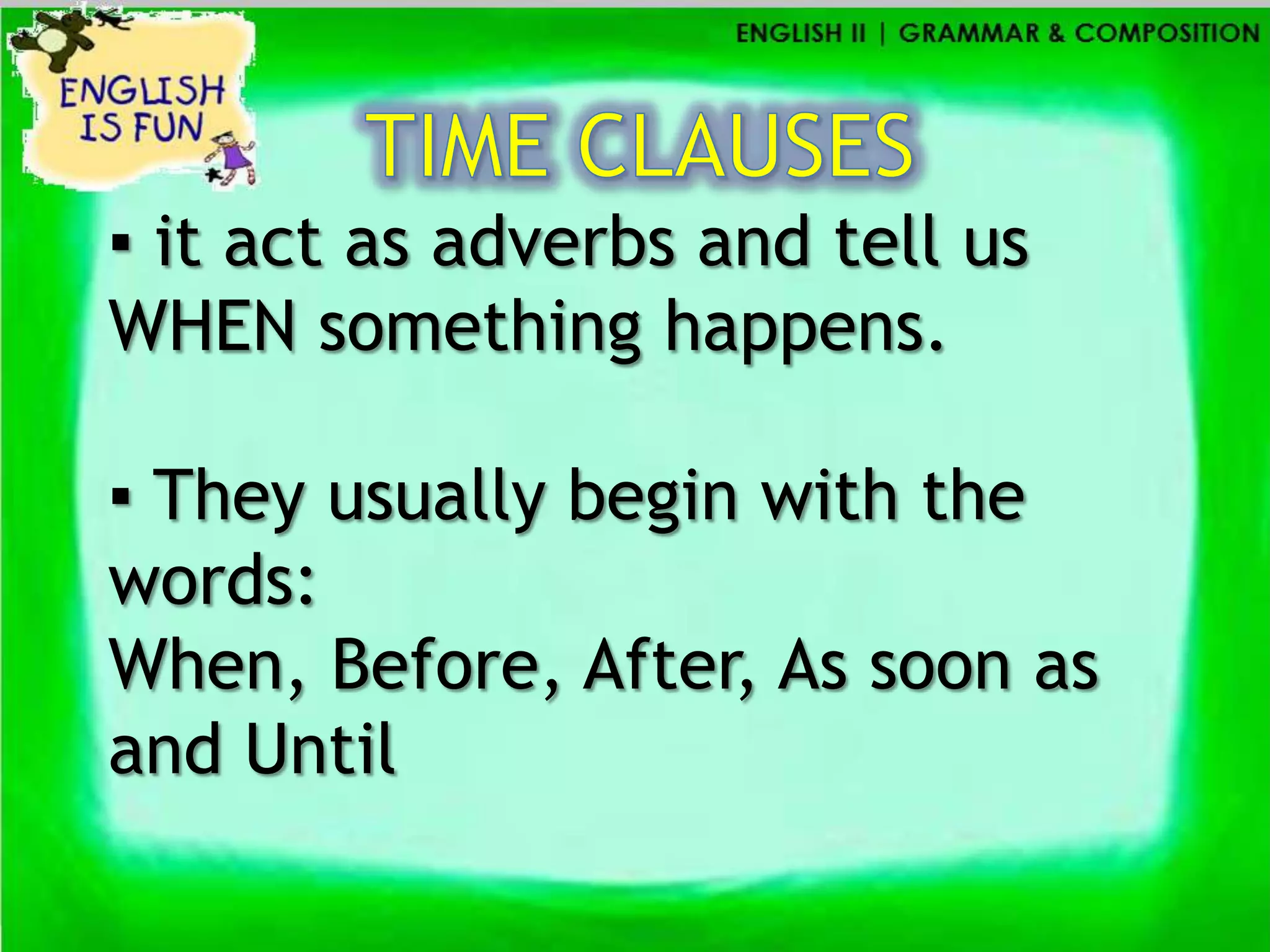
▪ it act as adverbs and tell us
WHEN something happens.

▪ They usually begin with the
words:
When, Before, After, As soon as
and Until
What are the 2 classifications of
        TIME CLAUSES?
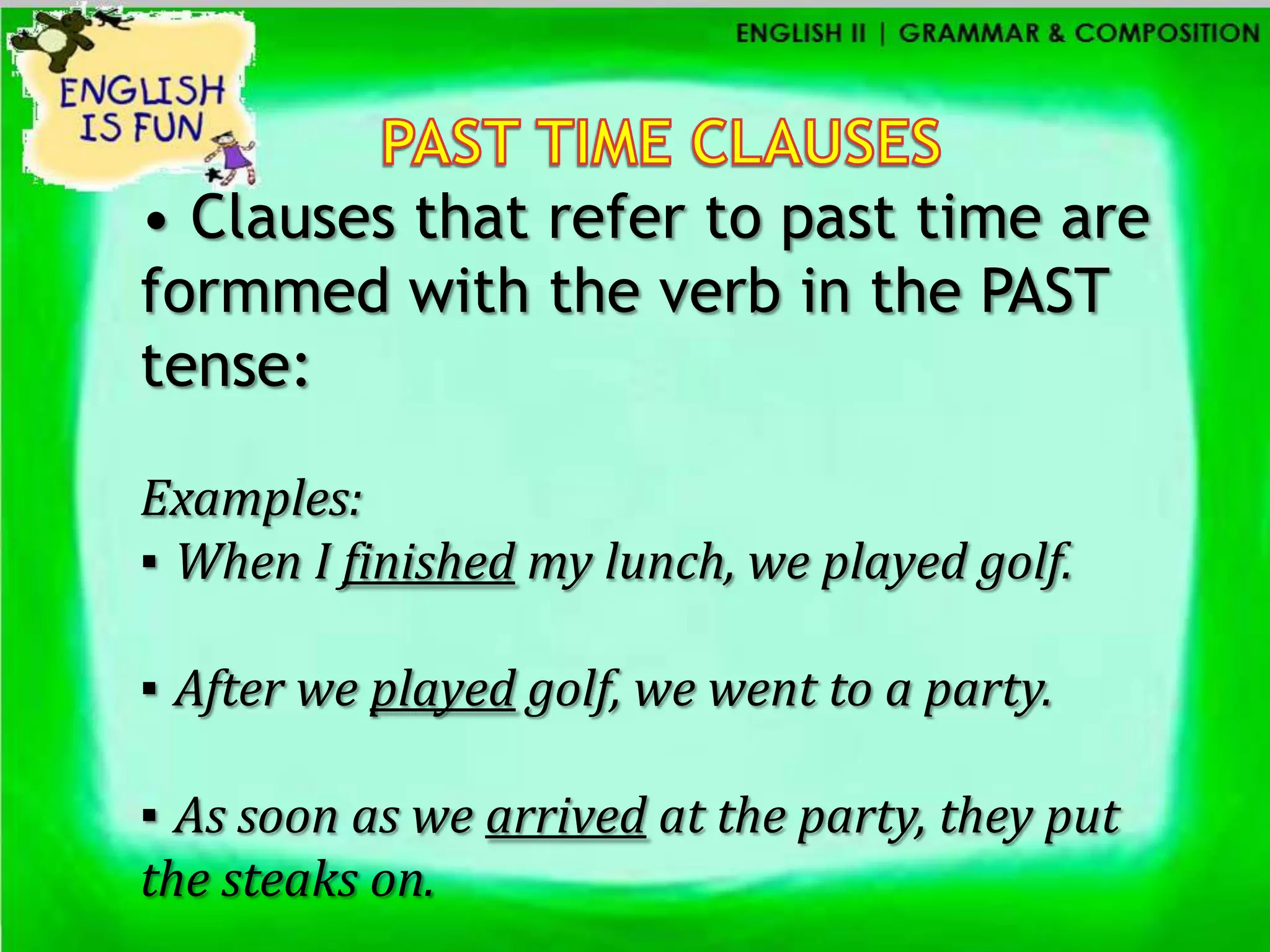
• Clauses that refer to past time are
formmed with the verb in the PAST
tense:

Examples:
▪ When I finished my lunch, we played golf.

▪ After we played golf, we went to a party.

▪ As soon as we arrived at the party, they put
the steaks on.
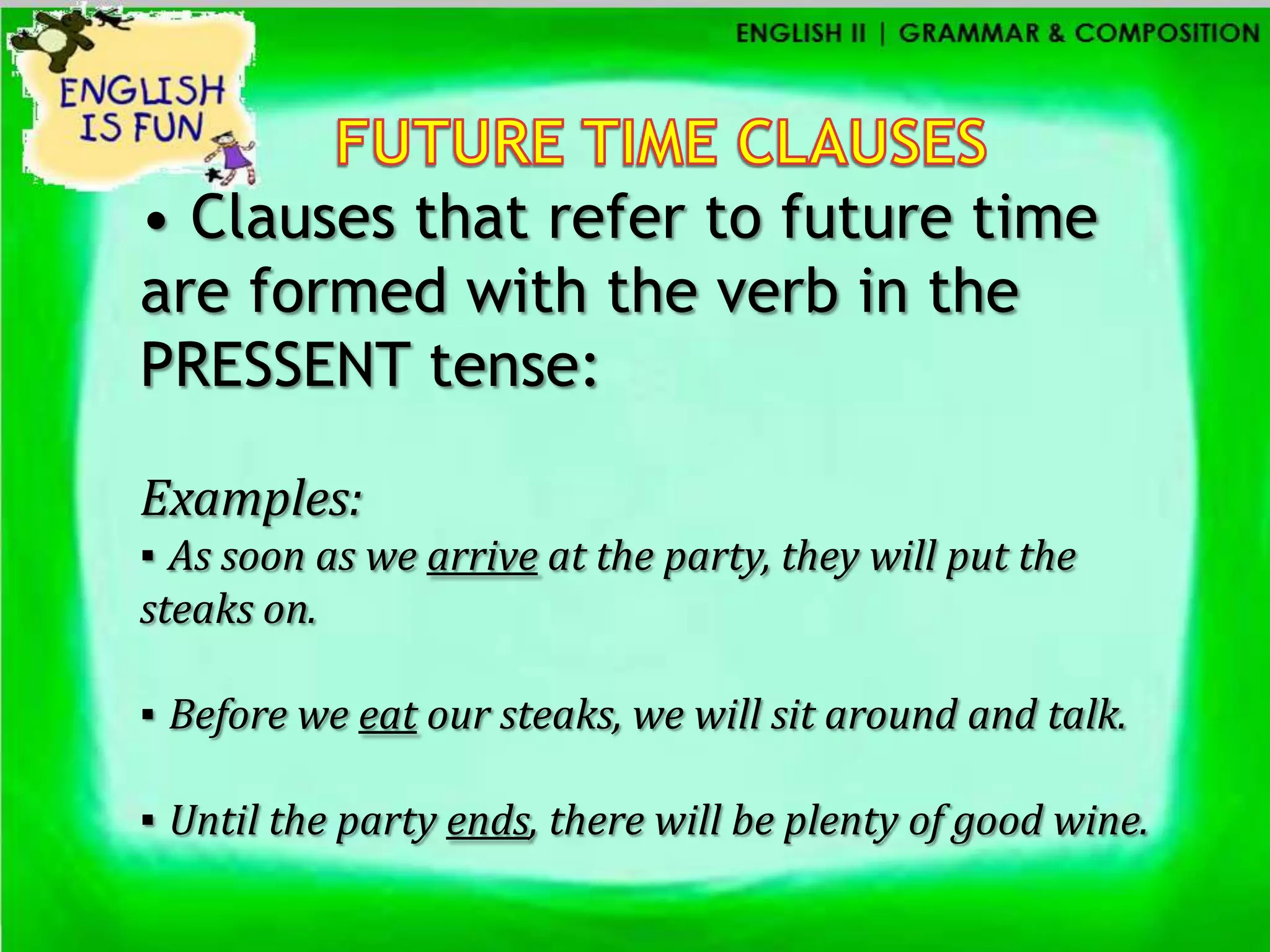
• Clauses that refer to future time
are formed with the verb in the
PRESSENT tense:

Examples:
▪ As soon as we arrive at the party, they will put the
steaks on.

▪ Before we eat our steaks, we will sit around and talk.

▪ Until the party ends, there will be plenty of good wine.
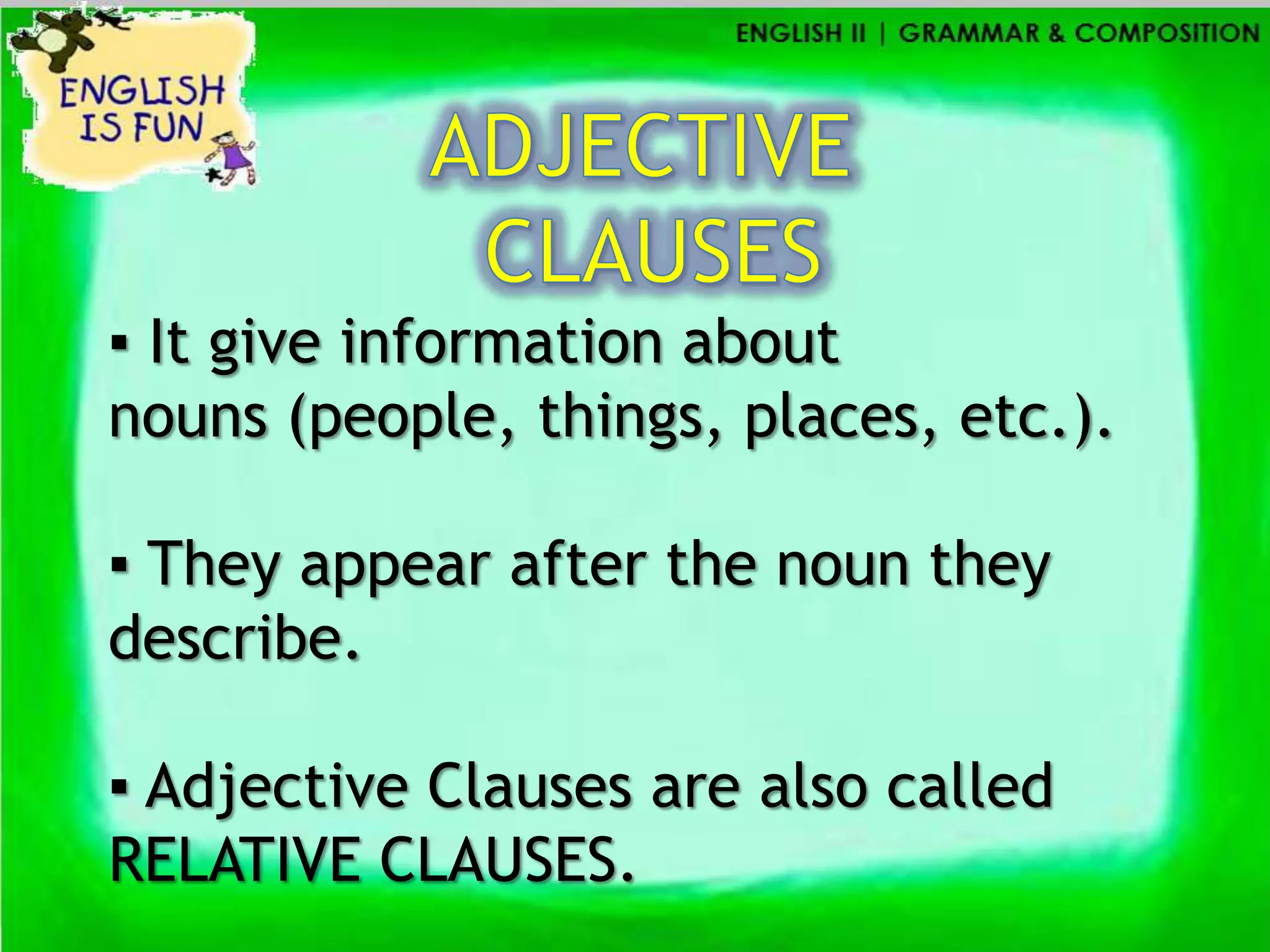
▪ It give information about
nouns (people, things, places, etc.).

▪ They appear after the noun they
describe.

▪ Adjective Clauses are also called
RELATIVE CLAUSES.
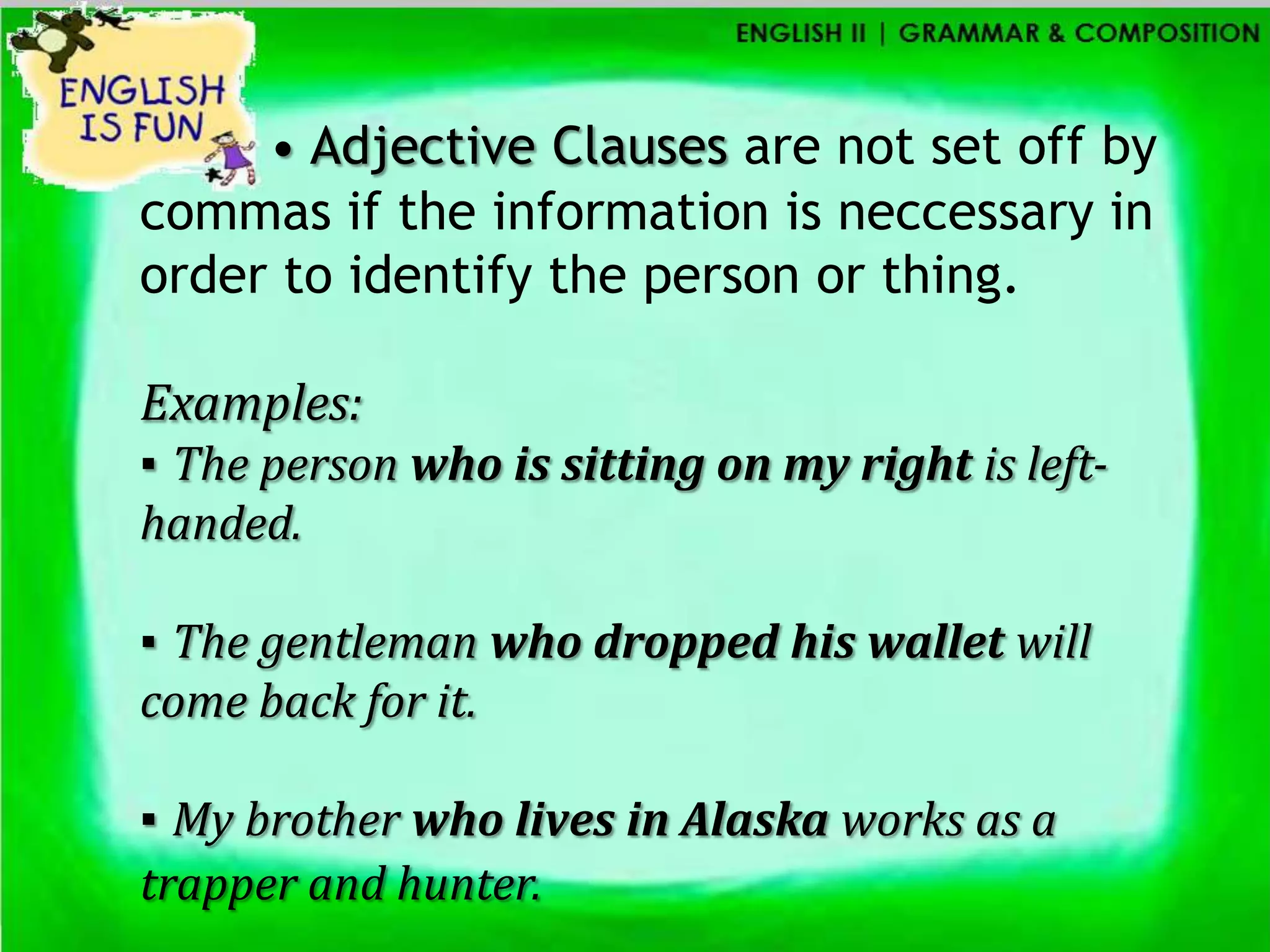
• Adjective Clauses are not set off by
commas if the information is neccessary in
order to identify the person or thing.

Examples:
▪ The person who is sitting on my right is left-
handed.

▪ The gentleman who dropped his wallet will
come back for it.

▪ My brother who lives in Alaska works as a
trapper and hunter.
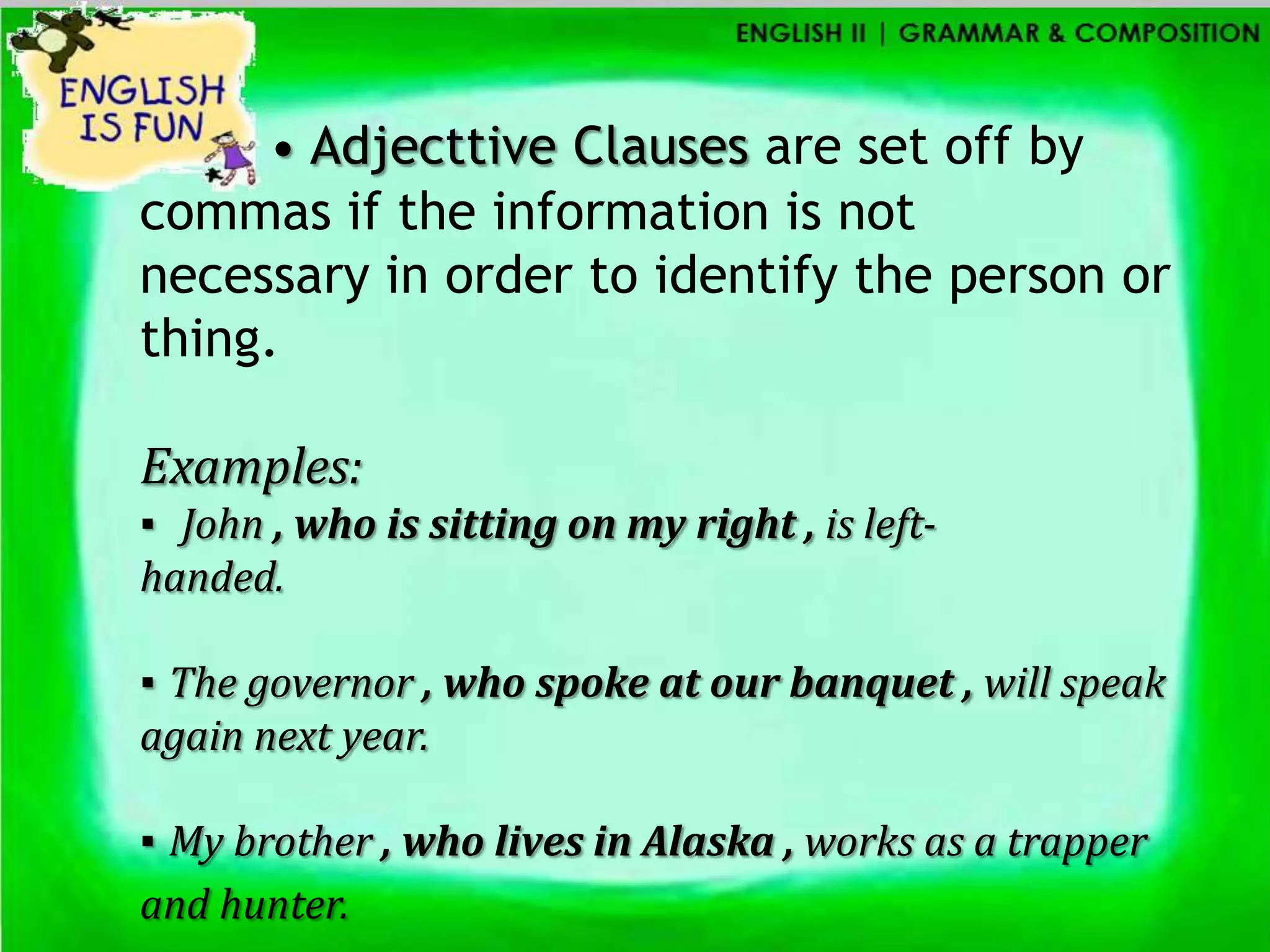
• Adjecttive Clauses are set off by
commas if the information is not
necessary in order to identify the person or
thing.

Examples:
▪ John , who is sitting on my right , is left-
handed.

▪ The governor , who spoke at our banquet , will speak
again next year.

▪ My brother , who lives in Alaska , works as a trapper
and hunter.
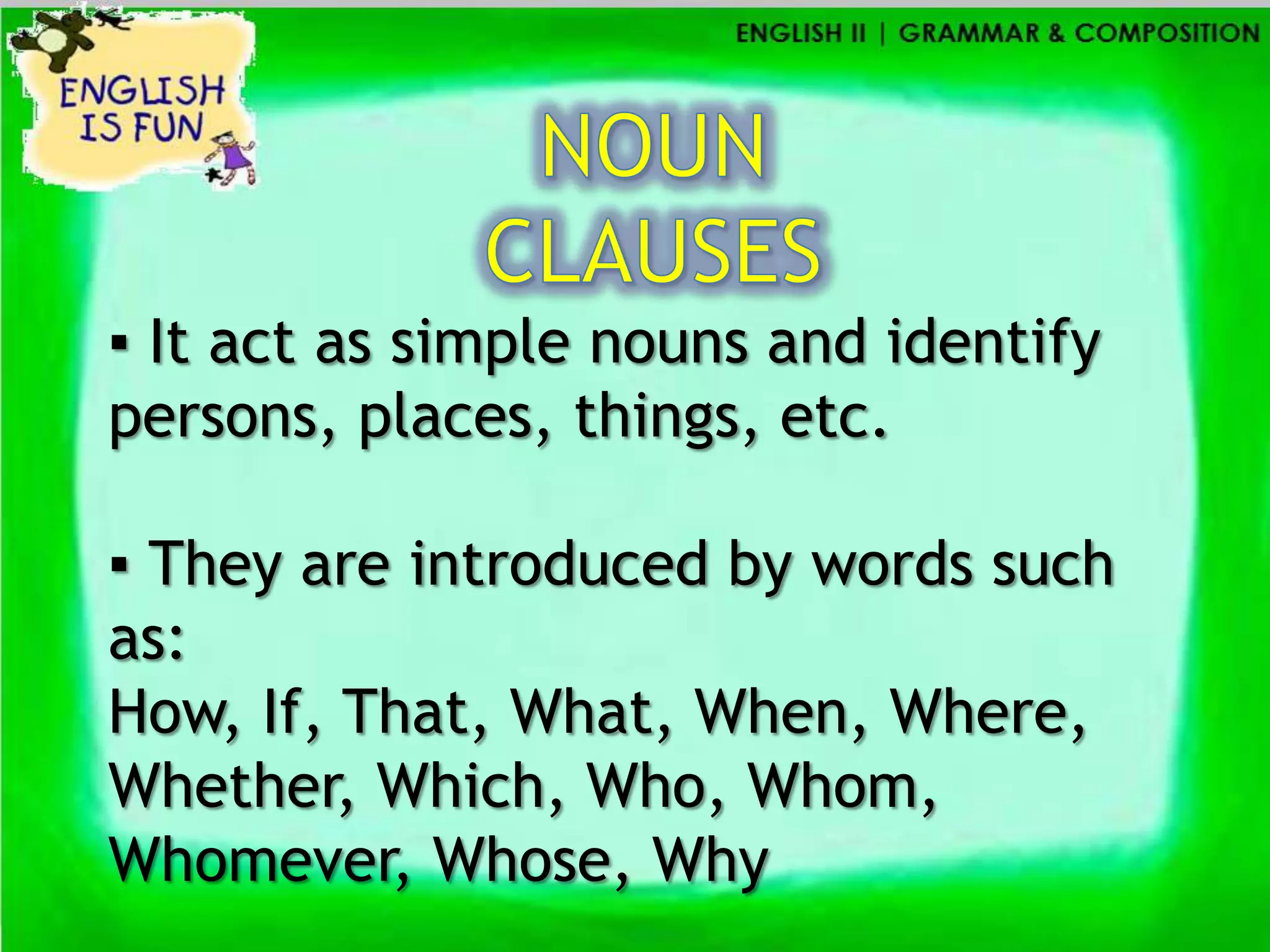
▪ It act as simple nouns and identify
persons, places, things, etc.

▪ They are introduced by words such
as:
How, If, That, What, When, Where,
Whether, Which, Who, Whom,
Whomever, Whose, Why
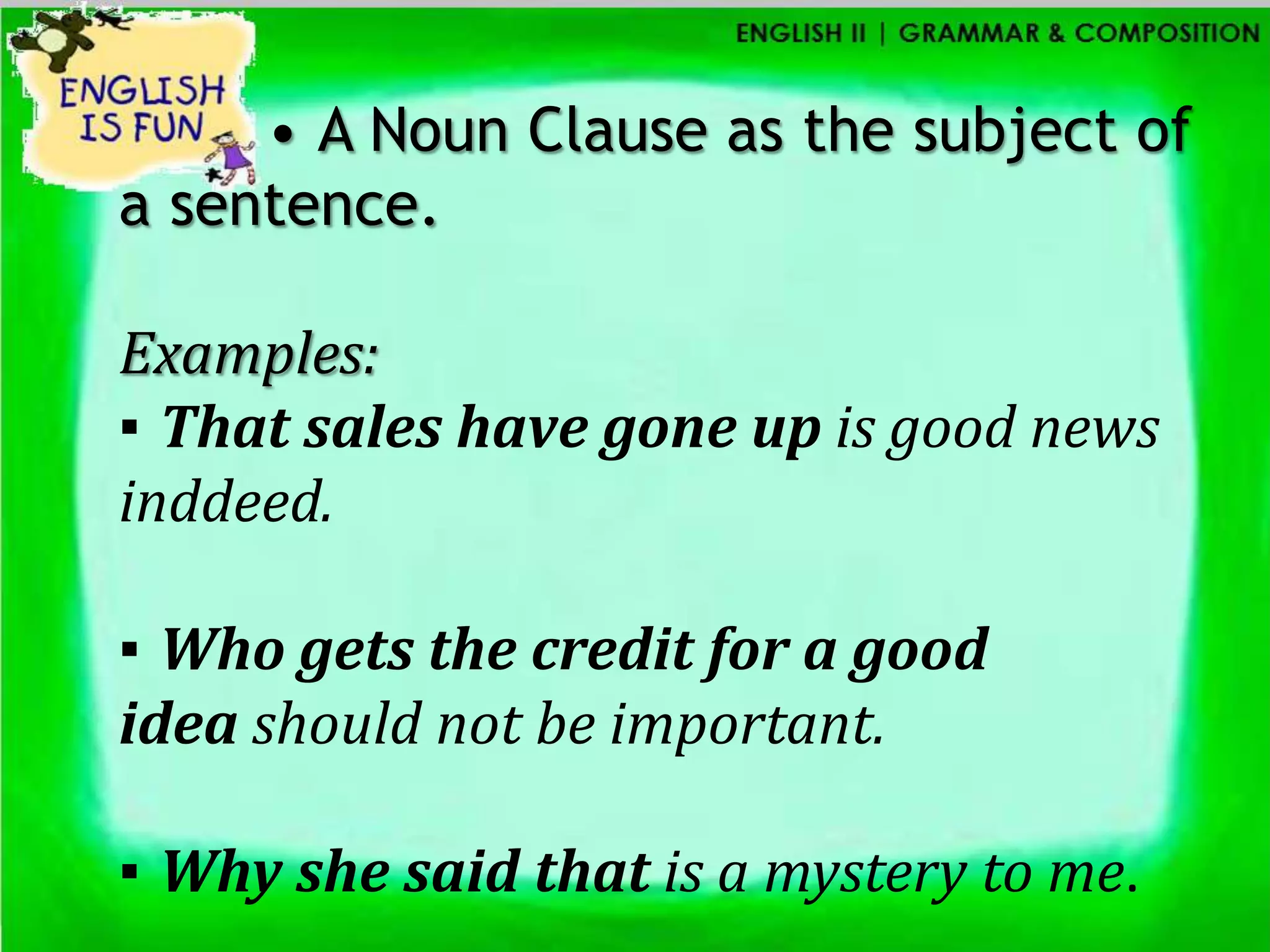
• A Noun Clause as the subject of
a sentence.

Examples:
▪ That sales have gone up is good news
inddeed.

▪ Who gets the credit for a good
idea should not be important.

▪ Why she said that is a mystery to me.
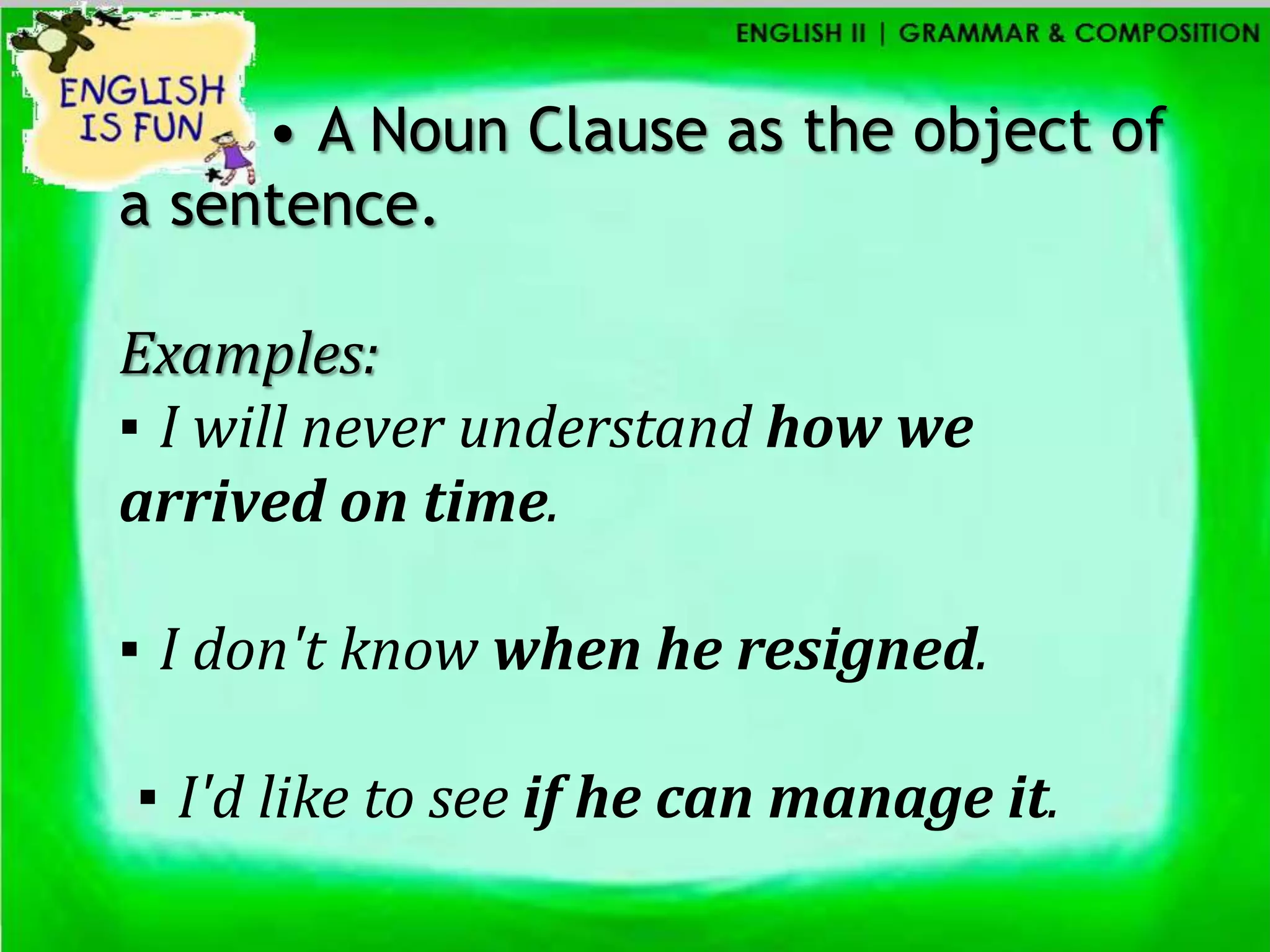
• A Noun Clause as the object of
a sentence.

Examples:
▪ I will never understand how we
arrived on time.

▪ I don't know when he resigned.

▪ I'd like to see if he can manage it.
QUIZ :))

Clause

  • 1.
  • 4.
    • CLAUSE isa string of words that contains a subject and a verb. • In grammar, a clause is the smallest grammatical unit that can express a complete proposition.
  • 5.
    What are the2 distinctions of CLAUSES?
  • 6.
    INDEPENDENT CLAUSES ▪ An independent clause is a group of words that contains a subject and verb and expresses a complete thought. An independent clause is a sentence. ▪ It is a simple sentence that can stand alone.
  • 7.
    INDEPENDENT CLAUSE MARKERS also consequently furthermore however moreover nevertheless therefore
  • 8.
    Examples of SimpleSentences (Independent Clauses): ▪ Mr. Smith arrived at the airport early this morning. ▪ We must find a new strateghy. ▪ I play basketball.
  • 9.
    Examples of CompoundSentences (Two Independent Clauses): ▪ Mr. Smith arrived early this morning, but I didn’t meet him. ▪ We must find a new strategy, or we will lose our advantage. ▪ I play basketball, George plays baseball, and Fred plays tennis.
  • 10.
    DEPENDENT CLAUSES ▪ A dependent clause functions not as a sentence but as a part of speech (noun, adjective, adverb). Therefore, it cannot stand alone as a sentence. It is attached to some part of an independent clause. ▪ It has an incomplete thought and cannot be a sentence. Often a dependent clause is marked by a dependent marker word.
  • 11.
    DEPENDENT CLAUSE MARKERS after if although in order as to as if since because though before unless even if until even though whatever when whenever whether while
  • 12.
    Examples of ComplexSentences (1 Dependent Clause, 1 Independent Clause): ▪ When I got home, I cooked for dinner. ▪ We visited the musuem, before it closed. ▪ When he handed in his homework, he forgot to give the teacher the last page.
  • 13.
    What are the3 classifications of DEPENDENT CLAUSES?
  • 14.
    ▪ it actas adverbs and tell us WHEN something happens. ▪ They usually begin with the words: When, Before, After, As soon as and Until
  • 15.
    What are the2 classifications of TIME CLAUSES?
  • 16.
    • Clauses thatrefer to past time are formmed with the verb in the PAST tense: Examples: ▪ When I finished my lunch, we played golf. ▪ After we played golf, we went to a party. ▪ As soon as we arrived at the party, they put the steaks on.
  • 17.
    • Clauses thatrefer to future time are formed with the verb in the PRESSENT tense: Examples: ▪ As soon as we arrive at the party, they will put the steaks on. ▪ Before we eat our steaks, we will sit around and talk. ▪ Until the party ends, there will be plenty of good wine.
  • 18.
    ▪ It giveinformation about nouns (people, things, places, etc.). ▪ They appear after the noun they describe. ▪ Adjective Clauses are also called RELATIVE CLAUSES.
  • 19.
    • Adjective Clausesare not set off by commas if the information is neccessary in order to identify the person or thing. Examples: ▪ The person who is sitting on my right is left- handed. ▪ The gentleman who dropped his wallet will come back for it. ▪ My brother who lives in Alaska works as a trapper and hunter.
  • 20.
    • Adjecttive Clausesare set off by commas if the information is not necessary in order to identify the person or thing. Examples: ▪ John , who is sitting on my right , is left- handed. ▪ The governor , who spoke at our banquet , will speak again next year. ▪ My brother , who lives in Alaska , works as a trapper and hunter.
  • 21.
    ▪ It actas simple nouns and identify persons, places, things, etc. ▪ They are introduced by words such as: How, If, That, What, When, Where, Whether, Which, Who, Whom, Whomever, Whose, Why
  • 22.
    • A NounClause as the subject of a sentence. Examples: ▪ That sales have gone up is good news inddeed. ▪ Who gets the credit for a good idea should not be important. ▪ Why she said that is a mystery to me.
  • 23.
    • A NounClause as the object of a sentence. Examples: ▪ I will never understand how we arrived on time. ▪ I don't know when he resigned. ▪ I'd like to see if he can manage it.
  • 24.