Module 3 
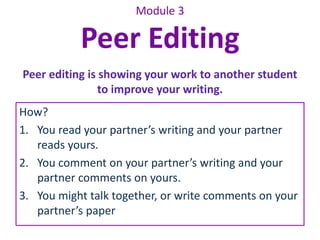
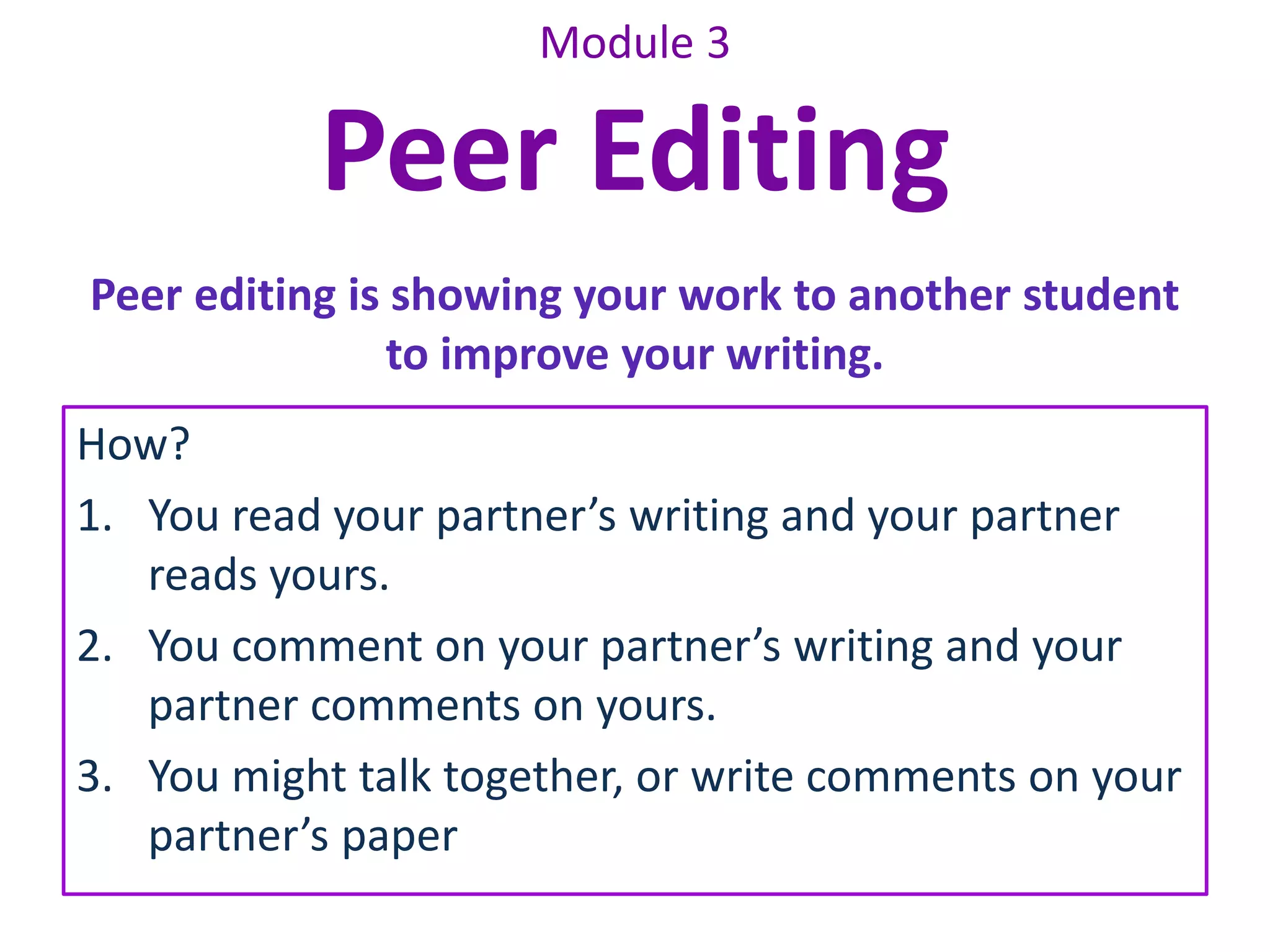
Peer Editing 
Peer editing is showing your work to another student 
to improve your writing. 
How? 
1. You read your partner’s writing and your partner 
reads yours. 
2. You comment on your partner’s writing and your 
partner comments on yours. 
3. You might talk together, or write comments on your 
partner’s paper
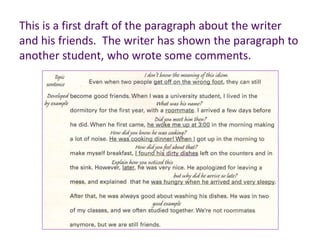
This is a first draft of the paragraph about the writer 
and his friends. The writer has shown the paragraph to 
another student, who wrote some comments.
Answer these questions based on the previous 
example of peer edition 
• Why do you think the 
peer editor sometimes 
wrote questions instead 
of statements? For 
example, why did she 
write “What was his 
name?” instead of “Tell 
me his name”? 
• Why do you think thee 
peer editor marked the 
topic sentence and the 
concluding sentence?
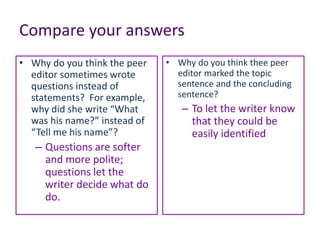
Compare your answers 
• Why do you think the peer 
editor sometimes wrote 
questions instead of 
statements? For example, 
why did she write “What 
was his name?” instead of 
“Tell me his name”? 
– Questions are softer 
and more polite; 
questions let the 
writer decide what do 
do. 
• Why do you think thee peer 
editor marked the topic 
sentence and the concluding 
sentence? 
– To let the writer know 
that they could be 
easily identified
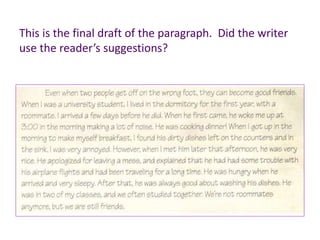
This is the final draft of the paragraph. Did the writer 
use the reader’s suggestions?
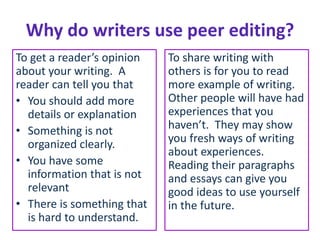
Why do writers use peer editing? 
To get a reader’s opinion 
about your writing. A 
reader can tell you that 
• You should add more 
details or explanation 
• Something is not 
organized clearly. 
• You have some 
information that is not 
relevant 
• There is something that 
is hard to understand. 
To share writing with 
others is for you to read 
more example of writing. 
Other people will have had 
experiences that you 
haven’t. They may show 
you fresh ways of writing 
about experiences. 
Reading their paragraphs 
and essays can give you 
good ideas to use yourself 
in the future.
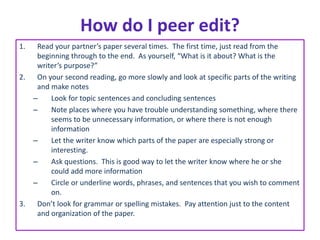
How do I peer edit? 
1. Read your partner’s paper several times. The first time, just read from the 
beginning through to the end. As yourself, “What is it about? What is the 
writer’s purpose?” 
2. On your second reading, go more slowly and look at specific parts of the writing 
and make notes 
– Look for topic sentences and concluding sentences 
– Note places where you have trouble understanding something, where there 
seems to be unnecessary information, or where there is not enough 
information 
– Let the writer know which parts of the paper are especially strong or 
interesting. 
– Ask questions. This is good way to let the writer know where he or she 
could add more information 
– Circle or underline words, phrases, and sentences that you wish to comment 
on. 
3. Don’t look for grammar or spelling mistakes. Pay attention just to the content 
and organization of the paper.

E3 m3.4 Peer editing

  • 1.
    Module 3 PeerEditing Peer editing is showing your work to another student to improve your writing. How? 1. You read your partner’s writing and your partner reads yours. 2. You comment on your partner’s writing and your partner comments on yours. 3. You might talk together, or write comments on your partner’s paper
  • 2.
    This is afirst draft of the paragraph about the writer and his friends. The writer has shown the paragraph to another student, who wrote some comments.
  • 3.
    Answer these questionsbased on the previous example of peer edition • Why do you think the peer editor sometimes wrote questions instead of statements? For example, why did she write “What was his name?” instead of “Tell me his name”? • Why do you think thee peer editor marked the topic sentence and the concluding sentence?
  • 4.
    Compare your answers • Why do you think the peer editor sometimes wrote questions instead of statements? For example, why did she write “What was his name?” instead of “Tell me his name”? – Questions are softer and more polite; questions let the writer decide what do do. • Why do you think thee peer editor marked the topic sentence and the concluding sentence? – To let the writer know that they could be easily identified
  • 5.
    This is thefinal draft of the paragraph. Did the writer use the reader’s suggestions?
  • 6.
    Why do writersuse peer editing? To get a reader’s opinion about your writing. A reader can tell you that • You should add more details or explanation • Something is not organized clearly. • You have some information that is not relevant • There is something that is hard to understand. To share writing with others is for you to read more example of writing. Other people will have had experiences that you haven’t. They may show you fresh ways of writing about experiences. Reading their paragraphs and essays can give you good ideas to use yourself in the future.
  • 7.
    How do Ipeer edit? 1. Read your partner’s paper several times. The first time, just read from the beginning through to the end. As yourself, “What is it about? What is the writer’s purpose?” 2. On your second reading, go more slowly and look at specific parts of the writing and make notes – Look for topic sentences and concluding sentences – Note places where you have trouble understanding something, where there seems to be unnecessary information, or where there is not enough information – Let the writer know which parts of the paper are especially strong or interesting. – Ask questions. This is good way to let the writer know where he or she could add more information – Circle or underline words, phrases, and sentences that you wish to comment on. 3. Don’t look for grammar or spelling mistakes. Pay attention just to the content and organization of the paper.