Mixed-Methods
Designs
By Mareta Pratiwi
SUNY Buffalo State
Outline
Definition
Reasons
Types
Definition
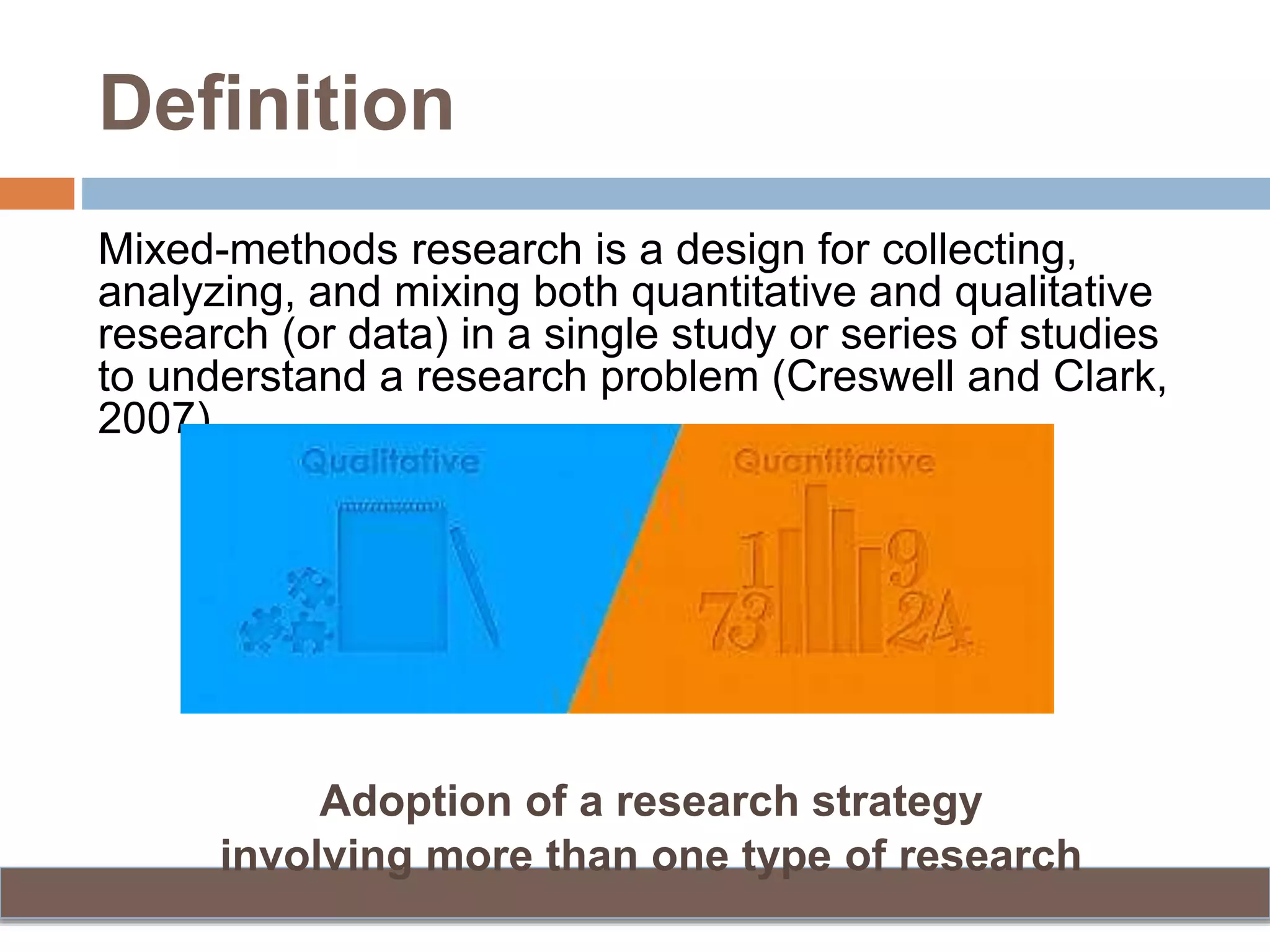
Mixed-methods research is a design for collecting,
analyzing, and mixing both quantitative and qualitative
research (or data) in a single study or series of studies
to understand a research problem (Creswell and Clark,
2007).
Adoption of a research strategy
involving more than one type of research
Why do Mixed-Methods?
According to Johnson and Turner (2003)
“Methods should be mixed in a way that has
complementary strengths and non-
overlapping weakness. It involves the
recognition that all methods have their
limitations as well as their strength.”
Leedy (2013) mentioned that “some research
problem practically scream for both quantitative
and qualitative data. These problems calls for
mixed-methods research.
Why do Mixed-Methods?
Based on Bryman (2006), Greene, Varacelli, and
Graham (1989) several good reasons for using
mixed-methods designs:
1. Completeness
2. Complementarity
3. Hypothesis generation & testing
4. Development of appropriate research tools and
strategies
5. Resolution of puzzling findings
6. Triangulation.
Common Mixed-Methods
Designs
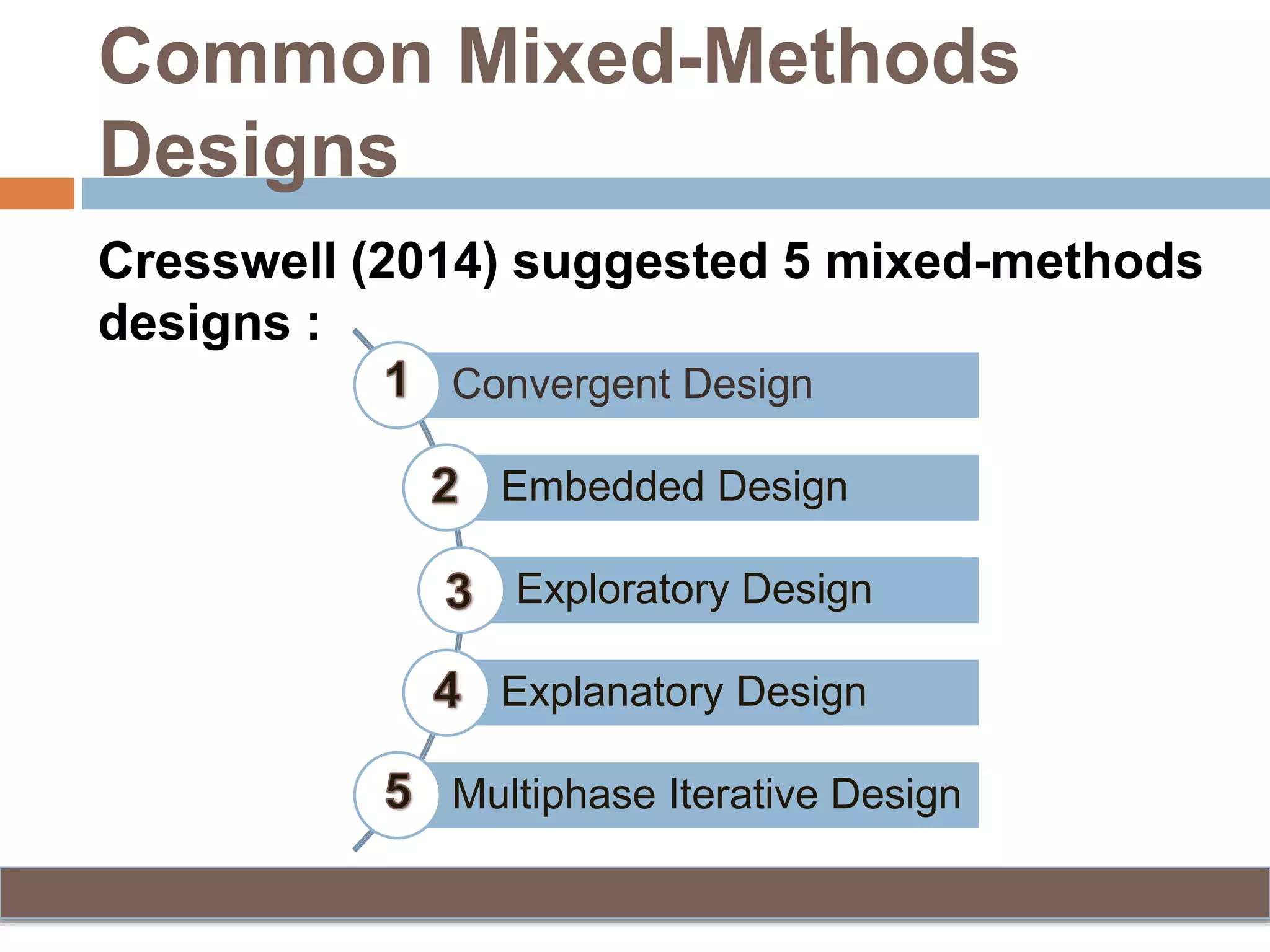
Cresswell (2014) suggested 5 mixed-methods
designs :
Convergent Design
Embedded Design
Exploratory Design
Explanatory Design
Multiphase Iterative Design
Convergent Design
 The Qualitative and Quantitative Data
Collection is conducted in parallel (at the same
time).
 With purpose of solving the same research
problem and lead to similar conclusion.
 The researcher gives equal weight to the
Qualitative and Quantitative Data.
Embedded Design
 Conducted at the same time and with on
purpose of solving the same research
problem.
 One general approach dominates (usually the
quantitative)
 The non-dominated approach serves
supplementary role.
Exploratory Design
 Comprises two phases
 Qualitative method for the first phase and the
quantitative will be conducted after. The
qualitative data taken from observation,
interview, or both.
 Qualitative provide the basis so that the the
second phase will be more systematic.
Explanatory Design
 Comprises two phases
 The quantitative method is applied in first
phase
 The quantitative data collected from an
experiment, ex post facto study, or survey
 This can help the researcher give more
substance and meaning to the numbers.
Multiphase Iterative Design
 Comprises three or more phases
 Moving back and forth among quantitative and
qualitative methods.
 Each of new body of data notifies the
conceptualization and application of
subsequent phases.
References
Creswell, J. W., & Clark, V. L. P. (2007). Designing and conducting
mixed methods research.
Johnson, R. B., & Turner, L. A. (2003). Data collection strategies in
mixed methods research. In A. Tashakkori & C. Teddlie (Eds.),
Handbook of mixed methods in social and behavioral research
(pp. 297-319). Thousand Oaks, CA: Sage.
Greene, J. C., Caracelli, V. J., & Graham, W. F. (1989). Toward a
conceptual framework for mixed-method evaluation
designs. Educational Evaluation and Policy Analysis, 11, 255-
274.
Leedy, P. D., & Ormrod, J. E. (2016). Practical research: Planning and
design. New York, NY: Pearson Education.
Mixed Methods Designs by mareta pratiwi

Mixed Methods Designs by mareta pratiwi

  • 1.
  • 2.
  • 3.
    Definition Mixed-methods research isa design for collecting, analyzing, and mixing both quantitative and qualitative research (or data) in a single study or series of studies to understand a research problem (Creswell and Clark, 2007). Adoption of a research strategy involving more than one type of research
  • 4.
    Why do Mixed-Methods? Accordingto Johnson and Turner (2003) “Methods should be mixed in a way that has complementary strengths and non- overlapping weakness. It involves the recognition that all methods have their limitations as well as their strength.” Leedy (2013) mentioned that “some research problem practically scream for both quantitative and qualitative data. These problems calls for mixed-methods research.
  • 5.
    Why do Mixed-Methods? Basedon Bryman (2006), Greene, Varacelli, and Graham (1989) several good reasons for using mixed-methods designs: 1. Completeness 2. Complementarity 3. Hypothesis generation & testing 4. Development of appropriate research tools and strategies 5. Resolution of puzzling findings 6. Triangulation.
  • 6.
    Common Mixed-Methods Designs Cresswell (2014)suggested 5 mixed-methods designs : Convergent Design Embedded Design Exploratory Design Explanatory Design Multiphase Iterative Design
  • 7.
    Convergent Design  TheQualitative and Quantitative Data Collection is conducted in parallel (at the same time).  With purpose of solving the same research problem and lead to similar conclusion.  The researcher gives equal weight to the Qualitative and Quantitative Data.
  • 8.
    Embedded Design  Conductedat the same time and with on purpose of solving the same research problem.  One general approach dominates (usually the quantitative)  The non-dominated approach serves supplementary role.
  • 9.
    Exploratory Design  Comprisestwo phases  Qualitative method for the first phase and the quantitative will be conducted after. The qualitative data taken from observation, interview, or both.  Qualitative provide the basis so that the the second phase will be more systematic.
  • 10.
    Explanatory Design  Comprisestwo phases  The quantitative method is applied in first phase  The quantitative data collected from an experiment, ex post facto study, or survey  This can help the researcher give more substance and meaning to the numbers.
  • 11.
    Multiphase Iterative Design Comprises three or more phases  Moving back and forth among quantitative and qualitative methods.  Each of new body of data notifies the conceptualization and application of subsequent phases.
  • 12.
    References Creswell, J. W.,& Clark, V. L. P. (2007). Designing and conducting mixed methods research. Johnson, R. B., & Turner, L. A. (2003). Data collection strategies in mixed methods research. In A. Tashakkori & C. Teddlie (Eds.), Handbook of mixed methods in social and behavioral research (pp. 297-319). Thousand Oaks, CA: Sage. Greene, J. C., Caracelli, V. J., & Graham, W. F. (1989). Toward a conceptual framework for mixed-method evaluation designs. Educational Evaluation and Policy Analysis, 11, 255- 274. Leedy, P. D., & Ormrod, J. E. (2016). Practical research: Planning and design. New York, NY: Pearson Education.