


Grounded Theory
Presented By:
Gautam Kumar
Pre-Ph.D. Scholar
R.I.E., Bhubaneswar
What does it mean?
Grounded Theory
 Grounded Theory is a Qualitative research method.
 ‘Grounded theory is a general methodology for developing theory that is
grounded in data, systematically gathered and analysed’. (Strauss and
Corbin,1994).
 Grounded theory is a methodology that researchers use to develop theory
inductively from data. In grounded theory, do not begin with a theory and
then attempt to “prove” or “disprove” it. Instead, it begins with an area of
study and allow what is relevant within that area to emerge from data.
 Data Analysis is systematic and begins as soon as data is available.
 Grounded theory methods emerged from two sociologists, Barney G. Glaser
and Anselm L. Strauss, and their 1960s research on dying patients in hospitals.
 After their original publication (The Discovery of Grounded Theory) in 1967,
Glaser and Strauss have disagreed on how to conduct grounded theory,
resulting in a split in the theory between Straussian and Glaserian paradigms.
 In 2006 Charmaz came up with her own approach of Grounded Theory called
“Constructivist” method
Development of Grounded Theory
 When we need a broad theory or explanation of a process
 Especially helpful when current theories about a phenomenon are either inadequate
or nonexistent (Creswell, 2008)
 For instance, in the study of certain educational populations (e.g., children with
attention disorders), existing theories may have little applicability to special
populations.
 When we wish to study some process, such as how students develop as writers
(Neff, 1998)
 Provides a better explanation than a theory borrowed “off the shelf,” because it fits
the situation.
 Actually works in practice, is sensitive to individuals in a setting, and may represent
all of the complexities actually found in the process.
When Do We Use Grounded Theory?
 Semi-Structured, Formal Interview and In-formal Interview.
 Notes from – Internal Meeting, Phone Conversation, Social Function,
Training Sessions, etc.
 Documents – Relevant administrative materials, Client presentation books,
feedback received, etc.
Data Collection in Grounded Theory
 Literature review should not be done until you have finished
collecting all data / evidences and have drawn conclusion.
=> Anselm Strauss
Role of Literature Review in Grounded Theory?
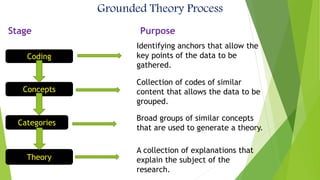
Grounded Theory Process
Coding
Categories
Concepts
Theory
Identifying anchors that allow the
key points of the data to be
gathered.
Collection of codes of similar
content that allows the data to be
grouped.
Broad groups of similar concepts
that are used to generate a theory.
A collection of explanations that
explain the subject of the
research.
Stage Purpose
Types of Grounded Theory
 The systematic Design.
• Strauss and Corbin (1998)
• Corbin and Strauss (2008)
 The Emerging Design.
• Glaser (1992)
 The Constructivist Design.
• Charmaz (1990, 2000, 2006)
The Systematic Design
Strauss and Corbin (1998), Corbin and Strauss (2008)
 Grounded theory is an approach for looking systematically at qualitative
data aiming at the generation of theory. Important concepts of grounded
theory are categories, codes and coding.
 A Systematic Grounded Theory emphasizes the use of data analysis steps
of open, axial and selective coding, and the development of a logic
paradigm or a visual picture of the theory generated.
Open Coding
 From RAW data we form initial categories of information about the
phenomenon being studied.
 Researcher may make several categories as per need from data.
 In open coding the grounded theorist forms initial categories of
information about the phenomenon being studied by segmenting
information.
 Open coding may be applied in various degree of detail. A text can be
coded line by line, sentence by sentence or paragraph by paragraph or code
can be linked to whole text.
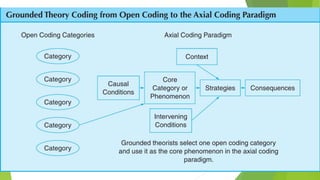
Axial Coding
 More formal coding for identifying and classifying links between
substantive categories
 Here relation between categories are elaborated. It serves to clarify the
relation between a phenomenon, its causes and consequences, its context
and the strategies of those who are involved.
 Strauss and Corbin (1998) suggested Coding Paradigm model for this
Selective Coding
 In selective coding the grounded theorist writes a theory from the inter-
relationship of the categories in the axial coding model. At a basic level,
this theory provides an abstract explanation for the process being studied
in the research.
 This is the process of integrating and refining the theory.
The Emerging Design
Glaser (1992)
The more flexible, less prescribed form of grounded theory research as
advanced by Glaser (1992) consists of several major ideas:
 Grounded theory exists at the most abstract conceptual level rather
than the least abstract level as found in visual data presentation such
as coding paradigm.
 A theory is grounded in the data and it is not forced into categories.
 A good grounded theory must meet four central criteria: fit, work,
relevance, and modifiability.
Theoretical Coding Design
 First step is same as ‘open Coding’.
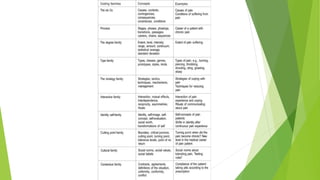
 But the he advances in a different way. Glaser (1978) has suggested a list of
basic codes, which are grouped as coding families.
 Last step is also similar to ‘selective coding’.
The Constructivist Design
Charmaz (1990, 2000, 2006)
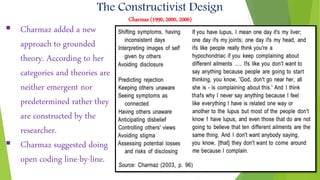
 Charmaz added a new
approach to grounded
theory. According to her
categories and theories are
neither emergent nor
predetermined rather they
are constructed by the
researcher.
 Charmaz suggested doing
open coding line-by-line.
Reliability & Validity
There are four main indicators of trustworthiness that a grounded theory
researcher should establish
 Credibility – Triangulation (for internal validity)
 Transferability – applicable to other area with similar setting (external
validity)
 Dependability
 Conformability – without any bias from the researcher (objectivity)
Characteristics of Grounded Theory
 Process Approach.
 Theoretical Sampling.
 Constant comparative Data Analysis.
 A Core Category.
 Theory Generation.
 Memos.
 In Diagnostic Testing.
 Assessment.
 Understanding more and more about how people learn is empowering for
the profession of teaching, and will enhance your own development.
=> Kervin L., Vialle W., Herrington J. & Okley T. (2006)
Application of Grounded Theory in Education
Grounded Theory

Grounded Theory

  • 1.
    Grounded Theory Presented By: GautamKumar Pre-Ph.D. Scholar R.I.E., Bhubaneswar
  • 2.
    What does itmean? Grounded Theory  Grounded Theory is a Qualitative research method.  ‘Grounded theory is a general methodology for developing theory that is grounded in data, systematically gathered and analysed’. (Strauss and Corbin,1994).  Grounded theory is a methodology that researchers use to develop theory inductively from data. In grounded theory, do not begin with a theory and then attempt to “prove” or “disprove” it. Instead, it begins with an area of study and allow what is relevant within that area to emerge from data.  Data Analysis is systematic and begins as soon as data is available.
  • 3.
     Grounded theorymethods emerged from two sociologists, Barney G. Glaser and Anselm L. Strauss, and their 1960s research on dying patients in hospitals.  After their original publication (The Discovery of Grounded Theory) in 1967, Glaser and Strauss have disagreed on how to conduct grounded theory, resulting in a split in the theory between Straussian and Glaserian paradigms.  In 2006 Charmaz came up with her own approach of Grounded Theory called “Constructivist” method Development of Grounded Theory
  • 4.
     When weneed a broad theory or explanation of a process  Especially helpful when current theories about a phenomenon are either inadequate or nonexistent (Creswell, 2008)  For instance, in the study of certain educational populations (e.g., children with attention disorders), existing theories may have little applicability to special populations.  When we wish to study some process, such as how students develop as writers (Neff, 1998)  Provides a better explanation than a theory borrowed “off the shelf,” because it fits the situation.  Actually works in practice, is sensitive to individuals in a setting, and may represent all of the complexities actually found in the process. When Do We Use Grounded Theory?
  • 5.
     Semi-Structured, FormalInterview and In-formal Interview.  Notes from – Internal Meeting, Phone Conversation, Social Function, Training Sessions, etc.  Documents – Relevant administrative materials, Client presentation books, feedback received, etc. Data Collection in Grounded Theory
  • 6.
     Literature reviewshould not be done until you have finished collecting all data / evidences and have drawn conclusion. => Anselm Strauss Role of Literature Review in Grounded Theory?
  • 7.
    Grounded Theory Process Coding Categories Concepts Theory Identifyinganchors that allow the key points of the data to be gathered. Collection of codes of similar content that allows the data to be grouped. Broad groups of similar concepts that are used to generate a theory. A collection of explanations that explain the subject of the research. Stage Purpose
  • 8.
    Types of GroundedTheory  The systematic Design. • Strauss and Corbin (1998) • Corbin and Strauss (2008)  The Emerging Design. • Glaser (1992)  The Constructivist Design. • Charmaz (1990, 2000, 2006)
  • 9.
    The Systematic Design Straussand Corbin (1998), Corbin and Strauss (2008)  Grounded theory is an approach for looking systematically at qualitative data aiming at the generation of theory. Important concepts of grounded theory are categories, codes and coding.  A Systematic Grounded Theory emphasizes the use of data analysis steps of open, axial and selective coding, and the development of a logic paradigm or a visual picture of the theory generated.
  • 10.
    Open Coding  FromRAW data we form initial categories of information about the phenomenon being studied.  Researcher may make several categories as per need from data.  In open coding the grounded theorist forms initial categories of information about the phenomenon being studied by segmenting information.  Open coding may be applied in various degree of detail. A text can be coded line by line, sentence by sentence or paragraph by paragraph or code can be linked to whole text.
  • 12.
    Axial Coding  Moreformal coding for identifying and classifying links between substantive categories  Here relation between categories are elaborated. It serves to clarify the relation between a phenomenon, its causes and consequences, its context and the strategies of those who are involved.  Strauss and Corbin (1998) suggested Coding Paradigm model for this
  • 14.
    Selective Coding  Inselective coding the grounded theorist writes a theory from the inter- relationship of the categories in the axial coding model. At a basic level, this theory provides an abstract explanation for the process being studied in the research.  This is the process of integrating and refining the theory.
  • 15.
    The Emerging Design Glaser(1992) The more flexible, less prescribed form of grounded theory research as advanced by Glaser (1992) consists of several major ideas:  Grounded theory exists at the most abstract conceptual level rather than the least abstract level as found in visual data presentation such as coding paradigm.  A theory is grounded in the data and it is not forced into categories.  A good grounded theory must meet four central criteria: fit, work, relevance, and modifiability. Theoretical Coding Design
  • 16.
    Theoretical Coding Design First step is same as ‘open Coding’.  But the he advances in a different way. Glaser (1978) has suggested a list of basic codes, which are grouped as coding families.  Last step is also similar to ‘selective coding’.
  • 18.
    The Constructivist Design Charmaz(1990, 2000, 2006)  Charmaz added a new approach to grounded theory. According to her categories and theories are neither emergent nor predetermined rather they are constructed by the researcher.  Charmaz suggested doing open coding line-by-line.
  • 19.
    Reliability & Validity Thereare four main indicators of trustworthiness that a grounded theory researcher should establish  Credibility – Triangulation (for internal validity)  Transferability – applicable to other area with similar setting (external validity)  Dependability  Conformability – without any bias from the researcher (objectivity)
  • 20.
    Characteristics of GroundedTheory  Process Approach.  Theoretical Sampling.  Constant comparative Data Analysis.  A Core Category.  Theory Generation.  Memos.
  • 21.
     In DiagnosticTesting.  Assessment.  Understanding more and more about how people learn is empowering for the profession of teaching, and will enhance your own development. => Kervin L., Vialle W., Herrington J. & Okley T. (2006) Application of Grounded Theory in Education