MISE EN SCENE 
Done by Eman Shah
HIGH KEY LIGHTING 
 High key lighting in films mainly involves the setting being really light . It is 
an overall lighting design which uses the fill light and backlight to create low 
contrast between brighter and darker areas. It can be used for both daylight and 
night scenes. This type of lighting can be used in many different types of shots 
and for various purposes. There are usually very few shadows in a scene shot 
implementing high key lighting, especially on the principle characters or focus 
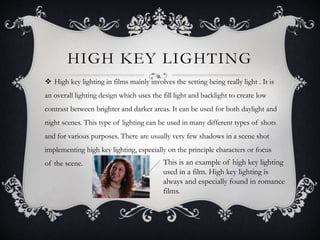
of the scene. This is an example of high key lighting 
used in a film. High key lighting is 
always and especially found in romance 
films.
LOW KEY LIGHTING 
 Low key lighting is a technique used in films and television to create 
mood or set the tone of the scene. Low key lighting are frequently used in 
horror films to create suspense or to control how much of the 
surrounding scene is revealed. This type of lighting employs very little fill 
light, creating contrast between the brightness and darkest parts of a 
scene creating strong shadows that obscure parts of the principals 
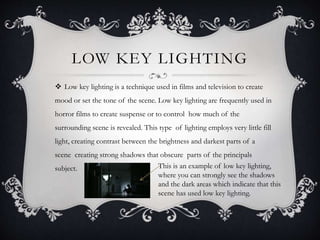
subject. This is an example of low key lighting, 
where you can strongly see the shadows 
and the dark areas which indicate that this 
scene has used low key lighting.
COSTUME 
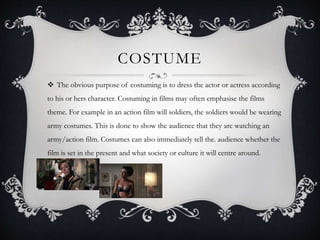
 The obvious purpose of costuming is to dress the actor or actress according 
to his or hers character. Costuming in films may often emphasise the films 
theme. For example in an action film will soldiers, the soldiers would be wearing 
army costumes. This is done to show the audience that they are watching an 
army/action film. Costumes can also immediately tell the. audience whether the 
film is set in the present and what society or culture it will centre around.
SETTING AND PROPS 
 The settings and the location plan are important part in films because it 
informs time and place apart from costume . Setting creates both a sense 
of place and a mood and it may also reflect a character’s emotional state of 
mind. The overall design of a setting can significantly shape how we 
understand the story. In manipulating a shots setting, the director may 
create props. Props may be functional or could become a motif which 
could have another meaning assigned to it. 
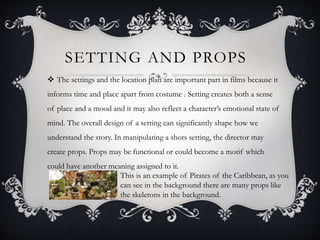
This is an example of Pirates of the Caribbean, as you 
can see in the background there are many props like 
the skeletons in the background.
FACIAL EXPRESSIONS AND 
BODY LANGUAGE 
 Facial expressions provide a clear indicator of how something is feeling, 
usually this can come through a close up. For example if someone is 
smiling broadly, we will assume they are happy but we may get a different 
feeling is the scene is accompanied by scary music. Body language may 
indicate also how a character feels towards another character or it could 
may reflect the state of their relationship. 
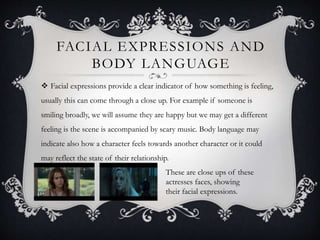
These are close ups of these 
actresses faces, showing 
their facial expressions.
COLOUR 
 Colour carries certain connotations which may reflect meaning to a 
scene for example black which is a dark colour and could reflect danger. 
Colour can also give a scene a particular look, feel or mood and colour can 
also be used for dramatic effect. Colour is one of the most important 
things in scenes because it can make it look completely different. The 
colour can be symbolic or suggestive. The colour differences can be used to 
suggest brightness or many different things.
EXPRESSIVE SKILLS AND 
REALISM 
 Styles in films refer to a manner in which the scene is performed. 
At the heart of a film actors have to make sure that their acting is 
believable. If performing in the style of realism, then you’re the actors 
level of acting must be at a certain point to begin with. It is slightly 
exaggerated because if you spoke at exactly the same volume as you 
would in a particular situation in everyday life, then the audience may 
not hear you.

Mise en scene

  • 1.
    MISE EN SCENE Done by Eman Shah
  • 2.
    HIGH KEY LIGHTING  High key lighting in films mainly involves the setting being really light . It is an overall lighting design which uses the fill light and backlight to create low contrast between brighter and darker areas. It can be used for both daylight and night scenes. This type of lighting can be used in many different types of shots and for various purposes. There are usually very few shadows in a scene shot implementing high key lighting, especially on the principle characters or focus of the scene. This is an example of high key lighting used in a film. High key lighting is always and especially found in romance films.
  • 3.
    LOW KEY LIGHTING  Low key lighting is a technique used in films and television to create mood or set the tone of the scene. Low key lighting are frequently used in horror films to create suspense or to control how much of the surrounding scene is revealed. This type of lighting employs very little fill light, creating contrast between the brightness and darkest parts of a scene creating strong shadows that obscure parts of the principals subject. This is an example of low key lighting, where you can strongly see the shadows and the dark areas which indicate that this scene has used low key lighting.
  • 4.
    COSTUME  Theobvious purpose of costuming is to dress the actor or actress according to his or hers character. Costuming in films may often emphasise the films theme. For example in an action film will soldiers, the soldiers would be wearing army costumes. This is done to show the audience that they are watching an army/action film. Costumes can also immediately tell the. audience whether the film is set in the present and what society or culture it will centre around.
  • 5.
    SETTING AND PROPS  The settings and the location plan are important part in films because it informs time and place apart from costume . Setting creates both a sense of place and a mood and it may also reflect a character’s emotional state of mind. The overall design of a setting can significantly shape how we understand the story. In manipulating a shots setting, the director may create props. Props may be functional or could become a motif which could have another meaning assigned to it. This is an example of Pirates of the Caribbean, as you can see in the background there are many props like the skeletons in the background.
  • 6.
    FACIAL EXPRESSIONS AND BODY LANGUAGE  Facial expressions provide a clear indicator of how something is feeling, usually this can come through a close up. For example if someone is smiling broadly, we will assume they are happy but we may get a different feeling is the scene is accompanied by scary music. Body language may indicate also how a character feels towards another character or it could may reflect the state of their relationship. These are close ups of these actresses faces, showing their facial expressions.
  • 7.
    COLOUR  Colourcarries certain connotations which may reflect meaning to a scene for example black which is a dark colour and could reflect danger. Colour can also give a scene a particular look, feel or mood and colour can also be used for dramatic effect. Colour is one of the most important things in scenes because it can make it look completely different. The colour can be symbolic or suggestive. The colour differences can be used to suggest brightness or many different things.
  • 8.
    EXPRESSIVE SKILLS AND REALISM  Styles in films refer to a manner in which the scene is performed. At the heart of a film actors have to make sure that their acting is believable. If performing in the style of realism, then you’re the actors level of acting must be at a certain point to begin with. It is slightly exaggerated because if you spoke at exactly the same volume as you would in a particular situation in everyday life, then the audience may not hear you.