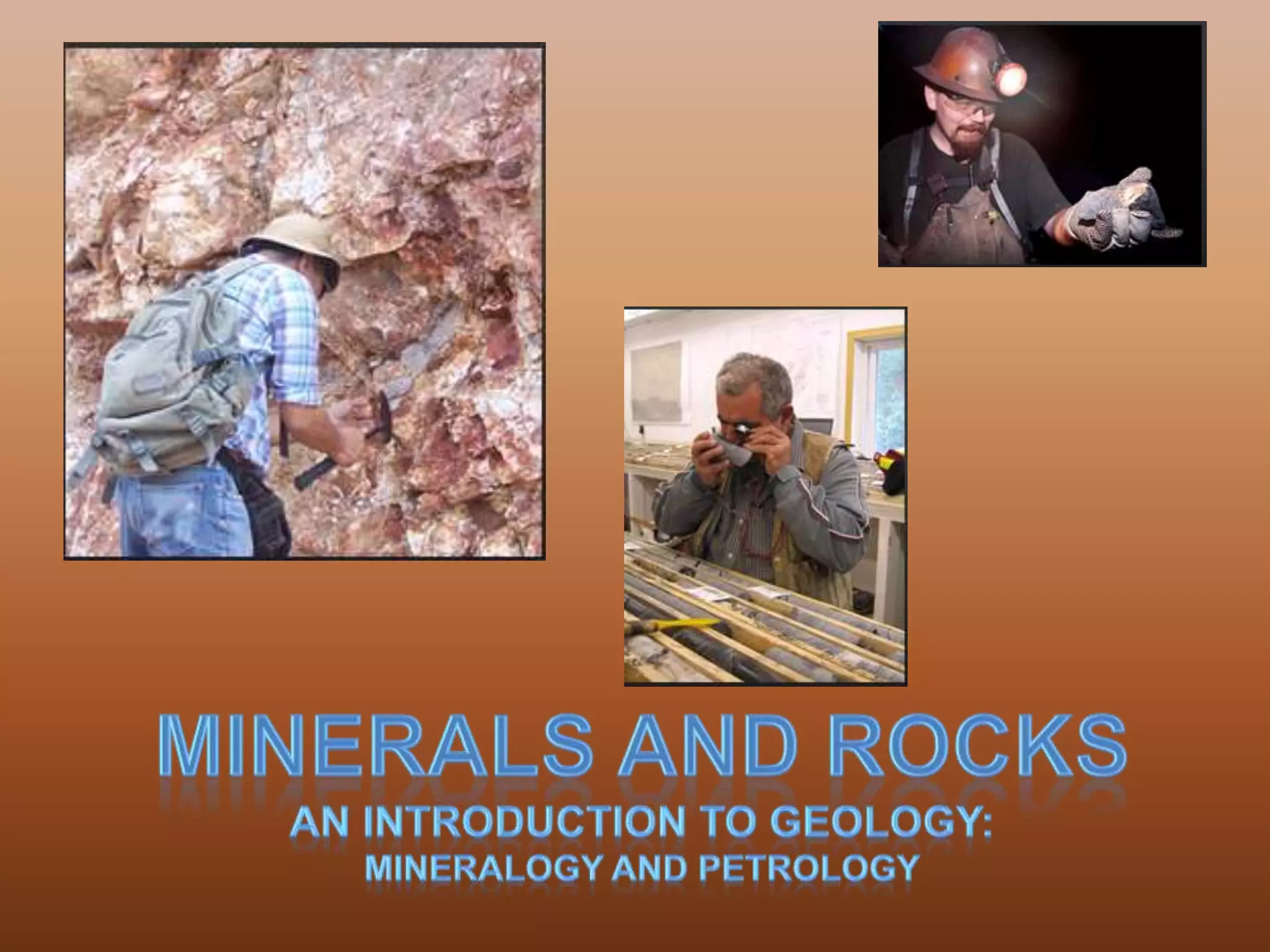
Minerals and RocksAn introduction to Geology:Mineralogy and Petrology
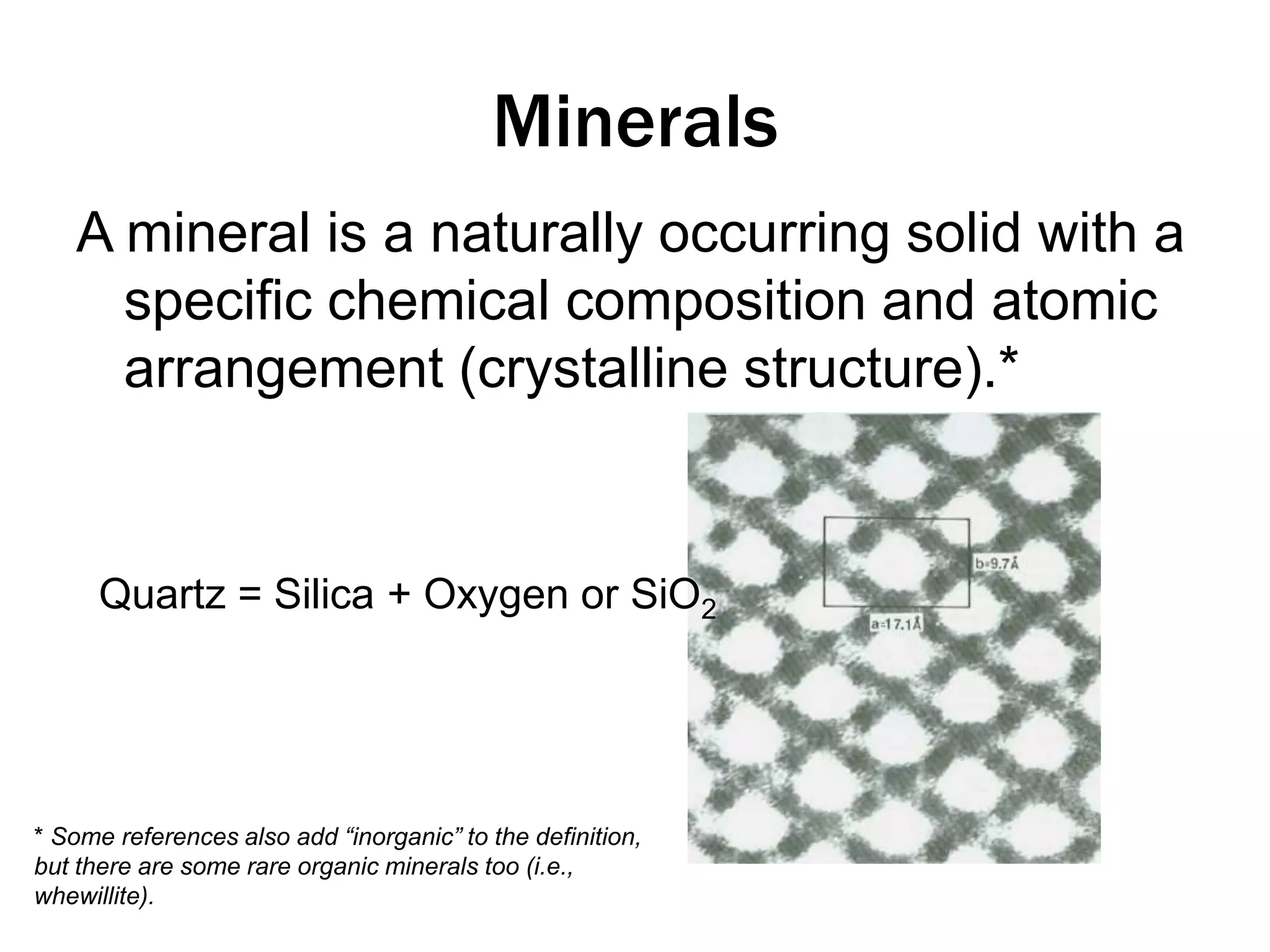
MineralsA mineral is a naturally occurring solid with a specific chemical composition and atomic arrangement (crystalline structure).*Quartz = Silica + Oxygen or SiO2* Some references also add “inorganic” to the definition, but there are some rare organic minerals too (i.e., whewillite).
Methods to Identify MineralsColorStreakLusterFluorescenceChemical CompositionHardnessTalcGypsumCalciteFluoriteApatiteOrthoclaseQuartzTopazCorundumDiamond( Mnemonic Devise - The Geologist Can Find An Ordinary Quartz Tourists Call Diamond)Specific GravityCrystal FormOptical PropertiesCleavageFractureMagnetismElectrical PropertiesMelting PointGeologic Setting
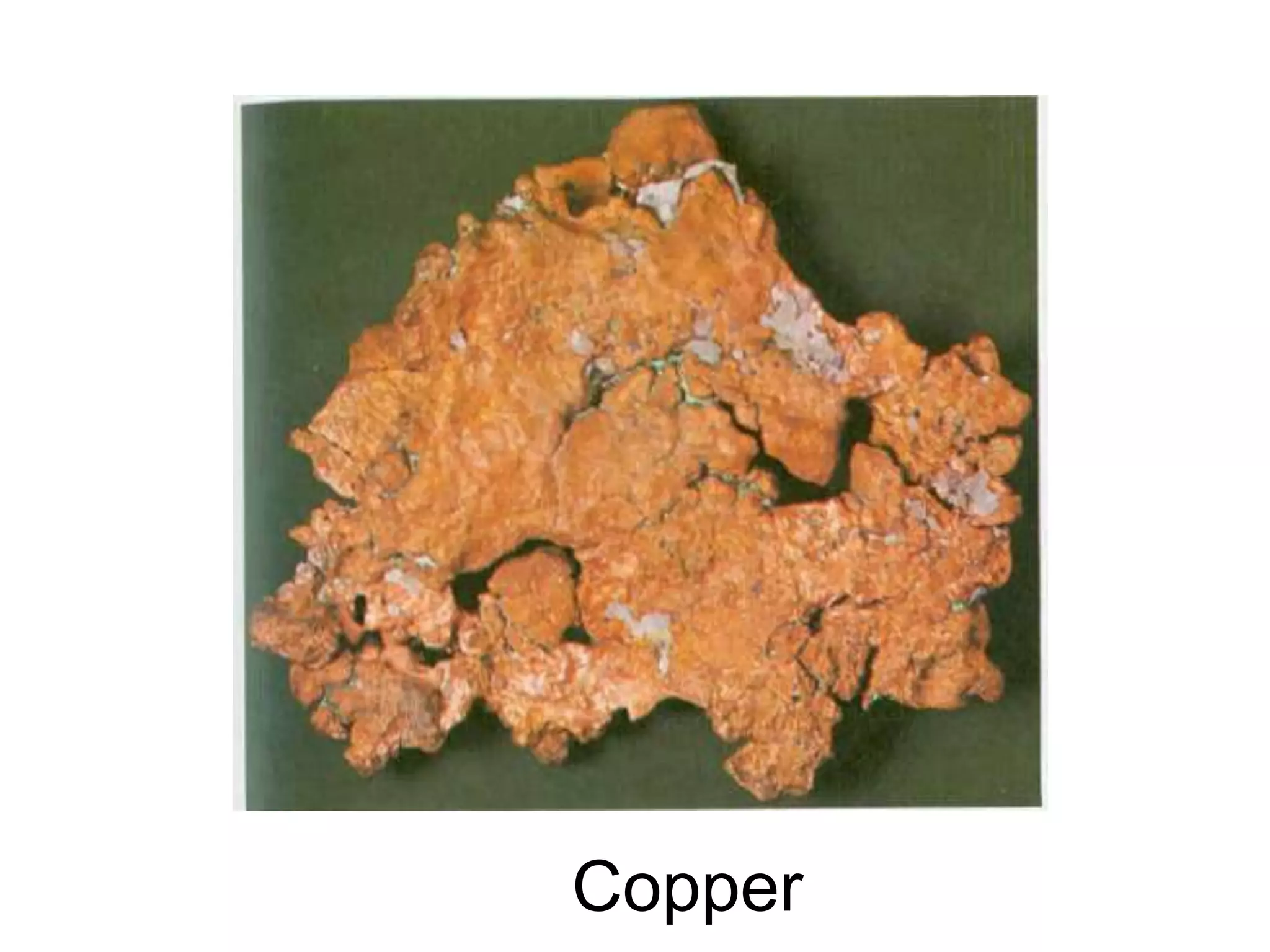
        Copper
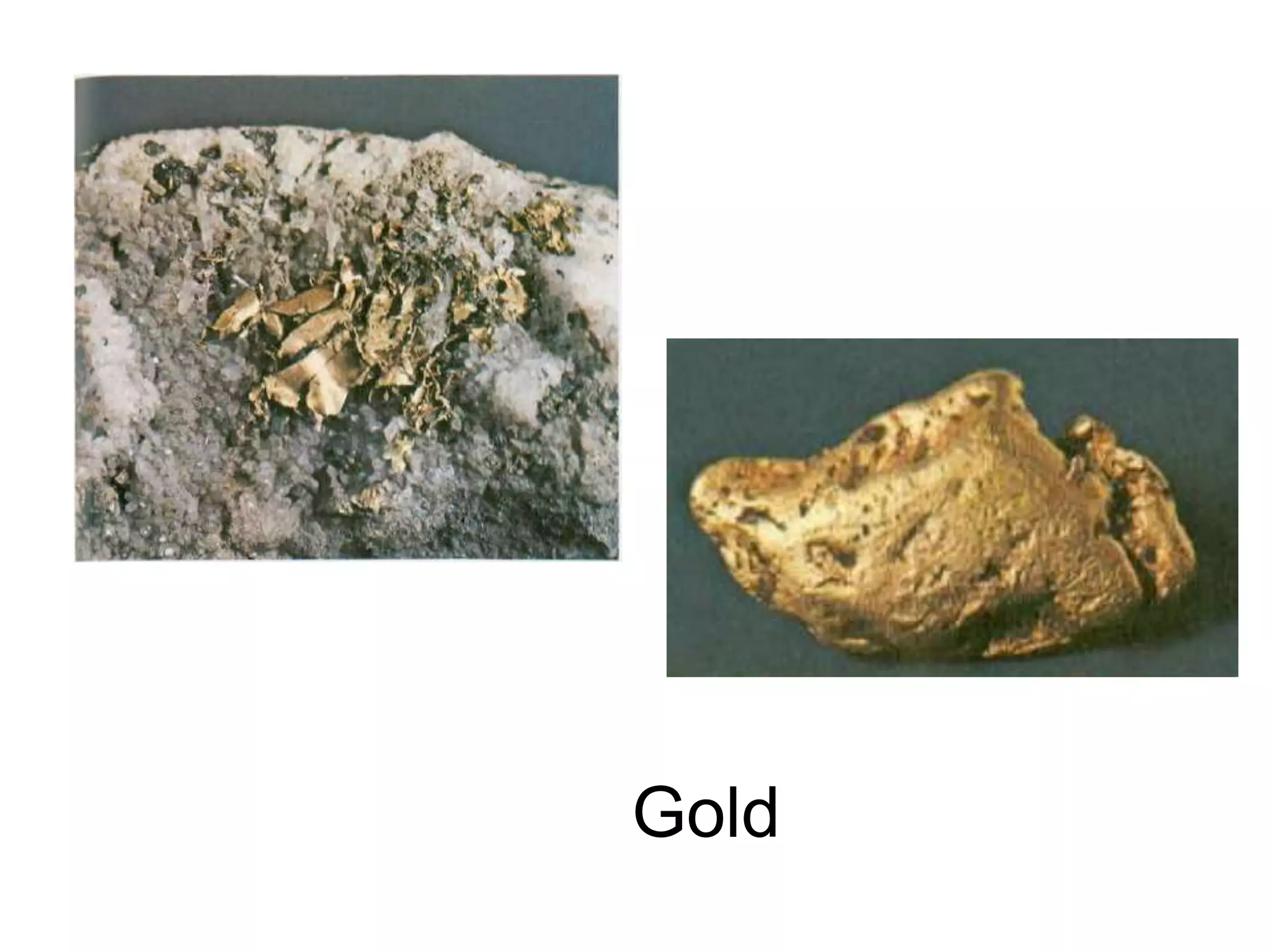
Gold
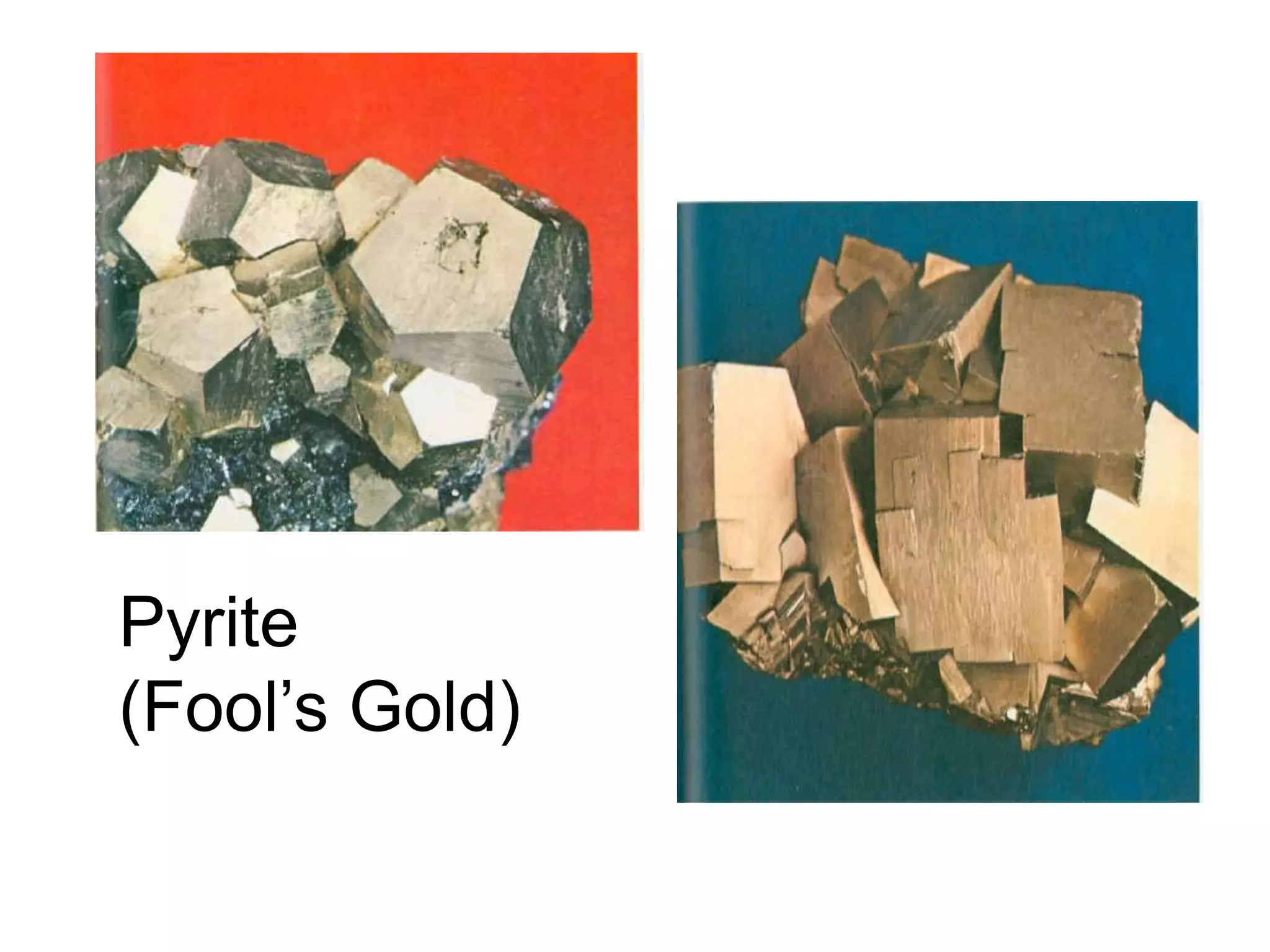
Pyrite (Fool’s Gold)
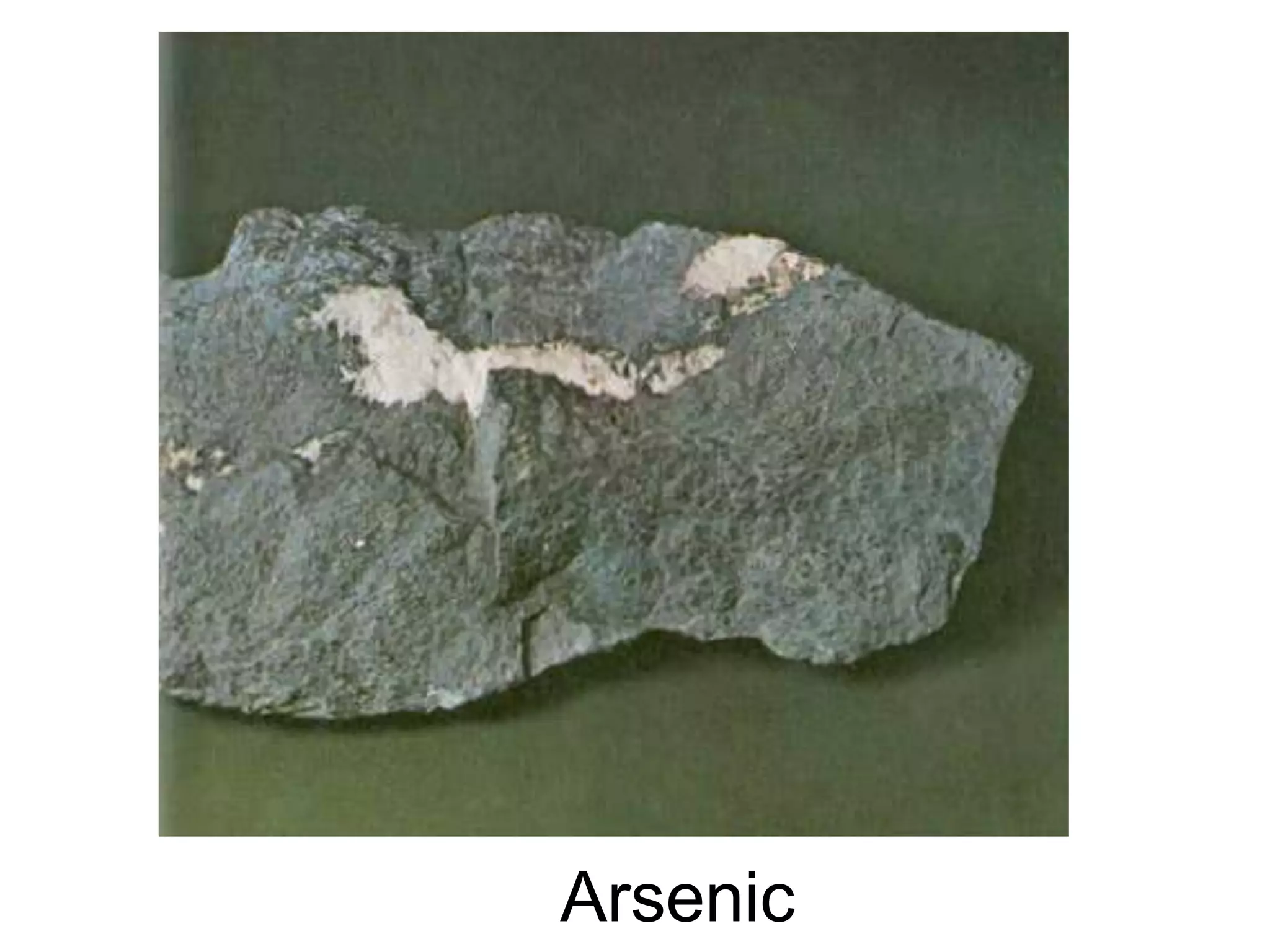
             Arsenic
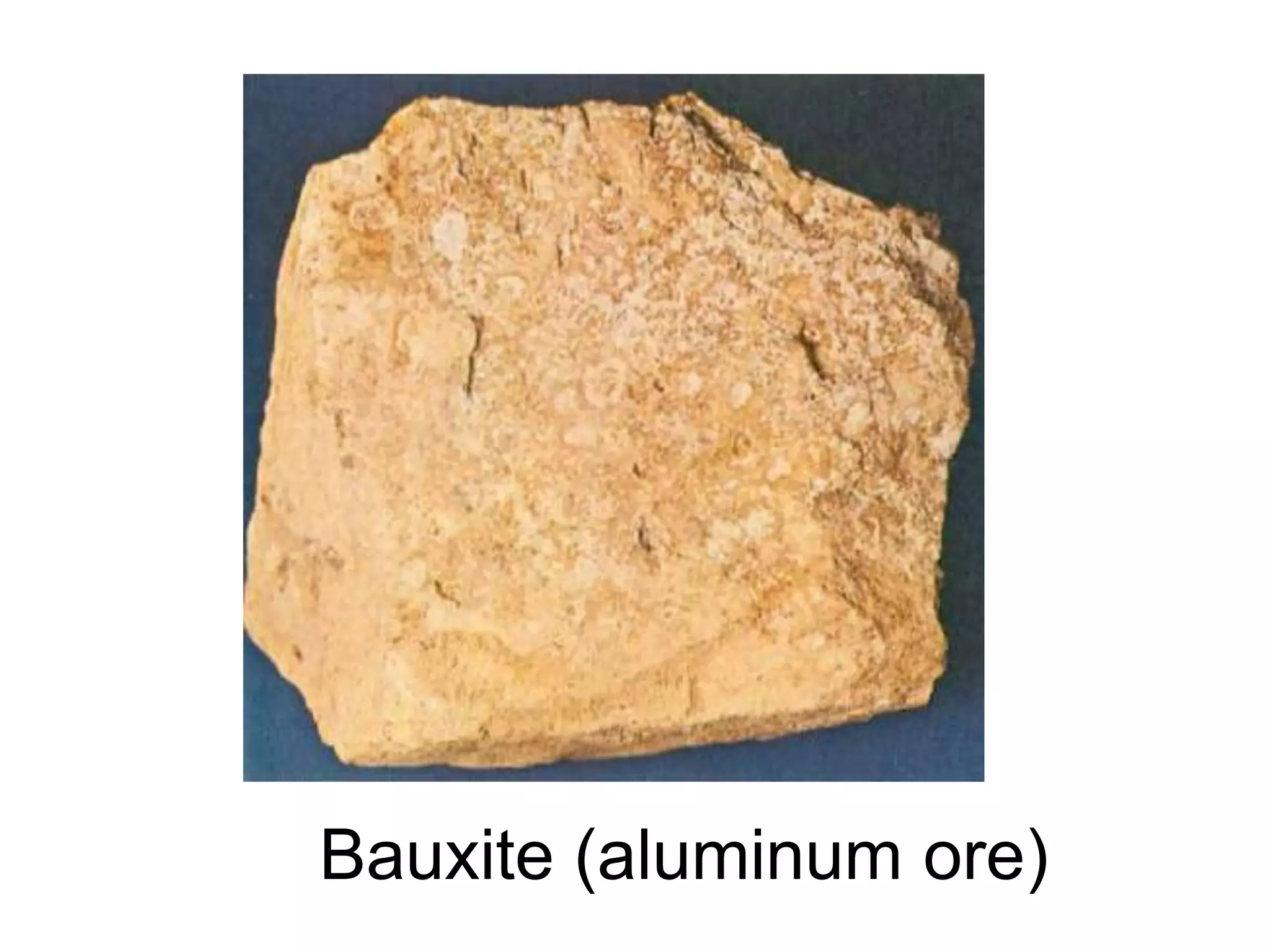
       Bauxite (aluminum ore)
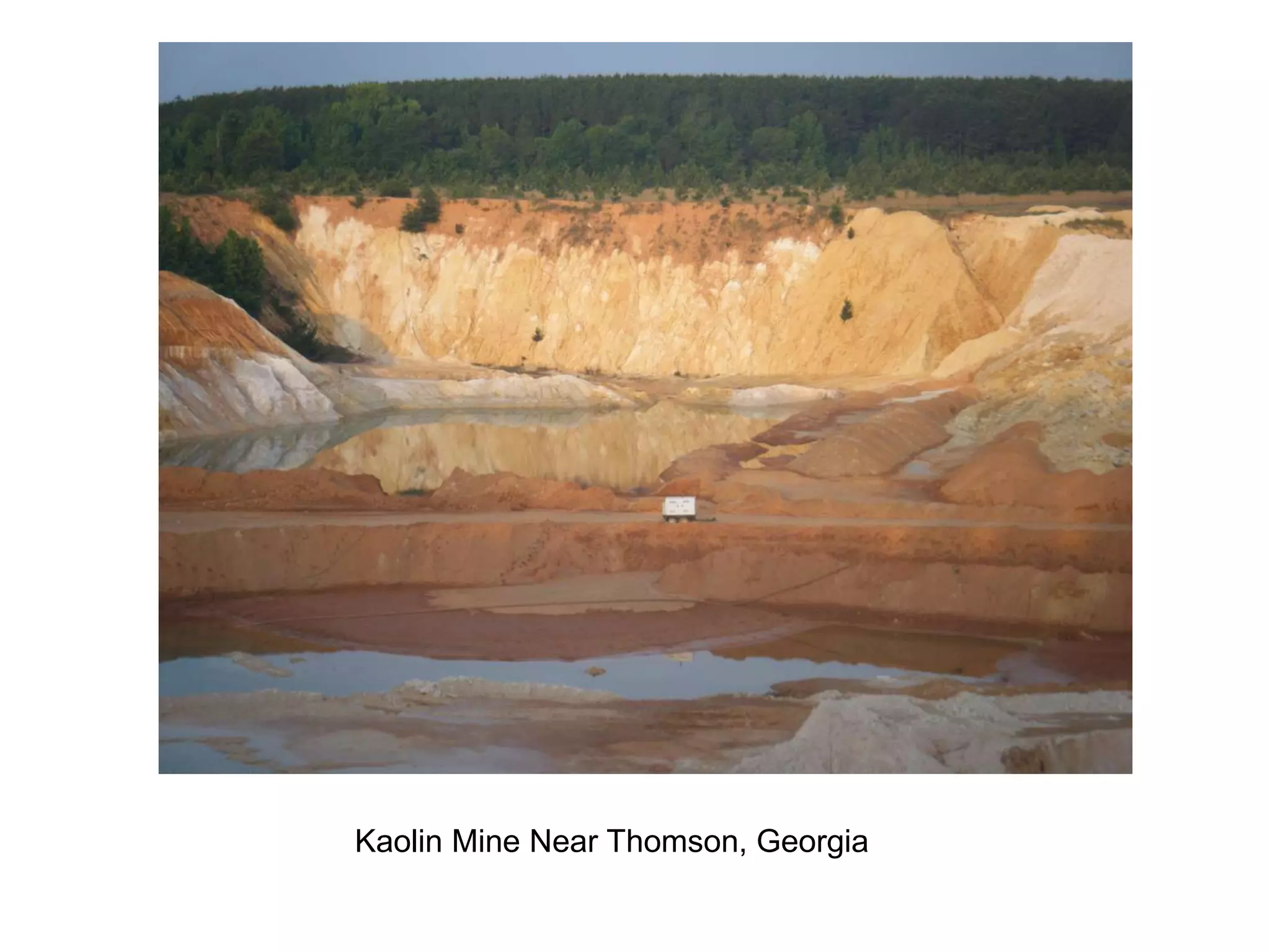
          Kaolin Mine Near Thomson, Georgia
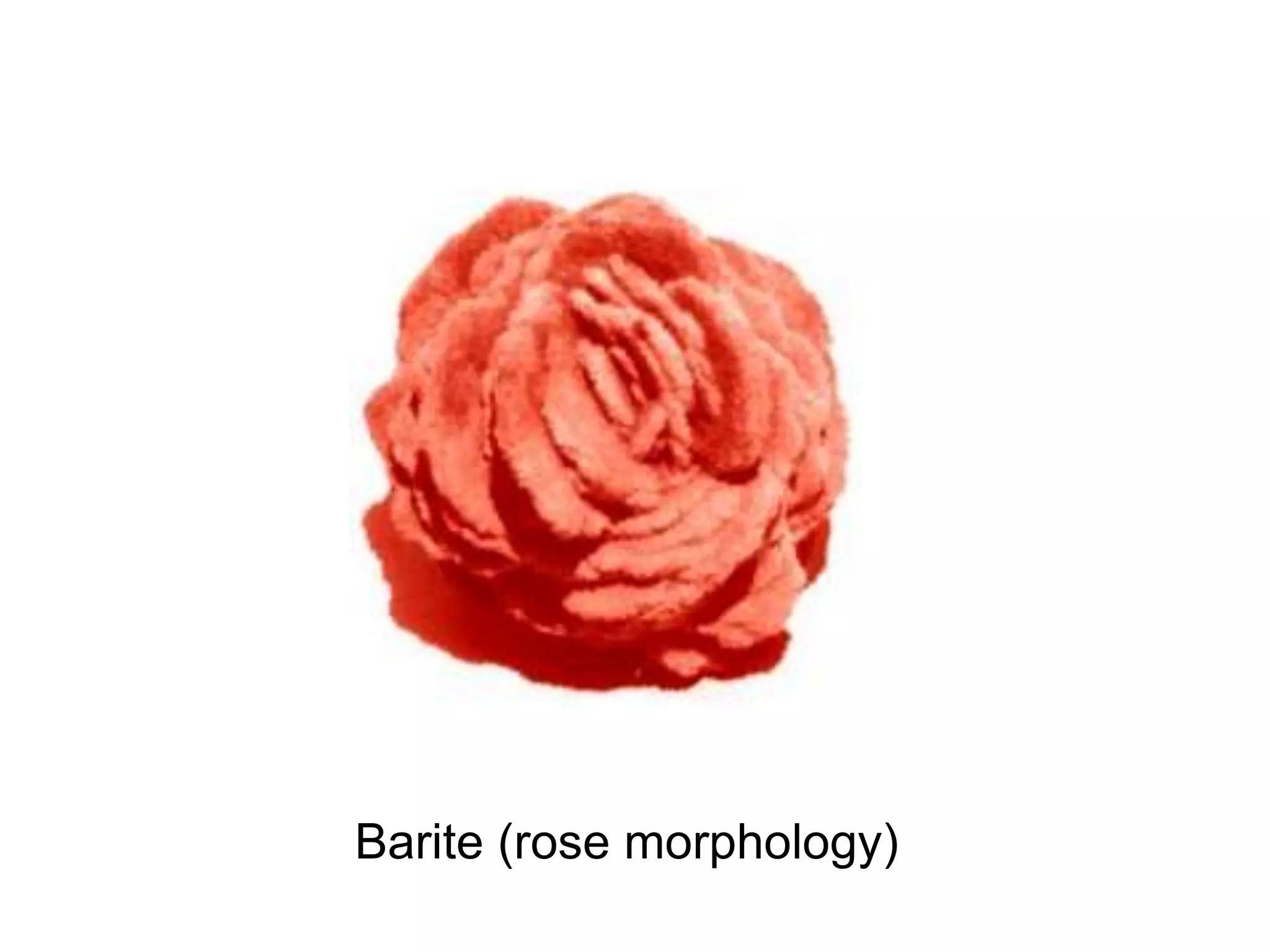
Barite (rose morphology)
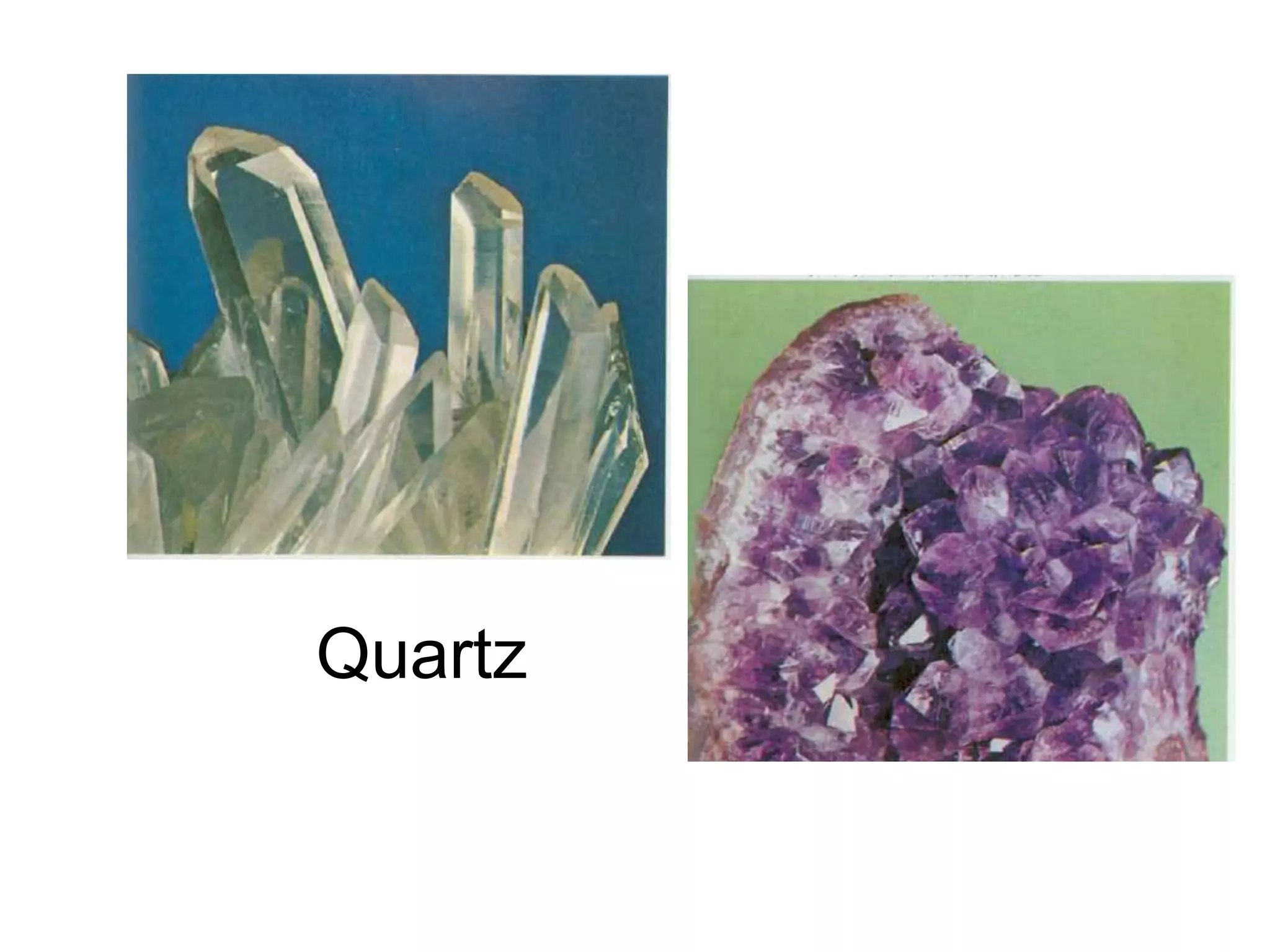
         Quartz
        ROCKS A rock is any naturally occurring solid mass of        	mineral or minerals.
There are three primary types of rocks:SedimentaryIgneousMetamorphic
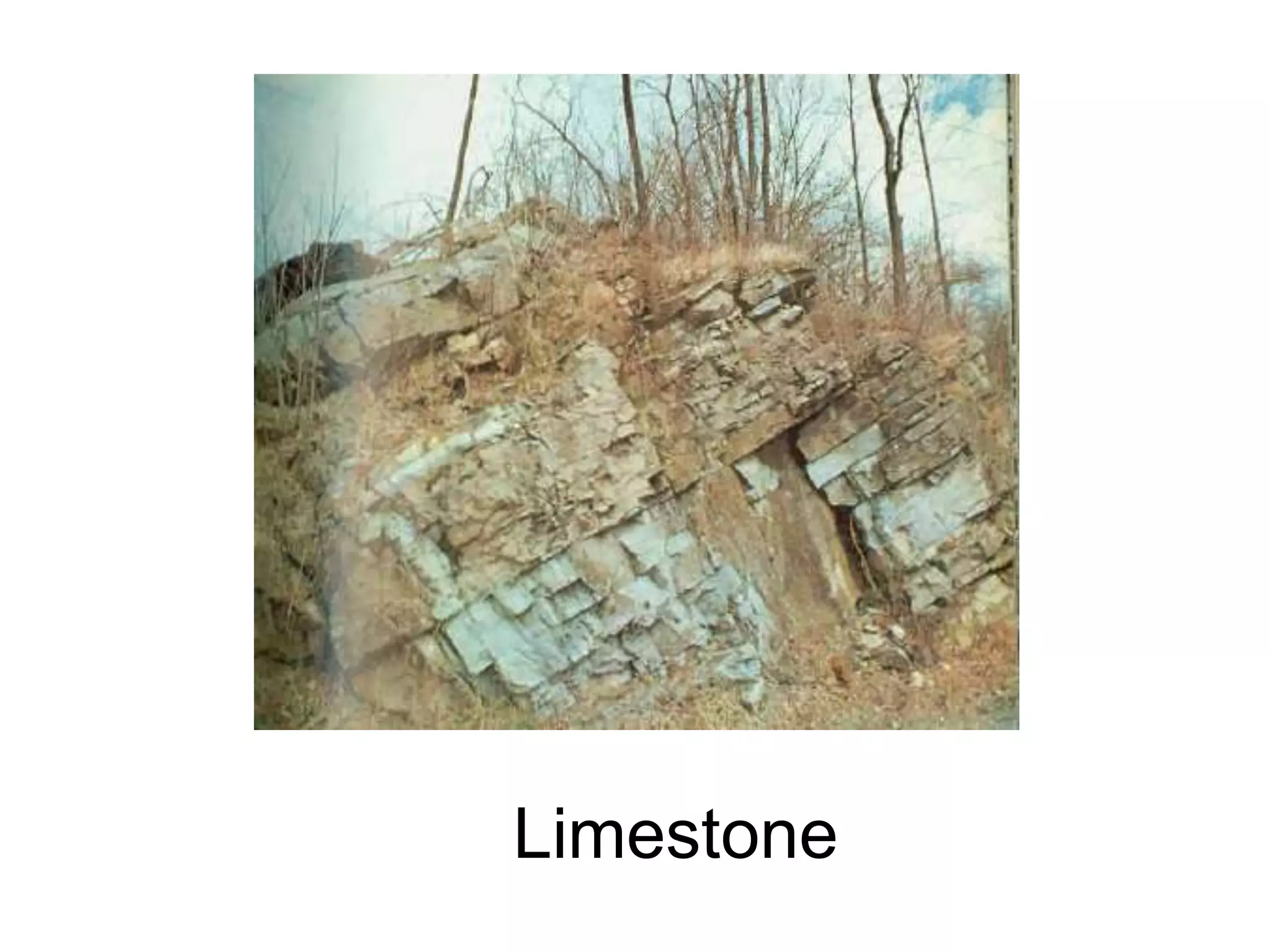
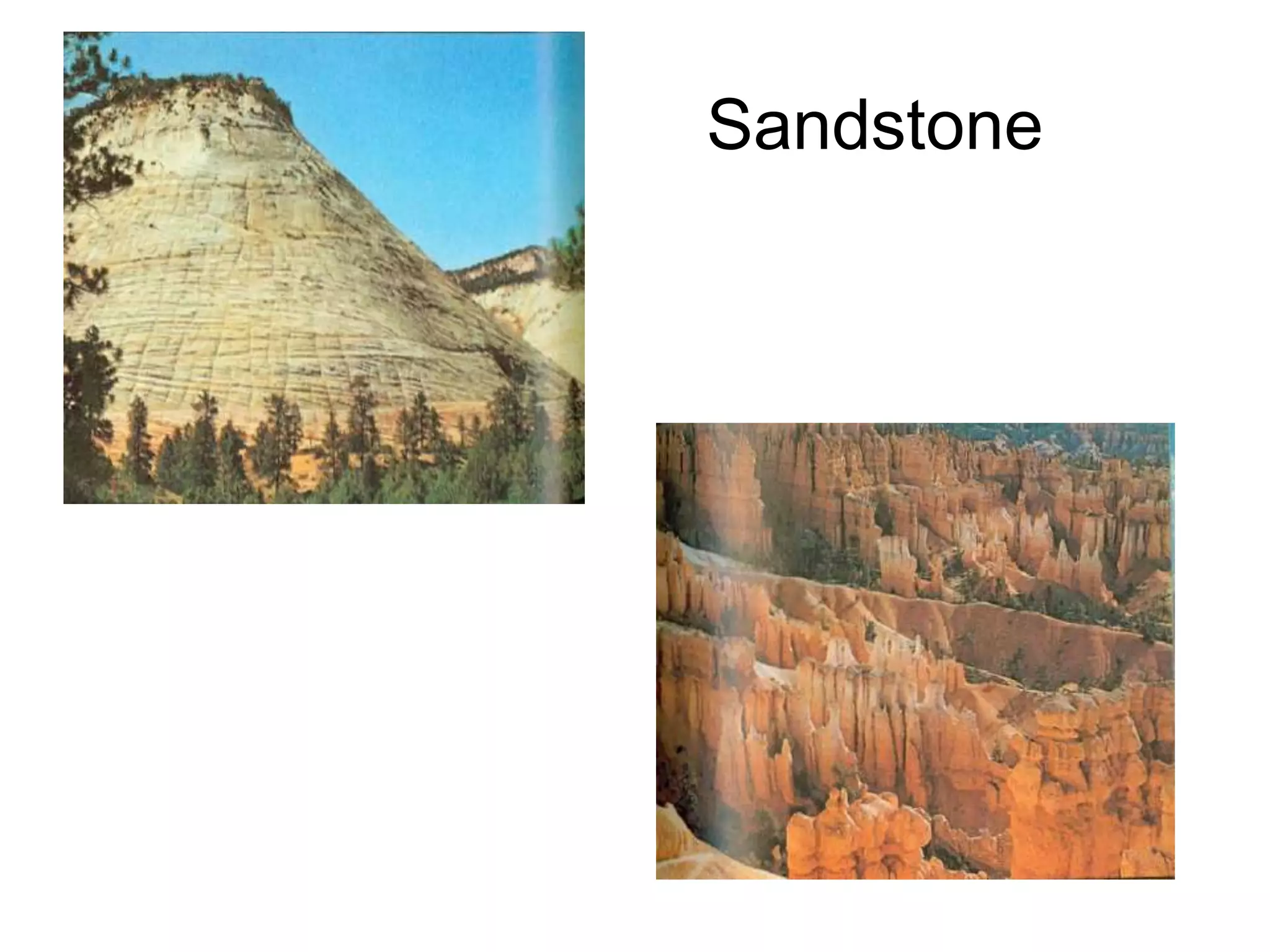
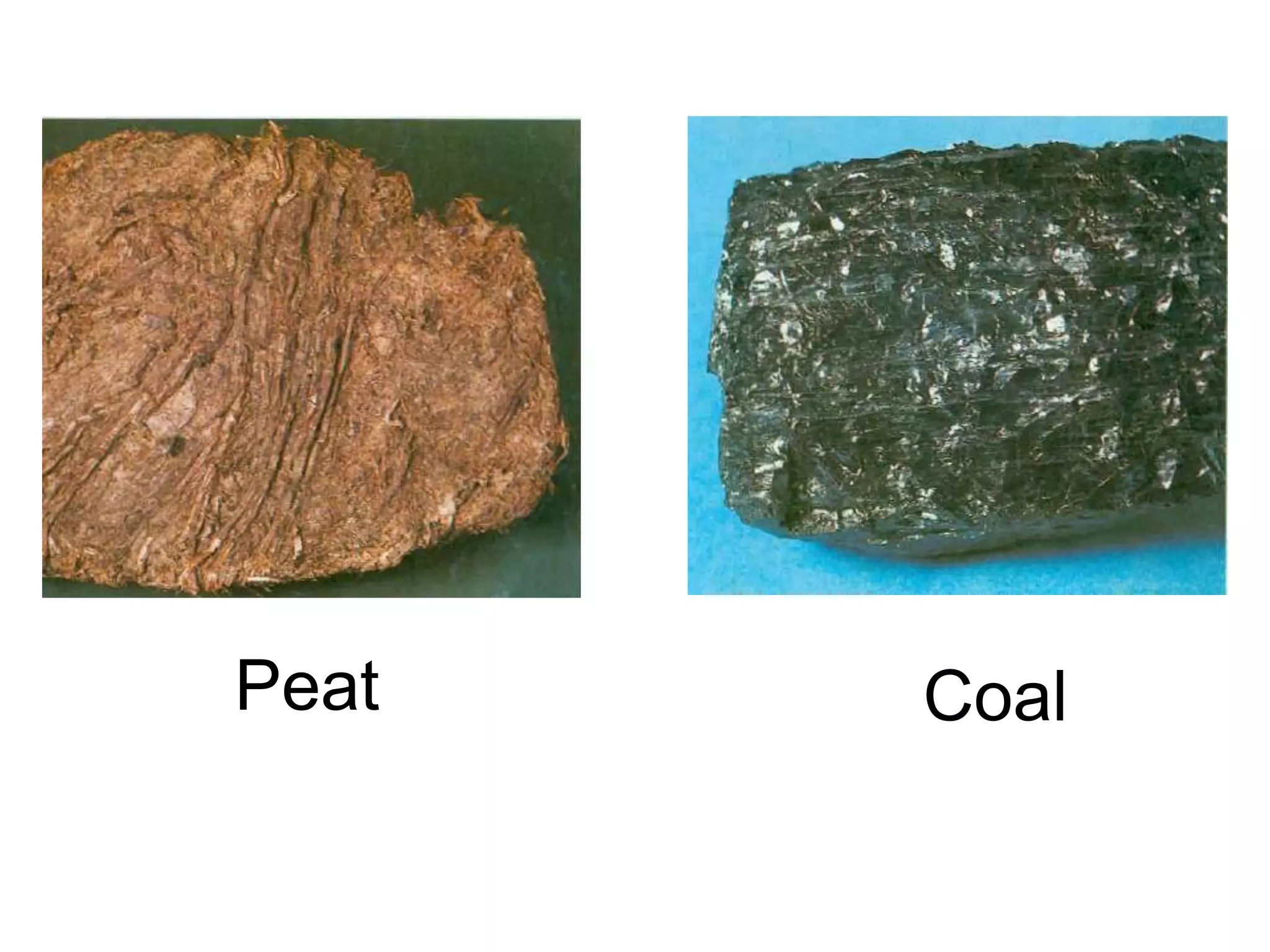
SEDIMENTARY ROCKSRocks formed from accumulation and hardening of water or airborne sediment, plant or animal remains, chemical action, or evaporation.Some of the most common sedimentary rocks are:Limestone
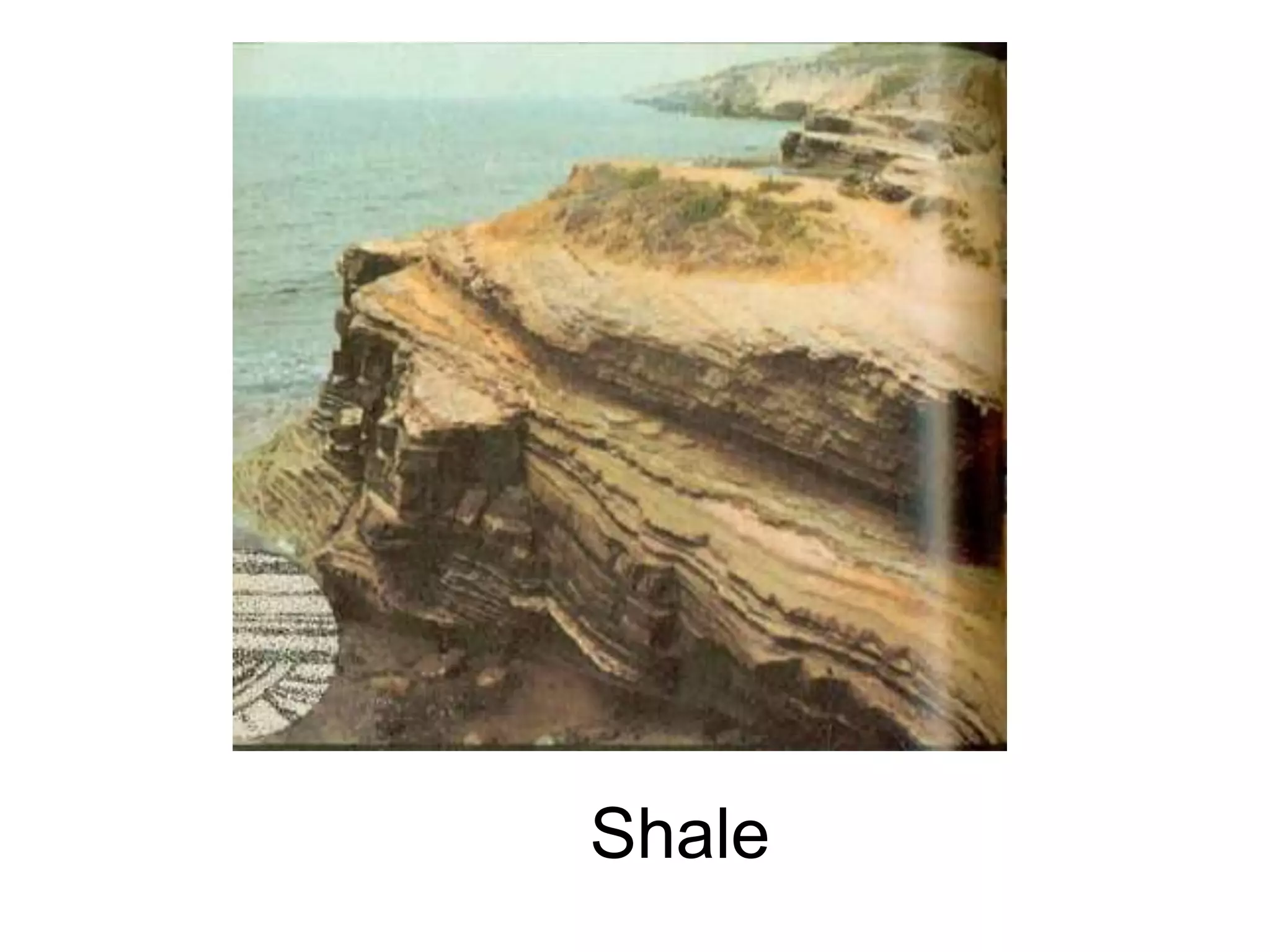
 Shale
 Sandstone     Limestone
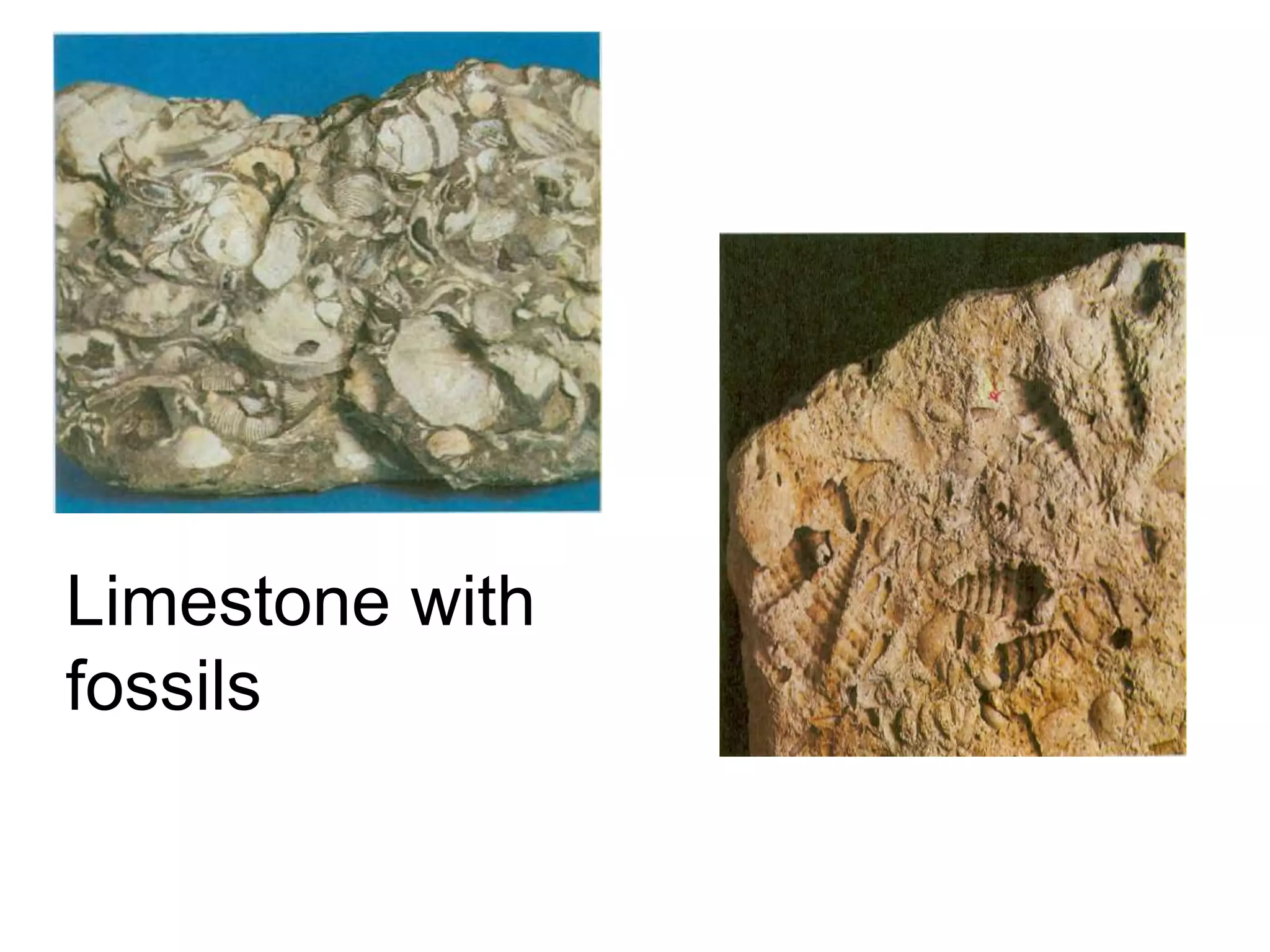
Limestone with fossils
          Shale
   Sandstone
       PeatCoal
                   Igneous Rocks  Igneous rocks are formed by the cooling of 	magma from deep within the earth
  There are two main categories of igneous 	rocks:Intrusive – formed undergroundExtrusive – formed above ground
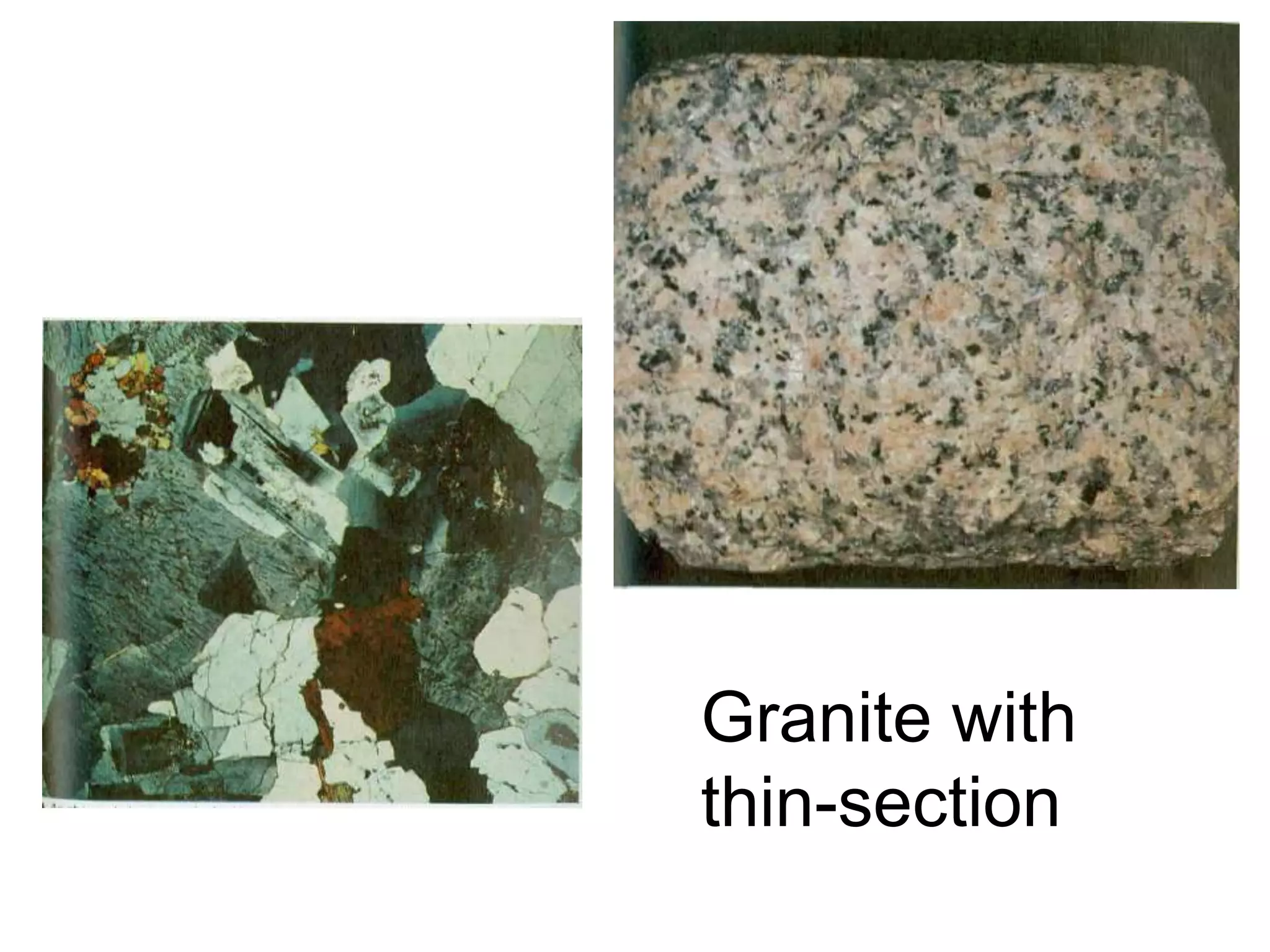
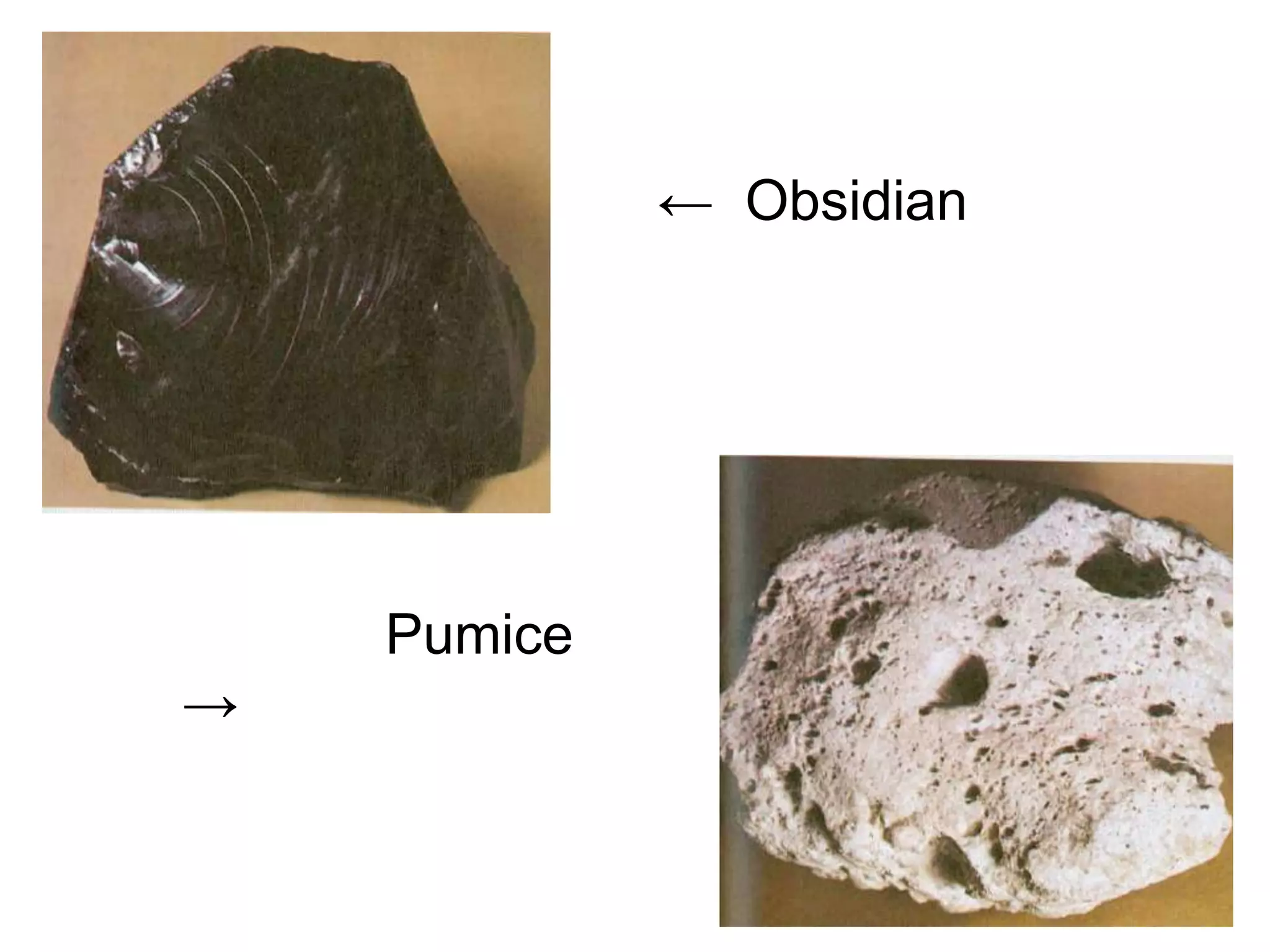
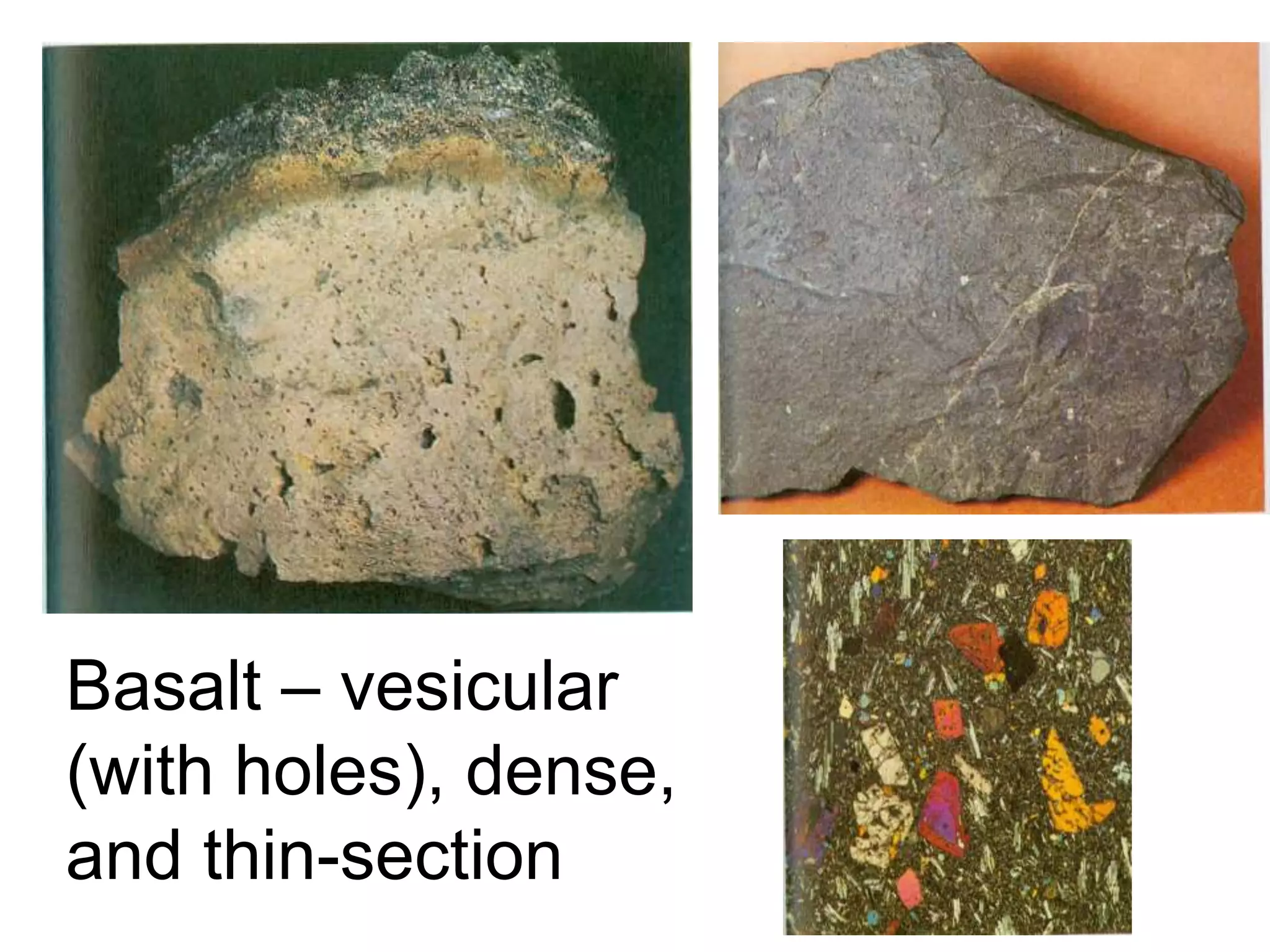
The most common intrusive igneous rock is granite.Some common extrusive igneous rocks include: Basalt
  Obsidian
 PumiceGranite with thin-section
    ←  Obsidian             Pumice  ->
Basalt – vesicular (with holes), dense, and thin-section
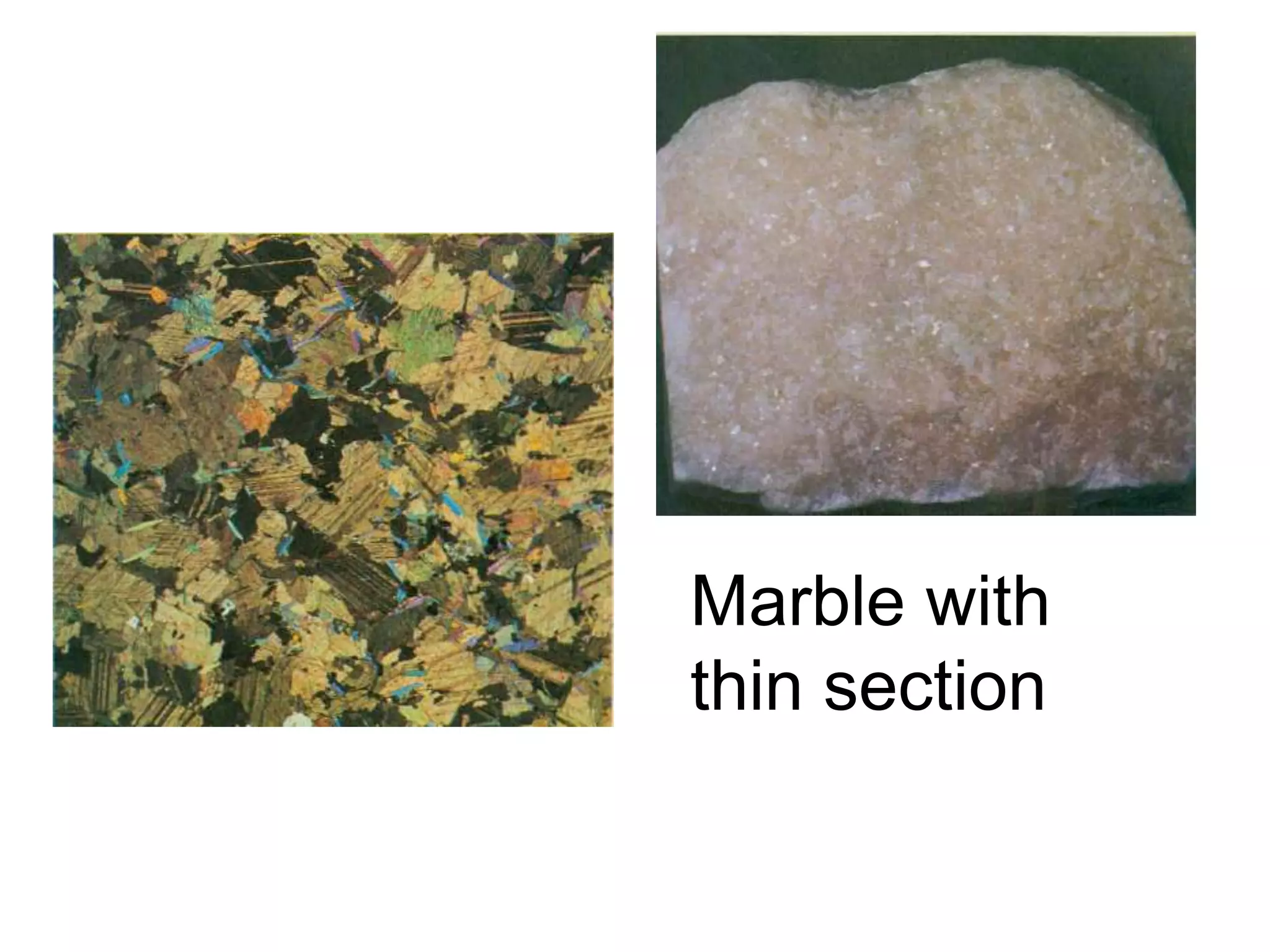
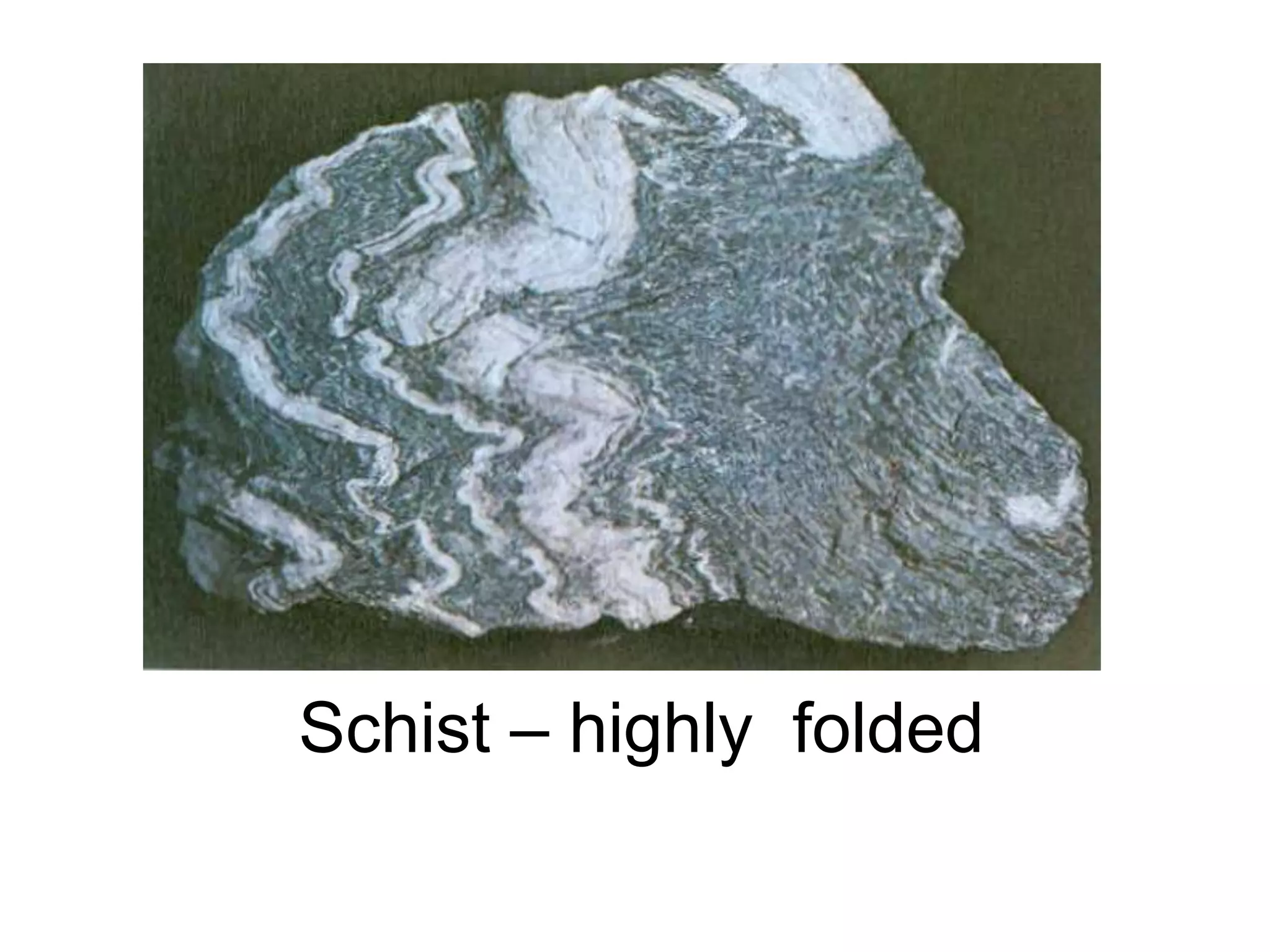
Metamorphic RocksThese rocks are formed by other rocks being buried deep within the earth and subjected to very high temperature and pressure.Common metamorphic rocks include: Marble
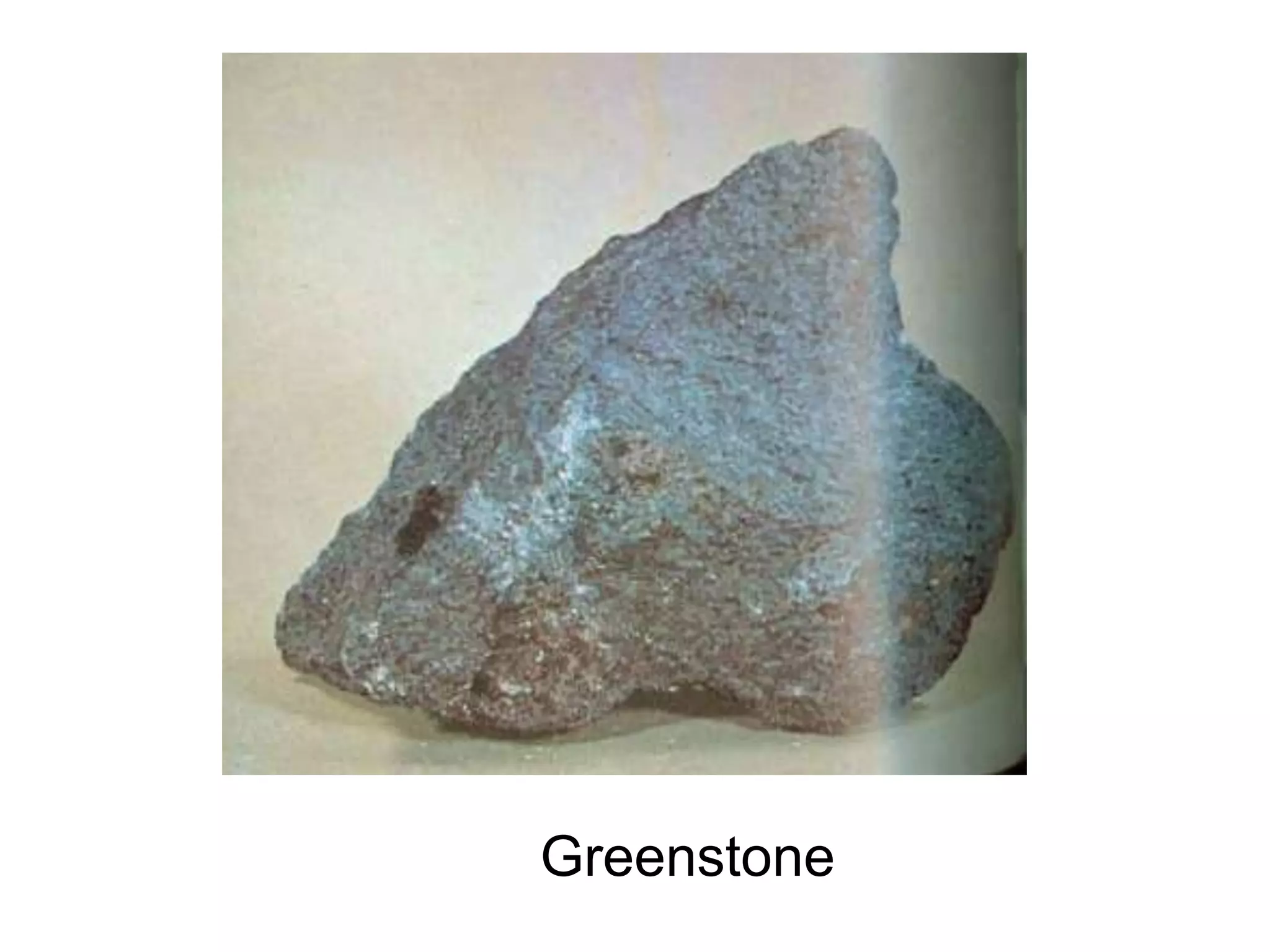
  Greenstone

Min Pet Presentation

  • 1.
    Minerals and RocksAnintroduction to Geology:Mineralogy and Petrology
  • 2.
    MineralsA mineral isa naturally occurring solid with a specific chemical composition and atomic arrangement (crystalline structure).*Quartz = Silica + Oxygen or SiO2* Some references also add “inorganic” to the definition, but there are some rare organic minerals too (i.e., whewillite).
  • 3.
    Methods to IdentifyMineralsColorStreakLusterFluorescenceChemical CompositionHardnessTalcGypsumCalciteFluoriteApatiteOrthoclaseQuartzTopazCorundumDiamond( Mnemonic Devise - The Geologist Can Find An Ordinary Quartz Tourists Call Diamond)Specific GravityCrystal FormOptical PropertiesCleavageFractureMagnetismElectrical PropertiesMelting PointGeologic Setting
  • 4.
    Copper
  • 5.
  • 6.
  • 7.
    Arsenic
  • 8.
    Bauxite (aluminum ore)
  • 9.
    Kaolin Mine Near Thomson, Georgia
  • 10.
  • 11.
    Quartz
  • 12.
    ROCKS A rock is any naturally occurring solid mass of mineral or minerals.
  • 13.
    There are threeprimary types of rocks:SedimentaryIgneousMetamorphic
  • 14.
    SEDIMENTARY ROCKSRocks formedfrom accumulation and hardening of water or airborne sediment, plant or animal remains, chemical action, or evaporation.Some of the most common sedimentary rocks are:Limestone
  • 15.
  • 16.
    Sandstone Limestone
  • 17.
  • 18.
    Shale
  • 19.
    Sandstone
  • 20.
    PeatCoal
  • 21.
    Igneous Rocks Igneous rocks are formed by the cooling of magma from deep within the earth
  • 22.
    Thereare two main categories of igneous rocks:Intrusive – formed undergroundExtrusive – formed above ground
  • 23.
    The most commonintrusive igneous rock is granite.Some common extrusive igneous rocks include: Basalt
  • 24.
  • 25.
  • 26.
    ← Obsidian Pumice ->
  • 27.
    Basalt – vesicular(with holes), dense, and thin-section
  • 28.
    Metamorphic RocksThese rocksare formed by other rocks being buried deep within the earth and subjected to very high temperature and pressure.Common metamorphic rocks include: Marble
  • 29.
  • 30.
  • 31.
  • 32.
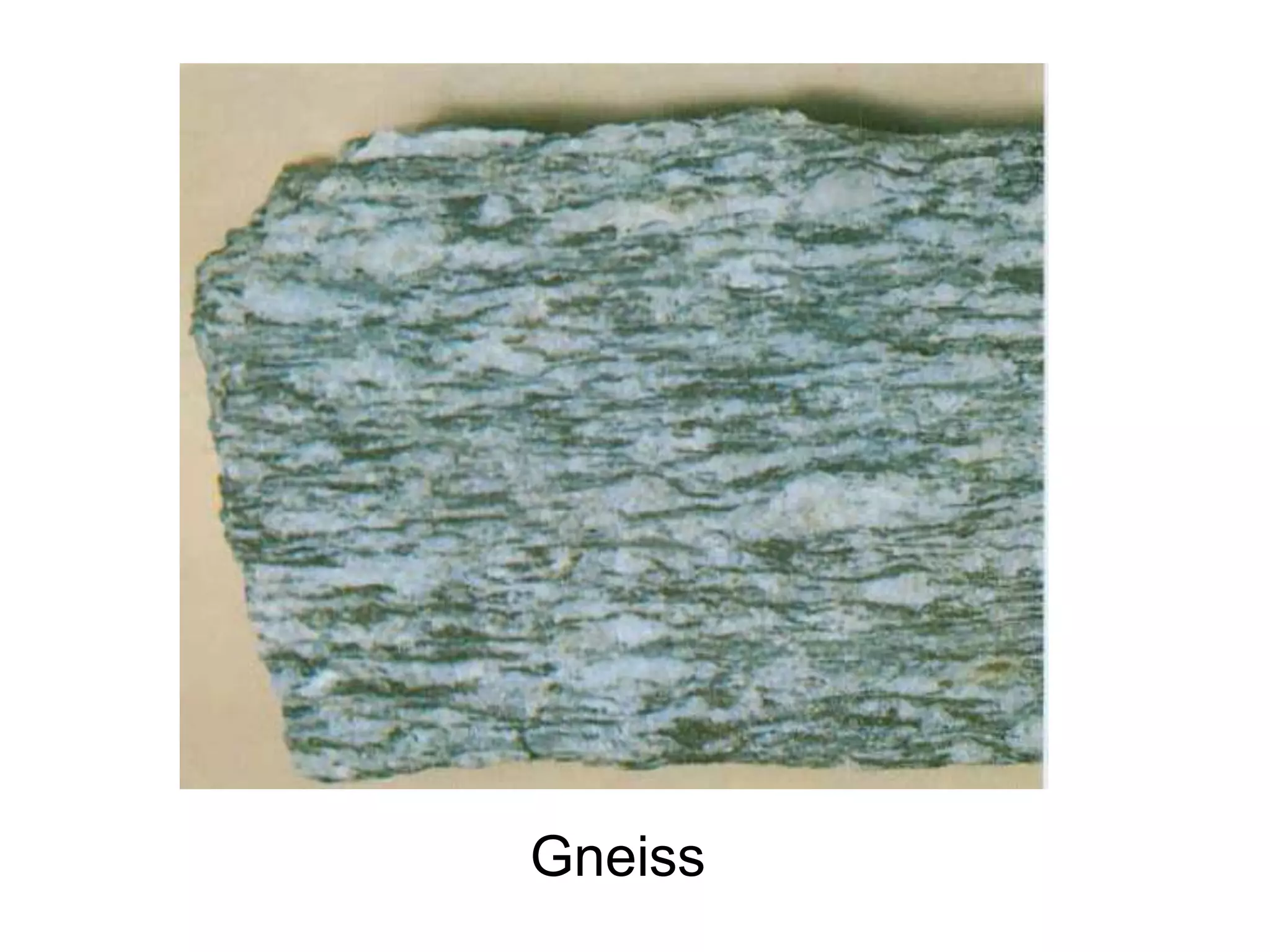
    GneissMarble withthin section
  • 33.
  • 34.
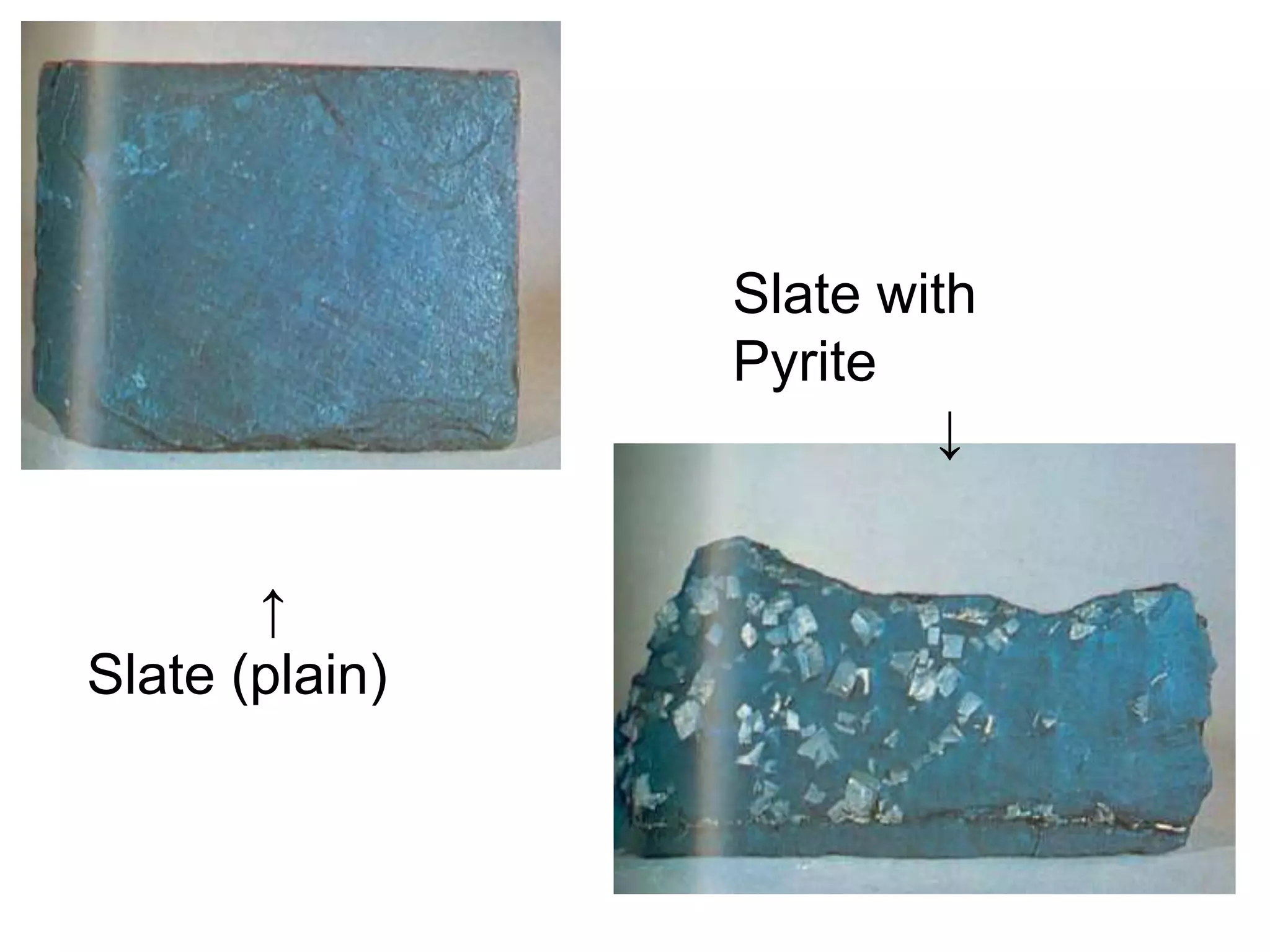
    Slate with Pyrite ↓ ↑Slate (plain)
  • 35.
    Gneiss
  • 36.