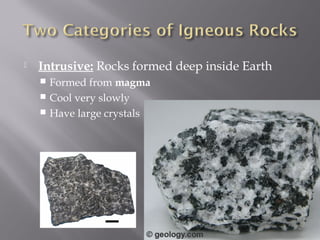
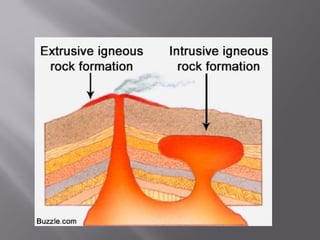
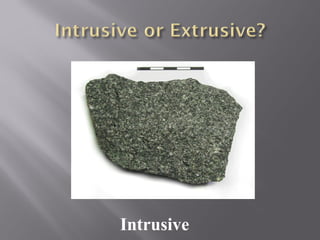
 Intrusive: Rocks formed deep inside Earth 
 Formed from magma 
 Cool very slowly 
 Have large crystals
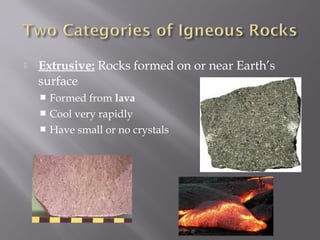
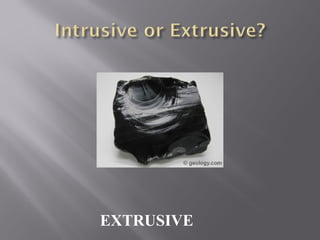
 Extrusive: Rocks formed on or near Earth’s 
surface 
 Formed from lava 
 Cool very rapidly 
 Have small or no crystals
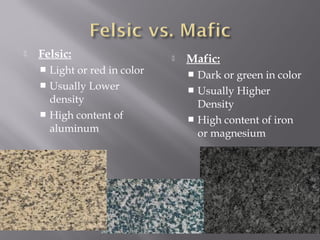
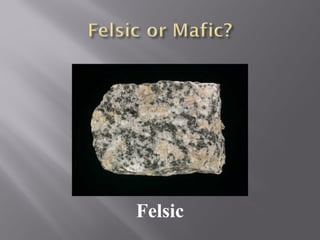
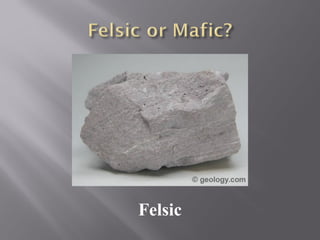
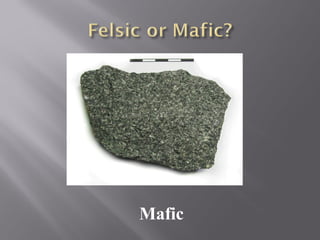
 Felsic: 
 Light or red in color 
 Usually Lower 
density 
 High content of 
aluminum 
 Mafic: 
 Dark or green in color 
 Usually Higher 
Density 
 High content of iron 
or magnesium
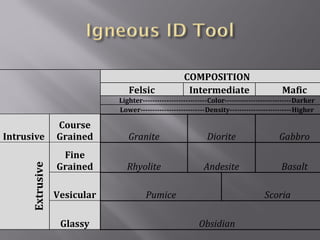
COMPOSITION 
Felsic Intermediate Mafic 
Lighter---------------------------Color----------------------------Darker 
Lower---------------------------Density--------------------------Higher 
Intrusive 
Course 
Grained Granite Diorite Gabbro 
Extrusive 
Fine 
Grained Rhyolite Andesite Basalt 
Vesicular Pumice Scoria 
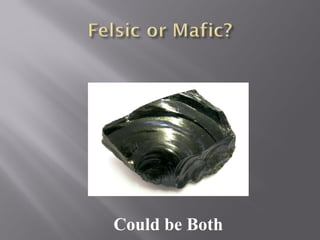
Glassy Obsidian
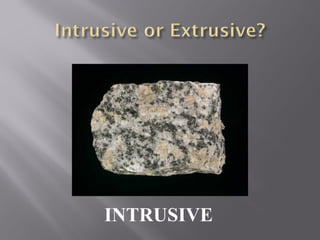
INTRUSIVE
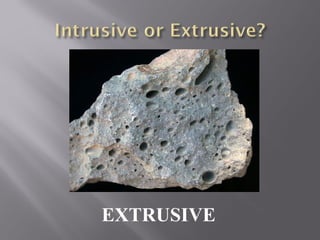
EXTRUSIVE
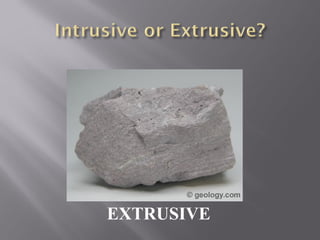
EXTRUSIVE
Intrusive
EXTRUSIVE
Felsic
Felsic
Mafic
Could be Both
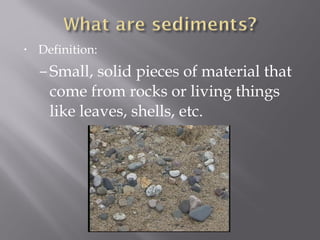
• Definition: 
– Small, solid pieces of material that 
come from rocks or living things 
like leaves, shells, etc.
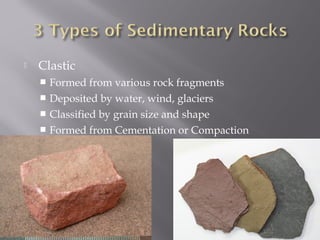
 Clastic 
 Formed from various rock fragments 
 Deposited by water, wind, glaciers 
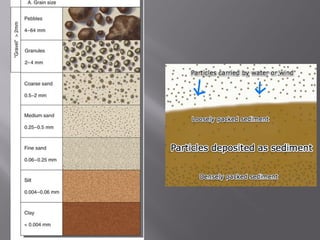
 Classified by grain size and shape 
 Formed from Cementation or Compaction
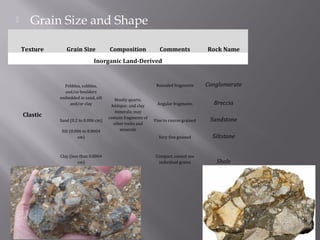
 Grain Size and Shape 
Texture Grain Size Composition Comments Rock Name 
Inorganic Land-Derived 
Clastic 
Pebbles, cobbles, 
and/or boulders 
embedded in sand, silt 
and/or clay 
Mostly quartz, 
feldspar, and clay 
minerals; may 
contain fragments of 
other rocks and 
minerals 
Rounded fragments Conglomerate 
Angular fragments Breccia 
Sand (0.2 to 0.006 cm) Fine to course grained Sandstone 
Silt (0.006 to 0.0004 
cm) Very fine grained Siltstone 
Clay (less than 0.0004 
cm) 
Compact, cannot see 
individual grains Shale
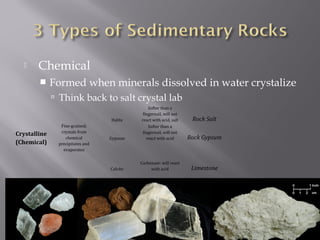
 Chemical 
 Formed when minerals dissolved in water crystalize 
 Think back to salt crystal lab 
Crystalline 
(Chemical) 
Fine-grained; 
crystals from 
chemical 
precipitates and 
evaporates 
Halite 
Softer than a 
fingernail, will not 
react with acid, salt Rock Salt 
Gypsum 
Softer than a 
fingernail, will not 
react with acid Rock Gypsum 
Calcite 
Carbonate: will react 
with acid Limestone
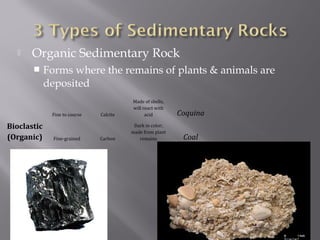
 Organic Sedimentary Rock 
 Forms where the remains of plants & animals are 
deposited 
Bioclastic 
(Organic) 
Fine to course Calcite 
Made of shells, 
will react with 
acid Coquina 
Fine-grained Carbon 
Dark in color; 
made from plant 
remains Coal
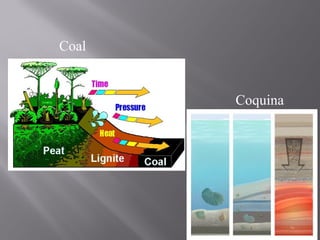
Coal 
Coquina
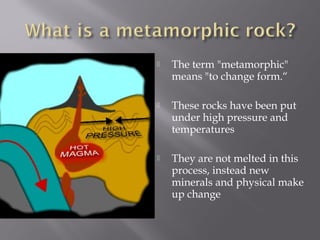
 The term "metamorphic" 
means "to change form.“ 
 These rocks have been put 
under high pressure and 
temperatures 
 They are not melted in this 
process, instead new 
minerals and physical make 
up change
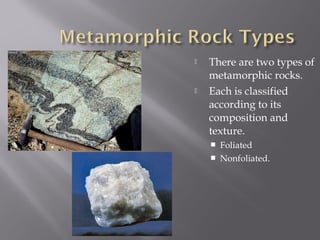
 There are two types of 
metamorphic rocks. 
 Each is classified 
according to its 
composition and 
texture. 
 Foliated 
 Nonfoliated.
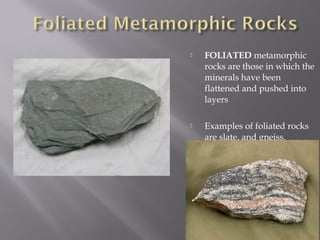
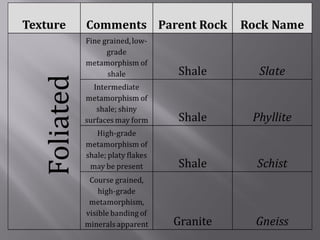
 FOLIATED metamorphic 
rocks are those in which the 
minerals have been 
flattened and pushed into 
layers 
 Examples of foliated rocks 
are slate, and gneiss.
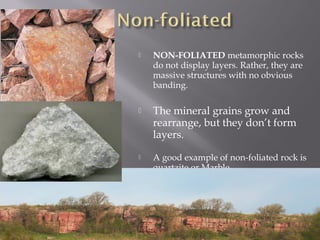
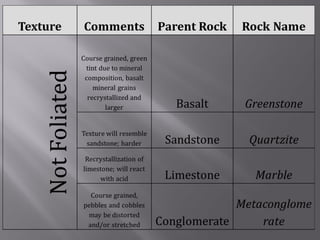
 NON-FOLIATED metamorphic rocks 
do not display layers. Rather, they are 
massive structures with no obvious 
banding. 
 The mineral grains grow and 
rearrange, but they don’t form 
layers. 
 A good example of non-foliated rock is 
quartzite or Marble
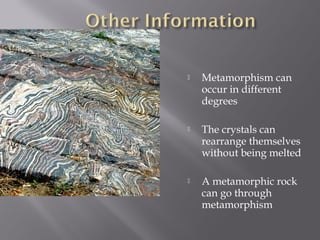
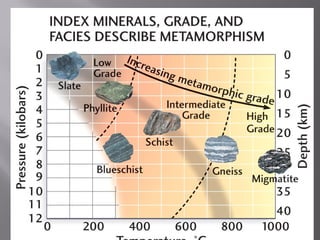
 Metamorphism can 
occur in different 
degrees 
 The crystals can 
rearrange themselves 
without being melted 
 A metamorphic rock 
can go through 
metamorphism
Unit 3 rock slides

Unit 3 rock slides

  • 2.
     Intrusive: Rocksformed deep inside Earth  Formed from magma  Cool very slowly  Have large crystals
  • 3.
     Extrusive: Rocksformed on or near Earth’s surface  Formed from lava  Cool very rapidly  Have small or no crystals
  • 5.
     Felsic: Light or red in color  Usually Lower density  High content of aluminum  Mafic:  Dark or green in color  Usually Higher Density  High content of iron or magnesium
  • 6.
    COMPOSITION Felsic IntermediateMafic Lighter---------------------------Color----------------------------Darker Lower---------------------------Density--------------------------Higher Intrusive Course Grained Granite Diorite Gabbro Extrusive Fine Grained Rhyolite Andesite Basalt Vesicular Pumice Scoria Glassy Obsidian
  • 7.
  • 8.
  • 9.
  • 10.
  • 11.
  • 12.
  • 13.
  • 14.
  • 15.
  • 17.
    • Definition: –Small, solid pieces of material that come from rocks or living things like leaves, shells, etc.
  • 18.
     Clastic Formed from various rock fragments  Deposited by water, wind, glaciers  Classified by grain size and shape  Formed from Cementation or Compaction
  • 20.
     Grain Sizeand Shape Texture Grain Size Composition Comments Rock Name Inorganic Land-Derived Clastic Pebbles, cobbles, and/or boulders embedded in sand, silt and/or clay Mostly quartz, feldspar, and clay minerals; may contain fragments of other rocks and minerals Rounded fragments Conglomerate Angular fragments Breccia Sand (0.2 to 0.006 cm) Fine to course grained Sandstone Silt (0.006 to 0.0004 cm) Very fine grained Siltstone Clay (less than 0.0004 cm) Compact, cannot see individual grains Shale
  • 21.
     Chemical Formed when minerals dissolved in water crystalize  Think back to salt crystal lab Crystalline (Chemical) Fine-grained; crystals from chemical precipitates and evaporates Halite Softer than a fingernail, will not react with acid, salt Rock Salt Gypsum Softer than a fingernail, will not react with acid Rock Gypsum Calcite Carbonate: will react with acid Limestone
  • 22.
     Organic SedimentaryRock  Forms where the remains of plants & animals are deposited Bioclastic (Organic) Fine to course Calcite Made of shells, will react with acid Coquina Fine-grained Carbon Dark in color; made from plant remains Coal
  • 23.
  • 25.
     The term"metamorphic" means "to change form.“  These rocks have been put under high pressure and temperatures  They are not melted in this process, instead new minerals and physical make up change
  • 26.
     There aretwo types of metamorphic rocks.  Each is classified according to its composition and texture.  Foliated  Nonfoliated.
  • 27.
     FOLIATED metamorphic rocks are those in which the minerals have been flattened and pushed into layers  Examples of foliated rocks are slate, and gneiss.
  • 29.
     NON-FOLIATED metamorphicrocks do not display layers. Rather, they are massive structures with no obvious banding.  The mineral grains grow and rearrange, but they don’t form layers.  A good example of non-foliated rock is quartzite or Marble
  • 31.
     Metamorphism can occur in different degrees  The crystals can rearrange themselves without being melted  A metamorphic rock can go through metamorphism