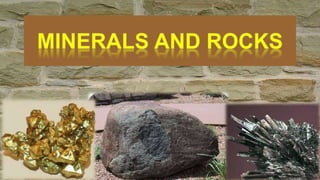
What I
Know
What I
Learned
What I want
to Learn
1. I can identify common rock-
forming minerals using their
physical and chemical
properties.
PLEDGE OF LEARNING
2. I can identify and describe the
three basic rock types;
3. I can describe how and define
what type of environment each of
these rock types are formed; and
PLEDGE OF LEARNING
4. I can describe how rocks are

transformed from one rock type to
another through the rock cycle.
PLEDGE OF LEARNING
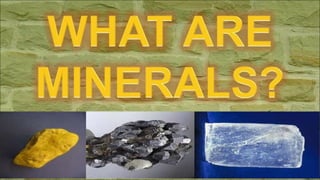
• naturally occurring, inorganic
solid that exhibits a crystalline
structure and can be represented
by a chemical formula.
• These are the basic building
blocks of rocks.
5 CRITERIA TO BE
CONSIDERED AS A MINERAL
1. Naturally Occurring
- It is a mineral if it has been formed by
geologic processes without any human
intervention.
2. Inorganic
-does not contain any organic
compounds.
However, minerals like calcite and other
shell-forming materials are formed
through organic processes but are still
considered as minerals if they become
part of a rock.
3. Solid
-A mineral should exhibit
stability at room temperature,
which can only be attained if
it is solid.
4. Crystalline structure
- minerals look like crystals since the
arrangement of their atoms is ordered
and repetitive.
5. Can be presented by a chemical formula
-most minerals are chemical compounds
and can therefore e presented using a
fixed or variable chemical formula.
Eg. Quartz (SiO2)
Olivine (Mg2SiO4) or (Fe2SiO4)
ARE THE FOLLOWING
COMMON SUBSTANCES
MINERALS?
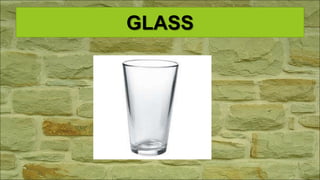
GLASS
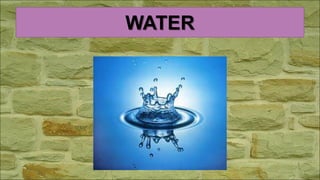
WATER
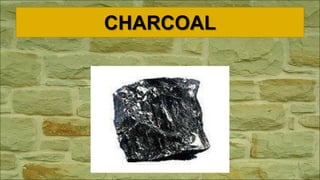
CHARCOAL
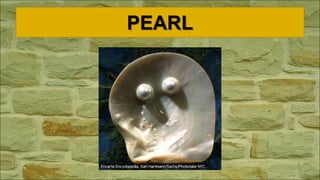
PEARL
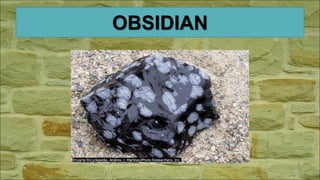
OBSIDIAN
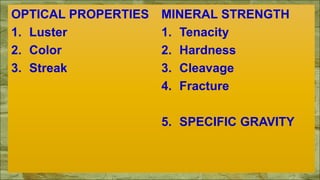
OPTICAL PROPERTIES
1. Luster
2. Color
3. Streak
MINERAL STRENGTH
1. Tenacity
2. Hardness
3. Cleavage
4. Fracture
5. SPECIFIC GRAVITY
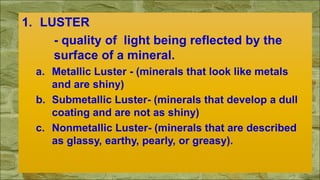
1. LUSTER
- quality of light being reflected by the
surface of a mineral.
a. Metallic Luster - (minerals that look like metals
and are shiny)
b. Submetallic Luster- (minerals that develop a dull
coating and are not as shiny)
c. Nonmetallic Luster- (minerals that are described
as glassy, earthy, pearly, or greasy).
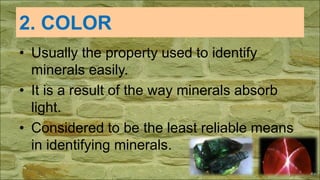
2. COLOR
• Usually the property used to identify
minerals easily.
• It is a result of the way minerals absorb
light.
• Considered to be the least reliable means
in identifying minerals.
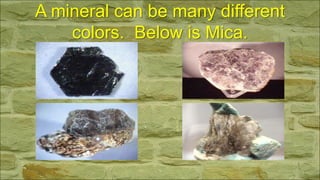
A mineral can be many different
colors. Below is Mica.
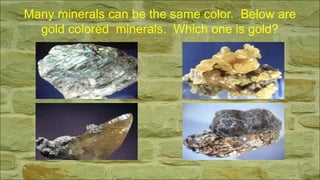
Many minerals can be the same color. Below are
gold colored minerals. Which one is gold?
The answer…
None of them were
real gold.
Just like with people…
Outside color does not tell you
much about the important
characteristics.
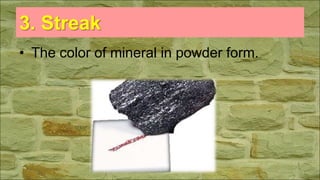
3. Streak
• The color of mineral in powder form.
MINERAL STRENGTH
- determines how easy the
minerals breaks or deforms
when exposed to stress.
4. Tenacity
• Level of the resistance or action or
minerals to stress such as crushing,
bending, breaking or tearing.
• It can tell if a mineral is brittle,
malleable, elastic, etc.
5. Hardness
• it is a measure of the resistance of
a mineral (not specifically surface)
to abrasion.
• To measure the relative hardness
of the minerals, Mohs scale is
used.
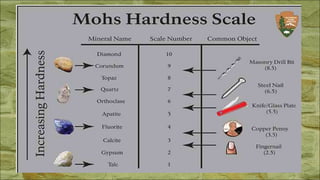
Mohs Scale
• Developed by a German mineralogist
named Frederick Mohs.
• It grades 10 fairly common minerals on
scale from 1 being the softest to 10 being
the hardest.
Cleavage and Fracture
• Used to describe how minerals break
into pieces
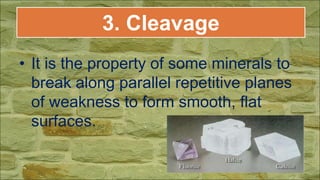
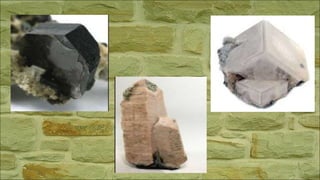
3. Cleavage
• It is the property of some minerals to
break along parallel repetitive planes
of weakness to form smooth, flat
surfaces.
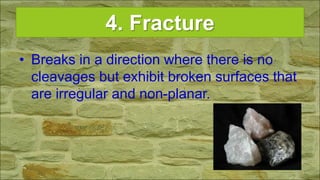
4. Fracture
• Breaks in a direction where there is no
cleavages but exhibit broken surfaces that
are irregular and non-planar.
5. Specific Gravity
• Measure the density of a mineral.
• Determines how heavy the minerals is
by its weight to water
COMMON ROCK-
FORMING MINERALS
GALLERY WALK
Definition Characteristics
Examples Non Examples
WHAT ARE ROCKS?
• Is any solid that is naturally found on
earth.
• Are natural substances consisting of
aggregate minerals clumped together
with other Earth materials through
natural processes.
3 types of Rocks
Igneous
Sedimentary
Metamorphic
Igneous Rocks
• Derived from the Latin word ignis
meaning “FIRE”.
• Are crystallized from magma or
molten or partially molten volcanic
materials that came from within
Earth.
What is the
difference
between magma
and lava?
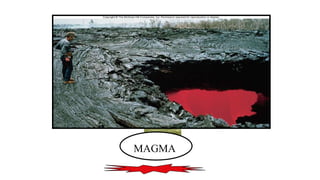
• Magma is a molten rock material
beneath the surface of the earth.
• Lava is molten rock material
extruded to the surface of the earth
through a central vent (volcano) or
as fissure eruption.
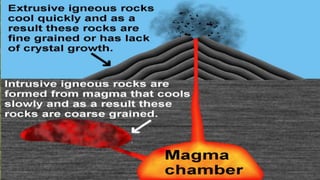
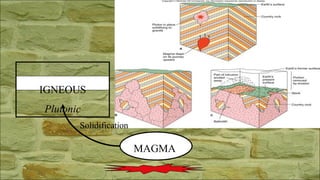
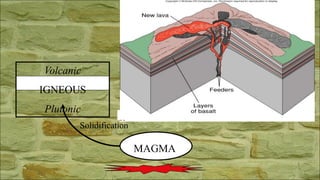
2 Types of Igneous Rocks
1. Extrusive (Volcanic)
2. Intrusive (Plutonic)
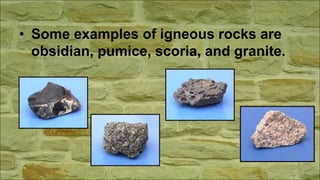
• Some examples of igneous rocks are
obsidian, pumice, scoria, and granite.
Sedimentary Rocks
• From the root word sediments which
means “remaining particles”
• Rocks that have formed from the
deposition of the different materials on
Earth’s surface.
Types of Sedimentary Rocks
1. Clastic
2.Non-Clastic/(crystalline/organic)
 Evaporites
 Precipitates
 Biological Matter
Clastic
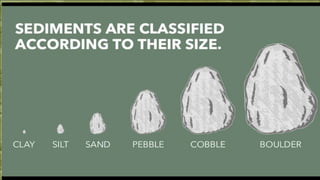
• describes rock that is composed
of fragments of other rocks
• Classified by size
Non-Clastic
Crystalline
• Evaporites
• Precipitate
Organic
• Biological Matter
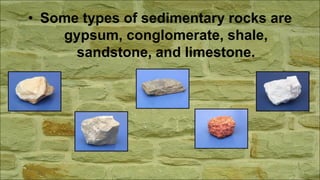
• Some types of sedimentary rocks are
gypsum, conglomerate, shale,
sandstone, and limestone.
Metamorphic Rocks
• Meta means “change”
• formed below the surface of the earth
through the process of metamorphism
with the recrystallization of minerals in
rocks due to changes in pressure and
temperature conditions
Types of Metamorphism
1. Contact Metamorphism
2. Regional Metamorphism
Contact Metamorphism
• Happens when magma intrudes a cooler
rock, hence exposing the rocks to a high
temperatures but not a higher pressure.
• Occurs when rocks are contact with
magma.
• creates non-foliated metamorphic rocks
• Eg. Hornfels
Regional Metamorphism
• it is during mountain building
• occurs on large masses of rocks is
exposed to differential stress.
• The main metamorphic agent is
pressure.
• Eg. schist, gneiss
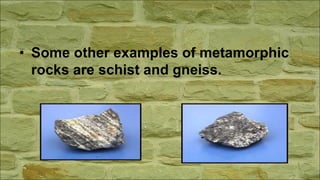
• Some other examples of metamorphic
rocks are schist and gneiss.
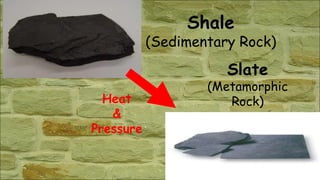
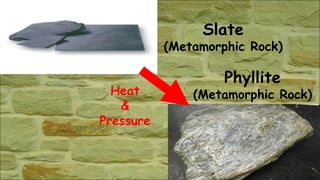
Shale
(Sedimentary Rock)
Slate
(Metamorphic
Rock)Heat
&
Pressure
Slate
(Metamorphic Rock)
Heat
&
Pressure
Phyllite
(Metamorphic Rock)
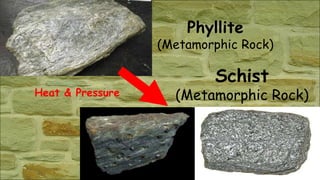
Phyllite
(Metamorphic Rock)
Schist
(Metamorphic Rock)Heat & Pressure
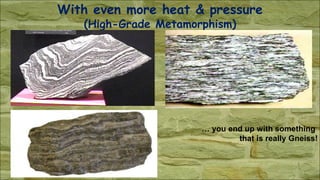
With even more heat & pressure
(High-Grade Metamorphism)
… you end up with something
that is really Gneiss!
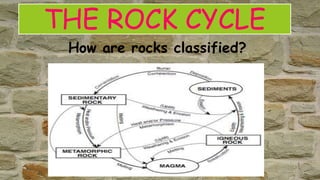
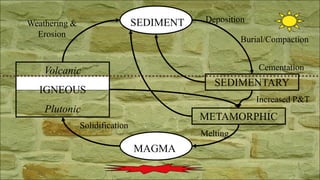
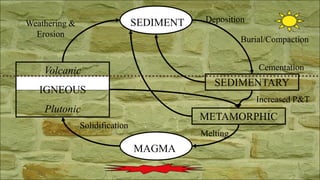
THE ROCK CYCLE
How are rocks classified?
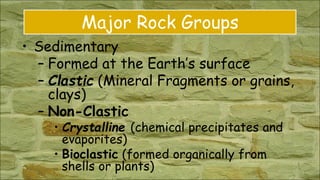
Major Rock Groups
• Sedimentary
– Formed at the Earth’s surface
– Clastic (Mineral Fragments or grains,
clays)
– Non-Clastic
• Crystalline (chemical precipitates and
evaporites)
• Bioclastic (formed organically from
shells or plants)
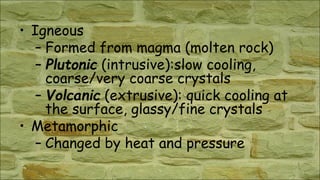
• Igneous
– Formed from magma (molten rock)
– Plutonic (intrusive):slow cooling,
coarse/very coarse crystals
– Volcanic (extrusive): quick cooling at
the surface, glassy/fine crystals
• Metamorphic
– Changed by heat and pressure
Rock Cycle Conclusion
Fig. 2.9
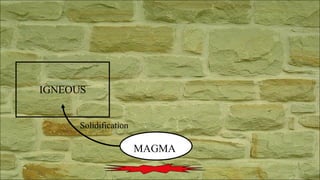
MAGMA
MAGMA
Solidification
IGNEOUS
MAGMA
IGNEOUS
Plutonic
Solidification
MAGMA
Volcanic
IGNEOUS
Plutonic
Solidification
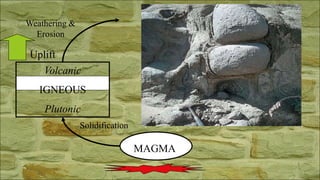
MAGMA
Volcanic
IGNEOUS
Plutonic
Uplift
Solidification
Weathering &
Erosion
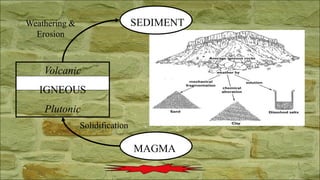
MAGMA
Volcanic
IGNEOUS
Plutonic
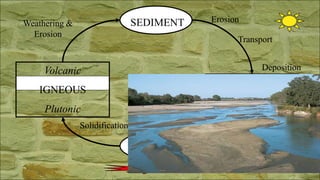
SEDIMENT
Solidification
Weathering &
Erosion
SEDIMENT
MAGMA
Volcanic
IGNEOUS
Plutonic
SEDIMENT
SEDIMENTARY
Solidification
Weathering &
Erosion
Erosion
Transport
Deposition
MAGMA
Volcanic
IGNEOUS
Plutonic
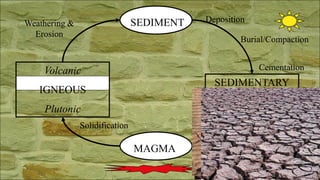
SEDIMENT
SEDIMENTARY
Solidification
Weathering &
Erosion
Deposition
Burial/Compaction
Cementation
MAGMA
Volcanic
IGNEOUS
Plutonic
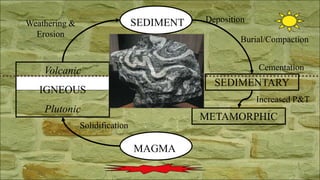
SEDIMENT
SEDIMENTARY
METAMORPHIC
Increased P&T
Solidification
Weathering &
Erosion
Deposition
Burial/Compaction
Cementation
MAGMA
Volcanic
IGNEOUS
Plutonic
SEDIMENT
SEDIMENTARY
METAMORPHIC
Increased P&T
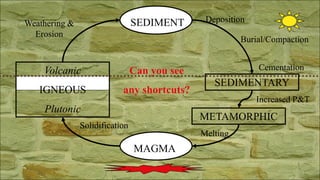
Melting
Solidification
Weathering &
Erosion
Deposition
Burial/Compaction
CementationCan you see
any shortcuts?
MAGMA
Volcanic
IGNEOUS
Plutonic
SEDIMENT
SEDIMENTARY
METAMORPHIC
Increased P&T
Melting
Solidification
Weathering &
Erosion
Deposition
Burial/Compaction
Cementation
MAGMA
Volcanic
IGNEOUS
Plutonic
SEDIMENT
SEDIMENTARY
METAMORPHIC
Increased P&T
Melting
Solidification
Weathering &
Erosion
Deposition
Burial/Compaction
Cementation

Ii. a. minerals and rocks