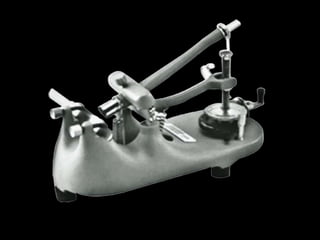
Gk micros = small ; tome = cutting
Microtomy is the cutting of thin sections of objects,
such as tissues or cells, for microscopic /
ultramicroscopic examination
Mechanical device is used to cut sections is called
microtome
It can overcome the limitations of free – hand
sectioning
They are especially desighned to cut away uniformly
thin section of tissues
Extreamly thin sections are needed for electron
microscopic examinations and this has led to the
invention of ultramicrotomes
COMMON FEATURS
A feed back mechanism to move the
material or the cutting knife forward
over a specific & pre-detemined
distance(in microns)after every cutting
stroke
A block holding the tissue block
A strong knife holder
Microtomes are broadly classified in to 2
categories
Block remains stationary & the knife moves
across it eg: bench microtome,clinical microtome
,sliding microtome, sledge microtome, etc can’t
use for serial sections but can prepare thin
sections
Block moves across a stationary knife
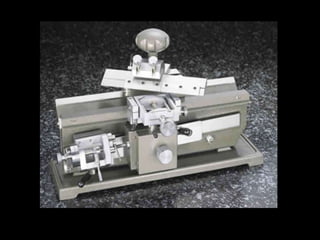
A sledge microtome is a device where the sample is placed
into a fixed holder (shuttle), which then moves backwards and
forwards across a knife.
Modern sled microtomes have the sled placed upon a linear
bearing, a design that allows for the microtome to readily cut
many coarse sections By adjusting the angles between the
sample and the microtome knife, the pressure applied to the
sample during the cut can be reduced.
Typical applications for this design of microtome are of the
preparation of large samples, such as those embedded in
paraffin for biological preparations. Typical cut thickness
achievable on a sledge microtome is between 1 and 60 µm.
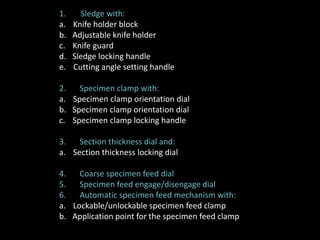
1. Sledge with:
a. Knife holder block
b. Adjustable knife holder
c. Knife guard
d. Sledge locking handle
e. Cutting angle setting handle
2. Specimen clamp with:
a. Specimen clamp orientation dial
b. Specimen clamp orientation dial
c. Specimen clamp locking handle
3. Section thickness dial and:
a. Section thickness locking dial
4. Coarse specimen feed dial
5. Specimen feed engage/disengage dial
6. Automatic specimen feed mechanism with:
a. Lockable/unlockable specimen feed clamp
b. Application point for the specimen feed clamp
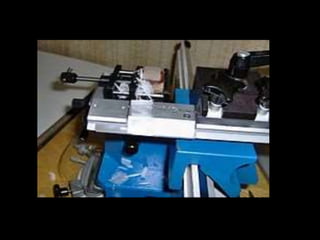
adjustable “declination angle” in the Hn-40 sledge microtome
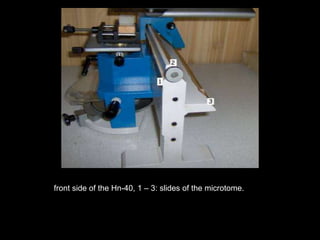
front side of the Hn-40, 1 – 3: slides of the microtome.
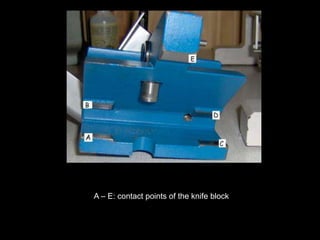
A – E: contact points of the knife block
hand position using the sledge microtome. Notice the oiled paper covering the
slides when the microtome is not in use. This is a precaution to prevent rust
trial sections made while adjusting the
microtome.
after some adjustments: nearly there…
The main parts of a rocking microtome are…
A long heavy base upon which the other parts of the
microscope rest
A long and solid cylindrical shaft attached to a handled
and grooved circular disc
A grooved circular disc at the posterior part of the
base. It connected to the shaft by a spring. The disc has
an adjustment lever which can be adjusted to obtain
sections of desired thickness.
A rising shaft which is connected to the disc by a long
screw.
A razor holder & razor-razor holder is a wide groove in
the front part of the base.the angles of the razor is
adjusted with the help of the screws on the razor holder
Rocking microtome is very simple in
operation & it can operate manually.
It works by moving the handle forward &
backward over the disc, in it, the material
moves against the stationary razor.
A rotary microtome of older construction
This instrument is a common microtome
design. This device operates with a staged rotary
action such that the actual cutting is part of the
rotary motion.
In a rotary microtome, the knife is typically
fixed in a horizontal position.
Principle of sample movement for making a
cut on a rotary microtome
In the figure to the left, the principle of the cut
is explained.
Principle of sample movement for making a cut
on a rotary microtome
Through the motion of the sample holder, the
sample is cut by the knife position 1 to position
2), at which point the fresh section remains on
the knife.
At the highest point of the rotary motion, the
sample holder is advanced by the same
thickness as the section that is to be made,
allowing for the next section to be made
The flywheel in many microtomes can be operated
by hand.
This has the advantage that a clean cut can be made,
as the relatively large mass of the flywheel prevents
the sample from being stopped during the sample cut.
The flywheel in newer models is often integrated
inside the microtome casing.
The typical cut thickness for a rotary microtome is
between 1 and 60 µm.
For hard materials, such as a sample embedded in a
synthetic resin, this design of microtome can allow for
good "Semi-thin" sections with a thickness of as low
as 0.5 µm.
SALIENT FEATURE OF ROTARY MICROTOME
High Precision specimen feed
Handwheel lock in each position
Erogonomically located hand wheel
for coarse advance
Counter balance hand wheel
Based on coarse roller guides
Adjustable knife angle
ADVANTAGES OF MICROTOMES
Helps to cut sections of uniform thickness
Helps to cut sections of any desired
thickness(10µ / 20µ etc)
Helps to retain the entire tissue in sections
Helps to avoid oblique sections
Helps to study the developmental stages of
plant organs / plant parts
DISADVANTAGES
Microtome sectioning is a long-drawn
process
This is a laborious task
Need help of an expert
Microtome

Microtome

  • 2.
    Gk micros =small ; tome = cutting Microtomy is the cutting of thin sections of objects, such as tissues or cells, for microscopic / ultramicroscopic examination Mechanical device is used to cut sections is called microtome It can overcome the limitations of free – hand sectioning They are especially desighned to cut away uniformly thin section of tissues Extreamly thin sections are needed for electron microscopic examinations and this has led to the invention of ultramicrotomes
  • 3.
    COMMON FEATURS A feedback mechanism to move the material or the cutting knife forward over a specific & pre-detemined distance(in microns)after every cutting stroke A block holding the tissue block A strong knife holder
  • 4.
    Microtomes are broadlyclassified in to 2 categories Block remains stationary & the knife moves across it eg: bench microtome,clinical microtome ,sliding microtome, sledge microtome, etc can’t use for serial sections but can prepare thin sections Block moves across a stationary knife
  • 7.
    A sledge microtomeis a device where the sample is placed into a fixed holder (shuttle), which then moves backwards and forwards across a knife. Modern sled microtomes have the sled placed upon a linear bearing, a design that allows for the microtome to readily cut many coarse sections By adjusting the angles between the sample and the microtome knife, the pressure applied to the sample during the cut can be reduced. Typical applications for this design of microtome are of the preparation of large samples, such as those embedded in paraffin for biological preparations. Typical cut thickness achievable on a sledge microtome is between 1 and 60 µm.
  • 12.
    1. Sledge with: a.Knife holder block b. Adjustable knife holder c. Knife guard d. Sledge locking handle e. Cutting angle setting handle 2. Specimen clamp with: a. Specimen clamp orientation dial b. Specimen clamp orientation dial c. Specimen clamp locking handle 3. Section thickness dial and: a. Section thickness locking dial 4. Coarse specimen feed dial 5. Specimen feed engage/disengage dial 6. Automatic specimen feed mechanism with: a. Lockable/unlockable specimen feed clamp b. Application point for the specimen feed clamp
  • 13.
    adjustable “declination angle”in the Hn-40 sledge microtome
  • 14.
    front side ofthe Hn-40, 1 – 3: slides of the microtome.
  • 15.
    A – E:contact points of the knife block
  • 16.
    hand position usingthe sledge microtome. Notice the oiled paper covering the slides when the microtome is not in use. This is a precaution to prevent rust
  • 17.
    trial sections madewhile adjusting the microtome. after some adjustments: nearly there…
  • 21.
    The main partsof a rocking microtome are… A long heavy base upon which the other parts of the microscope rest A long and solid cylindrical shaft attached to a handled and grooved circular disc A grooved circular disc at the posterior part of the base. It connected to the shaft by a spring. The disc has an adjustment lever which can be adjusted to obtain sections of desired thickness. A rising shaft which is connected to the disc by a long screw. A razor holder & razor-razor holder is a wide groove in the front part of the base.the angles of the razor is adjusted with the help of the screws on the razor holder
  • 23.
    Rocking microtome isvery simple in operation & it can operate manually. It works by moving the handle forward & backward over the disc, in it, the material moves against the stationary razor.
  • 28.
    A rotary microtomeof older construction
  • 29.
    This instrument isa common microtome design. This device operates with a staged rotary action such that the actual cutting is part of the rotary motion. In a rotary microtome, the knife is typically fixed in a horizontal position. Principle of sample movement for making a cut on a rotary microtome In the figure to the left, the principle of the cut is explained.
  • 30.
    Principle of samplemovement for making a cut on a rotary microtome
  • 31.
    Through the motionof the sample holder, the sample is cut by the knife position 1 to position 2), at which point the fresh section remains on the knife. At the highest point of the rotary motion, the sample holder is advanced by the same thickness as the section that is to be made, allowing for the next section to be made
  • 33.
    The flywheel inmany microtomes can be operated by hand. This has the advantage that a clean cut can be made, as the relatively large mass of the flywheel prevents the sample from being stopped during the sample cut. The flywheel in newer models is often integrated inside the microtome casing. The typical cut thickness for a rotary microtome is between 1 and 60 µm. For hard materials, such as a sample embedded in a synthetic resin, this design of microtome can allow for good "Semi-thin" sections with a thickness of as low as 0.5 µm.
  • 34.
    SALIENT FEATURE OFROTARY MICROTOME High Precision specimen feed Handwheel lock in each position Erogonomically located hand wheel for coarse advance Counter balance hand wheel Based on coarse roller guides Adjustable knife angle
  • 35.
    ADVANTAGES OF MICROTOMES Helpsto cut sections of uniform thickness Helps to cut sections of any desired thickness(10µ / 20µ etc) Helps to retain the entire tissue in sections Helps to avoid oblique sections Helps to study the developmental stages of plant organs / plant parts
  • 36.
    DISADVANTAGES Microtome sectioning isa long-drawn process This is a laborious task Need help of an expert