Freezing microtome/Cryostat
Introduction
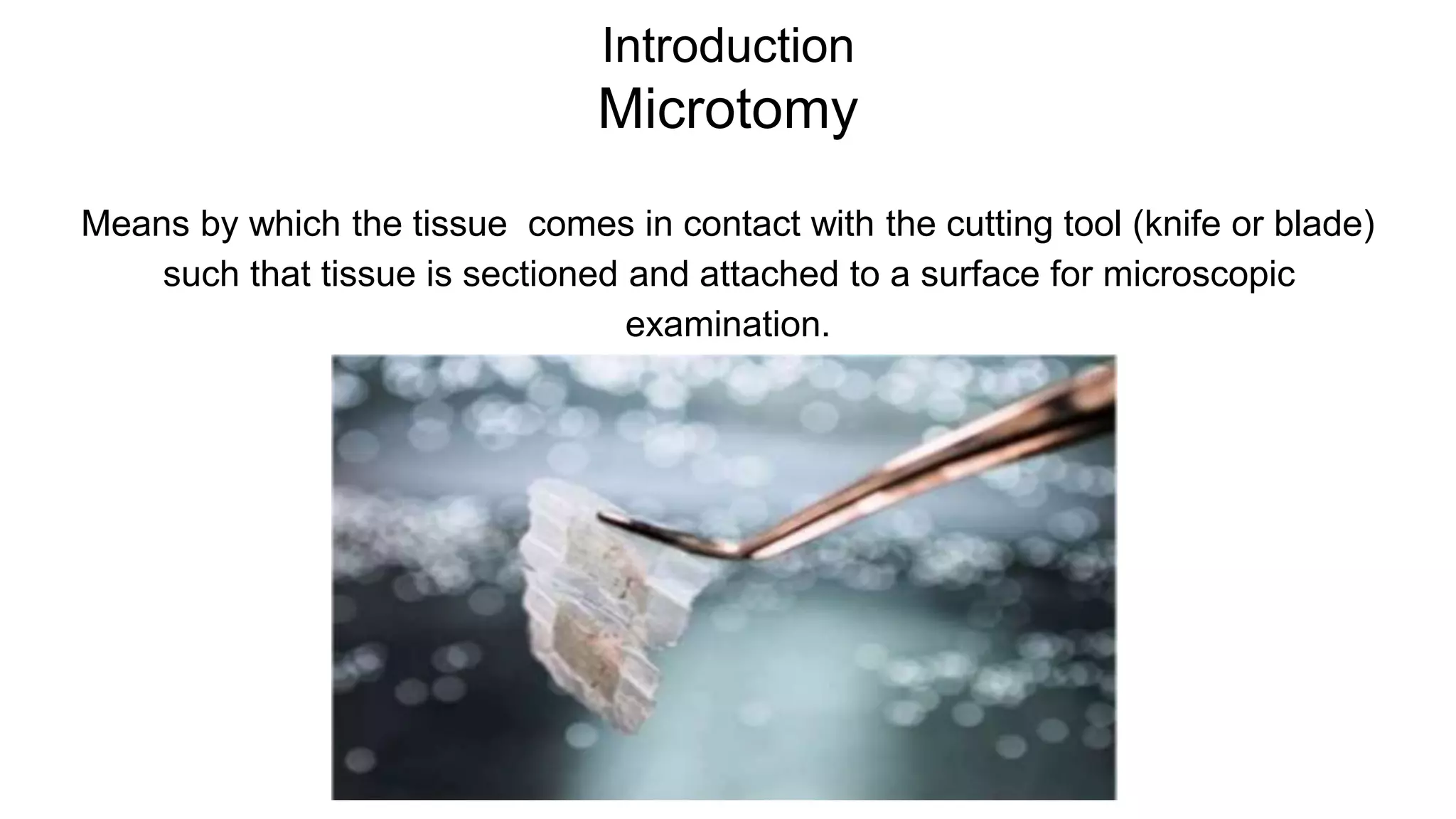
Microtomy
Means by which the tissue comes in contact with the cutting tool (knife or blade)
such that tissue is sectioned and attached to a surface for microscopic
examination.
Introduction - 2
MICROTOME
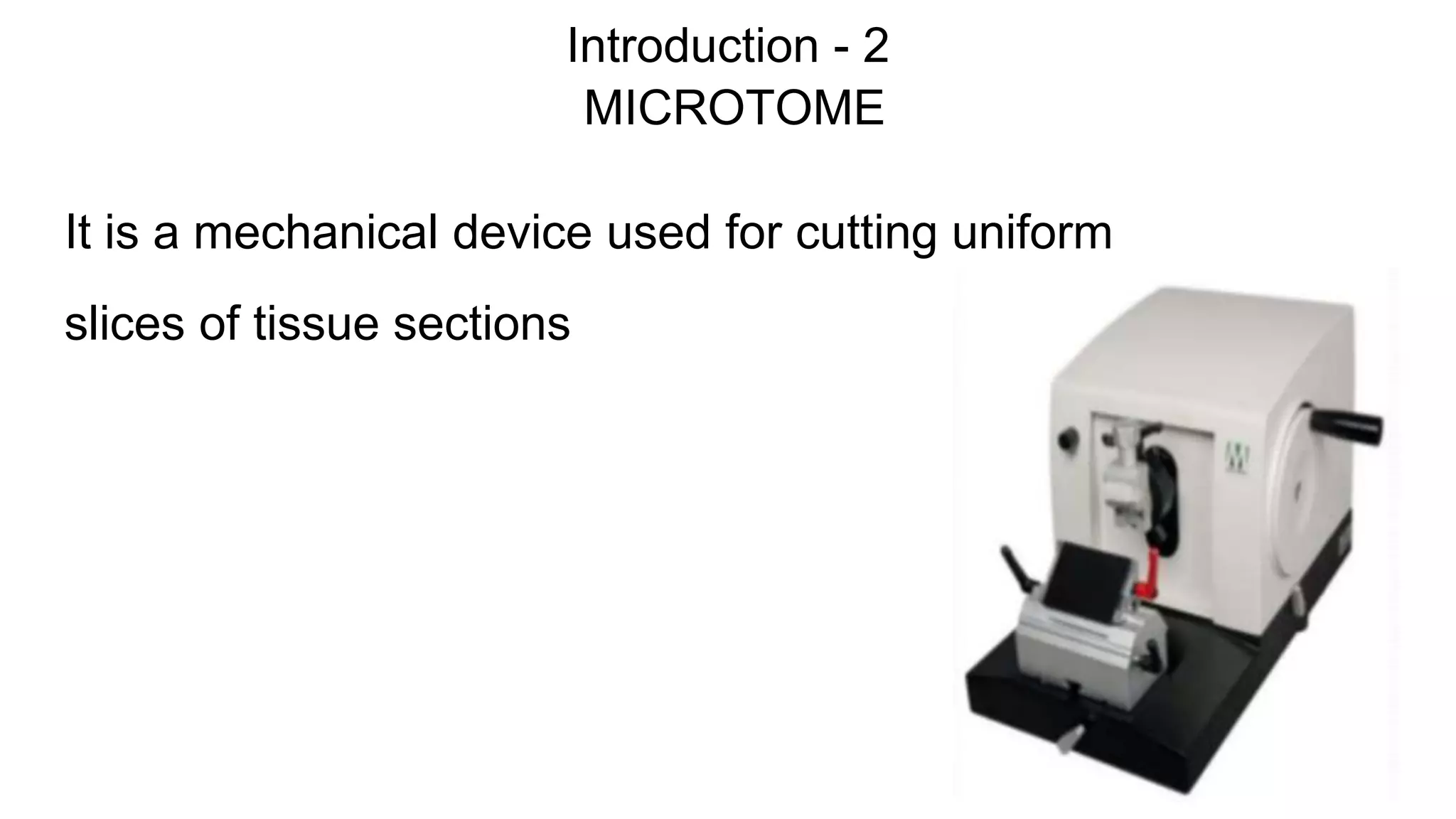
It is a mechanical device used for cutting uniform
slices of tissue sections
Introduction - 2
MICROTOME
It is a mechanical device used for cutting uniform
slices of tissue sections
Types of Microtome
There are several types of microtome, each designed for a specific purpose,
although many have multifunctional roles.
Rotary microtome
Rotation of a fine advancing hand-wheel by 360° degrees, moving the specimen
vertically past the cutting surface and returning it to the starting position.
Most common type
Types of rotary microtome
Manual rotary microtome
Completely manipulated by the
operator
Types of rotary microtome
Semi automated rotary microtome
One motor to advance either fine or course hand wheel
Types of rotary microtome
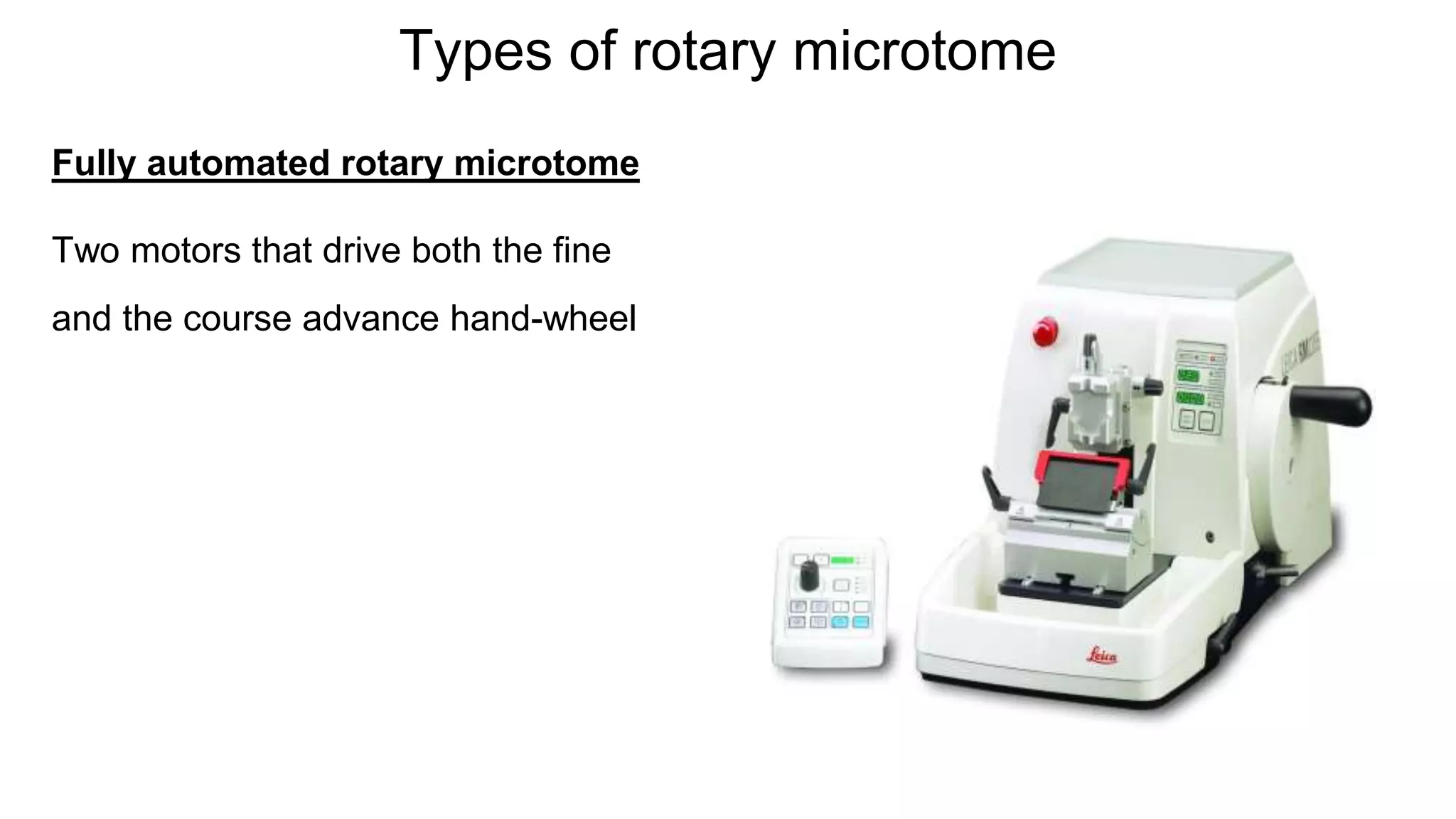
Fully automated rotary microtome
Two motors that drive both the fine
and the course advance hand-wheel
Types of Microtome
Base sledge microtome
- Specimen is stationary
- Knife slides across the top of the
specimen during sectioning
- Used for large blocks, hard
tissues, or whole mounts,
- Neuro and ophthalmic pathology.
Types of Microtome
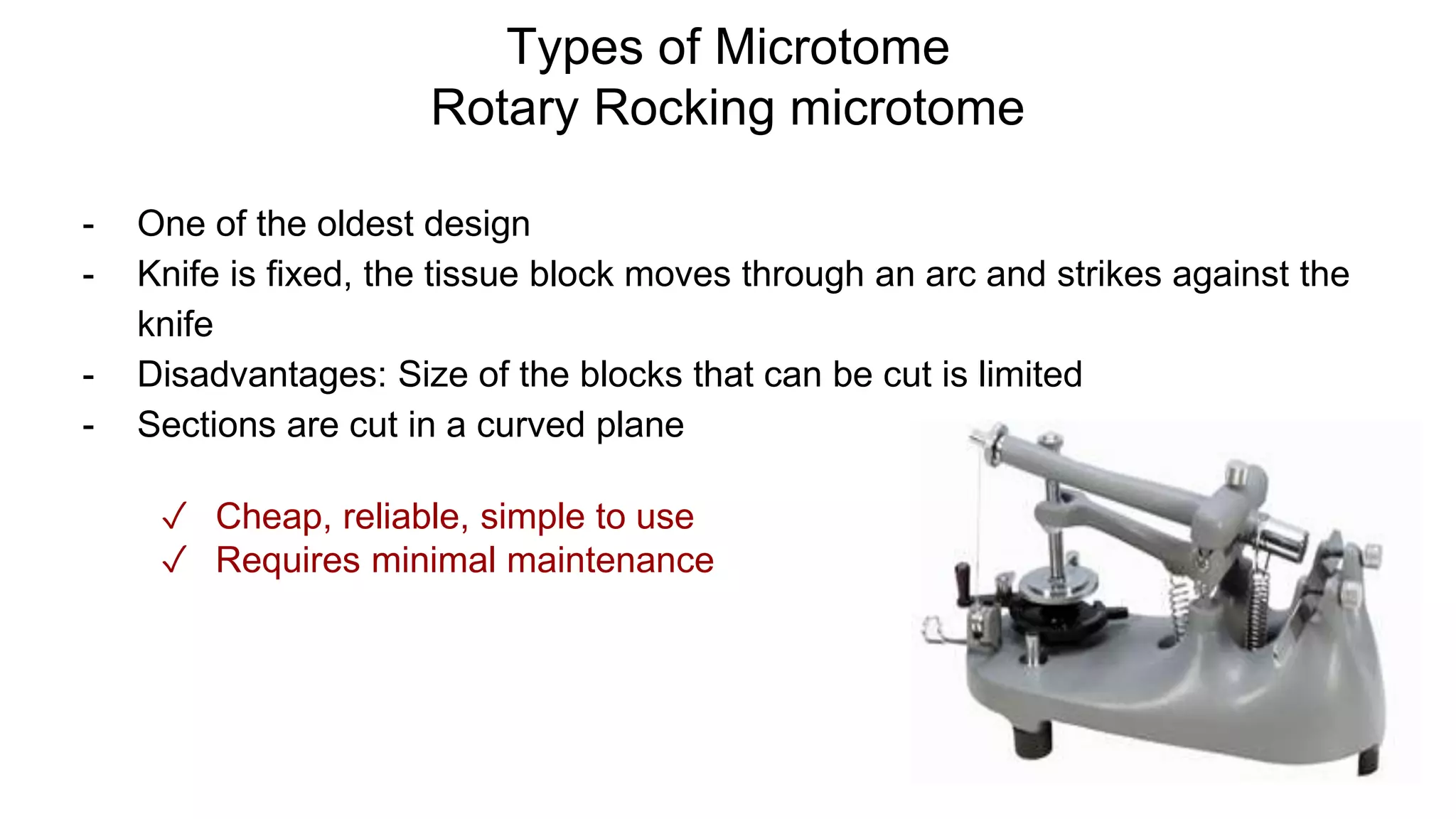
Rotary Rocking microtome
- One of the oldest design
- Knife is fixed, the tissue block moves through an arc and strikes against the
knife
- Disadvantages: Size of the blocks that can be cut is limited
- Sections are cut in a curved plane
✓ Cheap, reliable, simple to use
✓ Requires minimal maintenance
Types of Microtome
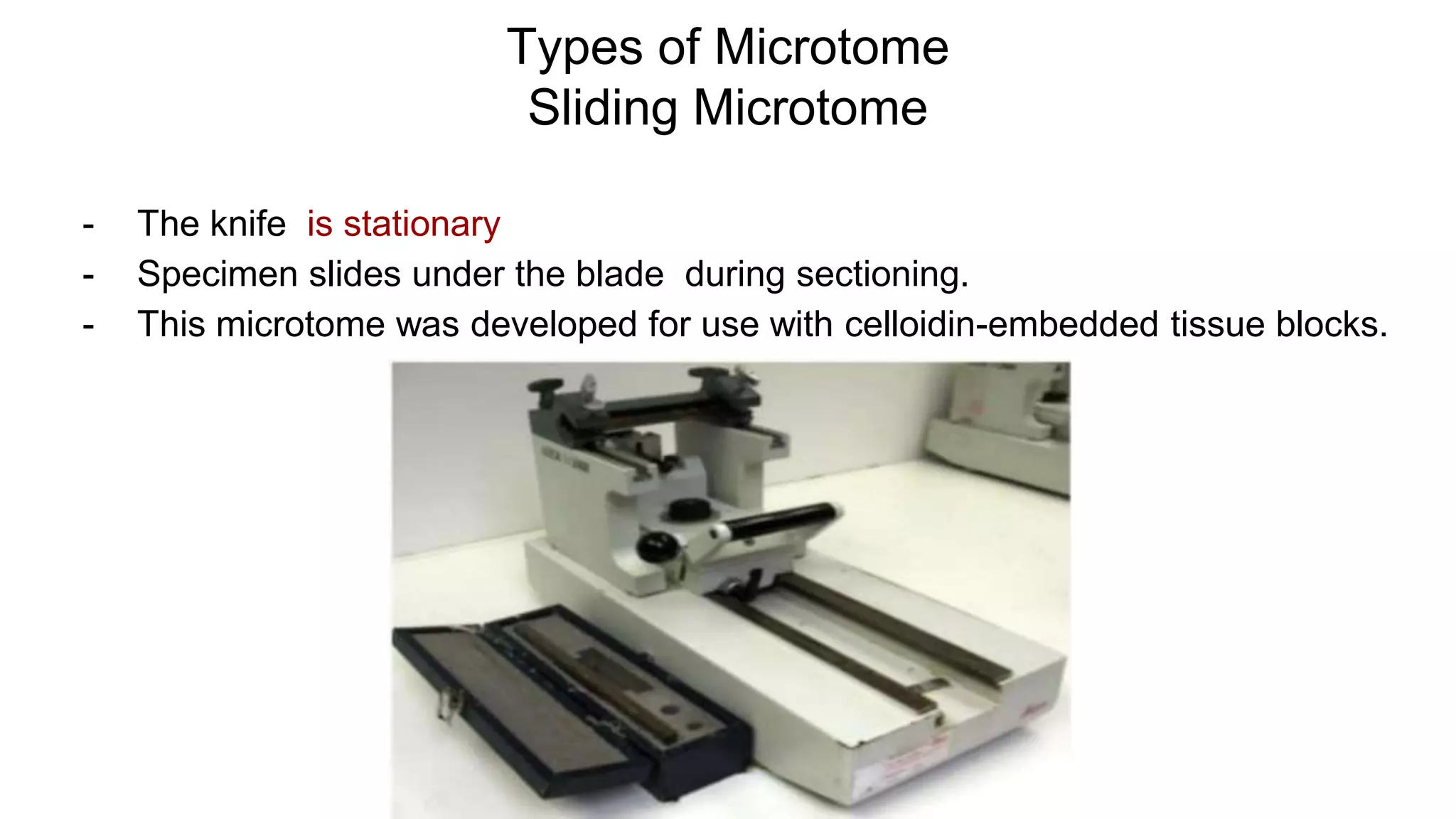
Sliding Microtome
- The knife is stationary
- Specimen slides under the blade during sectioning.
- This microtome was developed for use with celloidin-embedded tissue blocks.
Types of Microtome
Ultra Microtome
- Exclusively for electron microscopy
- Ultrathin sections upto 10nm
- Glass/ diamond/sapphire knives
- Block is brought close to the knife
edge under a microscope
- As each section is cut, it is floated
on a water bath adjacent to the
knife
Types of Microtome
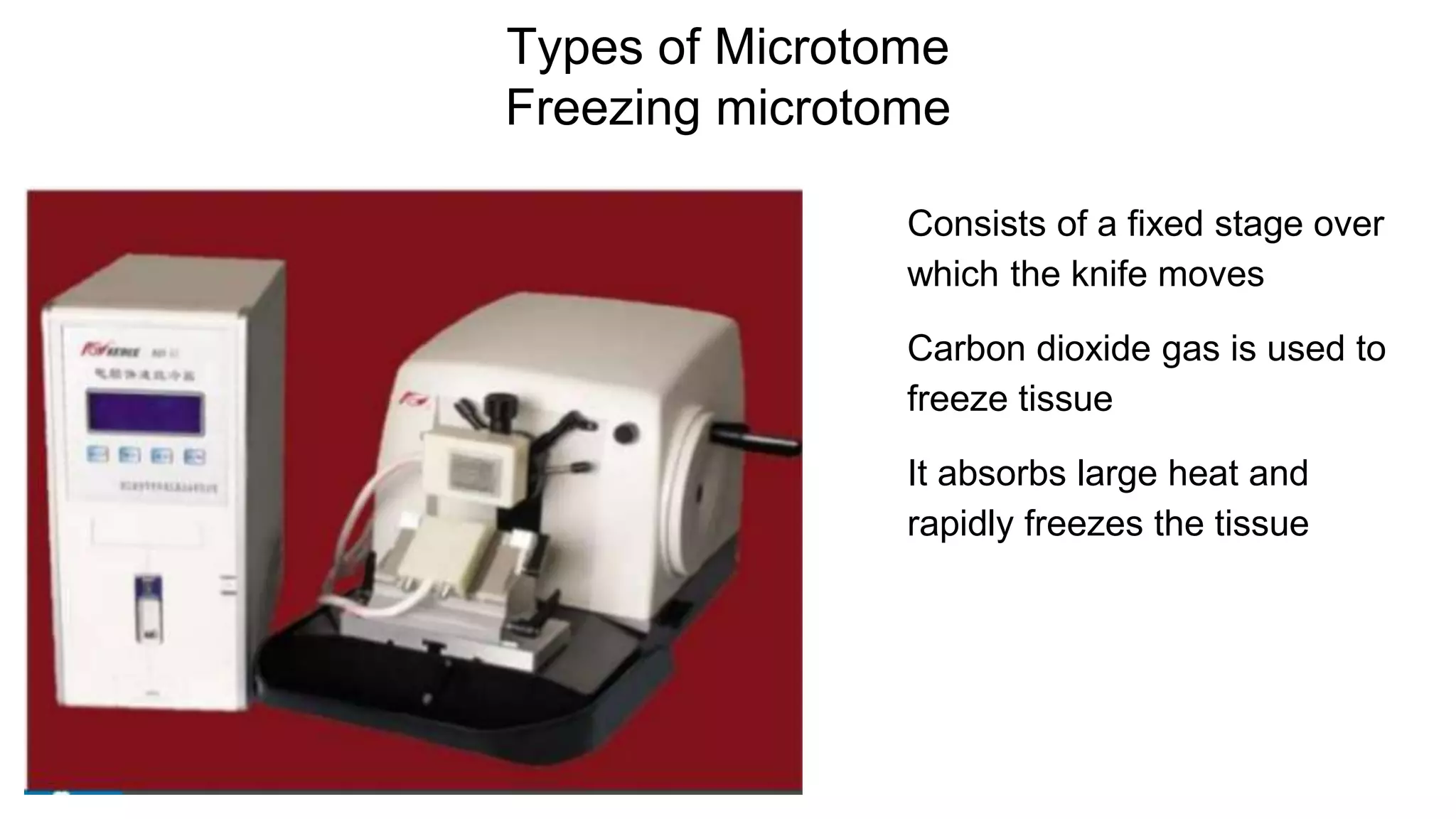
Freezing microtome
Consists of a fixed stage over
which the knife moves
Carbon dioxide gas is used to
freeze tissue
It absorbs large heat and
rapidly freezes the tissue
Types of Microtome
Vibrating microtome
- High speed vibration is used
- Designed to cut tissues which have
not been fixed or frozen
- Sections are thicker
- Tissue is immersed in water
- Enzyme histochemistry and
ultrastructure histochemistry
Types of Microtome
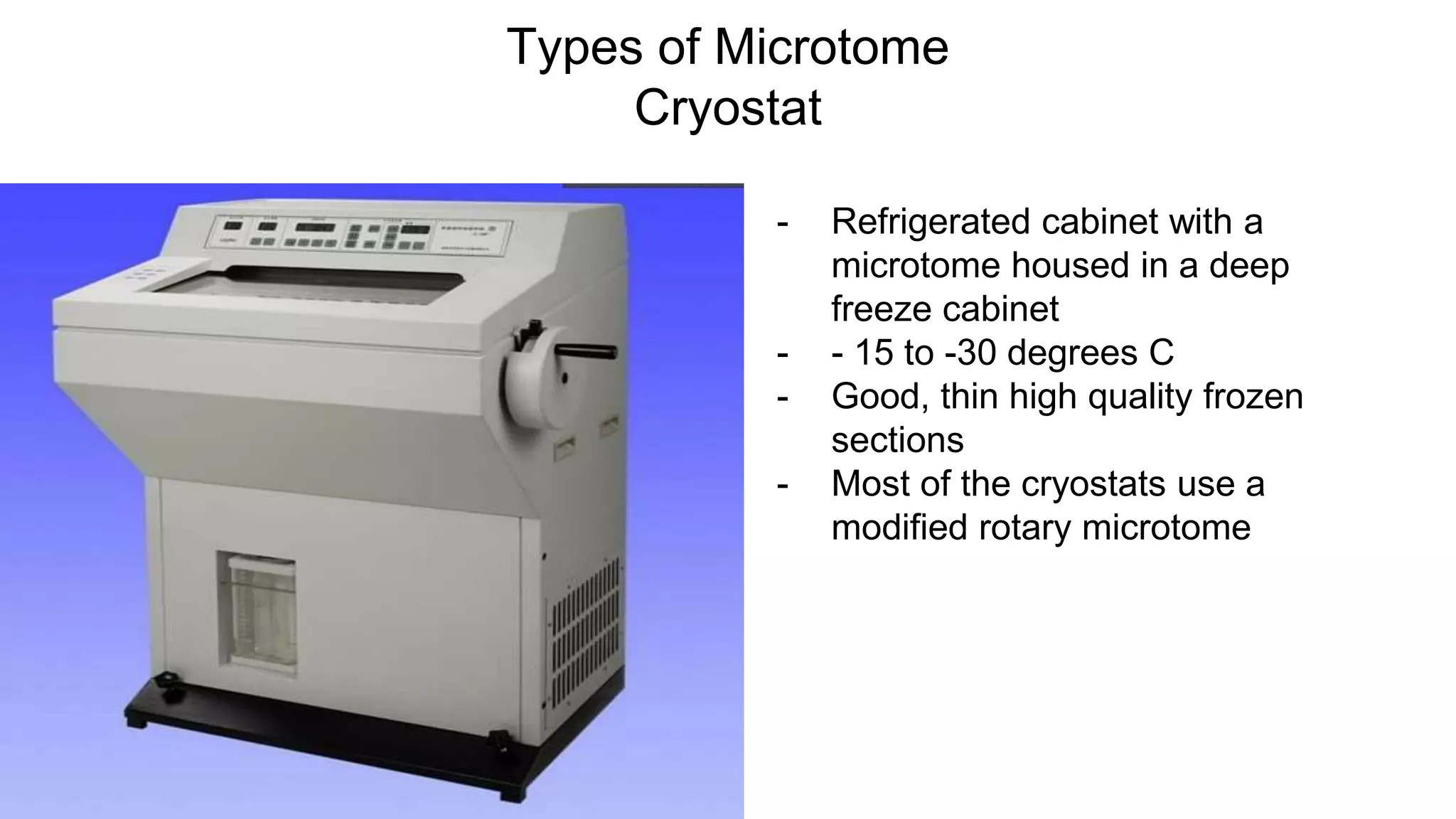
Cryostat
- Refrigerated cabinet with a
microtome housed in a deep
freeze cabinet
- - 15 to -30 degrees C
- Good, thin high quality frozen
sections
- Most of the cryostats use a
modified rotary microtome
PRINCIPLE of FROZEN SECTION
● When a tissue is frozen, the water within the tissue turns to ice and in
this state the tissue is firm, with the ice acting as the embedding
medium.
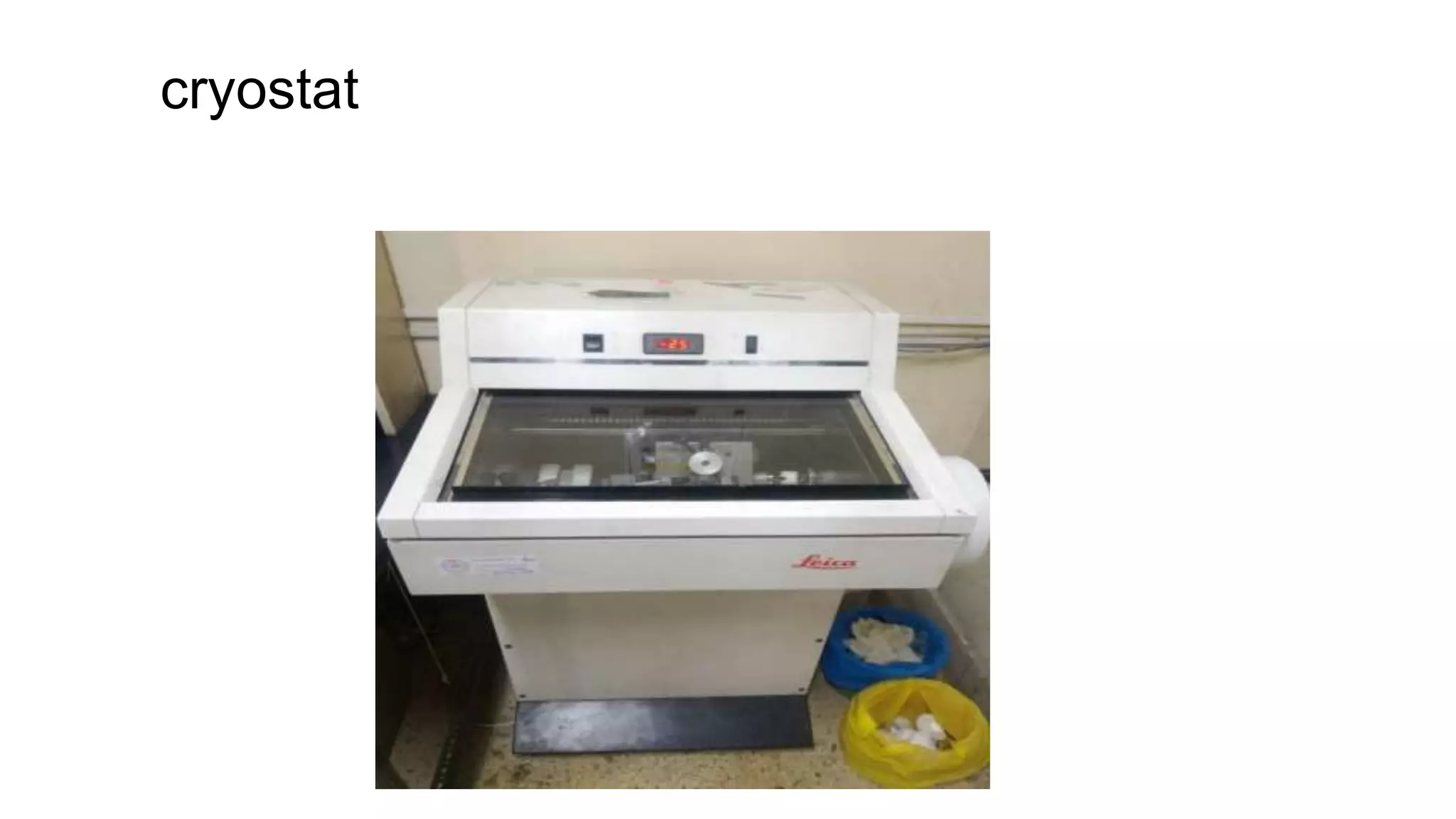
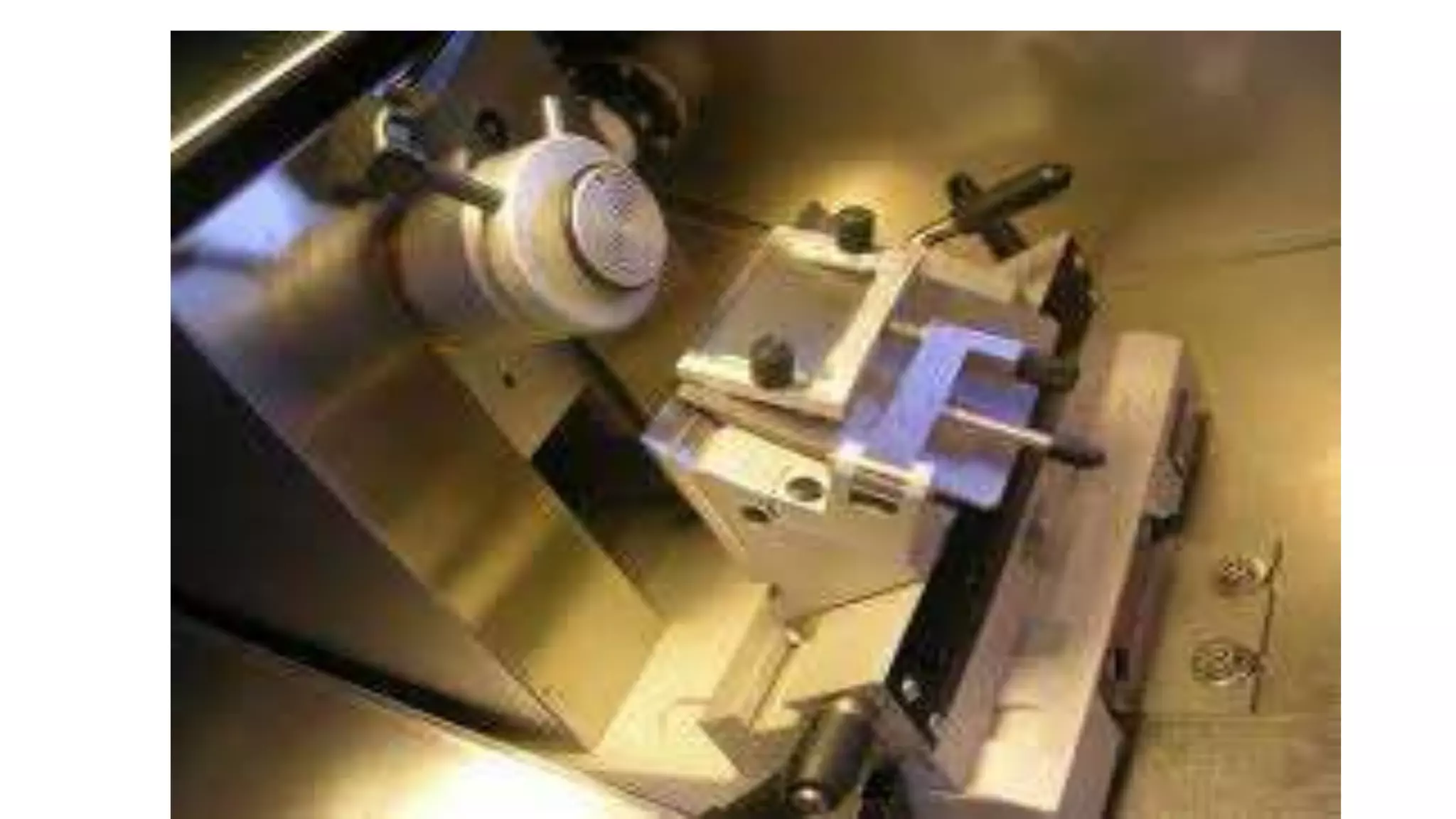
cryostat
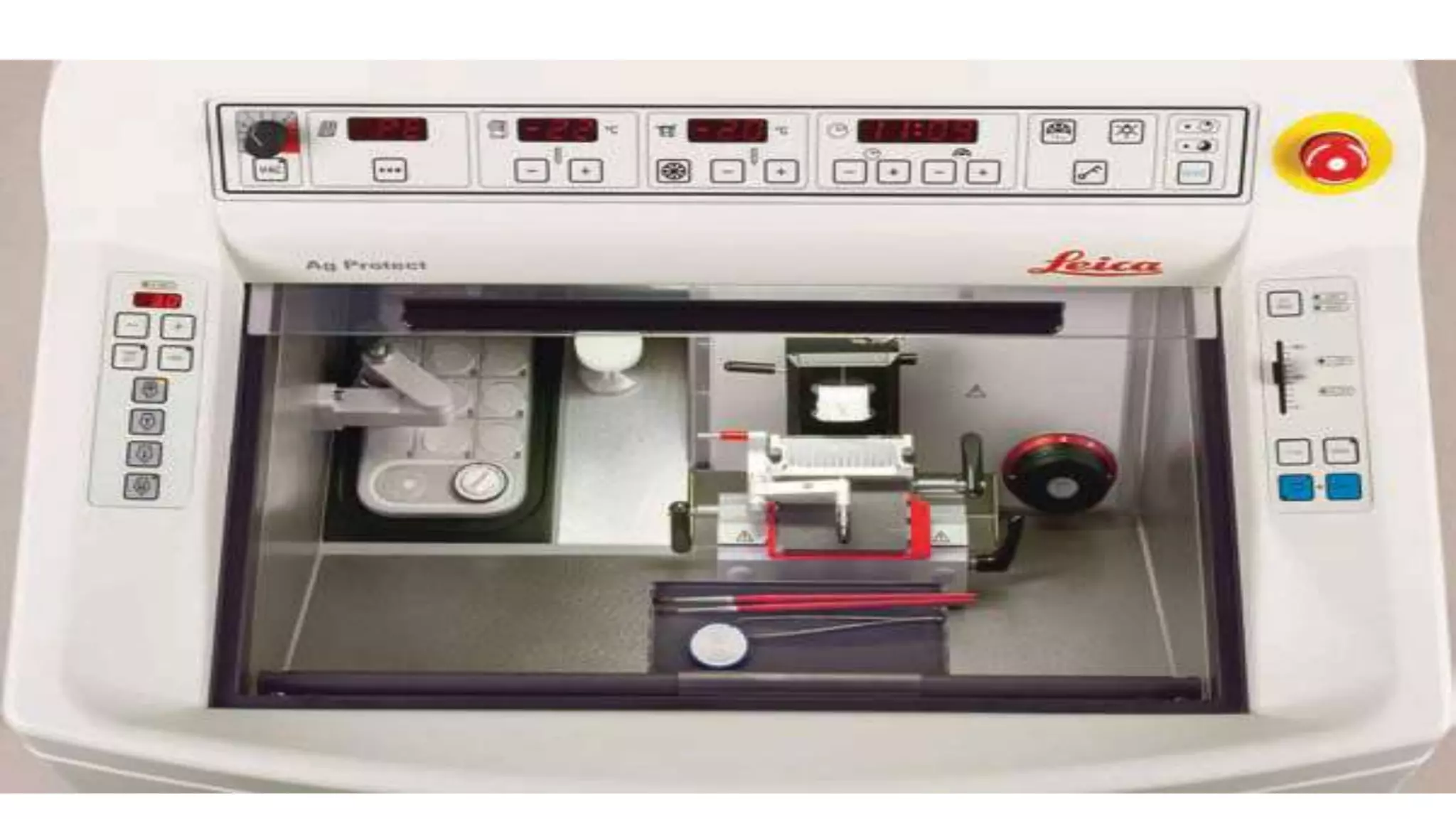
● Access to the chamber is via a sliding window.
● Working temperature : 0 to -35 degree Celsius
● Rotary microtome controlled by an external hand wheel.
● Freezing shelf
● knife holder
HEAT EXTRACTOR
HAND WHEEL
ANTI ROLL PLATE
❖ Prevent rolling or curling of tissue
❖ Glass plate supported on an aluminium frame
❖ Provides gap between underside of glass and upper surface of knife.
Anti roll plate
TEMPERATURE SETTINGS
● Digital display
● For most tissues: -15 to -23 degree Celsius is used
● For tissues with more fat: Colder temperature
● Temperature log maintained
● Defrosting done daily
● Rapid freezing to be done to reduce freeze artefacts
CHUCKS
Thank You
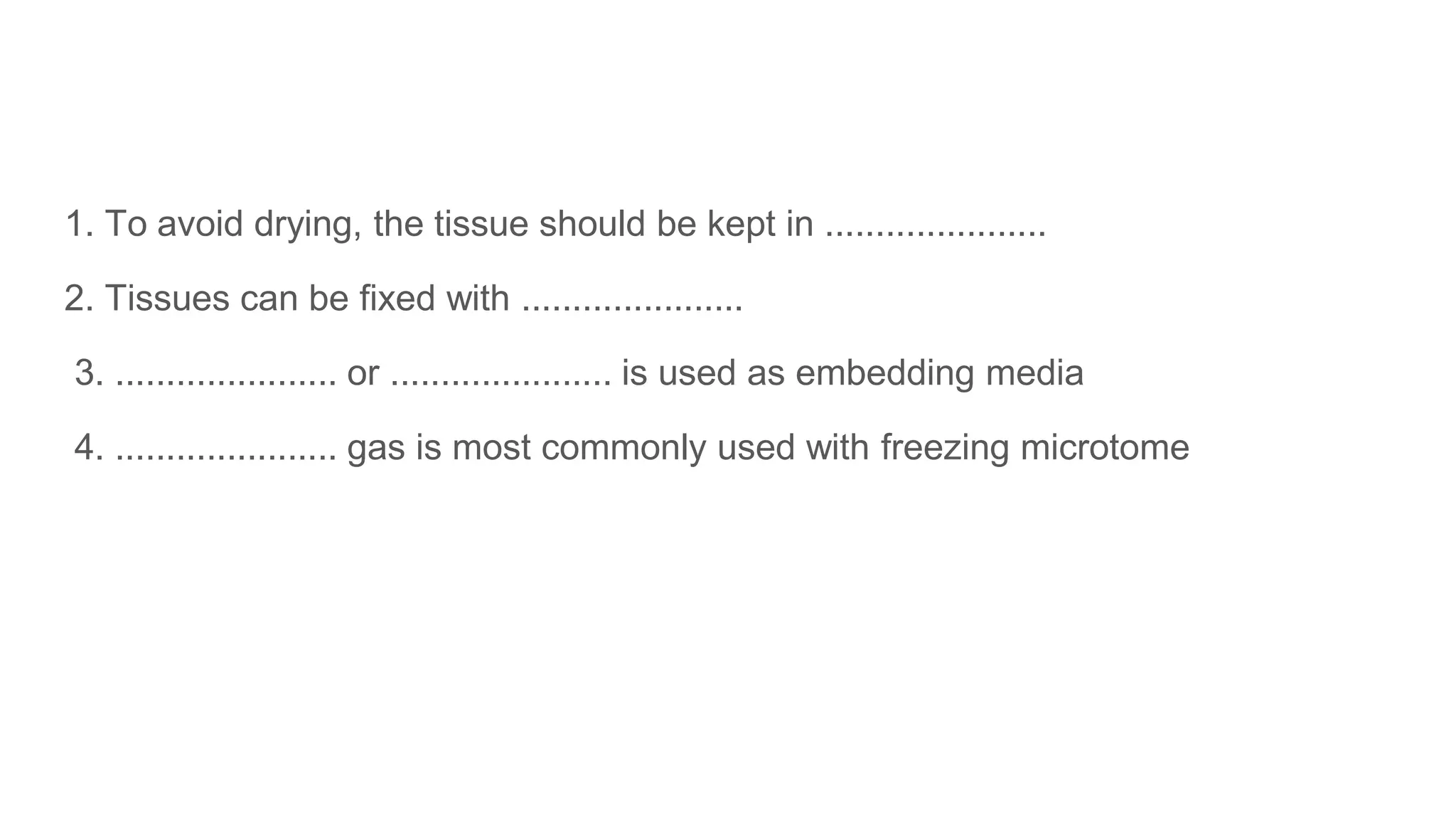
1. To avoid drying, the tissue should be kept in ......................
2. Tissues can be fixed with ......................
3. ...................... or ...................... is used as embedding media
4. ...................... gas is most commonly used with freezing microtome

Freezing microtome_ cryostat.pptx

  • 1.
  • 2.
    Introduction Microtomy Means by whichthe tissue comes in contact with the cutting tool (knife or blade) such that tissue is sectioned and attached to a surface for microscopic examination.
  • 3.
    Introduction - 2 MICROTOME Itis a mechanical device used for cutting uniform slices of tissue sections
  • 4.
    Introduction - 2 MICROTOME Itis a mechanical device used for cutting uniform slices of tissue sections
  • 5.
    Types of Microtome Thereare several types of microtome, each designed for a specific purpose, although many have multifunctional roles.
  • 6.
    Rotary microtome Rotation ofa fine advancing hand-wheel by 360° degrees, moving the specimen vertically past the cutting surface and returning it to the starting position. Most common type
  • 7.
    Types of rotarymicrotome Manual rotary microtome Completely manipulated by the operator
  • 8.
    Types of rotarymicrotome Semi automated rotary microtome One motor to advance either fine or course hand wheel
  • 9.
    Types of rotarymicrotome Fully automated rotary microtome Two motors that drive both the fine and the course advance hand-wheel
  • 10.
    Types of Microtome Basesledge microtome - Specimen is stationary - Knife slides across the top of the specimen during sectioning - Used for large blocks, hard tissues, or whole mounts, - Neuro and ophthalmic pathology.
  • 11.
    Types of Microtome RotaryRocking microtome - One of the oldest design - Knife is fixed, the tissue block moves through an arc and strikes against the knife - Disadvantages: Size of the blocks that can be cut is limited - Sections are cut in a curved plane ✓ Cheap, reliable, simple to use ✓ Requires minimal maintenance
  • 12.
    Types of Microtome SlidingMicrotome - The knife is stationary - Specimen slides under the blade during sectioning. - This microtome was developed for use with celloidin-embedded tissue blocks.
  • 13.
    Types of Microtome UltraMicrotome - Exclusively for electron microscopy - Ultrathin sections upto 10nm - Glass/ diamond/sapphire knives - Block is brought close to the knife edge under a microscope - As each section is cut, it is floated on a water bath adjacent to the knife
  • 14.
    Types of Microtome Freezingmicrotome Consists of a fixed stage over which the knife moves Carbon dioxide gas is used to freeze tissue It absorbs large heat and rapidly freezes the tissue
  • 15.
    Types of Microtome Vibratingmicrotome - High speed vibration is used - Designed to cut tissues which have not been fixed or frozen - Sections are thicker - Tissue is immersed in water - Enzyme histochemistry and ultrastructure histochemistry
  • 16.
    Types of Microtome Cryostat -Refrigerated cabinet with a microtome housed in a deep freeze cabinet - - 15 to -30 degrees C - Good, thin high quality frozen sections - Most of the cryostats use a modified rotary microtome
  • 17.
    PRINCIPLE of FROZENSECTION ● When a tissue is frozen, the water within the tissue turns to ice and in this state the tissue is firm, with the ice acting as the embedding medium.
  • 18.
  • 20.
    ● Access tothe chamber is via a sliding window. ● Working temperature : 0 to -35 degree Celsius ● Rotary microtome controlled by an external hand wheel. ● Freezing shelf ● knife holder
  • 22.
  • 23.
  • 24.
    ANTI ROLL PLATE ❖Prevent rolling or curling of tissue ❖ Glass plate supported on an aluminium frame ❖ Provides gap between underside of glass and upper surface of knife.
  • 25.
  • 26.
    TEMPERATURE SETTINGS ● Digitaldisplay ● For most tissues: -15 to -23 degree Celsius is used ● For tissues with more fat: Colder temperature ● Temperature log maintained ● Defrosting done daily ● Rapid freezing to be done to reduce freeze artefacts
  • 27.
  • 38.
  • 39.
    1. To avoiddrying, the tissue should be kept in ...................... 2. Tissues can be fixed with ...................... 3. ...................... or ...................... is used as embedding media 4. ...................... gas is most commonly used with freezing microtome