Today
Compound Light
Microscope
• Examine and diagram at
least 1 each:
• plant cell
• Choices: elodea, onion,
prepared slide
• animal cell
• Choices: your cheek, prepared
slides
• bacterial cell
• Prepared slide
• Optional:
• hair
• tank water
• magazine paper
• letter “e”
Dissecting Light
Microscope
• Examine and diagram at
least 1 thing such as:
• paper money
• a leaf or a flower
• an insect
• fabric
• sand/sediment
• your fingerprint
• tarantula exoskeleton
• other ideas?
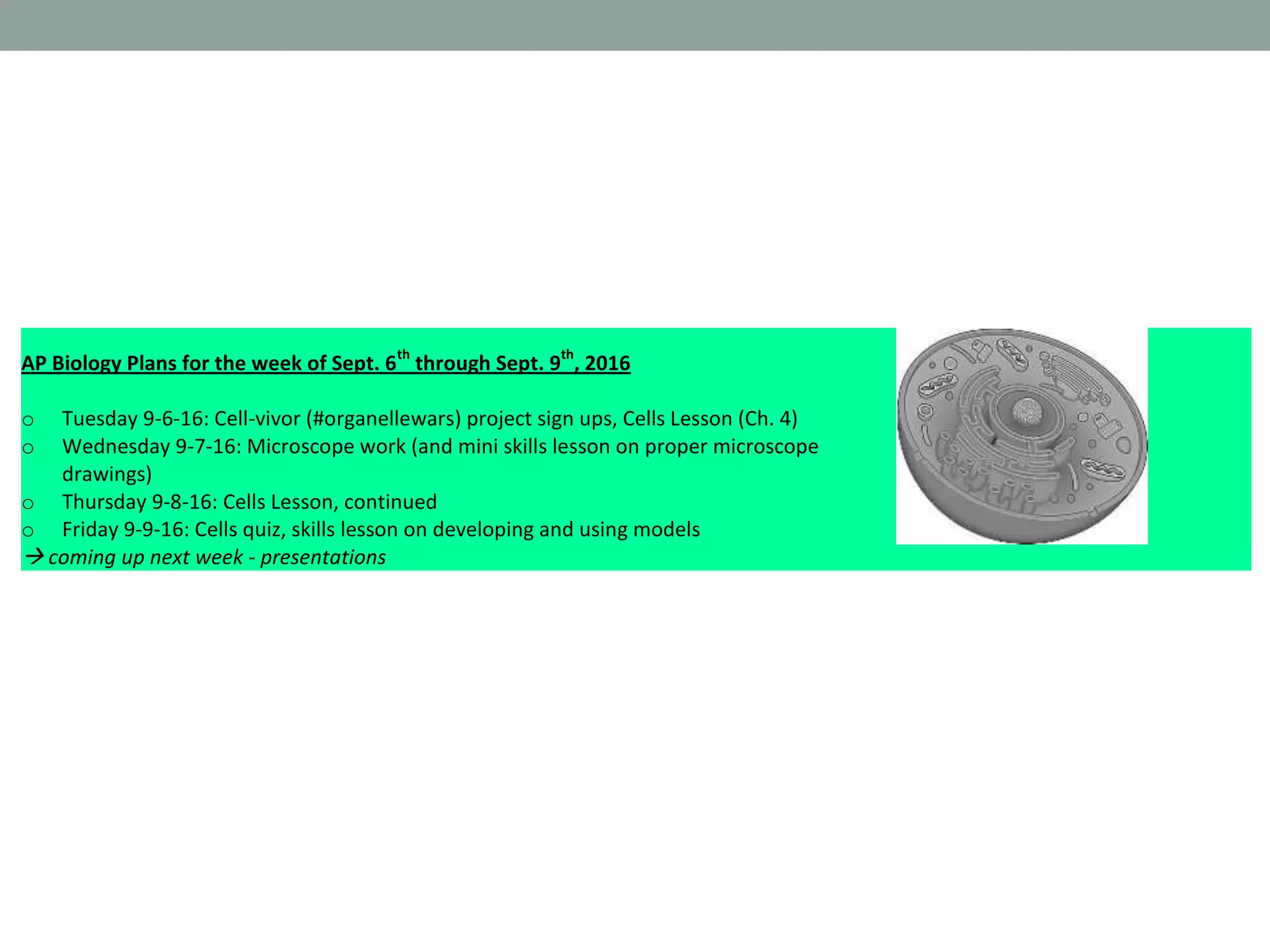
AP Biology Plans for the week of Sept. 6
th
through Sept. 9
th
, 2016
o Tuesday 9-6-16: Cell-vivor (#organellewars) project sign ups, Cells Lesson (Ch. 4)
o Wednesday 9-7-16: Microscope work (and mini skills lesson on proper microscope
drawings)
o Thursday 9-8-16: Cells Lesson, continued
o Friday 9-9-16: Cells quiz, skills lesson on developing and using models
 coming up next week - presentations
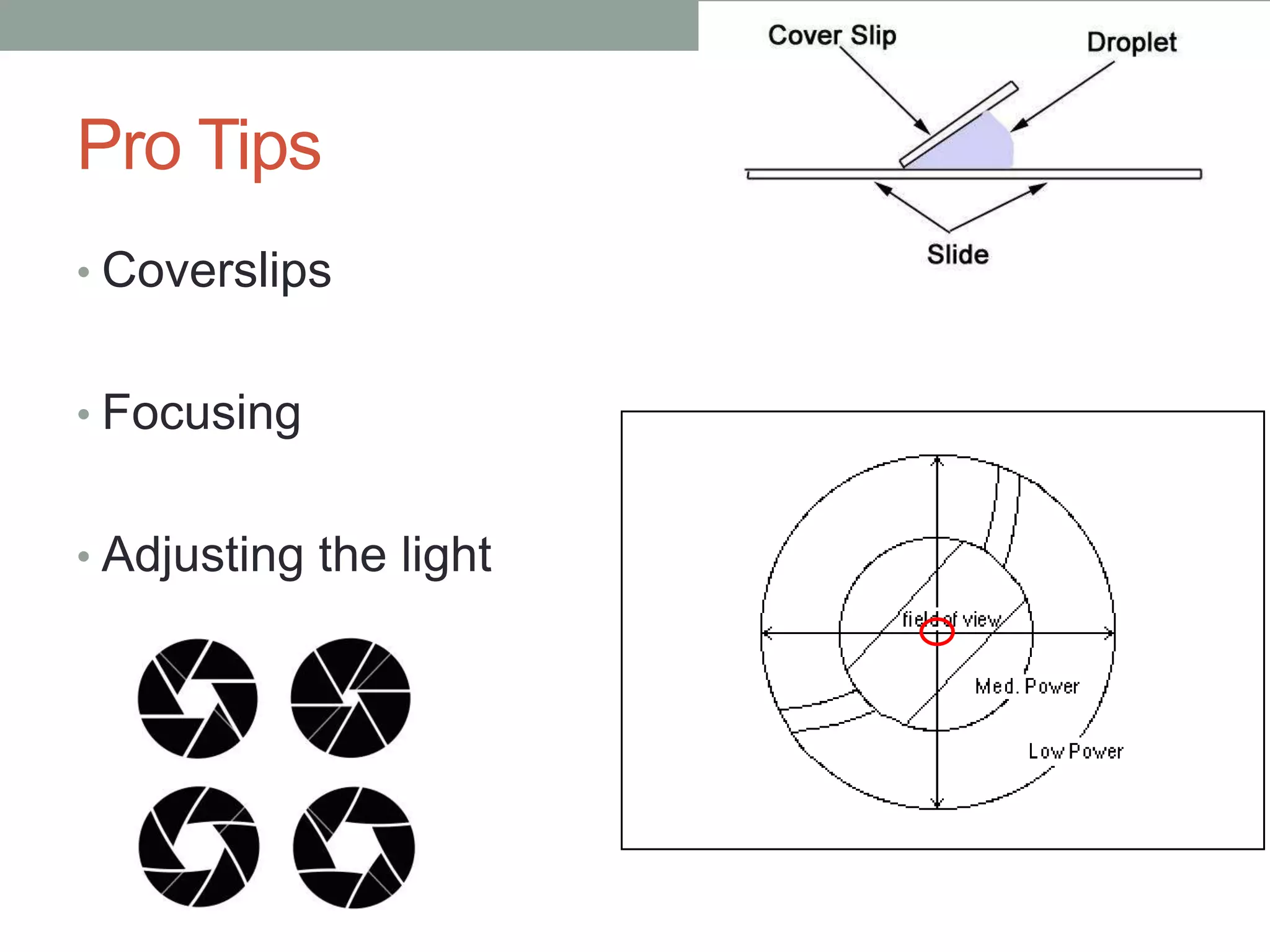
Pro Tips
• Coverslips
• Focusing
• Adjusting the light
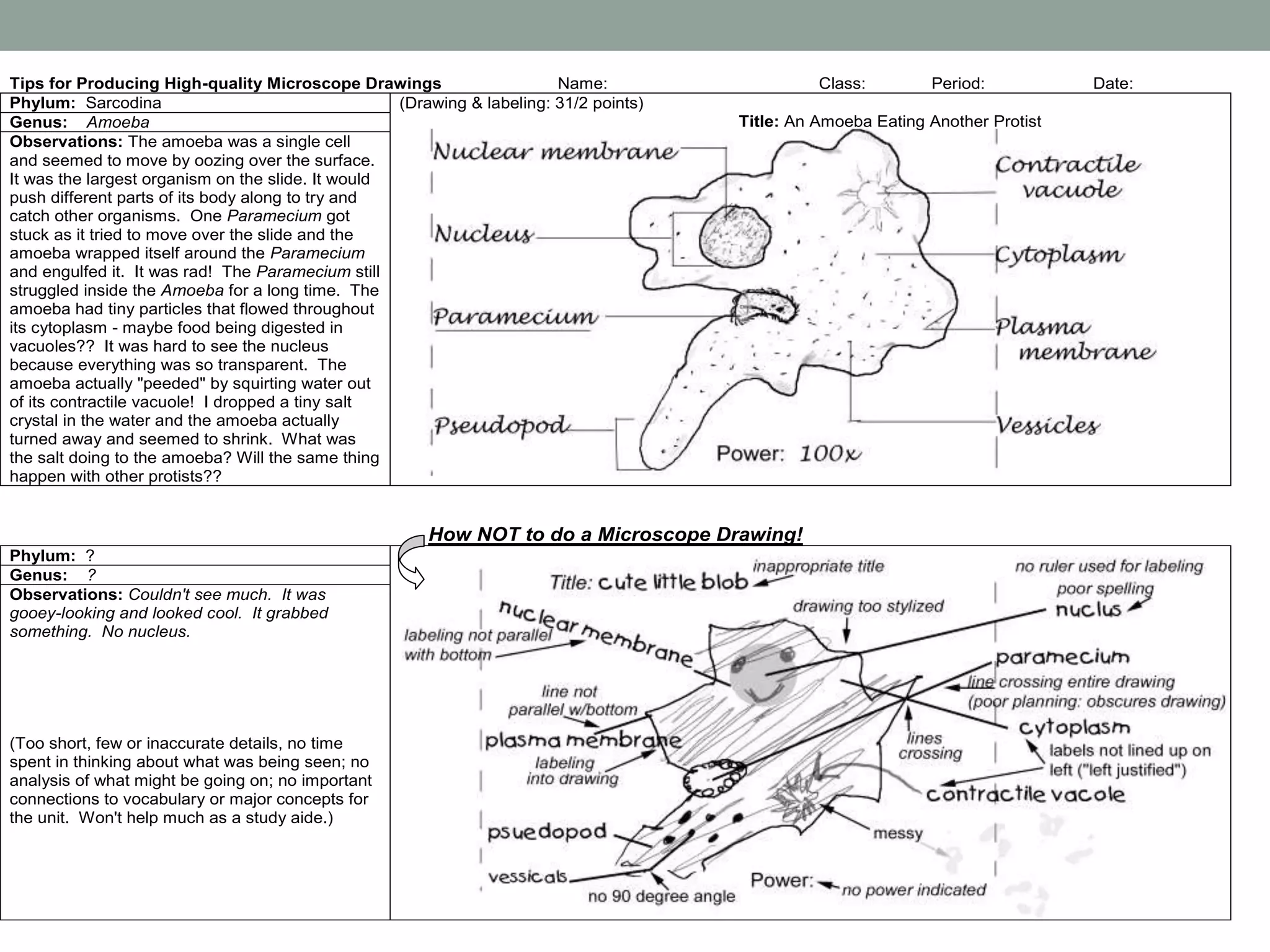
Tips for Producing High-quality Microscope Drawings Name: Class: Period: Date:
Phylum: Sarcodina (Drawing & labeling: 31/2 points)
Title: An Amoeba Eating Another ProtistGenus: Amoeba
Observations: The amoeba was a single cell
and seemed to move by oozing over the surface.
It was the largest organism on the slide. It would
push different parts of its body along to try and
catch other organisms. One Paramecium got
stuck as it tried to move over the slide and the
amoeba wrapped itself around the Paramecium
and engulfed it. It was rad! The Paramecium still
struggled inside the Amoeba for a long time. The
amoeba had tiny particles that flowed throughout
its cytoplasm - maybe food being digested in
vacuoles?? It was hard to see the nucleus
because everything was so transparent. The
amoeba actually "peeded" by squirting water out
of its contractile vacuole! I dropped a tiny salt
crystal in the water and the amoeba actually
turned away and seemed to shrink. What was
the salt doing to the amoeba? Will the same thing
happen with other protists??
How NOT to do a Microscope Drawing!
Phylum: ?
Genus: ?
Observations: Couldn't see much. It was
gooey-looking and looked cool. It grabbed
something. No nucleus.
(Too short, few or inaccurate details, no time
spent in thinking about what was being seen; no
analysis of what might be going on; no important
connections to vocabulary or major concepts for
the unit. Won't help much as a study aide.)
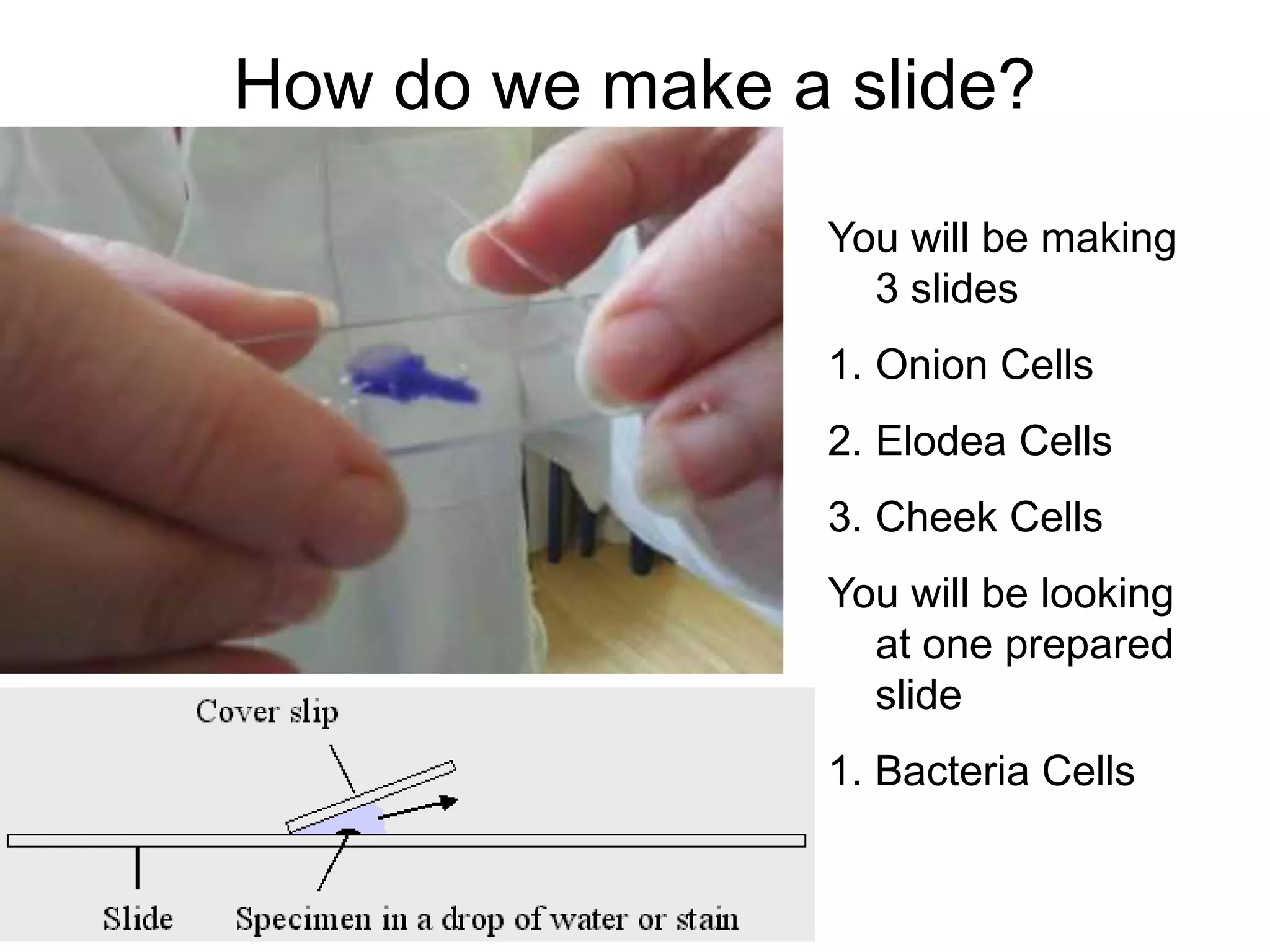
How do we make a slide?
You will be making
3 slides
1. Onion Cells
2. Elodea Cells
3. Cheek Cells
You will be looking
at one prepared
slide
1. Bacteria Cells
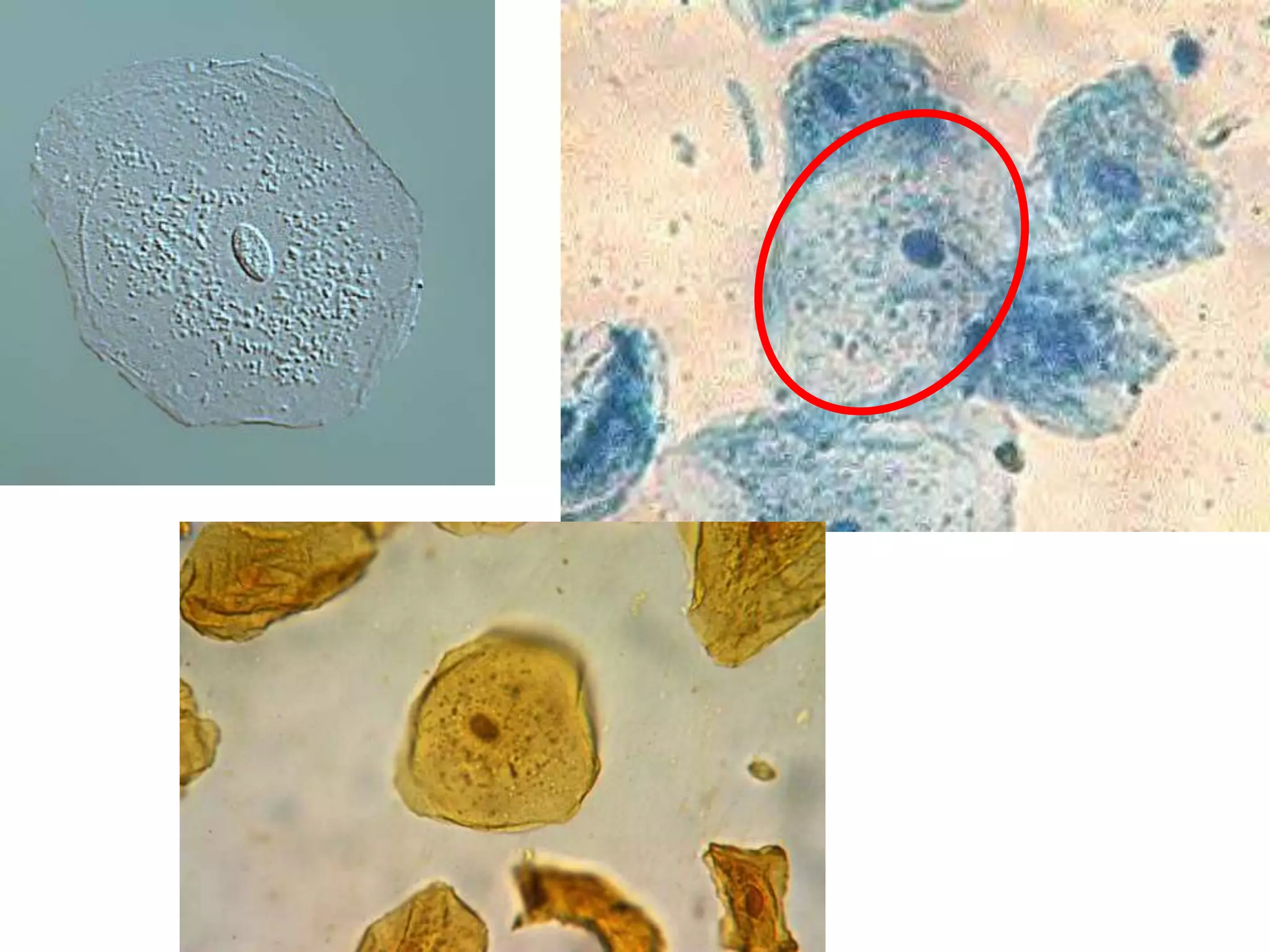
How to make a cheek cell slide
1. Put a drop of iodine
on the slide
2. Gently scrape a
toothpick over the
inside of your cheek
3. Swirl it in the drop of
iodine to stain the
cells
4. Add a cover slip
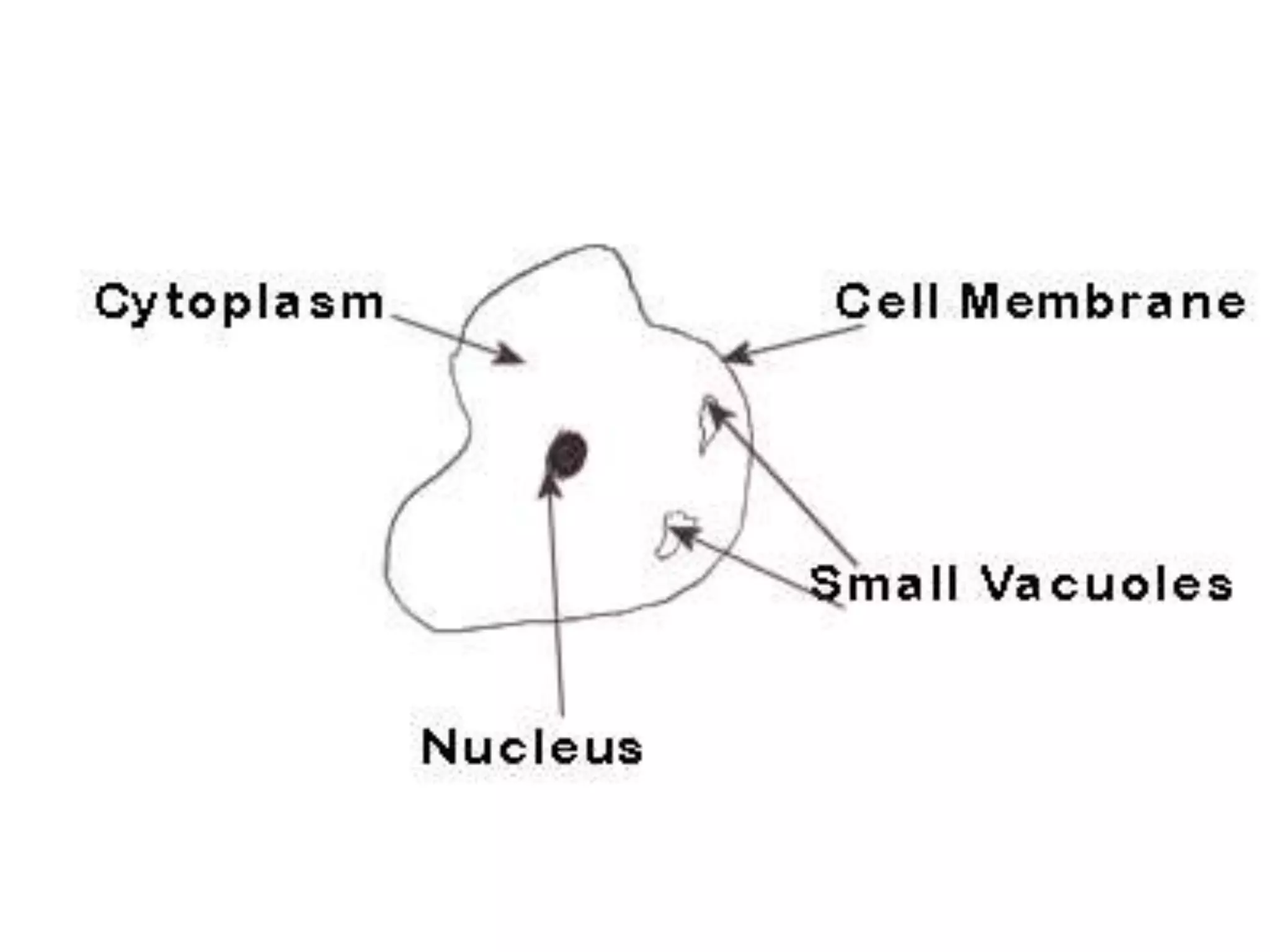
Draw 2 cells and
label what you can
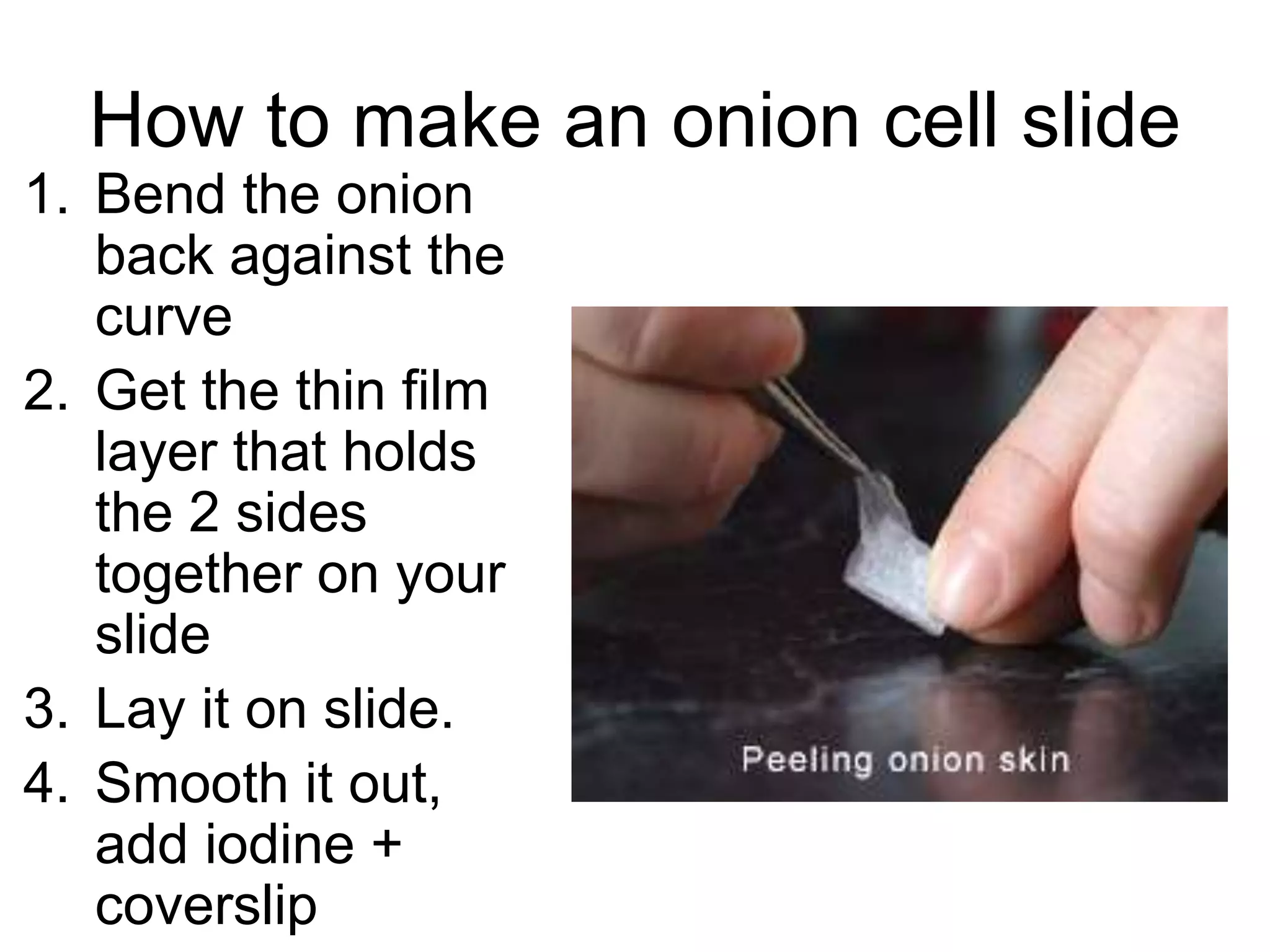
How to make an onion cell slide
1. Bend the onion
back against the
curve
2. Get the thin film
layer that holds
the 2 sides
together on your
slide
3. Lay it on slide.
4. Smooth it out,
add iodine +
coverslip
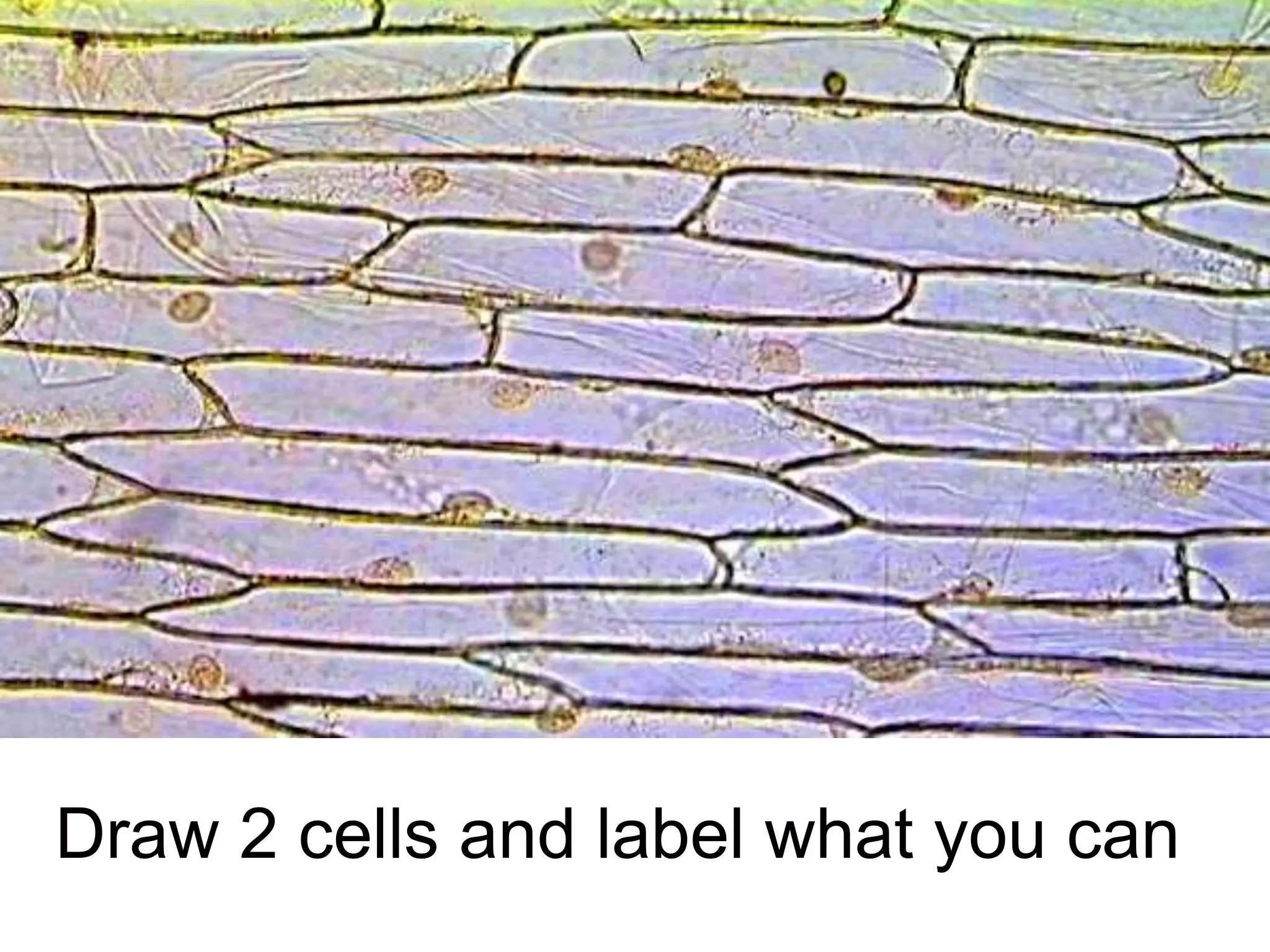
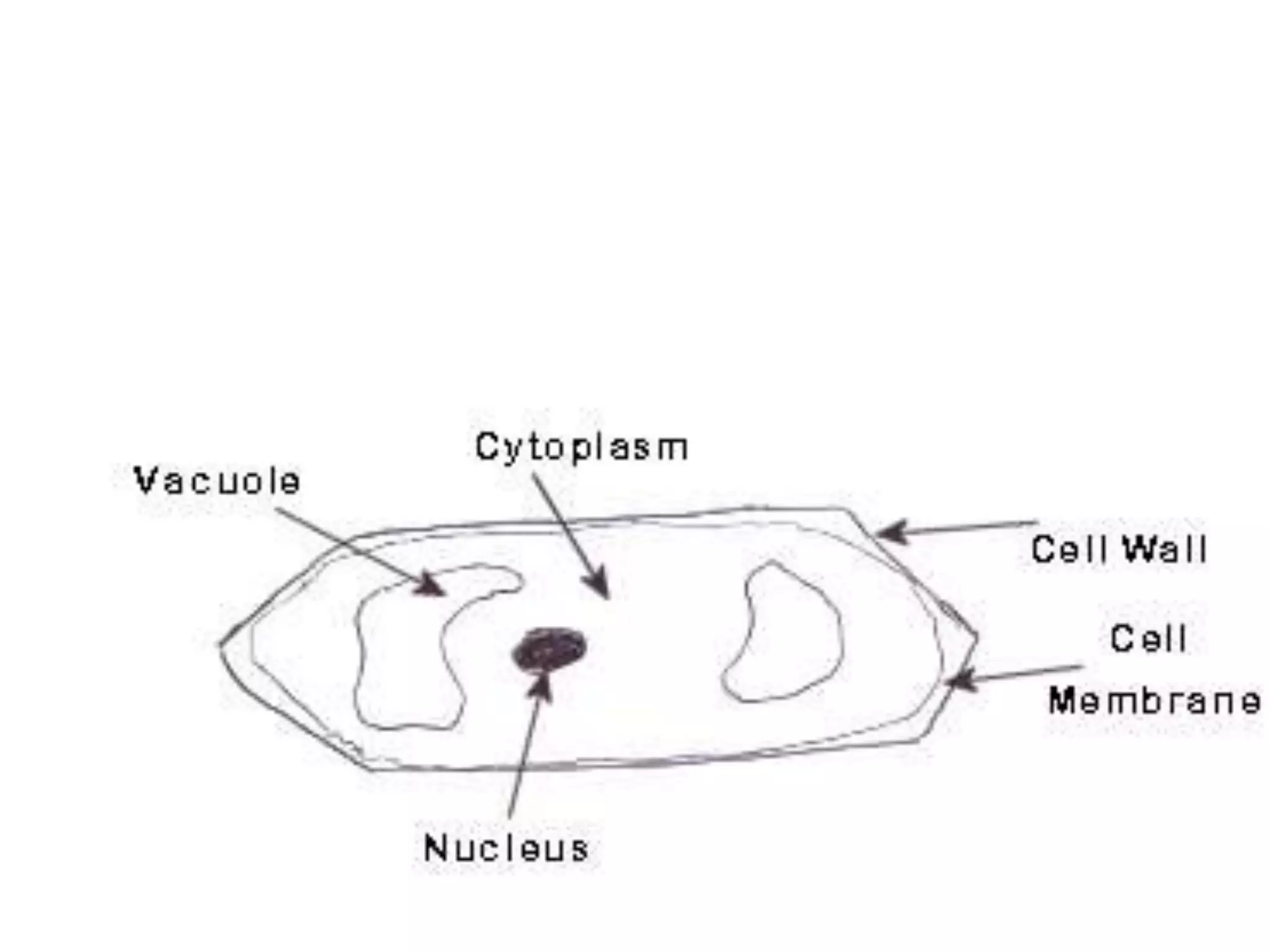
Draw 2 cells and label what you can
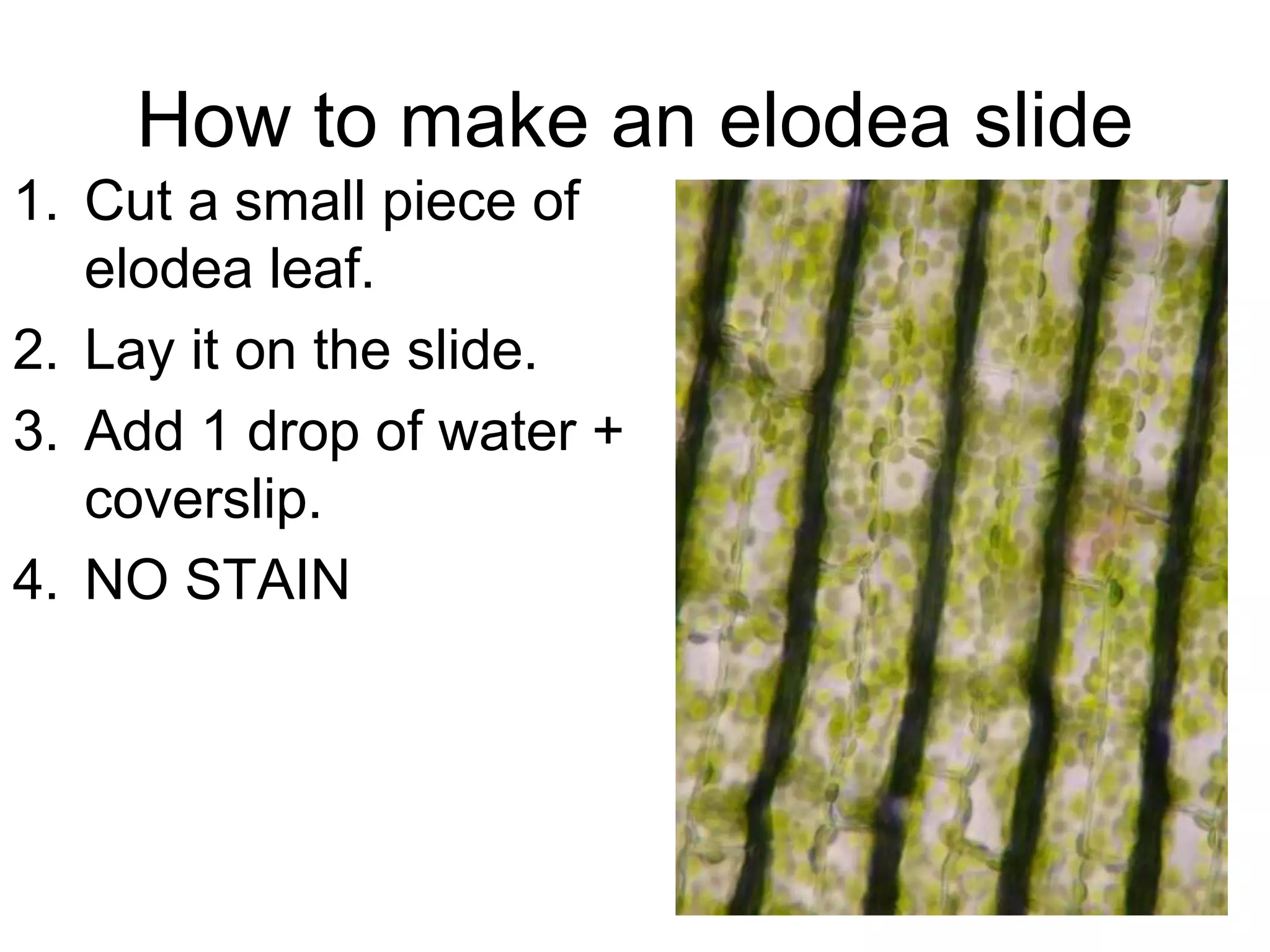
How to make an elodea slide
1. Cut a small piece of
elodea leaf.
2. Lay it on the slide.
3. Add 1 drop of water +
coverslip.
4. NO STAIN
You are not an expert…
• I don’t expect you to be an expert with the
scopes but…
• You need to try your best
• You need to show me when you think
you’ve got it.
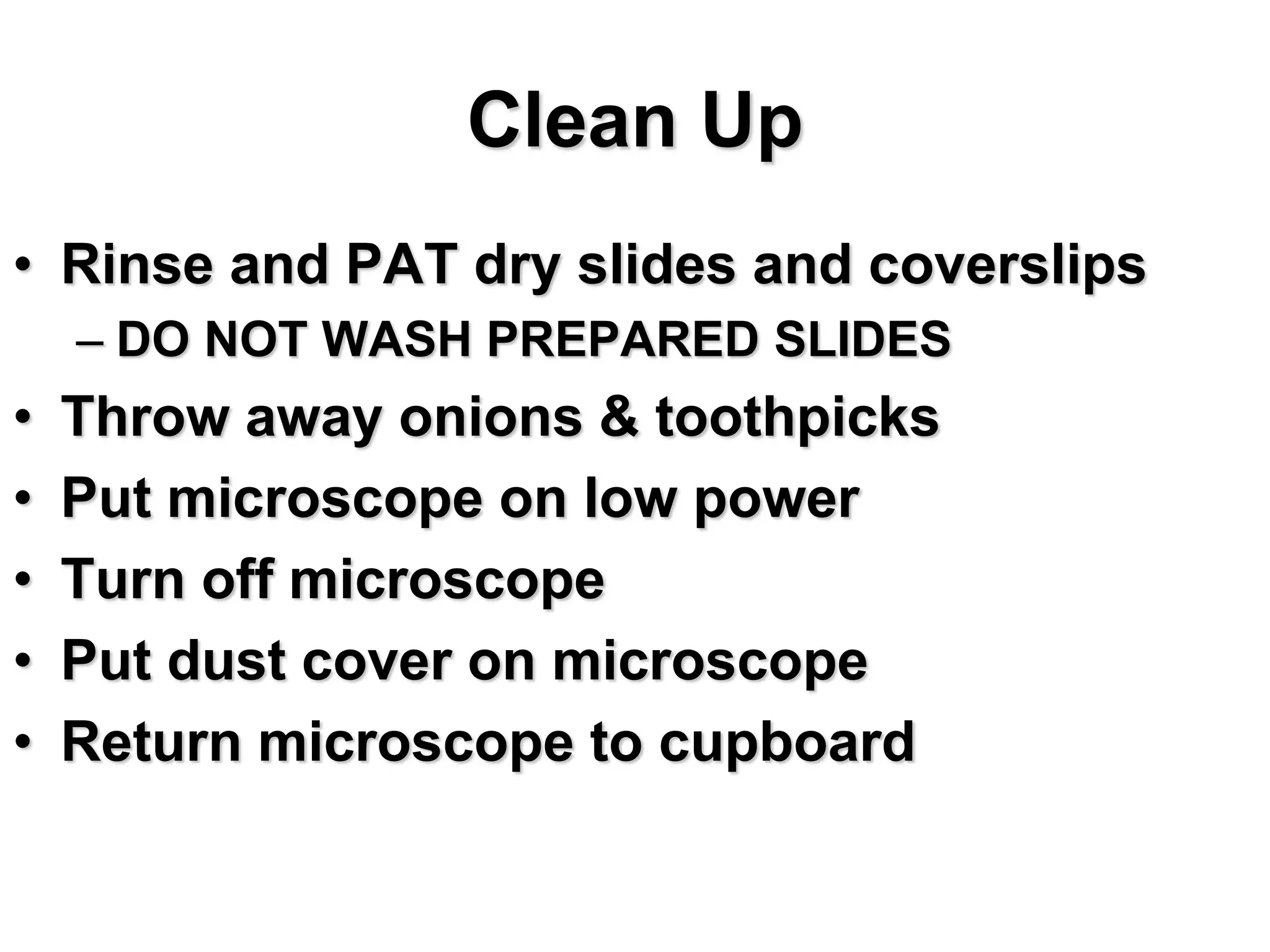
Clean Up
• Rinse and PAT dry slides and coverslips
– DO NOT WASH PREPARED SLIDES
• Throw away onions & toothpicks
• Put microscope on low power
• Turn off microscope
• Put dust cover on microscope
• Return microscope to cupboard
Microscope work for AP Biology students

Microscope work for AP Biology students

  • 1.
    Today Compound Light Microscope • Examineand diagram at least 1 each: • plant cell • Choices: elodea, onion, prepared slide • animal cell • Choices: your cheek, prepared slides • bacterial cell • Prepared slide • Optional: • hair • tank water • magazine paper • letter “e” Dissecting Light Microscope • Examine and diagram at least 1 thing such as: • paper money • a leaf or a flower • an insect • fabric • sand/sediment • your fingerprint • tarantula exoskeleton • other ideas?
  • 2.
    AP Biology Plansfor the week of Sept. 6 th through Sept. 9 th , 2016 o Tuesday 9-6-16: Cell-vivor (#organellewars) project sign ups, Cells Lesson (Ch. 4) o Wednesday 9-7-16: Microscope work (and mini skills lesson on proper microscope drawings) o Thursday 9-8-16: Cells Lesson, continued o Friday 9-9-16: Cells quiz, skills lesson on developing and using models  coming up next week - presentations
  • 3.
    Pro Tips • Coverslips •Focusing • Adjusting the light
  • 4.
    Tips for ProducingHigh-quality Microscope Drawings Name: Class: Period: Date: Phylum: Sarcodina (Drawing & labeling: 31/2 points) Title: An Amoeba Eating Another ProtistGenus: Amoeba Observations: The amoeba was a single cell and seemed to move by oozing over the surface. It was the largest organism on the slide. It would push different parts of its body along to try and catch other organisms. One Paramecium got stuck as it tried to move over the slide and the amoeba wrapped itself around the Paramecium and engulfed it. It was rad! The Paramecium still struggled inside the Amoeba for a long time. The amoeba had tiny particles that flowed throughout its cytoplasm - maybe food being digested in vacuoles?? It was hard to see the nucleus because everything was so transparent. The amoeba actually "peeded" by squirting water out of its contractile vacuole! I dropped a tiny salt crystal in the water and the amoeba actually turned away and seemed to shrink. What was the salt doing to the amoeba? Will the same thing happen with other protists?? How NOT to do a Microscope Drawing! Phylum: ? Genus: ? Observations: Couldn't see much. It was gooey-looking and looked cool. It grabbed something. No nucleus. (Too short, few or inaccurate details, no time spent in thinking about what was being seen; no analysis of what might be going on; no important connections to vocabulary or major concepts for the unit. Won't help much as a study aide.)
  • 5.
    How do wemake a slide? You will be making 3 slides 1. Onion Cells 2. Elodea Cells 3. Cheek Cells You will be looking at one prepared slide 1. Bacteria Cells
  • 6.
    How to makea cheek cell slide 1. Put a drop of iodine on the slide 2. Gently scrape a toothpick over the inside of your cheek 3. Swirl it in the drop of iodine to stain the cells 4. Add a cover slip
  • 9.
    Draw 2 cellsand label what you can
  • 11.
    How to makean onion cell slide 1. Bend the onion back against the curve 2. Get the thin film layer that holds the 2 sides together on your slide 3. Lay it on slide. 4. Smooth it out, add iodine + coverslip
  • 14.
    Draw 2 cellsand label what you can
  • 17.
    How to makean elodea slide 1. Cut a small piece of elodea leaf. 2. Lay it on the slide. 3. Add 1 drop of water + coverslip. 4. NO STAIN
  • 19.
    You are notan expert… • I don’t expect you to be an expert with the scopes but… • You need to try your best • You need to show me when you think you’ve got it.
  • 20.
    Clean Up • Rinseand PAT dry slides and coverslips – DO NOT WASH PREPARED SLIDES • Throw away onions & toothpicks • Put microscope on low power • Turn off microscope • Put dust cover on microscope • Return microscope to cupboard