MICROALGAE
CULTIVATION METHODS :
 AUTOTROPHIC CULTIVATION.
 HETEROTROPHIC CULTIVATION.
 MIXOTROPHIC CULTIVATION.
G.KEERTHANA GOPAL,
I – M.Sc MICROBILOGY,
DEPARTMENT OF MICROBIOLOGY,
VIVEKANANHAARTS AND SCIENCE COLLEGE FOR WOMEN,
SANKAGIRI,SALEM,TAMILNADU.
SUBJECT : MICROALGAL TECHNOLOGY
MICROALGAL CULTIVATION:
WHAT IS MICROALGAL CULTIVATION :
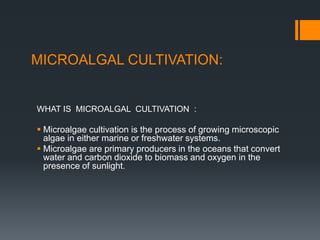
 Microalgae cultivation is the process of growing microscopic
algae in either marine or freshwater systems.
 Microalgae are primary producers in the oceans that convert
water and carbon dioxide to biomass and oxygen in the
presence of sunlight.
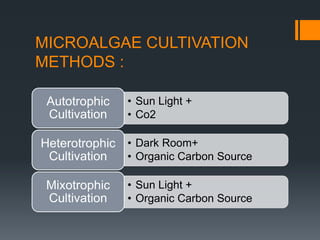
MICROALGAE CULTIVATION
METHODS :
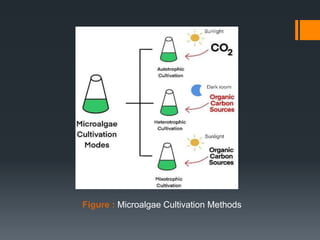
• Sun Light +
• Co2
Autotrophic
Cultivation
• Dark Room+
• Organic Carbon Source
Heterotrophic
Cultivation
• Sun Light +
• Organic Carbon Source
Mixotrophic
Cultivation
Figure : Microalgae Cultivation Methods
AUTOTROPHIC CULTIVATION
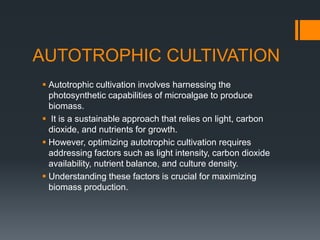
 Autotrophic cultivation involves harnessing the
photosynthetic capabilities of microalgae to produce
biomass.
 It is a sustainable approach that relies on light, carbon
dioxide, and nutrients for growth.
 However, optimizing autotrophic cultivation requires
addressing factors such as light intensity, carbon dioxide
availability, nutrient balance, and culture density.
 Understanding these factors is crucial for maximizing
biomass production.
HETEROTROPHIC CULTIVATION
WHAT IS HETEROTROPHIC CULTIVATION :
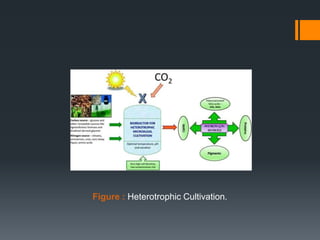
 Heterotrophic cultivation is a method of growing microalgae
in the presence of organic carbon sources.
 Unlike autotrophic cultivation, where microalgae use
photosynthesis to convert CO2 into biomass, heterotrophic
cultivation provides an alternative way to maximize
microalgae growth and lipid production.
Figure : Heterotrophic Cultivation.
APPLICATIONS OF
HETEROTROPHIC CULTIVATION
 Heterotrophic cultivation of microalgae has a wide range of
potential applications.
 It can be utilized for biofuel production, nutraceuticals,
aquaculture feed, and wastewater treatment.
 The high lipid content and diverse biochemical composition
of microalgae make them valuable resources for various
industries, offering sustainable and eco-friendly alternatives.
MIXOTROPHIC CULTIVATION
WHAT IS MIXOTROPHIC CULTIVATION :
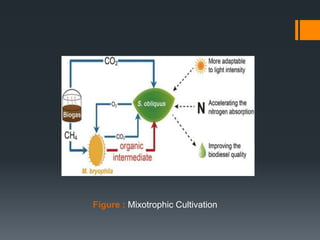
 Mixotrophic cultivation involves providing microalgae with
both light and organic carbon sources, such as glucose or
acetate.
 This allows microalgae to efficiently utilize diverse carbon
sources, enhancing their growth rate and biomass
productivity.
 Additionally, mixotrophy enables microalgae to better adapt
to fluctuating environmental conditions and utilize waste
carbon streams, making it a sustainable approach for
bioproduction.
Figure : Mixotrophic Cultivation
APPLICATIONS OF
MIXOTROPHIC CULTIVATION
 Mixotrophic microalgae cultivation has diverse applications in
sustainable bio production.
 It can be utilized for the production of biofuels, high-value
compounds such as pigments or omega-3 fatty acids, and
wastewater treatment.
 The ability of microalgae to efficiently utilize various carbon
sources in mixotrophic conditions opens up new possibilities
for sustainable and economically viable bio production
processes.
Microalgae Cultivation Methods

Microalgae Cultivation Methods

  • 1.
    MICROALGAE CULTIVATION METHODS : AUTOTROPHIC CULTIVATION.  HETEROTROPHIC CULTIVATION.  MIXOTROPHIC CULTIVATION. G.KEERTHANA GOPAL, I – M.Sc MICROBILOGY, DEPARTMENT OF MICROBIOLOGY, VIVEKANANHAARTS AND SCIENCE COLLEGE FOR WOMEN, SANKAGIRI,SALEM,TAMILNADU. SUBJECT : MICROALGAL TECHNOLOGY
  • 2.
    MICROALGAL CULTIVATION: WHAT ISMICROALGAL CULTIVATION :  Microalgae cultivation is the process of growing microscopic algae in either marine or freshwater systems.  Microalgae are primary producers in the oceans that convert water and carbon dioxide to biomass and oxygen in the presence of sunlight.
  • 3.
    MICROALGAE CULTIVATION METHODS : •Sun Light + • Co2 Autotrophic Cultivation • Dark Room+ • Organic Carbon Source Heterotrophic Cultivation • Sun Light + • Organic Carbon Source Mixotrophic Cultivation
  • 4.
    Figure : MicroalgaeCultivation Methods
  • 5.
    AUTOTROPHIC CULTIVATION  Autotrophiccultivation involves harnessing the photosynthetic capabilities of microalgae to produce biomass.  It is a sustainable approach that relies on light, carbon dioxide, and nutrients for growth.  However, optimizing autotrophic cultivation requires addressing factors such as light intensity, carbon dioxide availability, nutrient balance, and culture density.  Understanding these factors is crucial for maximizing biomass production.
  • 6.
    HETEROTROPHIC CULTIVATION WHAT ISHETEROTROPHIC CULTIVATION :  Heterotrophic cultivation is a method of growing microalgae in the presence of organic carbon sources.  Unlike autotrophic cultivation, where microalgae use photosynthesis to convert CO2 into biomass, heterotrophic cultivation provides an alternative way to maximize microalgae growth and lipid production.
  • 7.
  • 8.
    APPLICATIONS OF HETEROTROPHIC CULTIVATION Heterotrophic cultivation of microalgae has a wide range of potential applications.  It can be utilized for biofuel production, nutraceuticals, aquaculture feed, and wastewater treatment.  The high lipid content and diverse biochemical composition of microalgae make them valuable resources for various industries, offering sustainable and eco-friendly alternatives.
  • 9.
    MIXOTROPHIC CULTIVATION WHAT ISMIXOTROPHIC CULTIVATION :  Mixotrophic cultivation involves providing microalgae with both light and organic carbon sources, such as glucose or acetate.  This allows microalgae to efficiently utilize diverse carbon sources, enhancing their growth rate and biomass productivity.  Additionally, mixotrophy enables microalgae to better adapt to fluctuating environmental conditions and utilize waste carbon streams, making it a sustainable approach for bioproduction.
  • 10.
  • 11.
    APPLICATIONS OF MIXOTROPHIC CULTIVATION Mixotrophic microalgae cultivation has diverse applications in sustainable bio production.  It can be utilized for the production of biofuels, high-value compounds such as pigments or omega-3 fatty acids, and wastewater treatment.  The ability of microalgae to efficiently utilize various carbon sources in mixotrophic conditions opens up new possibilities for sustainable and economically viable bio production processes.