AIR BORNE BACTERIAL DISEASES
Muskan idrishi
M.S.c Microbiology
1st Semester
Kanya Gurukul Campus,
Gurukula Kangri (Deemed to be University),
Haridwar (Uttarakhand), India
Contents
 INTRODUCTION
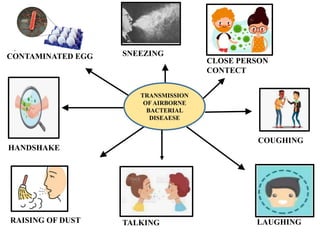
 TRANSMISSION OF AIR BORNE BACTERIAL
DISEASES
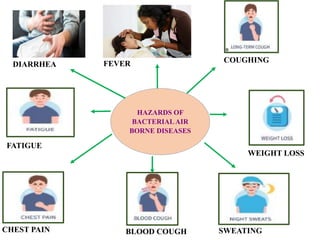
 HAZARDS OF BACTERIAL AIR BORNE DISEASES
 TYPES AND EFFECTS OF BACTERIAL AIR BORNE
DISEASES ON HUMAN
 TUBERCULOSIS
 PNEMONIA
 DIPHTHERIA
 PREVENTION
 TYPES AND EFFECTS OF BACTERIAL AIR BORNE
DISEASES ON PLANTS
 FIRE BLIGHT
 CITRUS CANKER
 PREVENTION AND CONTROL
 REFERENCES
INTRODUCTION
 Airborne diseases are caused
by pathogenic microbes that can be
transmitted through the air.
 The relevant pathogen may be
viruses, bacterial, fungi.
 These can be transmitted through
breathing, talking, coughing,
sneezing, laughing, raising of dust,
spraying of liquids, toilet flushing
and close personal contact or
aerosolization of the microbe.
 The discharged microbes remain
suspended in the air on dust particles,
and water droplets.
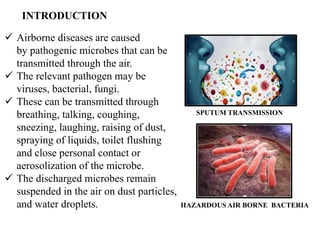
SPUTUM TRANSMISSION
HAZARDOUS AIR BORNE BACTERIA
TRANSMISSION
OF AIRBORNE
BACTERIAL
DISEAESE
HANDSHAKE
CONTAMINATED EGG SNEEZING
COUGHING
TALKING
RAISING OF DUST
CLOSE PERSON
CONTECT
LAUGHING
DIARRHEA
FATIGUE
COUGHING
SWEATING
FEVER
CHEST PAIN
WEIGHT LOSS
BLOOD COUGH
HAZARDS OF
BACTERIALAIR
BORNE DISEASES
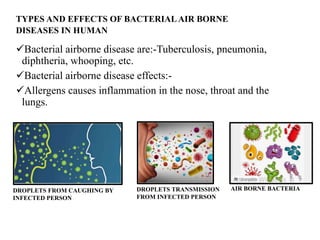
TYPES AND EFFECTS OF BACTERIALAIR BORNE
DISEASES IN HUMAN
Bacterial airborne disease are:-Tuberculosis, pneumonia,
diphtheria, whooping, etc.
Bacterial airborne disease effects:-
Allergens causes inflammation in the nose, throat and the
lungs.
DROPLETS FROM CAUGHING BY
INFECTED PERSON
DROPLETS TRANSMISSION
FROM INFECTED PERSON
AIR BORNE BACTERIA
Tuberculosis is commonly called TB.
 It is a contagious bacterial disease.
It is cause by mycobacterium.
Transmission spread from person to person through air.
The bacterial can attack any part of the body, but it most commonly stick to
the lungs and causes TB of lungs.
Treatment by antibiotic (isoniazid and rifampicin).
TUBERCULOSIS
DROPLETS FROM SNEEZE BY
AN INFECTED PERSON
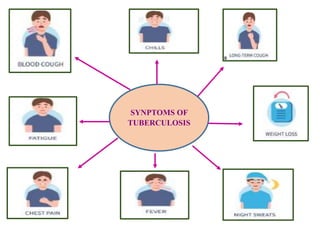
TUBERCULOSIS
BACTERIA
SYNPTOMS OF
TUBERCULOSIS
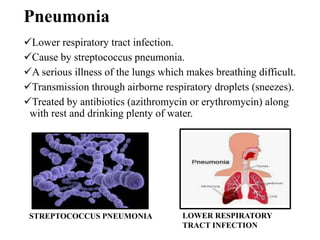
Pneumonia
Lower respiratory tract infection.
Cause by streptococcus pneumonia.
A serious illness of the lungs which makes breathing difficult.
Transmission through airborne respiratory droplets (sneezes).
Treated by antibiotics (azithromycin or erythromycin) along
with rest and drinking plenty of water.
STREPTOCOCCUS PNEUMONIA LOWER RESPIRATORY
TRACT INFECTION
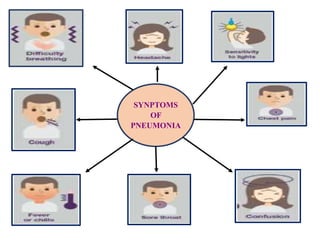
SYNPTOMS
OF
PNEUMONIA
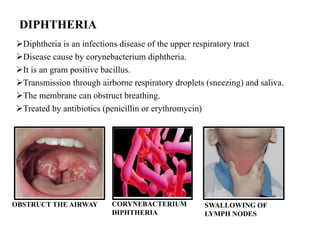
Diphtheria is an infections disease of the upper respiratory tract
Disease cause by corynebacterium diphtheria.
It is an gram positive bacillus.
Transmission through airborne respiratory droplets (sneezing) and saliva.
The membrane can obstruct breathing.
Treated by antibiotics (penicillin or erythromycin)
DIPHTHERIA
OBSTRUCT THE AIRWAY CORYNEBACTERIUM
DIPHTHERIA
SWALLOWING OF
LYMPH NODES
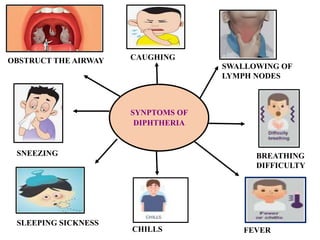
SYNPTOMS OF
DIPHTHERIA
SNEEZING
SLEEPING SICKNESS
CHILLS FEVER
BREATHING
DIFFICULTY
SWALLOWING OF
LYMPH NODES
CAUGHING
OBSTRUCT THE AIRWAY
PREVENTION
Maintain good personal hygiene.
Wear a mask properly
Keep the environment clean and hygienic.
Wash your hand after sneezing.
Adopt a healthy lifestyle.
Stay away from sick people.
Ensure good ventilation.
TYPES AND EFFECTS OF BACTERIALAIR
BORNE DISEASES ON PLANTS
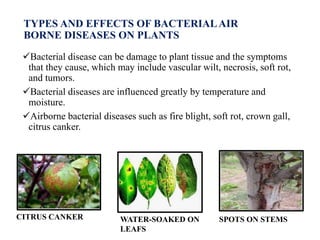
Bacterial disease can be damage to plant tissue and the symptoms
that they cause, which may include vascular wilt, necrosis, soft rot,
and tumors.
Bacterial diseases are influenced greatly by temperature and
moisture.
Airborne bacterial diseases such as fire blight, soft rot, crown gall,
citrus canker.
CITRUS CANKER WATER-SOAKED ON
LEAFS
SPOTS ON STEMS
FIRE BLIGHT
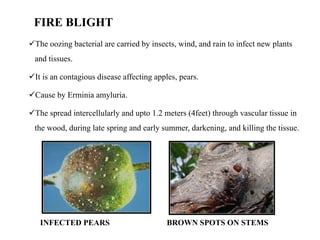
The oozing bacterial are carried by insects, wind, and rain to infect new plants
and tissues.
It is an contagious disease affecting apples, pears.
Cause by Erminia amyluria.
The spread intercellularly and upto 1.2 meters (4feet) through vascular tissue in
the wood, during late spring and early summer, darkening, and killing the tissue.
INFECTED PEARS BROWN SPOTS ON STEMS
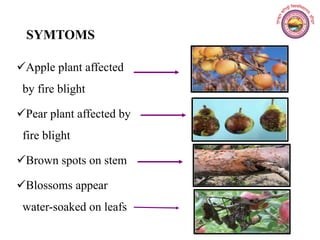
SYMTOMS
Apple plant affected
by fire blight
Pear plant affected by
fire blight
Brown spots on stem
Blossoms appear
water-soaked on leafs
CITRUS CANKER
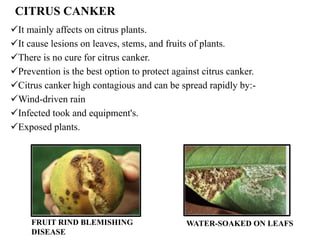
It mainly affects on citrus plants.
It cause lesions on leaves, stems, and fruits of plants.
There is no cure for citrus canker.
Prevention is the best option to protect against citrus canker.
Citrus canker high contagious and can be spread rapidly by:-
Wind-driven rain
Infected took and equipment's.
Exposed plants.
FRUIT RIND BLEMISHING
DISEASE
WATER-SOAKED ON LEAFS
SYMTOMS
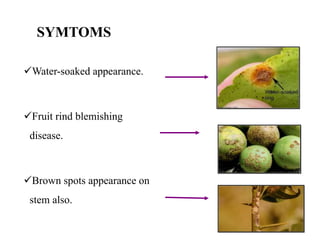
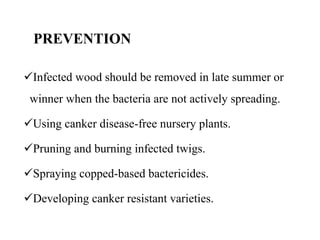
Water-soaked appearance.
Fruit rind blemishing
disease.
Brown spots appearance on
stem also.
PREVENTION
Infected wood should be removed in late summer or
winner when the bacteria are not actively spreading.
Using canker disease-free nursery plants.
Pruning and burning infected twigs.
Spraying copped-based bactericides.
Developing canker resistant varieties.
REFERENCES
• https://www.healthline.com/health/airborne-diseases
• https://www.sciencedirect.com/topics/immunology-and-microbiology/airborne-
bacterium
• A Text Book Of Microbiology By Dubey R.C. And Maheshwari
air borne bacterial disease.pptx

air borne bacterial disease.pptx

  • 1.
    AIR BORNE BACTERIALDISEASES Muskan idrishi M.S.c Microbiology 1st Semester Kanya Gurukul Campus, Gurukula Kangri (Deemed to be University), Haridwar (Uttarakhand), India
  • 2.
    Contents  INTRODUCTION  TRANSMISSIONOF AIR BORNE BACTERIAL DISEASES  HAZARDS OF BACTERIAL AIR BORNE DISEASES  TYPES AND EFFECTS OF BACTERIAL AIR BORNE DISEASES ON HUMAN  TUBERCULOSIS  PNEMONIA  DIPHTHERIA  PREVENTION  TYPES AND EFFECTS OF BACTERIAL AIR BORNE DISEASES ON PLANTS  FIRE BLIGHT  CITRUS CANKER  PREVENTION AND CONTROL  REFERENCES
  • 3.
    INTRODUCTION  Airborne diseasesare caused by pathogenic microbes that can be transmitted through the air.  The relevant pathogen may be viruses, bacterial, fungi.  These can be transmitted through breathing, talking, coughing, sneezing, laughing, raising of dust, spraying of liquids, toilet flushing and close personal contact or aerosolization of the microbe.  The discharged microbes remain suspended in the air on dust particles, and water droplets. SPUTUM TRANSMISSION HAZARDOUS AIR BORNE BACTERIA
  • 4.
    TRANSMISSION OF AIRBORNE BACTERIAL DISEAESE HANDSHAKE CONTAMINATED EGGSNEEZING COUGHING TALKING RAISING OF DUST CLOSE PERSON CONTECT LAUGHING
  • 5.
  • 6.
    TYPES AND EFFECTSOF BACTERIALAIR BORNE DISEASES IN HUMAN Bacterial airborne disease are:-Tuberculosis, pneumonia, diphtheria, whooping, etc. Bacterial airborne disease effects:- Allergens causes inflammation in the nose, throat and the lungs. DROPLETS FROM CAUGHING BY INFECTED PERSON DROPLETS TRANSMISSION FROM INFECTED PERSON AIR BORNE BACTERIA
  • 7.
    Tuberculosis is commonlycalled TB.  It is a contagious bacterial disease. It is cause by mycobacterium. Transmission spread from person to person through air. The bacterial can attack any part of the body, but it most commonly stick to the lungs and causes TB of lungs. Treatment by antibiotic (isoniazid and rifampicin). TUBERCULOSIS DROPLETS FROM SNEEZE BY AN INFECTED PERSON TUBERCULOSIS BACTERIA
  • 8.
  • 9.
    Pneumonia Lower respiratory tractinfection. Cause by streptococcus pneumonia. A serious illness of the lungs which makes breathing difficult. Transmission through airborne respiratory droplets (sneezes). Treated by antibiotics (azithromycin or erythromycin) along with rest and drinking plenty of water. STREPTOCOCCUS PNEUMONIA LOWER RESPIRATORY TRACT INFECTION
  • 10.
  • 11.
    Diphtheria is aninfections disease of the upper respiratory tract Disease cause by corynebacterium diphtheria. It is an gram positive bacillus. Transmission through airborne respiratory droplets (sneezing) and saliva. The membrane can obstruct breathing. Treated by antibiotics (penicillin or erythromycin) DIPHTHERIA OBSTRUCT THE AIRWAY CORYNEBACTERIUM DIPHTHERIA SWALLOWING OF LYMPH NODES
  • 12.
    SYNPTOMS OF DIPHTHERIA SNEEZING SLEEPING SICKNESS CHILLSFEVER BREATHING DIFFICULTY SWALLOWING OF LYMPH NODES CAUGHING OBSTRUCT THE AIRWAY
  • 13.
    PREVENTION Maintain good personalhygiene. Wear a mask properly Keep the environment clean and hygienic. Wash your hand after sneezing. Adopt a healthy lifestyle. Stay away from sick people. Ensure good ventilation.
  • 14.
    TYPES AND EFFECTSOF BACTERIALAIR BORNE DISEASES ON PLANTS Bacterial disease can be damage to plant tissue and the symptoms that they cause, which may include vascular wilt, necrosis, soft rot, and tumors. Bacterial diseases are influenced greatly by temperature and moisture. Airborne bacterial diseases such as fire blight, soft rot, crown gall, citrus canker. CITRUS CANKER WATER-SOAKED ON LEAFS SPOTS ON STEMS
  • 15.
    FIRE BLIGHT The oozingbacterial are carried by insects, wind, and rain to infect new plants and tissues. It is an contagious disease affecting apples, pears. Cause by Erminia amyluria. The spread intercellularly and upto 1.2 meters (4feet) through vascular tissue in the wood, during late spring and early summer, darkening, and killing the tissue. INFECTED PEARS BROWN SPOTS ON STEMS
  • 16.
    SYMTOMS Apple plant affected byfire blight Pear plant affected by fire blight Brown spots on stem Blossoms appear water-soaked on leafs
  • 17.
    CITRUS CANKER It mainlyaffects on citrus plants. It cause lesions on leaves, stems, and fruits of plants. There is no cure for citrus canker. Prevention is the best option to protect against citrus canker. Citrus canker high contagious and can be spread rapidly by:- Wind-driven rain Infected took and equipment's. Exposed plants. FRUIT RIND BLEMISHING DISEASE WATER-SOAKED ON LEAFS
  • 18.
    SYMTOMS Water-soaked appearance. Fruit rindblemishing disease. Brown spots appearance on stem also.
  • 19.
    PREVENTION Infected wood shouldbe removed in late summer or winner when the bacteria are not actively spreading. Using canker disease-free nursery plants. Pruning and burning infected twigs. Spraying copped-based bactericides. Developing canker resistant varieties.
  • 20.

Editor's Notes

  • #4 In the introduction section We all know about the.. We also know that According to a report .