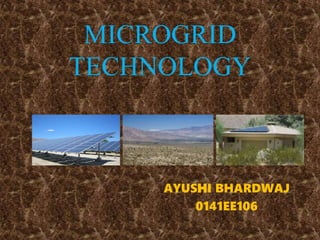
MICROGRID
TECHNOLOGY
AYUSHI BHARDWAJ
0141EE106
OUTLINE
 Introduction to Microgrid
 Microgrid key Attributes
 Interconnected Microgrid
 How does it work ?
 Microgrid : A Smart Choice for Tomorrow
 Why Microgrid!
 Conventional Grid V/s Microgrid
 Advantages
 Conclusion
INTRODUCTION TO MICROGRID
• It is a small scale power supply network that is
designed to provide power for a small
community.
• It enables local power generation for local
loads.
• It comprises of various small power generating
sources that makes it highly efficient.
• Size of the microgrid may vary depending
upon the loads.
WHAT IS MICROGRID ?
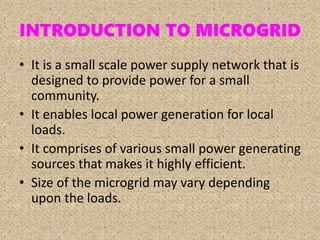
A Microgrid is a group of
interconnected loads and
distributed energy resources .
A microgrid can connect and
disconnect from the grid to enable it
to operate in both grid-connected or
island-mode.
MICROGRID KEY ATTRIBUTES
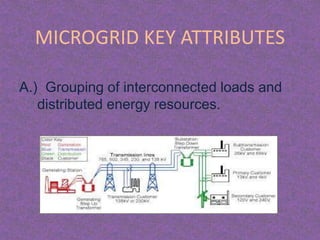
A.) Grouping of interconnected loads and
distributed energy resources.
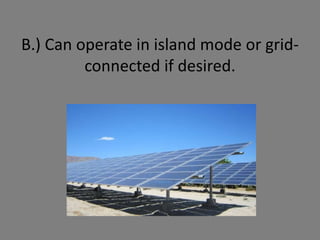
B.) Can operate in island mode or grid-
connected if desired.
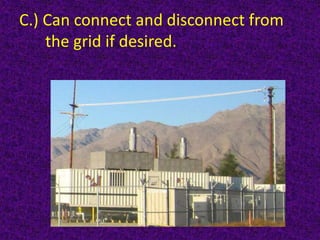
C.) Can connect and disconnect from
the grid if desired.
Interconnected Microgrids
Interconnected Microgrids – Power Parks
• Practical size of Microgrids is limited to a few MVA.
• For larger loads, it is desirable to interconnect many
Microgrids to form a larger Microgrid network called
Power Parks.
• The advantages of this Microgrid structure insures
greater stability for the Power Parks.
8
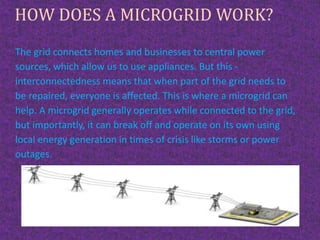
HOW DOES A MICROGRID WORK?
The grid connects homes and businesses to central power
sources, which allow us to use appliances. But this -
interconnectedness means that when part of the grid needs to
be repaired, everyone is affected. This is where a microgrid can
help. A microgrid generally operates while connected to the grid,
but importantly, it can break off and operate on its own using
local energy generation in times of crisis like storms or power
outages.
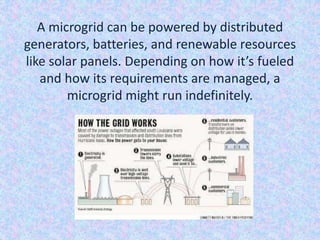
A microgrid can be powered by distributed
generators, batteries, and renewable resources
like solar panels. Depending on how it’s fueled
and how its requirements are managed, a
microgrid might run indefinitely.
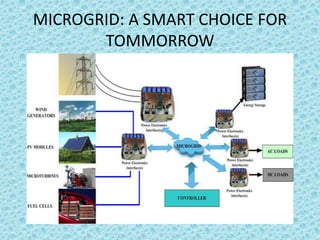
MICROGRID: A SMART CHOICE FOR
TOMMORROW
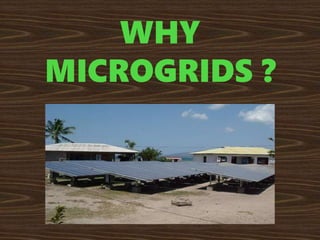
WHY
MICROGRIDS ?
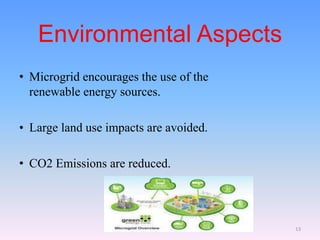
Environmental Aspects
• Microgrid encourages the use of the
renewable energy sources.
• Large land use impacts are avoided.
• CO2 Emissions are reduced.
13
Conventional grid V/s Microgrid
• Cost
• Fuel efficiency
• Reliability
• Emissions
• Construction constaint
Advantages
• Microgrids can operate autonomously.
• Microgrids operates in stable manner.
• Completely compatible with existing
utility grid.
15
Advantages
• In peak load periods it prevents utility
grid failure by reducing the local loads on
the grid.
• Efficiency is high.
10/1/2017 16
Conclusion
10/1/2017 17
Micro grids can provide
improved electric
service reliability and better
power quality to end customers.
Thank You
18

Microgrid technology

  • 1.
  • 2.
    OUTLINE  Introduction toMicrogrid  Microgrid key Attributes  Interconnected Microgrid  How does it work ?  Microgrid : A Smart Choice for Tomorrow  Why Microgrid!  Conventional Grid V/s Microgrid  Advantages  Conclusion
  • 3.
    INTRODUCTION TO MICROGRID •It is a small scale power supply network that is designed to provide power for a small community. • It enables local power generation for local loads. • It comprises of various small power generating sources that makes it highly efficient. • Size of the microgrid may vary depending upon the loads.
  • 4.
    WHAT IS MICROGRID? A Microgrid is a group of interconnected loads and distributed energy resources . A microgrid can connect and disconnect from the grid to enable it to operate in both grid-connected or island-mode.
  • 5.
    MICROGRID KEY ATTRIBUTES A.)Grouping of interconnected loads and distributed energy resources.
  • 6.
    B.) Can operatein island mode or grid- connected if desired.
  • 7.
    C.) Can connectand disconnect from the grid if desired.
  • 8.
    Interconnected Microgrids Interconnected Microgrids– Power Parks • Practical size of Microgrids is limited to a few MVA. • For larger loads, it is desirable to interconnect many Microgrids to form a larger Microgrid network called Power Parks. • The advantages of this Microgrid structure insures greater stability for the Power Parks. 8
  • 9.
    HOW DOES AMICROGRID WORK? The grid connects homes and businesses to central power sources, which allow us to use appliances. But this - interconnectedness means that when part of the grid needs to be repaired, everyone is affected. This is where a microgrid can help. A microgrid generally operates while connected to the grid, but importantly, it can break off and operate on its own using local energy generation in times of crisis like storms or power outages.
  • 10.
    A microgrid canbe powered by distributed generators, batteries, and renewable resources like solar panels. Depending on how it’s fueled and how its requirements are managed, a microgrid might run indefinitely.
  • 11.
    MICROGRID: A SMARTCHOICE FOR TOMMORROW
  • 12.
  • 13.
    Environmental Aspects • Microgridencourages the use of the renewable energy sources. • Large land use impacts are avoided. • CO2 Emissions are reduced. 13
  • 14.
    Conventional grid V/sMicrogrid • Cost • Fuel efficiency • Reliability • Emissions • Construction constaint
  • 15.
    Advantages • Microgrids canoperate autonomously. • Microgrids operates in stable manner. • Completely compatible with existing utility grid. 15
  • 16.
    Advantages • In peakload periods it prevents utility grid failure by reducing the local loads on the grid. • Efficiency is high. 10/1/2017 16
  • 17.
    Conclusion 10/1/2017 17 Micro gridscan provide improved electric service reliability and better power quality to end customers.
  • 18.