MICRO TEACHING
Presented by
Kiran Tariq
Content
 DEFINITION
 What is Microteaching?
 Microteaching Setting
 Steps is micro Teaching
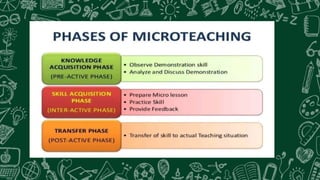
 Phases of Micro Teaching
 Characteristics
 Advantages of Micro Teaching
 Disadvantages of Micro Teaching
 Conclusion
DEFINITION
Microteaching is a scaled down teaching encounter in class size and
class time. - Allen DW
Microteaching is a training techniques which requires student teacher
to teach a single concept using specified teaching skill to a number of
pupils in a short duration of time. - Passi BK and lalita MS
What is Microteaching?
The teaching of a small unit of content to the small group of students (6-
10 number) in a small amount of time (5-7 min.) means Micro Teaching.
It is a skill training technique.
It is a short session teaching.
To train inexperience student-teachers for acquiring teaching skills.
To improve the skills of experience teachers.
Microteaching Setting
 Teaching :6 minutes
 Feedback :6 minutes
 Re-planning :12 minutes
 Re-teaching :6 minutes
 Re-feedback :6 minutes
 TOTAL = 36 minutes
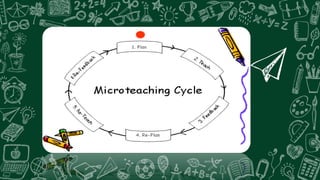
Steps is micro Teaching
 Planning
 Teaching
 Feedback
 Re-Planning
 Re- Teaching
 Re- Feedback
Steps is micro Teaching
 Planning: Planning the lesson The student teacher plans a short (micro)
lesson with the help of his supervisor, in which he can practice a particular
skill.
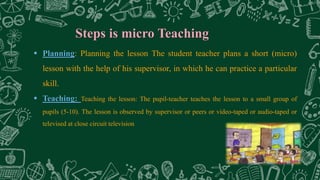
 Teaching: Teaching the lesson: The pupil-teacher teaches the lesson to a small group of
pupils (5-10). The lesson is observed by supervisor or peers or video-taped or audio-taped or
televised at close circuit television
Steps is micro Teaching
 Feedback: The teaching is followed by discussion to provide the
feedback to the trainee.
 Re-Planning: In the light of the discussion and suggestions the
pupil-teacher re-plans the lesson in order to practice the small
skill effectively.
Steps is micro Teaching
 Re-teaching: The revised lesson is re-taught to another small group of students
of same class for the same class duration to practice the small skill.
 Re-Feedback: The re-teaching is again followed by discussion, suggestions and
encouraging the teaching performance. Thus the feedback is again provided to
the trainee.
 Repeating the cycle: The ‘teach re-teach’ cycle is repeated till desired level of
skill is achieved.
Characteristics
 Relatively new innovation
 Teacher’s training technique
 Scaled down teaching
 Real teaching
 Safe practice ground
 Feedback
 Teaching model
Advantages of Micro Teaching
 Micro teaching reduces the complexity of classroom teaching.
 It is foundation of teaching especially student teachers.
 It is real classroom teaching.
 It is best way to improve teaching skill among student teachers.
Disadvantages of Microteaching
 It require competent and suitable trained teacher
educators.
 It is time consuming.
 It tends to reduce the creativity of the teachers.
 It can be carried out successfully in a controlled
environment only.
CONCLUSION
 Micro-teaching helps a teacher-trainee to improve his own
teaching.
 Plan strategies for improvement in performance
 It is concerned with development and modification of discrete
classroom teaching skills.
 It increases the confidence level.
 micro teaching.pptx

micro teaching.pptx

  • 1.
  • 2.
    Content  DEFINITION  Whatis Microteaching?  Microteaching Setting  Steps is micro Teaching  Phases of Micro Teaching  Characteristics  Advantages of Micro Teaching  Disadvantages of Micro Teaching  Conclusion
  • 3.
    DEFINITION Microteaching is ascaled down teaching encounter in class size and class time. - Allen DW Microteaching is a training techniques which requires student teacher to teach a single concept using specified teaching skill to a number of pupils in a short duration of time. - Passi BK and lalita MS
  • 4.
    What is Microteaching? Theteaching of a small unit of content to the small group of students (6- 10 number) in a small amount of time (5-7 min.) means Micro Teaching. It is a skill training technique. It is a short session teaching. To train inexperience student-teachers for acquiring teaching skills. To improve the skills of experience teachers.
  • 5.
    Microteaching Setting  Teaching:6 minutes  Feedback :6 minutes  Re-planning :12 minutes  Re-teaching :6 minutes  Re-feedback :6 minutes  TOTAL = 36 minutes
  • 7.
    Steps is microTeaching  Planning  Teaching  Feedback  Re-Planning  Re- Teaching  Re- Feedback
  • 8.
    Steps is microTeaching  Planning: Planning the lesson The student teacher plans a short (micro) lesson with the help of his supervisor, in which he can practice a particular skill.  Teaching: Teaching the lesson: The pupil-teacher teaches the lesson to a small group of pupils (5-10). The lesson is observed by supervisor or peers or video-taped or audio-taped or televised at close circuit television
  • 9.
    Steps is microTeaching  Feedback: The teaching is followed by discussion to provide the feedback to the trainee.  Re-Planning: In the light of the discussion and suggestions the pupil-teacher re-plans the lesson in order to practice the small skill effectively.
  • 10.
    Steps is microTeaching  Re-teaching: The revised lesson is re-taught to another small group of students of same class for the same class duration to practice the small skill.  Re-Feedback: The re-teaching is again followed by discussion, suggestions and encouraging the teaching performance. Thus the feedback is again provided to the trainee.  Repeating the cycle: The ‘teach re-teach’ cycle is repeated till desired level of skill is achieved.
  • 12.
    Characteristics  Relatively newinnovation  Teacher’s training technique  Scaled down teaching  Real teaching  Safe practice ground  Feedback  Teaching model
  • 13.
    Advantages of MicroTeaching  Micro teaching reduces the complexity of classroom teaching.  It is foundation of teaching especially student teachers.  It is real classroom teaching.  It is best way to improve teaching skill among student teachers.
  • 14.
    Disadvantages of Microteaching It require competent and suitable trained teacher educators.  It is time consuming.  It tends to reduce the creativity of the teachers.  It can be carried out successfully in a controlled environment only.
  • 15.
    CONCLUSION  Micro-teaching helpsa teacher-trainee to improve his own teaching.  Plan strategies for improvement in performance  It is concerned with development and modification of discrete classroom teaching skills.  It increases the confidence level.