Metal Melting Furnaces
Sub :- Manufacturing process – 2
Bhavik Nakrani_140990119027_MP2_2141908
Ankit Panchal_140990119028_MP2_2141908
Raj Parekh_140990119029_MP2_2141908
Dwij Patel_140990119032_MP2_2141908
Metal Melting Furnaces
 THE FURNACES USED IN METAL CASTING ARE AS FOLLOWING:.
 Cupola Furnace
 Electric Arc Furnace
 Induction Furnace
 Metal pot Furnace
Cupola Furnace
Cupola furnaces are tall, cylindrical
furnaces used to melt iron and ferrous
alloys in foundry operations. Alternating
layers of metal and ferrous alloys, coke,
and limestone are fed into the furnace
from the top.
 Preparation of cupola.
 Firing the cupola.
 Soaking of iron.
 Opening of air blast.
 Pouring the molten metal.
 Closing the cupola.
Operation of Cupola
 This zone is the zone between top of the
sand bed and bottom of the tuyers.
 This is also called well of the cupola,
molten metal is accumulated here
between taps.
Zones
Crucible Zone
 - situated 150 to 300 mm above the top
of the tuyers.
 -The actual combustion of fuel occurs in
This zone using oxygen in the air blast.
 -A lot of heat Is liberated in this zones
and is supplied to other zones.
Zones
Combustion Zone
 - Some heat is also evolved in this zone due to oxidation
 Of silicon & manganese. The temp of this zone is of 1550
to 1850 C.
 - Because of this temperature molten drops of CI pour
into the heart.
- Product : co2 , SiO2 and MnO2
 Reaction in this zone
 C + O2 ————> CO2 + Heat
Combustion Zone
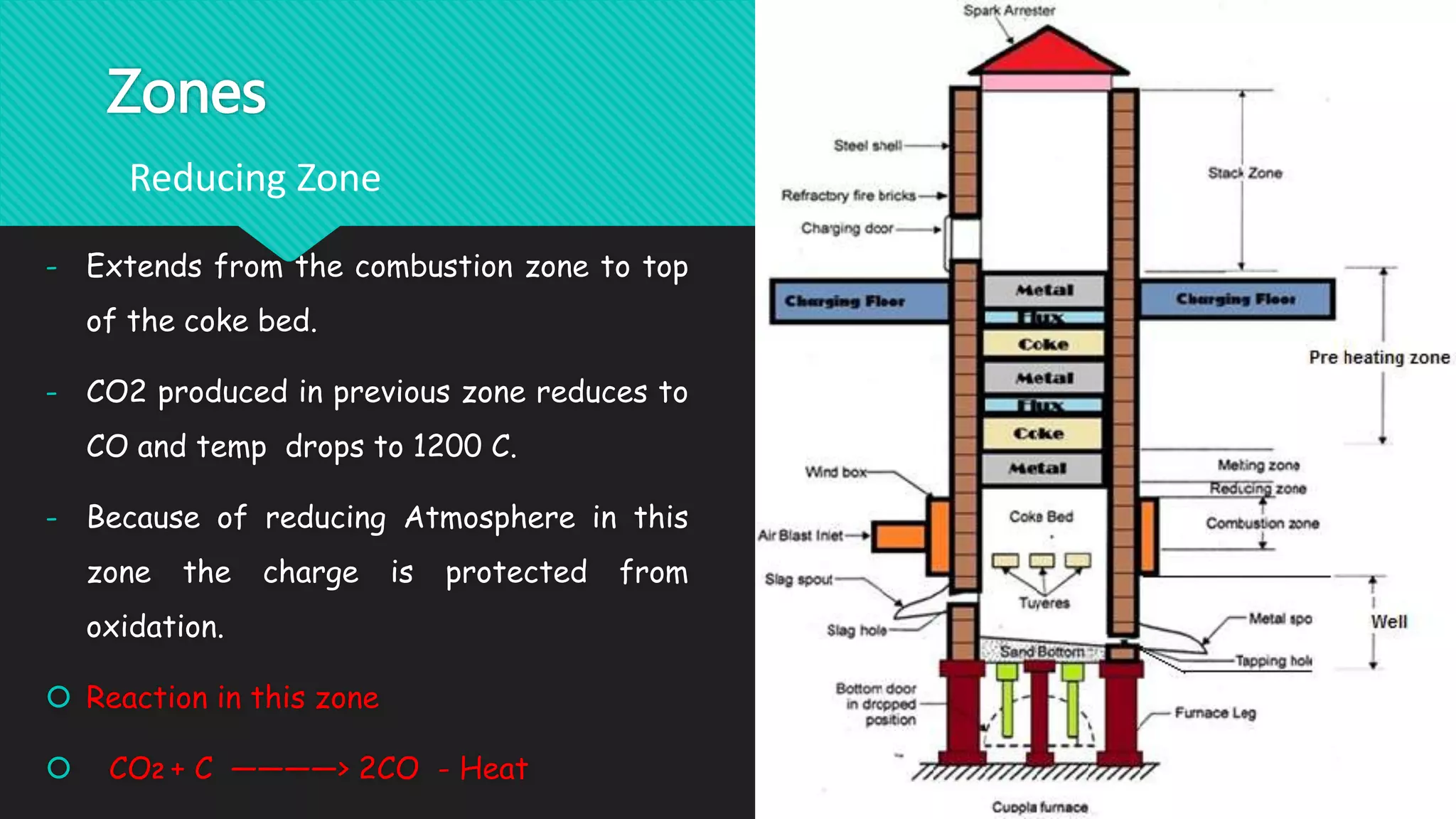
- Extends from the combustion zone to top
of the coke bed.
- CO2 produced in previous zone reduces to
CO and temp drops to 1200 C.
- Because of reducing Atmosphere in this
zone the charge is protected from
oxidation.
 Reaction in this zone
 CO2 + C ————> 2CO - Heat
Zones
Reducing Zone
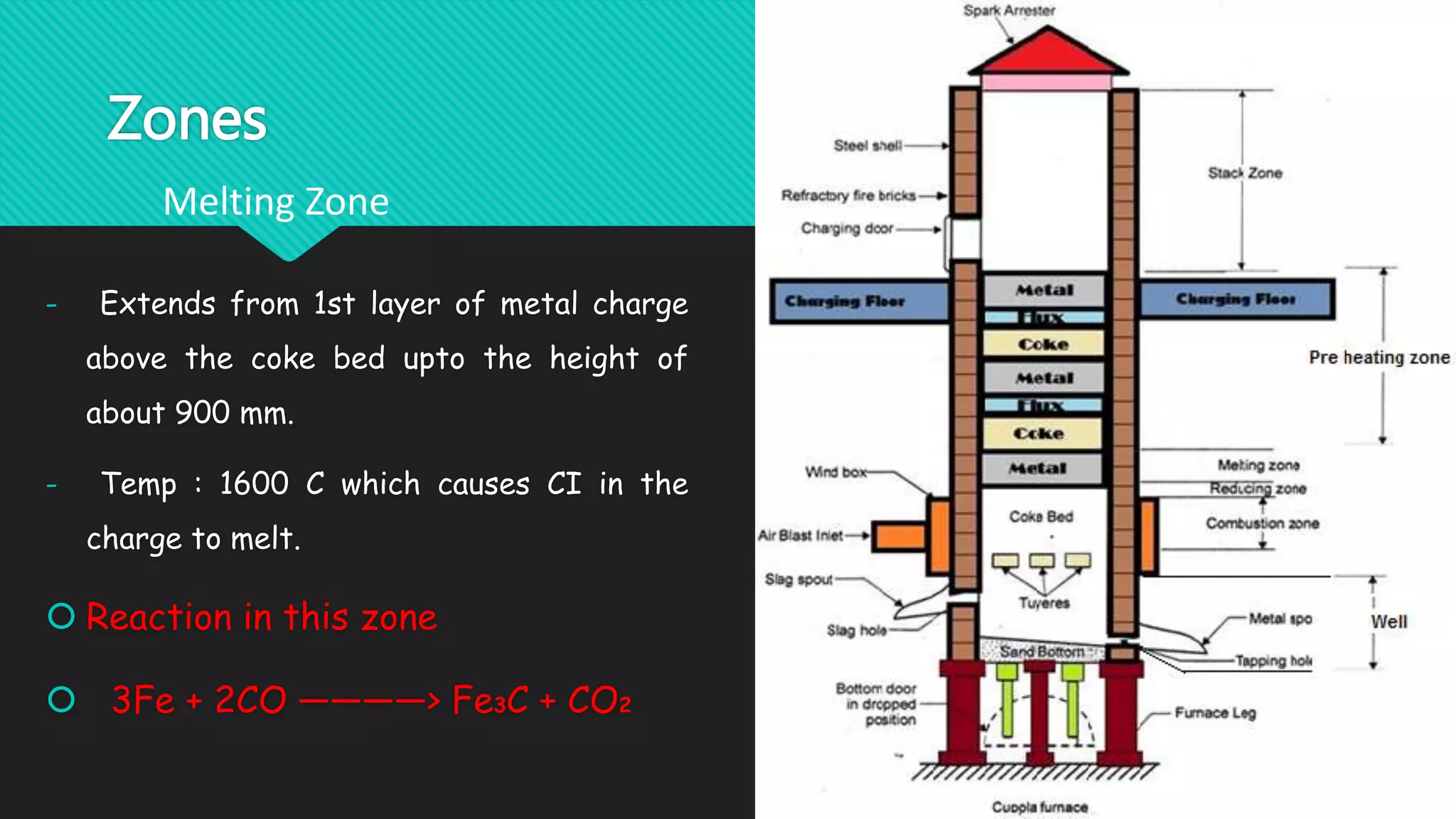
- Extends from 1st layer of metal charge
above the coke bed upto the height of
about 900 mm.
- Temp : 1600 C which causes CI in the
charge to melt.
 Reaction in this zone
 3Fe + 2CO ————> Fe3C + CO2
Zones
Melting Zone
- Starts from above the melting zone and
up to bottom of the Charging door.
- Alternate layers of coke, flux and metal
charge are preheated in this zone to
temp of about 1100 C before entering
melting zone.
Zones
Pre-heating Zone
Reaction in this zone
FeS + CaO + C ————>
Fe + CaS + CO
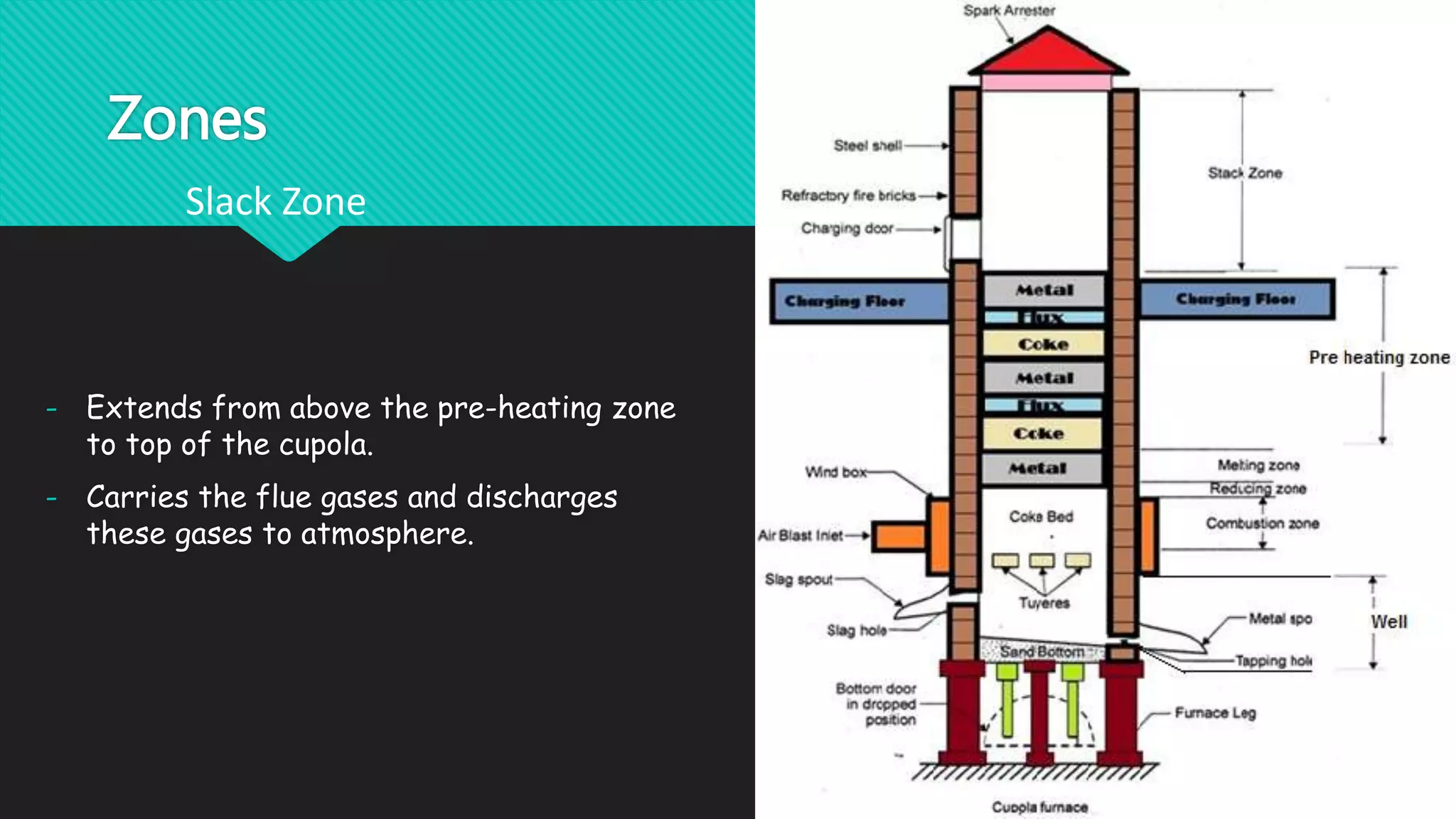
- Extends from above the pre-heating zone
to top of the cupola.
- Carries the flue gases and discharges
these gases to atmosphere.
Zones
Slack Zone
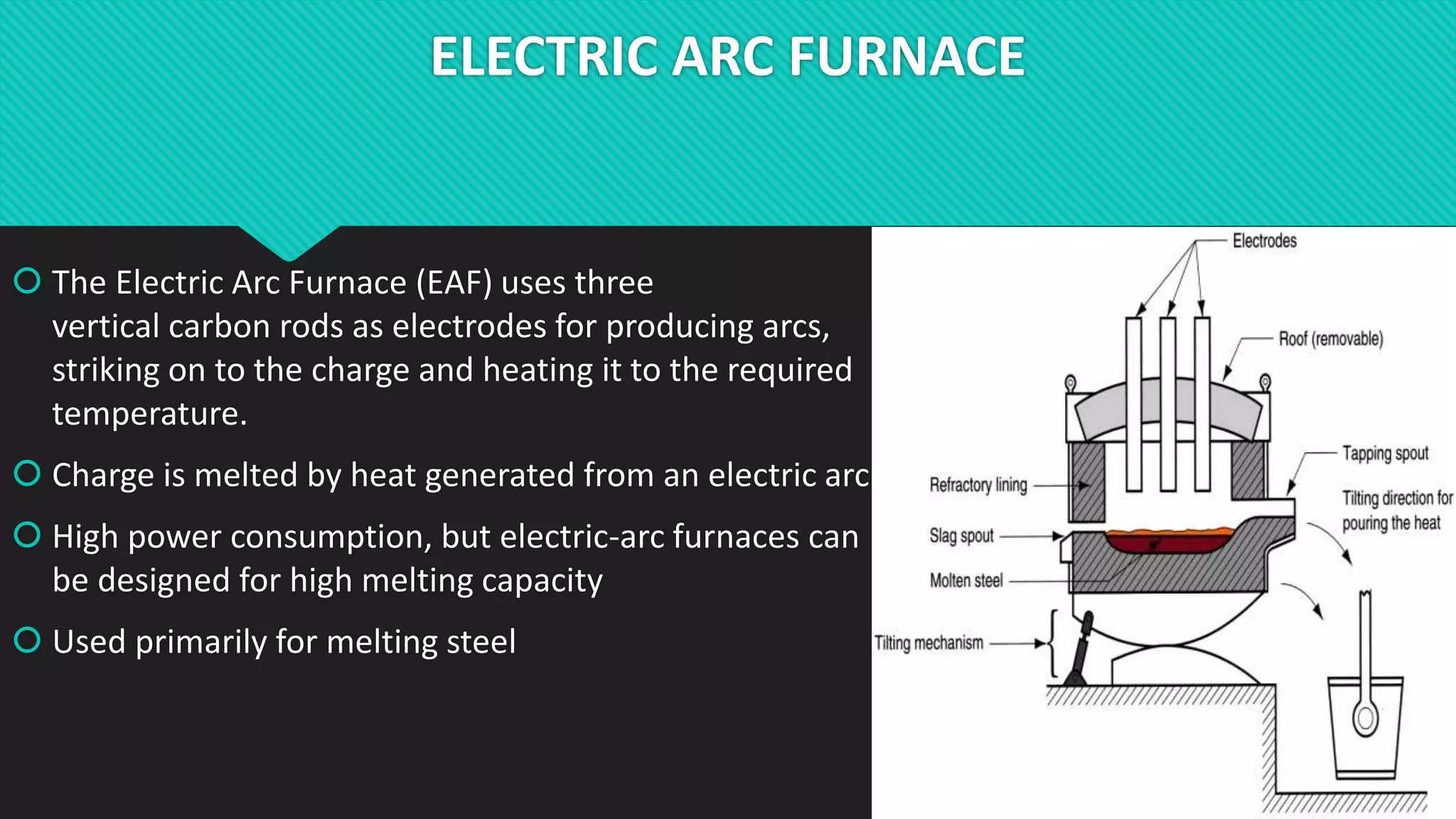
ELECTRIC ARC FURNACE
 The Electric Arc Furnace (EAF) uses three
vertical carbon rods as electrodes for producing arcs,
striking on to the charge and heating it to the required
temperature.
 Charge is melted by heat generated from an electric arc
 High power consumption, but electric-arc furnaces can
be designed for high melting capacity
 Used primarily for melting steel
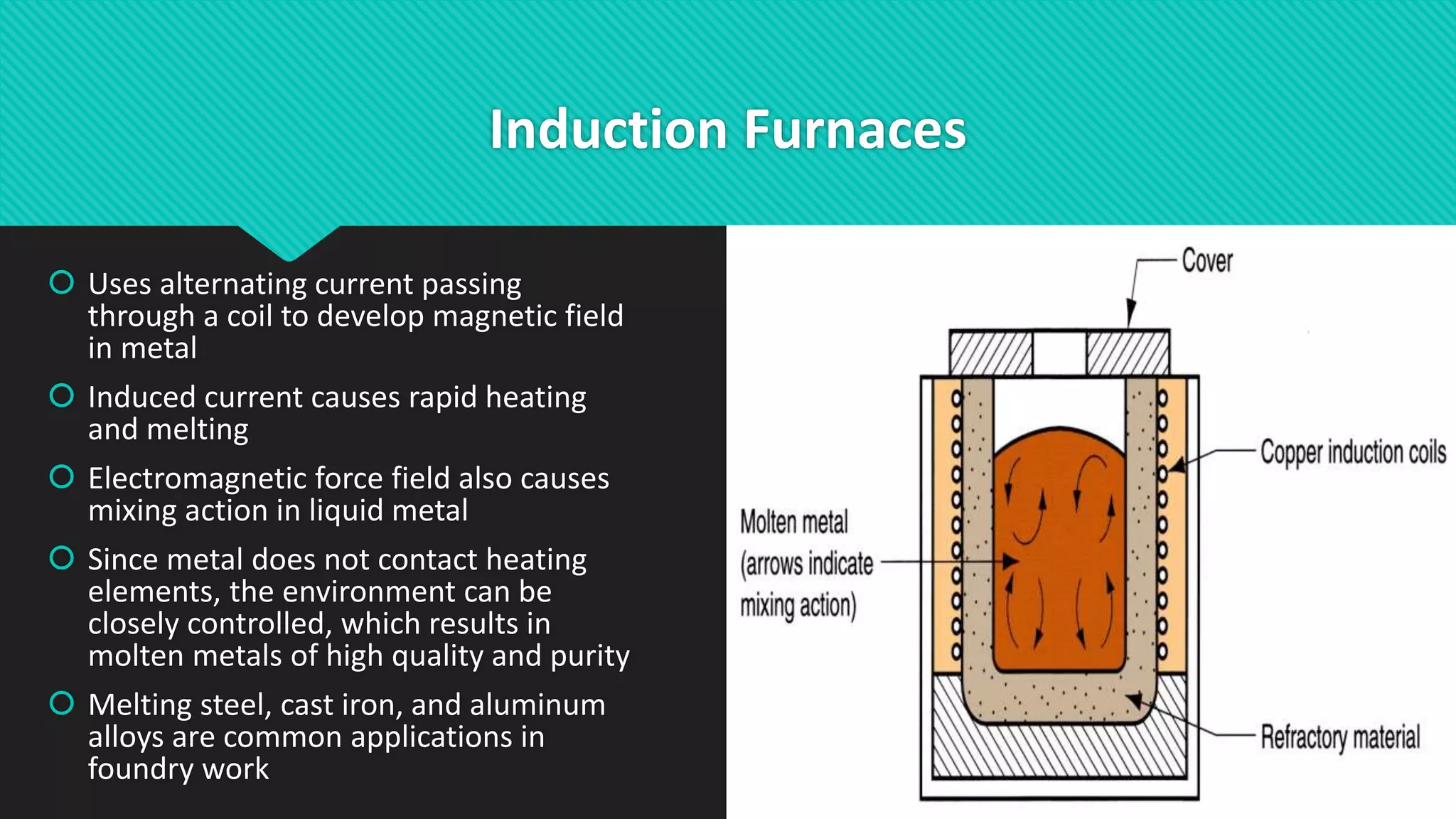
Induction Furnaces
 Uses alternating current passing
through a coil to develop magnetic field
in metal
 Induced current causes rapid heating
and melting
 Electromagnetic force field also causes
mixing action in liquid metal
 Since metal does not contact heating
elements, the environment can be
closely controlled, which results in
molten metals of high quality and purity
 Melting steel, cast iron, and aluminum
alloys are common applications in
foundry work
Metal Pot Furnace
 Relatively low melting point alloys
like alloys of
aluminium,magnesium,zinc,lead or
tin can be melted in a metal pot
usually made of cast iron or steel.
 The metal pot is supported by its lid
in a stationary fired by gas, or oil.
 The products of combustion are
discharged through a flue and do
not come into contact with the
molten metal.
Thank You

Metal melting furnaces

  • 1.
    Metal Melting Furnaces Sub:- Manufacturing process – 2 Bhavik Nakrani_140990119027_MP2_2141908 Ankit Panchal_140990119028_MP2_2141908 Raj Parekh_140990119029_MP2_2141908 Dwij Patel_140990119032_MP2_2141908
  • 2.
    Metal Melting Furnaces THE FURNACES USED IN METAL CASTING ARE AS FOLLOWING:.  Cupola Furnace  Electric Arc Furnace  Induction Furnace  Metal pot Furnace
  • 3.
    Cupola Furnace Cupola furnacesare tall, cylindrical furnaces used to melt iron and ferrous alloys in foundry operations. Alternating layers of metal and ferrous alloys, coke, and limestone are fed into the furnace from the top.
  • 4.
     Preparation ofcupola.  Firing the cupola.  Soaking of iron.  Opening of air blast.  Pouring the molten metal.  Closing the cupola. Operation of Cupola
  • 5.
     This zoneis the zone between top of the sand bed and bottom of the tuyers.  This is also called well of the cupola, molten metal is accumulated here between taps. Zones Crucible Zone
  • 6.
     - situated150 to 300 mm above the top of the tuyers.  -The actual combustion of fuel occurs in This zone using oxygen in the air blast.  -A lot of heat Is liberated in this zones and is supplied to other zones. Zones Combustion Zone
  • 7.
     - Someheat is also evolved in this zone due to oxidation  Of silicon & manganese. The temp of this zone is of 1550 to 1850 C.  - Because of this temperature molten drops of CI pour into the heart. - Product : co2 , SiO2 and MnO2  Reaction in this zone  C + O2 ————> CO2 + Heat Combustion Zone
  • 8.
    - Extends fromthe combustion zone to top of the coke bed. - CO2 produced in previous zone reduces to CO and temp drops to 1200 C. - Because of reducing Atmosphere in this zone the charge is protected from oxidation.  Reaction in this zone  CO2 + C ————> 2CO - Heat Zones Reducing Zone
  • 9.
    - Extends from1st layer of metal charge above the coke bed upto the height of about 900 mm. - Temp : 1600 C which causes CI in the charge to melt.  Reaction in this zone  3Fe + 2CO ————> Fe3C + CO2 Zones Melting Zone
  • 10.
    - Starts fromabove the melting zone and up to bottom of the Charging door. - Alternate layers of coke, flux and metal charge are preheated in this zone to temp of about 1100 C before entering melting zone. Zones Pre-heating Zone Reaction in this zone FeS + CaO + C ————> Fe + CaS + CO
  • 11.
    - Extends fromabove the pre-heating zone to top of the cupola. - Carries the flue gases and discharges these gases to atmosphere. Zones Slack Zone
  • 12.
    ELECTRIC ARC FURNACE The Electric Arc Furnace (EAF) uses three vertical carbon rods as electrodes for producing arcs, striking on to the charge and heating it to the required temperature.  Charge is melted by heat generated from an electric arc  High power consumption, but electric-arc furnaces can be designed for high melting capacity  Used primarily for melting steel
  • 13.
    Induction Furnaces  Usesalternating current passing through a coil to develop magnetic field in metal  Induced current causes rapid heating and melting  Electromagnetic force field also causes mixing action in liquid metal  Since metal does not contact heating elements, the environment can be closely controlled, which results in molten metals of high quality and purity  Melting steel, cast iron, and aluminum alloys are common applications in foundry work
  • 14.
    Metal Pot Furnace Relatively low melting point alloys like alloys of aluminium,magnesium,zinc,lead or tin can be melted in a metal pot usually made of cast iron or steel.  The metal pot is supported by its lid in a stationary fired by gas, or oil.  The products of combustion are discharged through a flue and do not come into contact with the molten metal.
  • 15.