Part 4: Water Conservation & Harvesting
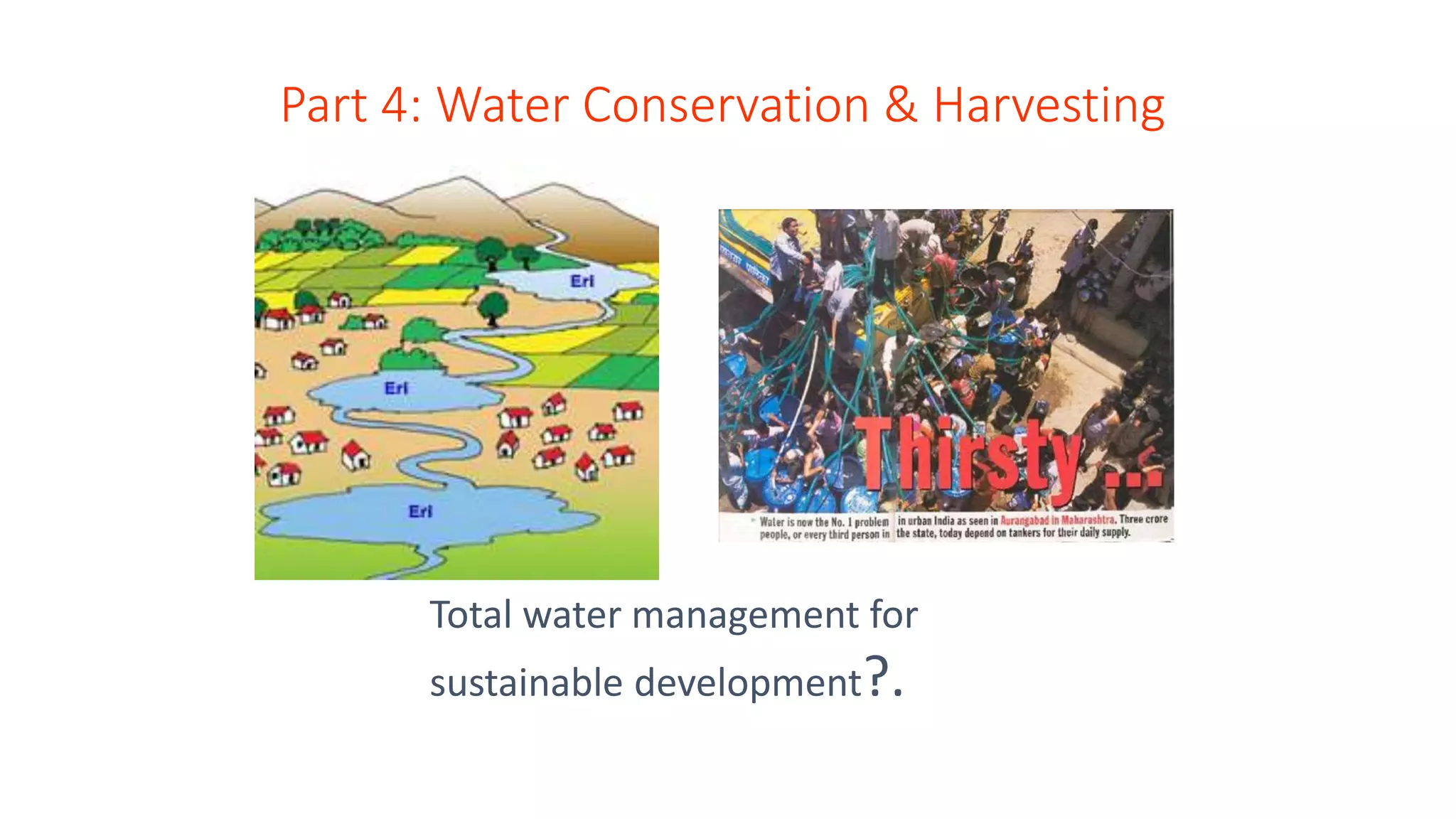
Total water management for
sustainable development?.
Rain Water Harvesting?.
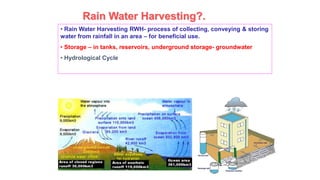
• Rain Water Harvesting RWH- process of collecting, conveying & storing
water from rainfall in an area – for beneficial use.
• Storage – in tanks, reservoirs, underground storage- groundwater
• Hydrological Cycle
Rain Water Harvesting?.
• RWH - yield copious amounts of water. For an average rainfall of
1,000mm, approximately four million litres of rainwater can be collected in
a year in an acre of land (4,047 m2), post-evaporation.
•As RWH - neither energy-intensive nor labour-intensive
•It can be a cost-effective alternative to other water-accruing methods.
• With the water table falling rapidly, & concrete surfaces and landfill
dumps taking the place of water bodies, RWH is the most reliable solution
for augmenting groundwater level to attain self-sufficiency
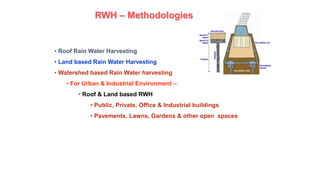
• Roof Rain Water Harvesting
• Land based Rain Water Harvesting
• Watershed based Rain Water harvesting
• For Urban & Industrial Environment –
• Roof & Land based RWH
• Public, Private, Office & Industrial buildings
• Pavements, Lawns, Gardens & other open spaces
RWH – Methodologies
Rain Water Harvesting– Advantages
1.Provides self-sufficiency to water supply
2.Reduces the cost for pumping of ground water
3.Provides high quality water, soft and low in minerals
4.Improves the quality of ground water through dilution when recharged
5.Reduces soil erosion & flooding in urban areas
6.The rooftop rain water harvesting is less expensive & easy to construct,
operate and maintain
7. In desert, RWH only relief
8. In saline or coastal areas & Islands, rain water provides good quality water

Rain water harvesting

  • 1.
    Part 4: WaterConservation & Harvesting Total water management for sustainable development?.
  • 2.
    Rain Water Harvesting?. •Rain Water Harvesting RWH- process of collecting, conveying & storing water from rainfall in an area – for beneficial use. • Storage – in tanks, reservoirs, underground storage- groundwater • Hydrological Cycle
  • 3.
    Rain Water Harvesting?. •RWH - yield copious amounts of water. For an average rainfall of 1,000mm, approximately four million litres of rainwater can be collected in a year in an acre of land (4,047 m2), post-evaporation. •As RWH - neither energy-intensive nor labour-intensive •It can be a cost-effective alternative to other water-accruing methods. • With the water table falling rapidly, & concrete surfaces and landfill dumps taking the place of water bodies, RWH is the most reliable solution for augmenting groundwater level to attain self-sufficiency
  • 4.
    • Roof RainWater Harvesting • Land based Rain Water Harvesting • Watershed based Rain Water harvesting • For Urban & Industrial Environment – • Roof & Land based RWH • Public, Private, Office & Industrial buildings • Pavements, Lawns, Gardens & other open spaces RWH – Methodologies
  • 5.
    Rain Water Harvesting–Advantages 1.Provides self-sufficiency to water supply 2.Reduces the cost for pumping of ground water 3.Provides high quality water, soft and low in minerals 4.Improves the quality of ground water through dilution when recharged 5.Reduces soil erosion & flooding in urban areas 6.The rooftop rain water harvesting is less expensive & easy to construct, operate and maintain 7. In desert, RWH only relief 8. In saline or coastal areas & Islands, rain water provides good quality water