METACOGNITION
John
Educ. 603
Philo, Socio
Psycho
Foundation
Prepared by:
Teresa C. Salvado
John Flavell
John H. Flavell was born on
August 9, 1928 in Rockland, Massachusetts.
He gain APA Award for Distinguished Scientific
Contributions to Psychology
He coined the term metacognition (1979, 1987)
According to him Metacognition consist of
metacognitive knowledge and metacognitive
experiences.
He was influenced by the work of JEAN
PIAGET.
Who is John Flavell?
Piaget’s Theory
John Flavell’s
Theory
Meta- referring to itself (self-
referential)
Cognition- mental process
Thinking about thinking
Refers to the awareness of ones own knowledge.
The ability to use prior knowledge to plan a
strategy for approaching a learning task, take
necessary steps to problem solve, reflect on and
evaluate results, and modify ones approach as
needed.
WHAT IS METACOGNITION?
Dimension of Metacognition
1.Metacognitive Knowledge- refers to what
learners know about learning. (trouble remembering the
history dates).
2.Metacognitive Regulation- refers to what
learners do about learning. It describes how learners
monitor and control their cognitive processes. (a learner
might realize that a particular strategy is not achieving the results they
want, so they decide to try a different strategy).
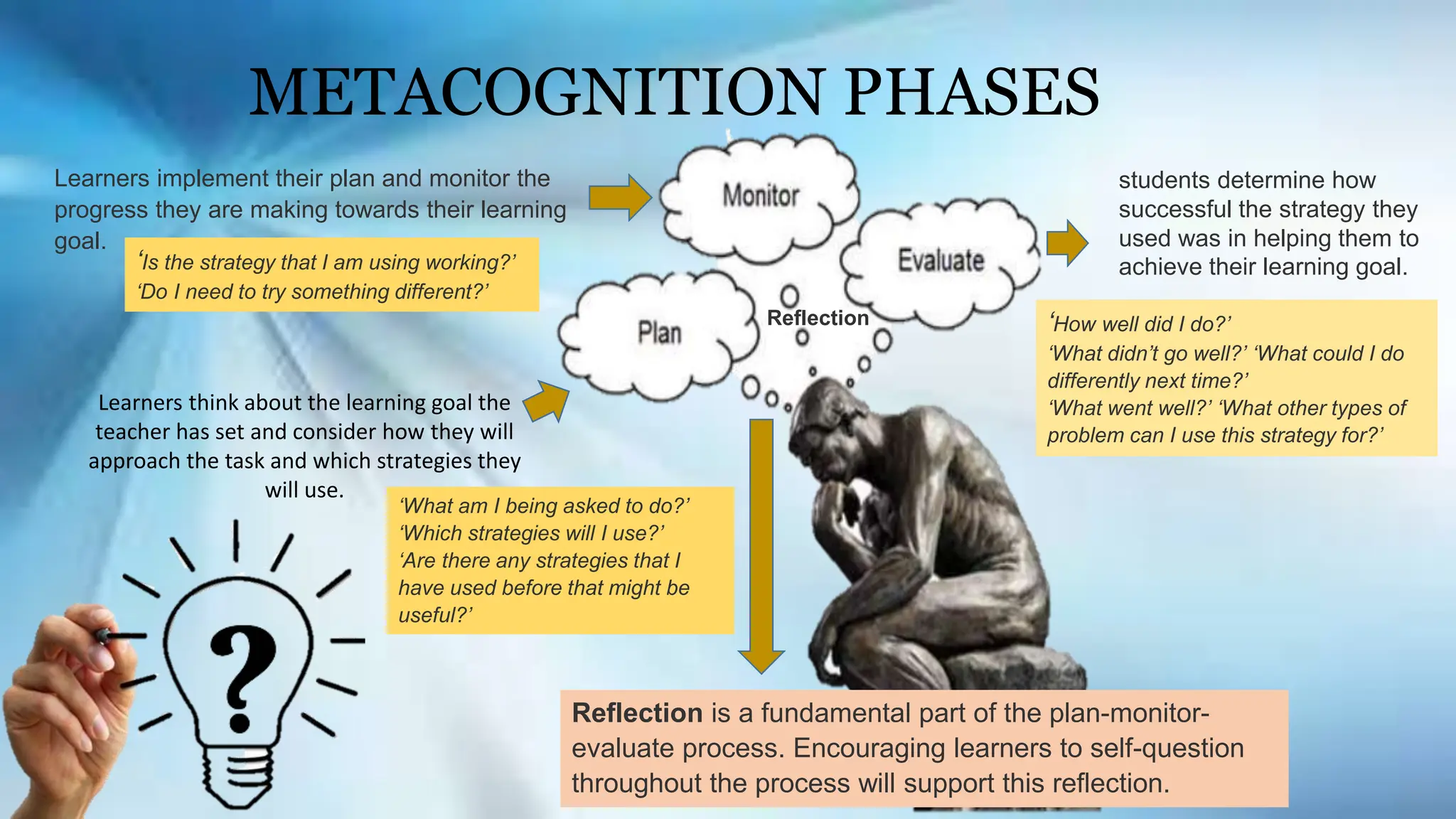
Learners think about the learning goal the
teacher has set and consider how they will
approach the task and which strategies they
will use.
METACOGNITION PHASES
Learners implement their plan and monitor the
progress they are making towards their learning
goal.
students determine how
successful the strategy they
used was in helping them to
achieve their learning goal.
‘What am I being asked to do?’
‘Which strategies will I use?’
‘Are there any strategies that I
have used before that might be
useful?’
‘Is the strategy that I am using working?’
‘Do I need to try something different?’
‘How well did I do?’
‘What didn’t go well?’ ‘What could I do
differently next time?’
‘What went well?’ ‘What other types of
problem can I use this strategy for?’
Reflection is a fundamental part of the plan-monitor-
evaluate process. Encouraging learners to self-question
throughout the process will support this reflection.
Reflection
Metacognition Strategies
Image mnemonics-use a visual reference to aid recall.
For example you can use your hands to recall how many days are in each month.
What are the benefits of metacognition?
Metacognition helps students to become independent learners
Metacognitive practices help learners to monitor their own progress and take control of their learning as they read,
write and solve problems in the classroom.
Metacognition has a positive impact on learning
Metacognition makes a unique contribution to learning over and above the influence of intellectual ability. Learners
who use metacognitive strategies are likely to be able to achieve more. Research shows that improving a learner’s
metacognitive practices may compensate for any cognitive limitations they have.
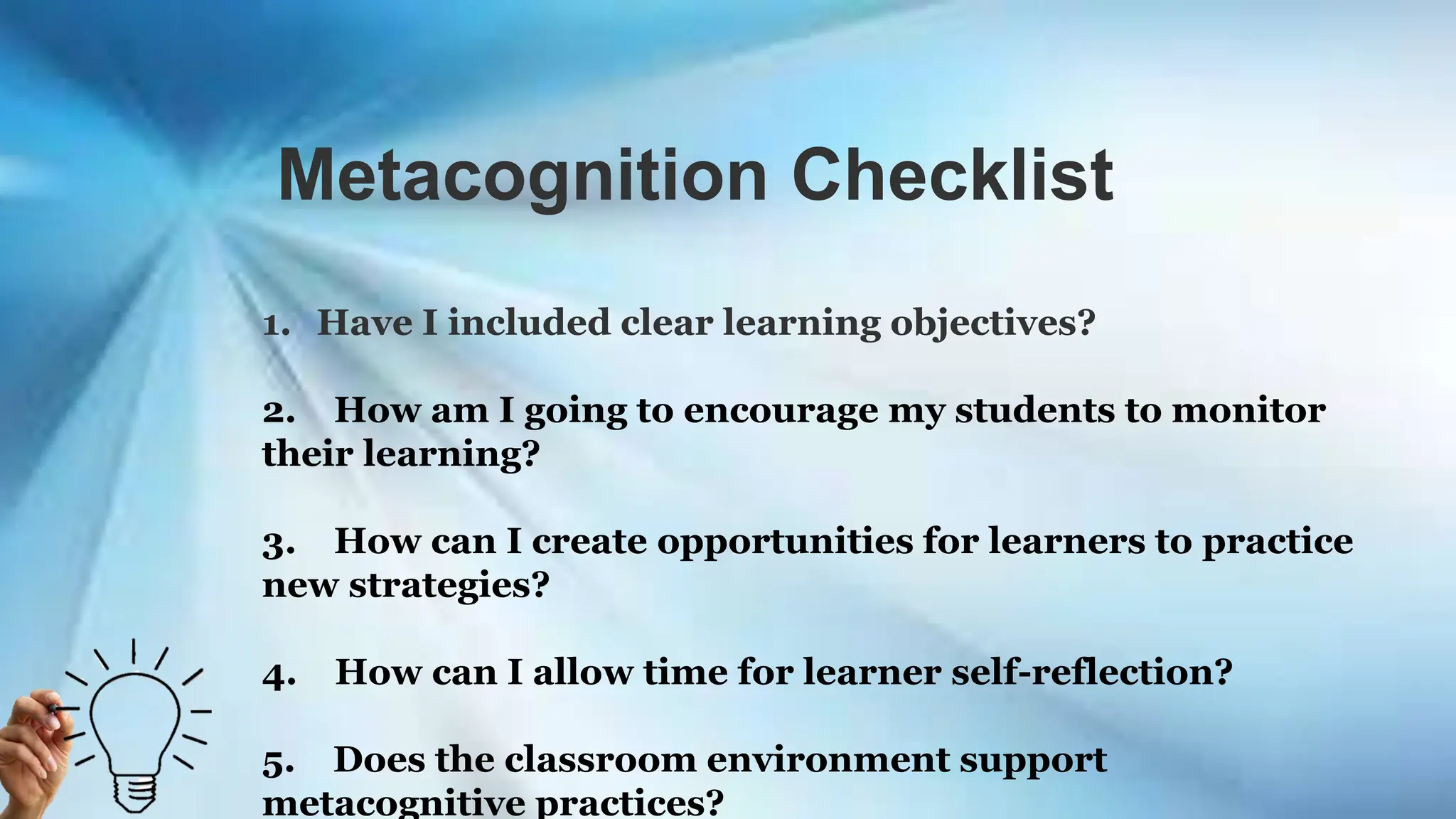
Metacognition Checklist
1. Have I included clear learning objectives?
2. How am I going to encourage my students to monitor
their learning?
3. How can I create opportunities for learners to practice
new strategies?
4. How can I allow time for learner self-reflection?
5. Does the classroom environment support
metacognitive practices?
Quote
Thank you.
End of Slides

Metacognition aims to present the topic PPT final.pptx

  • 1.
  • 2.
    John Flavell John H.Flavell was born on August 9, 1928 in Rockland, Massachusetts. He gain APA Award for Distinguished Scientific Contributions to Psychology He coined the term metacognition (1979, 1987) According to him Metacognition consist of metacognitive knowledge and metacognitive experiences. He was influenced by the work of JEAN PIAGET. Who is John Flavell?
  • 3.
  • 4.
    Meta- referring toitself (self- referential) Cognition- mental process Thinking about thinking Refers to the awareness of ones own knowledge. The ability to use prior knowledge to plan a strategy for approaching a learning task, take necessary steps to problem solve, reflect on and evaluate results, and modify ones approach as needed. WHAT IS METACOGNITION?
  • 5.
    Dimension of Metacognition 1.MetacognitiveKnowledge- refers to what learners know about learning. (trouble remembering the history dates). 2.Metacognitive Regulation- refers to what learners do about learning. It describes how learners monitor and control their cognitive processes. (a learner might realize that a particular strategy is not achieving the results they want, so they decide to try a different strategy).
  • 6.
    Learners think aboutthe learning goal the teacher has set and consider how they will approach the task and which strategies they will use. METACOGNITION PHASES Learners implement their plan and monitor the progress they are making towards their learning goal. students determine how successful the strategy they used was in helping them to achieve their learning goal. ‘What am I being asked to do?’ ‘Which strategies will I use?’ ‘Are there any strategies that I have used before that might be useful?’ ‘Is the strategy that I am using working?’ ‘Do I need to try something different?’ ‘How well did I do?’ ‘What didn’t go well?’ ‘What could I do differently next time?’ ‘What went well?’ ‘What other types of problem can I use this strategy for?’ Reflection is a fundamental part of the plan-monitor- evaluate process. Encouraging learners to self-question throughout the process will support this reflection. Reflection
  • 7.
    Metacognition Strategies Image mnemonics-usea visual reference to aid recall. For example you can use your hands to recall how many days are in each month.
  • 8.
    What are thebenefits of metacognition? Metacognition helps students to become independent learners Metacognitive practices help learners to monitor their own progress and take control of their learning as they read, write and solve problems in the classroom. Metacognition has a positive impact on learning Metacognition makes a unique contribution to learning over and above the influence of intellectual ability. Learners who use metacognitive strategies are likely to be able to achieve more. Research shows that improving a learner’s metacognitive practices may compensate for any cognitive limitations they have.
  • 9.
    Metacognition Checklist 1. HaveI included clear learning objectives? 2. How am I going to encourage my students to monitor their learning? 3. How can I create opportunities for learners to practice new strategies? 4. How can I allow time for learner self-reflection? 5. Does the classroom environment support metacognitive practices?
  • 10.
  • 11.