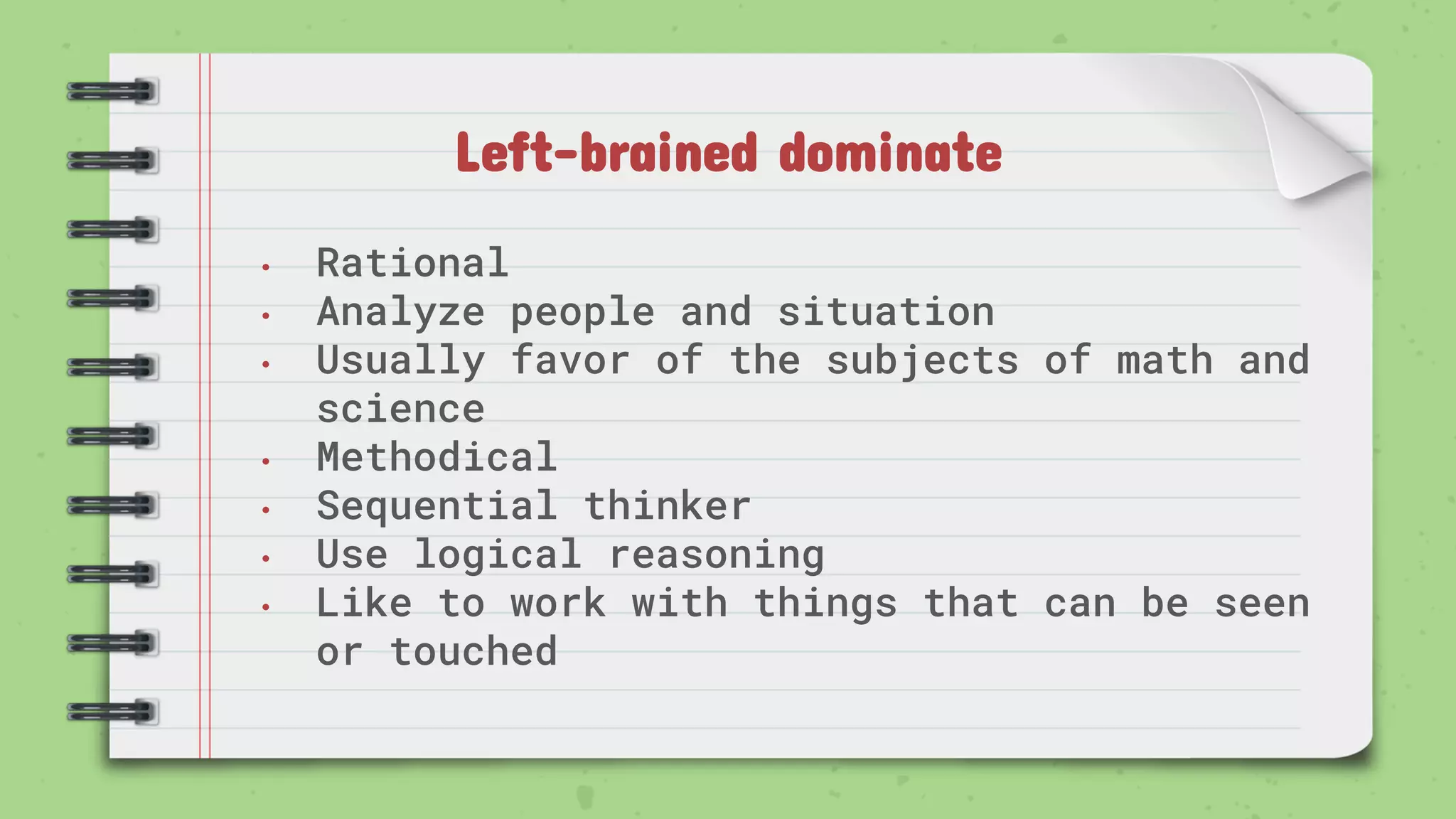
Left-brained dominate
• Rational
• Analyze people and situation
• Usually favor of the subjects of math and
science
• Methodical
• Sequential thinker
• Use logical reasoning
• Like to work with things that can be seen
or touched
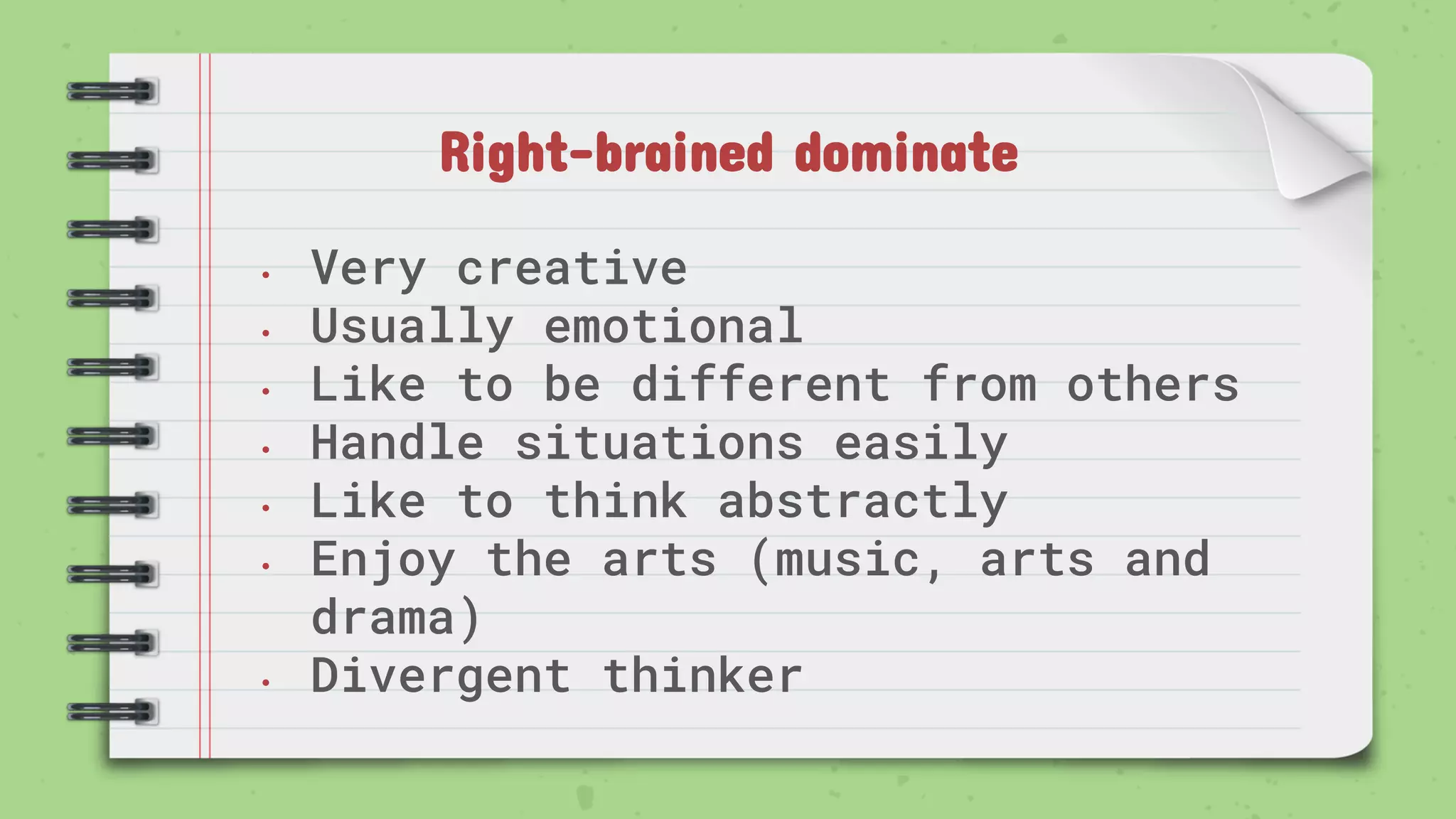
Right-brained dominate
• Very creative
• Usually emotional
• Like to be different from others
• Handle situations easily
• Like to think abstractly
• Enjoy the arts (music, arts and
drama)
• Divergent thinker
METACOGNITION
Here starts
the lesson!
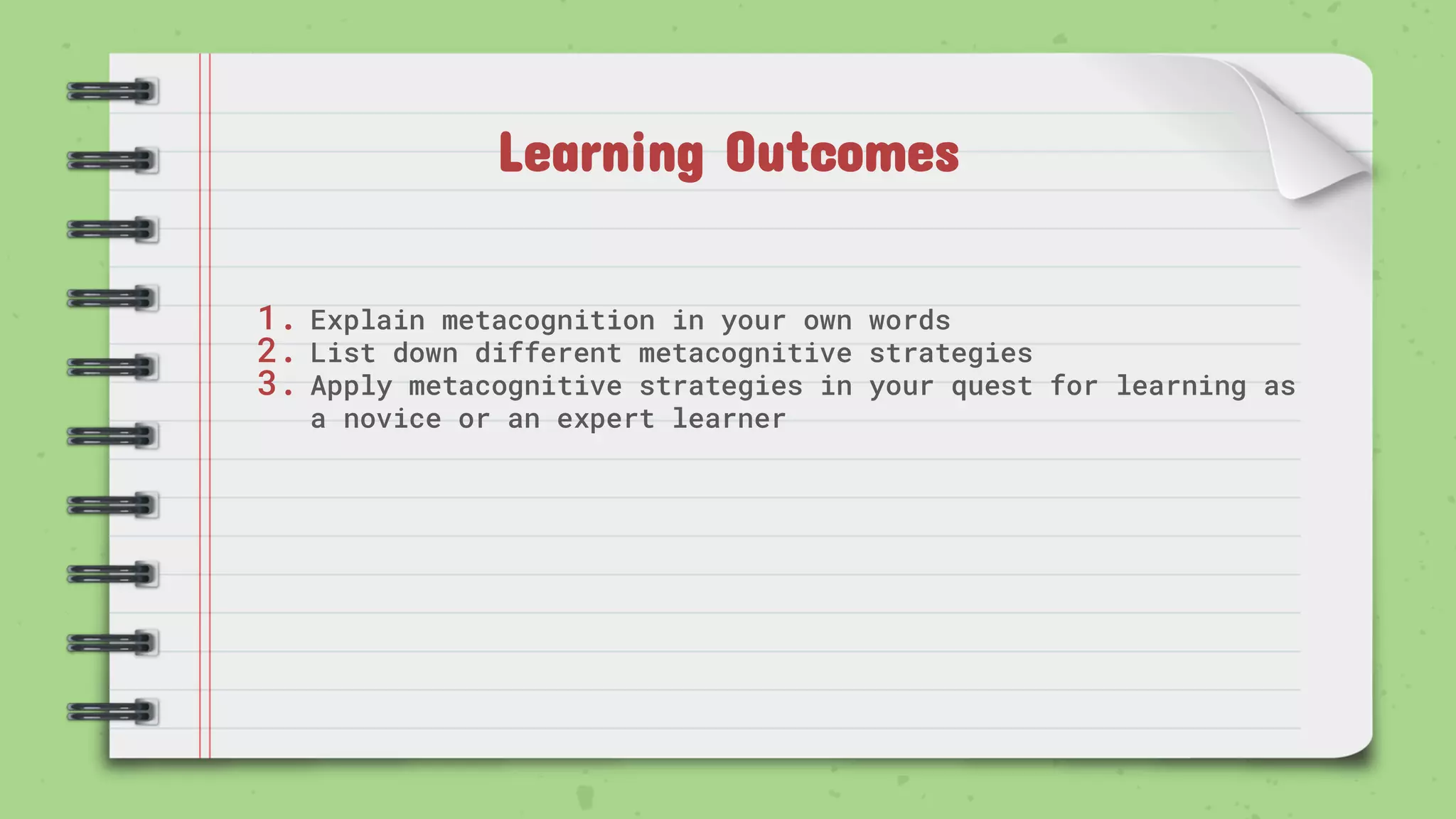
Learning Outcomes
1. Explain metacognition in your own words
2. List down different metacognitive strategies
3. Apply metacognitive strategies in your quest for learning as
a novice or an expert learner
—Margarette Mead
“Children must be
taught how to
think NOT what to
think.”
..
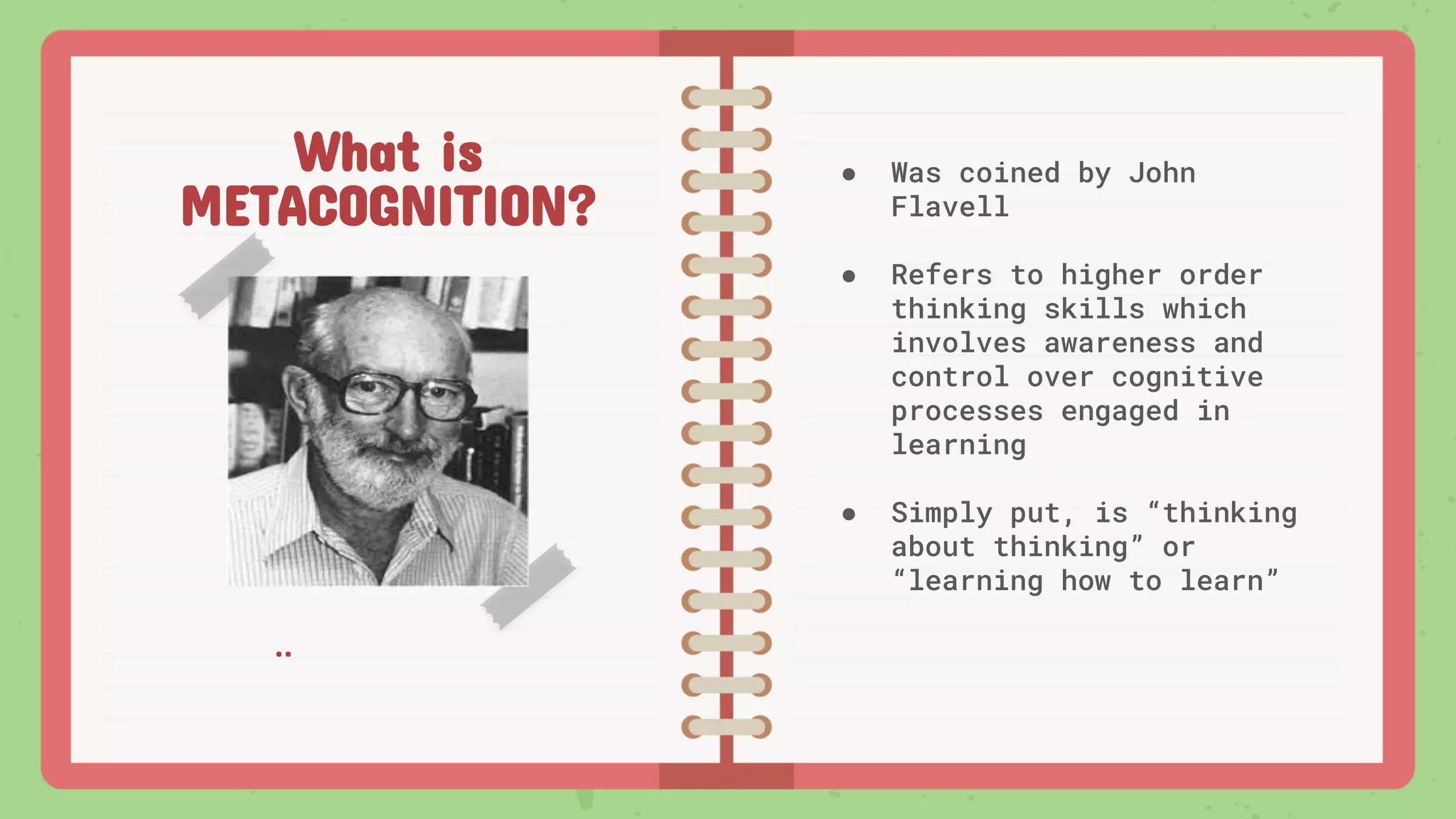
● Was coined by John
Flavell
● Refers to higher order
thinking skills which
involves awareness and
control over cognitive
processes engaged in
learning
● Simply put, is “thinking
about thinking” or
“learning how to learn”
What is
METACOGNITION?
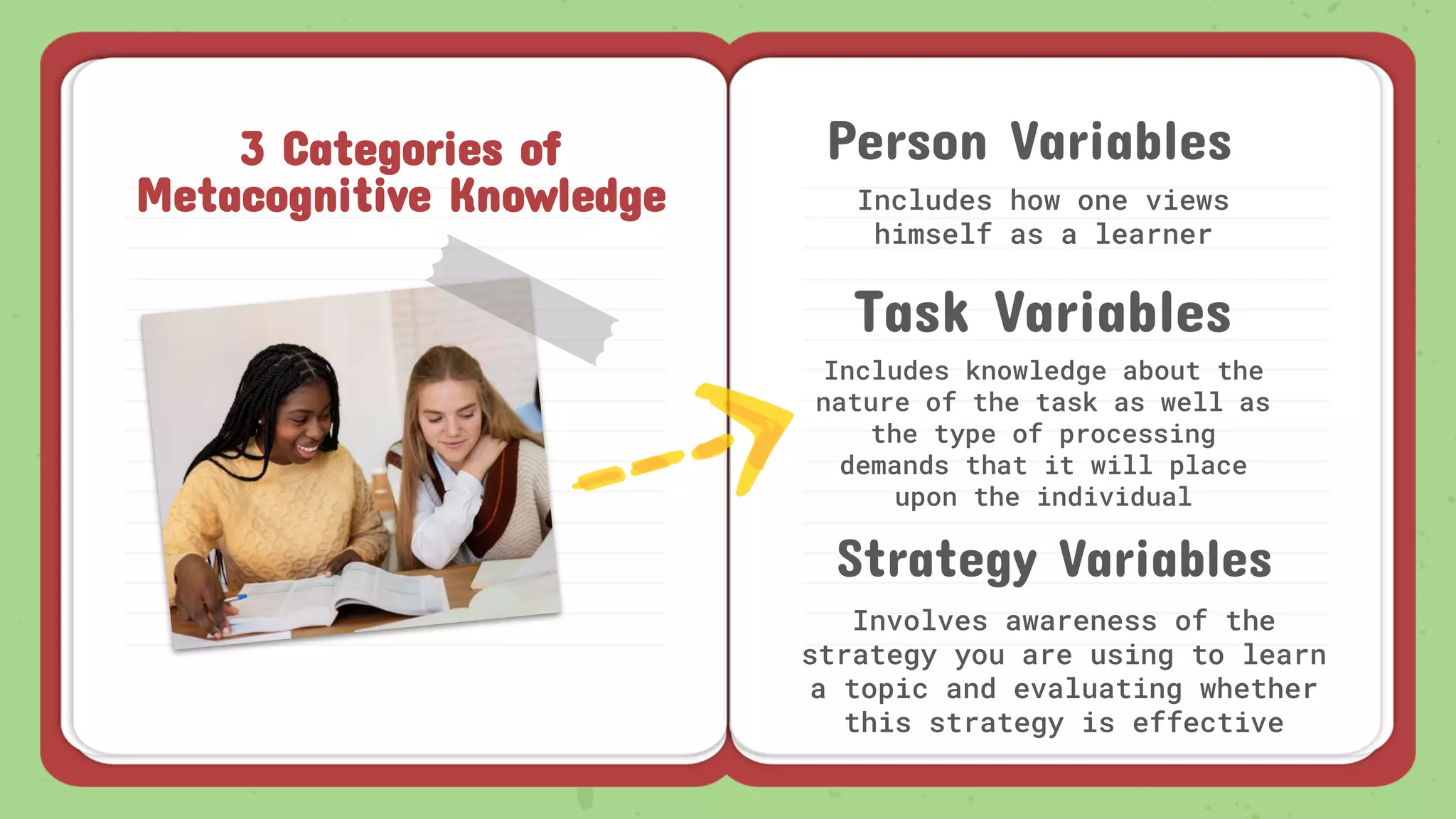
Strategy Variables
Includes knowledge about the
nature of the task as well as
the type of processing
demands that it will place
upon the individual
Person Variables
Task Variables
Involves awareness of the
strategy you are using to learn
a topic and evaluating whether
this strategy is effective
3 Categories of
Metacognitive Knowledge Includes how one views
himself as a learner
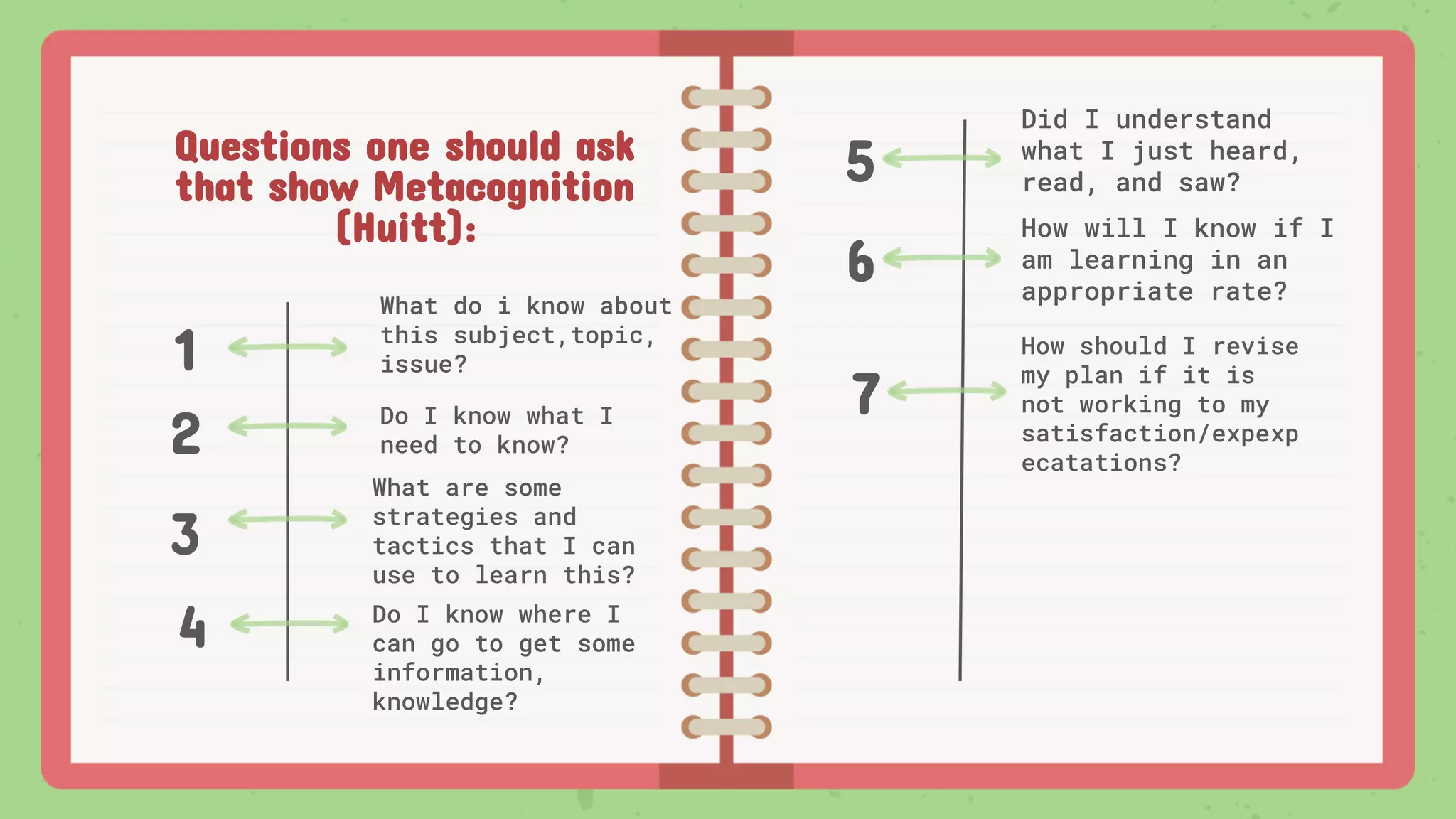
Questions one should ask
that show Metacognition
(Huitt):
Do I know what I
need to know?
Did I understand
what I just heard,
read, and saw?
What do i know about
this subject,topic,
issue?
What are some
strategies and
tactics that I can
use to learn this?
How will I know if I
am learning in an
appropriate rate?
How should I revise
my plan if it is
not working to my
satisfaction/expexp
ecatations?
1
2
3
5
6
7
4 Do I know where I
can go to get some
information,
knowledge?
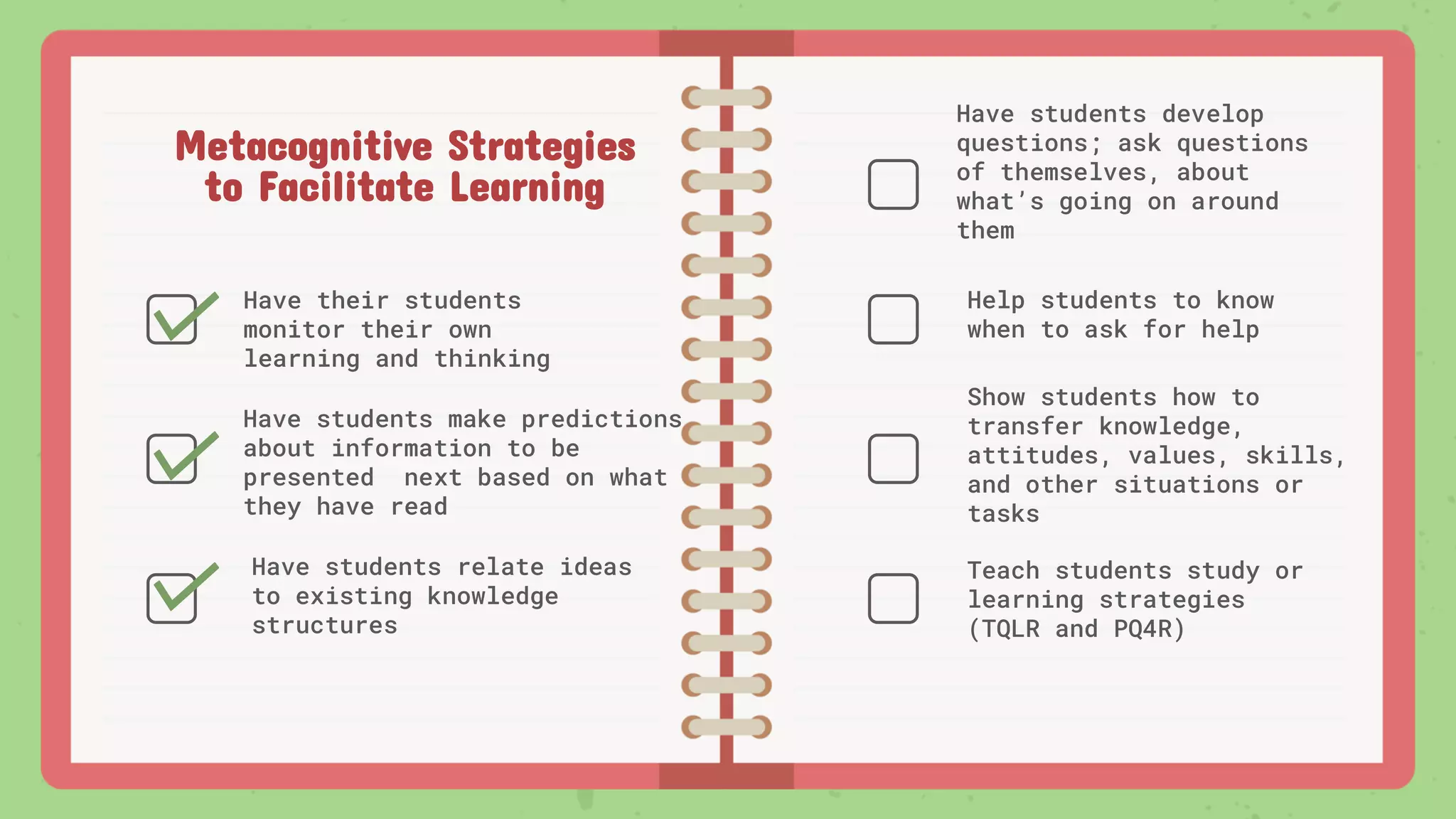
Metacognitive Strategies
to Facilitate Learning
Have students make predictions
about information to be
presented next based on what
they have read
Have students develop
questions; ask questions
of themselves, about
what’s going on around
them
Have their students
monitor their own
learning and thinking
Have students relate ideas
to existing knowledge
structures
Help students to know
when to ask for help
Show students how to
transfer knowledge,
attitudes, values, skills,
and other situations or
tasks
Teach students study or
learning strategies
(TQLR and PQ4R)
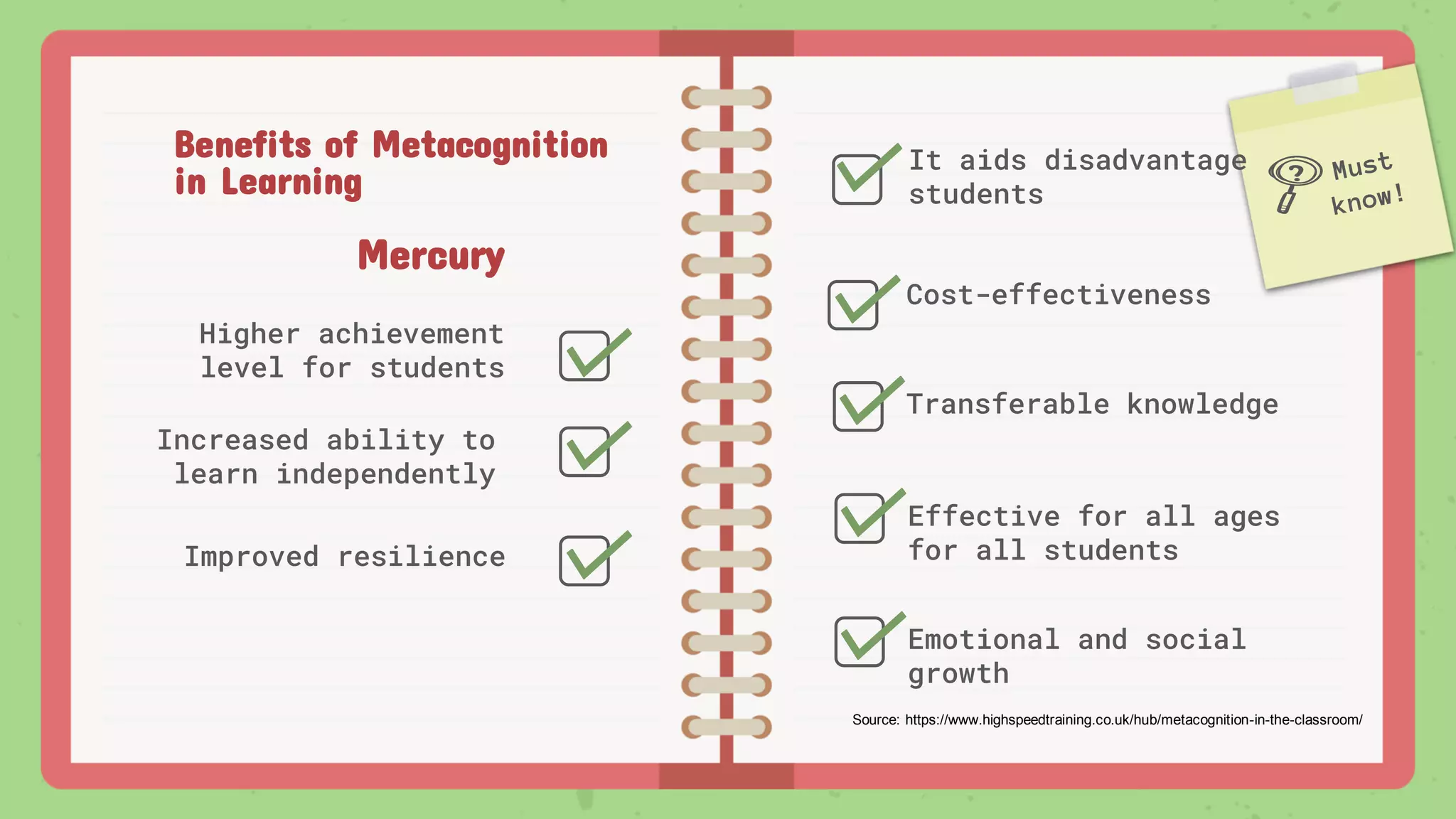
Benefits of Metacognition
in Learning
Mercury
Higher achievement
level for students
It aids disadvantage
students
Increased ability to
learn independently
Improved resilience
Cost-effectiveness
Transferable knowledge
Effective for all ages
for all students
Emotional and social
growth
Source: https://www.highspeedtraining.co.uk/hub/metacognition-in-the-classroom/
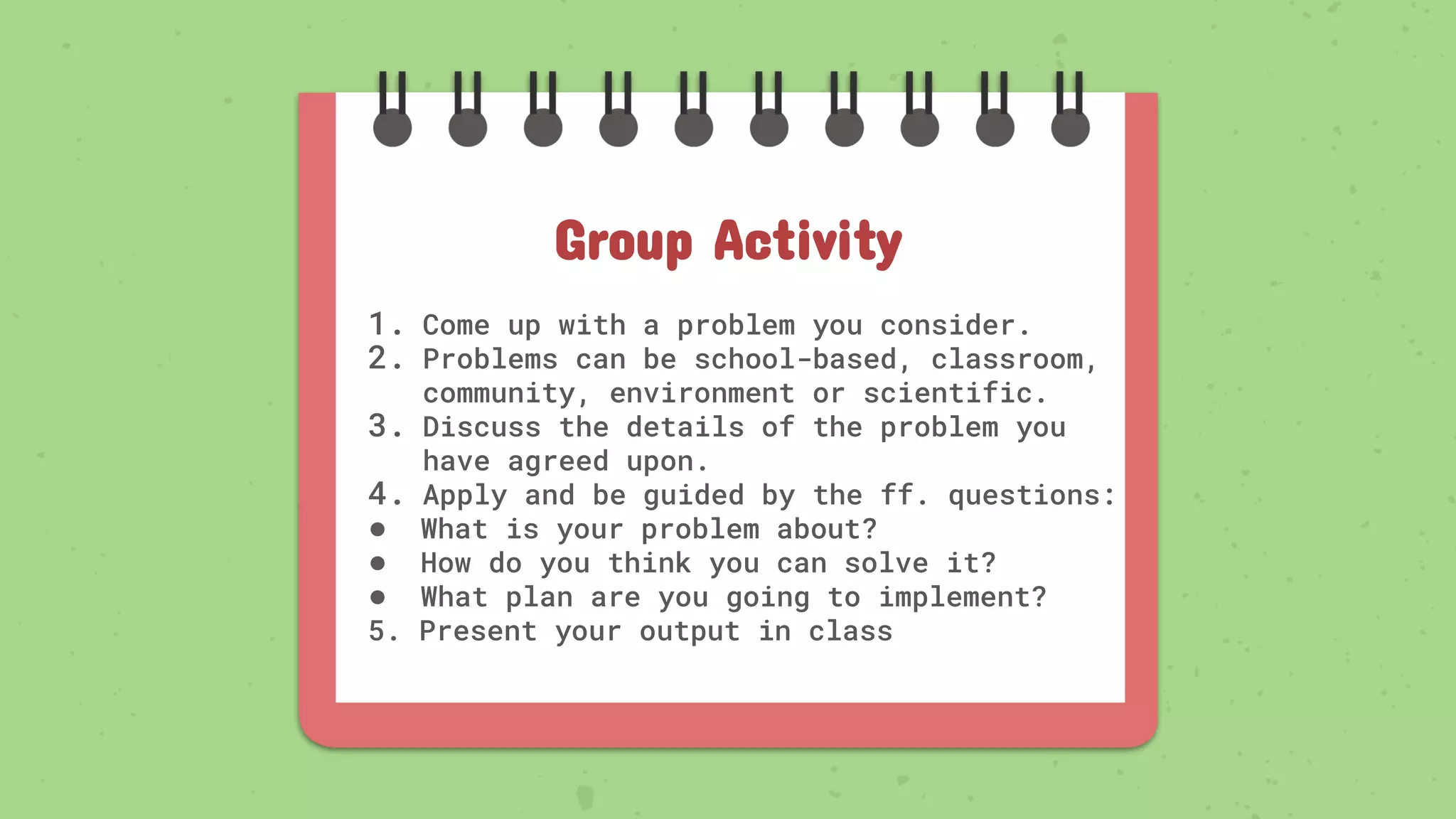
1. Come up with a problem you consider.
2. Problems can be school-based, classroom,
community, environment or scientific.
3. Discuss the details of the problem you
have agreed upon.
4. Apply and be guided by the ff. questions:
● What is your problem about?
● How do you think you can solve it?
● What plan are you going to implement?
5. Present your output in class
Group Activity
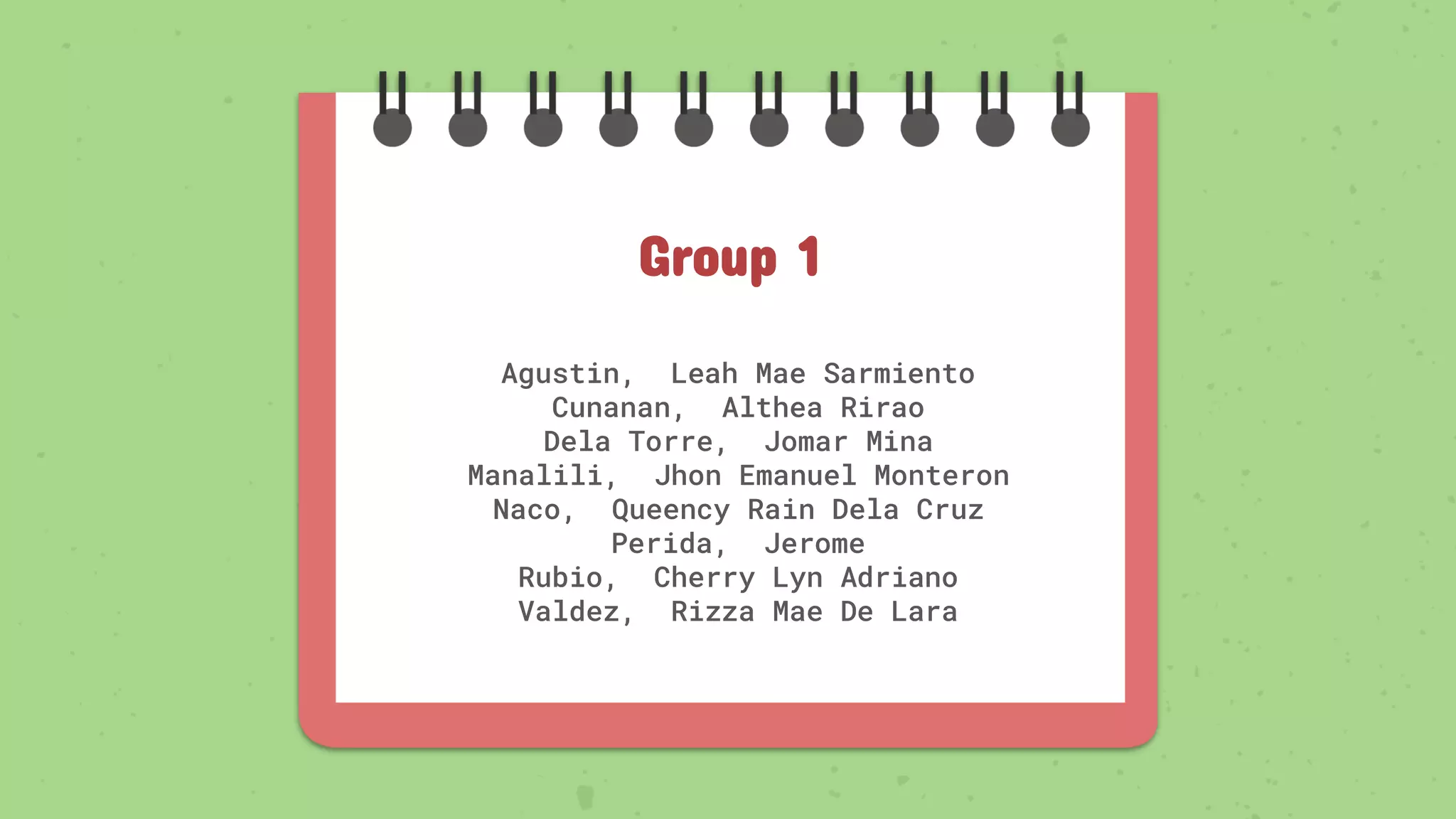
Agustin, Leah Mae Sarmiento
Cunanan, Althea Rirao
Dela Torre, Jomar Mina
Manalili, Jhon Emanuel Monteron
Naco, Queency Rain Dela Cruz
Perida, Jerome
Rubio, Cherry Lyn Adriano
Valdez, Rizza Mae De Lara
Group 1
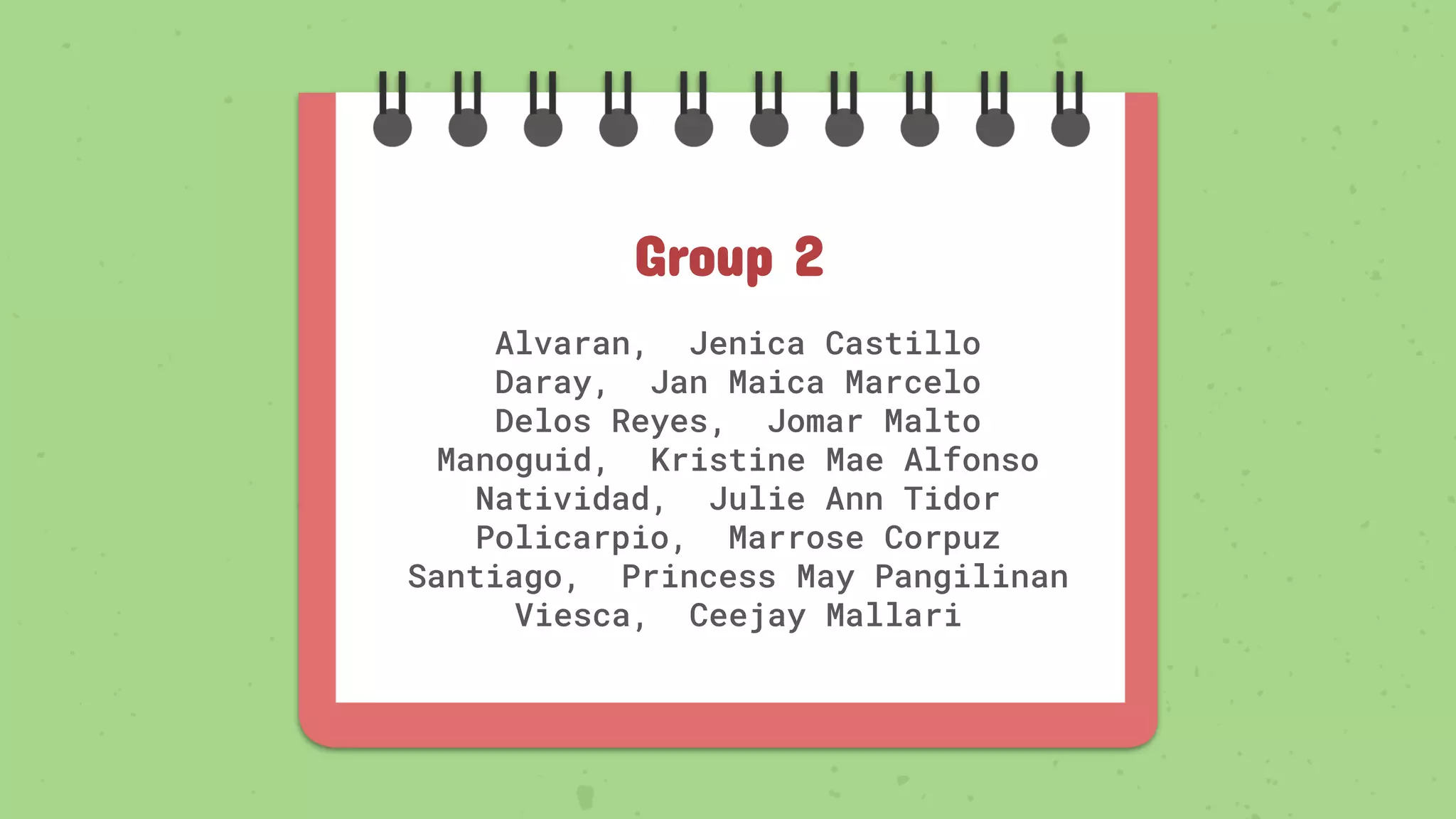
Alvaran, Jenica Castillo
Daray, Jan Maica Marcelo
Delos Reyes, Jomar Malto
Manoguid, Kristine Mae Alfonso
Natividad, Julie Ann Tidor
Policarpio, Marrose Corpuz
Santiago, Princess May Pangilinan
Viesca, Ceejay Mallari
Group 2
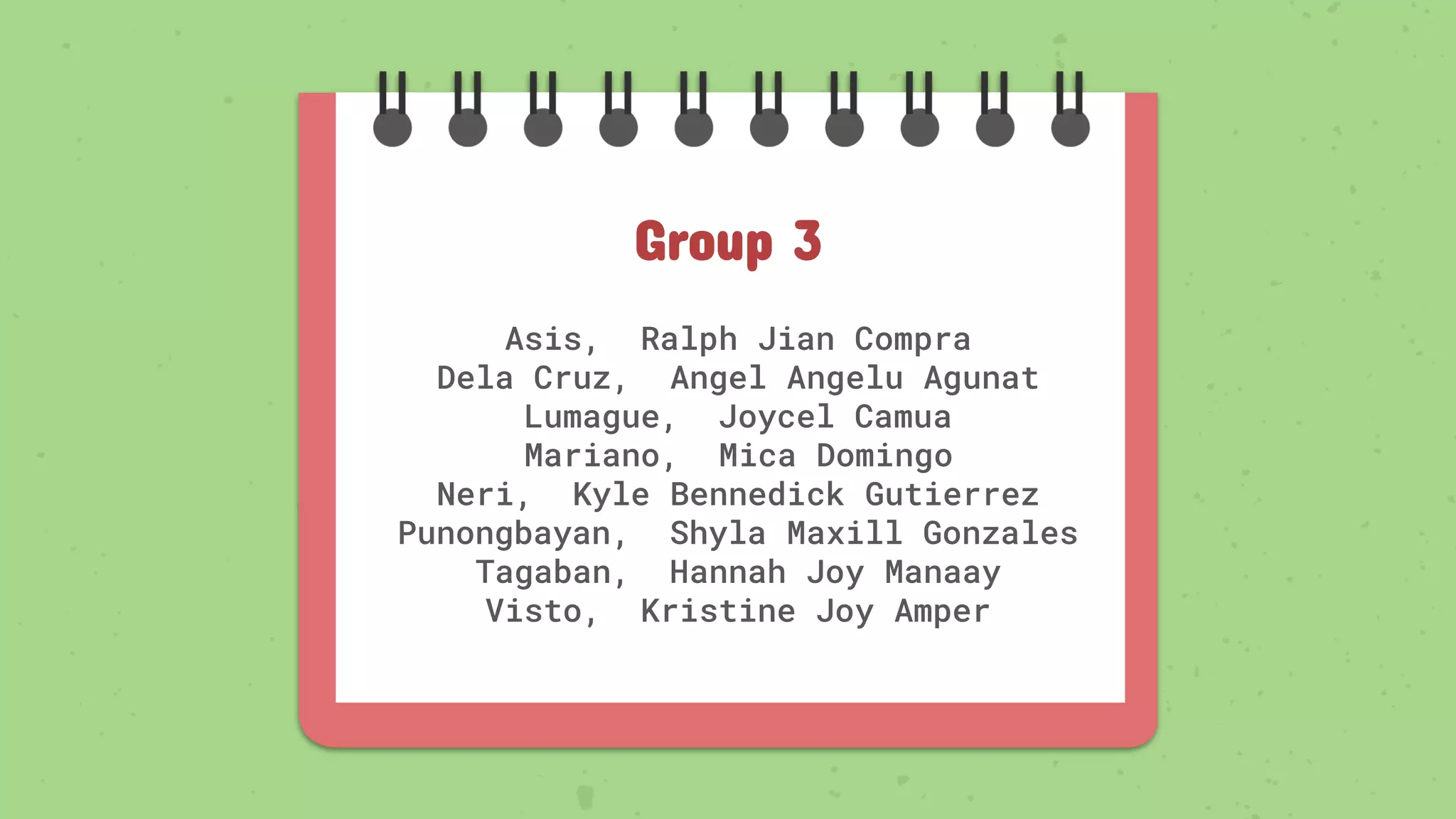
Asis, Ralph Jian Compra
Dela Cruz, Angel Angelu Agunat
Lumague, Joycel Camua
Mariano, Mica Domingo
Neri, Kyle Bennedick Gutierrez
Punongbayan, Shyla Maxill Gonzales
Tagaban, Hannah Joy Manaay
Visto, Kristine Joy Amper
Group 3
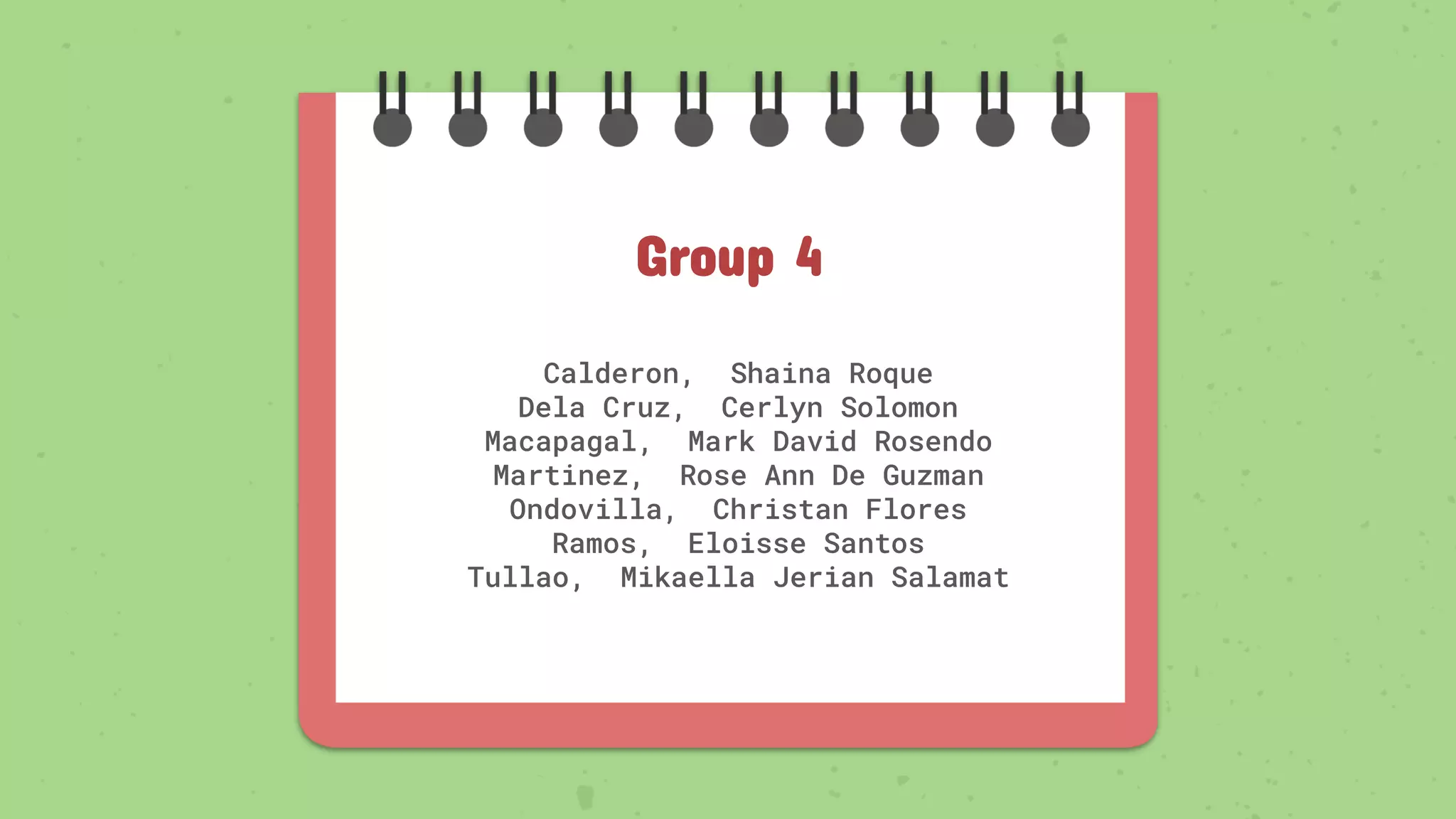
Calderon, Shaina Roque
Dela Cruz, Cerlyn Solomon
Macapagal, Mark David Rosendo
Martinez, Rose Ann De Guzman
Ondovilla, Christan Flores
Ramos, Eloisse Santos
Tullao, Mikaella Jerian Salamat
Group 4
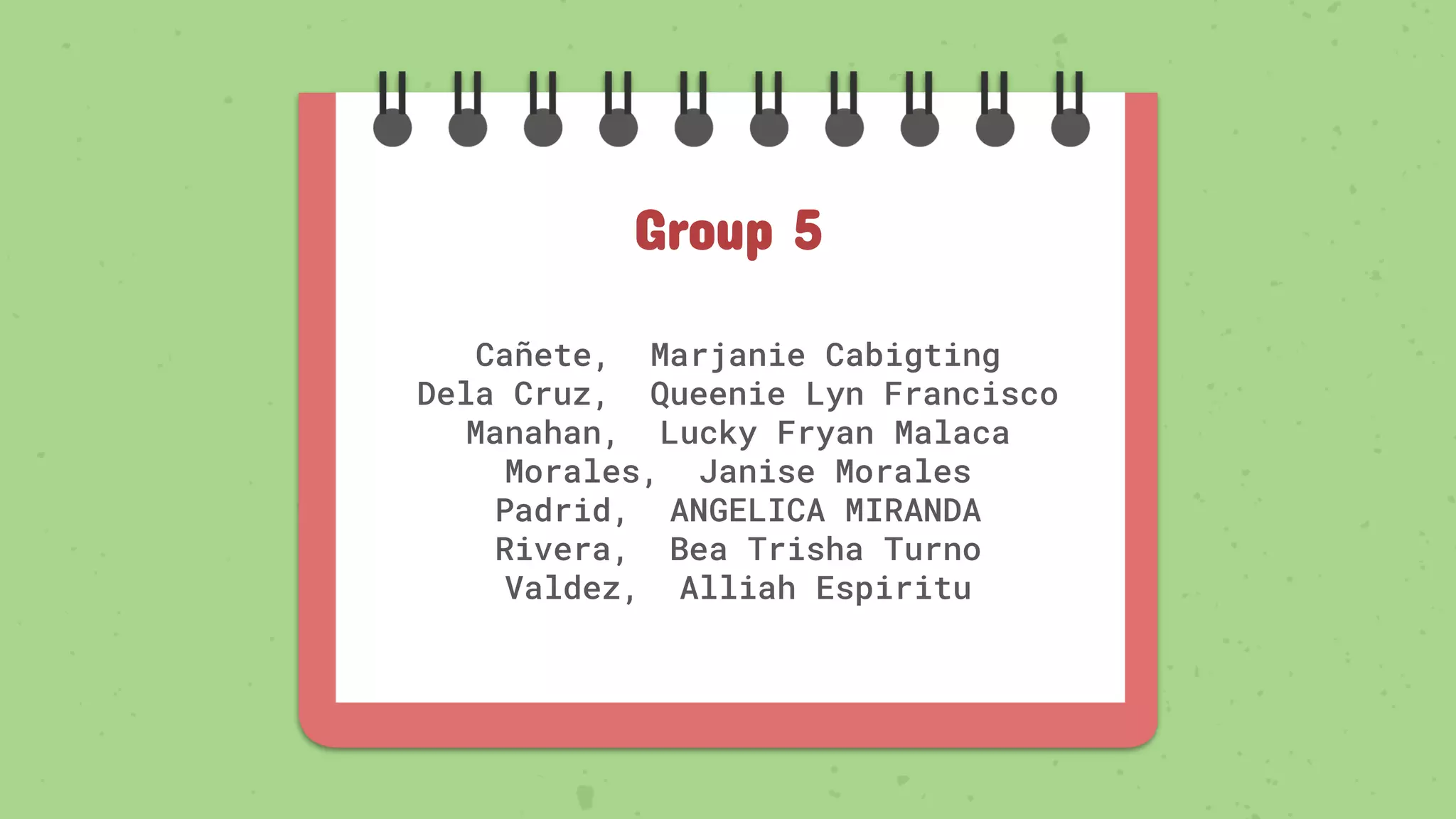
Cañete, Marjanie Cabigting
Dela Cruz, Queenie Lyn Francisco
Manahan, Lucky Fryan Malaca
Morales, Janise Morales
Padrid, ANGELICA MIRANDA
Rivera, Bea Trisha Turno
Valdez, Alliah Espiritu
Group 5
END

PPT1-METACOGNITION.pdf

  • 1.
    Left-brained dominate • Rational •Analyze people and situation • Usually favor of the subjects of math and science • Methodical • Sequential thinker • Use logical reasoning • Like to work with things that can be seen or touched
  • 2.
    Right-brained dominate • Verycreative • Usually emotional • Like to be different from others • Handle situations easily • Like to think abstractly • Enjoy the arts (music, arts and drama) • Divergent thinker
  • 3.
  • 4.
    Learning Outcomes 1. Explainmetacognition in your own words 2. List down different metacognitive strategies 3. Apply metacognitive strategies in your quest for learning as a novice or an expert learner
  • 5.
    —Margarette Mead “Children mustbe taught how to think NOT what to think.”
  • 6.
    .. ● Was coinedby John Flavell ● Refers to higher order thinking skills which involves awareness and control over cognitive processes engaged in learning ● Simply put, is “thinking about thinking” or “learning how to learn” What is METACOGNITION?
  • 7.
    Strategy Variables Includes knowledgeabout the nature of the task as well as the type of processing demands that it will place upon the individual Person Variables Task Variables Involves awareness of the strategy you are using to learn a topic and evaluating whether this strategy is effective 3 Categories of Metacognitive Knowledge Includes how one views himself as a learner
  • 8.
    Questions one shouldask that show Metacognition (Huitt): Do I know what I need to know? Did I understand what I just heard, read, and saw? What do i know about this subject,topic, issue? What are some strategies and tactics that I can use to learn this? How will I know if I am learning in an appropriate rate? How should I revise my plan if it is not working to my satisfaction/expexp ecatations? 1 2 3 5 6 7 4 Do I know where I can go to get some information, knowledge?
  • 9.
    Metacognitive Strategies to FacilitateLearning Have students make predictions about information to be presented next based on what they have read Have students develop questions; ask questions of themselves, about what’s going on around them Have their students monitor their own learning and thinking Have students relate ideas to existing knowledge structures Help students to know when to ask for help Show students how to transfer knowledge, attitudes, values, skills, and other situations or tasks Teach students study or learning strategies (TQLR and PQ4R)
  • 10.
    Benefits of Metacognition inLearning Mercury Higher achievement level for students It aids disadvantage students Increased ability to learn independently Improved resilience Cost-effectiveness Transferable knowledge Effective for all ages for all students Emotional and social growth Source: https://www.highspeedtraining.co.uk/hub/metacognition-in-the-classroom/
  • 12.
    1. Come upwith a problem you consider. 2. Problems can be school-based, classroom, community, environment or scientific. 3. Discuss the details of the problem you have agreed upon. 4. Apply and be guided by the ff. questions: ● What is your problem about? ● How do you think you can solve it? ● What plan are you going to implement? 5. Present your output in class Group Activity
  • 13.
    Agustin, Leah MaeSarmiento Cunanan, Althea Rirao Dela Torre, Jomar Mina Manalili, Jhon Emanuel Monteron Naco, Queency Rain Dela Cruz Perida, Jerome Rubio, Cherry Lyn Adriano Valdez, Rizza Mae De Lara Group 1
  • 14.
    Alvaran, Jenica Castillo Daray,Jan Maica Marcelo Delos Reyes, Jomar Malto Manoguid, Kristine Mae Alfonso Natividad, Julie Ann Tidor Policarpio, Marrose Corpuz Santiago, Princess May Pangilinan Viesca, Ceejay Mallari Group 2
  • 15.
    Asis, Ralph JianCompra Dela Cruz, Angel Angelu Agunat Lumague, Joycel Camua Mariano, Mica Domingo Neri, Kyle Bennedick Gutierrez Punongbayan, Shyla Maxill Gonzales Tagaban, Hannah Joy Manaay Visto, Kristine Joy Amper Group 3
  • 16.
    Calderon, Shaina Roque DelaCruz, Cerlyn Solomon Macapagal, Mark David Rosendo Martinez, Rose Ann De Guzman Ondovilla, Christan Flores Ramos, Eloisse Santos Tullao, Mikaella Jerian Salamat Group 4
  • 17.
    Cañete, Marjanie Cabigting DelaCruz, Queenie Lyn Francisco Manahan, Lucky Fryan Malaca Morales, Janise Morales Padrid, ANGELICA MIRANDA Rivera, Bea Trisha Turno Valdez, Alliah Espiritu Group 5
  • 18.