Theories on Factors 
Affecting Motivation 
John Migue F. Morales 
BSE-English 2-1
Choice Theory 
Biological theory that suggest we 
are born with specific needs that 
we are generically instructed to 
satisfy.
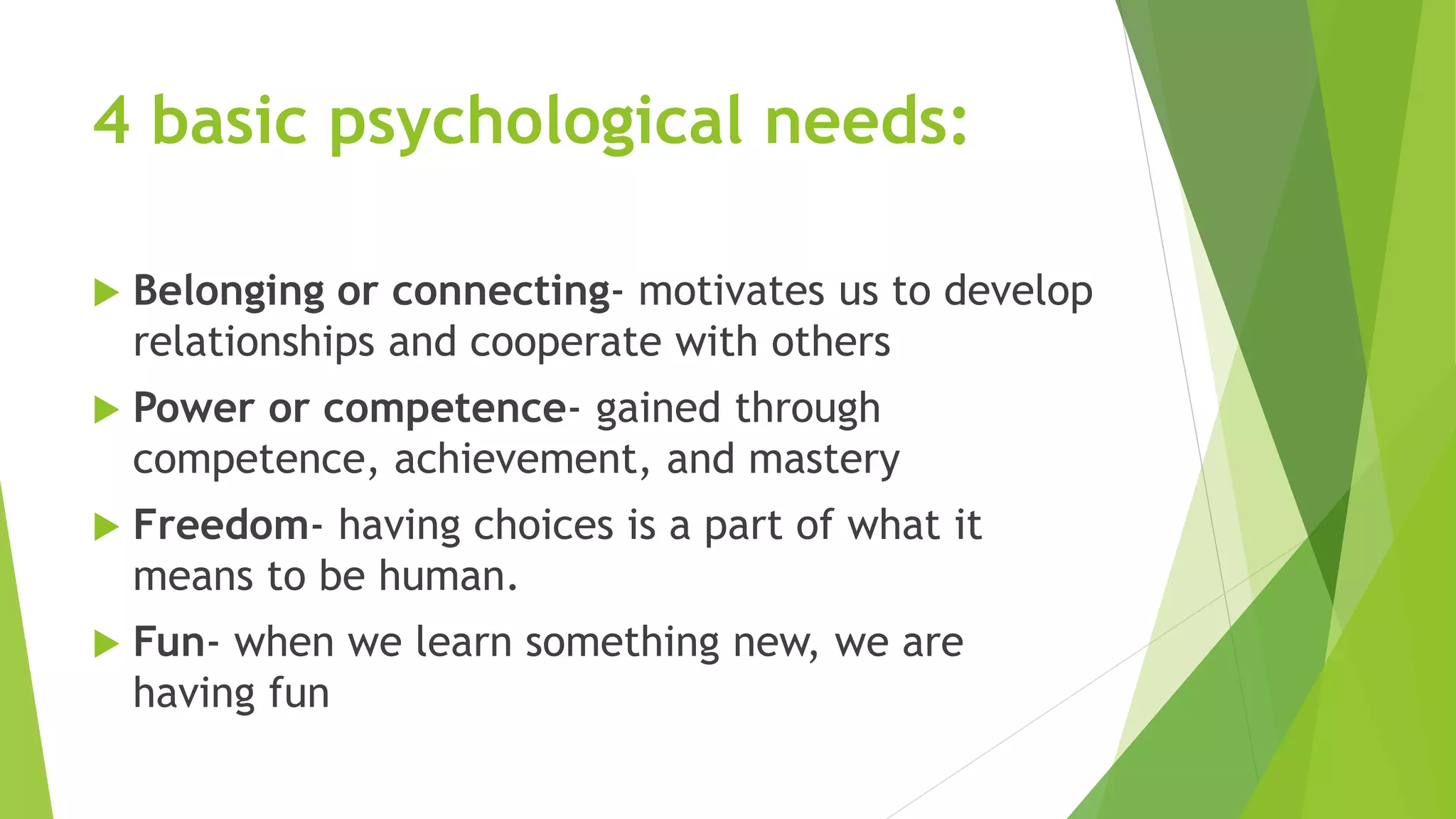
4 basic psychological needs: 
 Belonging or connecting- motivates us to develop 
relationships and cooperate with others 
 Power or competence- gained through 
competence, achievement, and mastery 
 Freedom- having choices is a part of what it 
means to be human. 
 Fun- when we learn something new, we are 
having fun
How can this be done? 
 Create a sense of community in the classroom and 
make every student feel s/he belongs to the 
classroom community, s/he will more likely to 
love to go to school 
 What happens outside of us has a lot to do with 
what we choose to do but the outside event does 
not cause our behavior. What we get, and all we 
ever get, and all we ever get from the outside is 
information; how we choose to act on that 
information is up to us.
MASLOW’S HIERARCHY OF 
NEEDS 
Maslow’s Hierarchy of Needs- a 
satisfied need is not a strong motivator 
but an unsatisfied need is 
Student’s lower-order needs must first 
be met before s/he works for the 
satisfaction of his/her higher-order 
needs.
Low-order needs: 
First-level: Basic survival and 
physiological needs 
Second-level: Bodily safety and 
economic security
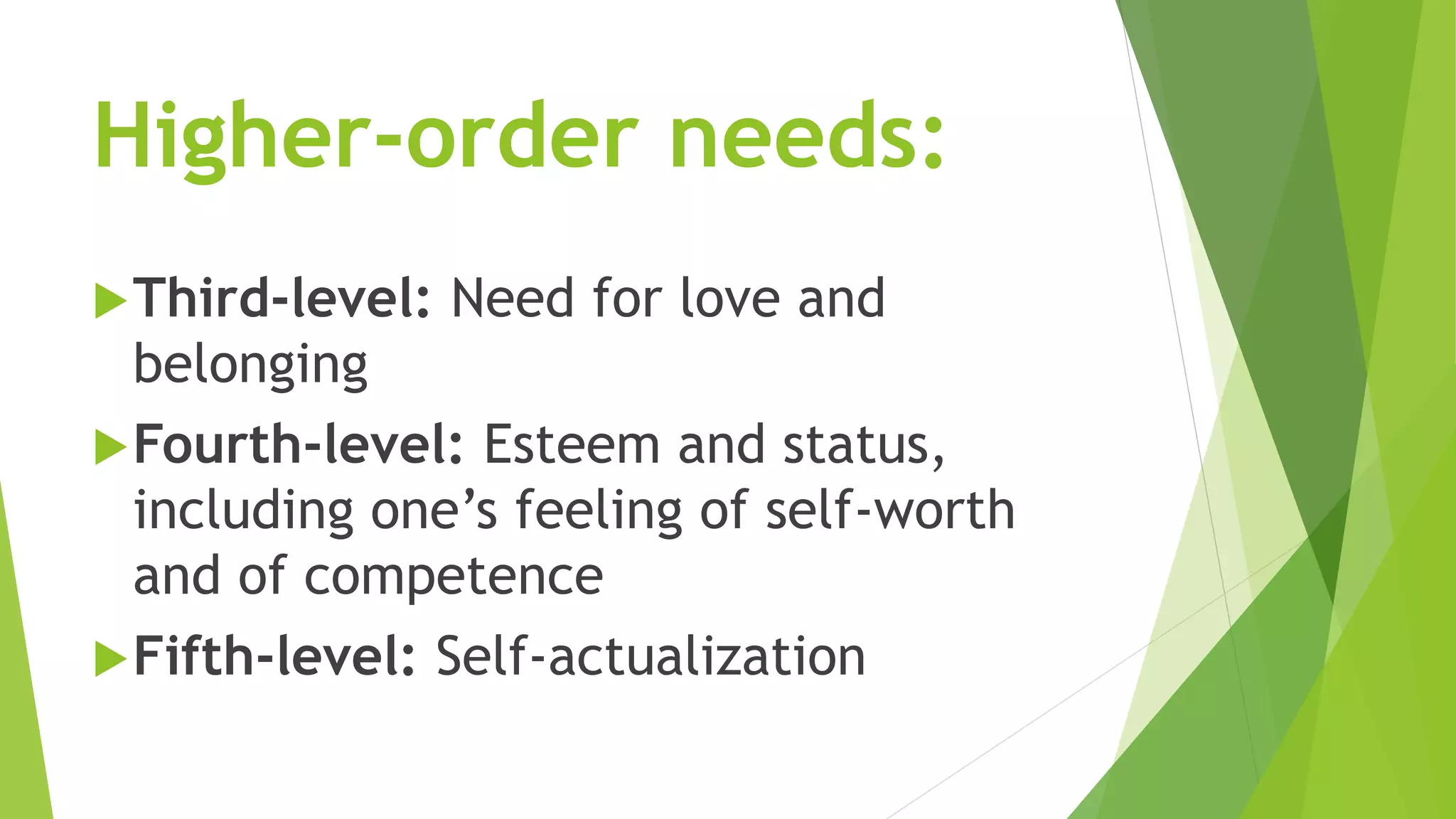
Higher-order needs: 
Third-level: Need for love and 
belonging 
Fourth-level: Esteem and status, 
including one’s feeling of self-worth 
and of competence 
Fifth-level: Self-actualization
GOAL THEORY 
Goal Theory- The goals we 
set for ourselves affect our 
level of motivation.
 Learning goals versus performance goals- 
Learning goals is a desire to acquire additional 
knowledge or master new skills, while a 
performance goal is a desire to look good and 
receive favorable judgments 
 Self-determined goals- When lessons objectives 
are relevant to the life of students, then students 
turn out to be more motivated to learn 
 Goal setting- Is effective when the following 
major elements are present 1.) Goal acceptance 
2.) Specificity 3.) Challenge 4.) Performance 
monitoring and 5.) Performance feedback. Thus 
objective lesson must be SMART (specific, 
measurable, attainable, result-oriented and time-bound) 
and challenging

Theories on factors affecting motivation

  • 1.
    Theories on Factors Affecting Motivation John Migue F. Morales BSE-English 2-1
  • 2.
    Choice Theory Biologicaltheory that suggest we are born with specific needs that we are generically instructed to satisfy.
  • 3.
    4 basic psychologicalneeds:  Belonging or connecting- motivates us to develop relationships and cooperate with others  Power or competence- gained through competence, achievement, and mastery  Freedom- having choices is a part of what it means to be human.  Fun- when we learn something new, we are having fun
  • 4.
    How can thisbe done?  Create a sense of community in the classroom and make every student feel s/he belongs to the classroom community, s/he will more likely to love to go to school  What happens outside of us has a lot to do with what we choose to do but the outside event does not cause our behavior. What we get, and all we ever get, and all we ever get from the outside is information; how we choose to act on that information is up to us.
  • 5.
    MASLOW’S HIERARCHY OF NEEDS Maslow’s Hierarchy of Needs- a satisfied need is not a strong motivator but an unsatisfied need is Student’s lower-order needs must first be met before s/he works for the satisfaction of his/her higher-order needs.
  • 6.
    Low-order needs: First-level:Basic survival and physiological needs Second-level: Bodily safety and economic security
  • 7.
    Higher-order needs: Third-level:Need for love and belonging Fourth-level: Esteem and status, including one’s feeling of self-worth and of competence Fifth-level: Self-actualization
  • 8.
    GOAL THEORY GoalTheory- The goals we set for ourselves affect our level of motivation.
  • 9.
     Learning goalsversus performance goals- Learning goals is a desire to acquire additional knowledge or master new skills, while a performance goal is a desire to look good and receive favorable judgments  Self-determined goals- When lessons objectives are relevant to the life of students, then students turn out to be more motivated to learn  Goal setting- Is effective when the following major elements are present 1.) Goal acceptance 2.) Specificity 3.) Challenge 4.) Performance monitoring and 5.) Performance feedback. Thus objective lesson must be SMART (specific, measurable, attainable, result-oriented and time-bound) and challenging