Presented by:
PROF. MARIANNE T. EVANGELISTA, MSHRM
METHOD OF EXECUTION
PART 05
INVENTORY
INVENTORY
• An itemized catalog or
list of tangible goods or
property, or the
intangible attributes or
qualities.
• Inventory represents one
of the most important
assets that most
businesses possess,
because the turnover of
inventory represents one
of the primary sources of
revenue generation and
subsequent earnings for
the company's
shareholders/owners.
TYPES OF INVENTORY
• PHYSICAL INVENTORY – must have a
preprinted lists of all the items in the
inventory, with spaces for entering the
correct counts of each item. (Physical
Count)
• PERPETUAL INVENTORY – is a continuous
reporting of items on hand. When
merchandize is received , sold, issued or
transferred, the system record is adjusted
to show the new quantity on hand
• ABC SYSTEM – attempts to combine both the
physical and perpetual inventory systems.
It separates inventory items into three
main categories
PURPOSE OF INVENTORY
AND RECONCILIATION
• Verify accuracy of requisitions
• Verify ending inventory extension methods
to ensure consistency. This is discussed
more in detail below.
• Verify unit prices on requisitions
compared to those on the actual inventory.
• Alert the food and beverage manager of any
adjustments to be made.
• Review all the paperwork and calculations
related to products that exhibit large
variances. Any errors found should be
corrected accordingly.
• Review and revise security measures as
needed.
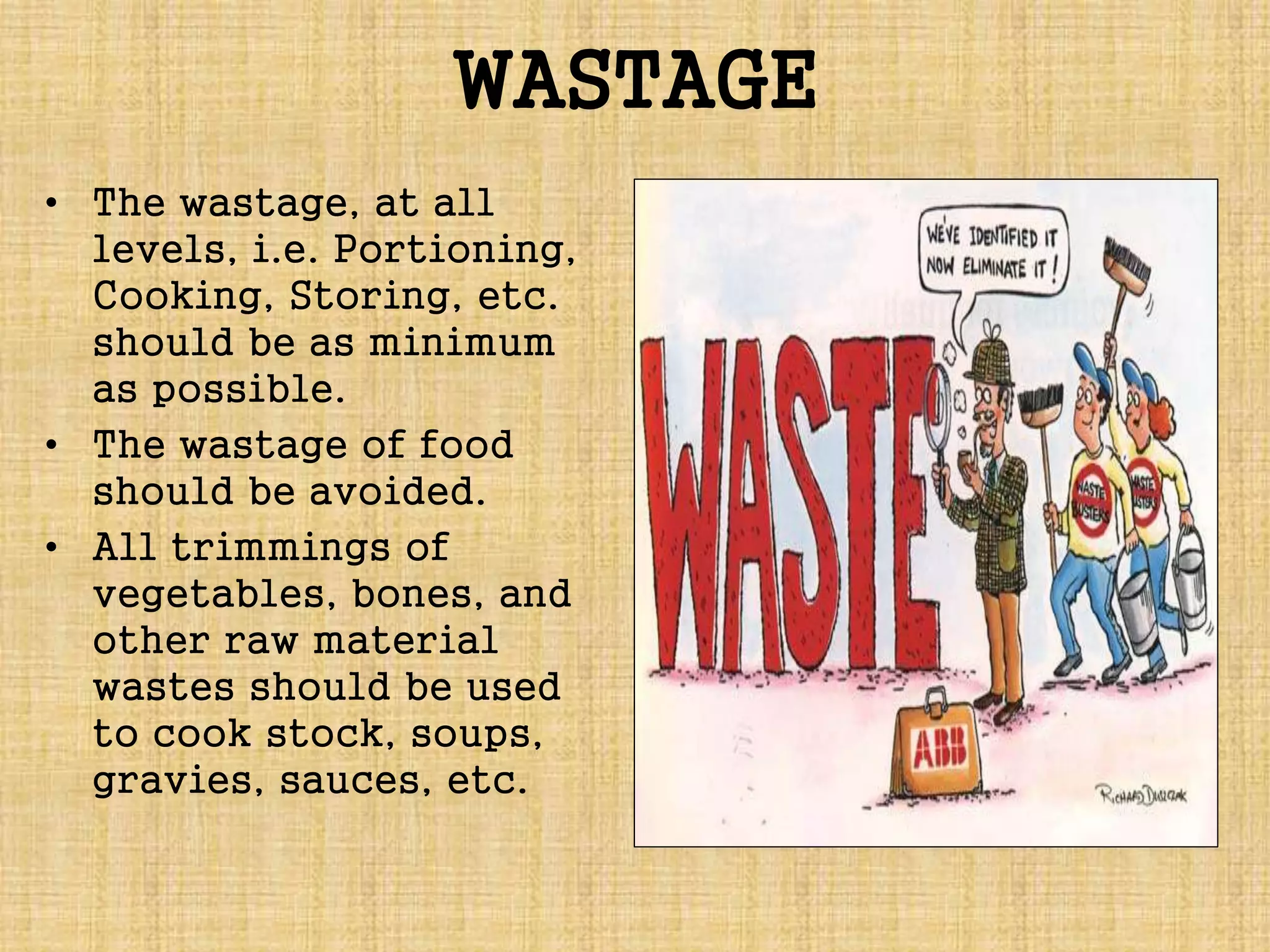
WASTAGE
• The wastage, at all
levels, i.e. Portioning,
Cooking, Storing, etc.
should be as minimum
as possible.
• The wastage of food
should be avoided.
• All trimmings of
vegetables, bones, and
other raw material
wastes should be used
to cook stock, soups,
gravies, sauces, etc.
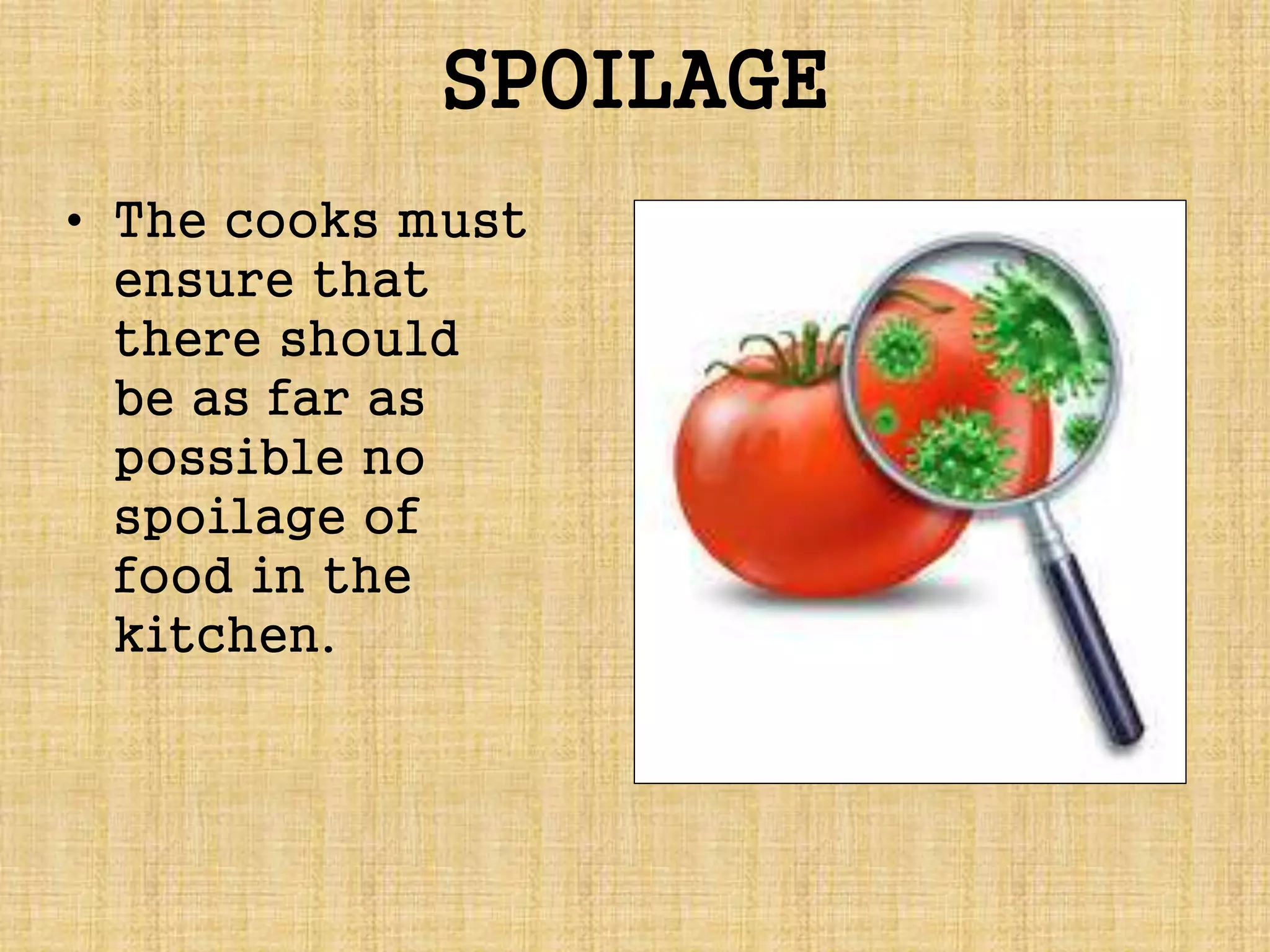
SPOILAGE
• The cooks must
ensure that
there should
be as far as
possible no
spoilage of
food in the
kitchen.
PORTION CONTROL
• The chef must
ensure that dish is
as per the standard
potion, as both the
larger portion and
smaller portion is
harmful to the
hotel / restaurant.
• A large portion will
increase the food
cost and a small
portion will
dissatisfy the
guest.
QUALITY CONTROL
• Quality covers accuracy,
thoroughness, and conformity
to the standard procedures.
• Quality control include:
- Quality control for
Productivity and Speed
- Quality control for Cost
- Quality control for
Safety
- Quality control for
Cleanliness and Sanitation
- Quality control for Staff
and Service
End of
Chapter 02

INVENTORY CONTROL POLICIES

  • 1.
    Presented by: PROF. MARIANNET. EVANGELISTA, MSHRM
  • 2.
  • 3.
    INVENTORY • An itemizedcatalog or list of tangible goods or property, or the intangible attributes or qualities. • Inventory represents one of the most important assets that most businesses possess, because the turnover of inventory represents one of the primary sources of revenue generation and subsequent earnings for the company's shareholders/owners.
  • 4.
    TYPES OF INVENTORY •PHYSICAL INVENTORY – must have a preprinted lists of all the items in the inventory, with spaces for entering the correct counts of each item. (Physical Count) • PERPETUAL INVENTORY – is a continuous reporting of items on hand. When merchandize is received , sold, issued or transferred, the system record is adjusted to show the new quantity on hand • ABC SYSTEM – attempts to combine both the physical and perpetual inventory systems. It separates inventory items into three main categories
  • 5.
    PURPOSE OF INVENTORY ANDRECONCILIATION • Verify accuracy of requisitions • Verify ending inventory extension methods to ensure consistency. This is discussed more in detail below. • Verify unit prices on requisitions compared to those on the actual inventory. • Alert the food and beverage manager of any adjustments to be made. • Review all the paperwork and calculations related to products that exhibit large variances. Any errors found should be corrected accordingly. • Review and revise security measures as needed.
  • 6.
    WASTAGE • The wastage,at all levels, i.e. Portioning, Cooking, Storing, etc. should be as minimum as possible. • The wastage of food should be avoided. • All trimmings of vegetables, bones, and other raw material wastes should be used to cook stock, soups, gravies, sauces, etc.
  • 7.
    SPOILAGE • The cooksmust ensure that there should be as far as possible no spoilage of food in the kitchen.
  • 8.
    PORTION CONTROL • Thechef must ensure that dish is as per the standard potion, as both the larger portion and smaller portion is harmful to the hotel / restaurant. • A large portion will increase the food cost and a small portion will dissatisfy the guest.
  • 9.
    QUALITY CONTROL • Qualitycovers accuracy, thoroughness, and conformity to the standard procedures. • Quality control include: - Quality control for Productivity and Speed - Quality control for Cost - Quality control for Safety - Quality control for Cleanliness and Sanitation - Quality control for Staff and Service
  • 10.