
Presented by:
PROF. MARIANNE T. EVANGELISTA, MSHRM
METHOD OF EXECUTION
PART 01
PURCHASING
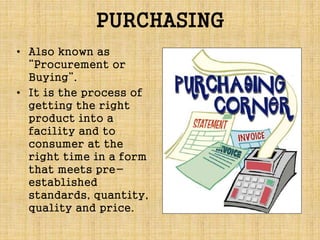
PURCHASING
• Also known as
“Procurement or
Buying”.
• It is the process of
getting the right
product into a
facility and to
consumer at the
right time in a form
that meets pre-
established
standards, quantity,
quality and price.
ETHICS IN PURCHASING
• Demands ,
integrity,
maturity,
bargaining
skills and
maintenance
of a high
standard
ethics.
5 R’S IN PURCHASING
1. Right Quality – all purchased items must
meet the desired specifications must be
described in detail in the purchase request
and/or market list. This information
include:
- Quality
- Brand Name
- Size and Weight
2. Right Quantity – purchase must be enough
for immediate consumption not unless there
is a need to purchase extra stocks like when
there is anticipated increase of prices or
food shortages.
5 R’S IN PURCHASING
2. Right Price – all items must be purchased
at the lowest possible price but make sure
that it still meets the required
specification.
3. Right Time – timely delivery is a must,
buying products in season can be considered
if they are cheaper and of better quality
than when they are out of season.
4. Right Source – all items will be purchased
to direct producers and trusted suppliers
to ensure good quality in a lower price. A
right source can give you good discounts
and rebates.
DIFFERENCE BETWEEN
DISCOUNT AND REBATE
• DISCOUNT – an automatic deduction or
reduction in the amount of cost per
product from your direct supplier.
• REBATE – Refund or a bigger discount
of part of an amount paid but with
terms and conditions.
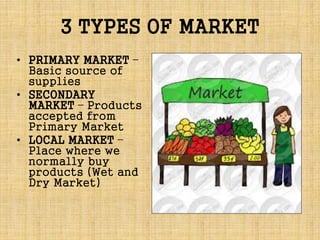
3 TYPES OF MARKET
• PRIMARY MARKET –
Basic source of
supplies
• SECONDARY
MARKET – Products
accepted from
Primary Market
• LOCAL MARKET –
Place where we
normally buy
products (Wet and
Dry Market)
PURCHASE ORDER
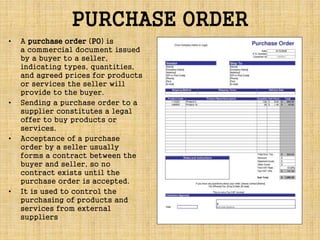
• A purchase order (PO) is
a commercial document issued
by a buyer to a seller,
indicating types, quantities,
and agreed prices for products
or services the seller will
provide to the buyer.
• Sending a purchase order to a
supplier constitutes a legal
offer to buy products or
services.
• Acceptance of a purchase
order by a seller usually
forms a contract between the
buyer and seller, so no
contract exists until the
purchase order is accepted.
• It is used to control the
purchasing of products and
services from external
suppliers
PURCHASING POLICIES:
• In order to control or avoid untimely, wasteful and
unreasonable purchases that drain company’s
capital here are the ff. purchasing policies:
1. No purchases can take place without duly
approved purchase request for non food items and
market or grocery list for perishable items. Said
request will come from the department head,
subject to the review and approval of Purchasing
Manager or whoever is in command of purchasing
transactions, based on approved budget.
2. No unbudgeted purchases will be allowed unless
fully justified. The budget is usually based on the
sales forecast. When the actual sales exceed the
forecast, the Purchasing office may consider
additional purchases.
PURCHASING POLICIES:
3. Purchaser shall resort to canvassing of
prices before making orders. There should be at
least 3 quotations from different suppliers.
4. Approval of purchases and awarding of bids
shall be done by the purchasing manager or
whoever is in charge after reviewing the price
quotations and the quality of the merchandise.
5. A purchase order shall be prepared upon
awarding of bid and shall be issued to the
winning bidder. PO shall contain all
specification such as: description of the items,
weight/size, yield, color etc.
PURCHASING POLICIES:
6. As a general practice, all purchases should
be pre planned . Emergency or rush order should
be minimized if not, totally eliminated.
7. Purchasing office must keep a file suppliers
information sheet for future reference.
8. All requests for capital expenditure such as:
heavy equipment, fixed furniture and other
related items are to be processed directly by
the Executive office, subject to Executive
approval of the owner or his duly authorized
representative.
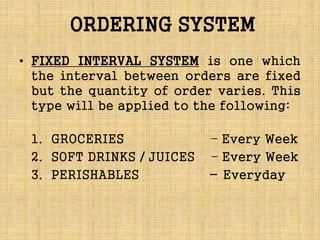
ORDERING SYSTEM
• FIXED INTERVAL SYSTEM is one which
the interval between orders are fixed
but the quantity of order varies. This
type will be applied to the following:
1. GROCERIES – Every Week
2. SOFT DRINKS / JUICES – Every Week
3. PERISHABLES - Everyday

PURCHASING CONTROL POLICIES

  • 1.
    Presented by: PROF. MARIANNET. EVANGELISTA, MSHRM
  • 2.
  • 3.
    PURCHASING • Also knownas “Procurement or Buying”. • It is the process of getting the right product into a facility and to consumer at the right time in a form that meets pre- established standards, quantity, quality and price.
  • 4.
    ETHICS IN PURCHASING •Demands , integrity, maturity, bargaining skills and maintenance of a high standard ethics.
  • 5.
    5 R’S INPURCHASING 1. Right Quality – all purchased items must meet the desired specifications must be described in detail in the purchase request and/or market list. This information include: - Quality - Brand Name - Size and Weight 2. Right Quantity – purchase must be enough for immediate consumption not unless there is a need to purchase extra stocks like when there is anticipated increase of prices or food shortages.
  • 6.
    5 R’S INPURCHASING 2. Right Price – all items must be purchased at the lowest possible price but make sure that it still meets the required specification. 3. Right Time – timely delivery is a must, buying products in season can be considered if they are cheaper and of better quality than when they are out of season. 4. Right Source – all items will be purchased to direct producers and trusted suppliers to ensure good quality in a lower price. A right source can give you good discounts and rebates.
  • 7.
    DIFFERENCE BETWEEN DISCOUNT ANDREBATE • DISCOUNT – an automatic deduction or reduction in the amount of cost per product from your direct supplier. • REBATE – Refund or a bigger discount of part of an amount paid but with terms and conditions.
  • 8.
    3 TYPES OFMARKET • PRIMARY MARKET – Basic source of supplies • SECONDARY MARKET – Products accepted from Primary Market • LOCAL MARKET – Place where we normally buy products (Wet and Dry Market)
  • 9.
    PURCHASE ORDER • Apurchase order (PO) is a commercial document issued by a buyer to a seller, indicating types, quantities, and agreed prices for products or services the seller will provide to the buyer. • Sending a purchase order to a supplier constitutes a legal offer to buy products or services. • Acceptance of a purchase order by a seller usually forms a contract between the buyer and seller, so no contract exists until the purchase order is accepted. • It is used to control the purchasing of products and services from external suppliers
  • 10.
    PURCHASING POLICIES: • Inorder to control or avoid untimely, wasteful and unreasonable purchases that drain company’s capital here are the ff. purchasing policies: 1. No purchases can take place without duly approved purchase request for non food items and market or grocery list for perishable items. Said request will come from the department head, subject to the review and approval of Purchasing Manager or whoever is in command of purchasing transactions, based on approved budget. 2. No unbudgeted purchases will be allowed unless fully justified. The budget is usually based on the sales forecast. When the actual sales exceed the forecast, the Purchasing office may consider additional purchases.
  • 11.
    PURCHASING POLICIES: 3. Purchasershall resort to canvassing of prices before making orders. There should be at least 3 quotations from different suppliers. 4. Approval of purchases and awarding of bids shall be done by the purchasing manager or whoever is in charge after reviewing the price quotations and the quality of the merchandise. 5. A purchase order shall be prepared upon awarding of bid and shall be issued to the winning bidder. PO shall contain all specification such as: description of the items, weight/size, yield, color etc.
  • 12.
    PURCHASING POLICIES: 6. Asa general practice, all purchases should be pre planned . Emergency or rush order should be minimized if not, totally eliminated. 7. Purchasing office must keep a file suppliers information sheet for future reference. 8. All requests for capital expenditure such as: heavy equipment, fixed furniture and other related items are to be processed directly by the Executive office, subject to Executive approval of the owner or his duly authorized representative.
  • 13.
    ORDERING SYSTEM • FIXEDINTERVAL SYSTEM is one which the interval between orders are fixed but the quantity of order varies. This type will be applied to the following: 1. GROCERIES – Every Week 2. SOFT DRINKS / JUICES – Every Week 3. PERISHABLES - Everyday

Editor's Notes

  • #4 The purchase department must ensure that the right quality of food, at competitive price and right quantity of raw material should be procured to keep the cost control.
  • #7 JIT METHOD – Just in Time method