MODULE 2: MENU
PLANNING OF DIFFERENT
ASIAN DISHES
Learning Objectives
•Design a menu planning for Asian dishes.
•Prepare menu costing for different dishes.
•Prepare different types of menu in selected Asian
countries.
•Discuss the different kinds of menu.
What is Menu?
• The word ‘MENU’ comes from the French word which means detailed list of
the dishes to be served in a banquet or meal. It is considered to be one of
the most critical activities of food service operations.
• It defines the décor, service style, costume, and required cooking skills. The
process of planning a menu must be thoroughly understood. To make a
profit in Hospitality business, Menu and Banquet packages must be
designed to suit the taste and budget of the target market. Likewise, the cost
and the prices should be made to conform to the describe food cost budget
for preparation of dishes.
OVERVIEW OF MENU PLANNING
• Menu planning is the process of deciding what you will eat for each meal,
including main dishes, side dishes, and desserts. It also entails knowing
how many meals to plan for and when to serve them. Daily activities and
scheduling variations may complicate the menu planning process. It means
choosing foods that will be the most helpful in controlling your cost of food
production. It also means knowing how much of and when to eat those
foods. There are several ways you can plan your meals to make sure you're
getting the right foods, in the right amounts, every day.
• Event planners should always plan to offer several entrée or menu choices
to ensure that all guests will be pleased with the meal. Anticipate special
needs: With many health related and religion issues and preferences, Chef’s
and Managers should anticipate the special dietary requirements
while planning a menu.
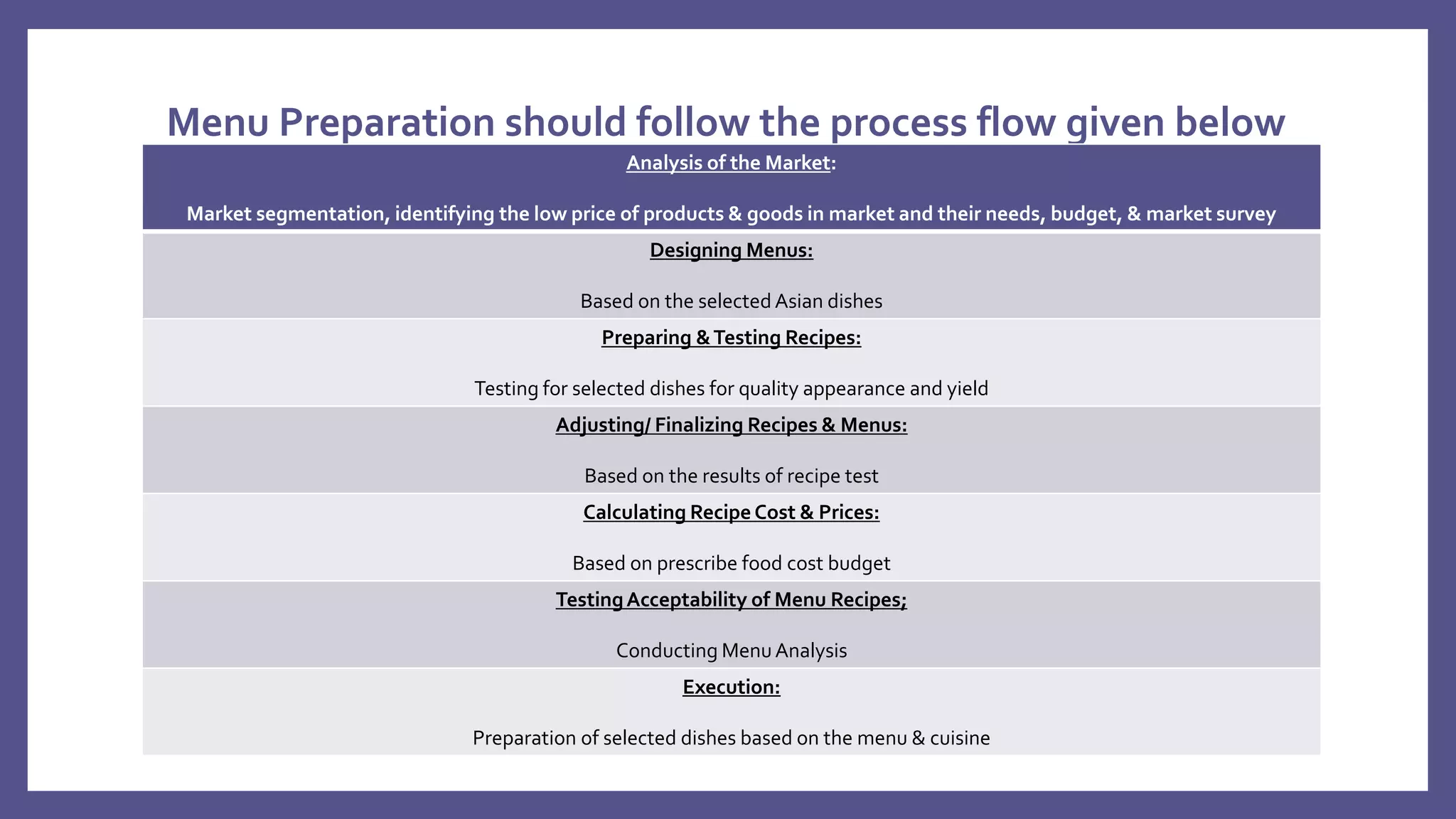
Menu Preparation should follow the process flow given below
Analysis of the Market:
Market segmentation, identifying the low price of products & goods in market and their needs, budget, & market survey
Designing Menus:
Based on the selected Asian dishes
Preparing &Testing Recipes:
Testing for selected dishes for quality appearance and yield
Adjusting/ Finalizing Recipes & Menus:
Based on the results of recipe test
Calculating Recipe Cost & Prices:
Based on prescribe food cost budget
TestingAcceptability of Menu Recipes;
Conducting MenuAnalysis
Execution:
Preparation of selected dishes based on the menu & cuisine
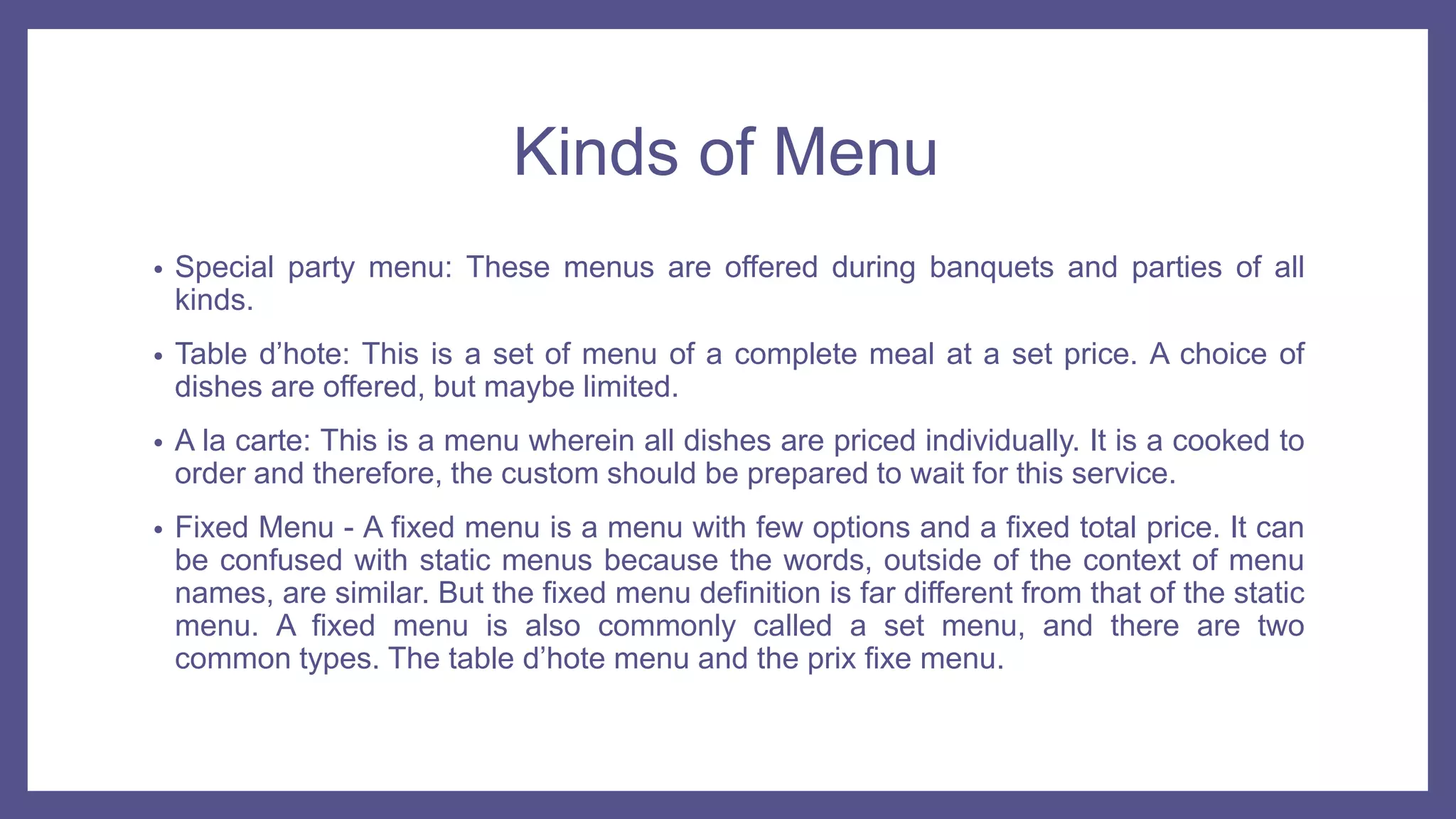
Kinds of Menu
• Special party menu: These menus are offered during banquets and parties of all
kinds.
• Table d’hote: This is a set of menu of a complete meal at a set price. A choice of
dishes are offered, but maybe limited.
• A la carte: This is a menu wherein all dishes are priced individually. It is a cooked to
order and therefore, the custom should be prepared to wait for this service.
• Fixed Menu - A fixed menu is a menu with few options and a fixed total price. It can
be confused with static menus because the words, outside of the context of menu
names, are similar. But the fixed menu definition is far different from that of the static
menu. A fixed menu is also commonly called a set menu, and there are two
common types. The table d’hote menu and the prix fixe menu.
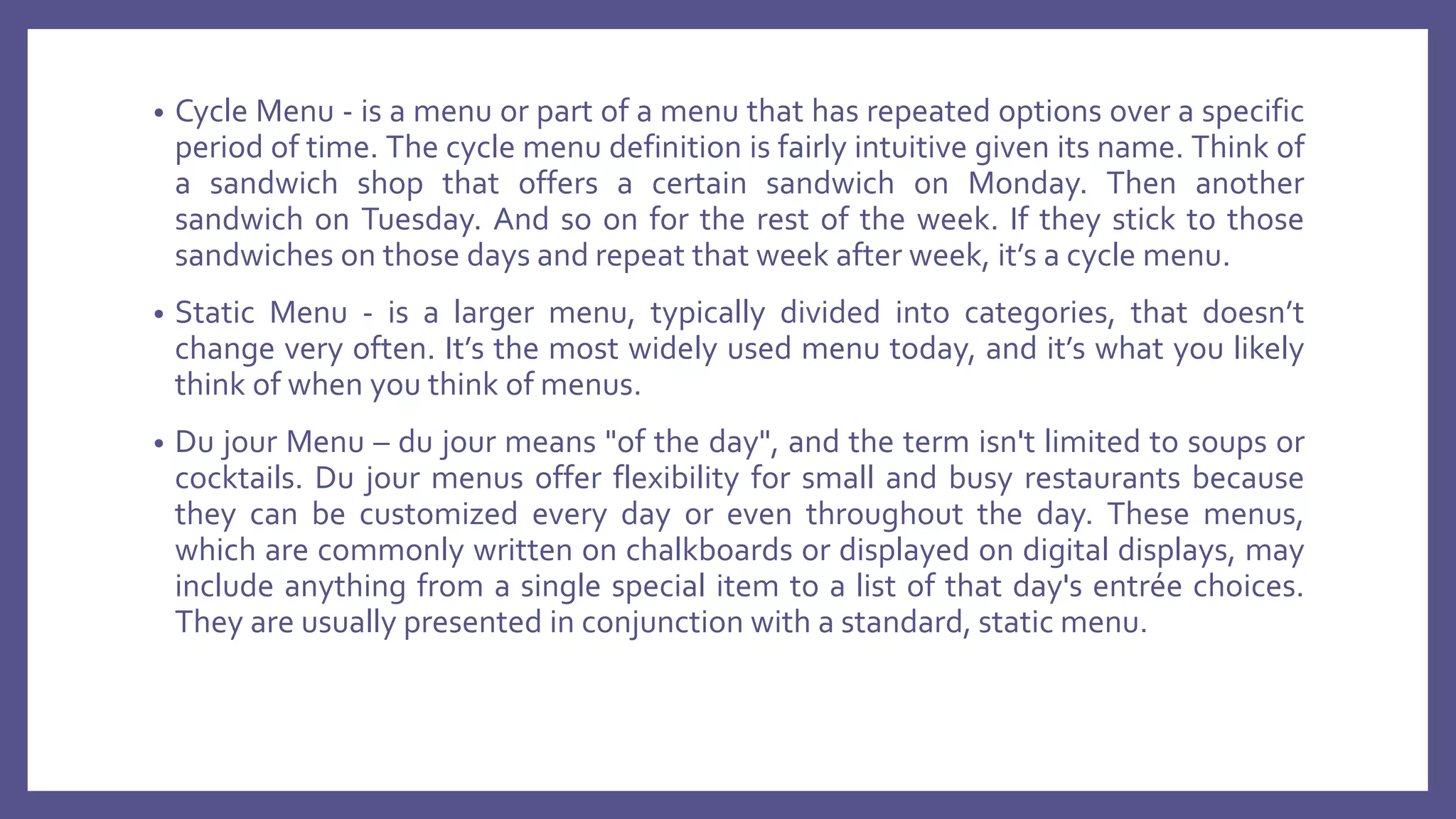
• Cycle Menu - is a menu or part of a menu that has repeated options over a specific
period of time. The cycle menu definition is fairly intuitive given its name. Think of
a sandwich shop that offers a certain sandwich on Monday. Then another
sandwich on Tuesday. And so on for the rest of the week. If they stick to those
sandwiches on those days and repeat that week after week, it’s a cycle menu.
• Static Menu - is a larger menu, typically divided into categories, that doesn’t
change very often. It’s the most widely used menu today, and it’s what you likely
think of when you think of menus.
• Du jour Menu – du jour means "of the day", and the term isn't limited to soups or
cocktails. Du jour menus offer flexibility for small and busy restaurants because
they can be customized every day or even throughout the day. These menus,
which are commonly written on chalkboards or displayed on digital displays, may
include anything from a single special item to a list of that day's entrée choices.
They are usually presented in conjunction with a standard, static menu.
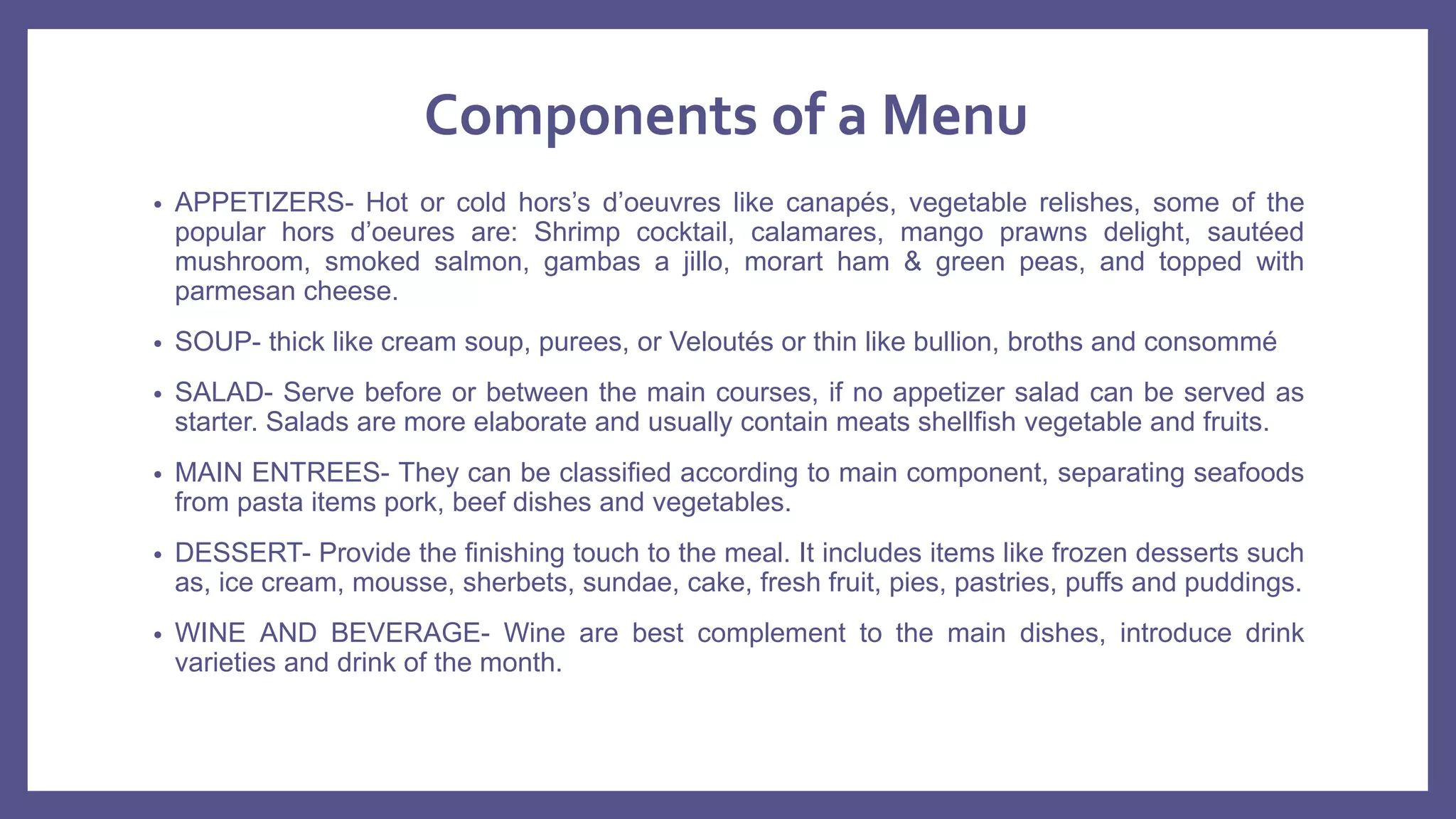
Components of a Menu
• APPETIZERS- Hot or cold hors’s d’oeuvres like canapés, vegetable relishes, some of the
popular hors d’oeures are: Shrimp cocktail, calamares, mango prawns delight, sautéed
mushroom, smoked salmon, gambas a jillo, morart ham & green peas, and topped with
parmesan cheese.
• SOUP- thick like cream soup, purees, or Veloutés or thin like bullion, broths and consommé
• SALAD- Serve before or between the main courses, if no appetizer salad can be served as
starter. Salads are more elaborate and usually contain meats shellfish vegetable and fruits.
• MAIN ENTREES- They can be classified according to main component, separating seafoods
from pasta items pork, beef dishes and vegetables.
• DESSERT- Provide the finishing touch to the meal. It includes items like frozen desserts such
as, ice cream, mousse, sherbets, sundae, cake, fresh fruit, pies, pastries, puffs and puddings.
• WINE AND BEVERAGE- Wine are best complement to the main dishes, introduce drink
varieties and drink of the month.
The Season of the Year
• Menu planning is long range. If menus have to be complied in advance of
the actual data of production, the season of the year should be considered,
there are certain dishes which are better offered in hot weather and are
unsuitable in cold weather.
BALANCE
• Repetition of ingredients - Never repeat the basic ingredients in one menu. Example: menudo,
afritada, mechado, baked macaroni
• Repetition of color - The colors of dishes in a menu should be varied, dishes exemplified in a have
orange as the dominating color and such combination should be avoided
• Repetition of words - Repeating the same words or terms should be avoided Example: fried fillet,
grilled fillet, steak fillet
• Overall balance of a menu - The menu planner should ensure that varied dishes of light and heavy
course are included
• Texture of courses - Attention should given to the texture of courses. Some dishes should be soft,
some should be crunchy and some chewy
• Seasonings - strong seasonings should not be repeated in more than one courses care should be
observed in the use of herbs, spices, and condiments.
• Sauces - if different sauces are served in a menu the foundation or base of the sauces should vary.
Example: demi glaze, veloute, tomato, starch thickening
• Food Values - offer menus that are adequate in nutritional value. A well balanced meal should be
based on the three basic groups and some nutritional guidelines. The menu should also meet the
nutritional as well health needs of the customer.

Module 2.pptx

  • 1.
    MODULE 2: MENU PLANNINGOF DIFFERENT ASIAN DISHES
  • 2.
    Learning Objectives •Design amenu planning for Asian dishes. •Prepare menu costing for different dishes. •Prepare different types of menu in selected Asian countries. •Discuss the different kinds of menu.
  • 3.
    What is Menu? •The word ‘MENU’ comes from the French word which means detailed list of the dishes to be served in a banquet or meal. It is considered to be one of the most critical activities of food service operations. • It defines the décor, service style, costume, and required cooking skills. The process of planning a menu must be thoroughly understood. To make a profit in Hospitality business, Menu and Banquet packages must be designed to suit the taste and budget of the target market. Likewise, the cost and the prices should be made to conform to the describe food cost budget for preparation of dishes.
  • 4.
    OVERVIEW OF MENUPLANNING • Menu planning is the process of deciding what you will eat for each meal, including main dishes, side dishes, and desserts. It also entails knowing how many meals to plan for and when to serve them. Daily activities and scheduling variations may complicate the menu planning process. It means choosing foods that will be the most helpful in controlling your cost of food production. It also means knowing how much of and when to eat those foods. There are several ways you can plan your meals to make sure you're getting the right foods, in the right amounts, every day. • Event planners should always plan to offer several entrée or menu choices to ensure that all guests will be pleased with the meal. Anticipate special needs: With many health related and religion issues and preferences, Chef’s and Managers should anticipate the special dietary requirements while planning a menu.
  • 5.
    Menu Preparation shouldfollow the process flow given below Analysis of the Market: Market segmentation, identifying the low price of products & goods in market and their needs, budget, & market survey Designing Menus: Based on the selected Asian dishes Preparing &Testing Recipes: Testing for selected dishes for quality appearance and yield Adjusting/ Finalizing Recipes & Menus: Based on the results of recipe test Calculating Recipe Cost & Prices: Based on prescribe food cost budget TestingAcceptability of Menu Recipes; Conducting MenuAnalysis Execution: Preparation of selected dishes based on the menu & cuisine
  • 6.
    Kinds of Menu •Special party menu: These menus are offered during banquets and parties of all kinds. • Table d’hote: This is a set of menu of a complete meal at a set price. A choice of dishes are offered, but maybe limited. • A la carte: This is a menu wherein all dishes are priced individually. It is a cooked to order and therefore, the custom should be prepared to wait for this service. • Fixed Menu - A fixed menu is a menu with few options and a fixed total price. It can be confused with static menus because the words, outside of the context of menu names, are similar. But the fixed menu definition is far different from that of the static menu. A fixed menu is also commonly called a set menu, and there are two common types. The table d’hote menu and the prix fixe menu.
  • 7.
    • Cycle Menu- is a menu or part of a menu that has repeated options over a specific period of time. The cycle menu definition is fairly intuitive given its name. Think of a sandwich shop that offers a certain sandwich on Monday. Then another sandwich on Tuesday. And so on for the rest of the week. If they stick to those sandwiches on those days and repeat that week after week, it’s a cycle menu. • Static Menu - is a larger menu, typically divided into categories, that doesn’t change very often. It’s the most widely used menu today, and it’s what you likely think of when you think of menus. • Du jour Menu – du jour means "of the day", and the term isn't limited to soups or cocktails. Du jour menus offer flexibility for small and busy restaurants because they can be customized every day or even throughout the day. These menus, which are commonly written on chalkboards or displayed on digital displays, may include anything from a single special item to a list of that day's entrée choices. They are usually presented in conjunction with a standard, static menu.
  • 8.
    Components of aMenu • APPETIZERS- Hot or cold hors’s d’oeuvres like canapés, vegetable relishes, some of the popular hors d’oeures are: Shrimp cocktail, calamares, mango prawns delight, sautéed mushroom, smoked salmon, gambas a jillo, morart ham & green peas, and topped with parmesan cheese. • SOUP- thick like cream soup, purees, or Veloutés or thin like bullion, broths and consommé • SALAD- Serve before or between the main courses, if no appetizer salad can be served as starter. Salads are more elaborate and usually contain meats shellfish vegetable and fruits. • MAIN ENTREES- They can be classified according to main component, separating seafoods from pasta items pork, beef dishes and vegetables. • DESSERT- Provide the finishing touch to the meal. It includes items like frozen desserts such as, ice cream, mousse, sherbets, sundae, cake, fresh fruit, pies, pastries, puffs and puddings. • WINE AND BEVERAGE- Wine are best complement to the main dishes, introduce drink varieties and drink of the month.
  • 9.
    The Season ofthe Year • Menu planning is long range. If menus have to be complied in advance of the actual data of production, the season of the year should be considered, there are certain dishes which are better offered in hot weather and are unsuitable in cold weather.
  • 10.
    BALANCE • Repetition ofingredients - Never repeat the basic ingredients in one menu. Example: menudo, afritada, mechado, baked macaroni • Repetition of color - The colors of dishes in a menu should be varied, dishes exemplified in a have orange as the dominating color and such combination should be avoided • Repetition of words - Repeating the same words or terms should be avoided Example: fried fillet, grilled fillet, steak fillet • Overall balance of a menu - The menu planner should ensure that varied dishes of light and heavy course are included • Texture of courses - Attention should given to the texture of courses. Some dishes should be soft, some should be crunchy and some chewy • Seasonings - strong seasonings should not be repeated in more than one courses care should be observed in the use of herbs, spices, and condiments. • Sauces - if different sauces are served in a menu the foundation or base of the sauces should vary. Example: demi glaze, veloute, tomato, starch thickening • Food Values - offer menus that are adequate in nutritional value. A well balanced meal should be based on the three basic groups and some nutritional guidelines. The menu should also meet the nutritional as well health needs of the customer.

Editor's Notes

  • #2 Are your classroom colors different than what you see in this template? That’s OK! Click on Design -> Variants (the down arrow) -> Pick the color scheme that works for you! Feel free to change any “You will…” and “I will…” statements to ensure they align with your classroom procedures and rules!