FOOD AND BEVERAGE
COST CONTROL
Presented by:
PROF. MARIANNE T. EVANGELISTA, MSHRM
CHAPTER 1 – COURSE OUTLINE
• Overview of the Industry and the Manager’s
Role
- Communication
- Cost / Expense Control
- Revenue Enhancement
- Forecasting
• Introduction to Cost Control
- Costs
- Types of Costs
- Basics of Cost Controls
- Controls Techniques
OVERVIEW OF THE INDUSTRY
AND MANAGER’S ROLE
• In the growing food service industry,
the role of the food and beverage
manager is to carry out four (4) major
activities to achieve financial results
for his or her company.
1. Communication
2. Cost Control
3. Revenue Enhancement
4. Forecasting
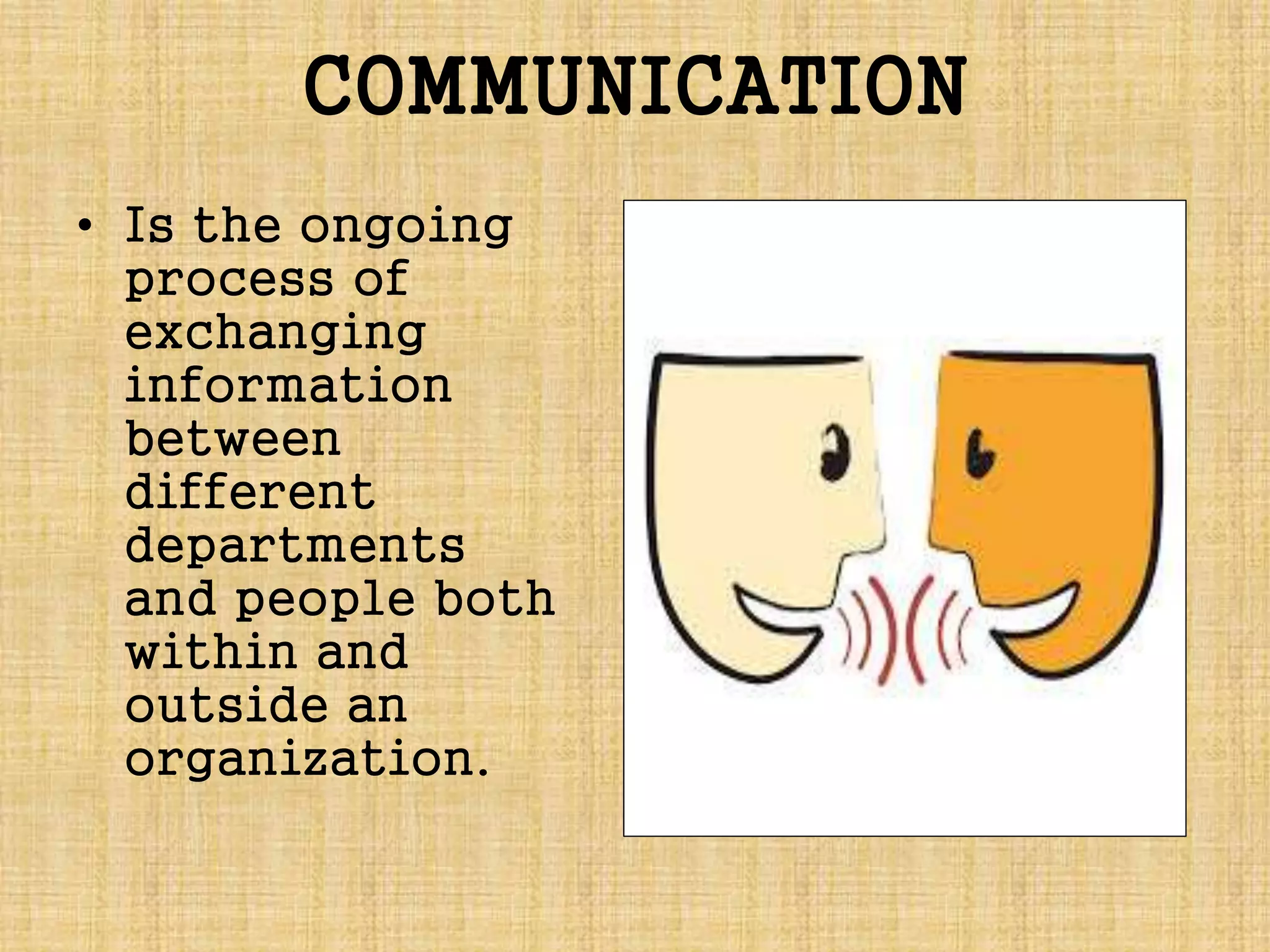
COMMUNICATION
• Is the ongoing
process of
exchanging
information
between
different
departments
and people both
within and
outside an
organization.
COST OR EXPENSE CONTROL
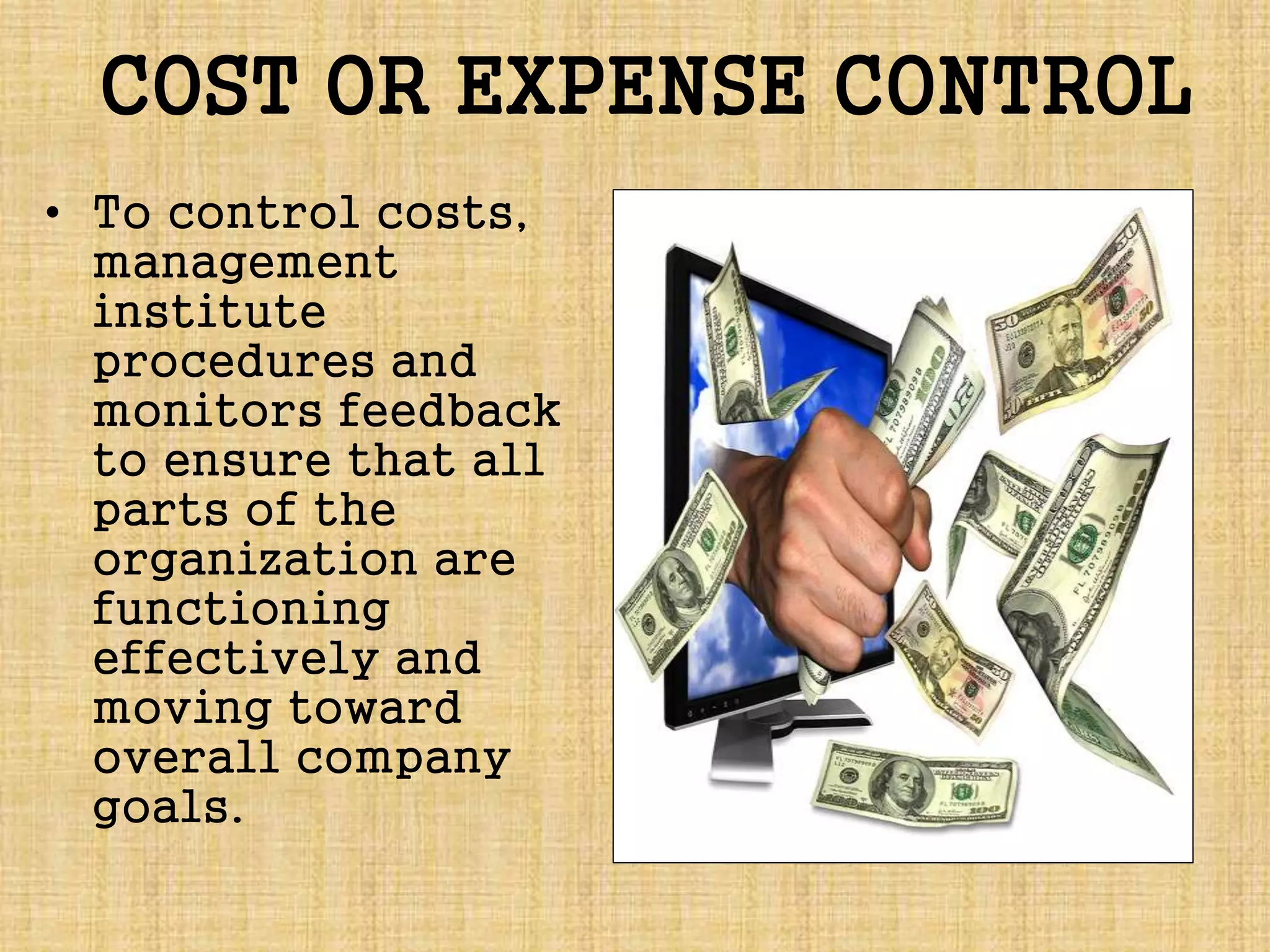
• To control costs,
management
institute
procedures and
monitors feedback
to ensure that all
parts of the
organization are
functioning
effectively and
moving toward
overall company
goals.
REVENUE ENHANCEMENT
• REVENUE – is a term used
interchangeably with income or sales,
money received by a business minus
returns and discounts in a given
period of time.
• If a business is to succeed or even just
survive, revenue must be great enough
to pay for the cost of goods sold and
other expenses and to provide
sufficient net income.
REVENUE AND EXPENSE
FORMULA
Revenue - Expenses = Profit
Revenue – Desired Profit = Ideal Expense
Expense
Revenue = Expense %
Revenue (100%)
- Food and Beverage Cost %
- Labor Cost %
- Other Expense %
= Profit %
FORECASTING
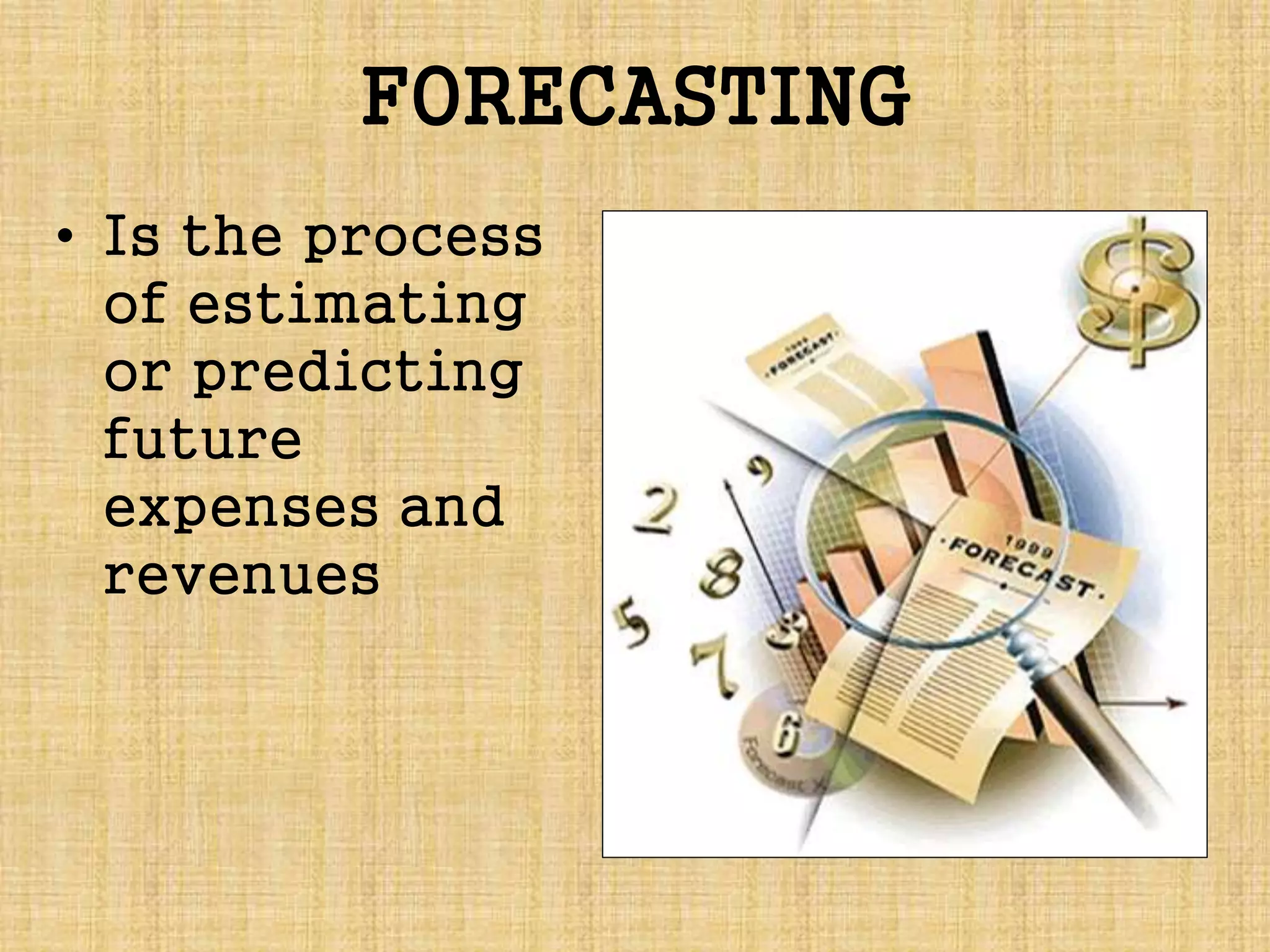
• Is the process
of estimating
or predicting
future
expenses and
revenues
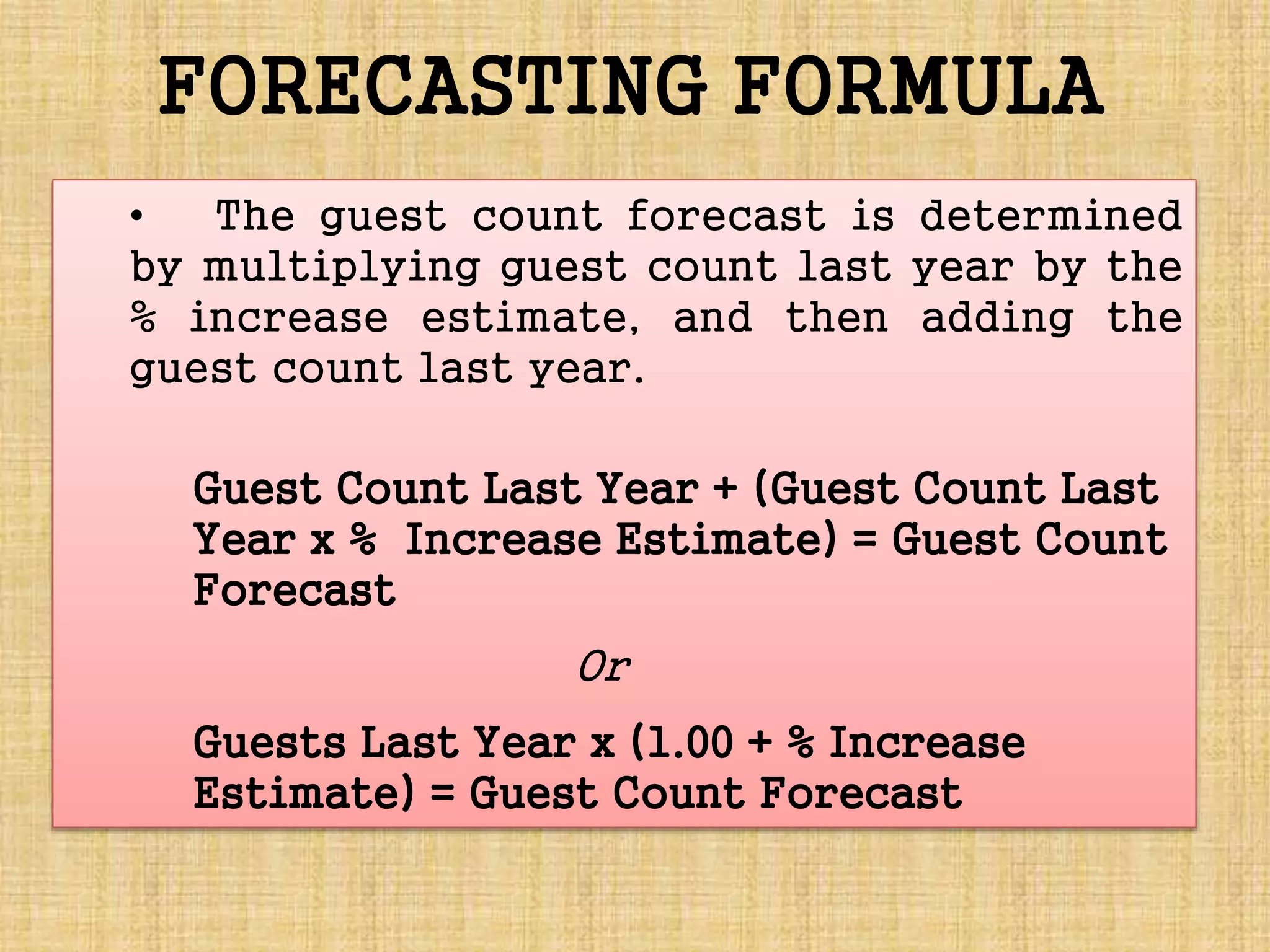
• The guest count forecast is determined
by multiplying guest count last year by the
% increase estimate, and then adding the
guest count last year.
Guest Count Last Year + (Guest Count Last
Year x % Increase Estimate) = Guest Count
Forecast
Or
Guests Last Year x (1.00 + % Increase
Estimate) = Guest Count Forecast
FORECASTING FORMULA
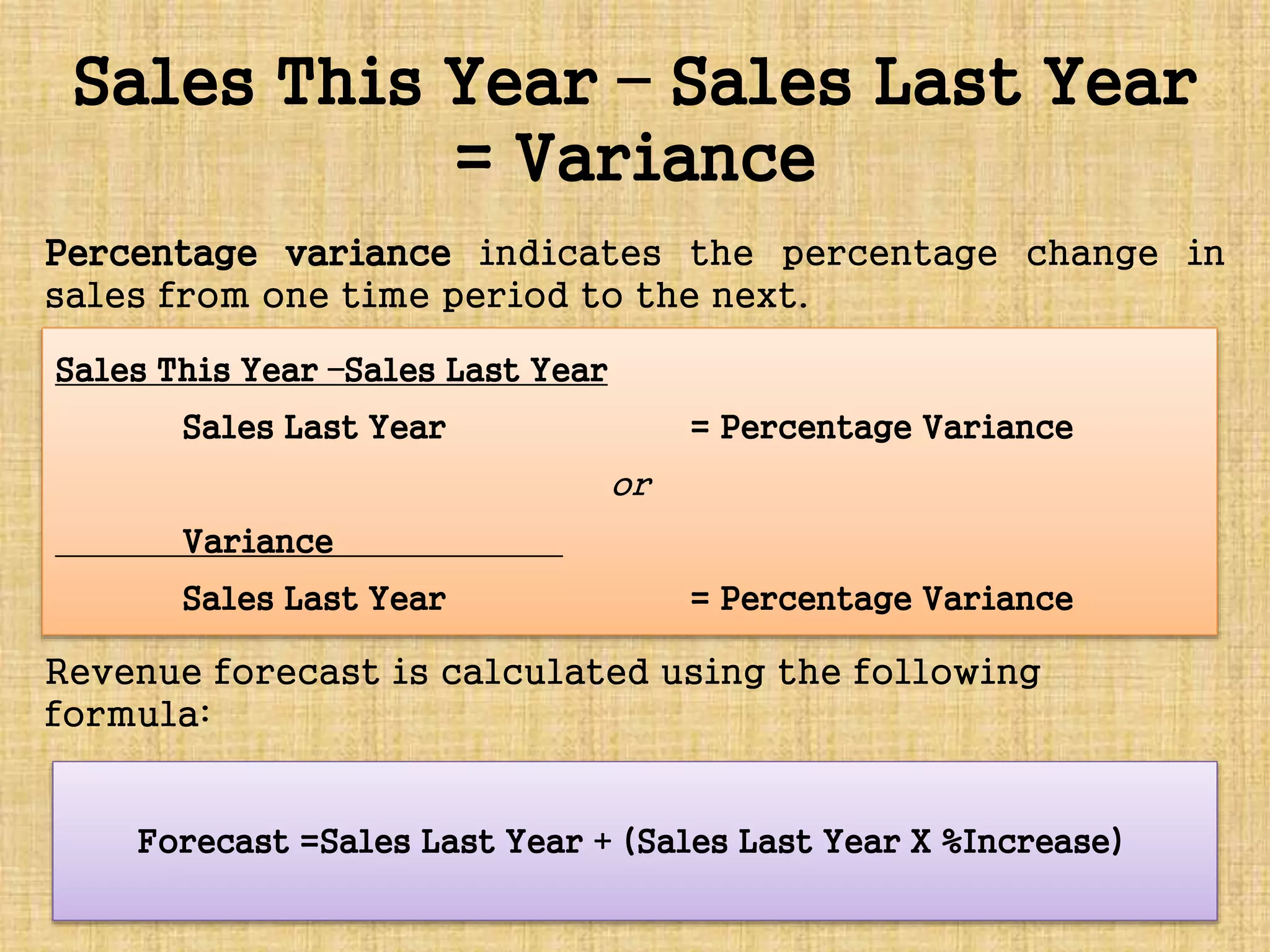
Sales This Year – Sales Last Year
= Variance
Percentage variance indicates the percentage change in
sales from one time period to the next.
Revenue forecast is calculated using the following
formula:
Sales This Year –Sales Last Year
Sales Last Year = Percentage Variance
or
Variance
Sales Last Year = Percentage Variance
Forecast =Sales Last Year + (Sales Last Year X %Increase)
COST OF FOOD AND BEVERAGE
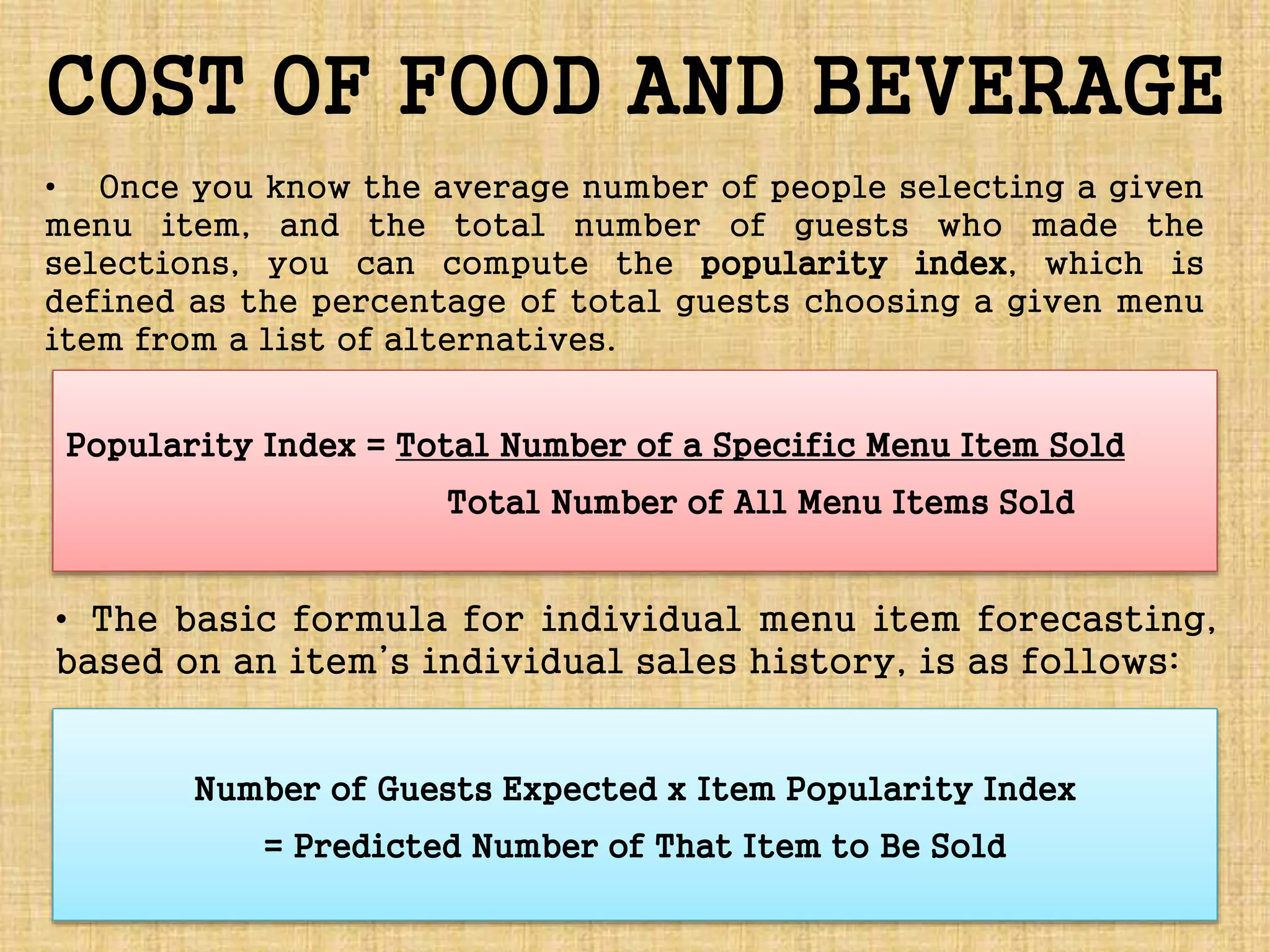
• Once you know the average number of people selecting a given
menu item, and the total number of guests who made the
selections, you can compute the popularity index, which is
defined as the percentage of total guests choosing a given menu
item from a list of alternatives.
• The basic formula for individual menu item forecasting,
based on an item’s individual sales history, is as follows:
Popularity Index = Total Number of a Specific Menu Item Sold
Total Number of All Menu Items Sold
Number of Guests Expected x Item Popularity Index
= Predicted Number of That Item to Be Sold
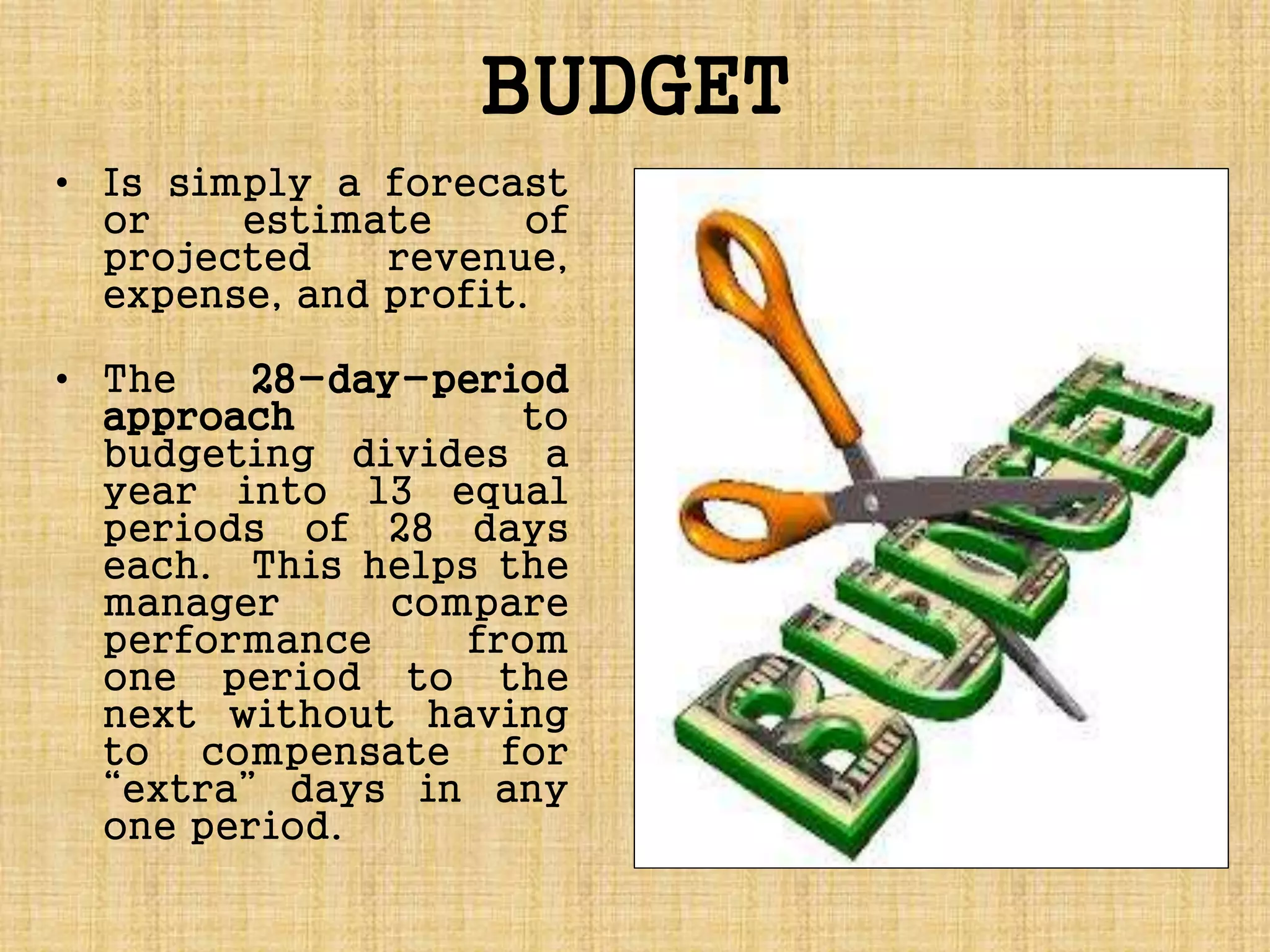
BUDGET
• Is simply a forecast
or estimate of
projected revenue,
expense, and profit.
• The 28-day-period
approach to
budgeting divides a
year into 13 equal
periods of 28 days
each. This helps the
manager compare
performance from
one period to the
next without having
to compensate for
“extra” days in any
one period.
BUDGETING
Developing the Budget
 To establish any type of budget, you need
to have the following information
available:
1. Prior period operating results
2. Assumptions of next period operations
3. Goals
4. Monitoring policies
• Annual budget
• Achievement budget
To determine a food budget, compute
the estimated food cost as follows:
1. Last Year’s Average Food Cost per Meal
= Last Year’s Cost of Food / Total Meals
Served
2. Last Year’s Food Cost per Meal + %
Estimated Increase in Food Costs
= This Year’s Food Cost per Meal
3. This Year’s Food Cost Per Meal x
Number of Meals to Be Served This Year
= Estimated Cost of Food This Year
To determine a labor budget, compute
the estimated labor cost as follows:
1. Last Year’s Labor Cost per Meal= Last Year’s
Cost of Labor / Total Meals Served
2. Last Year’s Labor Cost per Meal+% Estimated
Increase in Labor Cost = This Year’s Labor
Cost per Meal
3. This Year’s Labor Cost per Meal x Number of
Meals to Be Served This Year = Estimated
Cost of Labor This Year
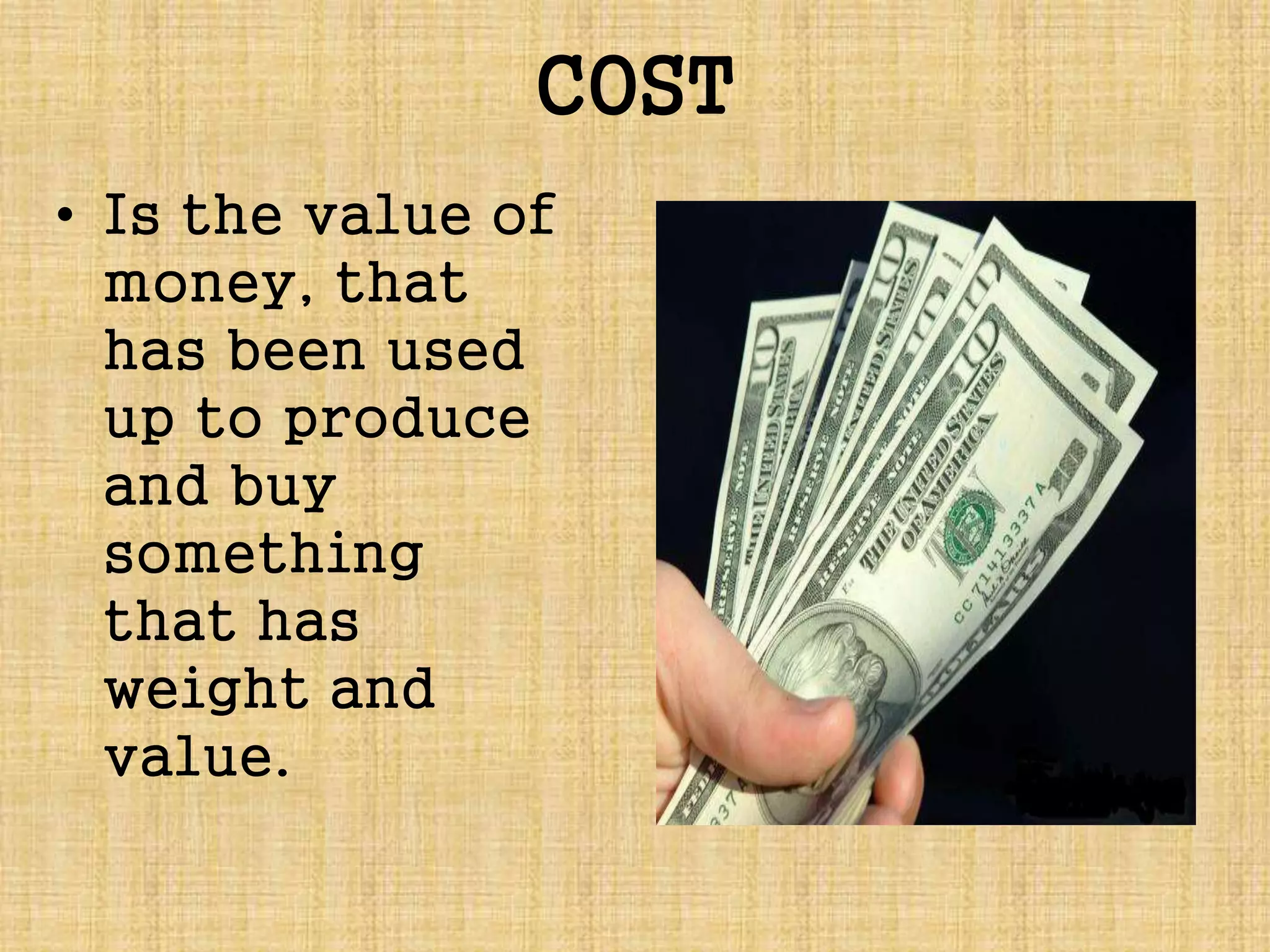
COST
• Is the value of
money, that
has been used
up to produce
and buy
something
that has
weight and
value.
TYPES OF COST
• FIXED COSTS – are those that have
little direct relationship to the
volume of business.
• VARIABLE COSTS – have some
relationship to volume of business. As
business volume increases, these
costs will increase; as volume
decreases, so should these costs.
2 TYPES OF VARIABLE COSTS
• DIRECTLY VARIABLE COSTS – are those
that have a direct relationship to the
volume of business, such that every
increase or decrease in volume brings a
corresponding increase or decrease in
costs
• SEMI-VARIABLE COSTS – fixed costs
and variable costs employees, meaning
that a portion of it should remain
constant with changes in business
volume, and the other portion should not.
OTHER TYPES OF COST
• CONTROLLABLE COSTS – are those
that can be changed in the short term.
Variable costs are normally
controllable.
• NON CONTROLLABLE COSTS – are
those that cannot be changed in the
short term, these are usually the fixed
costs.
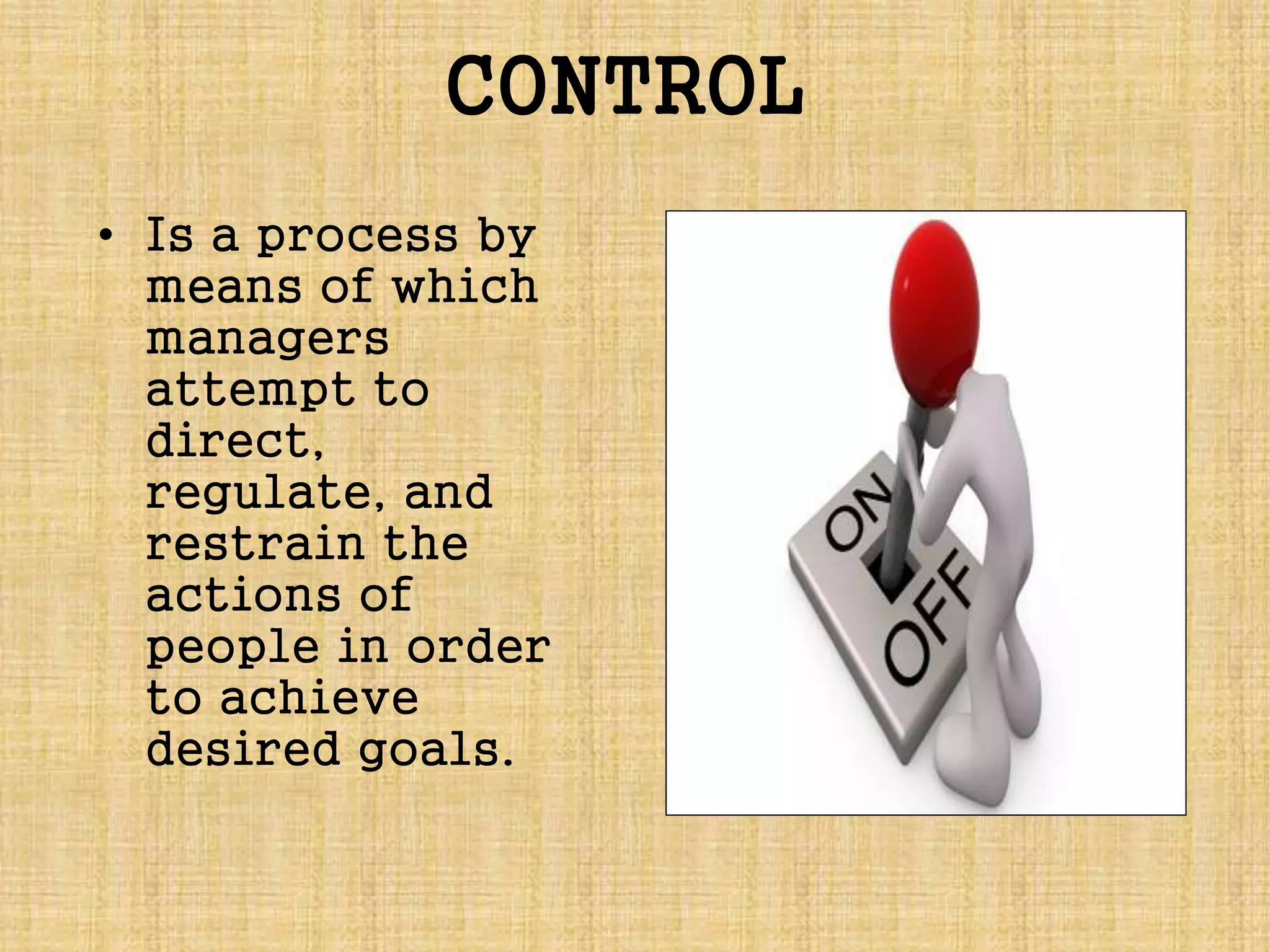
CONTROL
• Is a process by
means of which
managers
attempt to
direct,
regulate, and
restrain the
actions of
people in order
to achieve
desired goals.
QUALITIES OF A GOOD
CONTROL SYSTEM
• Must fit the needs, rather than interfere with the
operation.
• Must be Cost-effective
• Must provide accurate, detailed data to identify
the need for corrective measures and proper
steps to be taken.
• Must be simple to operate
• There must be a separation of duties so that no
one person has control over a transaction from
start to finish.
• Must be continuous
• Reports must be timely
• Must be action oriented.
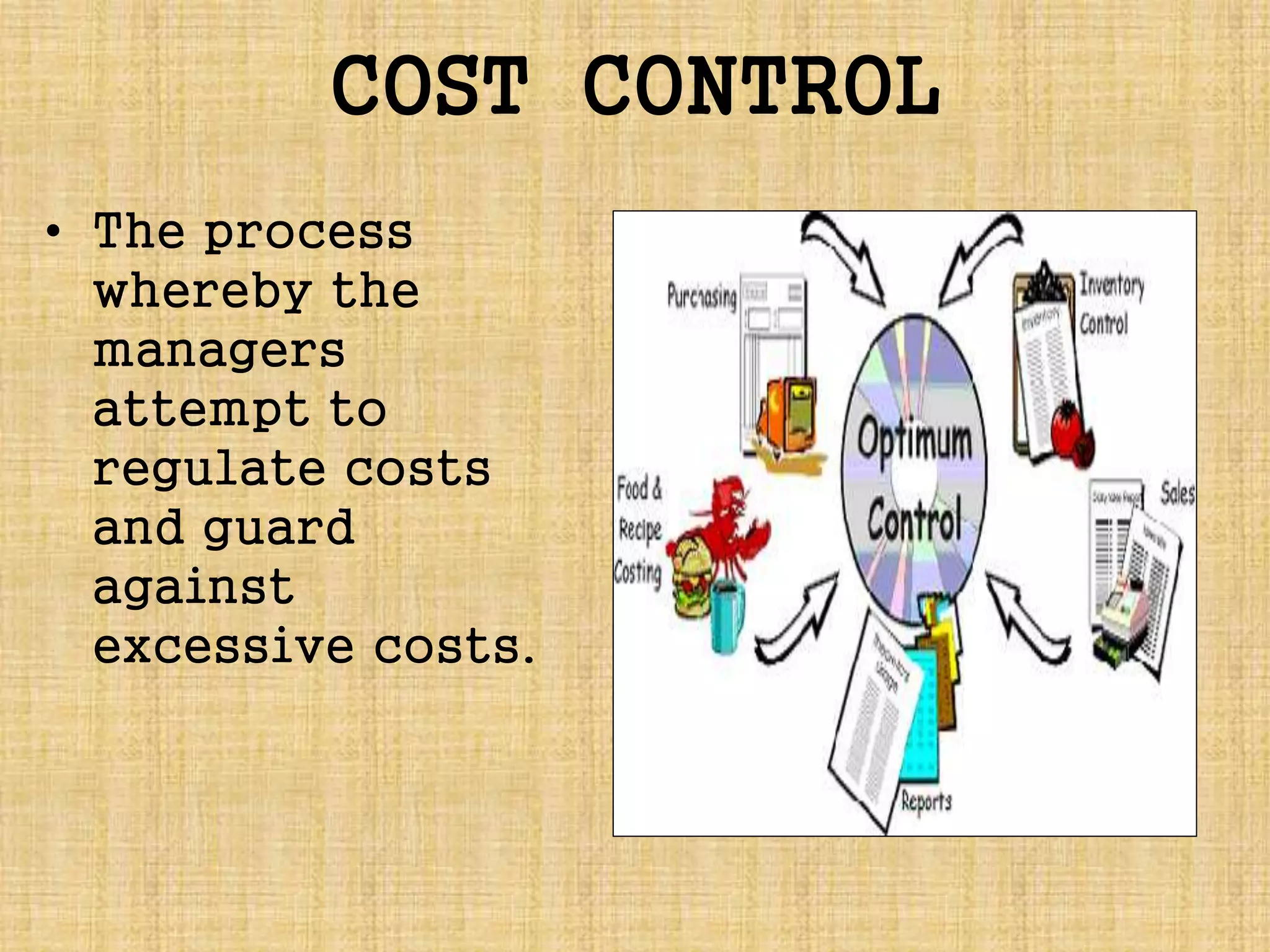
COST CONTROL
• The process
whereby the
managers
attempt to
regulate costs
and guard
against
excessive costs.
BASICS OF COST CONTROL
• KEEP IT SIMPLE – Keep your
procedures and forms to the minimum
necessary to do the job, so that the
people who provide information and
fill out the reports can do easily.
• MAKE IT TIMELY– Information that
takes too long to get is ineffective in
controlling an operation.
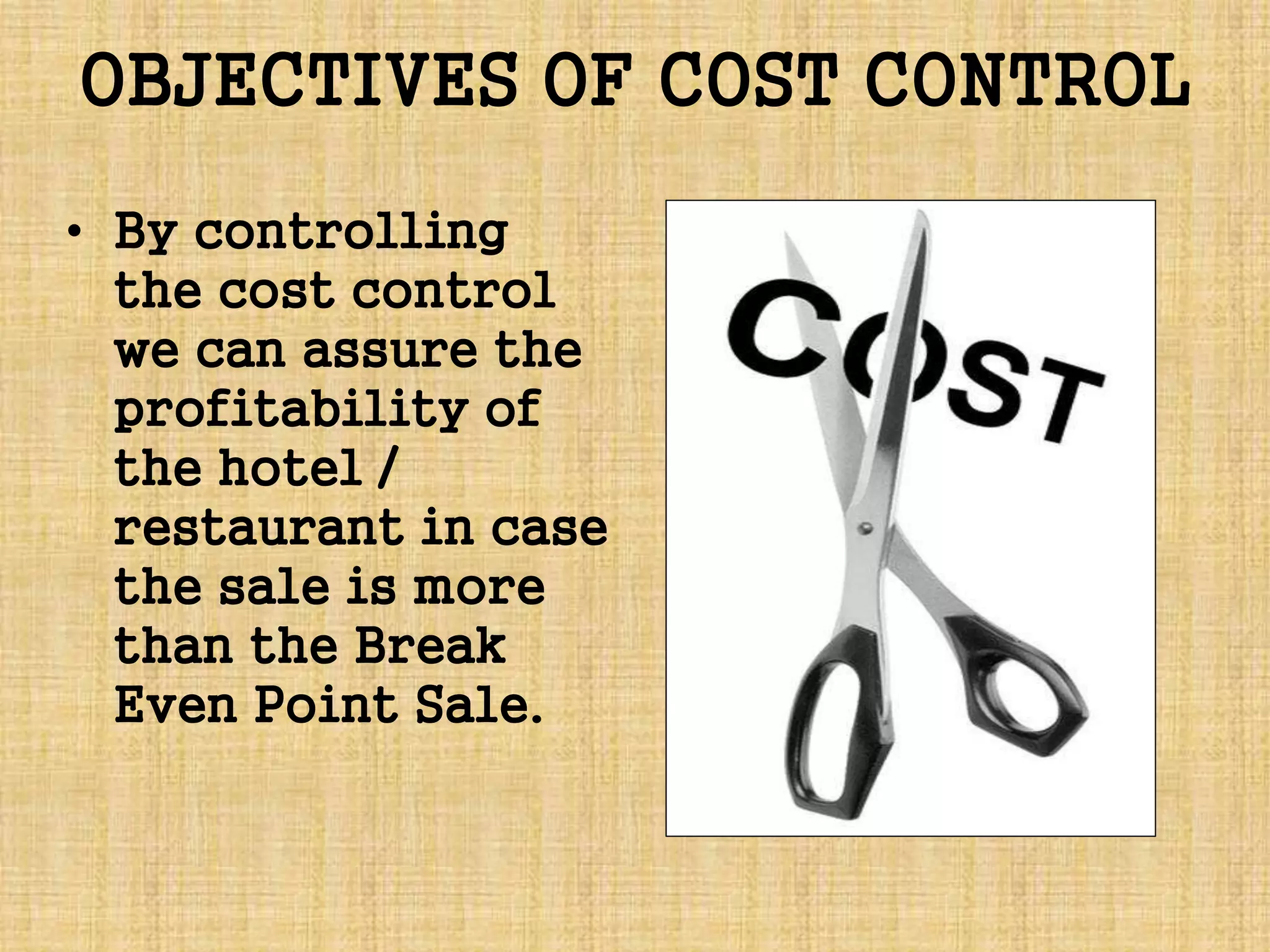
OBJECTIVES OF COST CONTROL
• By controlling
the cost control
we can assure the
profitability of
the hotel /
restaurant in case
the sale is more
than the Break
Even Point Sale.
CHALLENGES OF CONTROLLING
FOOD COST
• There are numerous obstacles which affect on
the food and beverage items cost.
1. Highly perishable nature of food.
2. Edible raw materials are prone to pilferage
3. Unpredictable volume of business makes
forecasting difficult.
4. Short operating cycle
5. Fluctuating prices of some raw materials
6. Variety of products sold.
LIMITATION OF F&B
COST CONTROL
• It looks very simple
that if the standard
recipe and portion size
control is followed
then the food cost will
be always under
control.
• In actual, in spite of
following standard
recipe and portion size
the food cost may
differ.
FACTORS THAT AFFECT THE
FOOD COST
1. Fluctuation in Raw Material Cost
2. Wrong Purchasing of Raw Material
3. Reduction in Sale
4. Wastage during preparation of Food
5. Pilferage in Food Sale
6. Spoilage due to wrong storage
CONTROL TECHNIQUES
• Establishing Standards
• Establishing Procedures
• Training
• Setting Examples
• Observing and Correcting employees
actions
• Requiring Records and Reports
• Censuring and Disciplining
employees
• Preparing and Following budgets
ESSENTIALS OF FOOD COST
CONTROL
1. Proper Purchasing
2. Control in Purchasing
3. Follow Purchasing Procedure
4. Control Food Production
5. Follow Standard Recipe
6. Follow Standard Portion Size
End of
Chapter 01

INTRODUCTION TO COST CONTROL

  • 1.
    FOOD AND BEVERAGE COSTCONTROL Presented by: PROF. MARIANNE T. EVANGELISTA, MSHRM
  • 2.
    CHAPTER 1 –COURSE OUTLINE • Overview of the Industry and the Manager’s Role - Communication - Cost / Expense Control - Revenue Enhancement - Forecasting • Introduction to Cost Control - Costs - Types of Costs - Basics of Cost Controls - Controls Techniques
  • 3.
    OVERVIEW OF THEINDUSTRY AND MANAGER’S ROLE • In the growing food service industry, the role of the food and beverage manager is to carry out four (4) major activities to achieve financial results for his or her company. 1. Communication 2. Cost Control 3. Revenue Enhancement 4. Forecasting
  • 4.
    COMMUNICATION • Is theongoing process of exchanging information between different departments and people both within and outside an organization.
  • 5.
    COST OR EXPENSECONTROL • To control costs, management institute procedures and monitors feedback to ensure that all parts of the organization are functioning effectively and moving toward overall company goals.
  • 6.
    REVENUE ENHANCEMENT • REVENUE– is a term used interchangeably with income or sales, money received by a business minus returns and discounts in a given period of time. • If a business is to succeed or even just survive, revenue must be great enough to pay for the cost of goods sold and other expenses and to provide sufficient net income.
  • 7.
    REVENUE AND EXPENSE FORMULA Revenue- Expenses = Profit Revenue – Desired Profit = Ideal Expense Expense Revenue = Expense % Revenue (100%) - Food and Beverage Cost % - Labor Cost % - Other Expense % = Profit %
  • 8.
    FORECASTING • Is theprocess of estimating or predicting future expenses and revenues
  • 9.
    • The guestcount forecast is determined by multiplying guest count last year by the % increase estimate, and then adding the guest count last year. Guest Count Last Year + (Guest Count Last Year x % Increase Estimate) = Guest Count Forecast Or Guests Last Year x (1.00 + % Increase Estimate) = Guest Count Forecast FORECASTING FORMULA
  • 10.
    Sales This Year– Sales Last Year = Variance Percentage variance indicates the percentage change in sales from one time period to the next. Revenue forecast is calculated using the following formula: Sales This Year –Sales Last Year Sales Last Year = Percentage Variance or Variance Sales Last Year = Percentage Variance Forecast =Sales Last Year + (Sales Last Year X %Increase)
  • 11.
    COST OF FOODAND BEVERAGE • Once you know the average number of people selecting a given menu item, and the total number of guests who made the selections, you can compute the popularity index, which is defined as the percentage of total guests choosing a given menu item from a list of alternatives. • The basic formula for individual menu item forecasting, based on an item’s individual sales history, is as follows: Popularity Index = Total Number of a Specific Menu Item Sold Total Number of All Menu Items Sold Number of Guests Expected x Item Popularity Index = Predicted Number of That Item to Be Sold
  • 12.
    BUDGET • Is simplya forecast or estimate of projected revenue, expense, and profit. • The 28-day-period approach to budgeting divides a year into 13 equal periods of 28 days each. This helps the manager compare performance from one period to the next without having to compensate for “extra” days in any one period.
  • 13.
    BUDGETING Developing the Budget To establish any type of budget, you need to have the following information available: 1. Prior period operating results 2. Assumptions of next period operations 3. Goals 4. Monitoring policies • Annual budget • Achievement budget
  • 14.
    To determine afood budget, compute the estimated food cost as follows: 1. Last Year’s Average Food Cost per Meal = Last Year’s Cost of Food / Total Meals Served 2. Last Year’s Food Cost per Meal + % Estimated Increase in Food Costs = This Year’s Food Cost per Meal 3. This Year’s Food Cost Per Meal x Number of Meals to Be Served This Year = Estimated Cost of Food This Year
  • 15.
    To determine alabor budget, compute the estimated labor cost as follows: 1. Last Year’s Labor Cost per Meal= Last Year’s Cost of Labor / Total Meals Served 2. Last Year’s Labor Cost per Meal+% Estimated Increase in Labor Cost = This Year’s Labor Cost per Meal 3. This Year’s Labor Cost per Meal x Number of Meals to Be Served This Year = Estimated Cost of Labor This Year
  • 16.
    COST • Is thevalue of money, that has been used up to produce and buy something that has weight and value.
  • 17.
    TYPES OF COST •FIXED COSTS – are those that have little direct relationship to the volume of business. • VARIABLE COSTS – have some relationship to volume of business. As business volume increases, these costs will increase; as volume decreases, so should these costs.
  • 18.
    2 TYPES OFVARIABLE COSTS • DIRECTLY VARIABLE COSTS – are those that have a direct relationship to the volume of business, such that every increase or decrease in volume brings a corresponding increase or decrease in costs • SEMI-VARIABLE COSTS – fixed costs and variable costs employees, meaning that a portion of it should remain constant with changes in business volume, and the other portion should not.
  • 19.
    OTHER TYPES OFCOST • CONTROLLABLE COSTS – are those that can be changed in the short term. Variable costs are normally controllable. • NON CONTROLLABLE COSTS – are those that cannot be changed in the short term, these are usually the fixed costs.
  • 20.
    CONTROL • Is aprocess by means of which managers attempt to direct, regulate, and restrain the actions of people in order to achieve desired goals.
  • 21.
    QUALITIES OF AGOOD CONTROL SYSTEM • Must fit the needs, rather than interfere with the operation. • Must be Cost-effective • Must provide accurate, detailed data to identify the need for corrective measures and proper steps to be taken. • Must be simple to operate • There must be a separation of duties so that no one person has control over a transaction from start to finish. • Must be continuous • Reports must be timely • Must be action oriented.
  • 22.
    COST CONTROL • Theprocess whereby the managers attempt to regulate costs and guard against excessive costs.
  • 23.
    BASICS OF COSTCONTROL • KEEP IT SIMPLE – Keep your procedures and forms to the minimum necessary to do the job, so that the people who provide information and fill out the reports can do easily. • MAKE IT TIMELY– Information that takes too long to get is ineffective in controlling an operation.
  • 24.
    OBJECTIVES OF COSTCONTROL • By controlling the cost control we can assure the profitability of the hotel / restaurant in case the sale is more than the Break Even Point Sale.
  • 25.
    CHALLENGES OF CONTROLLING FOODCOST • There are numerous obstacles which affect on the food and beverage items cost. 1. Highly perishable nature of food. 2. Edible raw materials are prone to pilferage 3. Unpredictable volume of business makes forecasting difficult. 4. Short operating cycle 5. Fluctuating prices of some raw materials 6. Variety of products sold.
  • 26.
    LIMITATION OF F&B COSTCONTROL • It looks very simple that if the standard recipe and portion size control is followed then the food cost will be always under control. • In actual, in spite of following standard recipe and portion size the food cost may differ.
  • 27.
    FACTORS THAT AFFECTTHE FOOD COST 1. Fluctuation in Raw Material Cost 2. Wrong Purchasing of Raw Material 3. Reduction in Sale 4. Wastage during preparation of Food 5. Pilferage in Food Sale 6. Spoilage due to wrong storage
  • 28.
    CONTROL TECHNIQUES • EstablishingStandards • Establishing Procedures • Training • Setting Examples • Observing and Correcting employees actions • Requiring Records and Reports • Censuring and Disciplining employees • Preparing and Following budgets
  • 29.
    ESSENTIALS OF FOODCOST CONTROL 1. Proper Purchasing 2. Control in Purchasing 3. Follow Purchasing Procedure 4. Control Food Production 5. Follow Standard Recipe 6. Follow Standard Portion Size
  • 30.

Editor's Notes

  • #23 Minimizing costs the company must expend without sacrificing the end product (service/food) that the customer receives.
  • #24 KEEP IT SIMPLE - If the system is too complicated there is always a chance that the staff will get confused therefore it is time consuming, and difficult to complete.
  • #25 To obtain the highest possible gross profit on F & B.
  • #28 FLUCTUATION – MEANS VARIATIONS OR CHANGES