



• Marketing is an integrated
communications-based process
through which individuals and
communities discover that existing and
newly-identified needs and wants may
be satisfied by the products and
services of others.
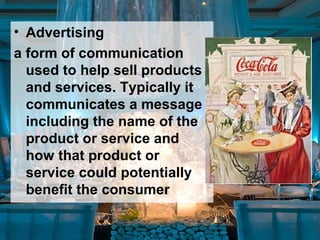
• Advertising
a form of communication
used to help sell products
and services. Typically it
communicates a message
including the name of the
product or service and
how that product or
service could potentially
benefit the consumer
• Distribution
An organization or set of
organizations involved in the
process of making a product
or service available for use or
consumption by a consumer
or business user.
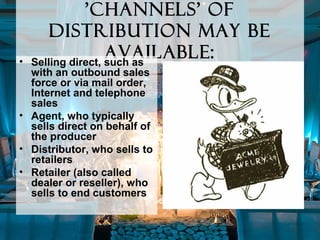
'channels' of
distribution may be
available:• Selling direct, such as
with an outbound sales
force or via mail order,
Internet and telephone
sales
• Agent, who typically
sells direct on behalf of
the producer
• Distributor, who sells to
retailers
• Retailer (also called
dealer or reseller), who
sells to end customers
• Selling
A sale is completed by the
seller, the owner of the
goods. It starts with
consent (or agreement) to
an acquisition or
appropriation or request
followed by the passing
of title (property or
ownership) in the item
and the application and
due settlement of a price
•PRODUCT
•PRICING
•PLACEMENT
•PROMOTION
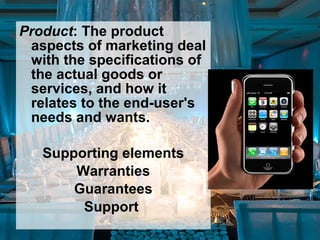
Product: The product
aspects of marketing deal
with the specifications of
the actual goods or
services, and how it
relates to the end-user's
needs and wants.
Supporting elements
Warranties
Guarantees
Support
Pricing: This refers to
the process of setting
a price for a product,
including discounts.
The price need not be
monetary; it can
simply be what is
exchanged for the
product or services,
e.g. time, energy, or
attention.
Placement (or distribution):
refers to how the product
gets to the customer; for
example, point-of-sale
placement or retailing.
Place, referring to the channel
by which a product or service
is sold (e.g. online vs. retail),
which geographic region or
industry, also referring to
how the environment in
which the product is sold in
can affect sales.
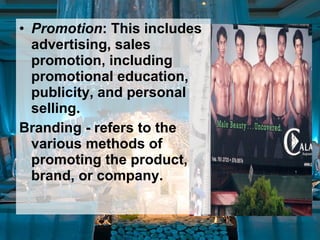
• Promotion: This includes
advertising, sales
promotion, including
promotional education,
publicity, and personal
selling.
Branding - refers to the
various methods of
promoting the product,
brand, or company.
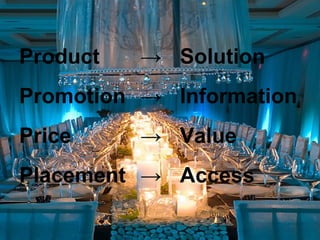
Product → Solution
Promotion → Information
Price → Value
Placement → Access
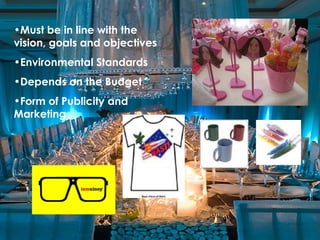
•Must be in line with the
vision, goals and objectives
•Environmental Standards
•Depends on the Budget
•Form of Publicity and
Marketing
Event
Marketing
Opens Doors
Trade Shows
Branding Company and Products
Expand Marketplace
Prospect for New Business
Increase Sales
Educate the Purchasing Agents
Learn what is New in the Industry
Announce New Products or
Services
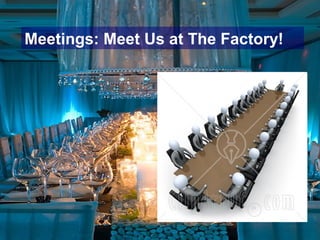
Meetings: Meet Us at The Factory!
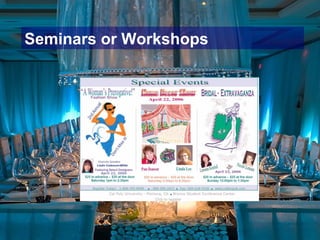
Seminars or Workshops
Sponsorship
Online Event Marketing
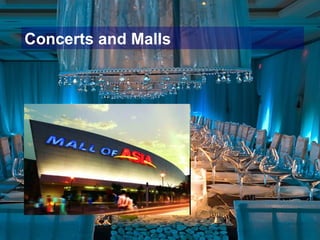
Concerts and Malls
15 Useful Event
Promotion Tips
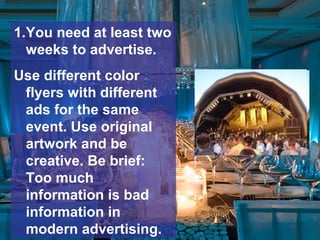
1.You need at least two
weeks to advertise.
Use different color
flyers with different
ads for the same
event. Use original
artwork and be
creative. Be brief:
Too much
information is bad
information in
modern advertising.
2. Contact local stations,
websites, and newspapers
to see if they’re willing to
plug your event in
exchange for promoting
them on flyers and other
announcements.
This is known as a “media
sponsorship”. Always
phrase your pitch in terms
of how they benefit, not
you.
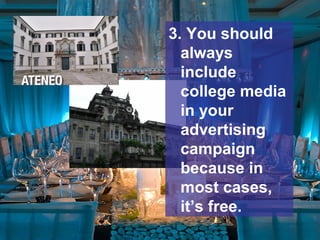
3. You should
always
include
college media
in your
advertising
campaign
because in
most cases,
it’s free.
4. Do not solely use MySpace or
other social networks to promote
your event. MySpace is dead, and
there is too much clutter to fight
through on other networks.
5. Make sure you advertise where
your audience is, not just where
the event is. Never violate local
posting policy and town / state
regulations. Call the town /
village / city before you post.
6. Tell people about the show in
person. Tell your friends, have
them tell their friends. Don’t be
annoying. You can tell quickly if
someone wants to learn more. If
they don’t, thank them and leave.
7. Band and performer selection is
crucial. The performer’s “Suck
Factor” outweighs drawing ability.
You have to keep people at your
event, not send them away
screaming.
8.Having an ego is the worst thing
this business. Check your ego at
the door or pay for it later. Be
polite. Always. Having an ego is
the worst thing this business.
Check your ego at the door or pay
for it later. Be polite. Always.
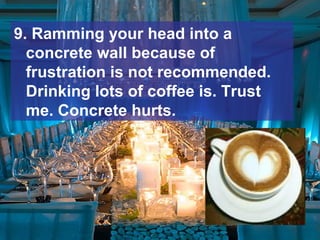
9. Ramming your head into a
concrete wall because of
frustration is not recommended.
Drinking lots of coffee is. Trust
me. Concrete hurts.
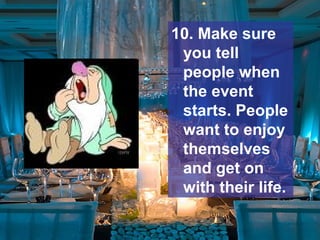
10. Make sure
you tell
people when
the event
starts. People
want to enjoy
themselves
and get on
with their life.
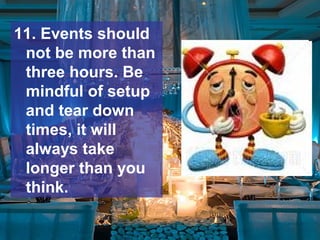
11. Events should
not be more than
three hours. Be
mindful of setup
and tear down
times, it will
always take
longer than you
think.
12.Make sure you and the venue
know who is doing what, when,
why, and how. Do not ever work
with a venue, band, or promoter
without something signed by both
parties explaining responsibilities.
13. If you’re hosting a major tour
with its own crew, be helpful, be
polite, and get out of the way.
14. Something will go wrong. If
you’re prepared, you’ll be fine.
15. With large concerts, don’t
assume people are coming. Never,
ever assume people are going to
come out to anything. You do the
best with what you have and plan
for the worst.
Good luck

EVENTS MARKETING

  • 2.
    • Marketing isan integrated communications-based process through which individuals and communities discover that existing and newly-identified needs and wants may be satisfied by the products and services of others.
  • 3.
    • Advertising a formof communication used to help sell products and services. Typically it communicates a message including the name of the product or service and how that product or service could potentially benefit the consumer
  • 4.
    • Distribution An organizationor set of organizations involved in the process of making a product or service available for use or consumption by a consumer or business user.
  • 5.
    'channels' of distribution maybe available:• Selling direct, such as with an outbound sales force or via mail order, Internet and telephone sales • Agent, who typically sells direct on behalf of the producer • Distributor, who sells to retailers • Retailer (also called dealer or reseller), who sells to end customers
  • 6.
    • Selling A saleis completed by the seller, the owner of the goods. It starts with consent (or agreement) to an acquisition or appropriation or request followed by the passing of title (property or ownership) in the item and the application and due settlement of a price
  • 8.
  • 9.
    Product: The product aspectsof marketing deal with the specifications of the actual goods or services, and how it relates to the end-user's needs and wants. Supporting elements Warranties Guarantees Support
  • 10.
    Pricing: This refersto the process of setting a price for a product, including discounts. The price need not be monetary; it can simply be what is exchanged for the product or services, e.g. time, energy, or attention.
  • 11.
    Placement (or distribution): refersto how the product gets to the customer; for example, point-of-sale placement or retailing. Place, referring to the channel by which a product or service is sold (e.g. online vs. retail), which geographic region or industry, also referring to how the environment in which the product is sold in can affect sales.
  • 12.
    • Promotion: Thisincludes advertising, sales promotion, including promotional education, publicity, and personal selling. Branding - refers to the various methods of promoting the product, brand, or company.
  • 13.
    Product → Solution Promotion→ Information Price → Value Placement → Access
  • 15.
    •Must be inline with the vision, goals and objectives •Environmental Standards •Depends on the Budget •Form of Publicity and Marketing
  • 16.
  • 17.
    Trade Shows Branding Companyand Products Expand Marketplace Prospect for New Business Increase Sales Educate the Purchasing Agents Learn what is New in the Industry Announce New Products or Services
  • 18.
    Meetings: Meet Usat The Factory!
  • 19.
  • 20.
  • 21.
  • 22.
  • 23.
  • 24.
    1.You need atleast two weeks to advertise. Use different color flyers with different ads for the same event. Use original artwork and be creative. Be brief: Too much information is bad information in modern advertising.
  • 25.
    2. Contact localstations, websites, and newspapers to see if they’re willing to plug your event in exchange for promoting them on flyers and other announcements. This is known as a “media sponsorship”. Always phrase your pitch in terms of how they benefit, not you.
  • 26.
    3. You should always include collegemedia in your advertising campaign because in most cases, it’s free.
  • 27.
    4. Do notsolely use MySpace or other social networks to promote your event. MySpace is dead, and there is too much clutter to fight through on other networks.
  • 28.
    5. Make sureyou advertise where your audience is, not just where the event is. Never violate local posting policy and town / state regulations. Call the town / village / city before you post.
  • 29.
    6. Tell peopleabout the show in person. Tell your friends, have them tell their friends. Don’t be annoying. You can tell quickly if someone wants to learn more. If they don’t, thank them and leave.
  • 30.
    7. Band andperformer selection is crucial. The performer’s “Suck Factor” outweighs drawing ability. You have to keep people at your event, not send them away screaming.
  • 31.
    8.Having an egois the worst thing this business. Check your ego at the door or pay for it later. Be polite. Always. Having an ego is the worst thing this business. Check your ego at the door or pay for it later. Be polite. Always.
  • 32.
    9. Ramming yourhead into a concrete wall because of frustration is not recommended. Drinking lots of coffee is. Trust me. Concrete hurts.
  • 33.
    10. Make sure youtell people when the event starts. People want to enjoy themselves and get on with their life.
  • 34.
    11. Events should notbe more than three hours. Be mindful of setup and tear down times, it will always take longer than you think.
  • 35.
    12.Make sure youand the venue know who is doing what, when, why, and how. Do not ever work with a venue, band, or promoter without something signed by both parties explaining responsibilities.
  • 36.
    13. If you’rehosting a major tour with its own crew, be helpful, be polite, and get out of the way.
  • 37.
    14. Something willgo wrong. If you’re prepared, you’ll be fine.
  • 38.
    15. With largeconcerts, don’t assume people are coming. Never, ever assume people are going to come out to anything. You do the best with what you have and plan for the worst.
  • 39.