Presented by: MARIANNE T. EVANGELISTA, MSHRM
UNIVERSITY OF THE EAST
CALOOCAN
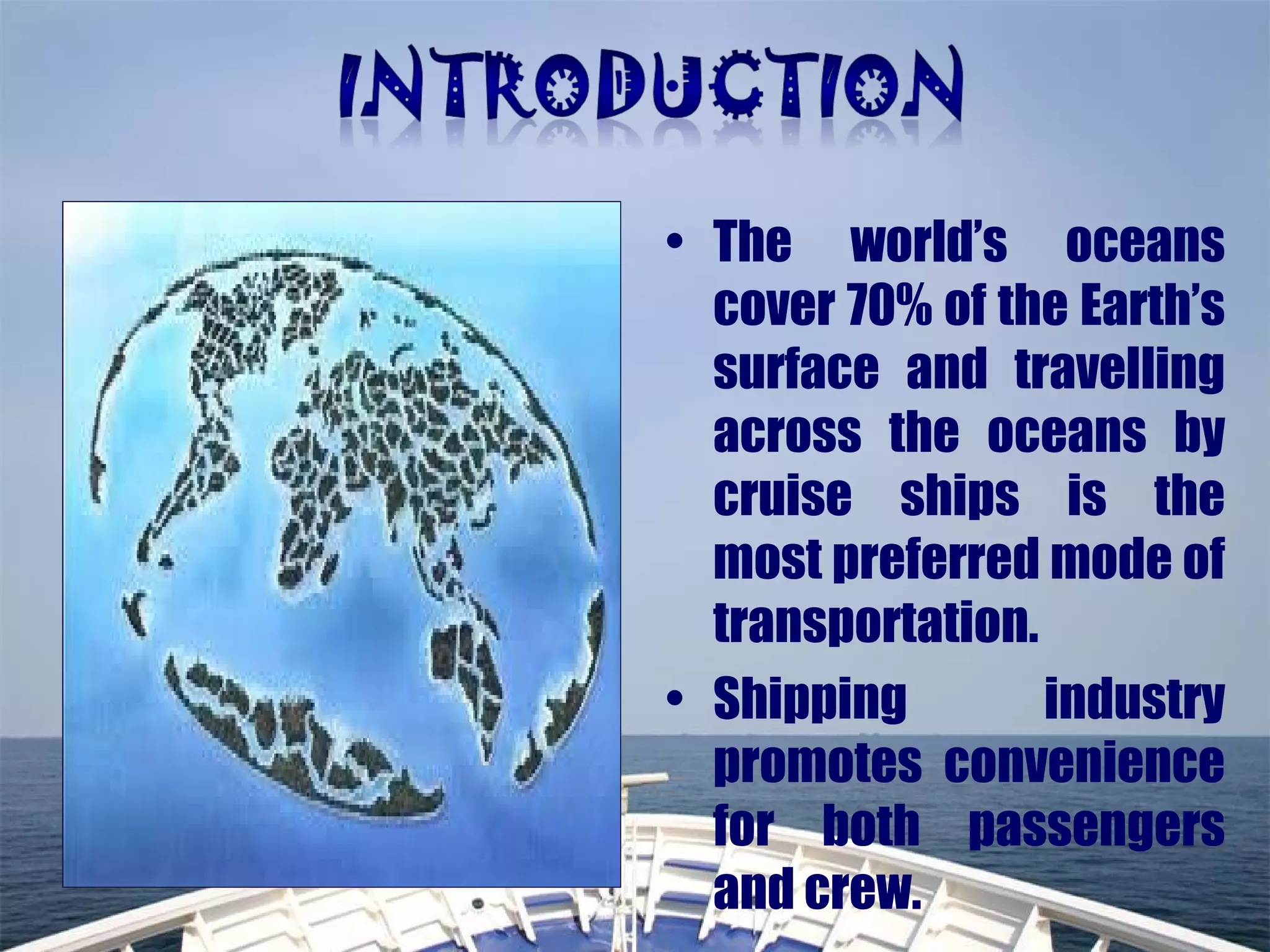
• The world’s oceans
cover 70% of the Earth’s
surface and travelling
across the oceans by
cruise ships is the
most preferred mode of
transportation.
• Shipping industry
promotes convenience
for both passengers
and crew.
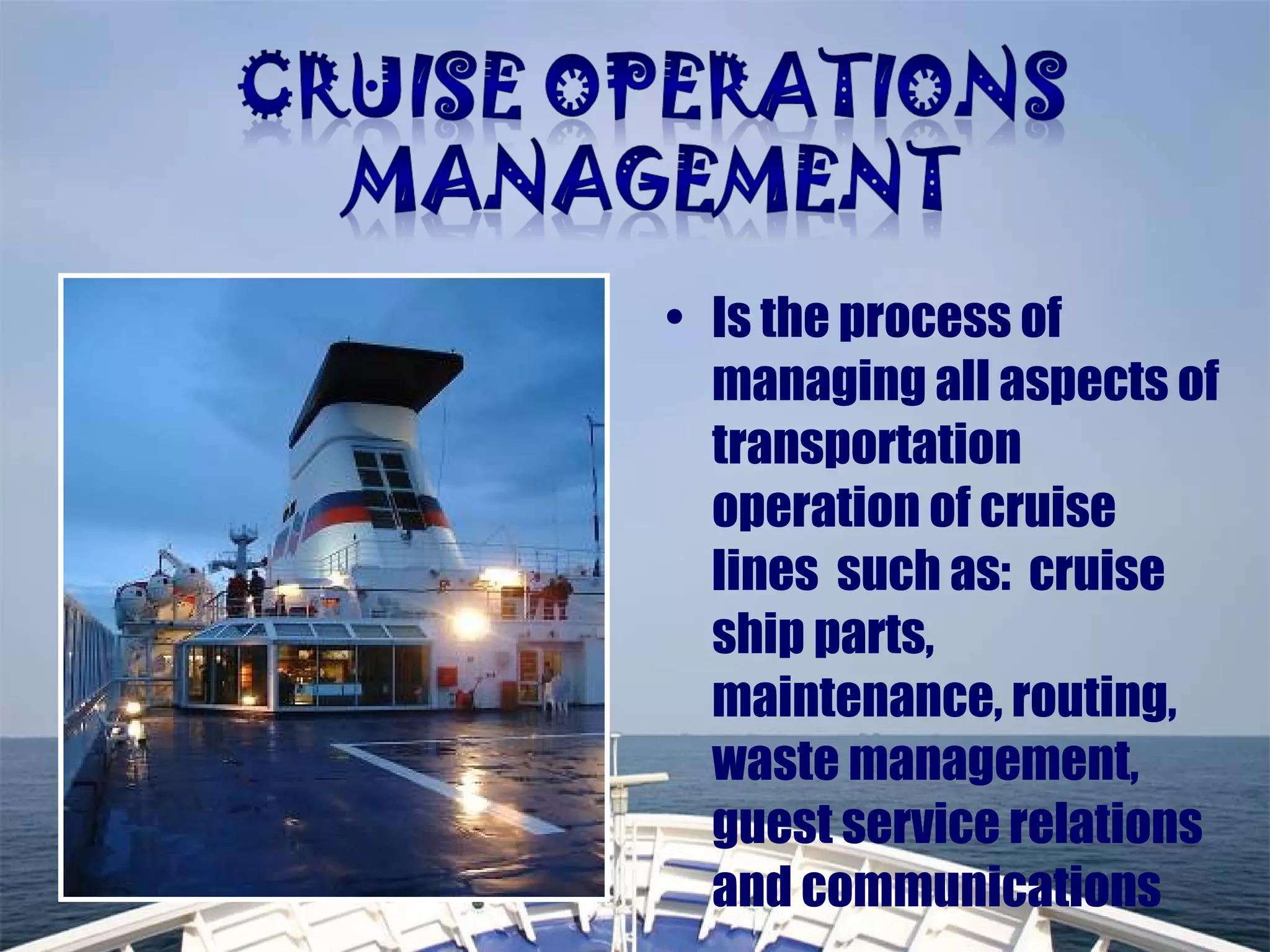
• Is the process of
managing all aspects of
transportation
operation of cruise
lines such as: cruise
ship parts,
maintenance, routing,
waste management,
guest service relations
and communications
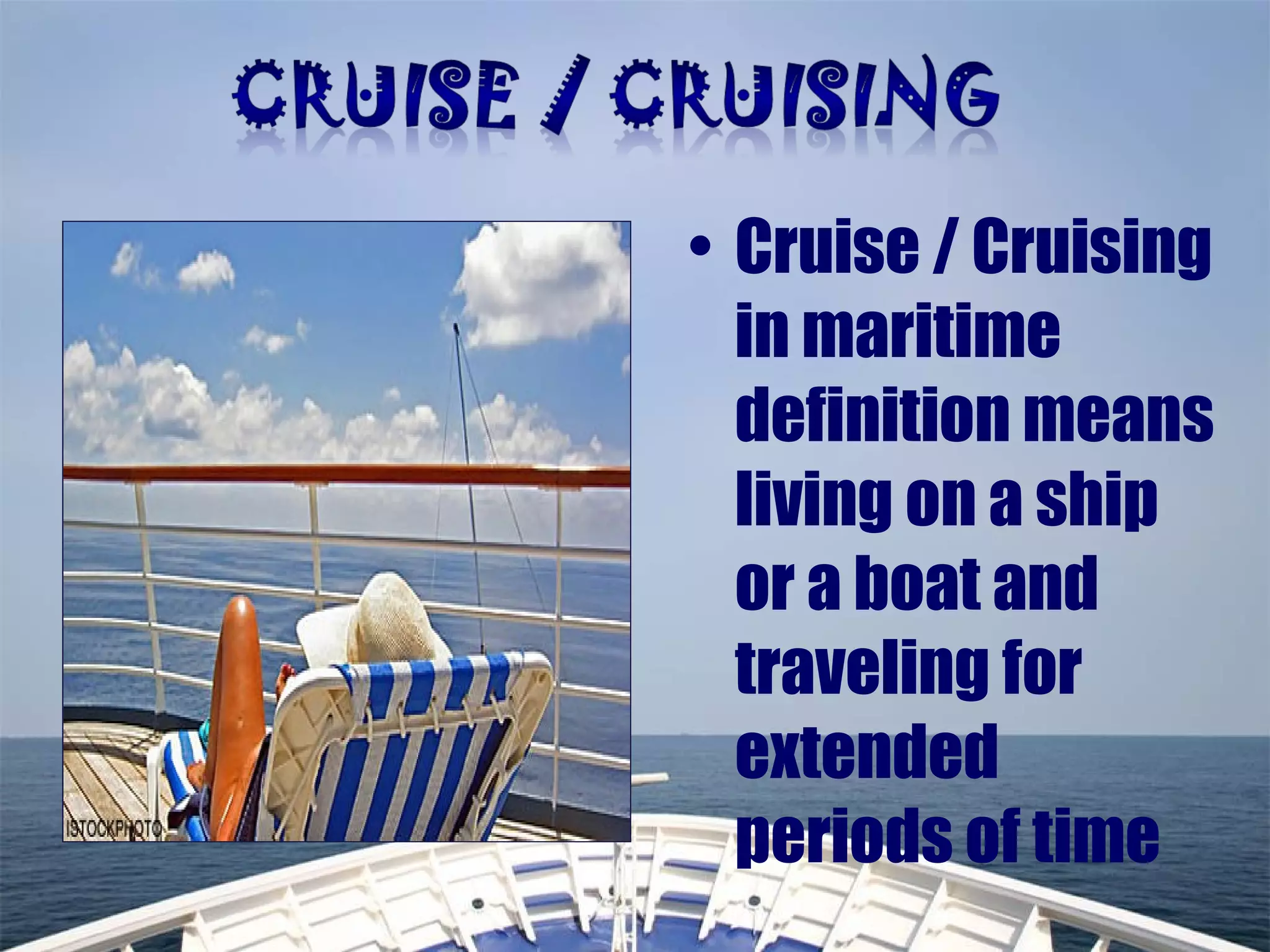
• Cruise / Cruising
in maritime
definition means
living on a ship
or a boat and
traveling for
extended
periods of time
QUESTION.
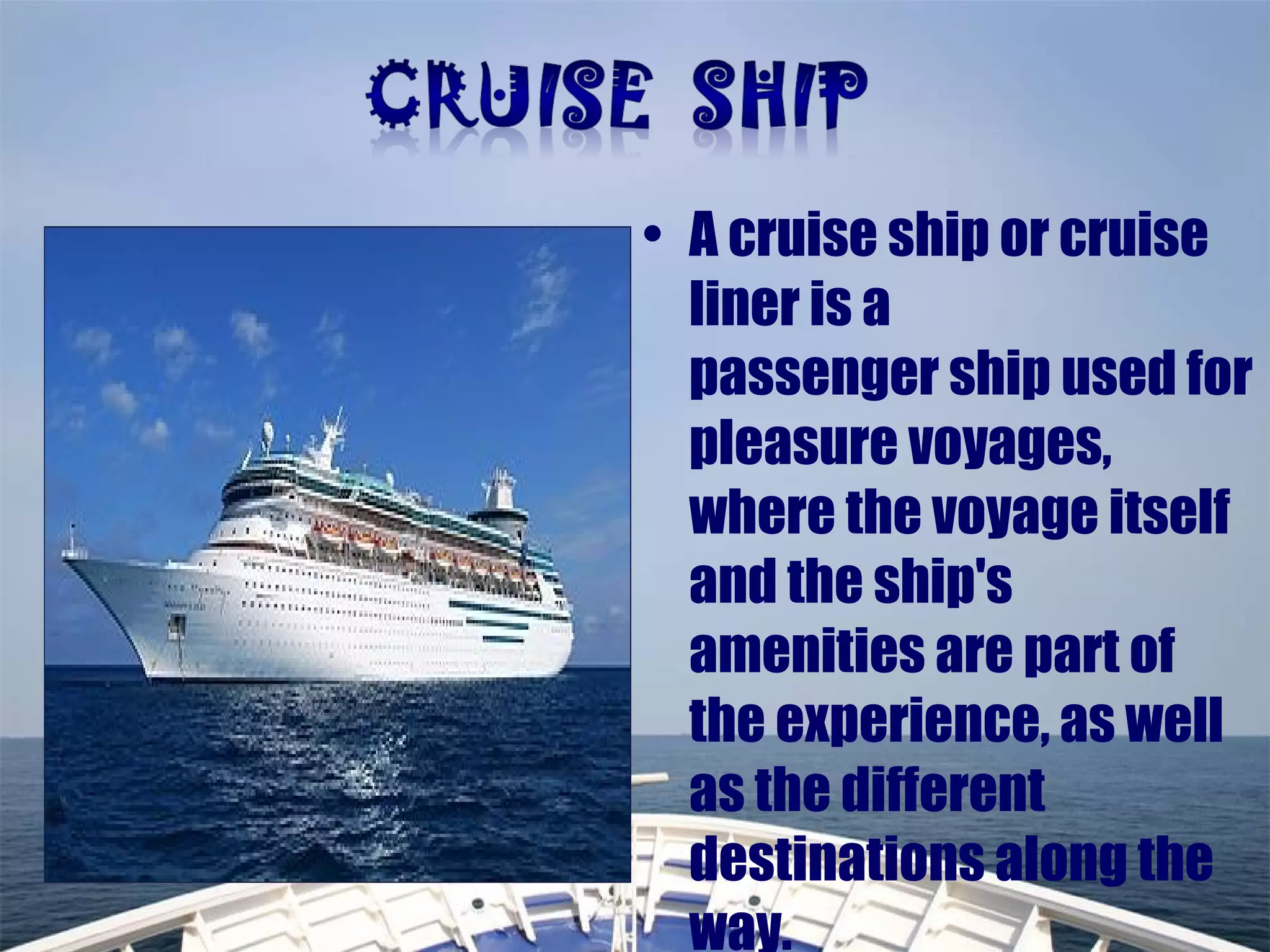
• A cruise ship or cruise
liner is a
passenger ship used for
pleasure voyages,
where the voyage itself
and the ship's
amenities are part of
the experience, as well
as the different
destinations along the
way.
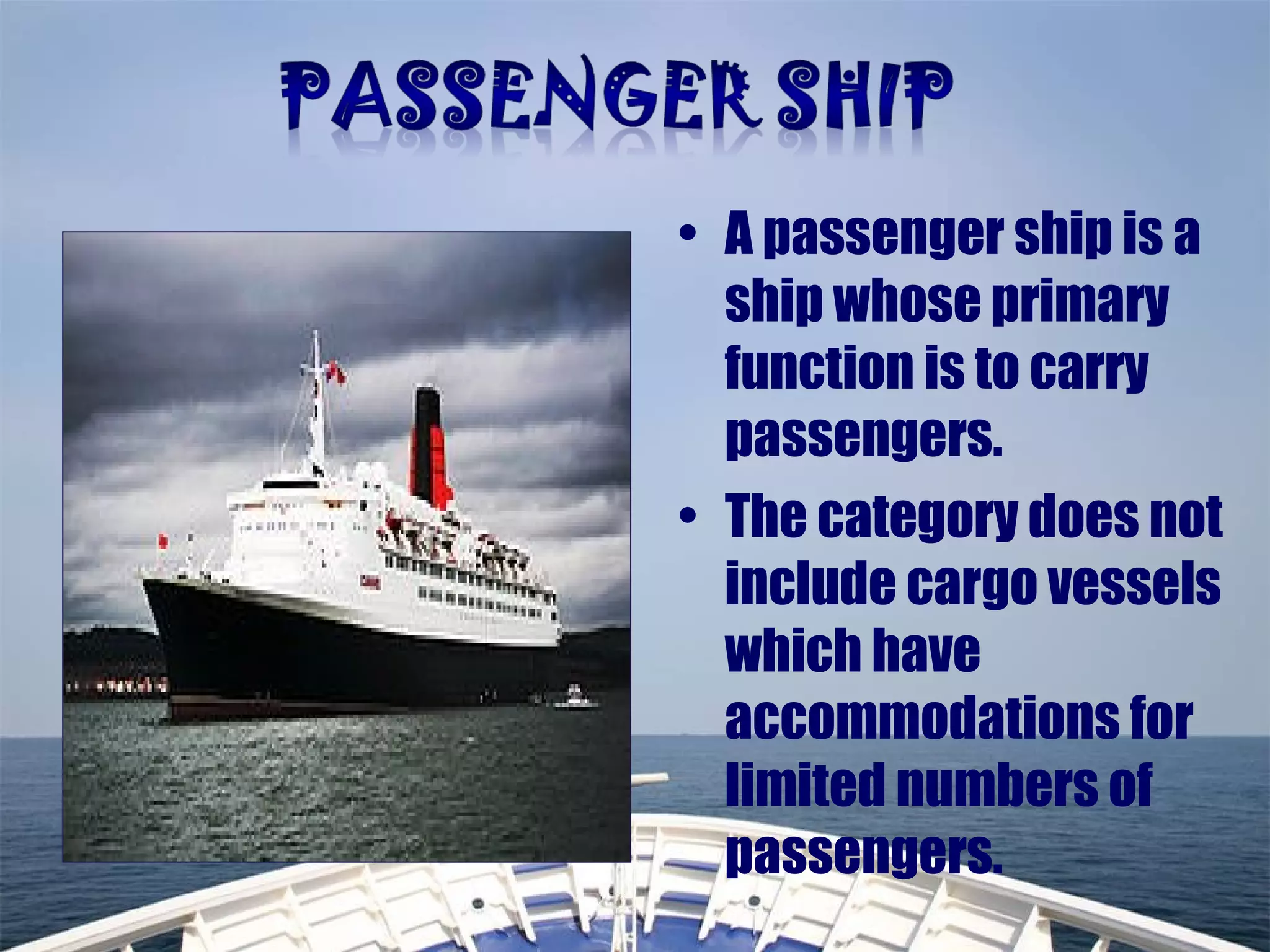
• A passenger ship is a
ship whose primary
function is to carry
passengers.
• The category does not
include cargo vessels
which have
accommodations for
limited numbers of
passengers.
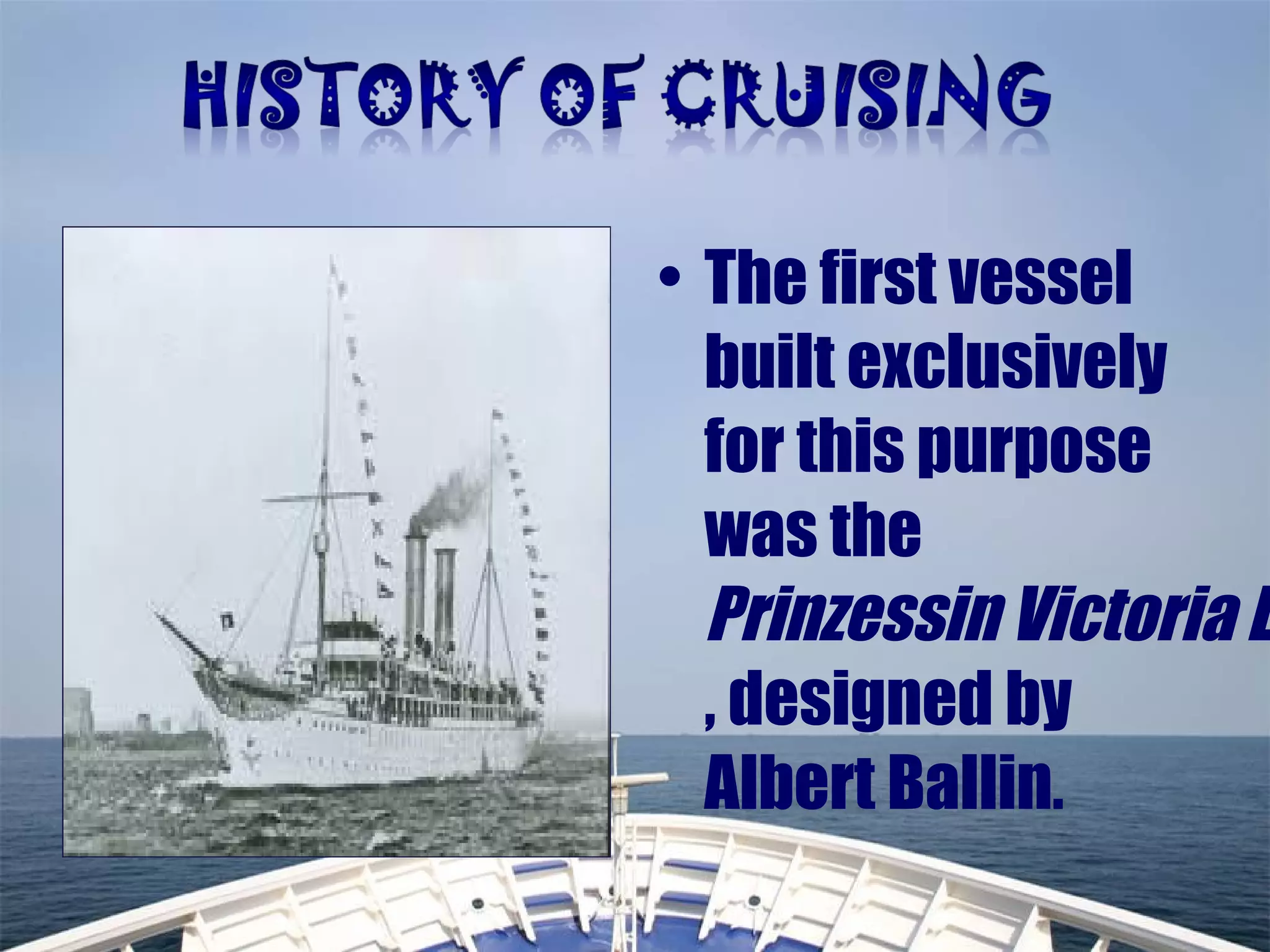
• The first vessel
built exclusively
for this purpose
was the
Prinzessin Victoria L
, designed by
Albert Ballin.
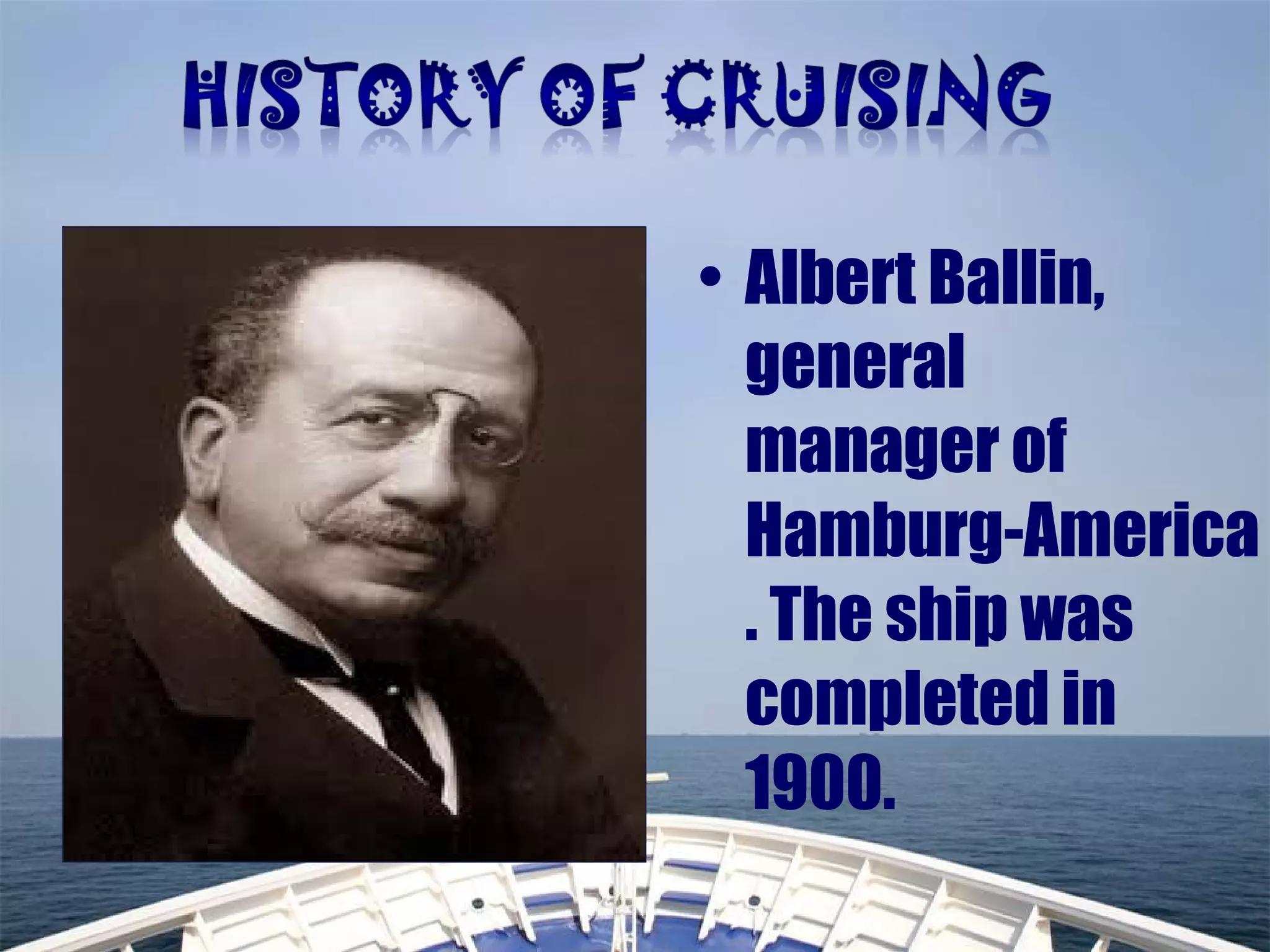
• Albert Ballin,
general
manager of
Hamburg-America
. The ship was
completed in
1900.
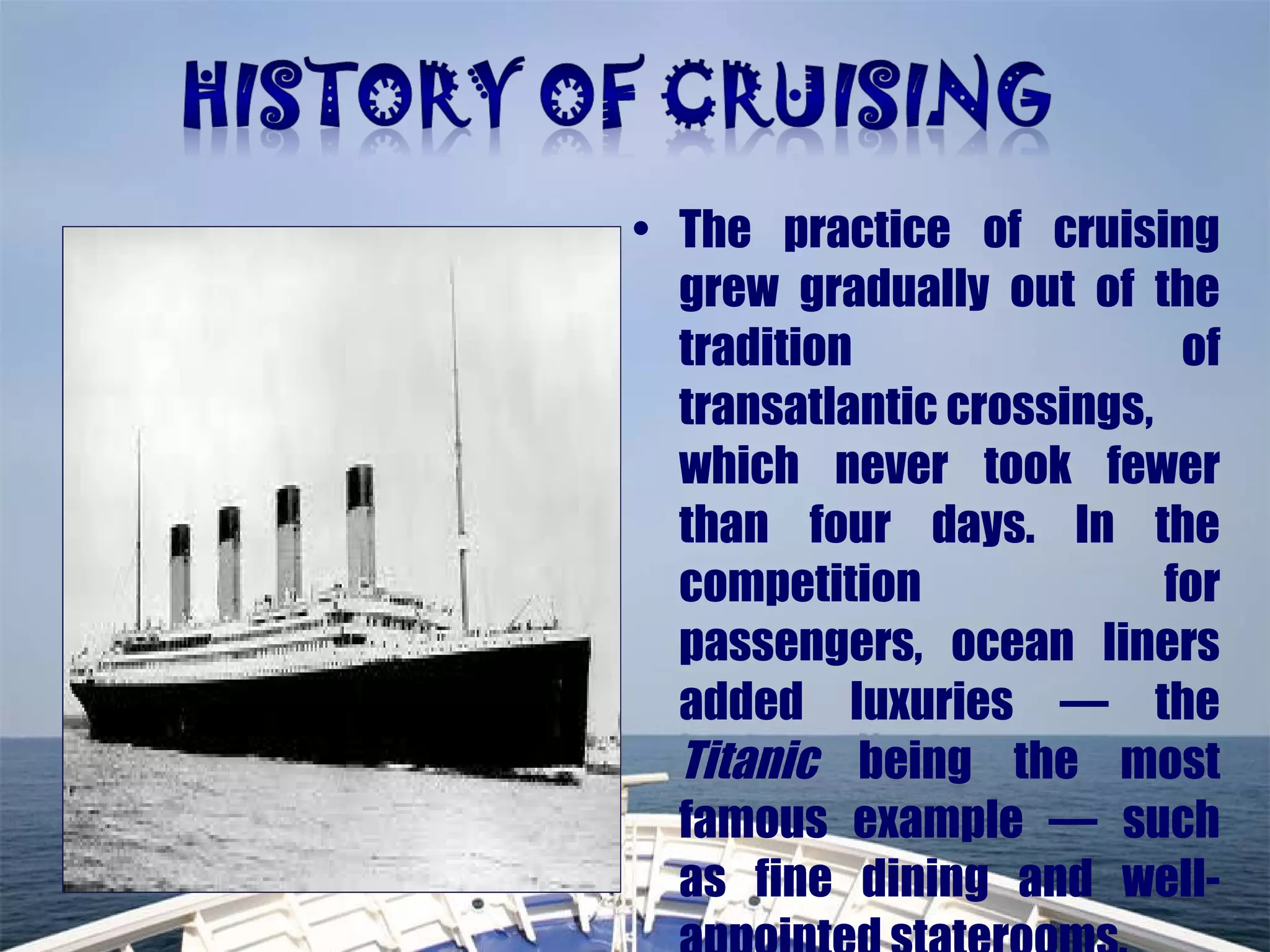
• The practice of cruising
grew gradually out of the
tradition of
transatlantic crossings,
which never took fewer
than four days. In the
competition for
passengers, ocean liners
added luxuries — the
Titanic being the most
famous example — such
as fine dining and well-
• In the late 19th
century, Albert Ballin,
director of the
Hamburg-America Line
, was the first to send
his transatlantic ships
out on long southern
cruises during the
worst of the winter
season of the North
Atlantic.
• Older cruise ships have had multiple owners.
• Since each cruise line has its own colors and
often a naming theme
• (for instance, ships of the Holland America Line
have names ending in "-dam", e.g. MS Statendam,
and Royal Caribbean's ships' names all end with
"of the Seas", e.g. MS Freedom of the Seas, ships of
Cunard Line have the title of "Queen", e.g. RMS
Queen Mary 2), it is usual for the transfer of
ownership to entail a refitting and a name change.
Some ships have had a dozen or more identities.
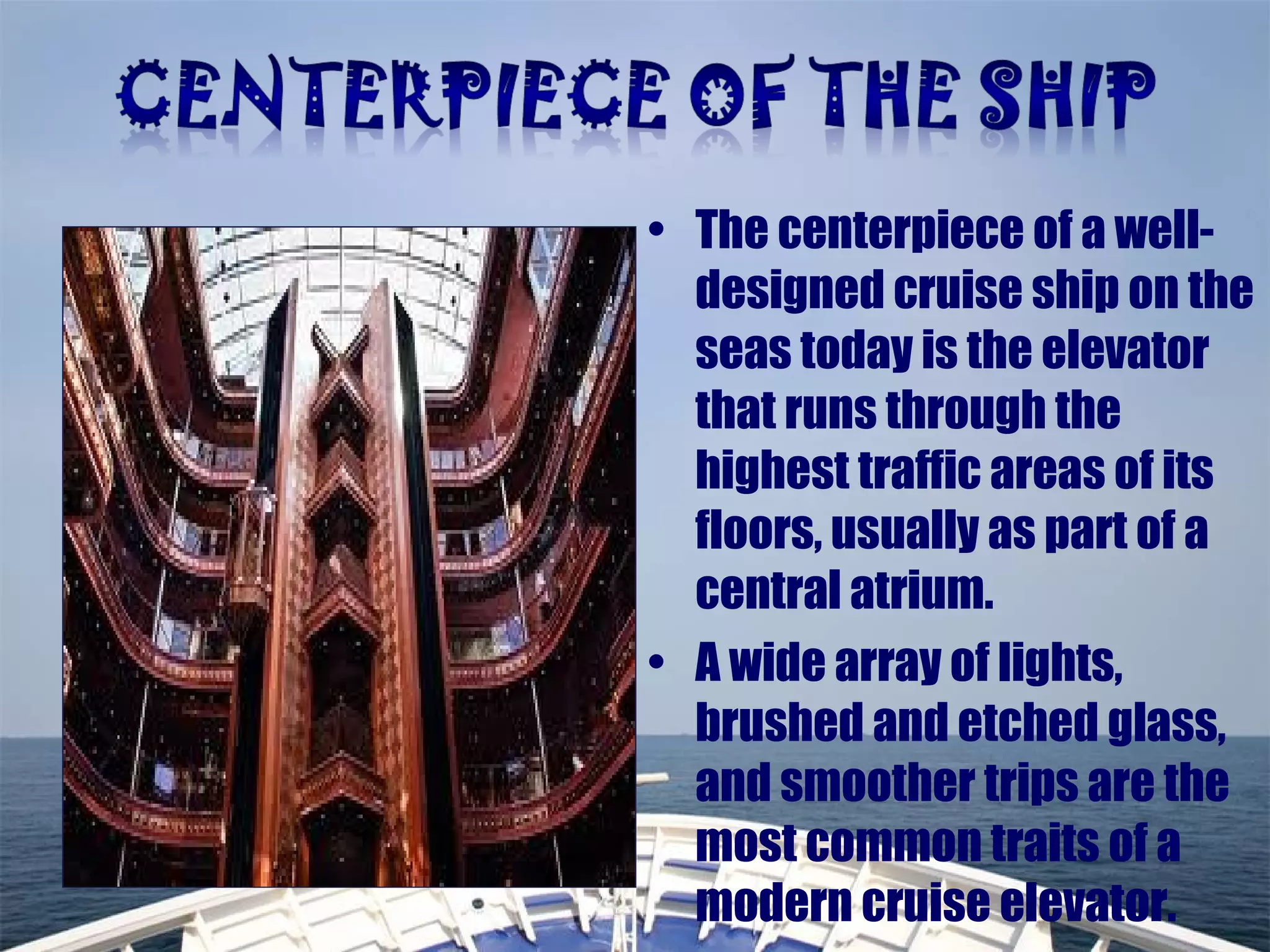
• The centerpiece of a well-
designed cruise ship on the
seas today is the elevator
that runs through the
highest traffic areas of its
floors, usually as part of a
central atrium.
• A wide array of lights,
brushed and etched glass,
and smoother trips are the
most common traits of a
modern cruise elevator.
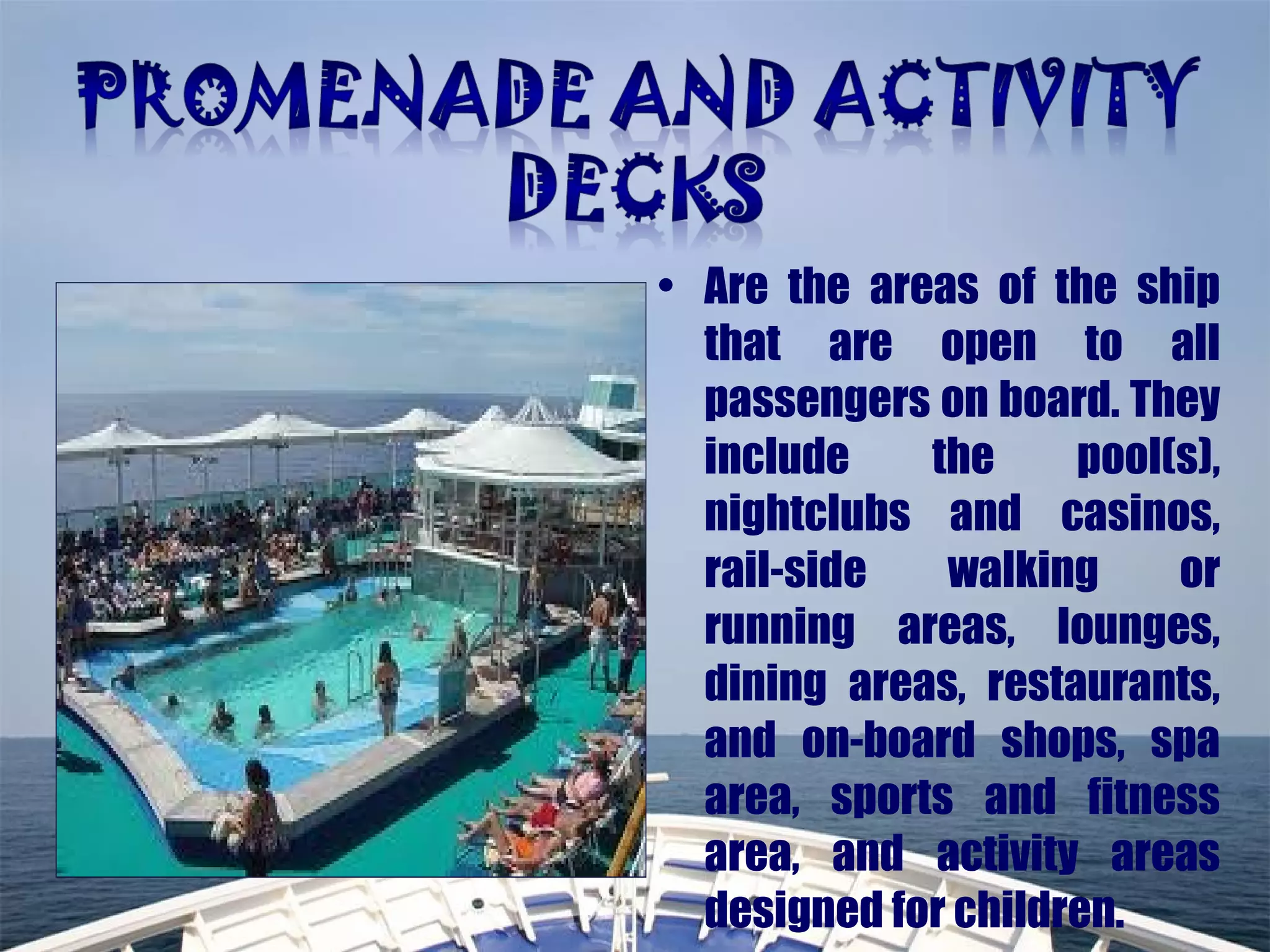
• Are the areas of the ship
that are open to all
passengers on board. They
include the pool(s),
nightclubs and casinos,
rail-side walking or
running areas, lounges,
dining areas, restaurants,
and on-board shops, spa
area, sports and fitness
area, and activity areas
designed for children.
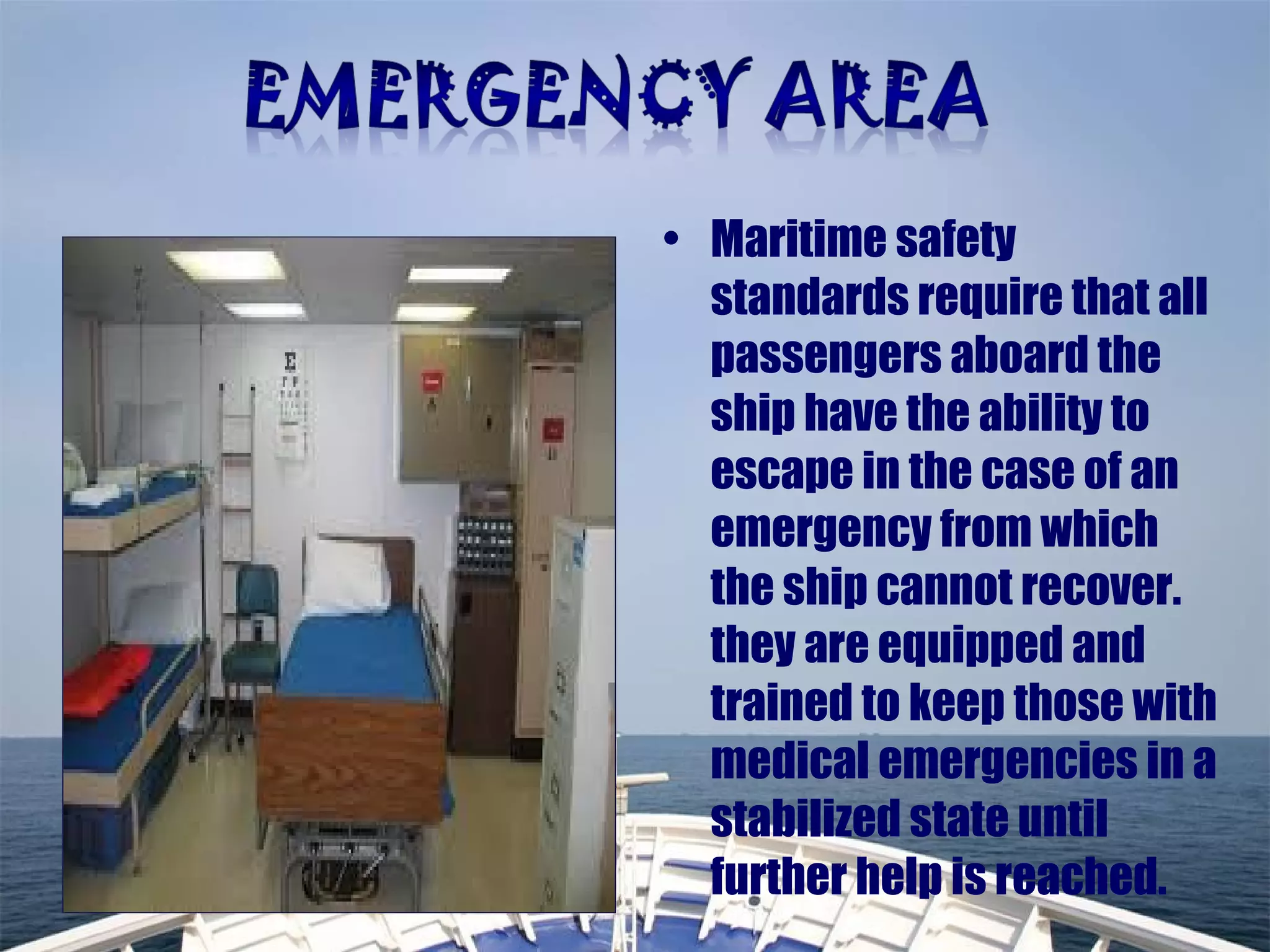
• Maritime safety
standards require that all
passengers aboard the
ship have the ability to
escape in the case of an
emergency from which
the ship cannot recover.
they are equipped and
trained to keep those with
medical emergencies in a
stabilized state until
further help is reached.
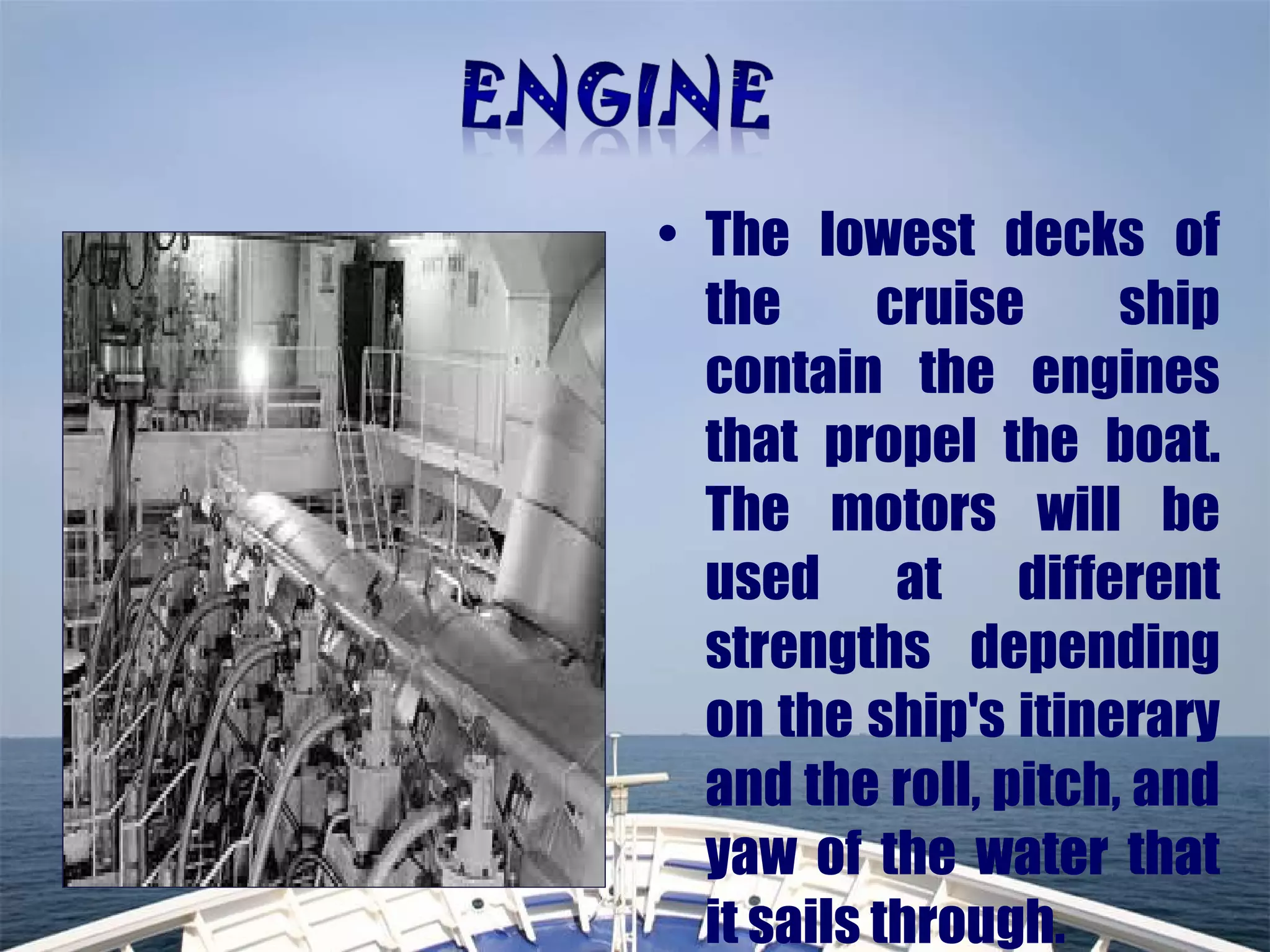
• The lowest decks of
the cruise ship
contain the engines
that propel the boat.
The motors will be
used at different
strengths depending
on the ship's itinerary
and the roll, pitch, and
yaw of the water that
it sails through.
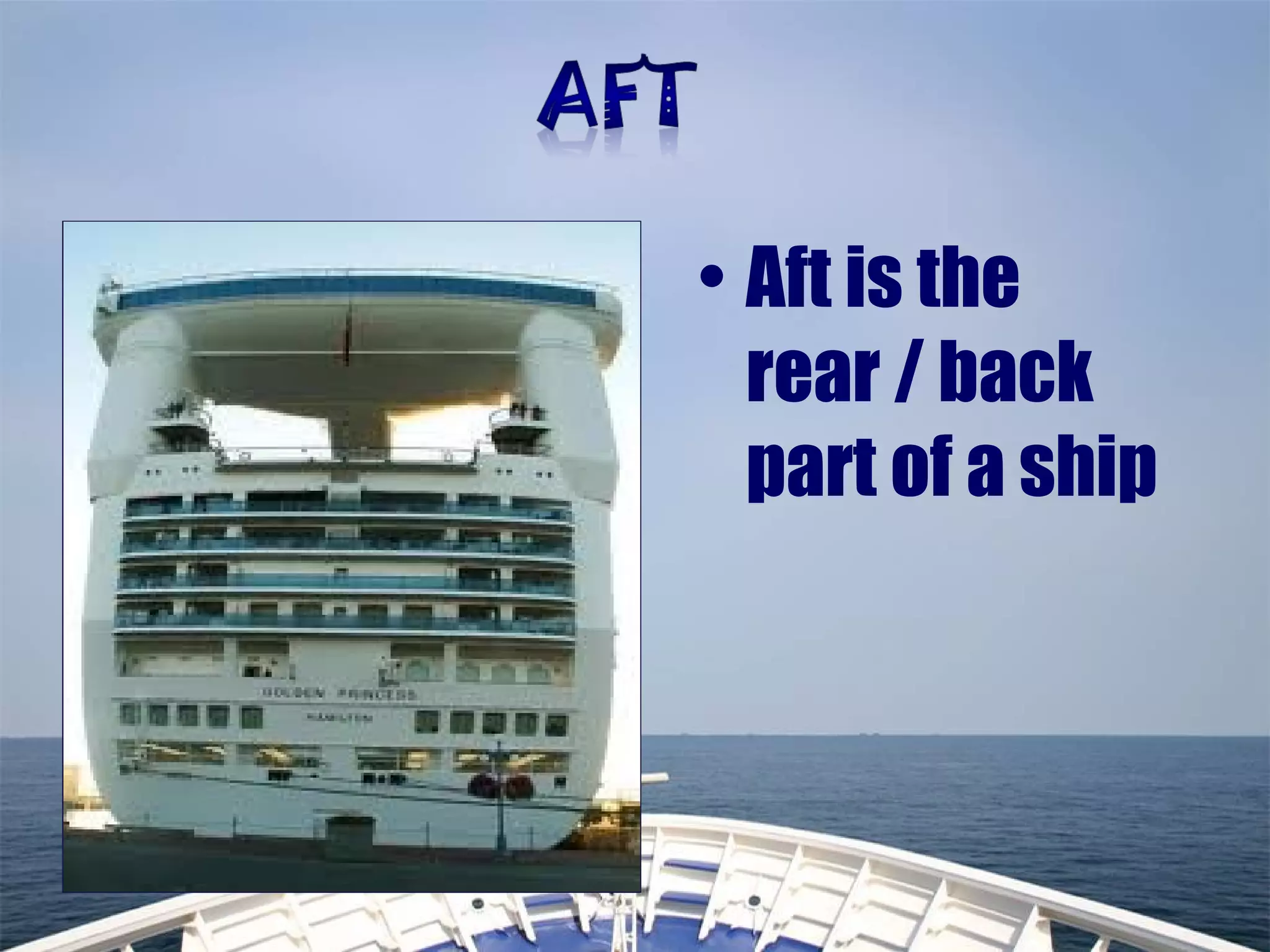
• Aft is the
rear / back
part of a ship
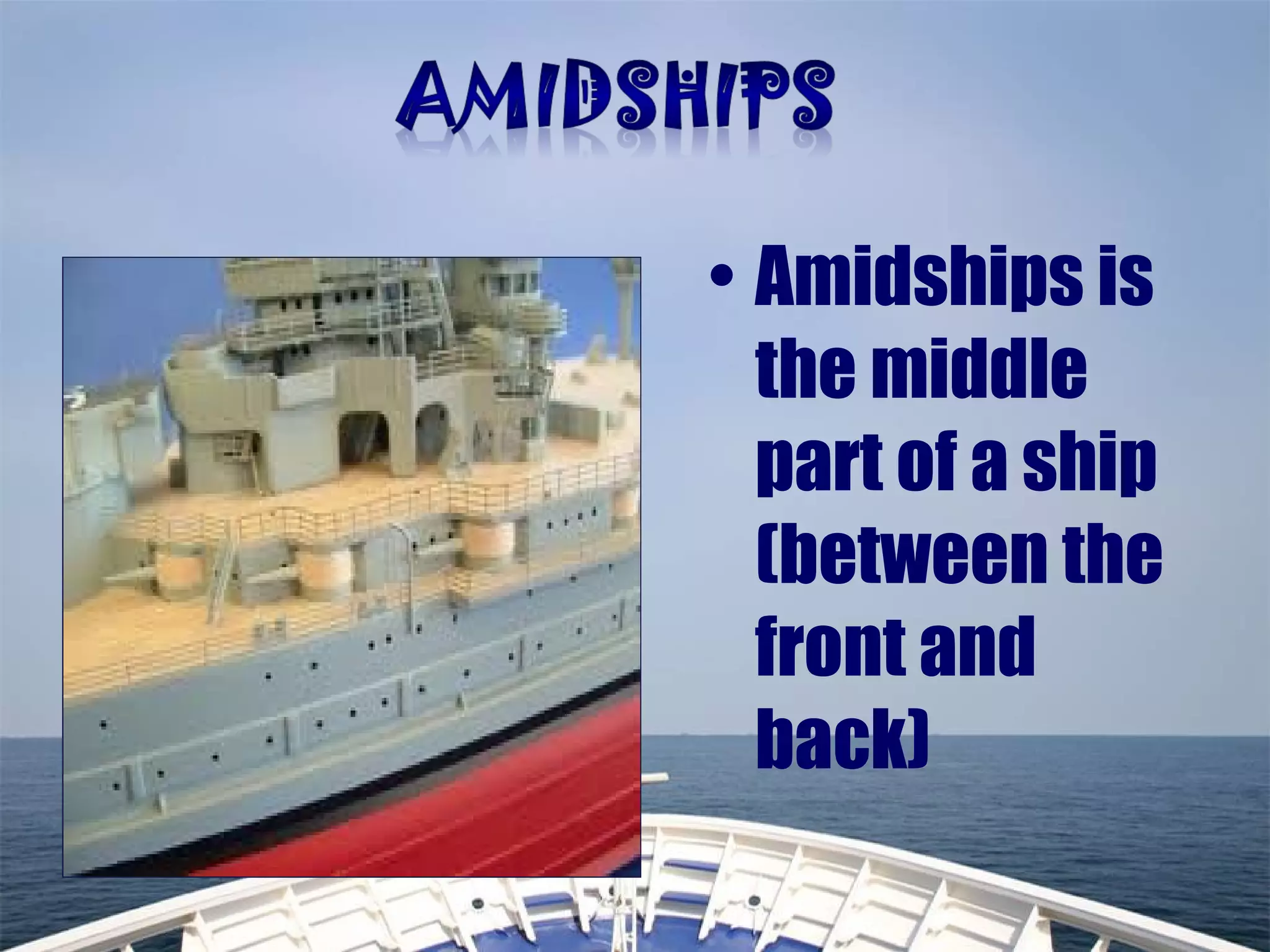
• Amidships is
the middle
part of a ship
(between the
front and
back)
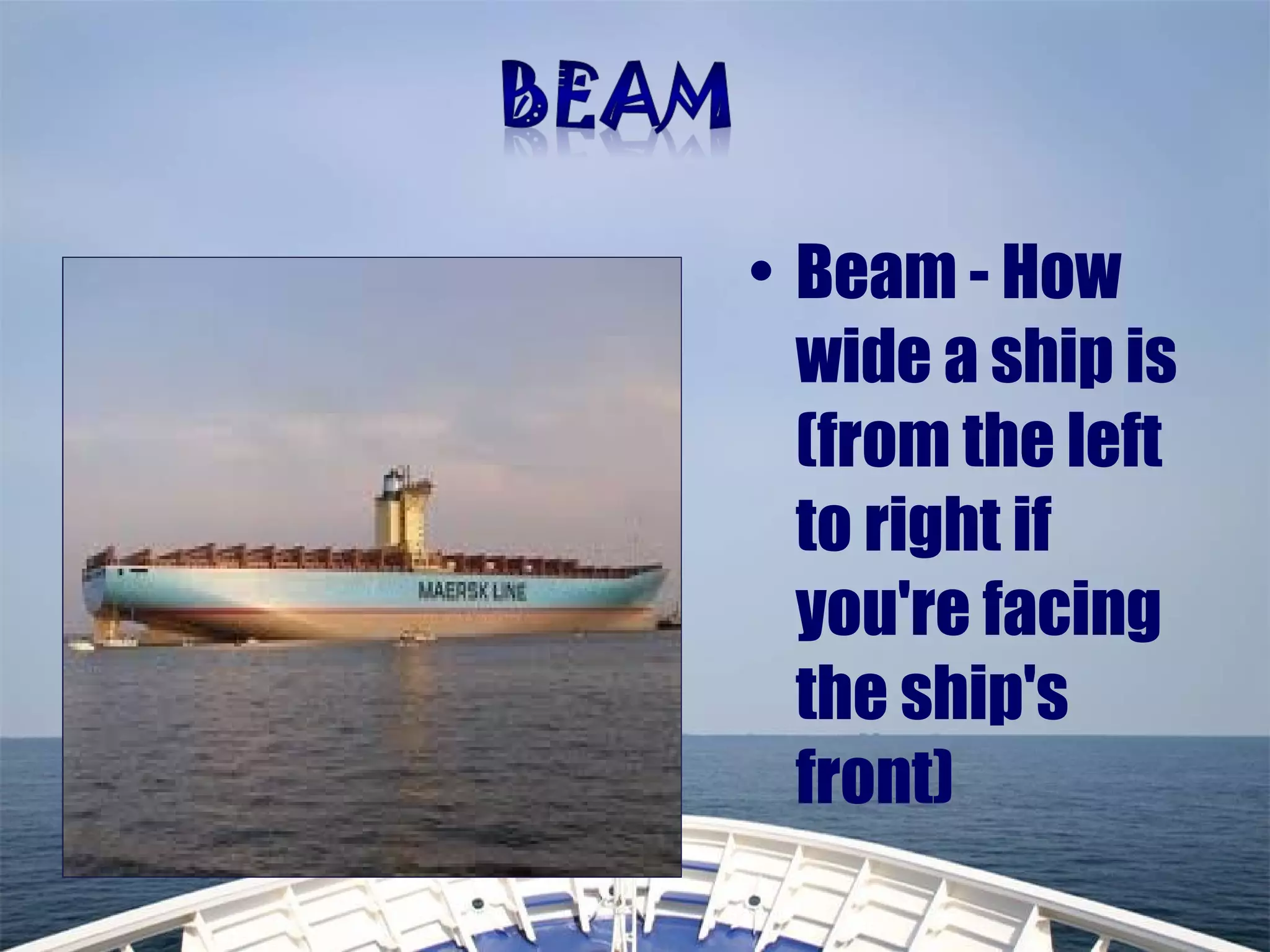
• Beam - How
wide a ship is
(from the left
to right if
you're facing
the ship's
front)
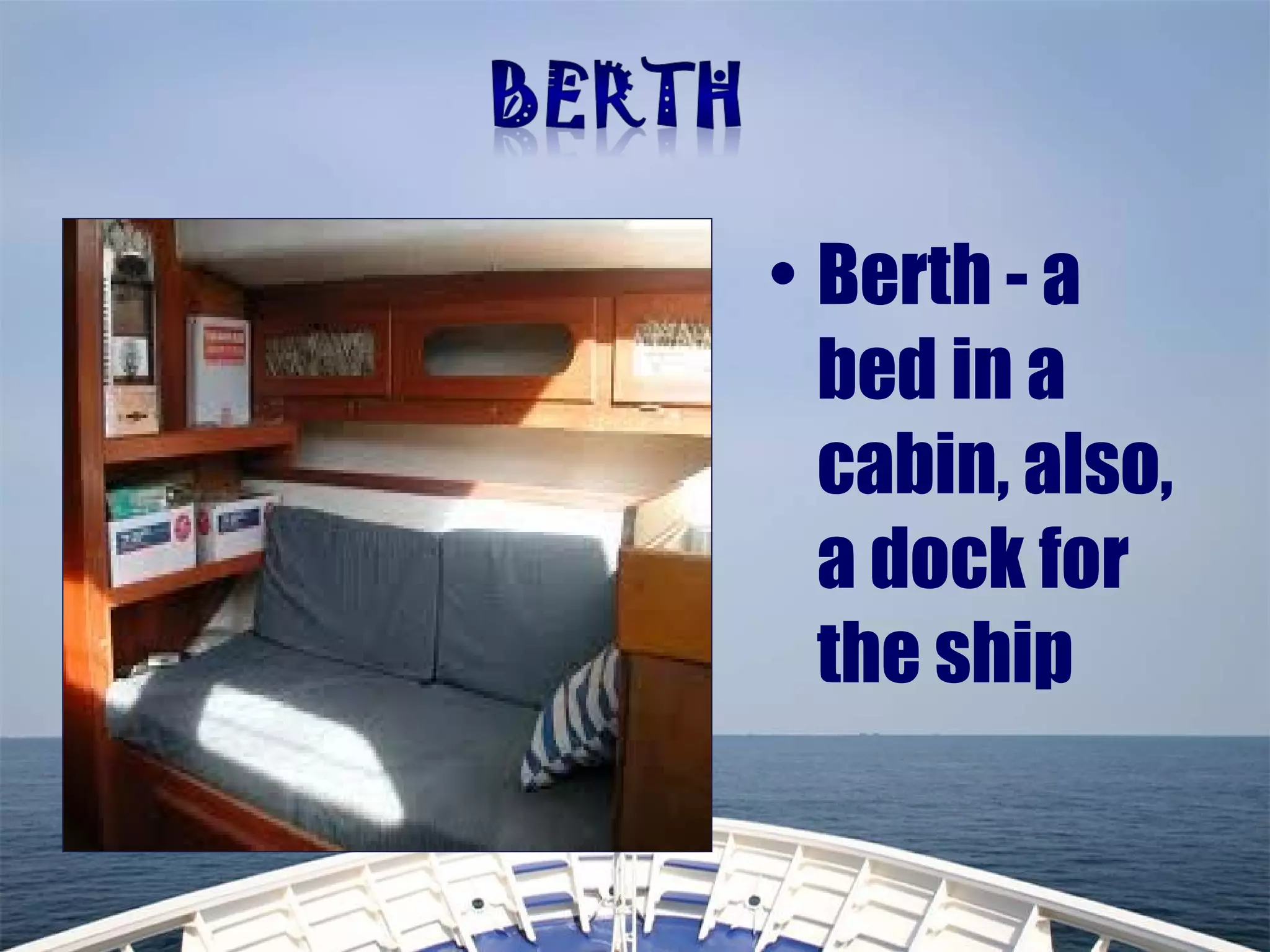
• Berth - a
bed in a
cabin, also,
a dock for
the ship
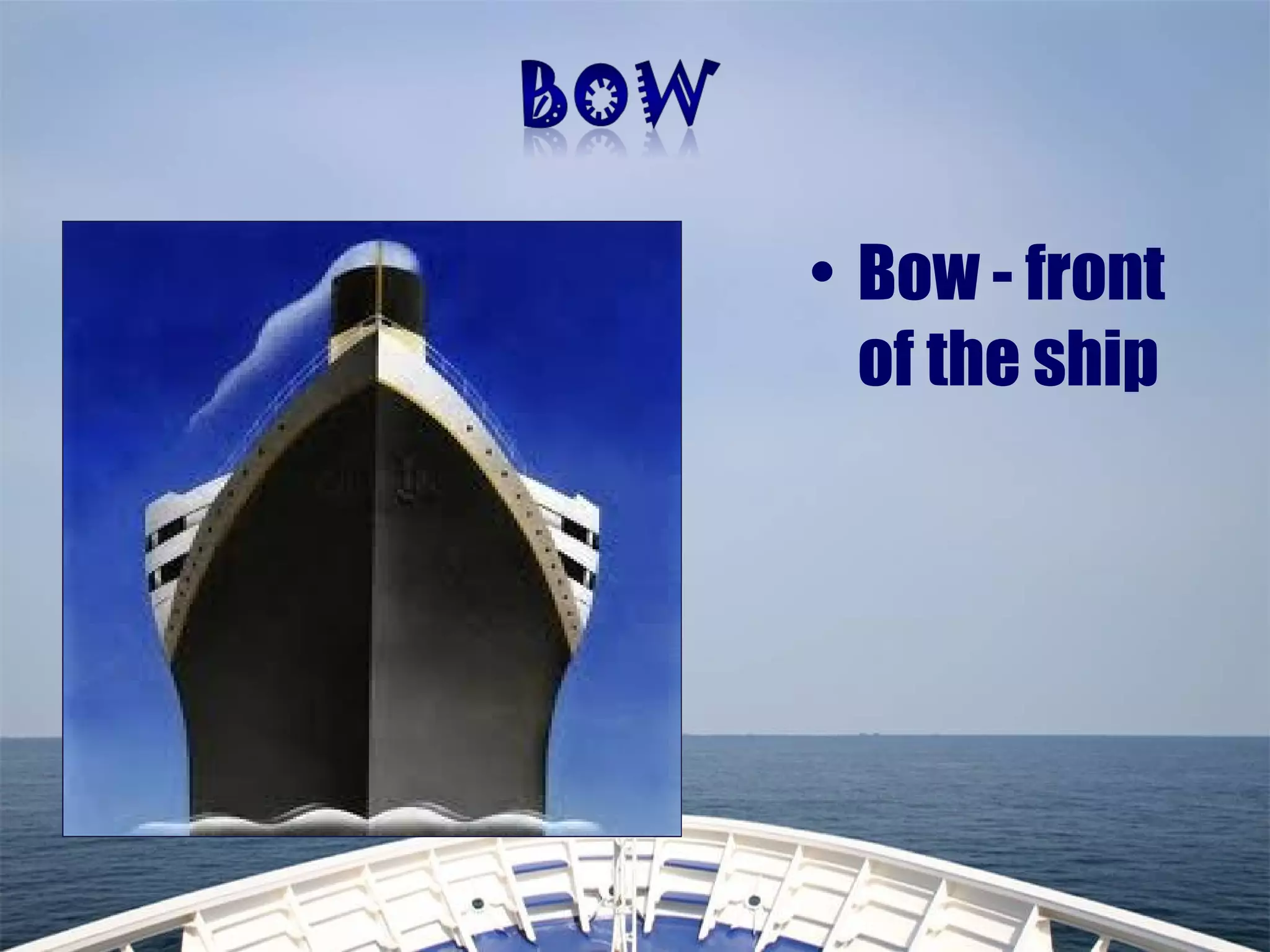
• Bow - front
of the ship
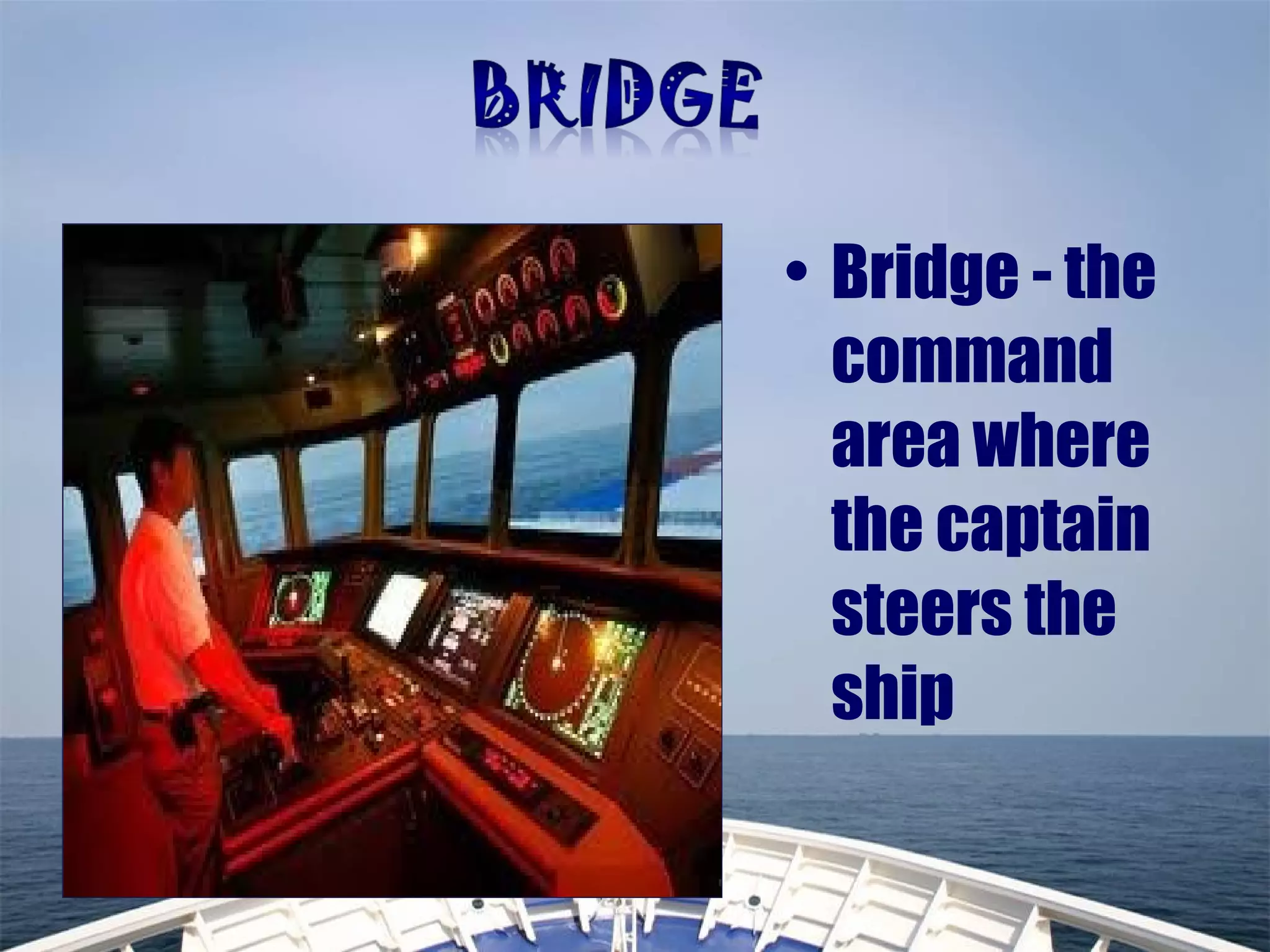
• Bridge - the
command
area where
the captain
steers the
ship
• Draft - how
much of the
ship is
under water
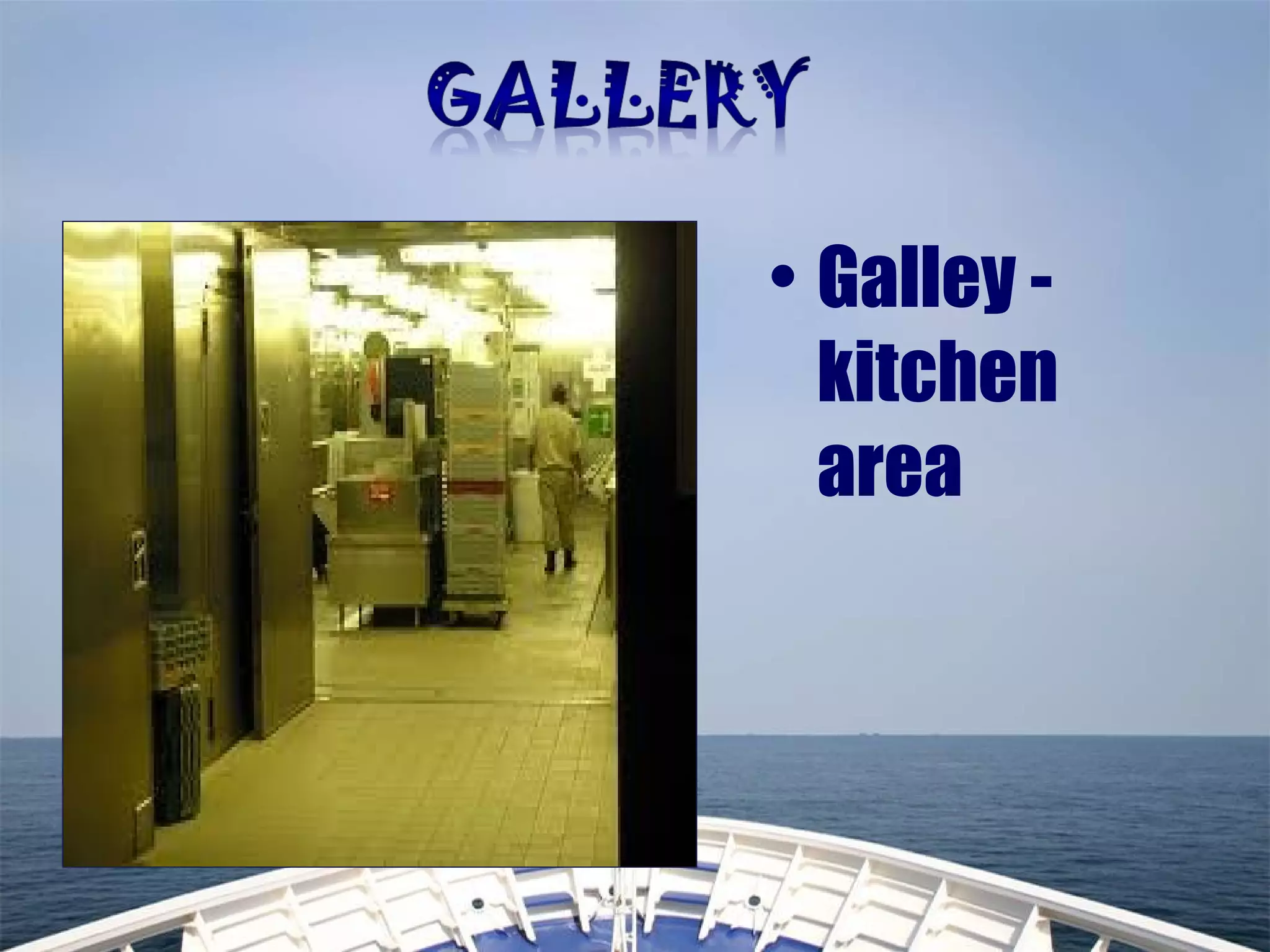
• Galley -
kitchen
area
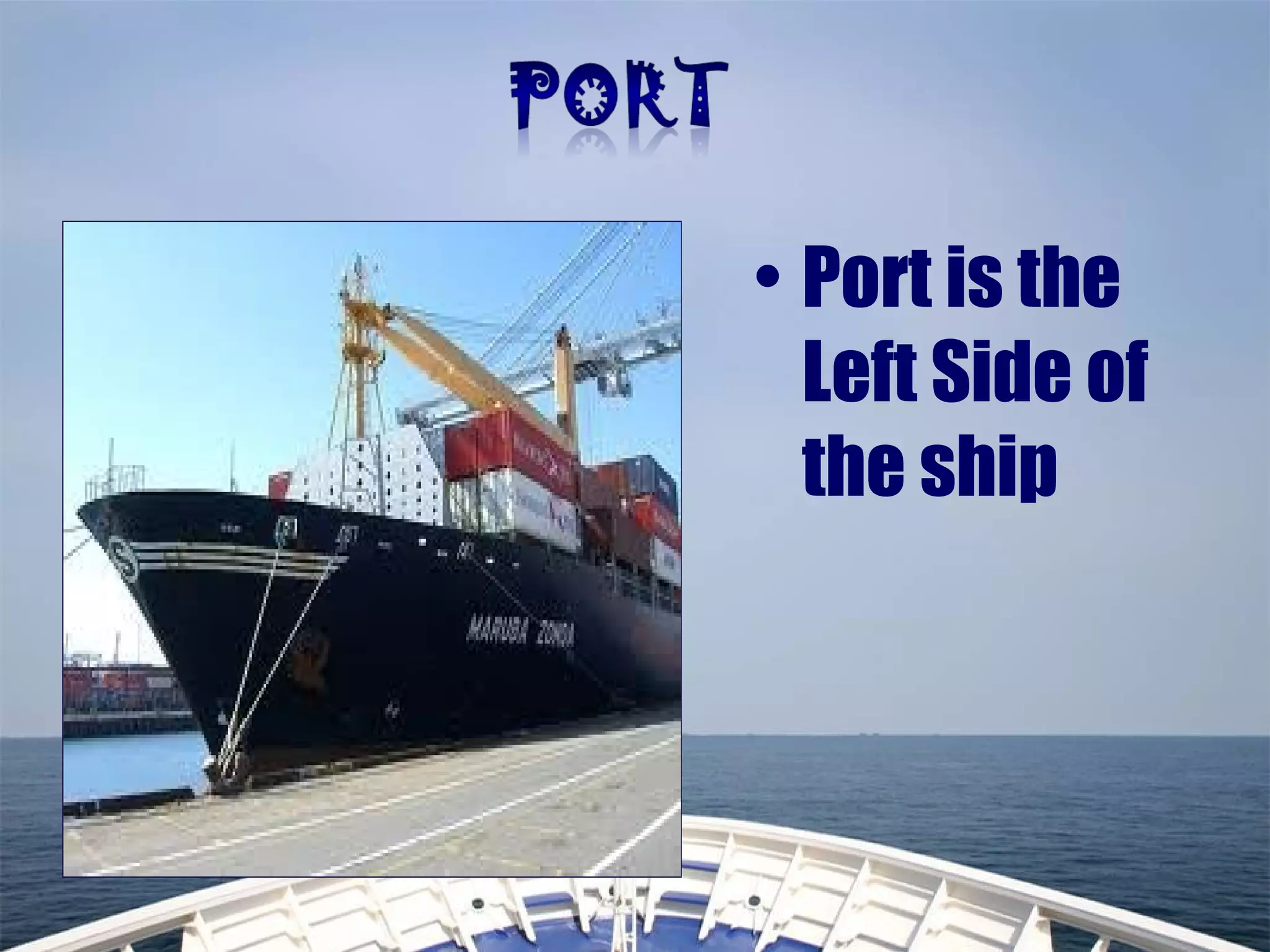
• Port is the
Left Side of
the ship
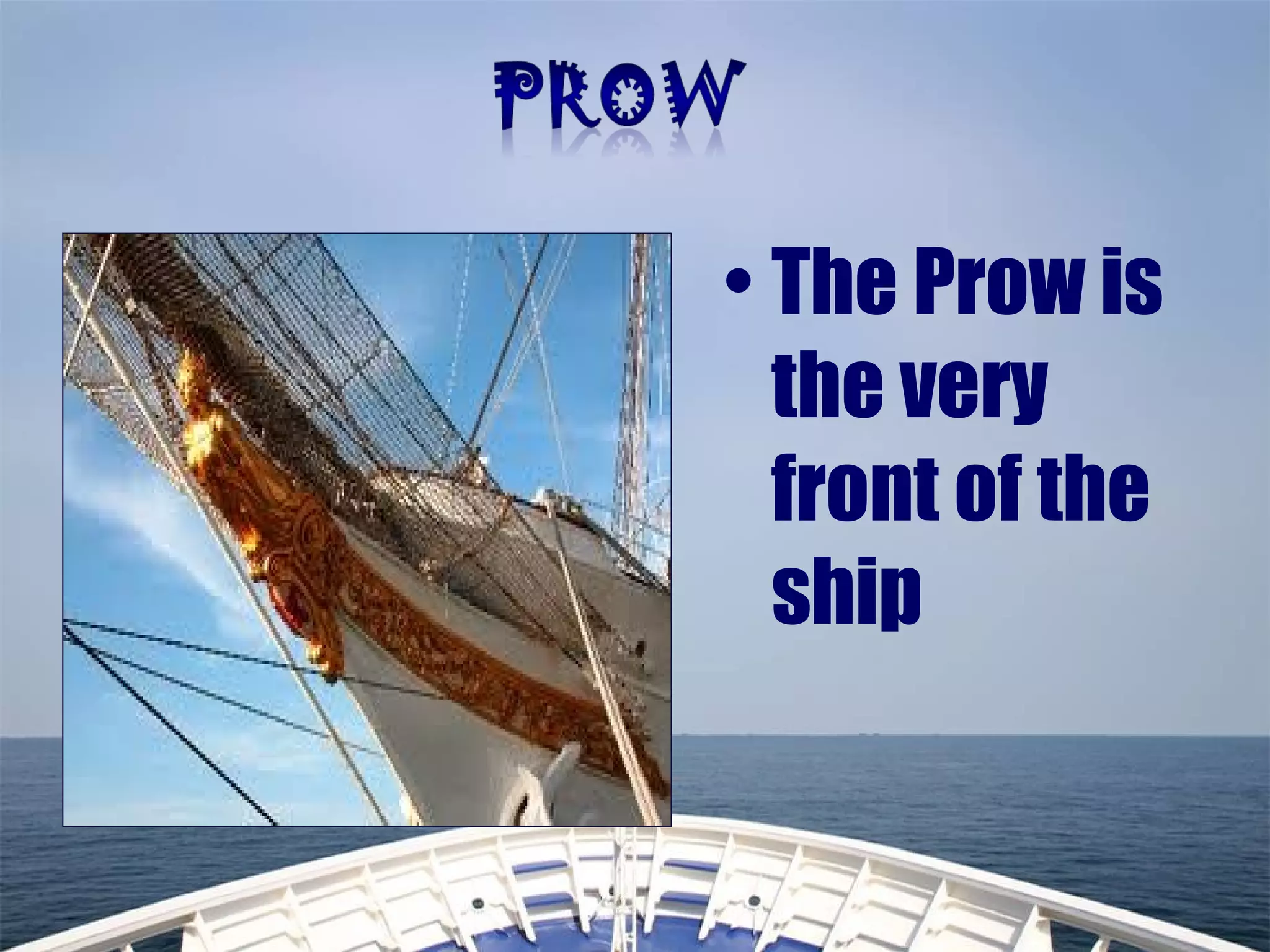
• The Prow is
the very
front of the
ship
• Starboard is
the right
side of the
ship
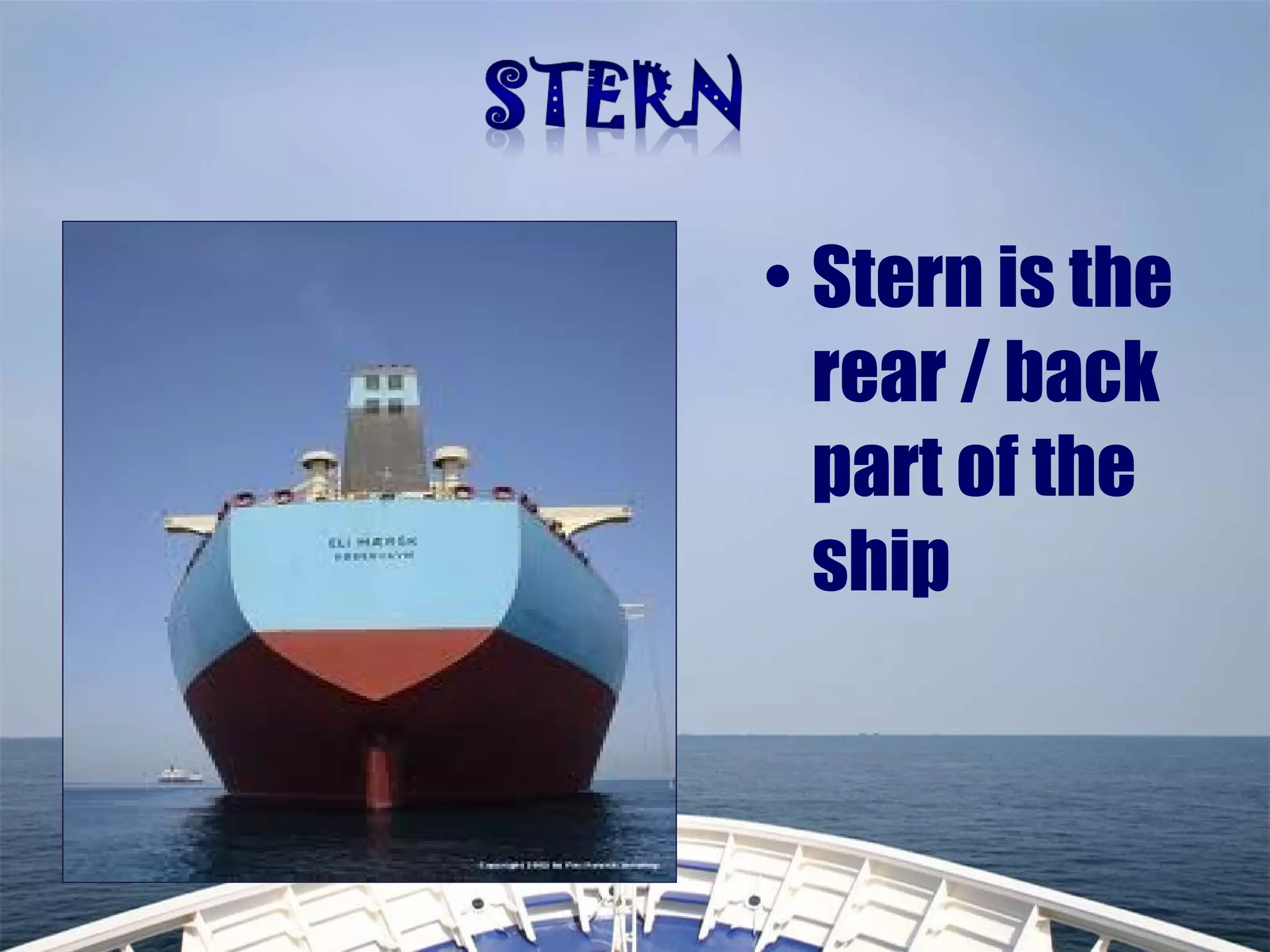
• Stern is the
rear / back
part of the
ship
• a small ship
used to bring
passengers
from the ship
to the land, if
the ship is too
big to actually
dock at land
• a plan
displayed in a
ship, showing
the various
decks and
what can be
found on them
CRUISE OPERATIONS MANAGEMENT

CRUISE OPERATIONS MANAGEMENT

  • 1.
    Presented by: MARIANNET. EVANGELISTA, MSHRM UNIVERSITY OF THE EAST CALOOCAN
  • 2.
    • The world’soceans cover 70% of the Earth’s surface and travelling across the oceans by cruise ships is the most preferred mode of transportation. • Shipping industry promotes convenience for both passengers and crew.
  • 3.
    • Is theprocess of managing all aspects of transportation operation of cruise lines such as: cruise ship parts, maintenance, routing, waste management, guest service relations and communications
  • 4.
    • Cruise /Cruising in maritime definition means living on a ship or a boat and traveling for extended periods of time
  • 5.
  • 6.
    • A cruiseship or cruise liner is a passenger ship used for pleasure voyages, where the voyage itself and the ship's amenities are part of the experience, as well as the different destinations along the way.
  • 7.
    • A passengership is a ship whose primary function is to carry passengers. • The category does not include cargo vessels which have accommodations for limited numbers of passengers.
  • 8.
    • The firstvessel built exclusively for this purpose was the Prinzessin Victoria L , designed by Albert Ballin.
  • 9.
    • Albert Ballin, general managerof Hamburg-America . The ship was completed in 1900.
  • 10.
    • The practiceof cruising grew gradually out of the tradition of transatlantic crossings, which never took fewer than four days. In the competition for passengers, ocean liners added luxuries — the Titanic being the most famous example — such as fine dining and well-
  • 11.
    • In thelate 19th century, Albert Ballin, director of the Hamburg-America Line , was the first to send his transatlantic ships out on long southern cruises during the worst of the winter season of the North Atlantic.
  • 12.
    • Older cruiseships have had multiple owners. • Since each cruise line has its own colors and often a naming theme • (for instance, ships of the Holland America Line have names ending in "-dam", e.g. MS Statendam, and Royal Caribbean's ships' names all end with "of the Seas", e.g. MS Freedom of the Seas, ships of Cunard Line have the title of "Queen", e.g. RMS Queen Mary 2), it is usual for the transfer of ownership to entail a refitting and a name change. Some ships have had a dozen or more identities.
  • 14.
    • The centerpieceof a well- designed cruise ship on the seas today is the elevator that runs through the highest traffic areas of its floors, usually as part of a central atrium. • A wide array of lights, brushed and etched glass, and smoother trips are the most common traits of a modern cruise elevator.
  • 15.
    • Are theareas of the ship that are open to all passengers on board. They include the pool(s), nightclubs and casinos, rail-side walking or running areas, lounges, dining areas, restaurants, and on-board shops, spa area, sports and fitness area, and activity areas designed for children.
  • 16.
    • Maritime safety standardsrequire that all passengers aboard the ship have the ability to escape in the case of an emergency from which the ship cannot recover. they are equipped and trained to keep those with medical emergencies in a stabilized state until further help is reached.
  • 17.
    • The lowestdecks of the cruise ship contain the engines that propel the boat. The motors will be used at different strengths depending on the ship's itinerary and the roll, pitch, and yaw of the water that it sails through.
  • 19.
    • Aft isthe rear / back part of a ship
  • 20.
    • Amidships is themiddle part of a ship (between the front and back)
  • 21.
    • Beam -How wide a ship is (from the left to right if you're facing the ship's front)
  • 22.
    • Berth -a bed in a cabin, also, a dock for the ship
  • 23.
    • Bow -front of the ship
  • 24.
    • Bridge -the command area where the captain steers the ship
  • 25.
    • Draft -how much of the ship is under water
  • 26.
  • 27.
    • Port isthe Left Side of the ship
  • 28.
    • The Prowis the very front of the ship
  • 29.
    • Starboard is theright side of the ship
  • 30.
    • Stern isthe rear / back part of the ship
  • 31.
    • a smallship used to bring passengers from the ship to the land, if the ship is too big to actually dock at land
  • 33.
    • a plan displayedin a ship, showing the various decks and what can be found on them

Editor's Notes

  • #7 Transportation is not the prime purpose, as cruise ships operate mostly on routes that return passengers to their originating port, so the ports of call are usually in a specified region of a continent.
  • #18 Passengers should expect to hear changes in the engines during the trip and that the level of vibration they feel from the engines will vary depending on where they are on the ship.