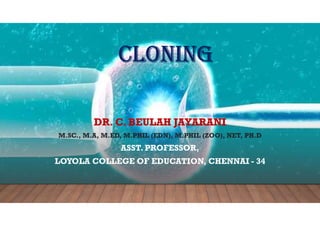
CLONING
DR. C. BEULAH JAYARANI
M.SC., M.A, M.ED, M.PHIL (EDN), M.PHIL (ZOO), NET, PH.D
ASST. PROFESSOR,
LOYOLA COLLEGE OF EDUCATION, CHENNAI - 34
CONTENT
• Cloning
• Clone
• Types of clones – Natural and Artificial
• Types of Artificial Cloning
• Conclusion
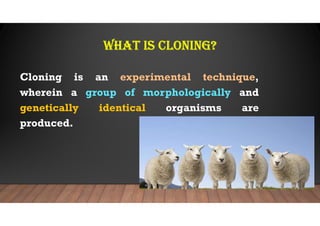
WHAT IS CLONING?
Cloning is an experimental technique,
wherein a group of morphologically and
genetically identical organisms are
produced.
CLONE
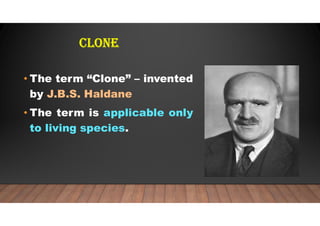
• The term “Clone” – invented
by J.B.S. Haldane
• The term is applicable only
to living species.
CLONE
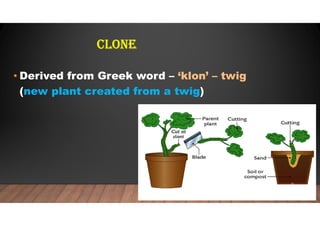
• Derived from Greek word – ‘klon’ – twig
(new plant created from a twig)
DEFINITION OF A CLONE
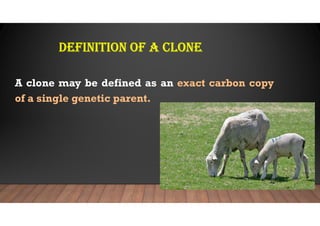
A clone may be defined as an exact carbon copy
of a single genetic parent.
TYPES OF CLONES
CLONE
1. NATURAL
CLONE
2. ARTIFICIAL
CLONE
1. NATURAL CLONE
Identical twins
• They are produced when a
fertilized egg splits creating 2
or more embryos that carry
almost identical DNA.
2. ARTIFICIAL CLONE
Induced clones
• Developed by nuclear
transfer into the host
cell.
• Done using somatic
cell
TYPES OF ARTIFICIAL CLONING
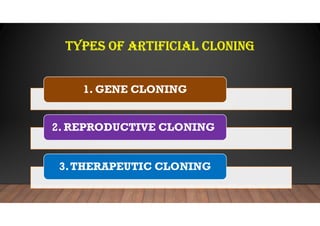
1. GENE CLONING
2. REPRODUCTIVE CLONING
3.THERAPEUTIC CLONING
GENE CLONING / DNA CLONING
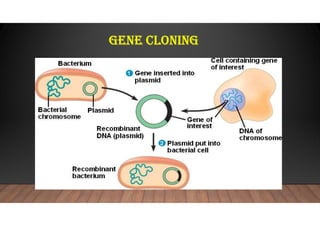
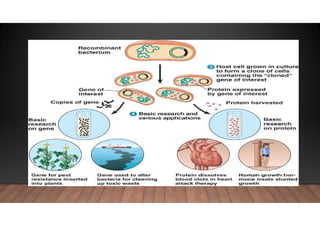
• The procedure consists of inserting a gene from
one organism, often referred to as “foreign
DNA” into the vector.
• The vector is placed in laboratory conditions
that prompt it to multiply, resulting in the gene
being copied many times over.
GENE CLONING
INSULIN PRODUCTION BY RECOMBINANT
BACTERIA
REPRODUCTIVE CLONING
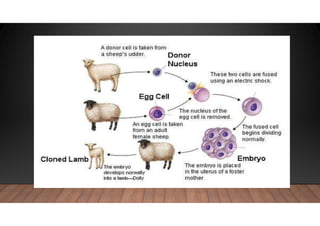
• In reproductive cloning, researchers remove a
mature somatic cell from an animal that they
wish to copy.
• They then transfer the DNA of the donor
animal’s somatic cell into an egg cell, or
oocyte, that has had its own nucleus removed.
DR. IAN WILMUT WITH DOLLY SHEEP
• JULY 5TH,1996
• Roslin Institute
• Scotland
DEVELOPMENT OF DOLLY
THERAPEUTIC CLONING
• Therapeutic cloning holds the most promise
of valuable medical advancement.
• In Therapeutic Cloning Stem Cells are used.
STEM CELLS
Stem cells are undifferentiated
biological cells that can
differentiate into specialized
cells and can divide (through
mitosis) to produce more stem
cells. They are found in
multicellular organisms.
CHARACTERISTICS OF STEM CELLS
TYPES OF STEM CELLS
• Embryonic stem cells
• Cord blood stem cells
• Tissue-specific stem cells/Adult stem cells
THERAPEUTIC CLONING
• It is the process by which a person's DNA is
used to grow an embryonic clone.
• However, instead of inserting this embryo into
a surrogate mother, its cells are used to
grow stem cells.
CONCLUSION
Thus, cloning can be profitably used in the
fields of
• Medicine
• Agriculture
• Animal Husbandry
• Environmental cleaning

Cloning

  • 1.
    CLONING DR. C. BEULAHJAYARANI M.SC., M.A, M.ED, M.PHIL (EDN), M.PHIL (ZOO), NET, PH.D ASST. PROFESSOR, LOYOLA COLLEGE OF EDUCATION, CHENNAI - 34
  • 2.
    CONTENT • Cloning • Clone •Types of clones – Natural and Artificial • Types of Artificial Cloning • Conclusion
  • 3.
    WHAT IS CLONING? Cloningis an experimental technique, wherein a group of morphologically and genetically identical organisms are produced.
  • 4.
    CLONE • The term“Clone” – invented by J.B.S. Haldane • The term is applicable only to living species.
  • 5.
    CLONE • Derived fromGreek word – ‘klon’ – twig (new plant created from a twig)
  • 6.
    DEFINITION OF ACLONE A clone may be defined as an exact carbon copy of a single genetic parent.
  • 7.
    TYPES OF CLONES CLONE 1.NATURAL CLONE 2. ARTIFICIAL CLONE
  • 8.
    1. NATURAL CLONE Identicaltwins • They are produced when a fertilized egg splits creating 2 or more embryos that carry almost identical DNA.
  • 9.
    2. ARTIFICIAL CLONE Inducedclones • Developed by nuclear transfer into the host cell. • Done using somatic cell
  • 10.
    TYPES OF ARTIFICIALCLONING 1. GENE CLONING 2. REPRODUCTIVE CLONING 3.THERAPEUTIC CLONING
  • 11.
    GENE CLONING /DNA CLONING • The procedure consists of inserting a gene from one organism, often referred to as “foreign DNA” into the vector. • The vector is placed in laboratory conditions that prompt it to multiply, resulting in the gene being copied many times over.
  • 12.
  • 14.
    INSULIN PRODUCTION BYRECOMBINANT BACTERIA
  • 15.
    REPRODUCTIVE CLONING • Inreproductive cloning, researchers remove a mature somatic cell from an animal that they wish to copy. • They then transfer the DNA of the donor animal’s somatic cell into an egg cell, or oocyte, that has had its own nucleus removed.
  • 16.
    DR. IAN WILMUTWITH DOLLY SHEEP • JULY 5TH,1996 • Roslin Institute • Scotland
  • 17.
  • 19.
    THERAPEUTIC CLONING • Therapeuticcloning holds the most promise of valuable medical advancement. • In Therapeutic Cloning Stem Cells are used.
  • 20.
    STEM CELLS Stem cellsare undifferentiated biological cells that can differentiate into specialized cells and can divide (through mitosis) to produce more stem cells. They are found in multicellular organisms.
  • 21.
  • 22.
    TYPES OF STEMCELLS • Embryonic stem cells • Cord blood stem cells • Tissue-specific stem cells/Adult stem cells
  • 23.
    THERAPEUTIC CLONING • Itis the process by which a person's DNA is used to grow an embryonic clone. • However, instead of inserting this embryo into a surrogate mother, its cells are used to grow stem cells.
  • 26.
    CONCLUSION Thus, cloning canbe profitably used in the fields of • Medicine • Agriculture • Animal Husbandry • Environmental cleaning