
FIRSTCLONNEDMAMMAL
DOLLY
Dolly in Detail
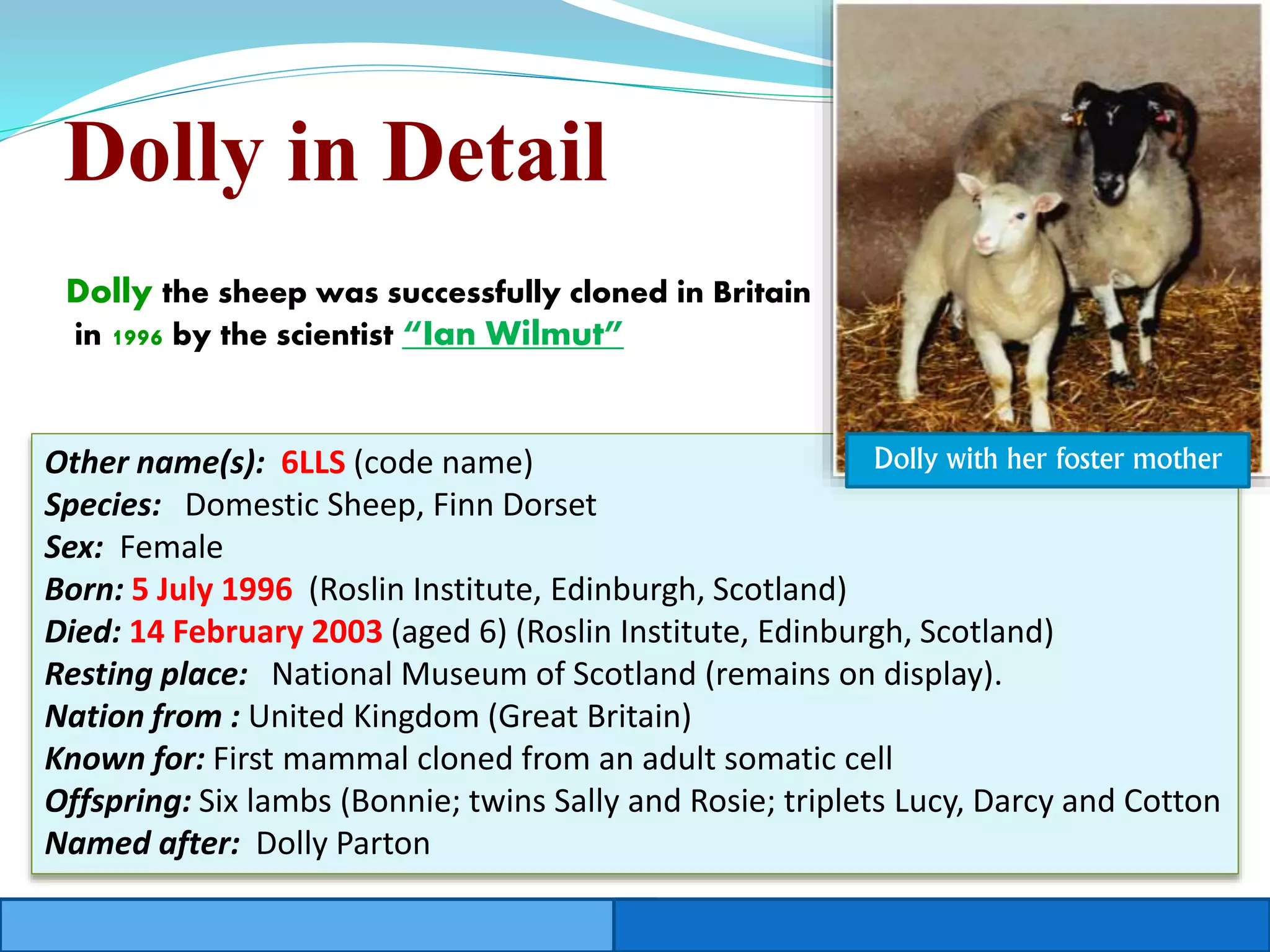
Dolly with her foster mother
Other name(s): 6LLS (code name)
Species: Domestic Sheep, Finn Dorset
Sex: Female
Born: 5 July 1996 (Roslin Institute, Edinburgh, Scotland)
Died: 14 February 2003 (aged 6) (Roslin Institute, Edinburgh, Scotland)
Resting place: National Museum of Scotland (remains on display).
Nation from : United Kingdom (Great Britain)
Known for: First mammal cloned from an adult somatic cell
Offspring: Six lambs (Bonnie; twins Sally and Rosie; triplets Lucy, Darcy and Cotton
Named after: Dolly Parton
Dolly with her foster mother
Dolly the sheep was successfully cloned in Britain
in 1996 by the scientist “Ian Wilmut”
Three mothers of Dolly
What is cloning?
Cloning is the production of living structures genetically
identical to their parent structure.
Clone is an exact carbon copy or copies of a single living parent.
Cloning in Higher organisms is done by artificial cloning.
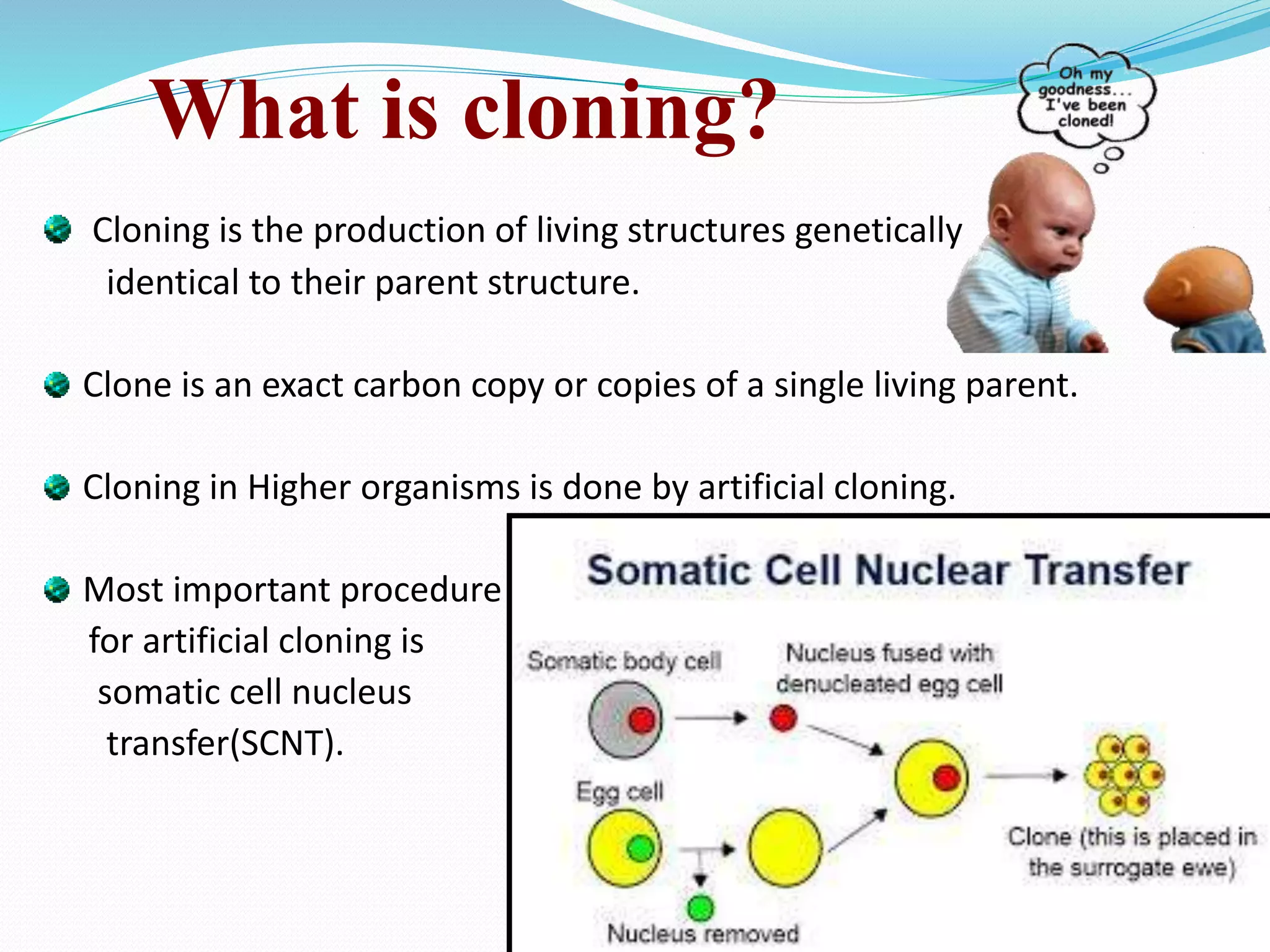
Most important procedure
for artificial cloning is
somatic cell nucleus
transfer(SCNT).
Steps in Cloning Dolly (SCNT method)
Step 1: Cells taken from the udder of a Finn Dorset ewe are placed in
a culture with very low concentrations of nutrients. Thus starved, the cells
stop dividing and switch off their active genes.
Step 2: Meanwhile, an unfertilized egg cell is taken from a Scottish
Blackface ewe. The nucleus (with its DNA) is sucked out, leaving an empty
egg cell containing all the cellular machinery necessary to produce an
embryo.
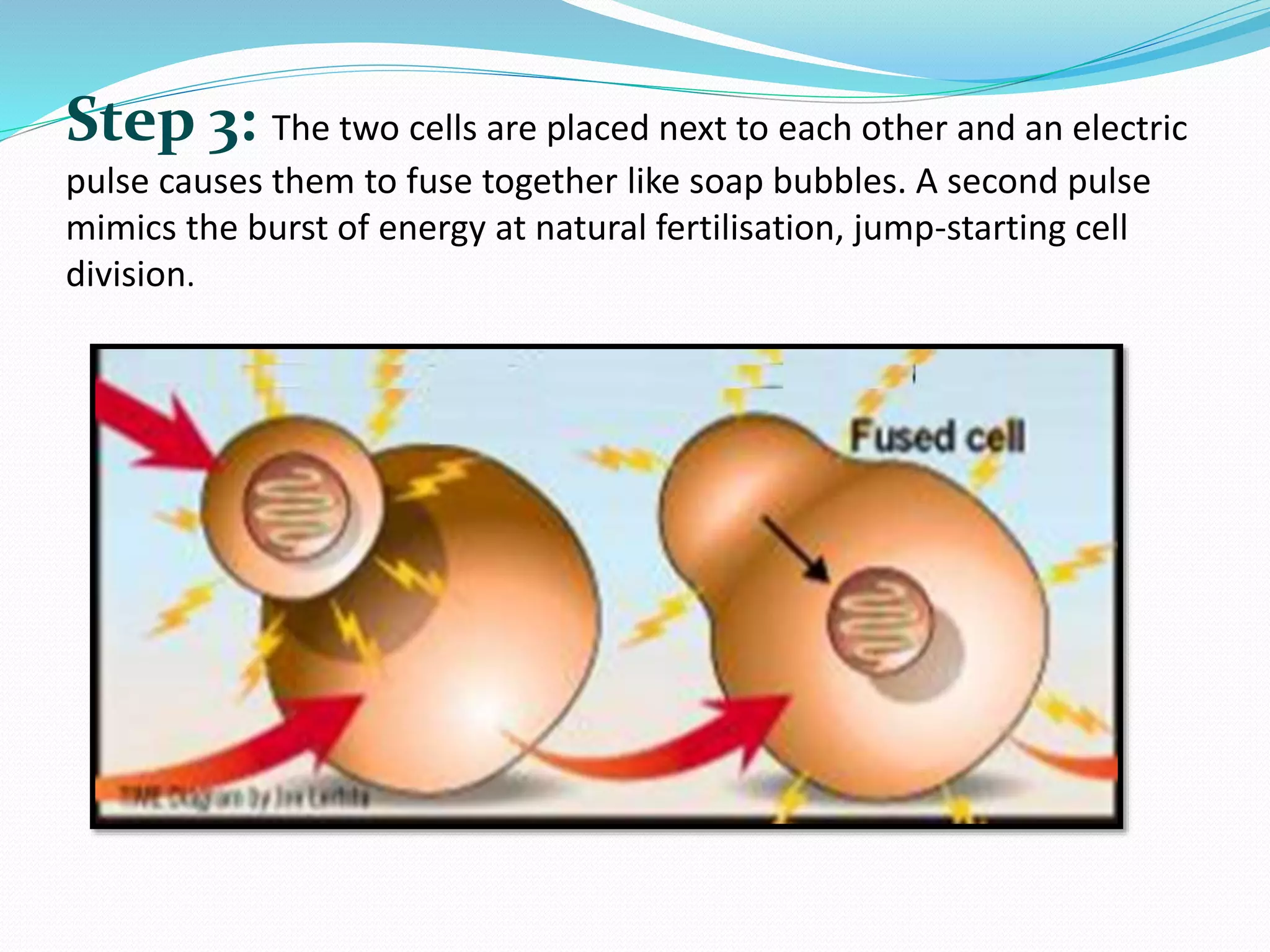
Step 3: The two cells are placed next to each other and an electric
pulse causes them to fuse together like soap bubbles. A second pulse
mimics the burst of energy at natural fertilisation, jump-starting cell
division.
Step 4 and 5:
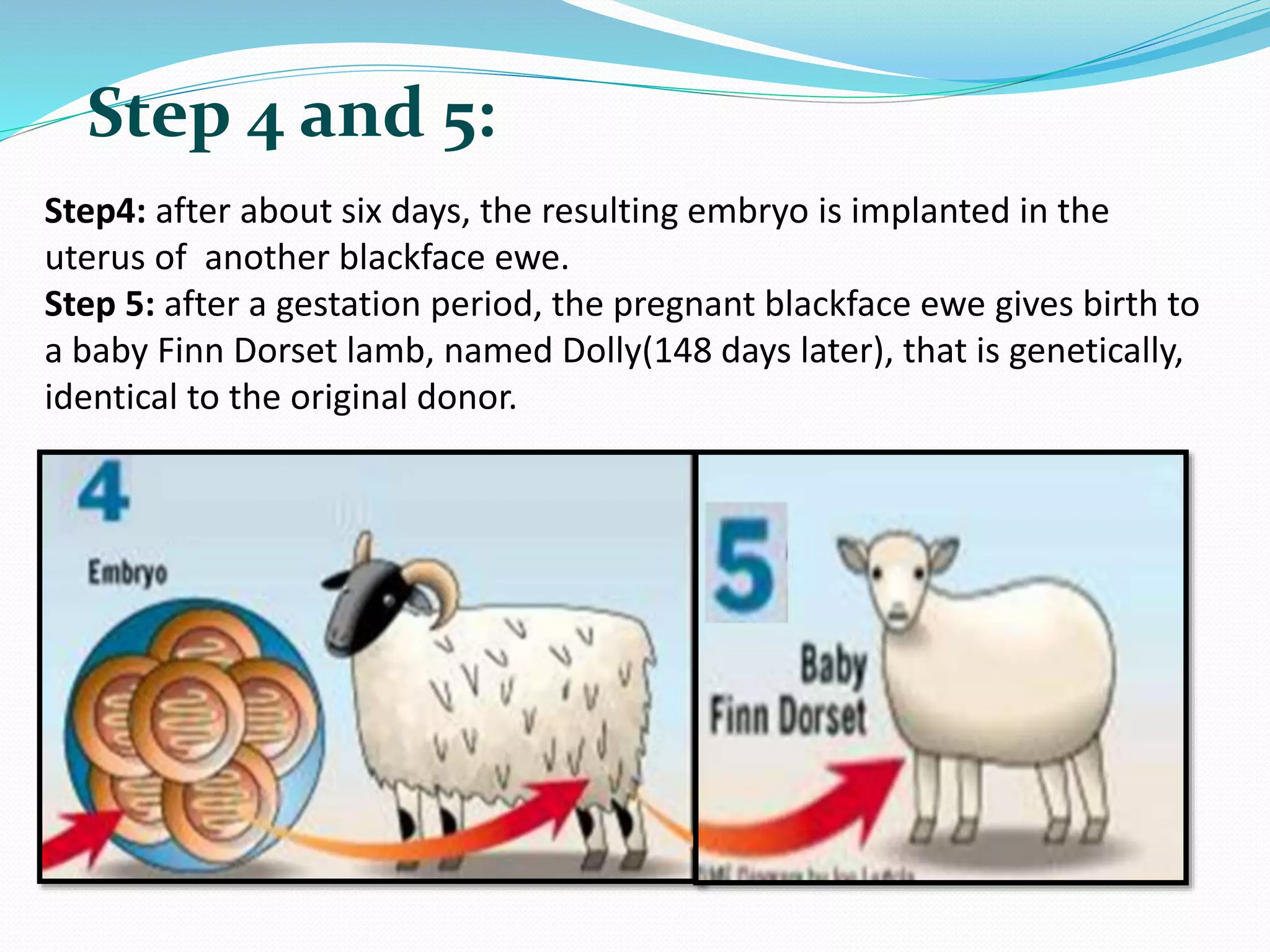
Step4: after about six days, the resulting embryo is implanted in the
uterus of another blackface ewe.
Step 5: after a gestation period, the pregnant blackface ewe gives birth to
a baby Finn Dorset lamb, named Dolly(148 days later), that is genetically,
identical to the original donor.
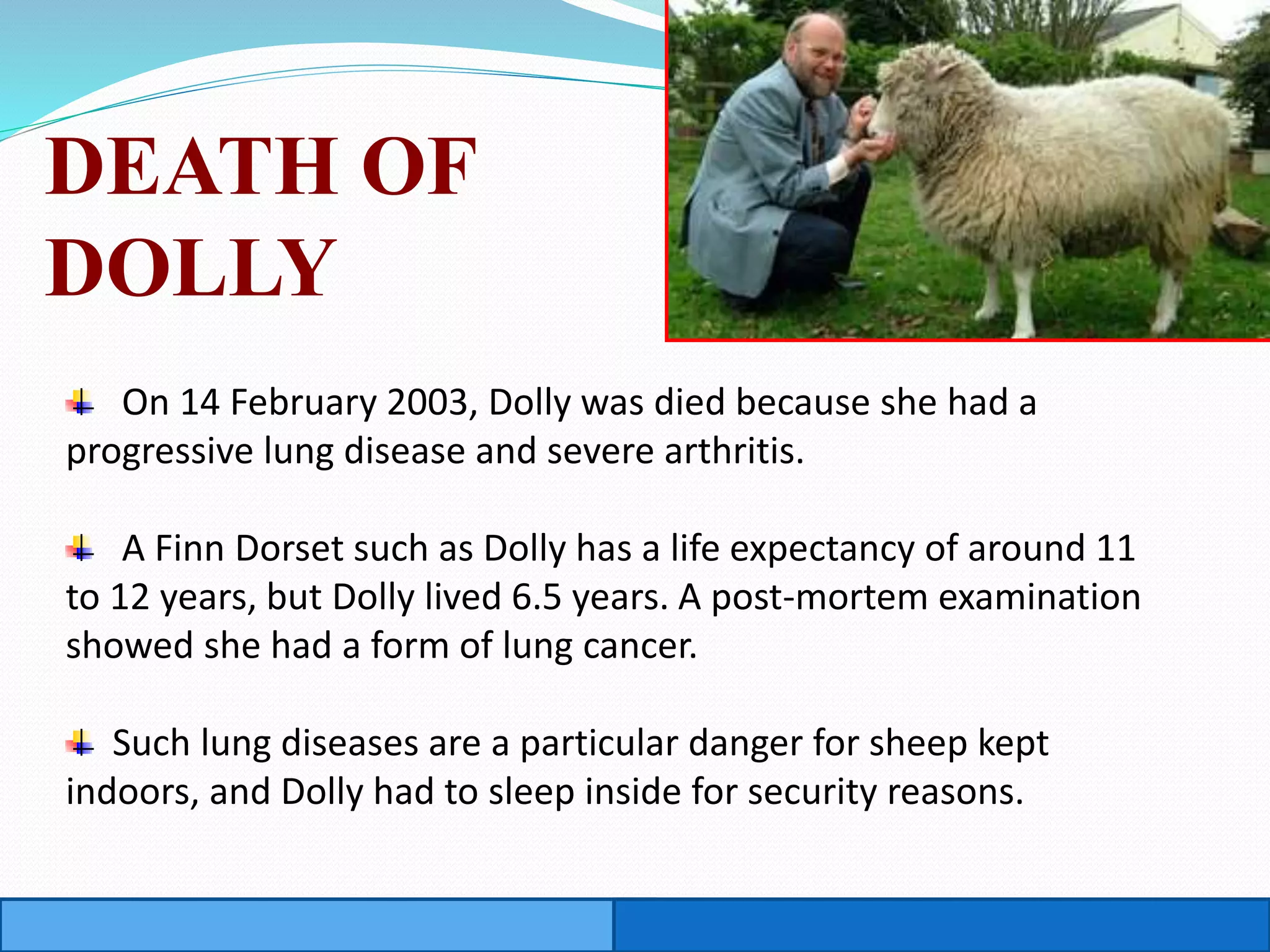
On 14 February 2003, Dolly was died because she had a
progressive lung disease and severe arthritis.
A Finn Dorset such as Dolly has a life expectancy of around 11
to 12 years, but Dolly lived 6.5 years. A post-mortem examination
showed she had a form of lung cancer.
Such lung diseases are a particular danger for sheep kept
indoors, and Dolly had to sleep inside for security reasons.
DEATH OF
DOLLY
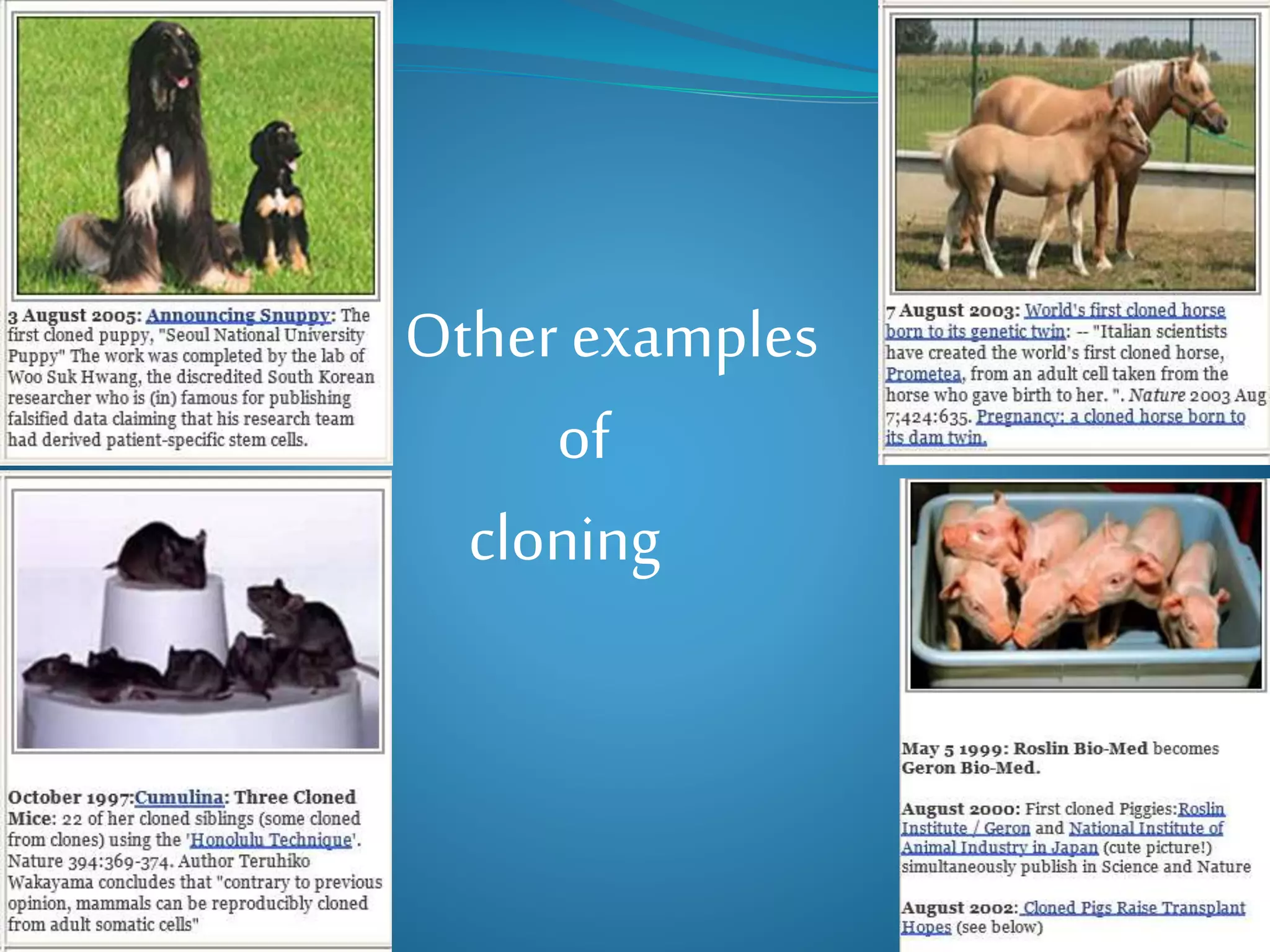
Other examples
of
cloning
MAJOR OBJECTIVES OF CLONING
IN ANIMALSFour possible areas of application of cloning based on nucleus transfer are :
Animals as drug producers: The first area is so-called »gene
pharming«, i.e. the use of transgenic animals to manufacture (human)
proteins with therapeutic use, e. g. in their milk. Another example:
antitrypsin sheep are used for treatment of emphysema and other
respiratory disorders. This is one of the possible main areas of application
in the future for cloning based on nucleus transfer.
Breeding endogenic body tissue: Cloning could also make a
technical contribution to the transplantation of endogenic tissue and in so-
called cell therapy. The ideal transplant tissue is easy to identify. Its cells
should be as genetically identical as possible with those of the recipient.
The patient’s immune system then no longer recognises them as alien,
eliminating problems of rejection.
Animal models: Another area where cloning could be used is
producing transgenic animals as animal models for human diseases.
Animal models are used to study the fundamental processes, and
provide valuable information for understanding these in humans.
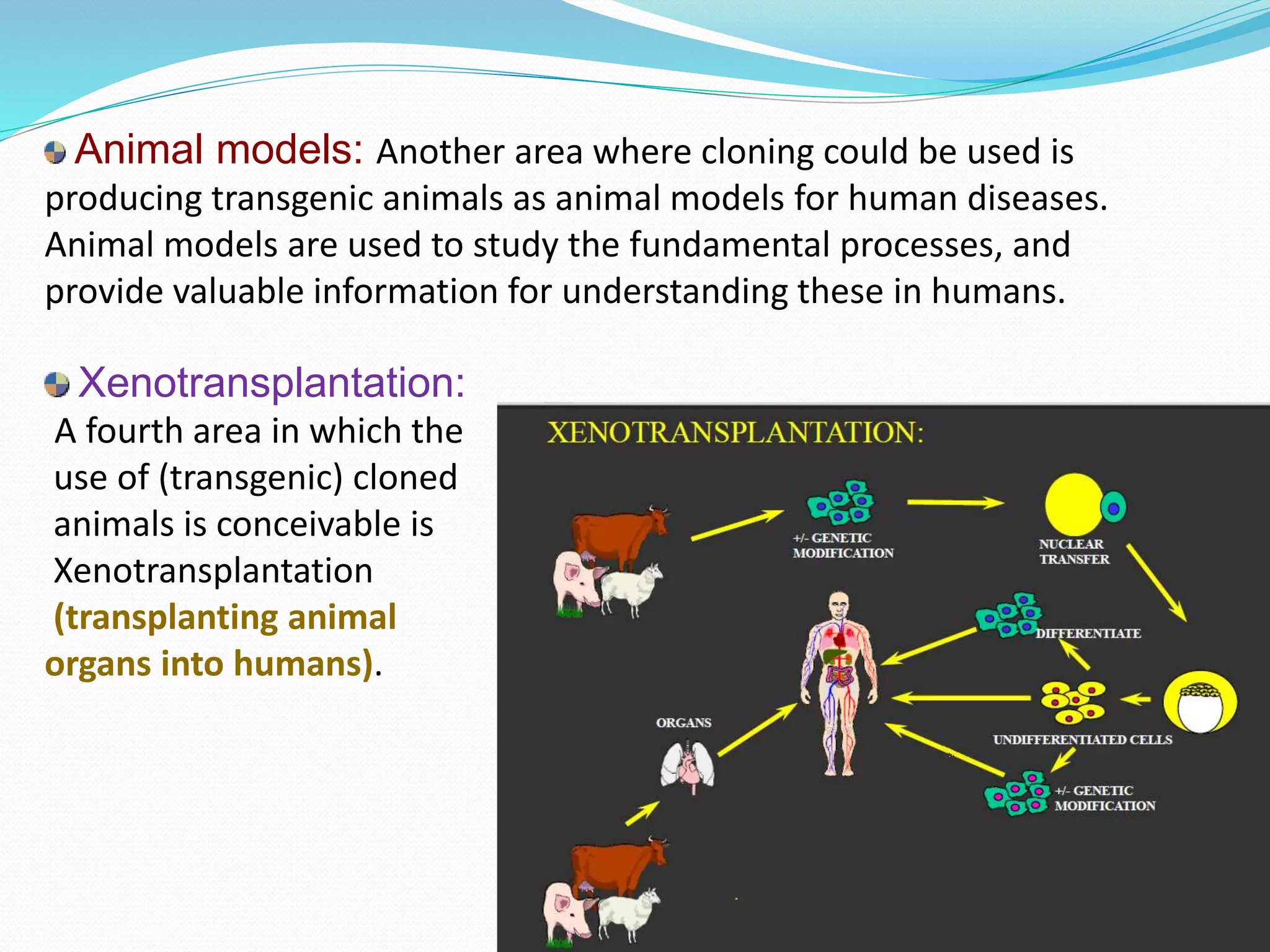
Xenotransplantation:
A fourth area in which the
use of (transgenic) cloned
animals is conceivable is
Xenotransplantation
(transplanting animal
organs into humans).
Animal cloning

Animal cloning

  • 1.
  • 2.
    Dolly in Detail Dollywith her foster mother Other name(s): 6LLS (code name) Species: Domestic Sheep, Finn Dorset Sex: Female Born: 5 July 1996 (Roslin Institute, Edinburgh, Scotland) Died: 14 February 2003 (aged 6) (Roslin Institute, Edinburgh, Scotland) Resting place: National Museum of Scotland (remains on display). Nation from : United Kingdom (Great Britain) Known for: First mammal cloned from an adult somatic cell Offspring: Six lambs (Bonnie; twins Sally and Rosie; triplets Lucy, Darcy and Cotton Named after: Dolly Parton Dolly with her foster mother Dolly the sheep was successfully cloned in Britain in 1996 by the scientist “Ian Wilmut”
  • 3.
  • 4.
    What is cloning? Cloningis the production of living structures genetically identical to their parent structure. Clone is an exact carbon copy or copies of a single living parent. Cloning in Higher organisms is done by artificial cloning. Most important procedure for artificial cloning is somatic cell nucleus transfer(SCNT).
  • 5.
    Steps in CloningDolly (SCNT method) Step 1: Cells taken from the udder of a Finn Dorset ewe are placed in a culture with very low concentrations of nutrients. Thus starved, the cells stop dividing and switch off their active genes.
  • 6.
    Step 2: Meanwhile,an unfertilized egg cell is taken from a Scottish Blackface ewe. The nucleus (with its DNA) is sucked out, leaving an empty egg cell containing all the cellular machinery necessary to produce an embryo.
  • 7.
    Step 3: Thetwo cells are placed next to each other and an electric pulse causes them to fuse together like soap bubbles. A second pulse mimics the burst of energy at natural fertilisation, jump-starting cell division.
  • 8.
    Step 4 and5: Step4: after about six days, the resulting embryo is implanted in the uterus of another blackface ewe. Step 5: after a gestation period, the pregnant blackface ewe gives birth to a baby Finn Dorset lamb, named Dolly(148 days later), that is genetically, identical to the original donor.
  • 9.
    On 14 February2003, Dolly was died because she had a progressive lung disease and severe arthritis. A Finn Dorset such as Dolly has a life expectancy of around 11 to 12 years, but Dolly lived 6.5 years. A post-mortem examination showed she had a form of lung cancer. Such lung diseases are a particular danger for sheep kept indoors, and Dolly had to sleep inside for security reasons. DEATH OF DOLLY
  • 10.
  • 11.
    MAJOR OBJECTIVES OFCLONING IN ANIMALSFour possible areas of application of cloning based on nucleus transfer are : Animals as drug producers: The first area is so-called »gene pharming«, i.e. the use of transgenic animals to manufacture (human) proteins with therapeutic use, e. g. in their milk. Another example: antitrypsin sheep are used for treatment of emphysema and other respiratory disorders. This is one of the possible main areas of application in the future for cloning based on nucleus transfer. Breeding endogenic body tissue: Cloning could also make a technical contribution to the transplantation of endogenic tissue and in so- called cell therapy. The ideal transplant tissue is easy to identify. Its cells should be as genetically identical as possible with those of the recipient. The patient’s immune system then no longer recognises them as alien, eliminating problems of rejection.
  • 12.
    Animal models: Anotherarea where cloning could be used is producing transgenic animals as animal models for human diseases. Animal models are used to study the fundamental processes, and provide valuable information for understanding these in humans. Xenotransplantation: A fourth area in which the use of (transgenic) cloned animals is conceivable is Xenotransplantation (transplanting animal organs into humans).