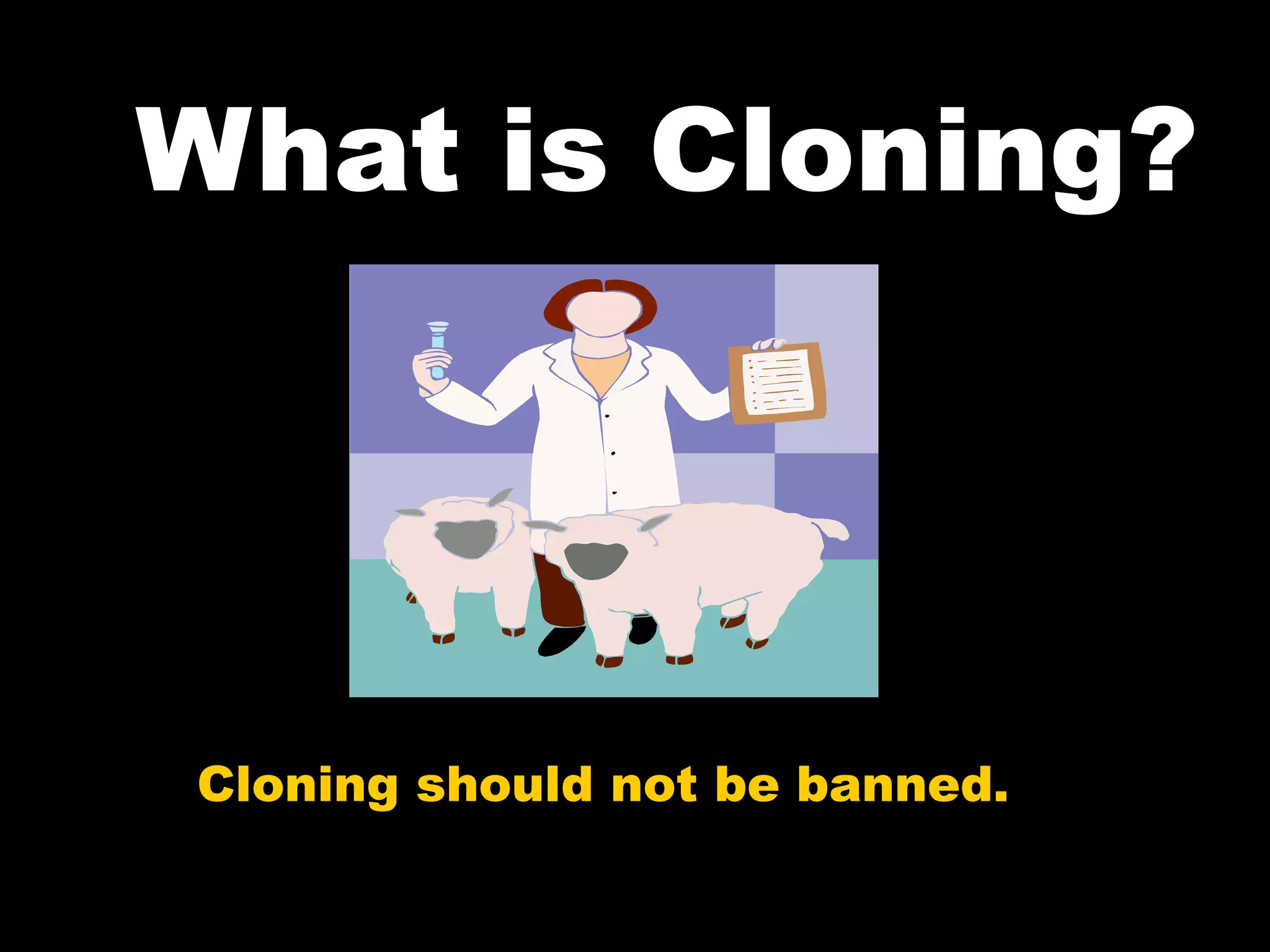
What is Cloning? Cloning should not be banned.
1-  DNA cloning/ Gene cloning 2-  Reproductive cloning (Dolly)  3-  Therapeutic Cloning  3 types of cloning:
Practiced since 1970  Common practice in molecular biology labs today.  Clones Genes; not cells or entire animals. For large protein production Study of viruses Vaccines No controversies in this branch of cloning DNA/ Gene Cloning
  Generate a “twin animal”: same DNA (Dolly) Benefits: 1) Maintain good DNA in animal reproduction. 2) Cloning genetically modified animals: -  Xenotransplantation (avoid tissue rejection) -  Insulin producers Risks: 1) Highly inefficient:  -  Die mysteriously -  High costs. 2) Morally wrong to experiment with animals. 3) Could lead to the cloning of humans. Reproductive Cloning
“ Production of human embryos for use in research:  Stem cell research” Possible Benefits: Produce whole organs from cloned stem cells. Produce healthy cells for transplantation. Reduce need for organ donors Test drugs, understand diseases. Risks: Killing embryos in the process. Therapeutic Cloning
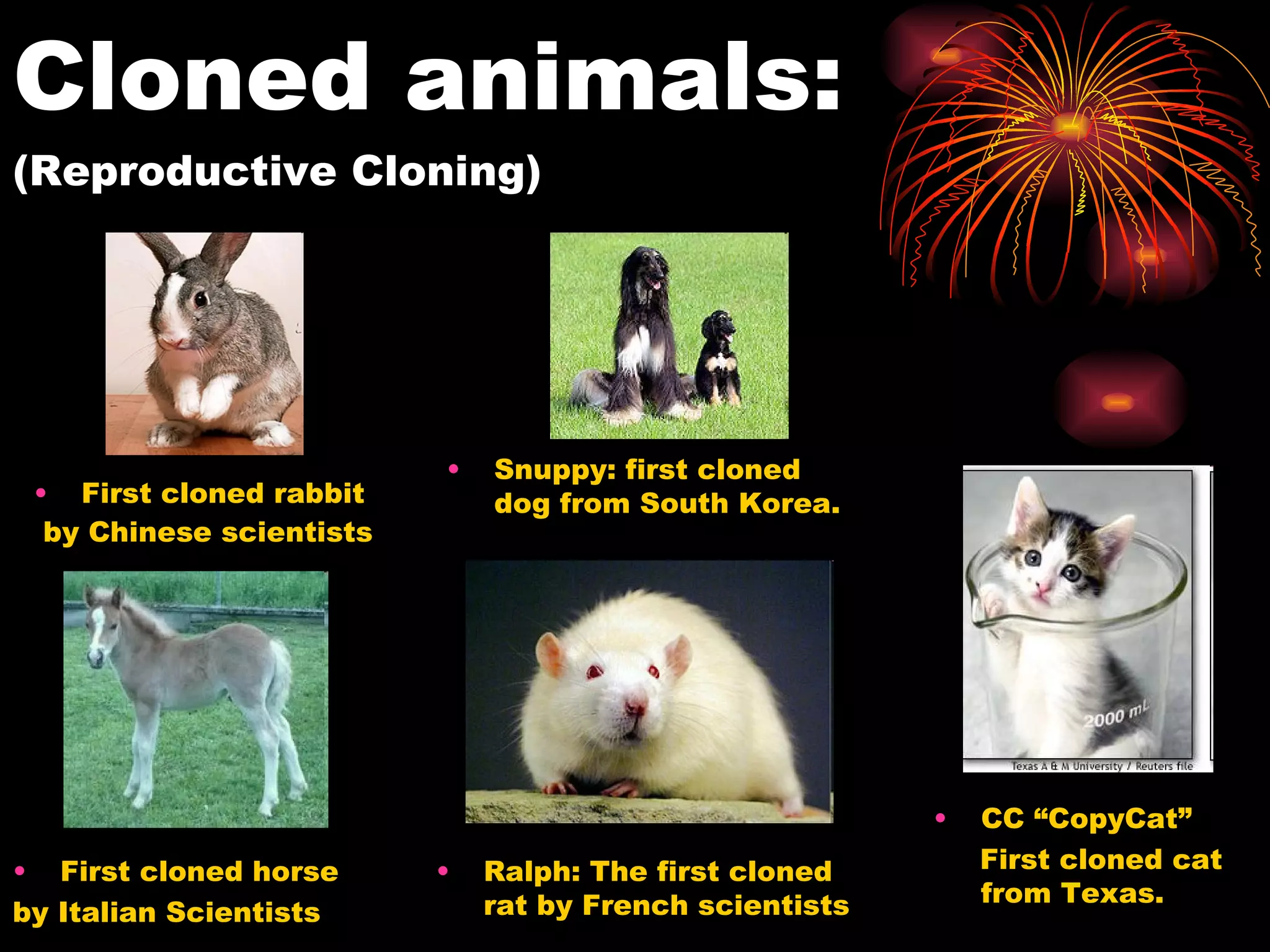
Cloned animals: (Reproductive Cloning) First cloned rabbit by Chinese scientists First cloned horse  by Italian Scientists Snuppy: first cloned dog from South Korea. CC “CopyCat”  First cloned cat from Texas. Ralph: The first cloned rat by French scientists
Works Cited National Human Genome research Institute, March 12, 2009. Web 9 Nov, 2009.  http://www.genome.gov/25020028#1 . Robert Gilmore McKinnell,  Cloning of frogs, mice, and other animals.  Minneapolis: University of Minnesota, 1985. Print.

Cloning Presentation

  • 1.
    What is Cloning?Cloning should not be banned.
  • 2.
    1- DNAcloning/ Gene cloning 2- Reproductive cloning (Dolly) 3- Therapeutic Cloning 3 types of cloning:
  • 3.
    Practiced since 1970 Common practice in molecular biology labs today. Clones Genes; not cells or entire animals. For large protein production Study of viruses Vaccines No controversies in this branch of cloning DNA/ Gene Cloning
  • 4.
    Generatea “twin animal”: same DNA (Dolly) Benefits: 1) Maintain good DNA in animal reproduction. 2) Cloning genetically modified animals: - Xenotransplantation (avoid tissue rejection) - Insulin producers Risks: 1) Highly inefficient: - Die mysteriously - High costs. 2) Morally wrong to experiment with animals. 3) Could lead to the cloning of humans. Reproductive Cloning
  • 5.
    “ Production ofhuman embryos for use in research: Stem cell research” Possible Benefits: Produce whole organs from cloned stem cells. Produce healthy cells for transplantation. Reduce need for organ donors Test drugs, understand diseases. Risks: Killing embryos in the process. Therapeutic Cloning
  • 6.
    Cloned animals: (ReproductiveCloning) First cloned rabbit by Chinese scientists First cloned horse by Italian Scientists Snuppy: first cloned dog from South Korea. CC “CopyCat” First cloned cat from Texas. Ralph: The first cloned rat by French scientists
  • 7.
    Works Cited NationalHuman Genome research Institute, March 12, 2009. Web 9 Nov, 2009. http://www.genome.gov/25020028#1 . Robert Gilmore McKinnell, Cloning of frogs, mice, and other animals. Minneapolis: University of Minnesota, 1985. Print.