Downloaded 233 times


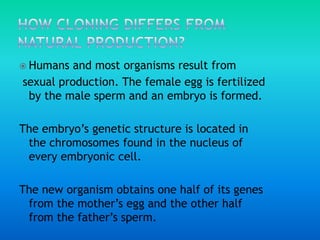




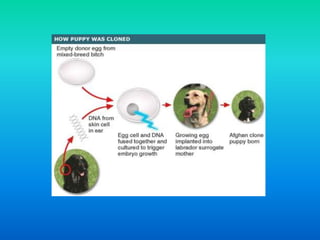
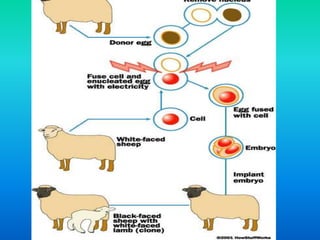




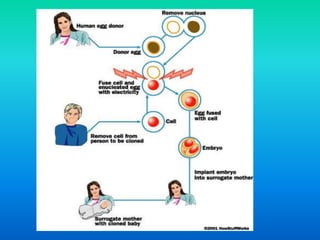







Cloning involves replacing the nucleus of an unfertilized egg with the nucleus of a donor cell, creating a genetically identical copy. While cloning differs from sexual reproduction by using a single donor's genes, early experiments cloned sea urchins in 1894, salamanders in 1902, and Dolly the sheep in 1996 was the first mammal cloned from an adult cell. However, cloned animals often suffer health issues and low survival rates due to the experimental nature. While some seek pet cloning for $50,000 despite pet overpopulation, it treats animals as products and exploits grieving owners. Human cloning raises ethical concerns about physical harms, effects on families and society, and challenges the idea that humans are uniquely created in God


