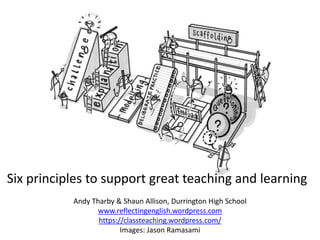
Six principles to support great teaching and learning
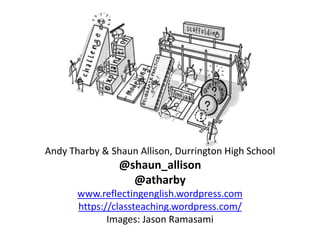
Andy Tharby & Shaun Allison, Durrington High School
www.reflectingenglish.wordpress.com
https://classteaching.wordpress.com/
Images: Jason Ramasami
HighExpectations
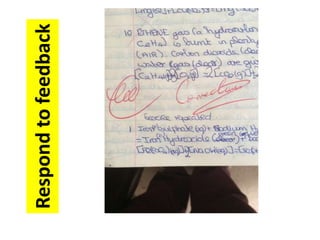
Respondtofeedback
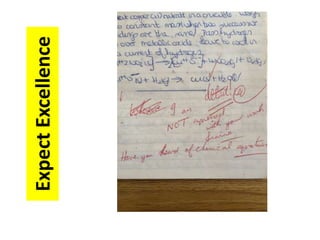
ExpectExcellence
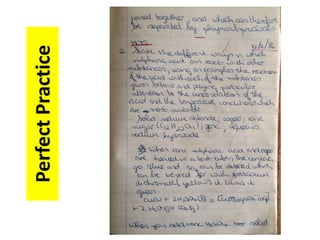
PerfectPractice
Prideinwork
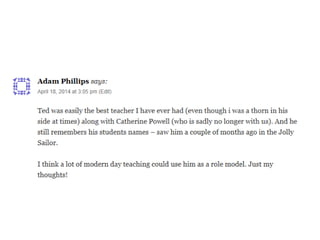
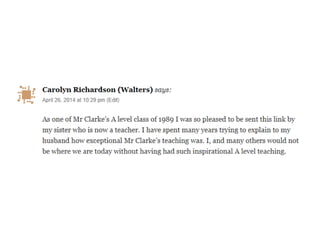
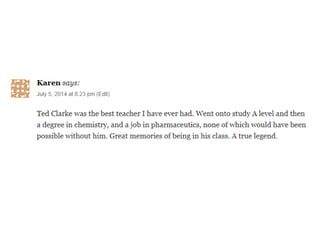
Mr Clarke’s approach to teaching
• Set the bar of expectation high and expected all students
to get there…..and beyond!
• Made it his business to know what his students couldn’t
do….and let them know too.
• Expected hard work and effort from all students and made
this ethos the highest priority, every lesson.
• Made all students believe that they could do better.
• Expected students to respond to his feedback.
• Provided lots of opportunities for practice – perfect
practice.
• Cared deeply about how his students performed in his
subject.
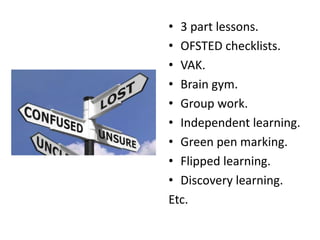
• 3 part lessons.
• OFSTED checklists.
• VAK.
• Brain gym.
• Group work.
• Independent learning.
• Green pen marking.
• Flipped learning.
• Discovery learning.
Etc.
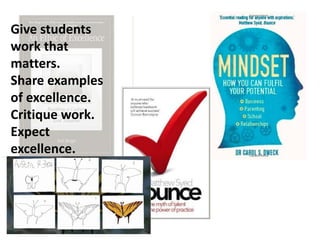
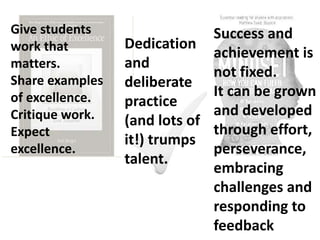
Give students
work that
matters.
Share examples
of excellence.
Critique work.
Expect
excellence.
Give students
work that
matters.
Share examples
of excellence.
Critique work.
Expect
excellence.
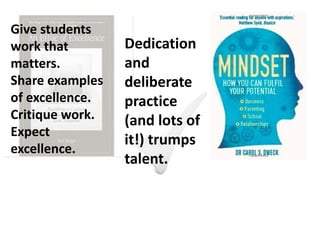
Dedication
and
deliberate
practice
(and lots of
it!) trumps
talent.
Give students
work that
matters.
Share examples
of excellence.
Critique work.
Expect
excellence.
Dedication
and
deliberate
practice
(and lots of
it!) trumps
talent.
Success and
achievement is
not fixed.
It can be grown
and developed
through effort,
perseverance,
embracing
challenges and
responding to
feedback
Sutton Trust – What makes great
teaching?
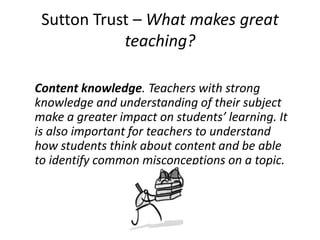
Content knowledge. Teachers with strong
knowledge and understanding of their subject
make a greater impact on students’ learning. It
is also important for teachers to understand
how students think about content and be able
to identify common misconceptions on a topic.
Sutton Trust – What makes great
teaching?
Content knowledge. Teachers with strong
knowledge and understanding of their subject
make a greater impact on students’ learning. It
is also important for teachers to understand
how students think about content and be able
to identify common misconceptions on a topic.
Sutton Trust – What makes great
teaching?
Quality of instruction. This includes effective
questioning and the use of assessment by
teachers. Specific practices, like reviewing
previous learning, providing model responses for
students, giving adequate time for practice to
embed skills securely and progressively
introducing new learning (scaffolding) are also
found to improve attainment.
Sutton Trust – What makes great
teaching?
Quality of instruction. This includes effective
questioning and the use of assessment by
teachers. Specific practices, like reviewing
previous learning, providing model responses
for students, giving adequate time for practice to
embed skills securely and progressively
introducing new learning (scaffolding) are also
found to improve attainment.
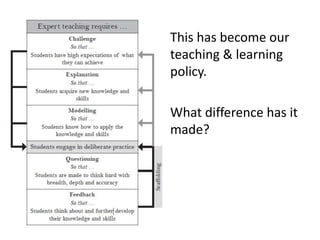
• This has become our
teaching & learning
policy.
• What difference has it
made?
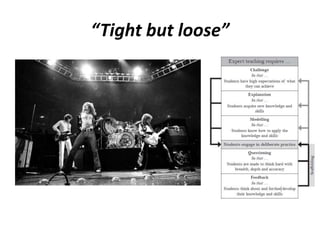
“Tight but loose”
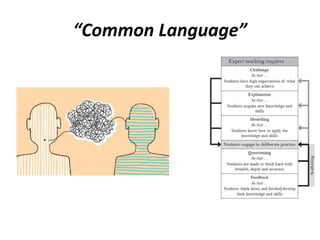
“Common Language”
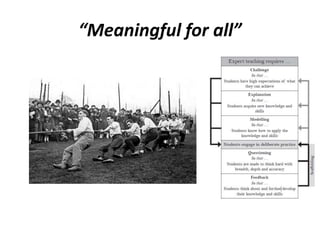
“Meaningful for all”
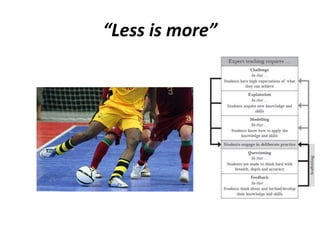
“Less is more”
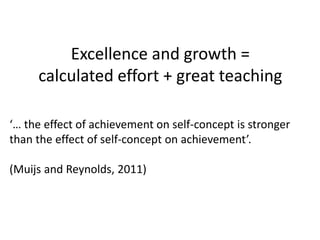
Excellence and growth =
calculated effort + great teaching
‘… the effect of achievement on self-concept is stronger
than the effect of self-concept on achievement’.
(Muijs and Reynolds, 2011)
.
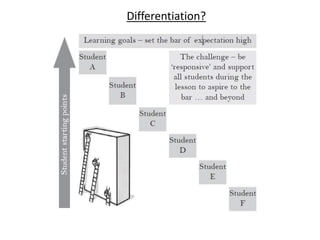
Differentiation?
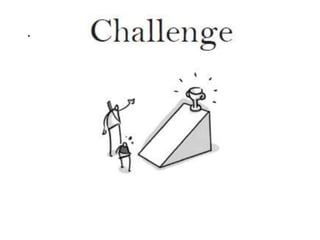
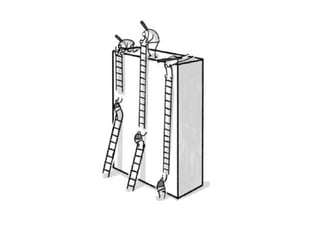
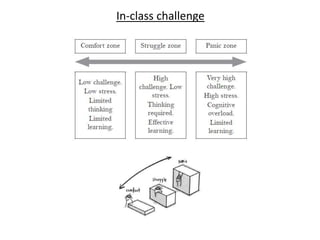
In-class challenge
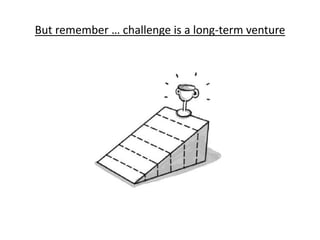
But remember … challenge is a long-term venture
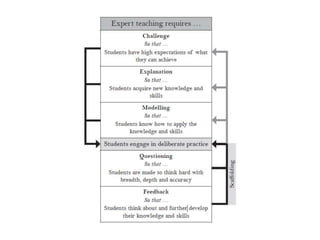
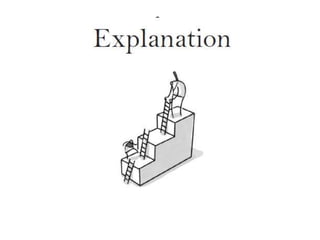
Three key principles for explanation
1. Tether them to something already known.
2. Allow for the limited capacity of the working
memory.
3. Aim to make the abstract, concrete.
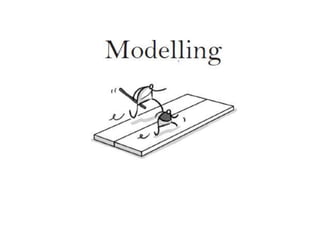
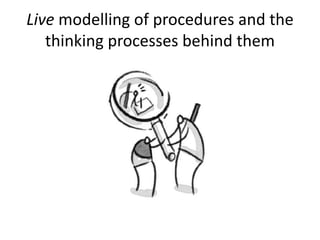
Live modelling of procedures and the
thinking processes behind them
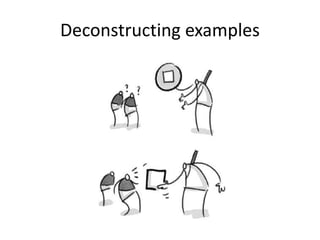
Deconstructing examples
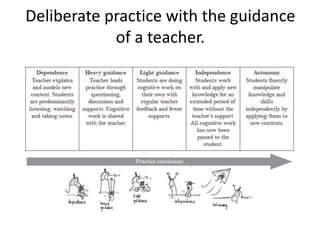
Deliberate practice with the guidance
of a teacher.
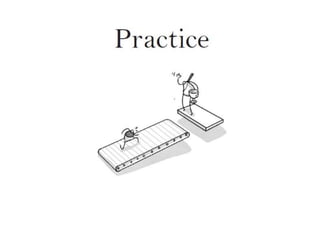
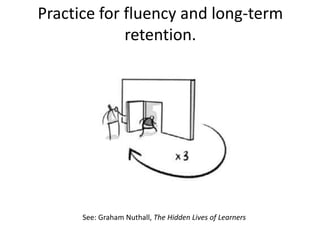
Practice for fluency and long-term
retention.
See: Graham Nuthall, The Hidden Lives of Learners
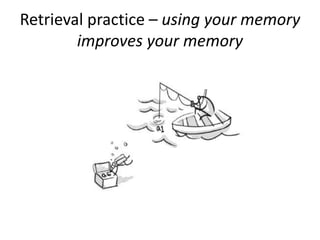
Retrieval practice – using your memory
improves your memory
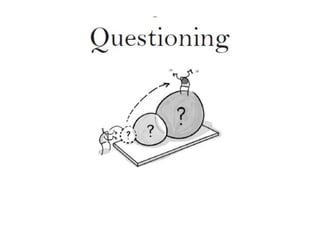
Questioning …
1. Should check for understanding – i.e. hinge
questions
2. Provoke deeper thinking.

3. Increase the ratio of participation and
thinking – ‘cold calling’
Andy Tharby & Shaun Allison, Durrington High School
@shaun_allison
@atharby
www.reflectingenglish.wordpress.com
https://classteaching.wordpress.com/
Images: Jason Ramasami

Melc wellington june 16

  • 1.
    Six principles tosupport great teaching and learning Andy Tharby & Shaun Allison, Durrington High School www.reflectingenglish.wordpress.com https://classteaching.wordpress.com/ Images: Jason Ramasami
  • 5.
  • 6.
  • 7.
  • 8.
  • 9.
  • 15.
    Mr Clarke’s approachto teaching • Set the bar of expectation high and expected all students to get there…..and beyond! • Made it his business to know what his students couldn’t do….and let them know too. • Expected hard work and effort from all students and made this ethos the highest priority, every lesson. • Made all students believe that they could do better. • Expected students to respond to his feedback. • Provided lots of opportunities for practice – perfect practice. • Cared deeply about how his students performed in his subject.
  • 16.
    • 3 partlessons. • OFSTED checklists. • VAK. • Brain gym. • Group work. • Independent learning. • Green pen marking. • Flipped learning. • Discovery learning. Etc.
  • 18.
    Give students work that matters. Shareexamples of excellence. Critique work. Expect excellence.
  • 19.
    Give students work that matters. Shareexamples of excellence. Critique work. Expect excellence. Dedication and deliberate practice (and lots of it!) trumps talent.
  • 20.
    Give students work that matters. Shareexamples of excellence. Critique work. Expect excellence. Dedication and deliberate practice (and lots of it!) trumps talent. Success and achievement is not fixed. It can be grown and developed through effort, perseverance, embracing challenges and responding to feedback
  • 23.
    Sutton Trust –What makes great teaching? Content knowledge. Teachers with strong knowledge and understanding of their subject make a greater impact on students’ learning. It is also important for teachers to understand how students think about content and be able to identify common misconceptions on a topic.
  • 24.
    Sutton Trust –What makes great teaching? Content knowledge. Teachers with strong knowledge and understanding of their subject make a greater impact on students’ learning. It is also important for teachers to understand how students think about content and be able to identify common misconceptions on a topic.
  • 25.
    Sutton Trust –What makes great teaching? Quality of instruction. This includes effective questioning and the use of assessment by teachers. Specific practices, like reviewing previous learning, providing model responses for students, giving adequate time for practice to embed skills securely and progressively introducing new learning (scaffolding) are also found to improve attainment.
  • 26.
    Sutton Trust –What makes great teaching? Quality of instruction. This includes effective questioning and the use of assessment by teachers. Specific practices, like reviewing previous learning, providing model responses for students, giving adequate time for practice to embed skills securely and progressively introducing new learning (scaffolding) are also found to improve attainment.
  • 27.
    • This hasbecome our teaching & learning policy. • What difference has it made?
  • 28.
  • 29.
  • 30.
  • 31.
  • 32.
    Excellence and growth= calculated effort + great teaching ‘… the effect of achievement on self-concept is stronger than the effect of self-concept on achievement’. (Muijs and Reynolds, 2011)
  • 33.
  • 34.
  • 36.
  • 37.
    But remember …challenge is a long-term venture
  • 39.
    Three key principlesfor explanation 1. Tether them to something already known. 2. Allow for the limited capacity of the working memory. 3. Aim to make the abstract, concrete.
  • 41.
    Live modelling ofprocedures and the thinking processes behind them
  • 42.
  • 44.
    Deliberate practice withthe guidance of a teacher.
  • 45.
    Practice for fluencyand long-term retention. See: Graham Nuthall, The Hidden Lives of Learners
  • 46.
    Retrieval practice –using your memory improves your memory
  • 50.
    Questioning … 1. Shouldcheck for understanding – i.e. hinge questions 2. Provoke deeper thinking. 3. Increase the ratio of participation and thinking – ‘cold calling’
  • 54.
    Andy Tharby &Shaun Allison, Durrington High School @shaun_allison @atharby www.reflectingenglish.wordpress.com https://classteaching.wordpress.com/ Images: Jason Ramasami

Editor's Notes

  • #2 Remember difference between great teaching and great teacher – separate the person from the practice
  • #22 Common language for teaching and learning. Great teaching leads to independence and creativity. Relationships and a positive classroom climate underpin everything. Not a tick sheet – not all lessons will include all 6. Long term goals – writing a speech. Short term – learning the meaning of a new word.
  • #34 Discuss the role of expectations – Pygmalion effect
  • #39 Often overlooked in schools Building metaphor – bulldoze expertise – rebuild in the phrase, imagery and incremental steps
  • #55 Remember difference between great teaching and great teacher – separate the person from the practice