THE PPP Teaching Method 
Presentation, Practice, & 
Production 
By 
Jenny Nieto
What is The PPP Method? 
• The "PPP" approach to Language Teaching is the 
most common modern methodology employed by 
professional schools around the world. This method 
for teaching language items follows a sequence of 
presentation of the item, practice of the item and 
then production ( use) of the item. 
• It is very important to understand what 
"Presentation", "Practice" and"Production" 
really are, and how they work in combination to 
create effective communicative language learning.
The PPP method is very useful for the 
acquisition of structures. 
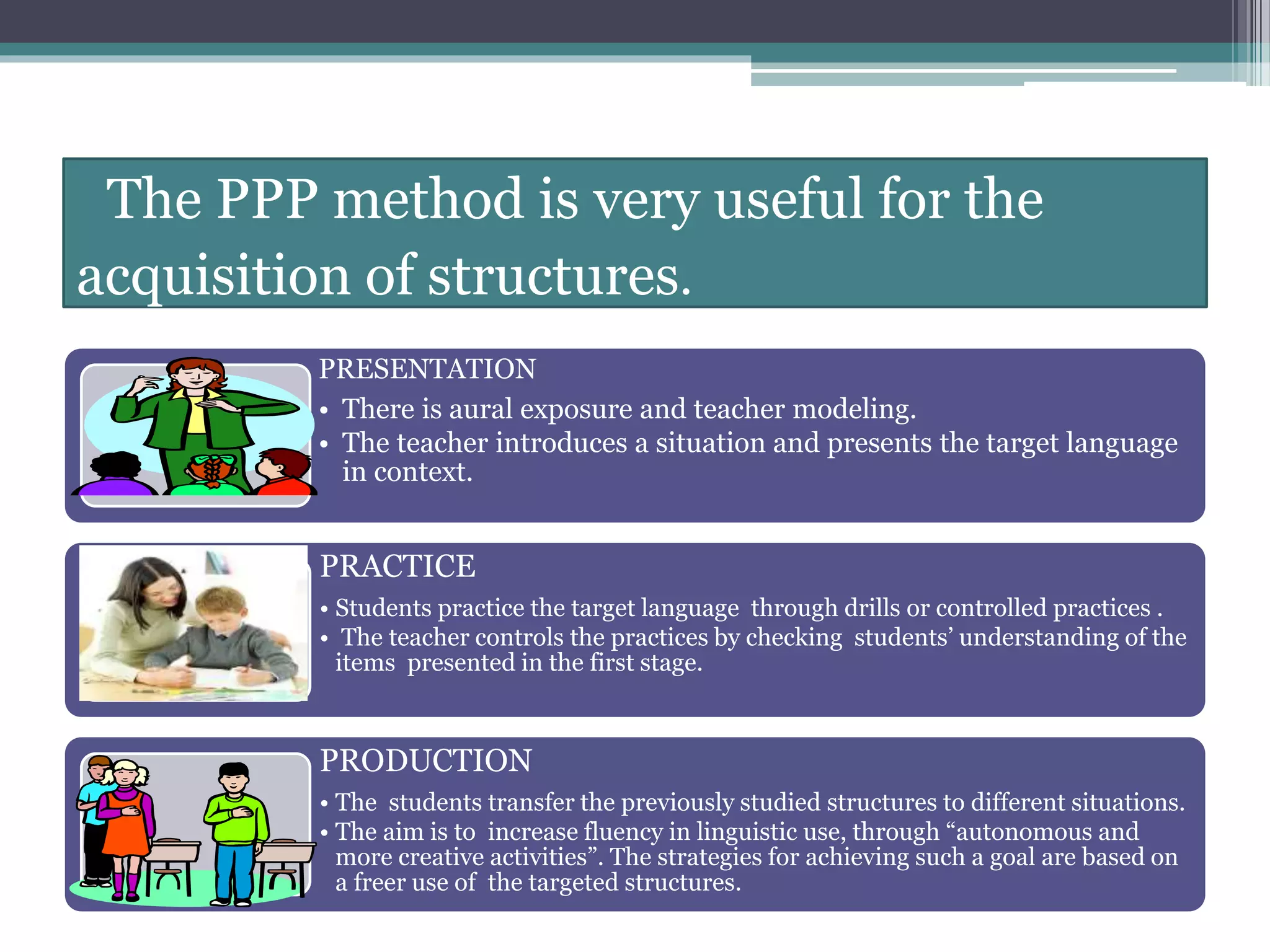
PRESENTATION 
• There is aural exposure and teacher modeling. 
• The teacher introduces a situation and presents the target language 
in context. 
PRACTICE 
• Students practice the target language through drills or controlled practices . 
• The teacher controls the practices by checking students’ understanding of the 
items presented in the first stage. 
PRODUCTION 
• The students transfer the previously studied structures to different situations. 
• The aim is to increase fluency in linguistic use, through “autonomous and 
more creative activities”. The strategies for achieving such a goal are based on 
a freer use of the targeted structures.
Presentation Suggested Activities 
Stage 
This stage has two steps: 
1. An introduction of the 
structure to be taught in L2 
2. A warm up or a lead –in 
activity is used to raise 
students’ interest in the topic. 
This stage is characterized by 
having memorable and realistic 
examples, it has logical 
connection with the next stage. 
It is clear and meaningful and 
has meaningful repetitions to 
help students with the context. 
Brainstorming: It is used to get 
information from the students 
about a specific topic. 
Repetition drills: The purpose 
is to help students improve 
their pronunciation. 
Using the topic in context: the 
students are provided with a 
linguistic "model" to apply to 
the concept they have 
recognized.
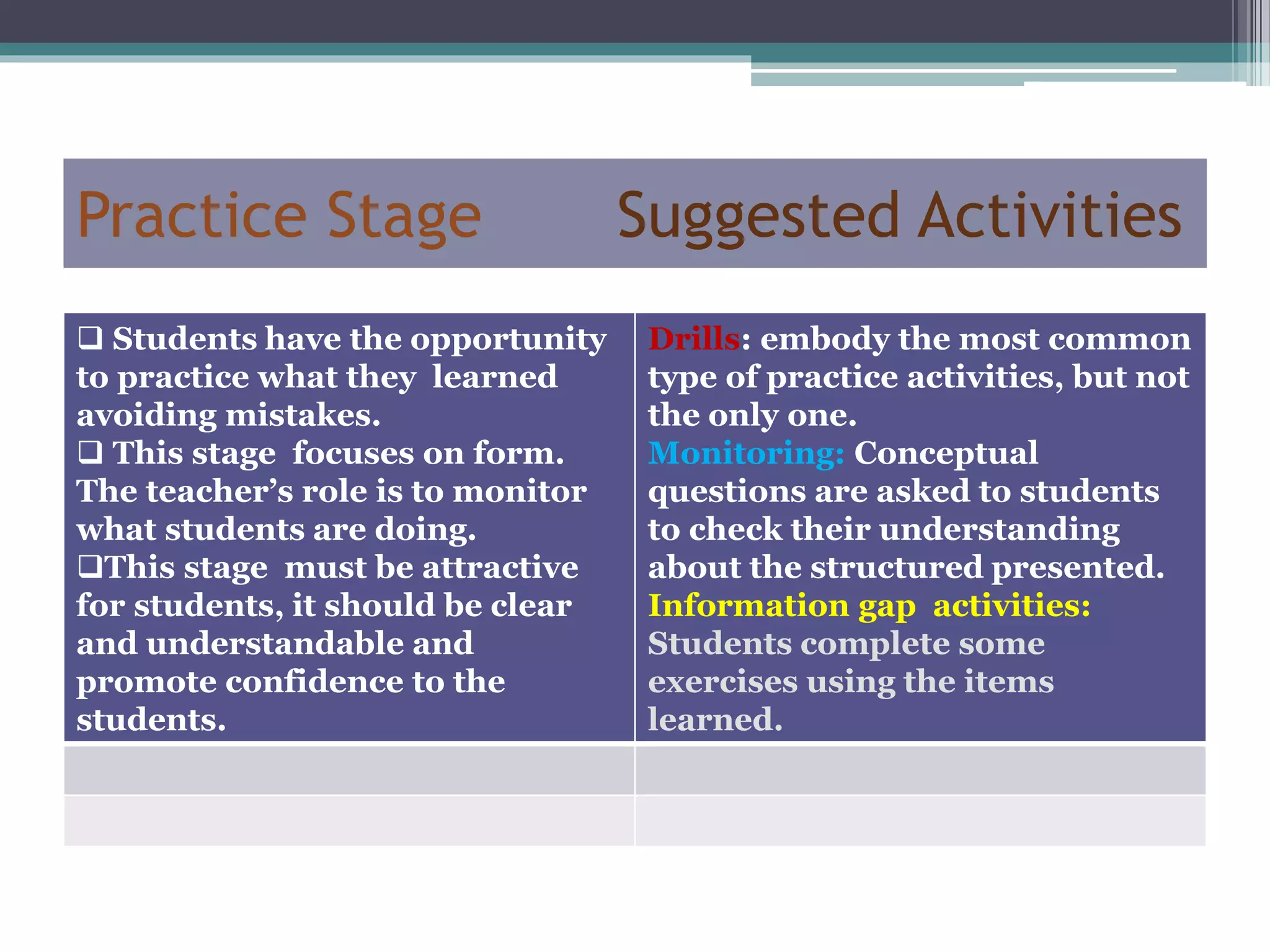
Practice Stage Suggested Activities 
 Students have the opportunity 
to practice what they learned 
avoiding mistakes. 
 This stage focuses on form. 
The teacher’s role is to monitor 
what students are doing. 
This stage must be attractive 
for students, it should be clear 
and understandable and 
promote confidence to the 
students. 
Drills: embody the most common 
type of practice activities, but not 
the only one. 
Monitoring: Conceptual 
questions are asked to students 
to check their understanding 
about the structured presented. 
Information gap activities: 
Students complete some 
exercises using the items 
learned.
Production Stage Suggested Activities 
This stage centers on fluency 
giving students the opportunity 
to interact in communicative 
activities. 
Students demonstrate their 
learning by working and sharing 
with each other. 
In this stage the language is used 
naturally in real situations. 
The three stages are essential to 
achieve communicative language 
learning. They must flow easily 
from one stage to the next. 
Some of the activities in the 
production stage may imply: 
-discussions - debates 
-role-plays - narratives 
-problem-solving activities 
-descriptions 
-information gaps 
-quizzes 
-games
“Tell me and I forget, teach me and I may 
remember, involve me and I learn.” Benjamin 
Franklin 
THANKS

The ppp teaching method (power point)

  • 1.
    THE PPP TeachingMethod Presentation, Practice, & Production By Jenny Nieto
  • 2.
    What is ThePPP Method? • The "PPP" approach to Language Teaching is the most common modern methodology employed by professional schools around the world. This method for teaching language items follows a sequence of presentation of the item, practice of the item and then production ( use) of the item. • It is very important to understand what "Presentation", "Practice" and"Production" really are, and how they work in combination to create effective communicative language learning.
  • 3.
    The PPP methodis very useful for the acquisition of structures. PRESENTATION • There is aural exposure and teacher modeling. • The teacher introduces a situation and presents the target language in context. PRACTICE • Students practice the target language through drills or controlled practices . • The teacher controls the practices by checking students’ understanding of the items presented in the first stage. PRODUCTION • The students transfer the previously studied structures to different situations. • The aim is to increase fluency in linguistic use, through “autonomous and more creative activities”. The strategies for achieving such a goal are based on a freer use of the targeted structures.
  • 4.
    Presentation Suggested Activities Stage This stage has two steps: 1. An introduction of the structure to be taught in L2 2. A warm up or a lead –in activity is used to raise students’ interest in the topic. This stage is characterized by having memorable and realistic examples, it has logical connection with the next stage. It is clear and meaningful and has meaningful repetitions to help students with the context. Brainstorming: It is used to get information from the students about a specific topic. Repetition drills: The purpose is to help students improve their pronunciation. Using the topic in context: the students are provided with a linguistic "model" to apply to the concept they have recognized.
  • 5.
    Practice Stage SuggestedActivities  Students have the opportunity to practice what they learned avoiding mistakes.  This stage focuses on form. The teacher’s role is to monitor what students are doing. This stage must be attractive for students, it should be clear and understandable and promote confidence to the students. Drills: embody the most common type of practice activities, but not the only one. Monitoring: Conceptual questions are asked to students to check their understanding about the structured presented. Information gap activities: Students complete some exercises using the items learned.
  • 6.
    Production Stage SuggestedActivities This stage centers on fluency giving students the opportunity to interact in communicative activities. Students demonstrate their learning by working and sharing with each other. In this stage the language is used naturally in real situations. The three stages are essential to achieve communicative language learning. They must flow easily from one stage to the next. Some of the activities in the production stage may imply: -discussions - debates -role-plays - narratives -problem-solving activities -descriptions -information gaps -quizzes -games
  • 7.
    “Tell me andI forget, teach me and I may remember, involve me and I learn.” Benjamin Franklin THANKS