Goals & Feedback 
Evidence Based Teaching 
Gareth Edwards 
Staff Development - Sep 2014
Evidence Based - Focus your work 
• What can I change about my teaching that is 
going to make the biggest difference to my 
students? 
• Any teacher can try out new ideas, but the 
danger is we spend a lot of time trying out 
new ideas that don’t help our students. 
• Given that college is a one shot deal for our 
students, we need to be really picky about the 
things we work on.
Feedback 
Definition 
• Information about reactions to a product, a 
person’s performance of a task, etc. which is 
used as a basis for improvement. 
(Oxford Dictionary)
Why give feedback? 
• Setting goals and objectives helps the learner 
see where they are going. 
• Providing feedback shows them how far they 
have come on their learning journey.
Feedback 
• Research shows that: 
1. Much of the feedback that students get has 
little or no effect on their learning 
2. Some kinds of feedback are actually 
counterproductive
Difficulty!!! 
• What is clear through the research conducted 
is that providing feedback is VERY difficult. 
• Get it wrong and students 
1. Give up 
2. Reject the feedback 
3. Choose an easier goal
How do we give feedback then? 
1. Give feedback that helps them move forward 
2. Reinforce the belief that effort leads to 
success 
3. Ability is incremental rather than fixed 
(Growth Mindset – Carol Dweck) 
Smart is not something you are, it is something 
you get.
AfL 
• Setting goals and objectives helps the learner 
see where they are going. 
• Providing feedback shows them how far they 
are on this learning journey. 
• Assessment for Learning (AfL} is an example of 
this.
FORMATIVE ASSESSMENT 
FEEDBACK GIVEN TO A STUDENT WHICH 
INCREASES THEIR LEARNING. 
SUMMATIVE ASSESSMENT 
A TEST OR TASK WHICH IS MARKED BY THE 
TEACHER AND THE STUDENT RECIEVES A 
NUMERICAL MARK, GRADE ETC…
What the research says… 
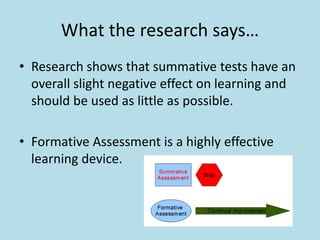
• Research shows that summative tests have an 
overall slight negative effect on learning and 
should be used as little as possible. 
• Formative Assessment is a highly effective 
learning device.
Classroom Culture 
• Through your formative assessment you are 
trying to find out whether the student 
understands the task, question etc. 
• By doing this you will be able to provide 
meaningful feedback which will help them move 
forward. 
• To do this you need to create a classroom culture 
where it is okay to be wrong. 
• Students should feel safe enough to make 
mistakes. 
• If they’re not making mistakes, they are not being 
challenged.
Something to take away… 
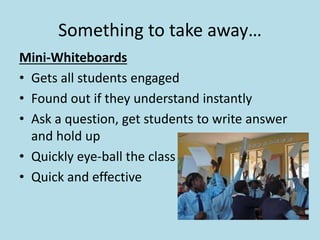
Mini-Whiteboards 
• Gets all students engaged 
• Found out if they understand instantly 
• Ask a question, get students to write answer 
and hold up 
• Quickly eye-ball the class 
• Quick and effective
Something to take away… 
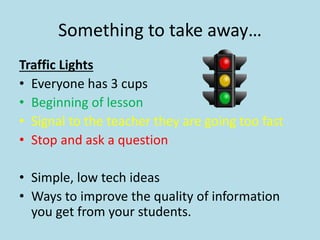
Traffic Lights 
• Everyone has 3 cups 
• Beginning of lesson 
• Signal to the teacher they are going too fast 
• Stop and ask a question 
• Simple, low tech ideas 
• Ways to improve the quality of information 
you get from your students.
Thanks for listening

Goals & Feedback

  • 1.
    Goals & Feedback Evidence Based Teaching Gareth Edwards Staff Development - Sep 2014
  • 2.
    Evidence Based -Focus your work • What can I change about my teaching that is going to make the biggest difference to my students? • Any teacher can try out new ideas, but the danger is we spend a lot of time trying out new ideas that don’t help our students. • Given that college is a one shot deal for our students, we need to be really picky about the things we work on.
  • 3.
    Feedback Definition •Information about reactions to a product, a person’s performance of a task, etc. which is used as a basis for improvement. (Oxford Dictionary)
  • 4.
    Why give feedback? • Setting goals and objectives helps the learner see where they are going. • Providing feedback shows them how far they have come on their learning journey.
  • 5.
    Feedback • Researchshows that: 1. Much of the feedback that students get has little or no effect on their learning 2. Some kinds of feedback are actually counterproductive
  • 6.
    Difficulty!!! • Whatis clear through the research conducted is that providing feedback is VERY difficult. • Get it wrong and students 1. Give up 2. Reject the feedback 3. Choose an easier goal
  • 7.
    How do wegive feedback then? 1. Give feedback that helps them move forward 2. Reinforce the belief that effort leads to success 3. Ability is incremental rather than fixed (Growth Mindset – Carol Dweck) Smart is not something you are, it is something you get.
  • 8.
    AfL • Settinggoals and objectives helps the learner see where they are going. • Providing feedback shows them how far they are on this learning journey. • Assessment for Learning (AfL} is an example of this.
  • 9.
    FORMATIVE ASSESSMENT FEEDBACKGIVEN TO A STUDENT WHICH INCREASES THEIR LEARNING. SUMMATIVE ASSESSMENT A TEST OR TASK WHICH IS MARKED BY THE TEACHER AND THE STUDENT RECIEVES A NUMERICAL MARK, GRADE ETC…
  • 10.
    What the researchsays… • Research shows that summative tests have an overall slight negative effect on learning and should be used as little as possible. • Formative Assessment is a highly effective learning device.
  • 11.
    Classroom Culture •Through your formative assessment you are trying to find out whether the student understands the task, question etc. • By doing this you will be able to provide meaningful feedback which will help them move forward. • To do this you need to create a classroom culture where it is okay to be wrong. • Students should feel safe enough to make mistakes. • If they’re not making mistakes, they are not being challenged.
  • 12.
    Something to takeaway… Mini-Whiteboards • Gets all students engaged • Found out if they understand instantly • Ask a question, get students to write answer and hold up • Quickly eye-ball the class • Quick and effective
  • 13.
    Something to takeaway… Traffic Lights • Everyone has 3 cups • Beginning of lesson • Signal to the teacher they are going too fast • Stop and ask a question • Simple, low tech ideas • Ways to improve the quality of information you get from your students.
  • 14.