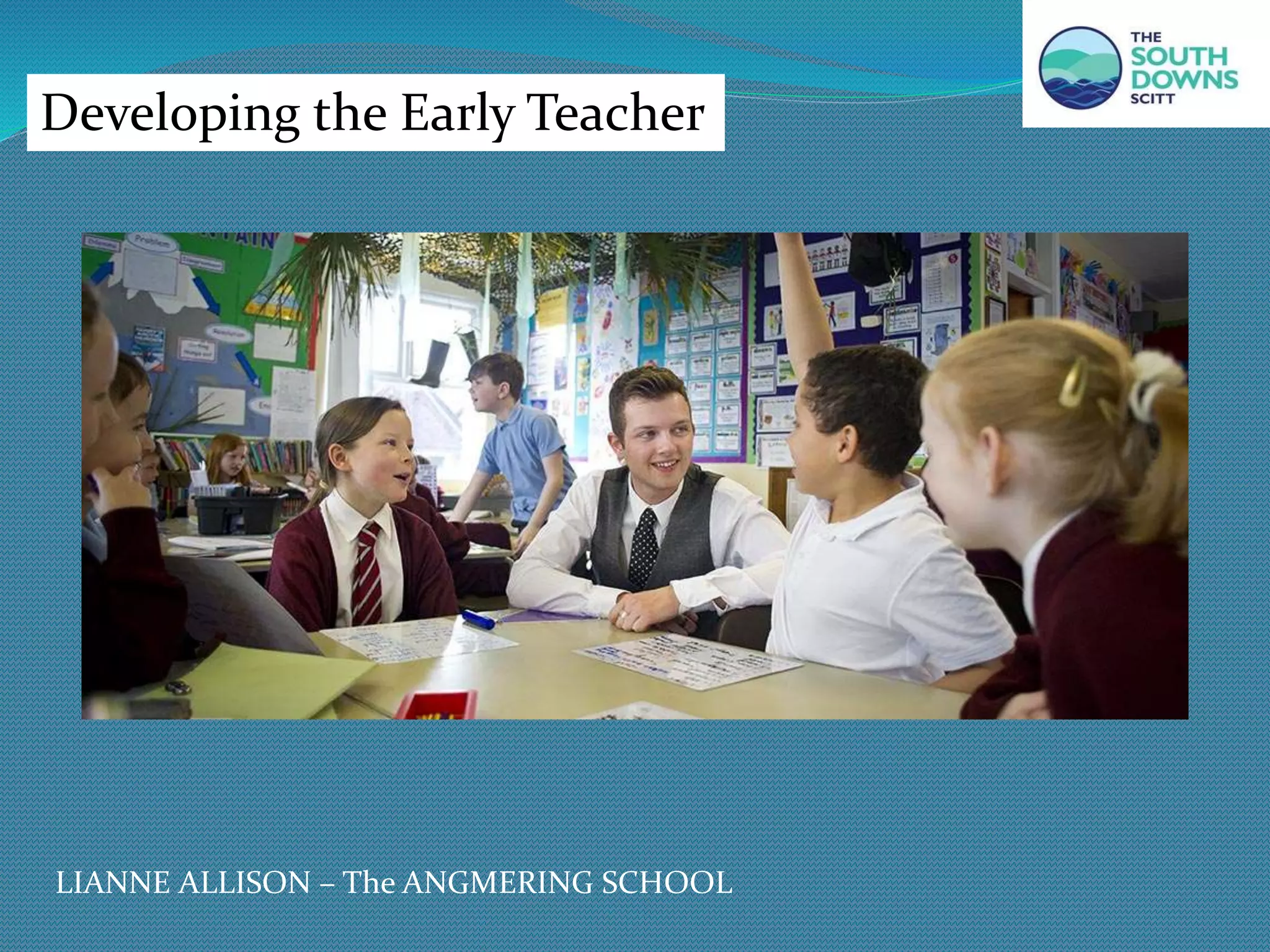
Developing the Early Teacher
LIANNE ALLISON – The ANGMERING SCHOOL
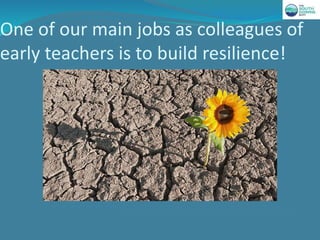
One of our main jobs as colleagues of
early teachers is to build resilience!
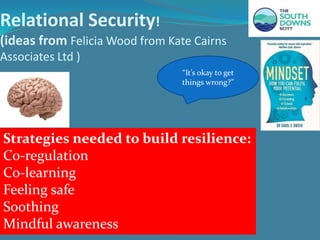
Relational Security!
(ideas from Felicia Wood from Kate Cairns
Associates Ltd )
“It’s okay to get
things wrong?”
Strategies needed to build resilience:
Co-regulation
Co-learning
Feeling safe
Soothing
Mindful awareness
How do we respond to any problems to help
build resilience?
(Ideas from Pat Black at Bath Spa University)
 What’s happened?
 How did it make you feel?
 What are the elements we can address immediately?
YES NO
Stage 1 - Survival:
 Coping/self blame/confusion/sticking to script/self
doubt.
 Mentor Response:
Clear guidance and specific suggestions.
Very direct and very clear.
Stage 2 – Early Optimism:
 Implementing rules/ Beginning to question/ Not yet
managing all children.
 Mentor Response:
Encourage to have a go at
things but continue to
suggest.
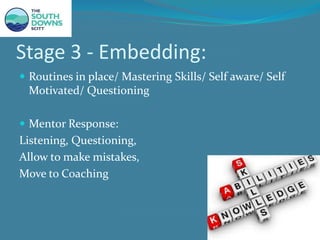
Stage 3 - Embedding:
 Routines in place/ Mastering Skills/ Self aware/ Self
Motivated/ Questioning
 Mentor Response:
Listening, Questioning,
Allow to make mistakes,
Move to Coaching
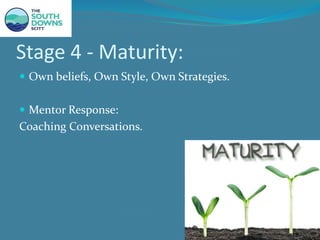
Stage 4 - Maturity:
 Own beliefs, Own Style, Own Strategies.
 Mentor Response:
Coaching Conversations.
Provide School-based professional development
where they can develop a support network!
15MF
Journal Club
NQT Group
Professional Learning Groups
Pedagogy Book Club
Subject Specific is so important!
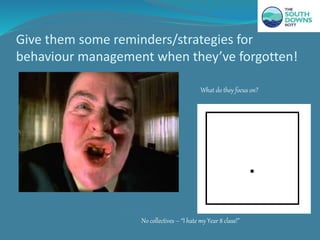
Give them some reminders/strategies for
behaviour management when they’ve forgotten!
No collectives – “I hate my Year 8 class!”
What do they focus on?
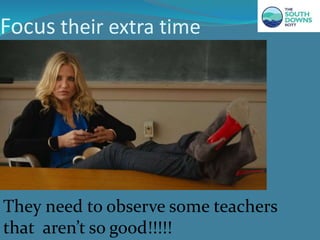
Focus their extra time
They need to observe some teachers
that aren’t so good!!!!!
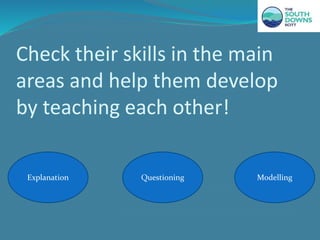
Check their skills in the main
areas and help them develop
by teaching each other!
QuestioningExplanation Modelling
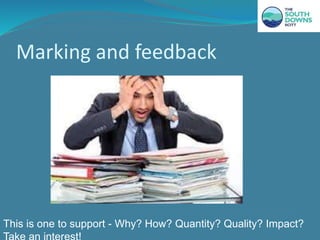
Marking and feedback
This is one to support - Why? How? Quantity? Quality? Impact?
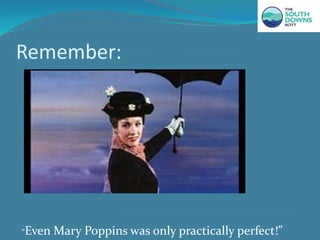
Remember:
“Even Mary Poppins was only practically perfect!”

Allison l

  • 1.
    Developing the EarlyTeacher LIANNE ALLISON – The ANGMERING SCHOOL
  • 2.
    One of ourmain jobs as colleagues of early teachers is to build resilience!
  • 3.
    Relational Security! (ideas fromFelicia Wood from Kate Cairns Associates Ltd ) “It’s okay to get things wrong?” Strategies needed to build resilience: Co-regulation Co-learning Feeling safe Soothing Mindful awareness
  • 4.
    How do werespond to any problems to help build resilience? (Ideas from Pat Black at Bath Spa University)  What’s happened?  How did it make you feel?  What are the elements we can address immediately? YES NO
  • 5.
    Stage 1 -Survival:  Coping/self blame/confusion/sticking to script/self doubt.  Mentor Response: Clear guidance and specific suggestions. Very direct and very clear.
  • 6.
    Stage 2 –Early Optimism:  Implementing rules/ Beginning to question/ Not yet managing all children.  Mentor Response: Encourage to have a go at things but continue to suggest.
  • 7.
    Stage 3 -Embedding:  Routines in place/ Mastering Skills/ Self aware/ Self Motivated/ Questioning  Mentor Response: Listening, Questioning, Allow to make mistakes, Move to Coaching
  • 8.
    Stage 4 -Maturity:  Own beliefs, Own Style, Own Strategies.  Mentor Response: Coaching Conversations.
  • 9.
    Provide School-based professionaldevelopment where they can develop a support network! 15MF Journal Club NQT Group Professional Learning Groups Pedagogy Book Club Subject Specific is so important!
  • 10.
    Give them somereminders/strategies for behaviour management when they’ve forgotten! No collectives – “I hate my Year 8 class!” What do they focus on?
  • 11.
    Focus their extratime They need to observe some teachers that aren’t so good!!!!!
  • 12.
    Check their skillsin the main areas and help them develop by teaching each other! QuestioningExplanation Modelling
  • 13.
    Marking and feedback Thisis one to support - Why? How? Quantity? Quality? Impact?
  • 14.
    Remember: “Even Mary Poppinswas only practically perfect!”