YES
YES
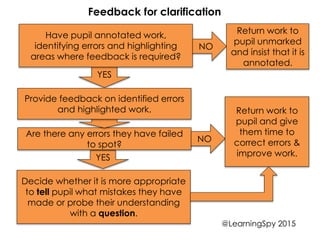
Have pupil annotated work,
identifying errors and highlighting
areas where feedback is required?
NO
Return work to
pupil unmarked
and insist that it is
annotated.
Are there any errors they have failed
to spot?
NO
Return work to
pupil and give
them time to
correct errors &
improve work.
Decide whether it is more appropriate
to tell pupil what mistakes they have
made or probe their understanding
with a question.
Provide feedback on identified errors
and highlighted work.
Feedback for clarification
@LearningSpy 2015
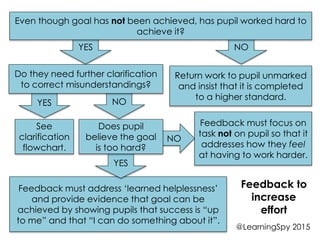
Feedback must address ‘learned helplessness’
and provide evidence that goal can be
achieved by showing pupils that success is “up
to me” and that “I can do something about it”.
Feedback must focus on
task not on pupil so that it
addresses how they feel
at having to work harder.
YES
YES
YES NO
NO
NO
Return work to pupil unmarked
and insist that it is completed
to a higher standard.
Do they need further clarification
to correct misunderstandings?
Does pupil
believe the goal
is too hard?
See
clarification
flowchart.
Even though goal has not been achieved, has pupil worked hard to
achieve it?
Feedback to
increase
effort
@LearningSpy 2015
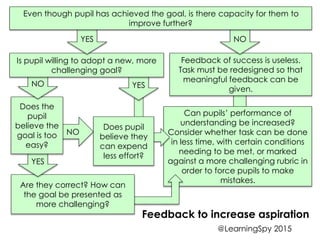
Can pupils’ performance of
understanding be increased?
Consider whether task can be done
in less time, with certain conditions
needing to be met, or marked
against a more challenging rubric in
order to force pupils to make
mistakes.
NO
Are they correct? How can
the goal be presented as
more challenging?
YES
Does the
pupil
believe the
goal is too
easy?
YES
Does pupil
believe they
can expend
less effort?
Feedback to increase aspiration
Feedback of success is useless.
Task must be redesigned so that
meaningful feedback can be
given.
NO
NO
Is pupil willing to adopt a new, more
challenging goal?
YES
Even though pupil has achieved the goal, is there capacity for them to
improve further?
@LearningSpy 2015

Feedback flowcharts

  • 1.
    YES YES Have pupil annotatedwork, identifying errors and highlighting areas where feedback is required? NO Return work to pupil unmarked and insist that it is annotated. Are there any errors they have failed to spot? NO Return work to pupil and give them time to correct errors & improve work. Decide whether it is more appropriate to tell pupil what mistakes they have made or probe their understanding with a question. Provide feedback on identified errors and highlighted work. Feedback for clarification @LearningSpy 2015
  • 2.
    Feedback must address‘learned helplessness’ and provide evidence that goal can be achieved by showing pupils that success is “up to me” and that “I can do something about it”. Feedback must focus on task not on pupil so that it addresses how they feel at having to work harder. YES YES YES NO NO NO Return work to pupil unmarked and insist that it is completed to a higher standard. Do they need further clarification to correct misunderstandings? Does pupil believe the goal is too hard? See clarification flowchart. Even though goal has not been achieved, has pupil worked hard to achieve it? Feedback to increase effort @LearningSpy 2015
  • 3.
    Can pupils’ performanceof understanding be increased? Consider whether task can be done in less time, with certain conditions needing to be met, or marked against a more challenging rubric in order to force pupils to make mistakes. NO Are they correct? How can the goal be presented as more challenging? YES Does the pupil believe the goal is too easy? YES Does pupil believe they can expend less effort? Feedback to increase aspiration Feedback of success is useless. Task must be redesigned so that meaningful feedback can be given. NO NO Is pupil willing to adopt a new, more challenging goal? YES Even though pupil has achieved the goal, is there capacity for them to improve further? @LearningSpy 2015