Mechanism of Arrhythmias
Dr Fuad Farooq
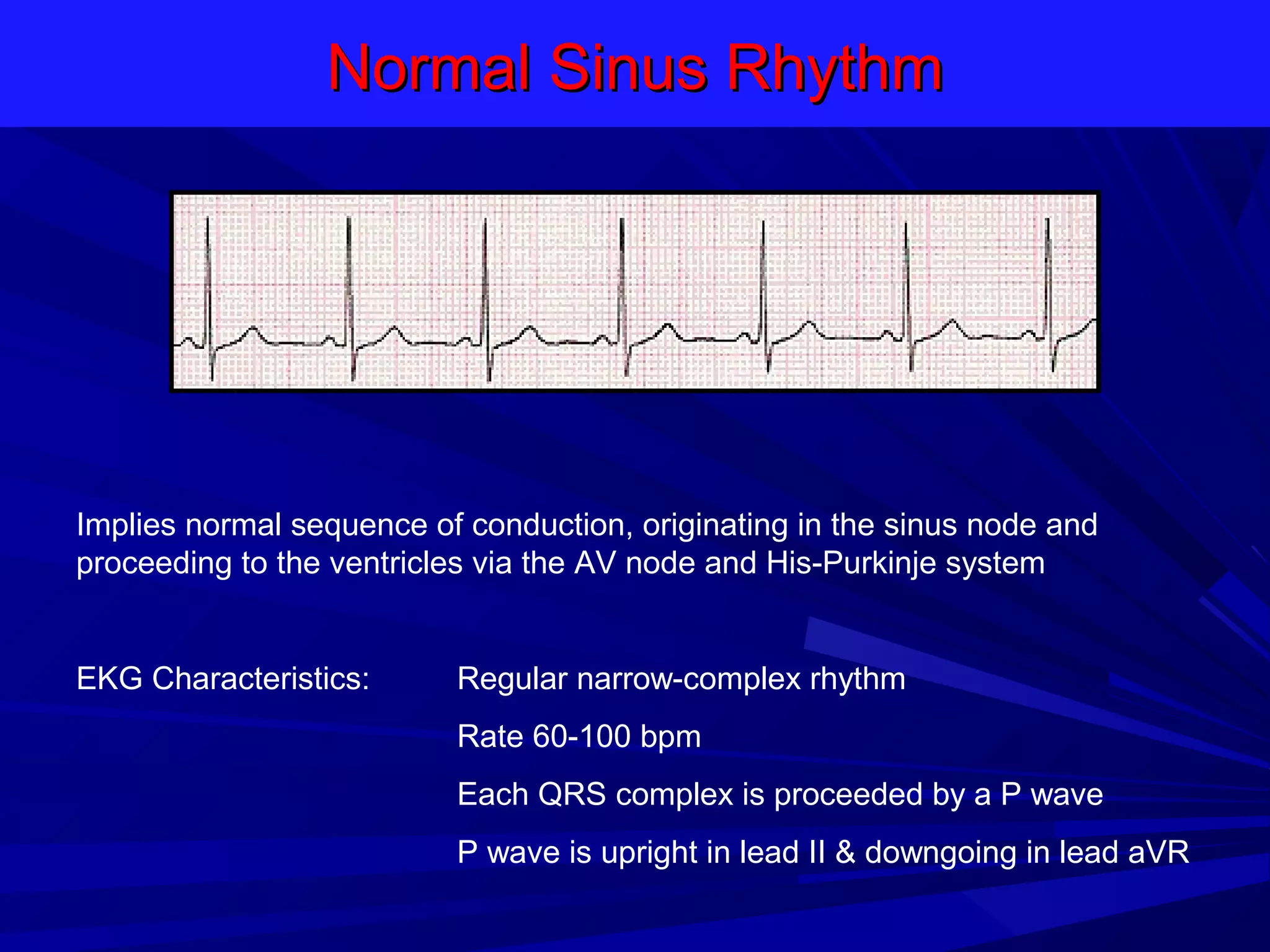
Normal Sinus Rhythm

Implies normal sequence of conduction, originating in the sinus node and
proceeding to the ventricles via the AV node and His-Purkinje system

EKG Characteristics:

Regular narrow-complex rhythm
Rate 60-100 bpm
Each QRS complex is proceeded by a P wave
P wave is upright in lead II & downgoing in lead aVR
The mechanisms responsible for
arrhythmias are generally divided into
–
–
–

Disorders of impulse formation
Disorders of impulse conduction
Combinations of both

cardiac
Disorders of Impulse Formation
Can be
– Disorder in Automaticity
– Trigger activity
Automaticity
Automaticity is the property of a fiber to initiate an
impulse spontaneously, without need for prior stimulation
Characterized by
– Inappropriate discharge rate of the normal pacemaker, the
SA node (e.g., sinus rates too fast or too slow for the
physiologic needs of the patient)
– Discharge of an ectopic pacemaker that controls atrial or
ventricular rhythm

Ectopic pacemakers are often called latent or subsidiary
pacemakers
Automaticity
Ectopic pacemakers are usually suppressed by
overdrive suppression by the more rapidly firing SA node
or by concealed conduction from neighboring fibers
– Manifested when the SA discharge rate slows or block
occurs at some level between the SA node and the ectopic
pacemaker site
– The discharge rate of the latent pacemaker can speed
inappropriately and usurp control of cardiac rhythm from
the SA node
Recognizing Altered Automaticity on EKG

Gradual onset (warming) and termination of the
arrhythmia
The P wave of the first beat of the arrhythmia is
typically the same as the remaining beats of the
arrhythmia (if a P wave is present at all)
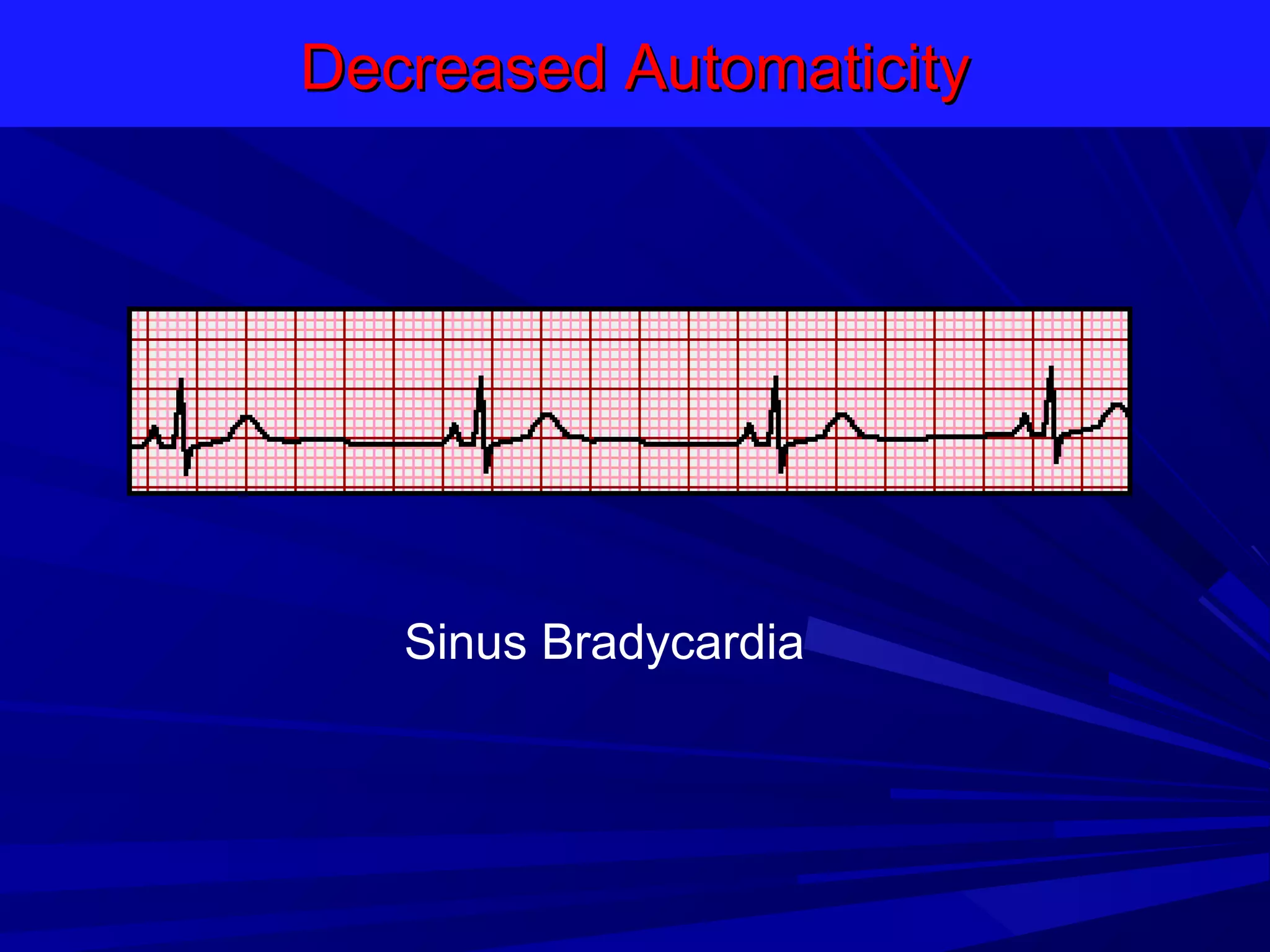
Decreased Automaticity

Sinus Bradycardia
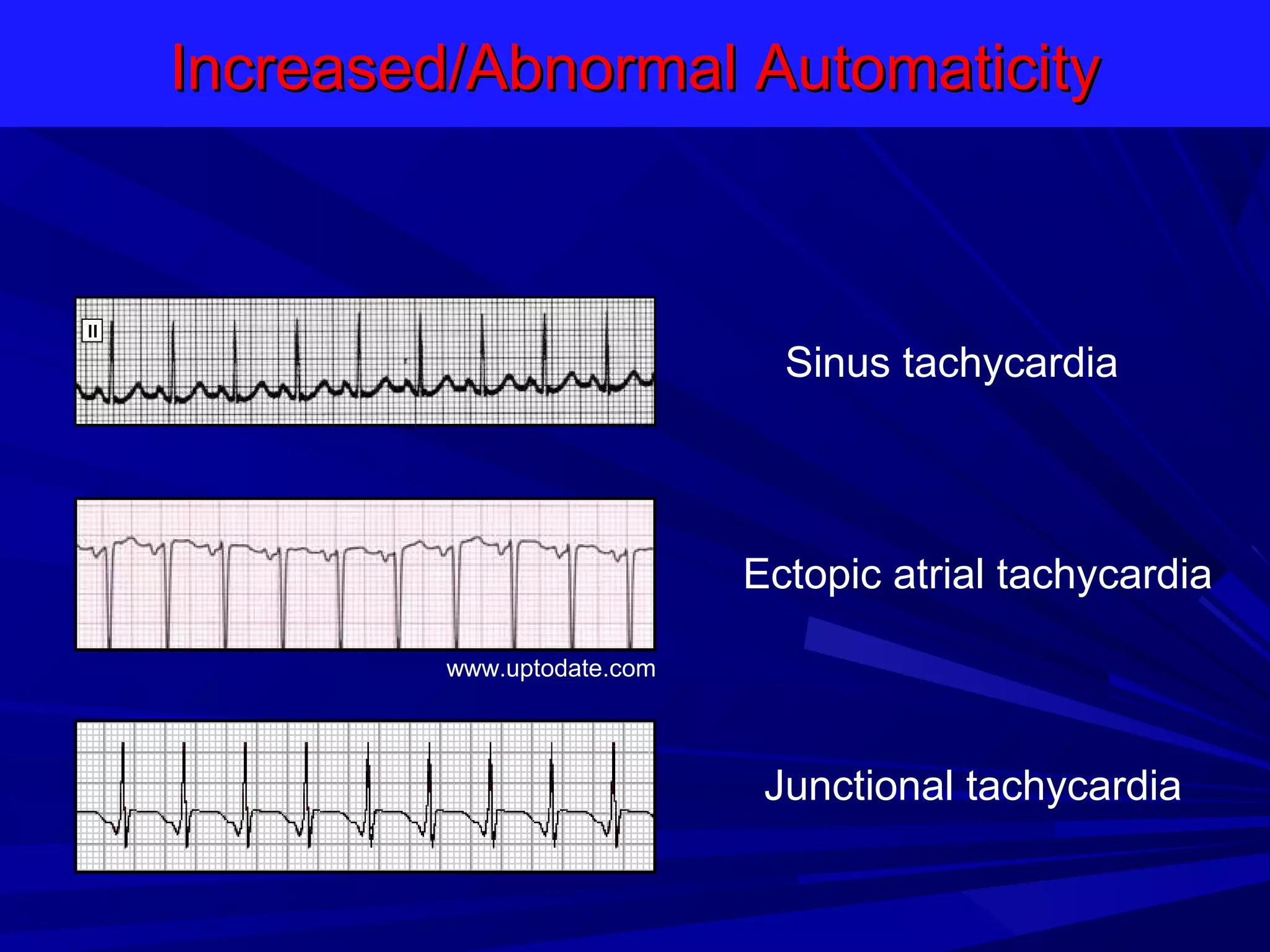
Increased/Abnormal Automaticity

Sinus tachycardia

Ectopic atrial tachycardia
www.uptodate.com

Junctional tachycardia
Triggered Activity
•

Triggered activity is initiated by after-depolarizations, which
are depolarizing oscillations in membrane voltage induced by
one or more preceding action potentials

•

Thus, triggered activity is pacemaker activity that results
consequent to a preceding impulse or series of impulses,
without which electrical quiescence will occurs
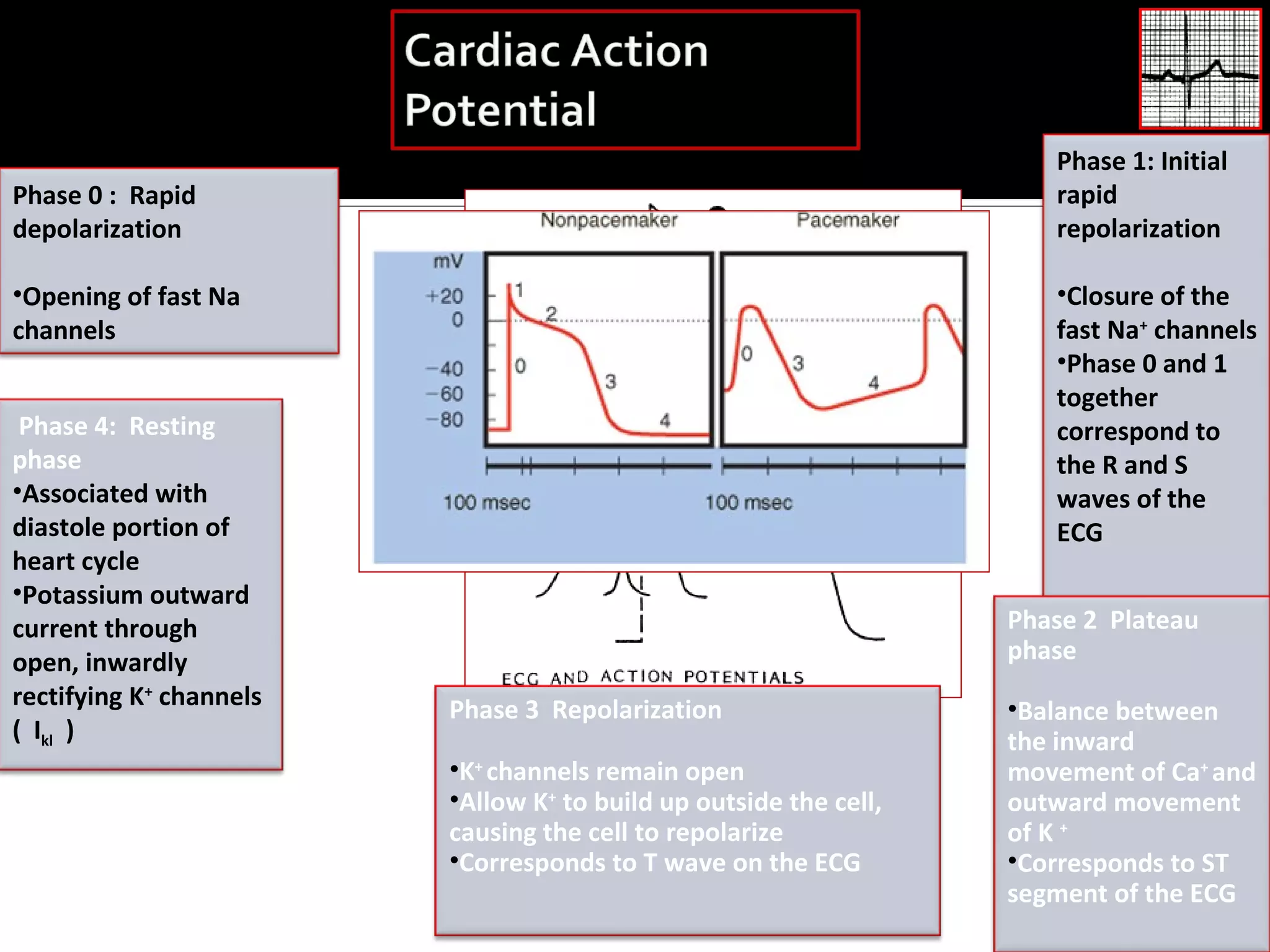
Phase 1: Initial
rapid
repolarization

Phase 0 : Rapid
depolarization

•Closure of the
fast Na+ channels
•Phase 0 and 1
together
correspond to
the R and S
waves of the
ECG

•Opening of fast Na
channels
Phase 4: Resting
phase
•Associated with
diastole portion of
heart cycle
•Potassium outward
current through
open, inwardly
rectifying K+ channels
( Ikl )

Phase 2 Plateau
phase
Phase 3 Repolarization
•K+ channels remain open
•Allow K+ to build up outside the cell,
causing the cell to repolarize
•Corresponds to T wave on the ECG

•Balance between
the inward
movement of Ca+ and
outward movement
of K +
•Corresponds to ST
segment of the ECG
Can be:
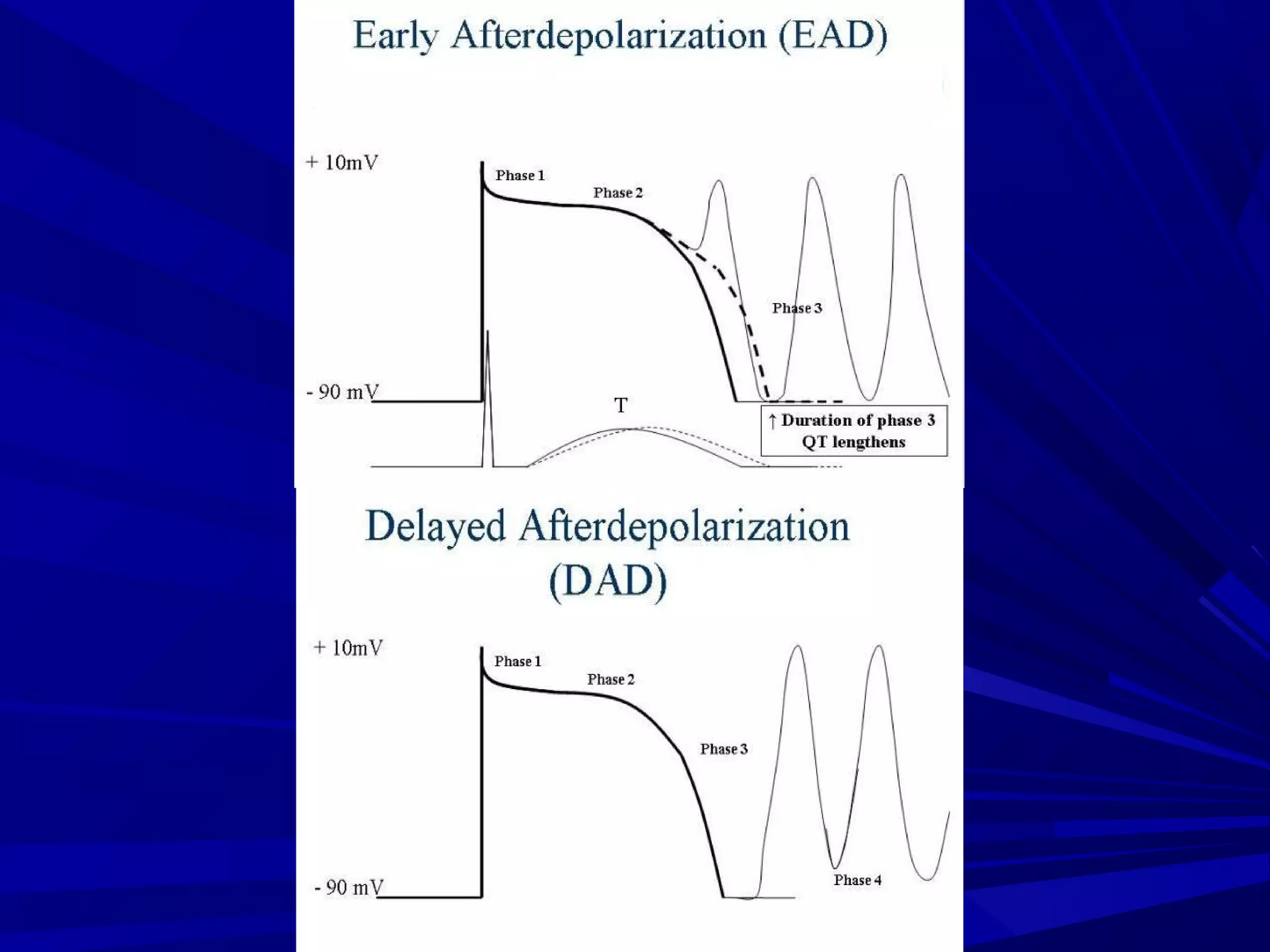
• Early after-depolarizations (EADs), arise from a reduced level of
membrane potential during phases 2 (type 1 – augmented
opening of Ca channels) and 3 (type 2 – augmented opening of
Na channels) of the cardiac action potential
• Late or delayed after-depolarizations (DADs), occur after
completion of repolarization (phase 4 – secondary to increase
cytosolic Ca++ levels), generally at a more negative membrane
potential than that from which EADs arise
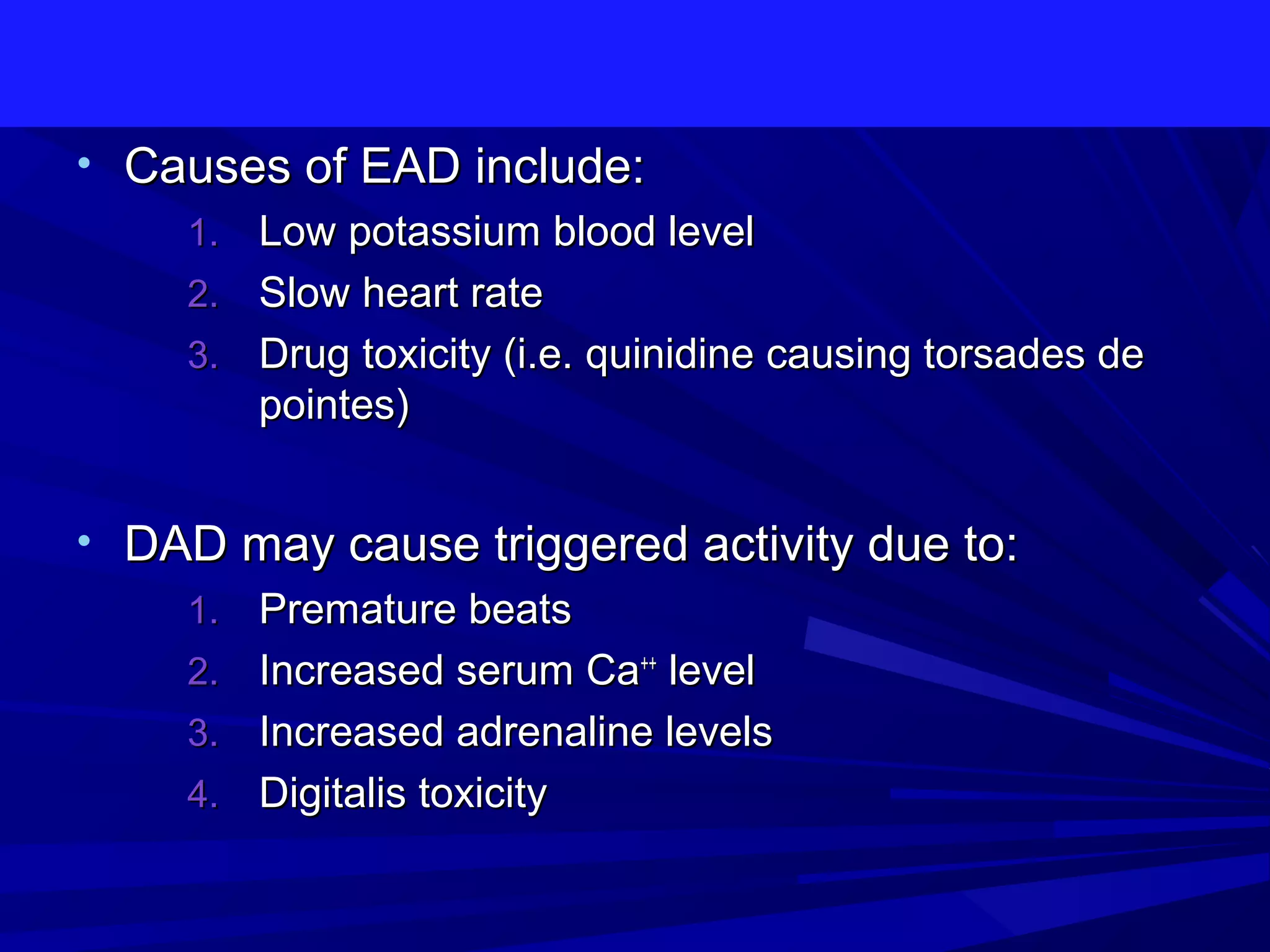
• Causes of EAD include:
1. Low potassium blood level
2. Slow heart rate
3. Drug toxicity (i.e. quinidine causing torsades de
pointes)
• DAD may cause triggered activity due to:
1. Premature beats
2. Increased serum Ca++ level
3. Increased adrenaline levels
4. Digitalis toxicity
Disorder of Impulse Conduction
Can be:
– Conduction block
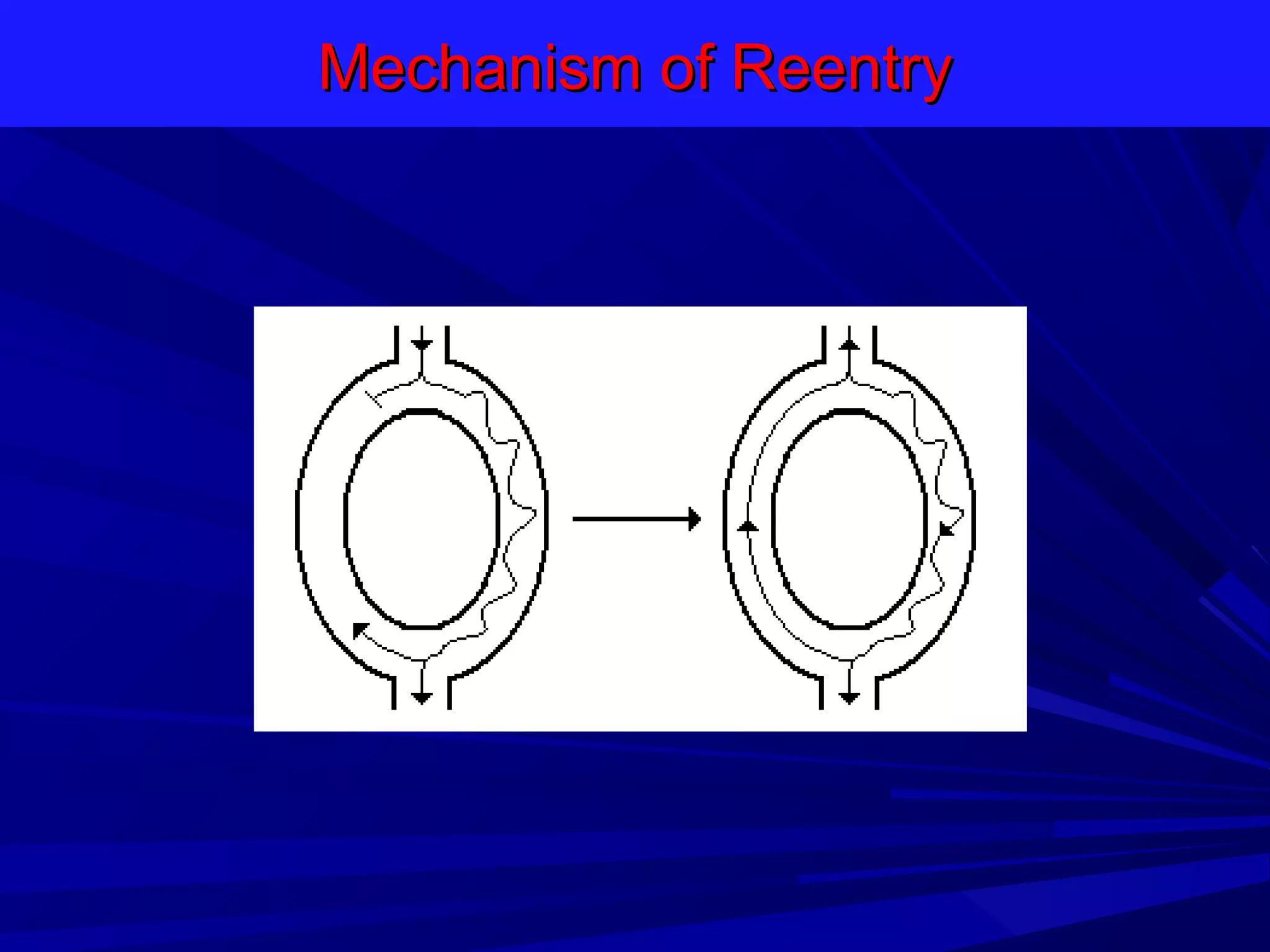
– Re-entry
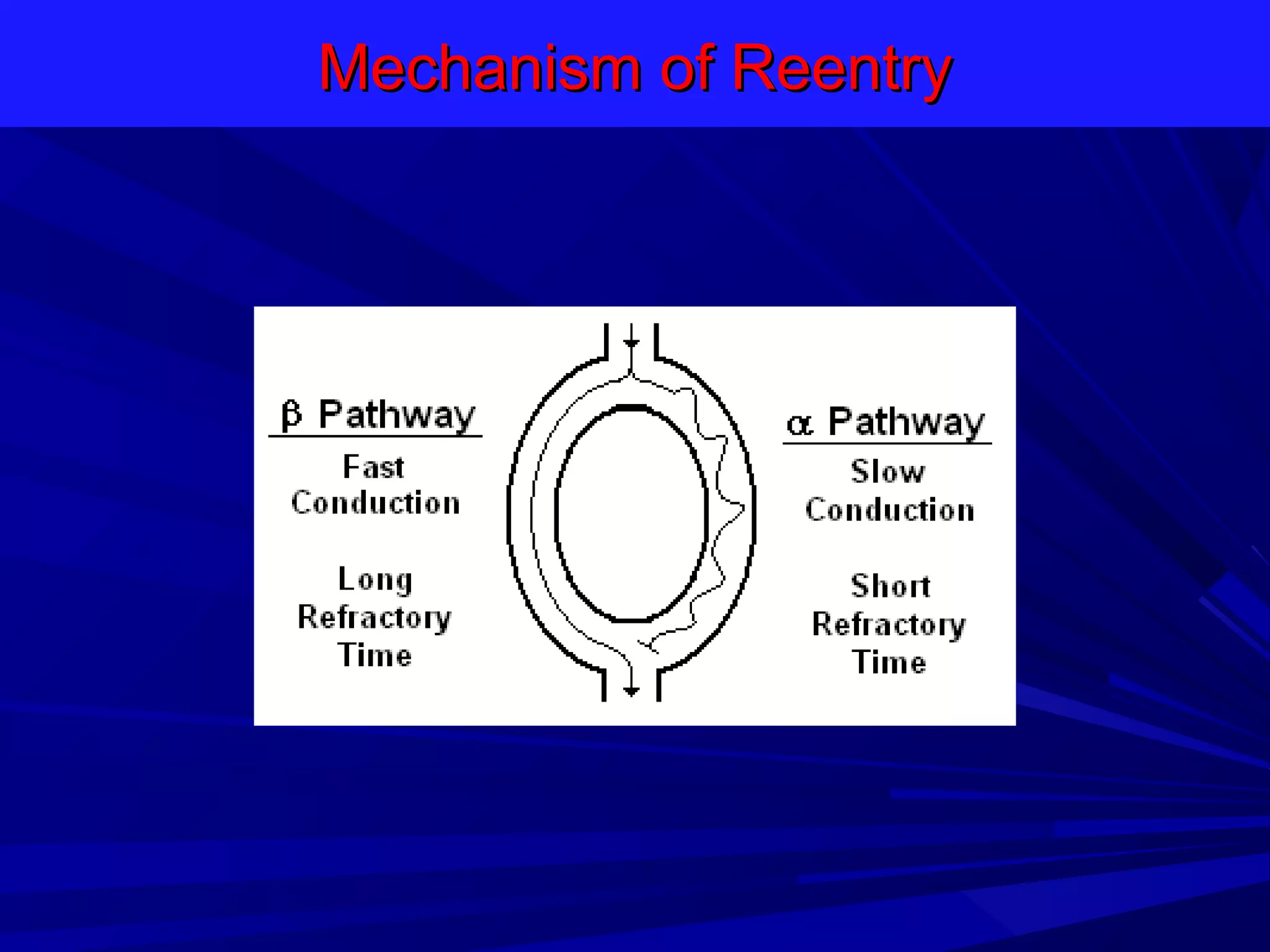
Mechanism of Reentry
Reentrent Rhythms
AV nodal reentrant tachycardia (AVNRT)
AV reentrant tachycardia (AVRT)
– Orthodromic
– Antidromic

Atrial flutter
Atrial fibrillation
Ventricular tachycardia
Recognizing Reentry on EKG

Abrupt onset and termination of the arrhythmia
The P wave of the first beat of the arrhythmia is
different as the remaining beats of the
arrhythmia (if a P wave is present at all)
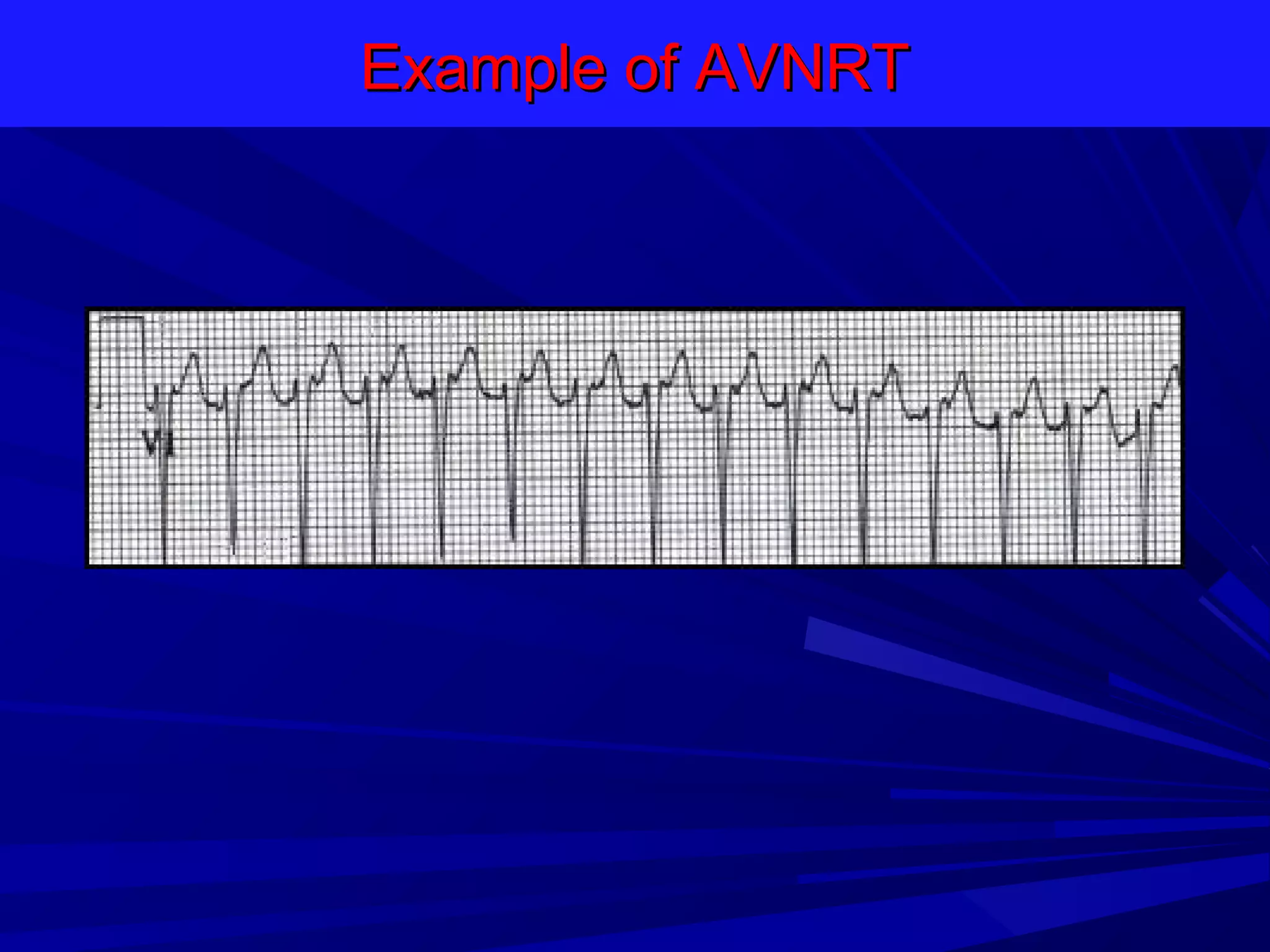
Example of AVNRT
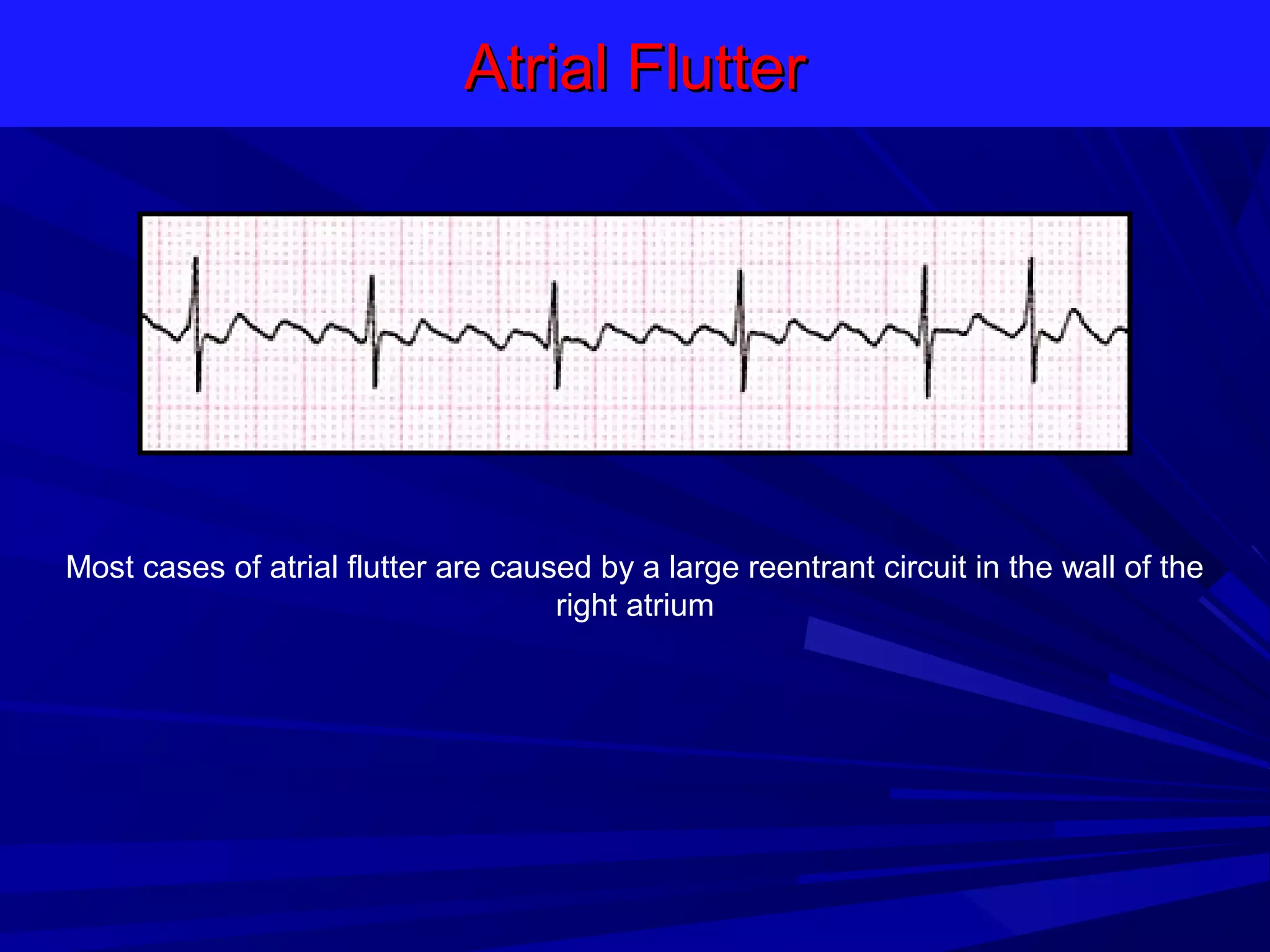
Atrial Flutter

Most cases of atrial flutter are caused by a large reentrant circuit in the wall of the
right atrium
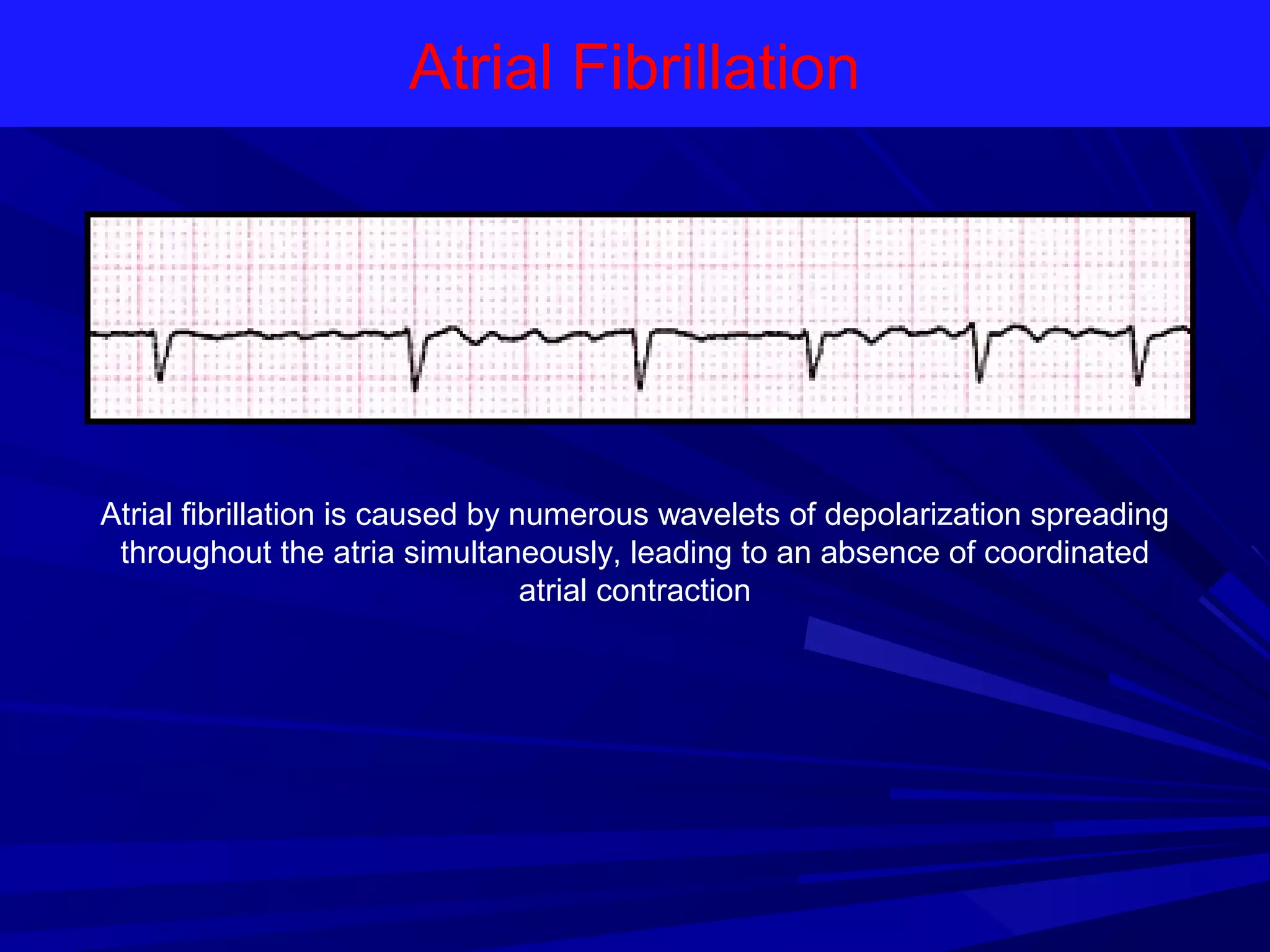
Atrial Fibrillation

Atrial fibrillation is caused by numerous wavelets of depolarization spreading
throughout the atria simultaneously, leading to an absence of coordinated
atrial contraction
Thank You

Mechanism of arrythmias

  • 1.
  • 2.
    Normal Sinus Rhythm Impliesnormal sequence of conduction, originating in the sinus node and proceeding to the ventricles via the AV node and His-Purkinje system EKG Characteristics: Regular narrow-complex rhythm Rate 60-100 bpm Each QRS complex is proceeded by a P wave P wave is upright in lead II & downgoing in lead aVR
  • 3.
    The mechanisms responsiblefor arrhythmias are generally divided into – – – Disorders of impulse formation Disorders of impulse conduction Combinations of both cardiac
  • 4.
    Disorders of ImpulseFormation Can be – Disorder in Automaticity – Trigger activity
  • 5.
    Automaticity Automaticity is theproperty of a fiber to initiate an impulse spontaneously, without need for prior stimulation Characterized by – Inappropriate discharge rate of the normal pacemaker, the SA node (e.g., sinus rates too fast or too slow for the physiologic needs of the patient) – Discharge of an ectopic pacemaker that controls atrial or ventricular rhythm Ectopic pacemakers are often called latent or subsidiary pacemakers
  • 6.
    Automaticity Ectopic pacemakers areusually suppressed by overdrive suppression by the more rapidly firing SA node or by concealed conduction from neighboring fibers – Manifested when the SA discharge rate slows or block occurs at some level between the SA node and the ectopic pacemaker site – The discharge rate of the latent pacemaker can speed inappropriately and usurp control of cardiac rhythm from the SA node
  • 7.
    Recognizing Altered Automaticityon EKG Gradual onset (warming) and termination of the arrhythmia The P wave of the first beat of the arrhythmia is typically the same as the remaining beats of the arrhythmia (if a P wave is present at all)
  • 8.
  • 9.
    Increased/Abnormal Automaticity Sinus tachycardia Ectopicatrial tachycardia www.uptodate.com Junctional tachycardia
  • 10.
    Triggered Activity • Triggered activityis initiated by after-depolarizations, which are depolarizing oscillations in membrane voltage induced by one or more preceding action potentials • Thus, triggered activity is pacemaker activity that results consequent to a preceding impulse or series of impulses, without which electrical quiescence will occurs
  • 11.
    Phase 1: Initial rapid repolarization Phase0 : Rapid depolarization •Closure of the fast Na+ channels •Phase 0 and 1 together correspond to the R and S waves of the ECG •Opening of fast Na channels Phase 4: Resting phase •Associated with diastole portion of heart cycle •Potassium outward current through open, inwardly rectifying K+ channels ( Ikl ) Phase 2 Plateau phase Phase 3 Repolarization •K+ channels remain open •Allow K+ to build up outside the cell, causing the cell to repolarize •Corresponds to T wave on the ECG •Balance between the inward movement of Ca+ and outward movement of K + •Corresponds to ST segment of the ECG
  • 12.
    Can be: • Earlyafter-depolarizations (EADs), arise from a reduced level of membrane potential during phases 2 (type 1 – augmented opening of Ca channels) and 3 (type 2 – augmented opening of Na channels) of the cardiac action potential • Late or delayed after-depolarizations (DADs), occur after completion of repolarization (phase 4 – secondary to increase cytosolic Ca++ levels), generally at a more negative membrane potential than that from which EADs arise
  • 14.
    • Causes ofEAD include: 1. Low potassium blood level 2. Slow heart rate 3. Drug toxicity (i.e. quinidine causing torsades de pointes) • DAD may cause triggered activity due to: 1. Premature beats 2. Increased serum Ca++ level 3. Increased adrenaline levels 4. Digitalis toxicity
  • 15.
    Disorder of ImpulseConduction Can be: – Conduction block – Re-entry
  • 16.
  • 17.
  • 18.
    Reentrent Rhythms AV nodalreentrant tachycardia (AVNRT) AV reentrant tachycardia (AVRT) – Orthodromic – Antidromic Atrial flutter Atrial fibrillation Ventricular tachycardia
  • 19.
    Recognizing Reentry onEKG Abrupt onset and termination of the arrhythmia The P wave of the first beat of the arrhythmia is different as the remaining beats of the arrhythmia (if a P wave is present at all)
  • 20.
  • 21.
    Atrial Flutter Most casesof atrial flutter are caused by a large reentrant circuit in the wall of the right atrium
  • 22.
    Atrial Fibrillation Atrial fibrillationis caused by numerous wavelets of depolarization spreading throughout the atria simultaneously, leading to an absence of coordinated atrial contraction
  • 23.