VASOPRESSORS IN ICU
Dr. Kanika Chaudhary
INOTROPES
VASOPRESSORS
SHOCK
SEPSIS
CARDIAC FAILURE
NOREPINEPHRINE
DOBUTAMINE
DOPAMINE
RENAL DOSE
HYPOVOLEMIA
RECEPTORS
CATECHOLAMINES
PHENYLEPHRINE
VASOPRESSIN
DEFINITION
• Vasopressor agents are administered to increase vascular tone.
• Inotropes are agents administered to increase myocardial contractility.
Bangash, Mansoor N et al. “Use of inotropes and vasopressor agents in critically ill patients.” British journal of
pharmacologyvol. 165,7 (2012): 2015-33. doi:10.1111/j.1476-5381.2011.01588.x
RECEPTOR PHYSIOLOGY
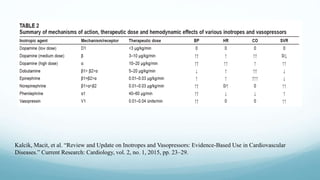
Kalcik, Macit, et al. “Review and Update on Inotropes and Vasopressors: Evidence-Based Use in Cardiovascular
Diseases.” Current Research: Cardiology, vol. 2, no. 1, 2015, pp. 23–29.
RECEPTOR PHYSIOLOGY
“Inotropes and Vasopressors Review of Physiology and Clinical Use in Cardiovascular Disease.” Circulation, vol. 118, no.
10, 2008, pp. 1047–1056.
RECEPTOR PHYSIOLOGY
“Inotropes and Vasopressors Review of Physiology and Clinical Use in Cardiovascular Disease.” Circulation, vol. 118, no.
10, 2008, pp. 1047–1056.
PRINCIPLES
Hypotension may result from
1.Hypovolemia (eg, exsanguination)
2.Pump failure (eg, severe medically refractory heart failure or shock complicating
myocardial infarction)
3.Pathologic maldistribution of blood flow (eg, septic shock, anaphylaxis)
Manaker S, Parsons P. Use of vasopressors and inotropes. Waltham, MA: UpToDate. 2020.
Indications
A decrease of >30 mm
Hg from baseline
systolic blood pressure
A mean arterial pressure
<60 mmHg
when
End-organ dysfunction
ensues due to
hypoperfusion
Hypovolemia should be
corrected prior to the
institution of
vasopressor therapy
PRINCIPLES
Manaker S, Parsons P. Use of vasopressors and inotropes. Waltham, MA: UpToDate. 2020.
PRINCIPLES
The rational use of vasopressors is guided by three fundamental concepts:
1. One drug, many receptors – A given drug has multiple effects because of actions
upon more than one receptor.
For example, dobutamine increases cardiac output by beta-1 adrenergic receptor activation;
however, it also acts upon beta-2 adrenergic receptors and thus induces vasodilation and
can cause hypotension
Manaker S, Parsons P. Use of vasopressors and inotropes. Waltham, MA: UpToDate. 2020.
PRINCIPLES
2. Dose-response curve – Many agents have dose-response curves, such that the primary
adrenergic receptor subtype activated by the drug is dose-dependent.
For example, dopamine stimulates beta-1 adrenergic receptors at doses of 2 to 10 mcg/kg
per minute, and alpha adrenergic receptors when doses exceed 10 mcg/kg per minute.
Manaker S, Parsons P. Use of vasopressors and inotropes. Waltham, MA: UpToDate. 2020.
PRINCIPLES
3. Direct versus reflex actions – A given agent can affect mean arterial pressure (MAP) both
by direct actions on adrenergic receptors and by reflex actions triggered by the pharmacologic
response.
Norepinephrine-induced beta-1 adrenergic stimulation alone normally would cause
tachycardia. However, the elevated MAP from norepinephrine's alpha-adrenergic receptor-
induced vasoconstriction results in a reflex decrease in heart rate.
The net result may be a stable or slightly reduced heart rate when the drug is used.
Manaker S, Parsons P. Use of vasopressors and inotropes. Waltham, MA: UpToDate. 2020.
Practical issues
I. Volume resuscitation
Repletion of adequate intravascular volume - crucial prior to the
initiation of vasopressors
Most patients in septic shock – need ~2 liters of fluids
Else,vasopressor effect is suboptimal or evenineffective
Fluidswithheld
Pulmonary edema
ARDS
Heart failure
Manaker S, Parsons P. Use of vasopressors and inotropes. Waltham, MA: UpToDate. 2020.
Practical issues
II. Selection and titration
Choice of an initial agent  underlying etiology of shock
Dose should be titrated up to achieve effective blood pressure or
end-organ perfusion – based on urine output or mentation
Maximal doses of the first agent or evidences ofadverse effects 
add a second agent
A third agent may be added – no controlled trials for thisapproach
Manaker S, Parsons P. Use of vasopressors and inotropes. Waltham, MA: UpToDate. 2020.
Practical issues
III. Route of administration
Vasopressors and inotropic agents  via Central venous catheter
CVC  Rapid delivery to the heart & peripheries & prevents
extravasation
Peripheral IV line –A temporary measure till a central line is
achieved
Manaker S, Parsons P. Use of vasopressors and inotropes. Waltham, MA: UpToDate. 2020.
Practical issues
IV. Tachyphylaxis
Responsiveness to these drugs can decrease over time dueto
tachyphylaxis.
Constantly titrated to adjust for this phenomenon and for changes
in the patient's clinical condition
Manaker S, Parsons P. Use of vasopressors and inotropes. Waltham, MA: UpToDate. 2020.
Practical issues
V. Hemodynamic effects
Mean arterial pressure (MAP) is influenced by systemic vascular
resistance (SVR)and cardiac output (CO)
Eg.In cardiogenic shock, increasing SVRcan increase afterload on
an already failing heart  impairing CO
Raising SVRis beneficial in septic shock, when cardiac function is
largely normal.
Manaker S, Parsons P. Use of vasopressors and inotropes. Waltham, MA: UpToDate. 2020.
Practical issues
VI. Subcutaneous delivery of medications
Critically ill patients often on sc medication(LMWH, insulin)
The bioavailability of these medications - reduced during
treatment with vasopressors due to cutaneous vasoconstriction.
A higher dose of LMWH may be required forthrombosis
prophylaxis
May require switching tointravenous therapy
Manaker S, Parsons P. Use of vasopressors and inotropes. Waltham, MA: UpToDate. 2020.
Practical issues
VII. Frequent re-evaluation
Critically ill patients may undergo a second hemodynamic insult
Could necessitates a change in vasopressor or inotrope
management
The dosage of a given agent should notsimply be increased
without reconsideration of the clinical situation and the
appropriateness of the current strategy
Weaning
• Catechol Vasopressors are titrated quickly
• Inotropes (Inamrinone, dobutamine) are titrated over hours
Manaker S, Parsons P. Use of vasopressors and inotropes. Waltham, MA: UpToDate. 2020.
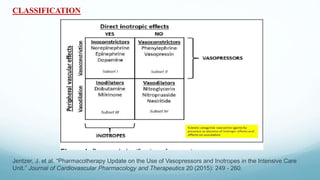
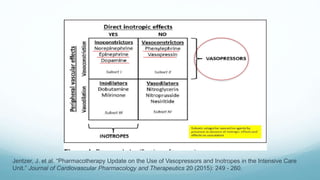
CLASSIFICATION
Jentzer, J. et al. “Pharmacotherapy Update on the Use of Vasopressors and Inotropes in the Intensive Care
Unit.” Journal of Cardiovascular Pharmacology and Therapeutics 20 (2015): 249 - 260.
Jentzer, J. et al. “Pharmacotherapy Update on the Use of Vasopressors and Inotropes in the Intensive Care
Unit.” Journal of Cardiovascular Pharmacology and Therapeutics 20 (2015): 249 - 260.
Jentzer, J. et al. “Pharmacotherapy Update on the Use of Vasopressors and Inotropes in the Intensive Care
Unit.” Journal of Cardiovascular Pharmacology and Therapeutics 20 (2015): 249 - 260.
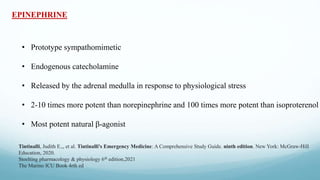
EPINEPHRINE
• Prototype sympathomimetic
• Endogenous catecholamine
• Released by the adrenal medulla in response to physiological stress
• 2-10 times more potent than norepinephrine and 100 times more potent than isoproterenol
• Most potent natural β-agonist
Tintinalli, Judith E.,, et al. Tintinalli's Emergency Medicine: A Comprehensive Study Guide. ninth edition. New York: McGraw-Hill
Education, 2020.
Stoelting pharmacology & physiology 6th edition,2021
The Marino ICU Book 4rth ed
EPINEPHRINE- Pharmacokinetics
Tintinalli, Judith E.,, et al. Tintinalli's Emergency Medicine: A Comprehensive Study Guide. ninth edition. New
York: McGraw-Hill Education, 2020.
EPINEPHRINE- Action
CVS
• α1- and nonselective β-adrenergic agonist that increases systemic vascular resistance, heart rate, cardiac
output, and blood pressure
• β -Adrenergic effects are more pronounced at low doses and α1-adrenergic effects at higher doses
• Low dose:
 β1>> β2 β1+ ↑ contractility & HR = ↑ CO
 alpha adrenergic receptor-induced vasoconstriction is often offset by the beta-2 adrenergic receptor
vasodilation
 Net result: increased CO, with decreased SVR and variable effects on the MAP
Tintinalli, Judith E.,, et al. Tintinalli's Emergency Medicine: A Comprehensive Study Guide. ninth edition. New York: McGraw-Hill Education, 2020.
Stoelting pharmacology & physiology 6th edition,2021
The Marino ICU Book 4rth ed
Kalcik, Macit, et al. “Review and Update on Inotropes and Vasopressors: Evidence-Based Use in Cardiovascular Diseases.” Current Research: Cardiology, vol. 2, no. 1, 2015,
pp. 23–29.
EPINEPHRINE- Action
CVS
• High dose:
 α1-adrenergic action predominates Vasoconstriction = ↑ SVR ↑MAP
 High and prolonged doses can cause direct cardiac toxicity through damage to arterial
walls, which causes focal regions of myocardial contraction band necrosis, and
through direct stimulation of myocyte apoptosis.
• Myocardial oxygen demand rises because of increased heart rate and stroke work
“Inotropes and Vasopressors Review of Physiology and Clinical Use in Cardiovascular Disease.” Circulation, vol. 118, no.
10, 2008, pp. 1047–1056.
Stoelting pharmacology & physiology 6th edition,2021
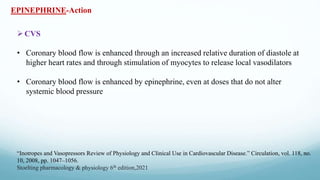
CVS
• Coronary blood flow is enhanced through an increased relative duration of diastole at
higher heart rates and through stimulation of myocytes to release local vasodilators
• Coronary blood flow is enhanced by epinephrine, even at doses that do not alter
systemic blood pressure
EPINEPHRINE-Action
“Inotropes and Vasopressors Review of Physiology and Clinical Use in Cardiovascular Disease.” Circulation, vol. 118, no.
10, 2008, pp. 1047–1056.
Stoelting pharmacology & physiology 6th edition,2021
EPINEPHRINE-Action
 RS
 Βeta 2+Smooth muscles of bronchi are relaxed/Bronchodilation
 Metabolic effects
 β1 Receptor stimulation increases liver glycogenolysis and adipose tissue lipolysis, whereas α1
receptor stimulation inhibits release of insulinincrease plasma concentrations of
glucose,cholesterol, phospholipids, and low-density lipoproteins
 Epinephrine-induced glycogenolysis in skeletal musclesIncreased plasma concentrations of
lactate
Gilmore K, Nanyanzi C. Pharmacology of vasopressors and inotropes. Update Aneasthesia. 1999;10:1-2.
Stoelting pharmacology & physiology 6th edition,2021
EPINEPHRINE-Action
 Ocular effects
 Contraction of the radial muscles of the iris, producing mydriasis (dilation of the pupil)
 Contraction of the orbital muscles produces an appearance of exophthalmos
Gastrointestinal and Genitourinary Effects
 Relaxation of gastrointestinal smooth muscle
 Activation of β-adrenergic receptors relaxes the detrusor muscle of the bladder, whereas activation of
α-adrenergic receptors contracts the trigone and sphincter muscles
Stoelting pharmacology & physiology 6th edition,2021
EPINEPHRINE-Action
Gastrointestinal and Genitourinary Effects
 Hepatosplanchnic vasoconstriction occurs as well as impaired renal blood flow as cardiac output is
diverted to the dilated skeletal muscle vasculaturedecreased hepatosplanchnic oxygen exchange and
lactate clearance
Stoelting pharmacology & physiology 6th edition,2021
EPINEPHRINE-Indication & Doses
1.Asystole/pulseless arrest, pulseless VT/VF
1 milligram IV/IO every 3–5 min until ROSC; 2–2.5 milligrams ET every 3–5 min until IV/IO access
established or ROSC (dilute in 5–10 mL NS)
2.In Septic shock-as a second line agent(after norepinephrine)
IV infusion (initial): 0.05–2 micrograms/kg/min; titrate every 10-15 min by increments of 0.02–0.05
microgram/kg/min to desired MAP
3.Anaphylaxis 0.3–0.5 milligram IM by epinephrine autoinjector or equivalent; For Anaphylactic
shock IV infusion, mix 1 milligram in 100 mL D5W(10microgram/ml) and infuse at 30-100ml/hr
(5-15microgram/min) and titrate dose as needed
4. Additive to local anaesthetic - add adrenaline to local anaesthetic to make a concentration of
1:200,000
Tintinalli, Judith E.,, et al. Tintinalli's Emergency Medicine: A Comprehensive Study Guide. ninth edition. New
York: McGraw-Hill Education, 2020.
Gilmore K, Nanyanzi C. Pharmacology of vasopressors and inotropes. Update Aneasthesia. 1999;10:1-2.
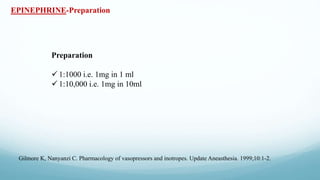
EPINEPHRINE-Preparation
Preparation
 1:1000 i.e. 1mg in 1 ml
 1:10,000 i.e. 1mg in 10ml
Gilmore K, Nanyanzi C. Pharmacology of vasopressors and inotropes. Update Aneasthesia. 1999;10:1-2.
EPINEPHRINE-Side effects
 Ventricular arrhythmias
 Severe hypertension resulting in cerebrovascular haemorrhage
 Cardiac ischemia
 Sudden cardiac death
 Hyperglycemia
 High lactate levels
 Splanchnic hypoperfusion
Tintinalli, Judith E.,, et al. Tintinalli's Emergency Medicine: A Comprehensive Study Guide. ninth edition. New York: McGraw-Hill
Education, 2020.
Stoelting pharmacology & physiology 6th edition,2021
The Marino ICU Book 4rth ed
NOREPINEPHRINE
 Endogenous catecholamine
 Excitatory neurotransmitter-stored in postganglionic sympathetic nerve
endings and released with sympathetic nerve stimulation
 Hydroxylated derivative of dopamine and the immediate precursor of
epinephrine
 Inotrope and vasopressor
Bangash, Mansoor N et al. “Use of inotropes and vasopressor agents in critically ill patients.” British journal of pharmacologyvol. 165,7 (2012): 2015-
33. doi:10.1111/j.1476-5381.2011.01588.x
“Inotropes and Vasopressors Review of Physiology and Clinical Use in Cardiovascular Disease.” Circulation, vol. 118, no. 10, 2008, pp. 1047–1056.
Kalcik, Macit, et al. “Review and Update on Inotropes and Vasopressors: Evidence-Based Use in Cardiovascular Diseases.” Current Research:
Cardiology, vol. 2, no. 1, 2015, pp. 23–29.
The Marino ICU Book 4rth ed
Stoelting pharmacology & physiology 6th edition,2021
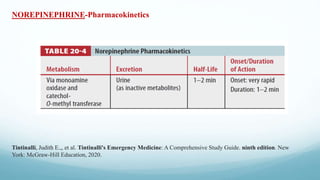
NOREPINEPHRINE-Pharmacokinetics
Tintinalli, Judith E.,, et al. Tintinalli's Emergency Medicine: A Comprehensive Study Guide. ninth edition. New
York: McGraw-Hill Education, 2020.
NOREPINEPHRINE-Action
 Potent α1-adrenergic receptor agonist with modest β-agonist activity  powerful
vasoconstrictor with less potent direct inotropic properties
 Primarily increases systolic, diastolic, and pulse pressure and has a minimal net
impact on CO
 At low dose, β1 effects dominate with increased HR, contractility and CO
 At high dose, α receptor mediated vasopressor effects become dominant; CO
plateaus while MAP and SVR increase
Kalcik, Macit, et al. “Review and Update on Inotropes and Vasopressors: Evidence-Based Use in Cardiovascular Diseases.”
Current Research: Cardiology, vol. 2, no. 1, 2015, pp. 23–29.
Stoelting pharmacology & physiology 6th edition,2021
 A reflex bradycardia usually occurs in response to the increased MAP, such that the
mild chronotropic effect is cancelled out and the heart rate remains unchanged or even
decreases slightly
 Coronary flow is increased owing to elevated diastolic blood pressure and indirect
stimulation of cardiomyocytes, which release local vasodilators
 Pulmonary artery vasoconstriction results in pulmonary hypertension
NOREPINEPHRINE-Action
Manaker S, Parsons P. Use of vasopressors and inotropes. Waltham, MA: UpToDate. 2020.
“Inotropes and Vasopressors Review of Physiology and Clinical Use in Cardiovascular Disease.” Circulation, vol. 118, no. 10, 2008,
pp. 1047–1056.
NOREPINEPHRINE-Action
 Renal, splanchnic and peripheral perfusion are usually decreased at high dose infusion
although if initial MAP is very low, the increased perfusion pressure may actually
increase perfusion to vital organs
 Norepinephrine acts as a respiratory stimulant through carotid and aortic arch
chemoreceptors
 Hyperglycemia is unlikely to occur as a result of norepinephrine administration
Kalcik, Macit, et al. “Review and Update on Inotropes and Vasopressors: Evidence-Based Use in Cardiovascular Diseases.”
Current Research: Cardiology, vol. 2, no. 1, 2015, pp. 23–29.
Stoelting pharmacology & physiology 6th edition,2021
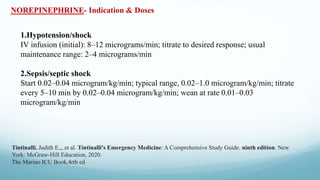
NOREPINEPHRINE- Indication & Doses
1.Hypotension/shock
IV infusion (initial): 8–12 micrograms/min; titrate to desired response; usual
maintenance range: 2–4 micrograms/min
2.Sepsis/septic shock
Start 0.02–0.04 microgram/kg/min; typical range, 0.02–1.0 microgram/kg/min; titrate
every 5–10 min by 0.02–0.04 microgram/kg/min; wean at rate 0.01–0.03
microgram/kg/min
Tintinalli, Judith E.,, et al. Tintinalli's Emergency Medicine: A Comprehensive Study Guide. ninth edition. New
York: McGraw-Hill Education, 2020.
The Marino ICU Book,4rth ed
NOREPINEPHRINE- Side effects
 Arrhythmias
 Bradycardia
 Peripheral (digital) ischemia
 Local tissue necrosis
 Hypertension (especially nonselective beta-blocker patients)
 Excessive vasoconstriction and decreased perfusion of renal, splanchnic, and peripheral vascular beds may
lead to end-organ hypoperfusion and ischemia
 Renal arteriolar vasoconstriction may lead to oliguria and renal failure
The Marino ICU Book 4rth ed
Stoelting pharmacology & physiology 6th edition,2021
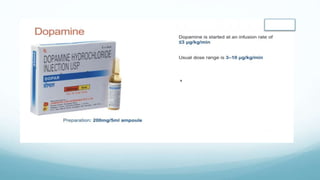
DOPAMINE
• Endogenous catecholamine
• Precursor for norepinephrine
• Nonspecific agonist at both dopamine 1 (D1) and dopamine 2 (D2) receptors and
the α- and β-adrenergic receptors
“Inotropes and Vasopressors Review of Physiology and Clinical Use in Cardiovascular Disease.” Circulation, vol.
118, no. 10, 2008, pp. 1047–1056.
The Marino ICU Book 4rth ed
Stoelting pharmacology & physiology 6th edition,2021
DOPAMINE-Pharmacokinetics
Tintinalli, Judith E.,, et al. Tintinalli's Emergency Medicine: A Comprehensive Study Guide. ninth edition. New
York: McGraw-Hill Education, 2020.
DOPAMINE-Action
• Dose dependent effect
 Low dose: D (0.5-3 mcg/kg/min)
• Stimulates D1 and D2 receptors vasodilation, decreased arterial blood pressure, and increased
renal and splanchnic vascular blood flow
• Increase renal blood flow in healthy individuals increase in urine output
• The renal effects of low-dose dopamine are minimal or absent in patients with acute renal failure
• D1 stimulation directly inhibits tubular solute reabsorption natriuresis
“Inotropes and Vasopressors Review of Physiology and Clinical Use in Cardiovascular Disease.” Circulation, vol. 118, no. 10,
2008, pp. 1047–1056.
The Marino ICU Book 4rth ed
Stoelting pharmacology & physiology 6th edition,2021
DOPAMINE-Action
• Dose dependent effect
 Intermediate dose: β(3-10 mcg/kg/min)
• ↑ Contractility & HR = ↑ CO
• Induces norepinephrine release from vascular sympathetic neurons
 High dose: α(10-20 mcg/kg/min)
• Vasoconstriction = ↑ SVR, ↑ BP
• Increases the ventricular afterload
• Reduces the SV augmentation produced by lower dose of dopamine
“Inotropes and Vasopressors Review of Physiology and Clinical Use in Cardiovascular Disease.” Circulation, vol. 118, no. 10,
2008, pp. 1047–1056.
The Marino ICU Book 4rth ed
Stoelting pharmacology & physiology 6th edition,2021
DOPAMINE- Indication/Uses
• Dopamine is used clinically to increase cardiac output in patients with decreased
contractility, low systemic blood pressure, and low urine output as may be present after
cardiopulmonary bypass or in chronic heart failure
• ACLS Guidelines for management of symptomatic bradycardia as an alternative to
pacing
Tintinalli, Judith E.,, et al. Tintinalli's Emergency Medicine: A Comprehensive Study Guide. ninth edition. New
York: McGraw-Hill Education, 2020.
The Marino ICU Book 4rth ed
Stoelting pharmacology & physiology 6th edition,2021
DOPAMINE- Side effects
• Sinus tachycardia and atrial fibrillation
• Precipitates myocardial ischemia
• Increased intraocular pressure
• Splanchnic hypoperfusion, and delayed gastric emptying, which could predispose to
aspiration pneumonia
Tintinalli, Judith E.,, et al. Tintinalli's Emergency Medicine: A Comprehensive Study Guide. ninth edition. New
York: McGraw-Hill Education, 2020.
The Marino ICU Book 4rth ed
Stoelting pharmacology & physiology 6th edition,2021
VASOPRESSIN
• Endogenous antidiuretic hormone, stored primarily in granules in the posterior
pituitary gland
• Released after increased plasma osmolality or hypotension
• V1a: vascular smooth muscle
• V1b: pituitary gland
• V2: renal collecting tubules
“Inotropes and Vasopressors Review of Physiology and Clinical Use in Cardiovascular Disease.” Circulation, vol. 118, no.
10, 2008, pp. 1047–1056.
The Marino ICU Book 4rth ed
VASOPRESSIN-Pharmacokinetics
Tintinalli, Judith E.,, et al. Tintinalli's Emergency Medicine: A Comprehensive Study Guide. ninth edition. New
York: McGraw-Hill Education, 2020.
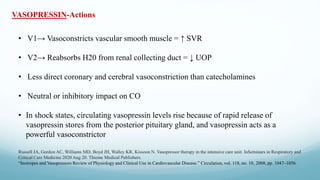
VASOPRESSIN-Actions
• V1→ Vasoconstricts vascular smooth muscle = ↑ SVR
• V2→ Reabsorbs H20 from renal collecting duct = ↓ UOP
• Less direct coronary and cerebral vasoconstriction than catecholamines
• Neutral or inhibitory impact on CO
• In shock states, circulating vasopressin levels rise because of rapid release of
vasopressin stores from the posterior pituitary gland, and vasopressin acts as a
powerful vasoconstrictor
Russell JA, Gordon AC, Williams MD, Boyd JH, Walley KR, Kissoon N. Vasopressor therapy in the intensive care unit. InSeminars in Respiratory and
Critical Care Medicine 2020 Aug 20. Thieme Medical Publishers.
“Inotropes and Vasopressors Review of Physiology and Clinical Use in Cardiovascular Disease.” Circulation, vol. 118, no. 10, 2008, pp. 1047–1056.
VASOPRESSIN-Uses
• In cases of septic shock that are resistant, or refractory, to hemodynamic support with
norepinephrine or dopamine, a vasopressin infusion can be used to raise the blood pressure
and reduce the catecholamine requirement (catecholamine sparing effect).
• In cases of hemorrhage from esophageal or gastric varices, vasopressin infusions can be
used to promote splanchnic vasoconstriction and reduce the rate of bleeding
• Vasopressin is no longer recommended in the advanced cardiovascular life support cardiac
arrest algorithm
Tintinalli, Judith E.,, et al. Tintinalli's Emergency Medicine: A Comprehensive Study Guide. ninth edition.
New York: McGraw-Hill Education, 2020.
The Marino ICU Book 4rth ed
VASOPRESSIN-Dosing
• In septic shock, the recommended infusion rate is 0.01 – 0.04 units/hr, and a rate of 0.03
units/hr is most popular
• Hypotension appears to be common following withdrawal of vasopressin. To avoid this, the
dose can be slowly tapered by 0.01 units/minute every 30 to 60 minutes
Manaker S, Parsons P. Use of vasopressors and inotropes. Waltham, MA: UpToDate. 2020.
Tintinalli, Judith E.,, et al. Tintinalli's Emergency Medicine: A Comprehensive Study Guide. ninth edition. New York: McGraw-Hill
Education, 2020.
The Marino ICU Book 4rth ed
VASOPRESSIN-Side effects
• Adverse effects are uncommon with infusion rates < 0.04 units/hr
• At higher infusion rates, unwanted effects can include consequences of excessive
vasoconstriction (e.g., impaired renal and hepatic function), along with excessive
water retention and hyponatremia
The Marino ICU Book 4rth ed
• Selective V1 receptor agonist, and does not produce the side effects associated with stimulation of the
other vasopressin receptors
• Longer duration of action than vasopressin
• A single IV dose of 1 – 2 mg can raise the blood pressure for 5 hours
• The long duration of action allows terlipressin to be given by intermittent IV dosing
• Potent splanchnic vasoconstrictor
• Management of variceal bleeding
TERLIPRESSIN
The Marino ICU Book 4rth ed
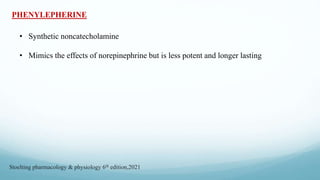
PHENYLEPHERINE
• Synthetic noncatecholamine
• Mimics the effects of norepinephrine but is less potent and longer lasting
Stoelting pharmacology & physiology 6th edition,2021
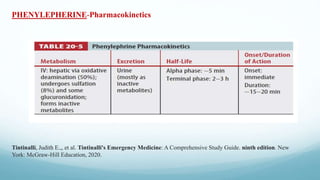
PHENYLEPHERINE-Pharmacokinetics
Tintinalli, Judith E.,, et al. Tintinalli's Emergency Medicine: A Comprehensive Study Guide. ninth edition. New
York: McGraw-Hill Education, 2020.
PHENYLEPHERINE-Actions
• Potent alpha adrenergic activity, stimulate alpha 1 receptors Vasoconstriction
Increase in SVR & MAP
• Increase in BP + baroreceptorsReflex decrease in HR
• Because of the decrease in HR CO also reduces
• Due to negative effect on CO Not used in cardiogenic shock
• Decrease in renal and splanchnic blood flow but coronary blood flow is increased
Kalcik, Macit, et al. “Review and Update on Inotropes and Vasopressors: Evidence-Based Use in Cardiovascular Diseases.”
Current Research: Cardiology, vol. 2, no. 1, 2015, pp. 23–29.
Stoelting pharmacology & physiology 6th edition,2021
PHENYLEPHERINE-Indication
• Useful in patients with coronary artery disease and in patients with aortic stenosis because it increases
coronary perfusion pressure without chronotropic side effects, unlike most other sympathomimetics
• Used to raise mean arterial pressure (MAP) in patients with severe hypotension and concomitant aortic
stenosis
• To correct hypotension caused by the simultaneous ingestion of sildenafil and nitrates
• To decrease the outflow tract gradient in patients with obstructive hypertrophic cardiomyopathy
• To correct vagally mediated hypotension during percutaneous diagnostic or therapeutic procedures
“Inotropes and Vasopressors Review of Physiology and Clinical Use in Cardiovascular Disease.” Circulation, vol. 118, no. 10, 2008, pp.
1047–1056.
Kalcik, Macit, et al. “Review and Update on Inotropes and Vasopressors: Evidence-Based Use in Cardiovascular Diseases.” Current
Research: Cardiology, vol. 2, no. 1, 2015, pp. 23–29.
Stoelting pharmacology & physiology 6th edition,2021
Due to the potential for decreasing stroke volume, the Surviving Sepsis guidelines do not
recommend phenylephrine for the treatment of septic shock unless patients experience serious
arrhythmias with norepinephrine, have high cardiac output, or require salvage therapy
PHENYLEPHERINE
Manaker S, Parsons P. Use of vasopressors and inotropes. Waltham, MA: UpToDate. 2020.
Stoelting pharmacology & physiology 6th edition,2021
PHENYLEPHERINE-Dosing
• Phenylephrine can be given as intermittent IV doses
• The initial IV dose is 0.2 mg, which can be repeated in increments of 0.1 mg to a
maximum dose of 0.5 mg
• Phenylephrine can be infused at an initial dose rate 0.1 – 0.2 mg/min, which is
progressively decreased after the blood pressure is stabilized
The Marino ICU Book 4rth ed
PHENYLEPHERINE-Side effects
• Bradycardia
• Low cardiac output
• Renal, mesenteric and peripheral ischemia
Stoelting pharmacology & physiology 6th edition,2021
The Marino ICU Book 4rth ed
GENERALAPPROACH TO SHOCK
Jentzer, J. et al. “Pharmacotherapy Update on the Use of Vasopressors and Inotropes in the Intensive Care
Unit.” Journal of Cardiovascular Pharmacology and Therapeutics 20 (2015): 249 - 260.
Kalcik, Macit, et al. “Review and Update on Inotropes and Vasopressors: Evidence-Based Use in Cardiovascular
Diseases.” Current Research: Cardiology, vol. 2, no. 1, 2015, pp. 23–29.
REFERENCES
• Manaker S, Parsons P. Use of vasopressors and inotropes. Waltham, MA: UpToDate. 2020.
• Russell JA, Gordon AC, Williams MD, Boyd JH, Walley KR, Kissoon N. Vasopressor therapy in the intensive care unit.
InSeminars in Respiratory and Critical Care Medicine 2020 Aug 20. Thieme Medical Publishers.
• Bangash, Mansoor N et al. “Use of inotropes and vasopressor agents in critically ill patients.” British journal of
pharmacologyvol. 165,7 (2012): 2015-33. doi:10.1111/j.1476-5381.2011.01588.x
• Jentzer, J. et al. “Pharmacotherapy Update on the Use of Vasopressors and Inotropes in the Intensive Care Unit.” Journal of
Cardiovascular Pharmacology and Therapeutics 20 (2015): 249 - 260.
• Kalcik, Macit, et al. “Review and Update on Inotropes and Vasopressors: Evidence-Based Use in Cardiovascular Diseases.”
Current Research: Cardiology, vol. 2, no. 1, 2015, pp. 23–29.
• “Inotropes and Vasopressors Review of Physiology and Clinical Use in Cardiovascular Disease.” Circulation, vol. 118, no. 10,
2008, pp. 1047–1056.
• Tintinalli, Judith E.,, et al. Tintinalli's Emergency Medicine: A Comprehensive Study Guide. ninth edition. New York:
McGraw-Hill Education, 2020.
• Stoelting pharmacology & physiology 6th edition,2021
• The Marino ICU Book 4rth ed
vasopressors
T
O
K
N
A
H

vasopressors.pptx

  • 1.
    VASOPRESSORS IN ICU Dr.Kanika Chaudhary
  • 2.
  • 3.
    DEFINITION • Vasopressor agentsare administered to increase vascular tone. • Inotropes are agents administered to increase myocardial contractility. Bangash, Mansoor N et al. “Use of inotropes and vasopressor agents in critically ill patients.” British journal of pharmacologyvol. 165,7 (2012): 2015-33. doi:10.1111/j.1476-5381.2011.01588.x
  • 4.
    RECEPTOR PHYSIOLOGY Kalcik, Macit,et al. “Review and Update on Inotropes and Vasopressors: Evidence-Based Use in Cardiovascular Diseases.” Current Research: Cardiology, vol. 2, no. 1, 2015, pp. 23–29.
  • 5.
    RECEPTOR PHYSIOLOGY “Inotropes andVasopressors Review of Physiology and Clinical Use in Cardiovascular Disease.” Circulation, vol. 118, no. 10, 2008, pp. 1047–1056.
  • 6.
    RECEPTOR PHYSIOLOGY “Inotropes andVasopressors Review of Physiology and Clinical Use in Cardiovascular Disease.” Circulation, vol. 118, no. 10, 2008, pp. 1047–1056.
  • 7.
    PRINCIPLES Hypotension may resultfrom 1.Hypovolemia (eg, exsanguination) 2.Pump failure (eg, severe medically refractory heart failure or shock complicating myocardial infarction) 3.Pathologic maldistribution of blood flow (eg, septic shock, anaphylaxis) Manaker S, Parsons P. Use of vasopressors and inotropes. Waltham, MA: UpToDate. 2020.
  • 8.
    Indications A decrease of>30 mm Hg from baseline systolic blood pressure A mean arterial pressure <60 mmHg when End-organ dysfunction ensues due to hypoperfusion Hypovolemia should be corrected prior to the institution of vasopressor therapy PRINCIPLES Manaker S, Parsons P. Use of vasopressors and inotropes. Waltham, MA: UpToDate. 2020.
  • 9.
    PRINCIPLES The rational useof vasopressors is guided by three fundamental concepts: 1. One drug, many receptors – A given drug has multiple effects because of actions upon more than one receptor. For example, dobutamine increases cardiac output by beta-1 adrenergic receptor activation; however, it also acts upon beta-2 adrenergic receptors and thus induces vasodilation and can cause hypotension Manaker S, Parsons P. Use of vasopressors and inotropes. Waltham, MA: UpToDate. 2020.
  • 10.
    PRINCIPLES 2. Dose-response curve– Many agents have dose-response curves, such that the primary adrenergic receptor subtype activated by the drug is dose-dependent. For example, dopamine stimulates beta-1 adrenergic receptors at doses of 2 to 10 mcg/kg per minute, and alpha adrenergic receptors when doses exceed 10 mcg/kg per minute. Manaker S, Parsons P. Use of vasopressors and inotropes. Waltham, MA: UpToDate. 2020.
  • 11.
    PRINCIPLES 3. Direct versusreflex actions – A given agent can affect mean arterial pressure (MAP) both by direct actions on adrenergic receptors and by reflex actions triggered by the pharmacologic response. Norepinephrine-induced beta-1 adrenergic stimulation alone normally would cause tachycardia. However, the elevated MAP from norepinephrine's alpha-adrenergic receptor- induced vasoconstriction results in a reflex decrease in heart rate. The net result may be a stable or slightly reduced heart rate when the drug is used. Manaker S, Parsons P. Use of vasopressors and inotropes. Waltham, MA: UpToDate. 2020.
  • 12.
    Practical issues I. Volumeresuscitation Repletion of adequate intravascular volume - crucial prior to the initiation of vasopressors Most patients in septic shock – need ~2 liters of fluids Else,vasopressor effect is suboptimal or evenineffective Fluidswithheld Pulmonary edema ARDS Heart failure Manaker S, Parsons P. Use of vasopressors and inotropes. Waltham, MA: UpToDate. 2020.
  • 13.
    Practical issues II. Selectionand titration Choice of an initial agent  underlying etiology of shock Dose should be titrated up to achieve effective blood pressure or end-organ perfusion – based on urine output or mentation Maximal doses of the first agent or evidences ofadverse effects  add a second agent A third agent may be added – no controlled trials for thisapproach Manaker S, Parsons P. Use of vasopressors and inotropes. Waltham, MA: UpToDate. 2020.
  • 14.
    Practical issues III. Routeof administration Vasopressors and inotropic agents  via Central venous catheter CVC  Rapid delivery to the heart & peripheries & prevents extravasation Peripheral IV line –A temporary measure till a central line is achieved Manaker S, Parsons P. Use of vasopressors and inotropes. Waltham, MA: UpToDate. 2020.
  • 15.
    Practical issues IV. Tachyphylaxis Responsivenessto these drugs can decrease over time dueto tachyphylaxis. Constantly titrated to adjust for this phenomenon and for changes in the patient's clinical condition Manaker S, Parsons P. Use of vasopressors and inotropes. Waltham, MA: UpToDate. 2020.
  • 16.
    Practical issues V. Hemodynamiceffects Mean arterial pressure (MAP) is influenced by systemic vascular resistance (SVR)and cardiac output (CO) Eg.In cardiogenic shock, increasing SVRcan increase afterload on an already failing heart  impairing CO Raising SVRis beneficial in septic shock, when cardiac function is largely normal. Manaker S, Parsons P. Use of vasopressors and inotropes. Waltham, MA: UpToDate. 2020.
  • 17.
    Practical issues VI. Subcutaneousdelivery of medications Critically ill patients often on sc medication(LMWH, insulin) The bioavailability of these medications - reduced during treatment with vasopressors due to cutaneous vasoconstriction. A higher dose of LMWH may be required forthrombosis prophylaxis May require switching tointravenous therapy Manaker S, Parsons P. Use of vasopressors and inotropes. Waltham, MA: UpToDate. 2020.
  • 18.
    Practical issues VII. Frequentre-evaluation Critically ill patients may undergo a second hemodynamic insult Could necessitates a change in vasopressor or inotrope management The dosage of a given agent should notsimply be increased without reconsideration of the clinical situation and the appropriateness of the current strategy Weaning • Catechol Vasopressors are titrated quickly • Inotropes (Inamrinone, dobutamine) are titrated over hours Manaker S, Parsons P. Use of vasopressors and inotropes. Waltham, MA: UpToDate. 2020.
  • 19.
    CLASSIFICATION Jentzer, J. etal. “Pharmacotherapy Update on the Use of Vasopressors and Inotropes in the Intensive Care Unit.” Journal of Cardiovascular Pharmacology and Therapeutics 20 (2015): 249 - 260.
  • 20.
    Jentzer, J. etal. “Pharmacotherapy Update on the Use of Vasopressors and Inotropes in the Intensive Care Unit.” Journal of Cardiovascular Pharmacology and Therapeutics 20 (2015): 249 - 260.
  • 21.
    Jentzer, J. etal. “Pharmacotherapy Update on the Use of Vasopressors and Inotropes in the Intensive Care Unit.” Journal of Cardiovascular Pharmacology and Therapeutics 20 (2015): 249 - 260.
  • 22.
    EPINEPHRINE • Prototype sympathomimetic •Endogenous catecholamine • Released by the adrenal medulla in response to physiological stress • 2-10 times more potent than norepinephrine and 100 times more potent than isoproterenol • Most potent natural β-agonist Tintinalli, Judith E.,, et al. Tintinalli's Emergency Medicine: A Comprehensive Study Guide. ninth edition. New York: McGraw-Hill Education, 2020. Stoelting pharmacology & physiology 6th edition,2021 The Marino ICU Book 4rth ed
  • 23.
    EPINEPHRINE- Pharmacokinetics Tintinalli, JudithE.,, et al. Tintinalli's Emergency Medicine: A Comprehensive Study Guide. ninth edition. New York: McGraw-Hill Education, 2020.
  • 24.
    EPINEPHRINE- Action CVS • α1-and nonselective β-adrenergic agonist that increases systemic vascular resistance, heart rate, cardiac output, and blood pressure • β -Adrenergic effects are more pronounced at low doses and α1-adrenergic effects at higher doses • Low dose:  β1>> β2 β1+ ↑ contractility & HR = ↑ CO  alpha adrenergic receptor-induced vasoconstriction is often offset by the beta-2 adrenergic receptor vasodilation  Net result: increased CO, with decreased SVR and variable effects on the MAP Tintinalli, Judith E.,, et al. Tintinalli's Emergency Medicine: A Comprehensive Study Guide. ninth edition. New York: McGraw-Hill Education, 2020. Stoelting pharmacology & physiology 6th edition,2021 The Marino ICU Book 4rth ed Kalcik, Macit, et al. “Review and Update on Inotropes and Vasopressors: Evidence-Based Use in Cardiovascular Diseases.” Current Research: Cardiology, vol. 2, no. 1, 2015, pp. 23–29.
  • 25.
    EPINEPHRINE- Action CVS • Highdose:  α1-adrenergic action predominates Vasoconstriction = ↑ SVR ↑MAP  High and prolonged doses can cause direct cardiac toxicity through damage to arterial walls, which causes focal regions of myocardial contraction band necrosis, and through direct stimulation of myocyte apoptosis. • Myocardial oxygen demand rises because of increased heart rate and stroke work “Inotropes and Vasopressors Review of Physiology and Clinical Use in Cardiovascular Disease.” Circulation, vol. 118, no. 10, 2008, pp. 1047–1056. Stoelting pharmacology & physiology 6th edition,2021
  • 26.
    CVS • Coronary bloodflow is enhanced through an increased relative duration of diastole at higher heart rates and through stimulation of myocytes to release local vasodilators • Coronary blood flow is enhanced by epinephrine, even at doses that do not alter systemic blood pressure EPINEPHRINE-Action “Inotropes and Vasopressors Review of Physiology and Clinical Use in Cardiovascular Disease.” Circulation, vol. 118, no. 10, 2008, pp. 1047–1056. Stoelting pharmacology & physiology 6th edition,2021
  • 27.
    EPINEPHRINE-Action  RS  Βeta2+Smooth muscles of bronchi are relaxed/Bronchodilation  Metabolic effects  β1 Receptor stimulation increases liver glycogenolysis and adipose tissue lipolysis, whereas α1 receptor stimulation inhibits release of insulinincrease plasma concentrations of glucose,cholesterol, phospholipids, and low-density lipoproteins  Epinephrine-induced glycogenolysis in skeletal musclesIncreased plasma concentrations of lactate Gilmore K, Nanyanzi C. Pharmacology of vasopressors and inotropes. Update Aneasthesia. 1999;10:1-2. Stoelting pharmacology & physiology 6th edition,2021
  • 28.
    EPINEPHRINE-Action  Ocular effects Contraction of the radial muscles of the iris, producing mydriasis (dilation of the pupil)  Contraction of the orbital muscles produces an appearance of exophthalmos Gastrointestinal and Genitourinary Effects  Relaxation of gastrointestinal smooth muscle  Activation of β-adrenergic receptors relaxes the detrusor muscle of the bladder, whereas activation of α-adrenergic receptors contracts the trigone and sphincter muscles Stoelting pharmacology & physiology 6th edition,2021
  • 29.
    EPINEPHRINE-Action Gastrointestinal and GenitourinaryEffects  Hepatosplanchnic vasoconstriction occurs as well as impaired renal blood flow as cardiac output is diverted to the dilated skeletal muscle vasculaturedecreased hepatosplanchnic oxygen exchange and lactate clearance Stoelting pharmacology & physiology 6th edition,2021
  • 30.
    EPINEPHRINE-Indication & Doses 1.Asystole/pulselessarrest, pulseless VT/VF 1 milligram IV/IO every 3–5 min until ROSC; 2–2.5 milligrams ET every 3–5 min until IV/IO access established or ROSC (dilute in 5–10 mL NS) 2.In Septic shock-as a second line agent(after norepinephrine) IV infusion (initial): 0.05–2 micrograms/kg/min; titrate every 10-15 min by increments of 0.02–0.05 microgram/kg/min to desired MAP 3.Anaphylaxis 0.3–0.5 milligram IM by epinephrine autoinjector or equivalent; For Anaphylactic shock IV infusion, mix 1 milligram in 100 mL D5W(10microgram/ml) and infuse at 30-100ml/hr (5-15microgram/min) and titrate dose as needed 4. Additive to local anaesthetic - add adrenaline to local anaesthetic to make a concentration of 1:200,000 Tintinalli, Judith E.,, et al. Tintinalli's Emergency Medicine: A Comprehensive Study Guide. ninth edition. New York: McGraw-Hill Education, 2020. Gilmore K, Nanyanzi C. Pharmacology of vasopressors and inotropes. Update Aneasthesia. 1999;10:1-2.
  • 31.
    EPINEPHRINE-Preparation Preparation  1:1000 i.e.1mg in 1 ml  1:10,000 i.e. 1mg in 10ml Gilmore K, Nanyanzi C. Pharmacology of vasopressors and inotropes. Update Aneasthesia. 1999;10:1-2.
  • 34.
    EPINEPHRINE-Side effects  Ventriculararrhythmias  Severe hypertension resulting in cerebrovascular haemorrhage  Cardiac ischemia  Sudden cardiac death  Hyperglycemia  High lactate levels  Splanchnic hypoperfusion Tintinalli, Judith E.,, et al. Tintinalli's Emergency Medicine: A Comprehensive Study Guide. ninth edition. New York: McGraw-Hill Education, 2020. Stoelting pharmacology & physiology 6th edition,2021 The Marino ICU Book 4rth ed
  • 35.
    NOREPINEPHRINE  Endogenous catecholamine Excitatory neurotransmitter-stored in postganglionic sympathetic nerve endings and released with sympathetic nerve stimulation  Hydroxylated derivative of dopamine and the immediate precursor of epinephrine  Inotrope and vasopressor Bangash, Mansoor N et al. “Use of inotropes and vasopressor agents in critically ill patients.” British journal of pharmacologyvol. 165,7 (2012): 2015- 33. doi:10.1111/j.1476-5381.2011.01588.x “Inotropes and Vasopressors Review of Physiology and Clinical Use in Cardiovascular Disease.” Circulation, vol. 118, no. 10, 2008, pp. 1047–1056. Kalcik, Macit, et al. “Review and Update on Inotropes and Vasopressors: Evidence-Based Use in Cardiovascular Diseases.” Current Research: Cardiology, vol. 2, no. 1, 2015, pp. 23–29. The Marino ICU Book 4rth ed Stoelting pharmacology & physiology 6th edition,2021
  • 36.
    NOREPINEPHRINE-Pharmacokinetics Tintinalli, Judith E.,,et al. Tintinalli's Emergency Medicine: A Comprehensive Study Guide. ninth edition. New York: McGraw-Hill Education, 2020.
  • 37.
    NOREPINEPHRINE-Action  Potent α1-adrenergicreceptor agonist with modest β-agonist activity  powerful vasoconstrictor with less potent direct inotropic properties  Primarily increases systolic, diastolic, and pulse pressure and has a minimal net impact on CO  At low dose, β1 effects dominate with increased HR, contractility and CO  At high dose, α receptor mediated vasopressor effects become dominant; CO plateaus while MAP and SVR increase Kalcik, Macit, et al. “Review and Update on Inotropes and Vasopressors: Evidence-Based Use in Cardiovascular Diseases.” Current Research: Cardiology, vol. 2, no. 1, 2015, pp. 23–29. Stoelting pharmacology & physiology 6th edition,2021
  • 38.
     A reflexbradycardia usually occurs in response to the increased MAP, such that the mild chronotropic effect is cancelled out and the heart rate remains unchanged or even decreases slightly  Coronary flow is increased owing to elevated diastolic blood pressure and indirect stimulation of cardiomyocytes, which release local vasodilators  Pulmonary artery vasoconstriction results in pulmonary hypertension NOREPINEPHRINE-Action Manaker S, Parsons P. Use of vasopressors and inotropes. Waltham, MA: UpToDate. 2020. “Inotropes and Vasopressors Review of Physiology and Clinical Use in Cardiovascular Disease.” Circulation, vol. 118, no. 10, 2008, pp. 1047–1056.
  • 39.
    NOREPINEPHRINE-Action  Renal, splanchnicand peripheral perfusion are usually decreased at high dose infusion although if initial MAP is very low, the increased perfusion pressure may actually increase perfusion to vital organs  Norepinephrine acts as a respiratory stimulant through carotid and aortic arch chemoreceptors  Hyperglycemia is unlikely to occur as a result of norepinephrine administration Kalcik, Macit, et al. “Review and Update on Inotropes and Vasopressors: Evidence-Based Use in Cardiovascular Diseases.” Current Research: Cardiology, vol. 2, no. 1, 2015, pp. 23–29. Stoelting pharmacology & physiology 6th edition,2021
  • 40.
    NOREPINEPHRINE- Indication &Doses 1.Hypotension/shock IV infusion (initial): 8–12 micrograms/min; titrate to desired response; usual maintenance range: 2–4 micrograms/min 2.Sepsis/septic shock Start 0.02–0.04 microgram/kg/min; typical range, 0.02–1.0 microgram/kg/min; titrate every 5–10 min by 0.02–0.04 microgram/kg/min; wean at rate 0.01–0.03 microgram/kg/min Tintinalli, Judith E.,, et al. Tintinalli's Emergency Medicine: A Comprehensive Study Guide. ninth edition. New York: McGraw-Hill Education, 2020. The Marino ICU Book,4rth ed
  • 43.
    NOREPINEPHRINE- Side effects Arrhythmias  Bradycardia  Peripheral (digital) ischemia  Local tissue necrosis  Hypertension (especially nonselective beta-blocker patients)  Excessive vasoconstriction and decreased perfusion of renal, splanchnic, and peripheral vascular beds may lead to end-organ hypoperfusion and ischemia  Renal arteriolar vasoconstriction may lead to oliguria and renal failure The Marino ICU Book 4rth ed Stoelting pharmacology & physiology 6th edition,2021
  • 44.
    DOPAMINE • Endogenous catecholamine •Precursor for norepinephrine • Nonspecific agonist at both dopamine 1 (D1) and dopamine 2 (D2) receptors and the α- and β-adrenergic receptors “Inotropes and Vasopressors Review of Physiology and Clinical Use in Cardiovascular Disease.” Circulation, vol. 118, no. 10, 2008, pp. 1047–1056. The Marino ICU Book 4rth ed Stoelting pharmacology & physiology 6th edition,2021
  • 45.
    DOPAMINE-Pharmacokinetics Tintinalli, Judith E.,,et al. Tintinalli's Emergency Medicine: A Comprehensive Study Guide. ninth edition. New York: McGraw-Hill Education, 2020.
  • 46.
    DOPAMINE-Action • Dose dependenteffect  Low dose: D (0.5-3 mcg/kg/min) • Stimulates D1 and D2 receptors vasodilation, decreased arterial blood pressure, and increased renal and splanchnic vascular blood flow • Increase renal blood flow in healthy individuals increase in urine output • The renal effects of low-dose dopamine are minimal or absent in patients with acute renal failure • D1 stimulation directly inhibits tubular solute reabsorption natriuresis “Inotropes and Vasopressors Review of Physiology and Clinical Use in Cardiovascular Disease.” Circulation, vol. 118, no. 10, 2008, pp. 1047–1056. The Marino ICU Book 4rth ed Stoelting pharmacology & physiology 6th edition,2021
  • 47.
    DOPAMINE-Action • Dose dependenteffect  Intermediate dose: β(3-10 mcg/kg/min) • ↑ Contractility & HR = ↑ CO • Induces norepinephrine release from vascular sympathetic neurons  High dose: α(10-20 mcg/kg/min) • Vasoconstriction = ↑ SVR, ↑ BP • Increases the ventricular afterload • Reduces the SV augmentation produced by lower dose of dopamine “Inotropes and Vasopressors Review of Physiology and Clinical Use in Cardiovascular Disease.” Circulation, vol. 118, no. 10, 2008, pp. 1047–1056. The Marino ICU Book 4rth ed Stoelting pharmacology & physiology 6th edition,2021
  • 48.
    DOPAMINE- Indication/Uses • Dopamineis used clinically to increase cardiac output in patients with decreased contractility, low systemic blood pressure, and low urine output as may be present after cardiopulmonary bypass or in chronic heart failure • ACLS Guidelines for management of symptomatic bradycardia as an alternative to pacing Tintinalli, Judith E.,, et al. Tintinalli's Emergency Medicine: A Comprehensive Study Guide. ninth edition. New York: McGraw-Hill Education, 2020. The Marino ICU Book 4rth ed Stoelting pharmacology & physiology 6th edition,2021
  • 51.
    DOPAMINE- Side effects •Sinus tachycardia and atrial fibrillation • Precipitates myocardial ischemia • Increased intraocular pressure • Splanchnic hypoperfusion, and delayed gastric emptying, which could predispose to aspiration pneumonia Tintinalli, Judith E.,, et al. Tintinalli's Emergency Medicine: A Comprehensive Study Guide. ninth edition. New York: McGraw-Hill Education, 2020. The Marino ICU Book 4rth ed Stoelting pharmacology & physiology 6th edition,2021
  • 52.
    VASOPRESSIN • Endogenous antidiuretichormone, stored primarily in granules in the posterior pituitary gland • Released after increased plasma osmolality or hypotension • V1a: vascular smooth muscle • V1b: pituitary gland • V2: renal collecting tubules “Inotropes and Vasopressors Review of Physiology and Clinical Use in Cardiovascular Disease.” Circulation, vol. 118, no. 10, 2008, pp. 1047–1056. The Marino ICU Book 4rth ed
  • 53.
    VASOPRESSIN-Pharmacokinetics Tintinalli, Judith E.,,et al. Tintinalli's Emergency Medicine: A Comprehensive Study Guide. ninth edition. New York: McGraw-Hill Education, 2020.
  • 54.
    VASOPRESSIN-Actions • V1→ Vasoconstrictsvascular smooth muscle = ↑ SVR • V2→ Reabsorbs H20 from renal collecting duct = ↓ UOP • Less direct coronary and cerebral vasoconstriction than catecholamines • Neutral or inhibitory impact on CO • In shock states, circulating vasopressin levels rise because of rapid release of vasopressin stores from the posterior pituitary gland, and vasopressin acts as a powerful vasoconstrictor Russell JA, Gordon AC, Williams MD, Boyd JH, Walley KR, Kissoon N. Vasopressor therapy in the intensive care unit. InSeminars in Respiratory and Critical Care Medicine 2020 Aug 20. Thieme Medical Publishers. “Inotropes and Vasopressors Review of Physiology and Clinical Use in Cardiovascular Disease.” Circulation, vol. 118, no. 10, 2008, pp. 1047–1056.
  • 55.
    VASOPRESSIN-Uses • In casesof septic shock that are resistant, or refractory, to hemodynamic support with norepinephrine or dopamine, a vasopressin infusion can be used to raise the blood pressure and reduce the catecholamine requirement (catecholamine sparing effect). • In cases of hemorrhage from esophageal or gastric varices, vasopressin infusions can be used to promote splanchnic vasoconstriction and reduce the rate of bleeding • Vasopressin is no longer recommended in the advanced cardiovascular life support cardiac arrest algorithm Tintinalli, Judith E.,, et al. Tintinalli's Emergency Medicine: A Comprehensive Study Guide. ninth edition. New York: McGraw-Hill Education, 2020. The Marino ICU Book 4rth ed
  • 56.
    VASOPRESSIN-Dosing • In septicshock, the recommended infusion rate is 0.01 – 0.04 units/hr, and a rate of 0.03 units/hr is most popular • Hypotension appears to be common following withdrawal of vasopressin. To avoid this, the dose can be slowly tapered by 0.01 units/minute every 30 to 60 minutes Manaker S, Parsons P. Use of vasopressors and inotropes. Waltham, MA: UpToDate. 2020. Tintinalli, Judith E.,, et al. Tintinalli's Emergency Medicine: A Comprehensive Study Guide. ninth edition. New York: McGraw-Hill Education, 2020. The Marino ICU Book 4rth ed
  • 57.
    VASOPRESSIN-Side effects • Adverseeffects are uncommon with infusion rates < 0.04 units/hr • At higher infusion rates, unwanted effects can include consequences of excessive vasoconstriction (e.g., impaired renal and hepatic function), along with excessive water retention and hyponatremia The Marino ICU Book 4rth ed
  • 58.
    • Selective V1receptor agonist, and does not produce the side effects associated with stimulation of the other vasopressin receptors • Longer duration of action than vasopressin • A single IV dose of 1 – 2 mg can raise the blood pressure for 5 hours • The long duration of action allows terlipressin to be given by intermittent IV dosing • Potent splanchnic vasoconstrictor • Management of variceal bleeding TERLIPRESSIN The Marino ICU Book 4rth ed
  • 59.
    PHENYLEPHERINE • Synthetic noncatecholamine •Mimics the effects of norepinephrine but is less potent and longer lasting Stoelting pharmacology & physiology 6th edition,2021
  • 60.
    PHENYLEPHERINE-Pharmacokinetics Tintinalli, Judith E.,,et al. Tintinalli's Emergency Medicine: A Comprehensive Study Guide. ninth edition. New York: McGraw-Hill Education, 2020.
  • 61.
    PHENYLEPHERINE-Actions • Potent alphaadrenergic activity, stimulate alpha 1 receptors Vasoconstriction Increase in SVR & MAP • Increase in BP + baroreceptorsReflex decrease in HR • Because of the decrease in HR CO also reduces • Due to negative effect on CO Not used in cardiogenic shock • Decrease in renal and splanchnic blood flow but coronary blood flow is increased Kalcik, Macit, et al. “Review and Update on Inotropes and Vasopressors: Evidence-Based Use in Cardiovascular Diseases.” Current Research: Cardiology, vol. 2, no. 1, 2015, pp. 23–29. Stoelting pharmacology & physiology 6th edition,2021
  • 62.
    PHENYLEPHERINE-Indication • Useful inpatients with coronary artery disease and in patients with aortic stenosis because it increases coronary perfusion pressure without chronotropic side effects, unlike most other sympathomimetics • Used to raise mean arterial pressure (MAP) in patients with severe hypotension and concomitant aortic stenosis • To correct hypotension caused by the simultaneous ingestion of sildenafil and nitrates • To decrease the outflow tract gradient in patients with obstructive hypertrophic cardiomyopathy • To correct vagally mediated hypotension during percutaneous diagnostic or therapeutic procedures “Inotropes and Vasopressors Review of Physiology and Clinical Use in Cardiovascular Disease.” Circulation, vol. 118, no. 10, 2008, pp. 1047–1056. Kalcik, Macit, et al. “Review and Update on Inotropes and Vasopressors: Evidence-Based Use in Cardiovascular Diseases.” Current Research: Cardiology, vol. 2, no. 1, 2015, pp. 23–29. Stoelting pharmacology & physiology 6th edition,2021
  • 63.
    Due to thepotential for decreasing stroke volume, the Surviving Sepsis guidelines do not recommend phenylephrine for the treatment of septic shock unless patients experience serious arrhythmias with norepinephrine, have high cardiac output, or require salvage therapy PHENYLEPHERINE Manaker S, Parsons P. Use of vasopressors and inotropes. Waltham, MA: UpToDate. 2020. Stoelting pharmacology & physiology 6th edition,2021
  • 64.
    PHENYLEPHERINE-Dosing • Phenylephrine canbe given as intermittent IV doses • The initial IV dose is 0.2 mg, which can be repeated in increments of 0.1 mg to a maximum dose of 0.5 mg • Phenylephrine can be infused at an initial dose rate 0.1 – 0.2 mg/min, which is progressively decreased after the blood pressure is stabilized The Marino ICU Book 4rth ed
  • 65.
    PHENYLEPHERINE-Side effects • Bradycardia •Low cardiac output • Renal, mesenteric and peripheral ischemia Stoelting pharmacology & physiology 6th edition,2021 The Marino ICU Book 4rth ed
  • 66.
    GENERALAPPROACH TO SHOCK Jentzer,J. et al. “Pharmacotherapy Update on the Use of Vasopressors and Inotropes in the Intensive Care Unit.” Journal of Cardiovascular Pharmacology and Therapeutics 20 (2015): 249 - 260.
  • 67.
    Kalcik, Macit, etal. “Review and Update on Inotropes and Vasopressors: Evidence-Based Use in Cardiovascular Diseases.” Current Research: Cardiology, vol. 2, no. 1, 2015, pp. 23–29.
  • 68.
    REFERENCES • Manaker S,Parsons P. Use of vasopressors and inotropes. Waltham, MA: UpToDate. 2020. • Russell JA, Gordon AC, Williams MD, Boyd JH, Walley KR, Kissoon N. Vasopressor therapy in the intensive care unit. InSeminars in Respiratory and Critical Care Medicine 2020 Aug 20. Thieme Medical Publishers. • Bangash, Mansoor N et al. “Use of inotropes and vasopressor agents in critically ill patients.” British journal of pharmacologyvol. 165,7 (2012): 2015-33. doi:10.1111/j.1476-5381.2011.01588.x • Jentzer, J. et al. “Pharmacotherapy Update on the Use of Vasopressors and Inotropes in the Intensive Care Unit.” Journal of Cardiovascular Pharmacology and Therapeutics 20 (2015): 249 - 260. • Kalcik, Macit, et al. “Review and Update on Inotropes and Vasopressors: Evidence-Based Use in Cardiovascular Diseases.” Current Research: Cardiology, vol. 2, no. 1, 2015, pp. 23–29. • “Inotropes and Vasopressors Review of Physiology and Clinical Use in Cardiovascular Disease.” Circulation, vol. 118, no. 10, 2008, pp. 1047–1056. • Tintinalli, Judith E.,, et al. Tintinalli's Emergency Medicine: A Comprehensive Study Guide. ninth edition. New York: McGraw-Hill Education, 2020. • Stoelting pharmacology & physiology 6th edition,2021 • The Marino ICU Book 4rth ed
  • 69.