What is Measurement
 The act or process of measuring something a size or
length or anything id defined as Measurement.
Objectives:
1. Design of equipment and processes
2. Proper operation control and maintenance of
processes
3. For evaluating the performance of a system
4. To test the functioning of components
Types Of Measurements
1. Linear Measurement
2. Angular and Taper Measurement
3. Screw Thread Measurement
4. Gear Measurement
5. Surface Finish Measurement
6. Temperature Measurement
7. Pressure Measurement
8. Miscellaneous Measurement
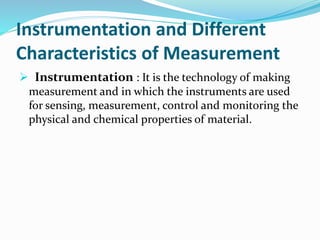
Instrumentation and Different
Characteristics of Measurement
 Instrumentation : It is the technology of making
measurement and in which the instruments are used
for sensing, measurement, control and monitoring the
physical and chemical properties of material.
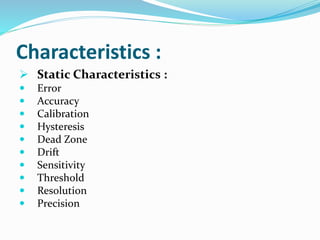
Characteristics :
 Static Characteristics :
 Error
 Accuracy
 Calibration
 Hysteresis
 Dead Zone
 Drift
 Sensitivity
 Threshold
 Resolution
 Precision
Characteristics :
 Dynamic Characteristics :
 Speed of response
 Measuring lag
 Fidelity
 Dynamic error
 Overshoot
 Dead time and dead zone
 Frequency response
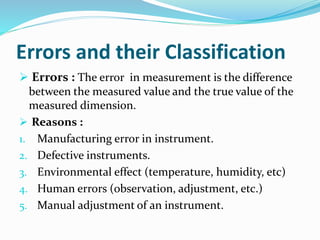
Errors and their Classification
 Errors : The error in measurement is the difference
between the measured value and the true value of the
measured dimension.
 Reasons :
1. Manufacturing error in instrument.
2. Defective instruments.
3. Environmental effect (temperature, humidity, etc)
4. Human errors (observation, adjustment, etc.)
5. Manual adjustment of an instrument.
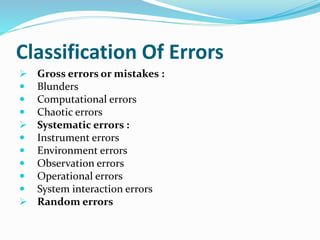
Classification Of Errors
 Gross errors or mistakes :
 Blunders
 Computational errors
 Chaotic errors
 Systematic errors :
 Instrument errors
 Environment errors
 Observation errors
 Operational errors
 System interaction errors
 Random errors
Metrology ,Types and its
Objectives
Metrology : It is the science of measurement.
 Types Of Metrology :
 Industrial metrology
 Medical metrology
Objectives :
1. To minimize the cost of inspection by efficient and
effective use of available facilities.
2. To minimize the cost of rejection and re- work through
application of statistical quality control techniques.
3. To maintain the accuracies of measurement.
4. To determine the process capabilities and ensure that
these are better than the relevant component tolerances.
5. To do complete evaluation of newly developed products.
6. To standardize the measuring methods.
Standards of Measurement :
Primary Standards :
They are the material standards
preserved under most careful conditions. These are
not used directly for measurements but are used once
in 10 or 20 years for calibrating secondary standards.
Ex: International Prototype meter , Imperial Standard
yard
Standards of Measurement
Secondary Standards:
These are the close copies of
primary standards with respect to design, material and
length. Any error existing in this standards is recorded
by comparison with primary standards after long
intervals. They are kept at a number of places under
great supervision and serve as reference for tertiary
standards. This also acts as safeguard against the loss
or destruction of primary standards.
END

Measurement and Metrology

  • 2.
    What is Measurement The act or process of measuring something a size or length or anything id defined as Measurement.
  • 3.
    Objectives: 1. Design ofequipment and processes 2. Proper operation control and maintenance of processes 3. For evaluating the performance of a system 4. To test the functioning of components
  • 4.
    Types Of Measurements 1.Linear Measurement 2. Angular and Taper Measurement 3. Screw Thread Measurement 4. Gear Measurement 5. Surface Finish Measurement 6. Temperature Measurement 7. Pressure Measurement 8. Miscellaneous Measurement
  • 5.
    Instrumentation and Different Characteristicsof Measurement  Instrumentation : It is the technology of making measurement and in which the instruments are used for sensing, measurement, control and monitoring the physical and chemical properties of material.
  • 6.
    Characteristics :  StaticCharacteristics :  Error  Accuracy  Calibration  Hysteresis  Dead Zone  Drift  Sensitivity  Threshold  Resolution  Precision
  • 7.
    Characteristics :  DynamicCharacteristics :  Speed of response  Measuring lag  Fidelity  Dynamic error  Overshoot  Dead time and dead zone  Frequency response
  • 8.
    Errors and theirClassification  Errors : The error in measurement is the difference between the measured value and the true value of the measured dimension.  Reasons : 1. Manufacturing error in instrument. 2. Defective instruments. 3. Environmental effect (temperature, humidity, etc) 4. Human errors (observation, adjustment, etc.) 5. Manual adjustment of an instrument.
  • 9.
    Classification Of Errors Gross errors or mistakes :  Blunders  Computational errors  Chaotic errors  Systematic errors :  Instrument errors  Environment errors  Observation errors  Operational errors  System interaction errors  Random errors
  • 10.
    Metrology ,Types andits Objectives Metrology : It is the science of measurement.  Types Of Metrology :  Industrial metrology  Medical metrology
  • 11.
    Objectives : 1. Tominimize the cost of inspection by efficient and effective use of available facilities. 2. To minimize the cost of rejection and re- work through application of statistical quality control techniques. 3. To maintain the accuracies of measurement. 4. To determine the process capabilities and ensure that these are better than the relevant component tolerances. 5. To do complete evaluation of newly developed products. 6. To standardize the measuring methods.
  • 12.
    Standards of Measurement: Primary Standards : They are the material standards preserved under most careful conditions. These are not used directly for measurements but are used once in 10 or 20 years for calibrating secondary standards. Ex: International Prototype meter , Imperial Standard yard
  • 13.
    Standards of Measurement SecondaryStandards: These are the close copies of primary standards with respect to design, material and length. Any error existing in this standards is recorded by comparison with primary standards after long intervals. They are kept at a number of places under great supervision and serve as reference for tertiary standards. This also acts as safeguard against the loss or destruction of primary standards.
  • 14.