Meat
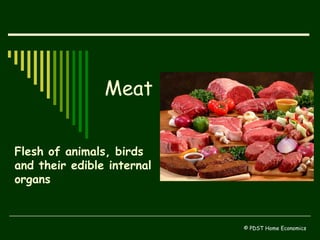
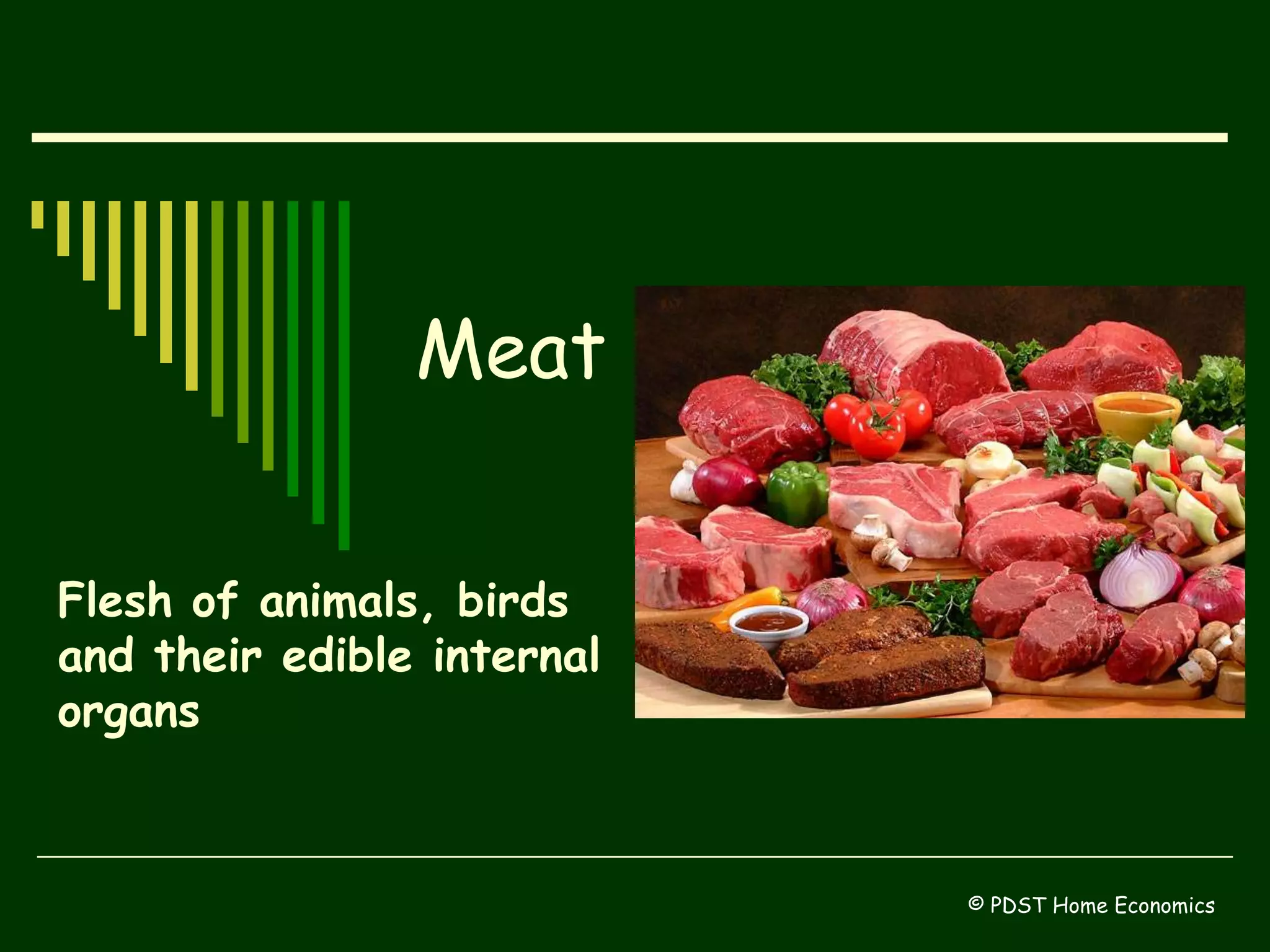
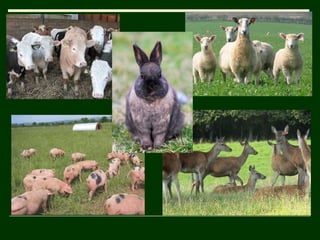
Flesh of animals, birds
and their edible internal
organs
© PDST Home Economics
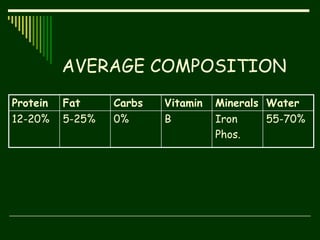
AVERAGE COMPOSITION
Protein Fat Carbs Vitamin Minerals Water
12-20% 5-25% 0% B Iron
Phos.
55-70%
Nutritive Value of Meat
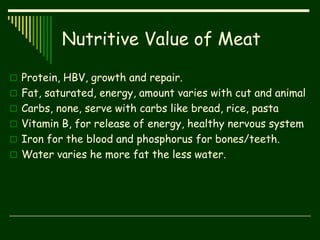
 Protein, HBV, growth and repair.
 Fat, saturated, energy, amount varies with cut and animal
 Carbs, none, serve with carbs like bread, rice, pasta
 Vitamin B, for release of energy, healthy nervous system
 Iron for the blood and phosphorus for bones/teeth.
 Water varies he more fat the less water.
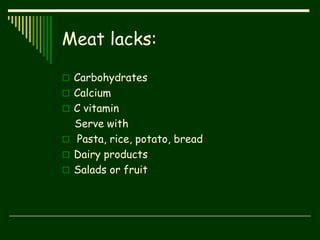
Meat lacks:
 Carbohydrates
 Calcium
 C vitamin
Serve with
 Pasta, rice, potato, bread
 Dairy products
 Salads or fruit
Value of meat in the diet
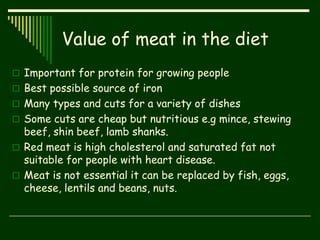
 Important for protein for growing people
 Best possible source of iron
 Many types and cuts for a variety of dishes
 Some cuts are cheap but nutritious e.g mince, stewing
beef, shin beef, lamb shanks.
 Red meat is high cholesterol and saturated fat not
suitable for people with heart disease.
 Meat is not essential it can be replaced by fish, eggs,
cheese, lentils and beans, nuts.
STRUCTURE OF MEAT
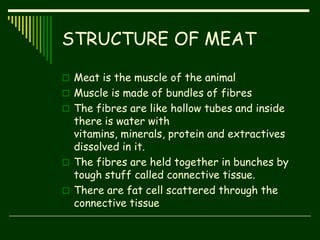
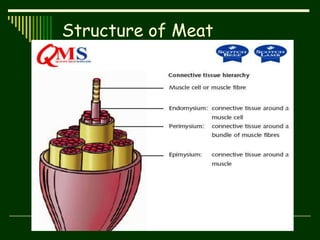
 Meat is the muscle of the animal
 Muscle is made of bundles of fibres
 The fibres are like hollow tubes and inside
there is water with
vitamins, minerals, protein and extractives
dissolved in it.
 The fibres are held together in bunches by
tough stuff called connective tissue.
 There are fat cell scattered through the
connective tissue
Structure of Meat
Tough v’s Tender
 In tender meat the fibres are shorter and
finer and there is less connective tissue.
 In tough meat the fibres are longer and
coarser and there is more connective tissue.
 Tough meat needs moist slow cooking to make
it tender e.g. stewing.
 Tender meat can be cooked by frying, grilling
or roasting.
Causes of toughness
Age The older the animal the
tougher the meat
Activity Meat from the more active
part of an animal is tougher
than from a less active part
Incorrect
Hanging
Meat must be hung for a
certain length of time or it
will go tough.
Incorrect
cooking method
The method must suit the
type of meat e.g. slow moist
method for tough meat
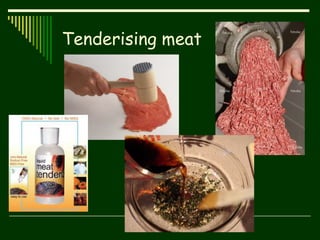
Tenderising meat
 Correct hanging, enzymes tenderise meat
 Mincing, breaks up fibres
 Beating with meat hammer.
 Marinating, soaking in oil, acid and flavouring.
 Chemical tenderiser e.g. papain.
 Slow moist cooking e.g. stewing
Tenderising meat
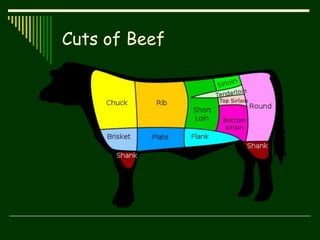
Cuts of Beef
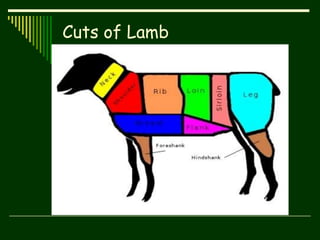
Cuts of Lamb
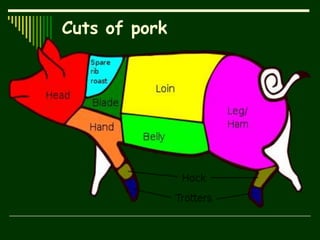
Cuts of pork
Buying Meat
 Buy meat from clean reliable shop with traceable meat.
 Cut should suit cooking method
 Avoid too much fat, bone, gristle.
 Cheaper cuts just as nutritious as expensive cuts.
 Check date stamp on packaged meat
Quality Assured Label
 Look out for
Quality Assured
label on Irish
meat
Storing Meat
 Remove packaging
 Put on clean plate and cover
 Refrigerate as soon as possible
 Use within 2 days
 Store raw below cooked meat
Cooking Meat
Reasons for:
 Destroy bacteria
 Improve flavour
 Make it more tender
Preparing meat for cooking:
 If frozen, defrost slowly in
fridge.
 Remove excess fat and
gristle, wipe with damp
kitchen paper.
 Weigh meat and calculate the
cooking time
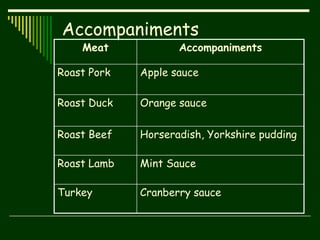
Effects of cooking on meat
 Protein coagulates, meat fibres squeeze out juices and
meat shrinks
 Fat Melts
 Some vitamin B and amino acids destroyed
 Colour changes red to brown
 Bacteria destroyed
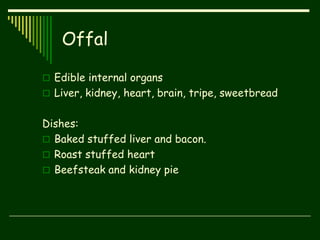
Accompaniments
Meat Accompaniments
Roast Pork Apple sauce
Roast Duck Orange sauce
Roast Beef Horseradish, Yorkshire pudding
Roast Lamb Mint Sauce
Turkey Cranberry sauce
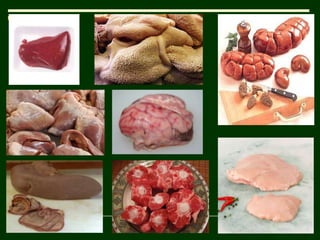
Offal
 Edible internal organs
 Liver, kidney, heart, brain, tripe, sweetbread
Dishes:
 Baked stuffed liver and bacon.
 Roast stuffed heart
 Beefsteak and kidney pie
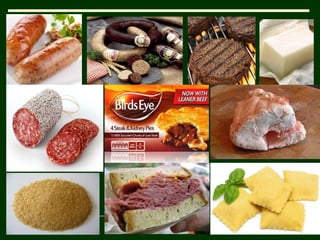
Meat Products
 Sausages, black & white pudding, hamburger.
 Processed cooked meats e.g. salami.
 Tinned foods, ravioli, beefsteak & kidney pie,
corned beef.
 Fats: suet, lard
 Gelatine: used to set dishes
Meat Alternatives and
Substitutes
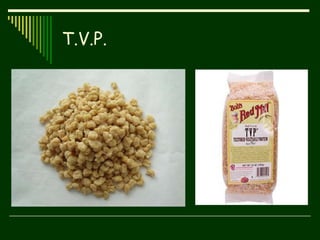
Textured Vegetable Protein (TVP)
 Made from soya beans
 Cheaper to produce than meat
 Less land needed
 Grows in any climate
 Contains fibre
 No saturated fat.
 Useful for vegetarians
 Other soya products: milk, quark, tofu
T.V.P.
Meat Alternatives & Substitutes
Quorn
 Protein food made from micro-organisms e.g. fungi
 Cheap to produce
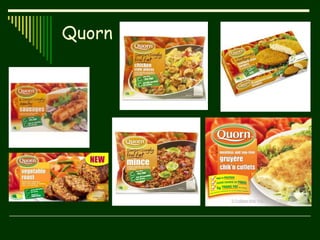
 Sold frozen in chunks or like mince and in ready meals
like burgers
Quorn

Meat 1

  • 1.
    Meat Flesh of animals,birds and their edible internal organs © PDST Home Economics
  • 3.
    AVERAGE COMPOSITION Protein FatCarbs Vitamin Minerals Water 12-20% 5-25% 0% B Iron Phos. 55-70%
  • 4.
    Nutritive Value ofMeat  Protein, HBV, growth and repair.  Fat, saturated, energy, amount varies with cut and animal  Carbs, none, serve with carbs like bread, rice, pasta  Vitamin B, for release of energy, healthy nervous system  Iron for the blood and phosphorus for bones/teeth.  Water varies he more fat the less water.
  • 5.
    Meat lacks:  Carbohydrates Calcium  C vitamin Serve with  Pasta, rice, potato, bread  Dairy products  Salads or fruit
  • 6.
    Value of meatin the diet  Important for protein for growing people  Best possible source of iron  Many types and cuts for a variety of dishes  Some cuts are cheap but nutritious e.g mince, stewing beef, shin beef, lamb shanks.  Red meat is high cholesterol and saturated fat not suitable for people with heart disease.  Meat is not essential it can be replaced by fish, eggs, cheese, lentils and beans, nuts.
  • 7.
    STRUCTURE OF MEAT Meat is the muscle of the animal  Muscle is made of bundles of fibres  The fibres are like hollow tubes and inside there is water with vitamins, minerals, protein and extractives dissolved in it.  The fibres are held together in bunches by tough stuff called connective tissue.  There are fat cell scattered through the connective tissue
  • 8.
  • 9.
    Tough v’s Tender In tender meat the fibres are shorter and finer and there is less connective tissue.  In tough meat the fibres are longer and coarser and there is more connective tissue.  Tough meat needs moist slow cooking to make it tender e.g. stewing.  Tender meat can be cooked by frying, grilling or roasting.
  • 10.
    Causes of toughness AgeThe older the animal the tougher the meat Activity Meat from the more active part of an animal is tougher than from a less active part Incorrect Hanging Meat must be hung for a certain length of time or it will go tough. Incorrect cooking method The method must suit the type of meat e.g. slow moist method for tough meat
  • 11.
    Tenderising meat  Correcthanging, enzymes tenderise meat  Mincing, breaks up fibres  Beating with meat hammer.  Marinating, soaking in oil, acid and flavouring.  Chemical tenderiser e.g. papain.  Slow moist cooking e.g. stewing
  • 12.
  • 13.
  • 14.
  • 15.
  • 16.
    Buying Meat  Buymeat from clean reliable shop with traceable meat.  Cut should suit cooking method  Avoid too much fat, bone, gristle.  Cheaper cuts just as nutritious as expensive cuts.  Check date stamp on packaged meat
  • 17.
    Quality Assured Label Look out for Quality Assured label on Irish meat
  • 18.
    Storing Meat  Removepackaging  Put on clean plate and cover  Refrigerate as soon as possible  Use within 2 days  Store raw below cooked meat
  • 19.
    Cooking Meat Reasons for: Destroy bacteria  Improve flavour  Make it more tender Preparing meat for cooking:  If frozen, defrost slowly in fridge.  Remove excess fat and gristle, wipe with damp kitchen paper.  Weigh meat and calculate the cooking time
  • 20.
    Effects of cookingon meat  Protein coagulates, meat fibres squeeze out juices and meat shrinks  Fat Melts  Some vitamin B and amino acids destroyed  Colour changes red to brown  Bacteria destroyed
  • 21.
    Accompaniments Meat Accompaniments Roast PorkApple sauce Roast Duck Orange sauce Roast Beef Horseradish, Yorkshire pudding Roast Lamb Mint Sauce Turkey Cranberry sauce
  • 22.
    Offal  Edible internalorgans  Liver, kidney, heart, brain, tripe, sweetbread Dishes:  Baked stuffed liver and bacon.  Roast stuffed heart  Beefsteak and kidney pie
  • 24.
    Meat Products  Sausages,black & white pudding, hamburger.  Processed cooked meats e.g. salami.  Tinned foods, ravioli, beefsteak & kidney pie, corned beef.  Fats: suet, lard  Gelatine: used to set dishes
  • 26.
    Meat Alternatives and Substitutes TexturedVegetable Protein (TVP)  Made from soya beans  Cheaper to produce than meat  Less land needed  Grows in any climate  Contains fibre  No saturated fat.  Useful for vegetarians  Other soya products: milk, quark, tofu
  • 27.
  • 28.
    Meat Alternatives &Substitutes Quorn  Protein food made from micro-organisms e.g. fungi  Cheap to produce  Sold frozen in chunks or like mince and in ready meals like burgers
  • 29.