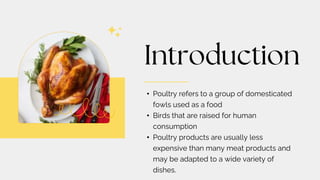
• Poultry refers to a group of domesticated
fowls used as a food
• Birds that are raised for human
consumption
• Poultry products are usually less
expensive than many meat products and
may be adapted to a wide variety of
dishes.
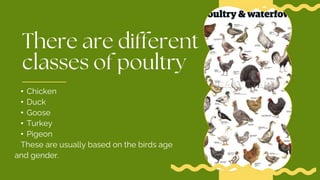
• Chicken
• Duck
• Goose
• Turkey
• Pigeon
These are usually based on the birds age
and gender.
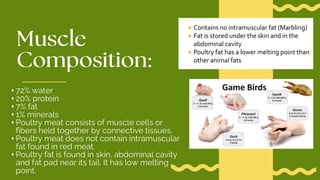
• 72% water
• 20% protein
• 7% fat
• 1% minerals
• Poultry meat consists of muscle cells or
fibers held together by connective tissues.
• Poultry meat does not contain intramuscular
fat found in red meat.
• Poultry fat is found in skin, abdominal cavity
and fat pad near its tail. It has low melting
point.
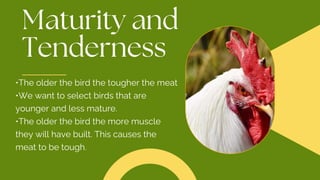
•The older the bird the tougher the meat
•We want to select birds that are
younger and less mature.
•The older the bird the more muscle
they will have built. This causes the
meat to be tough.
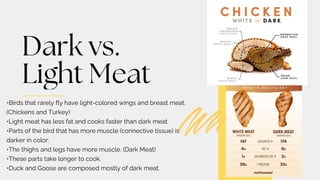
•Birds that rarely fly have light-colored wings and breast meat.
(Chickens and Turkey)
•Light meat has less fat and cooks faster than dark meat.
•Parts of the bird that has more muscle (connective tissue) is
darker in color.
•The thighs and legs have more muscle. (Dark Meat)
•These parts take longer to cook.
•Duck and Goose are composed mostly of dark meat.
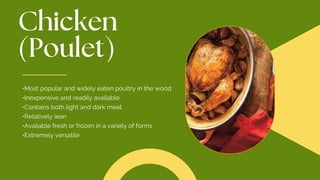
•Most popular and widely eaten poultry in the world
•Inexpensive and readily available
•Contains both light and dark meat
•Relatively lean
•Available fresh or frozen in a variety of forms
•Extremely versatile
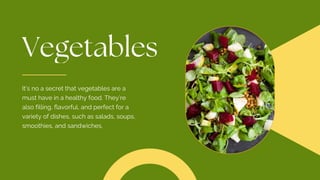
It’s no a secret that vegetables are a
must have in a healthy food. They’re
also filling, flavorful, and perfect for a
variety of dishes, such as salads, soups,
smoothies, and sandwiches.
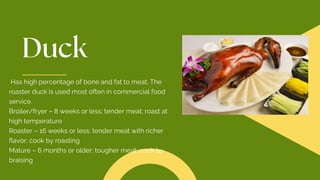
Has high percentage of bone and fat to meat. The
roaster duck is used most often in commercial food
service.
Broiler/fryer – 8 weeks or less; tender meat; roast at
high temperature
Roaster – 16 weeks or less; tender meat with richer
flavor; cook by roasting
Mature – 6 months or older; tougher meat; cook by
braising
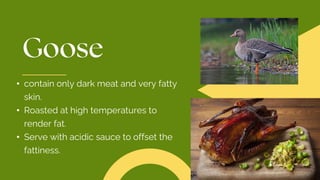
• contain only dark meat and very fatty
skin.
• Roasted at high temperatures to
render fat.
• Serve with acidic sauce to offset the
fattiness.
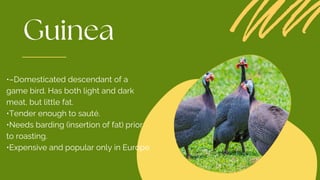
•–Domesticated descendant of a
game bird. Has both light and dark
meat, but little fat.
•Tender enough to sauté.
•Needs barding (insertion of fat) prior
to roasting.
•Expensive and popular only in Europe.
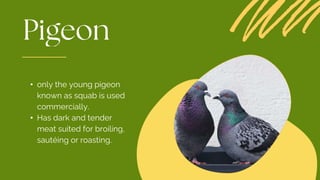
• only the young pigeon
known as squab is used
commercially.
• Has dark and tender
meat suited for broiling,
sautéing or roasting.
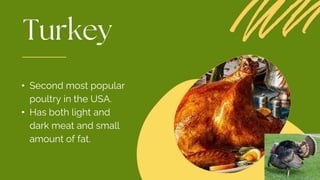
• Second most popular
poultry in the USA.
• Has both light and
dark meat and small
amount of fat.
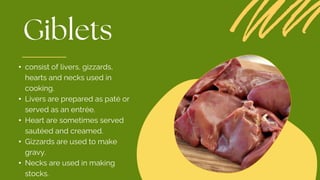
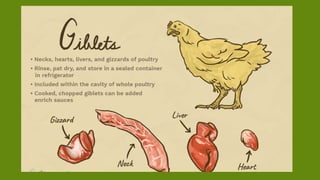
• consist of livers, gizzards,
hearts and necks used in
cooking.
• Livers are prepared as paté or
served as an entrée.
• Heart are sometimes served
sautéed and creamed.
• Gizzards are used to make
gravy.
• Necks are used in making
stocks.
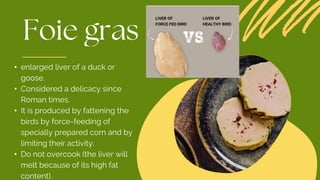
• enlarged liver of a duck or
goose.
• Considered a delicacy since
Roman times.
• It is produced by fattening the
birds by force-feeding of
specially prepared corn and by
limiting their activity.
• Do not overcook (the liver will
melt because of its high fat
content).
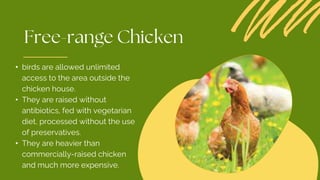
• birds are allowed unlimited
access to the area outside the
chicken house.
• They are raised without
antibiotics, fed with vegetarian
diet, processed without the use
of preservatives.
• They are heavier than
commercially-raised chicken
and much more expensive.
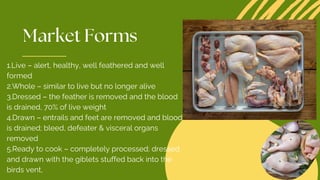
1.Live – alert, healthy, well feathered and well
formed
2.Whole – similar to live but no longer alive
3.Dressed – the feather is removed and the blood
is drained, 70% of live weight
4.Drawn – entrails and feet are removed and blood
is drained; bleed, defeater & visceral organs
removed
5.Ready to cook – completely processed; dressed
and drawn with the giblets stuffed back into the
birds vent,
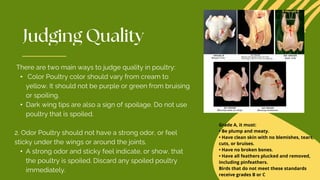
There are two main ways to judge quality in poultry:
• Color Poultry color should vary from cream to
yellow. It should not be purple or green from bruising
or spoiling.
• Dark wing tips are also a sign of spoilage. Do not use
poultry that is spoiled.
2. Odor Poultry should not have a strong odor, or feel
sticky under the wings or around the joints.
• A strong odor and sticky feel indicate, or show, that
the poultry is spoiled. Discard any spoiled poultry
immediately.
Grade A, it must:
• Be plump and meaty.
• Have clean skin with no blemishes, tears,
cuts, or bruises.
• Have no broken bones.
• Have all feathers plucked and removed,
including pinfeathers.
Birds that do not meet these standards
receive grades B or C
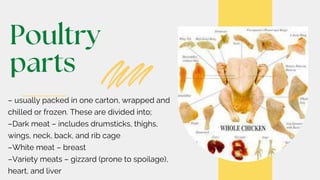
– usually packed in one carton, wrapped and
chilled or frozen. These are divided into;
–Dark meat – includes drumsticks, thighs,
wings, neck, back, and rib cage
–White meat – breast
–Variety meats – gizzard (prone to spoilage),
heart, and liver
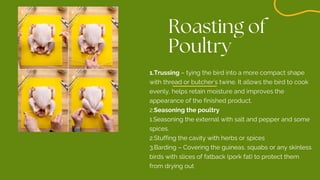
1.Trussing – tying the bird into a more compact shape
with thread or butcher’s twine. It allows the bird to cook
evenly, helps retain moisture and improves the
appearance of the finished product.
2.Seasoning the poultry
1.Seasoning the external with salt and pepper and some
spices.
2.Stuffing the cavity with herbs or spices
3.Barding – Covering the guineas, squabs or any skinless
birds with slices of fatback (pork fat) to protect them
from drying out
Poultry Cookery.pptx

Poultry Cookery.pptx

  • 2.
    • Poultry refersto a group of domesticated fowls used as a food • Birds that are raised for human consumption • Poultry products are usually less expensive than many meat products and may be adapted to a wide variety of dishes.
  • 3.
    • Chicken • Duck •Goose • Turkey • Pigeon These are usually based on the birds age and gender.
  • 4.
    • 72% water •20% protein • 7% fat • 1% minerals • Poultry meat consists of muscle cells or fibers held together by connective tissues. • Poultry meat does not contain intramuscular fat found in red meat. • Poultry fat is found in skin, abdominal cavity and fat pad near its tail. It has low melting point.
  • 5.
    •The older thebird the tougher the meat •We want to select birds that are younger and less mature. •The older the bird the more muscle they will have built. This causes the meat to be tough.
  • 6.
    •Birds that rarelyfly have light-colored wings and breast meat. (Chickens and Turkey) •Light meat has less fat and cooks faster than dark meat. •Parts of the bird that has more muscle (connective tissue) is darker in color. •The thighs and legs have more muscle. (Dark Meat) •These parts take longer to cook. •Duck and Goose are composed mostly of dark meat.
  • 7.
    •Most popular andwidely eaten poultry in the world •Inexpensive and readily available •Contains both light and dark meat •Relatively lean •Available fresh or frozen in a variety of forms •Extremely versatile
  • 8.
    It’s no asecret that vegetables are a must have in a healthy food. They’re also filling, flavorful, and perfect for a variety of dishes, such as salads, soups, smoothies, and sandwiches.
  • 9.
    Has high percentageof bone and fat to meat. The roaster duck is used most often in commercial food service. Broiler/fryer – 8 weeks or less; tender meat; roast at high temperature Roaster – 16 weeks or less; tender meat with richer flavor; cook by roasting Mature – 6 months or older; tougher meat; cook by braising
  • 10.
    • contain onlydark meat and very fatty skin. • Roasted at high temperatures to render fat. • Serve with acidic sauce to offset the fattiness.
  • 11.
    •–Domesticated descendant ofa game bird. Has both light and dark meat, but little fat. •Tender enough to sauté. •Needs barding (insertion of fat) prior to roasting. •Expensive and popular only in Europe.
  • 12.
    • only theyoung pigeon known as squab is used commercially. • Has dark and tender meat suited for broiling, sautéing or roasting.
  • 13.
    • Second mostpopular poultry in the USA. • Has both light and dark meat and small amount of fat.
  • 14.
    • consist oflivers, gizzards, hearts and necks used in cooking. • Livers are prepared as paté or served as an entrée. • Heart are sometimes served sautéed and creamed. • Gizzards are used to make gravy. • Necks are used in making stocks.
  • 15.
    • enlarged liverof a duck or goose. • Considered a delicacy since Roman times. • It is produced by fattening the birds by force-feeding of specially prepared corn and by limiting their activity. • Do not overcook (the liver will melt because of its high fat content).
  • 16.
    • birds areallowed unlimited access to the area outside the chicken house. • They are raised without antibiotics, fed with vegetarian diet, processed without the use of preservatives. • They are heavier than commercially-raised chicken and much more expensive.
  • 17.
    1.Live – alert,healthy, well feathered and well formed 2.Whole – similar to live but no longer alive 3.Dressed – the feather is removed and the blood is drained, 70% of live weight 4.Drawn – entrails and feet are removed and blood is drained; bleed, defeater & visceral organs removed 5.Ready to cook – completely processed; dressed and drawn with the giblets stuffed back into the birds vent,
  • 18.
    There are twomain ways to judge quality in poultry: • Color Poultry color should vary from cream to yellow. It should not be purple or green from bruising or spoiling. • Dark wing tips are also a sign of spoilage. Do not use poultry that is spoiled. 2. Odor Poultry should not have a strong odor, or feel sticky under the wings or around the joints. • A strong odor and sticky feel indicate, or show, that the poultry is spoiled. Discard any spoiled poultry immediately. Grade A, it must: • Be plump and meaty. • Have clean skin with no blemishes, tears, cuts, or bruises. • Have no broken bones. • Have all feathers plucked and removed, including pinfeathers. Birds that do not meet these standards receive grades B or C
  • 19.
    – usually packedin one carton, wrapped and chilled or frozen. These are divided into; –Dark meat – includes drumsticks, thighs, wings, neck, back, and rib cage –White meat – breast –Variety meats – gizzard (prone to spoilage), heart, and liver
  • 21.
    1.Trussing – tyingthe bird into a more compact shape with thread or butcher’s twine. It allows the bird to cook evenly, helps retain moisture and improves the appearance of the finished product. 2.Seasoning the poultry 1.Seasoning the external with salt and pepper and some spices. 2.Stuffing the cavity with herbs or spices 3.Barding – Covering the guineas, squabs or any skinless birds with slices of fatback (pork fat) to protect them from drying out