
A
G
S
C
6
MEAT
FABRICATION
Standard Cuts
TOPIC 5
A
G
S
C
6
At the end of this lecture the
STUDENTS will:
1. Become familiar with the basic
cuts of meat
2. Become familiar with terminologie
involving meat
3. Learn the name of meat cuts and
cooking methods for each cut.
4. Learn how to fabricate meat
OBJECTIVES
BEEFA
G
S
C
6
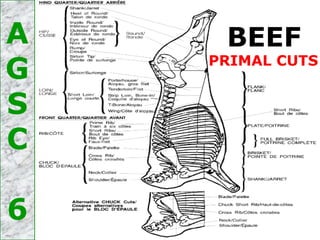
PRIMAL CUTS
A
G
S
C
6
BEEF
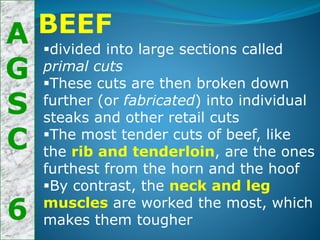
ď‚§divided into large sections called
primal cuts
ď‚§These cuts are then broken down
further (or fabricated) into individual
steaks and other retail cuts
ď‚§The most tender cuts of beef, like
the rib and tenderloin, are the ones
furthest from the horn and the hoof
ď‚§By contrast, the neck and leg
muscles are worked the most, which
makes them tougher
A
G
S
C
6
FORE QUARTER
A
G
S
C
6
FRONT QUARTER
A
G
S
C
6
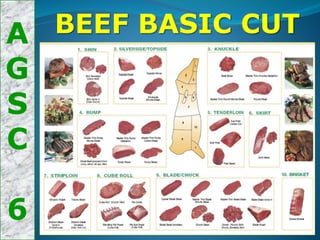
CHUCK
ď‚§Consisting of parts of the neck,
shoulder blade and upper arm, the
chuck is a tough cut of meat with a
good deal of connective tissue.
ď‚§This makes it a good choice for
braising and stewing, particularly
for making pot roast
ď‚§Because of its fat
content, chuck is also
excellent for making
ground beef
A
G
S
C
6
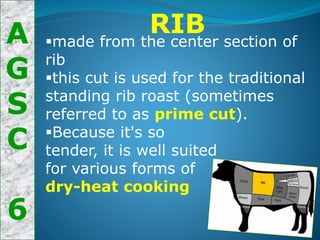
RIB
ď‚§made from the center section of
rib
ď‚§this cut is used for the traditional
standing rib roast (sometimes
referred to as prime cut).
ď‚§Because it's so
tender, it is well suited
for various forms of
dry-heat cooking
A
G
S
C
6
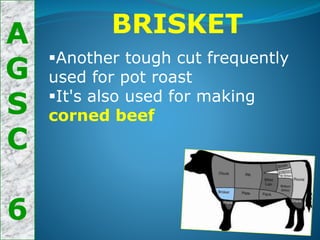
BRISKET
ď‚§Another tough cut frequently
used for pot roast
ď‚§It's also used for making
corned beef
A
G
S
C
6
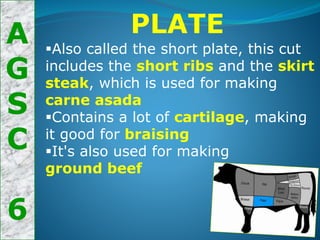
PLATE
ď‚§Also called the short plate, this cut
includes the short ribs and the skirt
steak, which is used for making
carne asada
ď‚§Contains a lot of cartilage, making
it good for braising
ď‚§It's also used for making
ground beef
A
G
S
C
6
SHANK
ď‚§ This is the leg of the animal, and
is extremely tough and full of
connective tissue
ď‚§ NOTE also that each side of beef
has two shanks, one in the
forequarter and one in the
hindquarter
ď‚§ The shank is used in
making the luxurious
Italian dish osso buco
A
G
S
C
6
HIND QUARTER
A
G
S
C
6
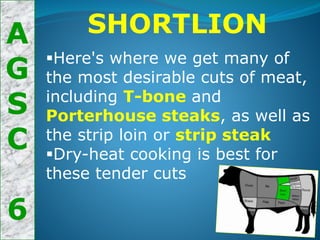
SHORTLION
ď‚§Here's where we get many of
the most desirable cuts of meat,
including T-bone and
Porterhouse steaks, as well as
the strip loin or strip steak
ď‚§Dry-heat cooking is best for
these tender cuts
A
G
S
C
6
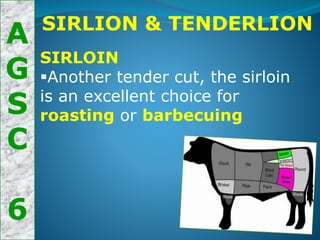
SIRLION & TENDERLION
SIRLOIN
ď‚§Another tender cut, the sirloin
is an excellent choice for
roasting or barbecuing
A
G
S
C
6
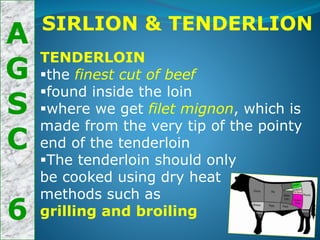
SIRLION & TENDERLION
TENDERLOIN
ď‚§the finest cut of beef
ď‚§found inside the loin
ď‚§where we get filet mignon, which is
made from the very tip of the pointy
end of the tenderloin
ď‚§The tenderloin should only
be cooked using dry heat
methods such as
grilling and broiling
A
G
S
C
6
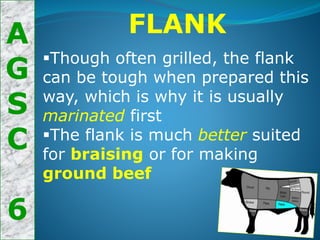
FLANK
ď‚§Though often grilled, the flank
can be tough when prepared this
way, which is why it is usually
marinated first
ď‚§The flank is much better suited
for braising or for making
ground beef
A
G
S
C
6
ROUND
ď‚§ This is a fairly lean cut, but also
tough
ď‚§ Best prepared using moist-heat,
as in a crockpot
A
G
S
C
6
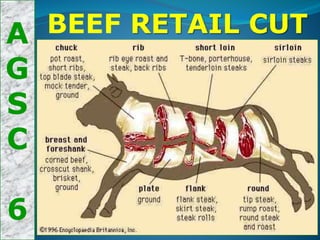
BEEF RETAIL CUT
A
G
S
C
6
BEEF BASIC CUT
A
G
S
C
6
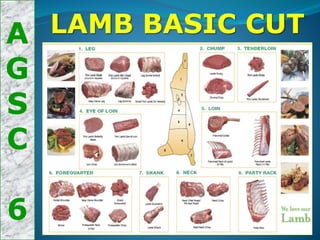
LAMB BASIC CUT
A
G
S
C
6
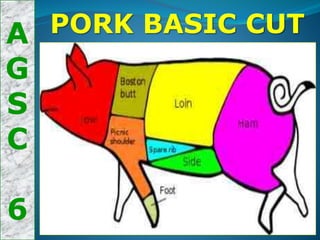
PORK BASIC CUT
A
G
S
C
6
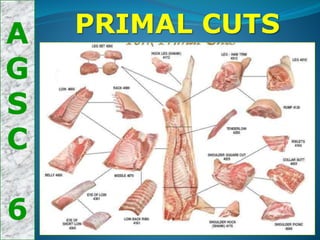
PRIMAL CUTS
A
G
S
C
6
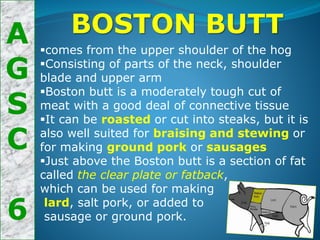
BOSTON BUTT
ď‚§comes from the upper shoulder of the hog
ď‚§Consisting of parts of the neck, shoulder
blade and upper arm
ď‚§Boston butt is a moderately tough cut of
meat with a good deal of connective tissue
ď‚§It can be roasted or cut into steaks, but it is
also well suited for braising and stewing or
for making ground pork or sausages
ď‚§Just above the Boston butt is a section of fat
called the clear plate or fatback,
which can be used for making
lard, salt pork, or added to
sausage or ground pork.
A
G
S
C
6
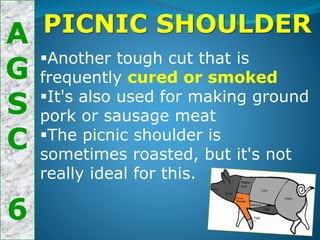
PICNIC SHOULDER
ď‚§Another tough cut that is
frequently cured or smoked
ď‚§It's also used for making ground
pork or sausage meat
ď‚§The picnic shoulder is
sometimes roasted, but it's not
really ideal for this.
A
G
S
C
6
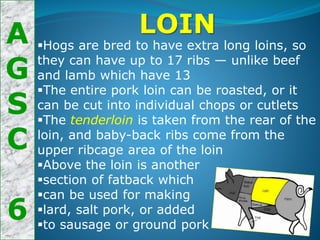
LOIN
ď‚§Hogs are bred to have extra long loins, so
they can have up to 17 ribs — unlike beef
and lamb which have 13
ď‚§The entire pork loin can be roasted, or it
can be cut into individual chops or cutlets
ď‚§The tenderloin is taken from the rear of the
loin, and baby-back ribs come from the
upper ribcage area of the loin
ď‚§Above the loin is another
ď‚§section of fatback which
ď‚§can be used for making
ď‚§lard, salt pork, or added
ď‚§to sausage or ground pork
A
G
S
C
6
HAM
ď‚§The back leg of the hog is where we
get fresh, smoked or cured hams
ď‚§Serrano ham and prosciutto are
made from hams that are cured,
smoked and then air-dried
ď‚§Fresh hams are usually roasted,
but they can be cut into steaks
as well.
A
G
S
C
6
SPARERIBS
ď‚§Taken from the belly side of the
ribs where they join the
breastbone
ď‚§pork spareribs are often prepared
by grilling very slowly over low
temperatures, although they can
also be braised or
cooked in a crockpot
A
G
S
C
6
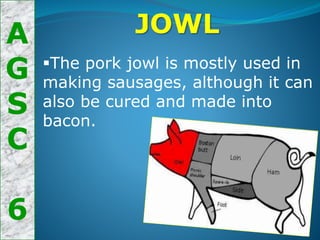
JOWL
ď‚§The pork jowl is mostly used in
making sausages, although it can
also be cured and made into
bacon.
A
G
S
C
6
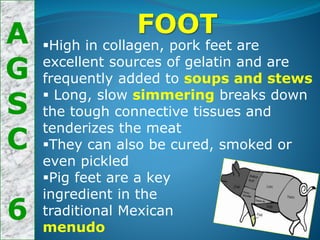
FOOT
ď‚§High in collagen, pork feet are
excellent sources of gelatin and are
frequently added to soups and stews
ď‚§ Long, slow simmering breaks down
the tough connective tissues and
tenderizes the meat
ď‚§They can also be cured, smoked or
even pickled
ď‚§Pig feet are a key
ingredient in the
traditional Mexican
menudo
A
G
S
C
6
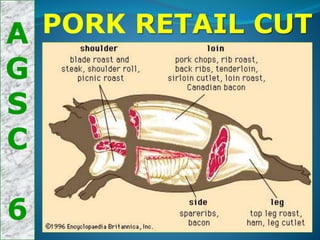
PORK RETAIL CUT

Meat Cuts

  • 1.
  • 2.
    A G S C 6 At the endof this lecture the STUDENTS will: 1. Become familiar with the basic cuts of meat 2. Become familiar with terminologie involving meat 3. Learn the name of meat cuts and cooking methods for each cut. 4. Learn how to fabricate meat OBJECTIVES
  • 3.
  • 4.
    A G S C 6 BEEF ď‚§divided into largesections called primal cuts ď‚§These cuts are then broken down further (or fabricated) into individual steaks and other retail cuts ď‚§The most tender cuts of beef, like the rib and tenderloin, are the ones furthest from the horn and the hoof ď‚§By contrast, the neck and leg muscles are worked the most, which makes them tougher
  • 5.
  • 6.
  • 7.
    A G S C 6 CHUCK ď‚§Consisting of partsof the neck, shoulder blade and upper arm, the chuck is a tough cut of meat with a good deal of connective tissue. ď‚§This makes it a good choice for braising and stewing, particularly for making pot roast ď‚§Because of its fat content, chuck is also excellent for making ground beef
  • 8.
    A G S C 6 RIB ď‚§made from thecenter section of rib ď‚§this cut is used for the traditional standing rib roast (sometimes referred to as prime cut). ď‚§Because it's so tender, it is well suited for various forms of dry-heat cooking
  • 9.
    A G S C 6 BRISKET ď‚§Another tough cutfrequently used for pot roast ď‚§It's also used for making corned beef
  • 10.
    A G S C 6 PLATE ď‚§Also called theshort plate, this cut includes the short ribs and the skirt steak, which is used for making carne asada ď‚§Contains a lot of cartilage, making it good for braising ď‚§It's also used for making ground beef
  • 11.
    A G S C 6 SHANK ď‚§ This isthe leg of the animal, and is extremely tough and full of connective tissue ď‚§ NOTE also that each side of beef has two shanks, one in the forequarter and one in the hindquarter ď‚§ The shank is used in making the luxurious Italian dish osso buco
  • 12.
  • 13.
    A G S C 6 SHORTLION ď‚§Here's where weget many of the most desirable cuts of meat, including T-bone and Porterhouse steaks, as well as the strip loin or strip steak ď‚§Dry-heat cooking is best for these tender cuts
  • 14.
    A G S C 6 SIRLION & TENDERLION SIRLOIN ď‚§Anothertender cut, the sirloin is an excellent choice for roasting or barbecuing
  • 15.
    A G S C 6 SIRLION & TENDERLION TENDERLOIN ď‚§thefinest cut of beef ď‚§found inside the loin ď‚§where we get filet mignon, which is made from the very tip of the pointy end of the tenderloin ď‚§The tenderloin should only be cooked using dry heat methods such as grilling and broiling
  • 16.
    A G S C 6 FLANK ď‚§Though often grilled,the flank can be tough when prepared this way, which is why it is usually marinated first ď‚§The flank is much better suited for braising or for making ground beef
  • 17.
    A G S C 6 ROUND ď‚§ This isa fairly lean cut, but also tough ď‚§ Best prepared using moist-heat, as in a crockpot
  • 18.
  • 19.
  • 20.
  • 21.
  • 22.
  • 23.
    A G S C 6 BOSTON BUTT ď‚§comes fromthe upper shoulder of the hog ď‚§Consisting of parts of the neck, shoulder blade and upper arm ď‚§Boston butt is a moderately tough cut of meat with a good deal of connective tissue ď‚§It can be roasted or cut into steaks, but it is also well suited for braising and stewing or for making ground pork or sausages ď‚§Just above the Boston butt is a section of fat called the clear plate or fatback, which can be used for making lard, salt pork, or added to sausage or ground pork.
  • 24.
    A G S C 6 PICNIC SHOULDER ď‚§Another toughcut that is frequently cured or smoked ď‚§It's also used for making ground pork or sausage meat ď‚§The picnic shoulder is sometimes roasted, but it's not really ideal for this.
  • 25.
    A G S C 6 LOIN Hogs are bredto have extra long loins, so they can have up to 17 ribs — unlike beef and lamb which have 13 The entire pork loin can be roasted, or it can be cut into individual chops or cutlets The tenderloin is taken from the rear of the loin, and baby-back ribs come from the upper ribcage area of the loin Above the loin is another section of fatback which can be used for making lard, salt pork, or added to sausage or ground pork
  • 26.
    A G S C 6 HAM ď‚§The back legof the hog is where we get fresh, smoked or cured hams ď‚§Serrano ham and prosciutto are made from hams that are cured, smoked and then air-dried ď‚§Fresh hams are usually roasted, but they can be cut into steaks as well.
  • 27.
    A G S C 6 SPARERIBS ď‚§Taken from thebelly side of the ribs where they join the breastbone ď‚§pork spareribs are often prepared by grilling very slowly over low temperatures, although they can also be braised or cooked in a crockpot
  • 28.
    A G S C 6 JOWL ď‚§The pork jowlis mostly used in making sausages, although it can also be cured and made into bacon.
  • 29.
    A G S C 6 FOOT ď‚§High in collagen,pork feet are excellent sources of gelatin and are frequently added to soups and stews ď‚§ Long, slow simmering breaks down the tough connective tissues and tenderizes the meat ď‚§They can also be cured, smoked or even pickled ď‚§Pig feet are a key ingredient in the traditional Mexican menudo
  • 30.