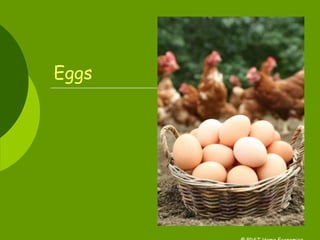
Eggs
EGGS ARE…….
 A cheap protein food
 Versatile
 Cooked quickly
 Suitable for all ages
Average % composition of an egg
 Protein 13%
 Fat 12%
 Carbohydrate 0%
 Vitamins 1% B,A,D
 Minerals 1% Ca, Phos, Iron
 Water 73%
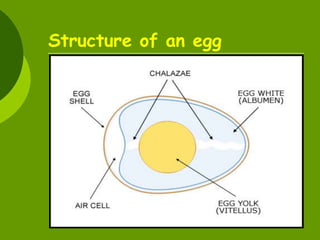
Structure of an egg
Nutritive/ Food Value
 HBV protein, growth & repair.
 Saturated fat, energy.
 No carbs, serve with bread, pasta, rice.
 Vit B - nerves and energy.
Vit A - growth, skin, membranes, eyes.
Vit D - bones & teeth.
 Calcium & phosphorus - bones & teeth.
Iron - red blood cells.
 High in water more in the white than the yolk.
Value of eggs in the diet
 Contain protein, vit A, calcium, phosphorus & vitamin
D all needed by growing people.
 Low income, cheap protein instead of meat.
 Easily digested for invalids, elderly, infants.
 Very versatile in cookery.
 High cholesterol, not good for people with heart
disease.
Uses
 Cooked on their own eg. boiled, poached, scrambled.
 In savoury dishes eg quiche, omelette.
 Thickening eg. custard.
 Glazing eg. scones, pastry
 Binding eg. beef burgers, fish cakes.
 Aerating eg. sponges, pavlova.
 Coating eg. in batter, with breadcrumbs.
 Emulsions eg. mayonnaise.
Buying and storing eggs
Buying
 Best before date
 Check grade
 No cracks or dirt
 Correct size
 Heavy for size
 Rough shell
Storing
 Store in fridge
 Pointed end down
 Use before use by date
 Use in rotation
 Away from strong smelling foods
 Yolks in cup covered with water
 Whites in screw top jar
Fresh eggs
 Date stamp
 Small air space
 Heavy
 Rough shell
 Sink in water
 Dome shaped yolk
 Thick egg white
Using eggs
To avoid curdling:
 Use at room temperature
 Cook gently
 Add the hot to the cold
For good aeration :
 Use fresh eggs
 Room temperature
 Do not let any yolk get into
the white when making
meringue
Effects of cooking
 Protein coagulates and sets
 May curdle if temperature is too high
 Lightly cooked – more digestible
 Over cooked – harder to digest
 Bacteria are killed
 Vit. B damaged
Salmonella
 It is recommended that
elderly, pregnant women ,
invalids and infants avoid
foods containing raw eggs
eg. mayonnaise because of
the danger of salmonella
food poisoning
Batters
 A mixture of flour, eggs and a liquid (usually
milk)
 Beat well to get air bubbles into the batter,
this will make it rise
Uses:
 Thin Batters: pancakes, Yorkshire pudding
 Thick Batters: coating foods
Custard
 A custard is a mixture of eggs
and milk cooked gently so that
the eggs thicken the milk.
 Can form part of hot and cold
dishes eg. baked custard, crème
caramel, crème brulée , quiche.
 Commercial custards are made
of starch, coloured and
flavoured to seem like custard
Eggs

Eggs

  • 1.
  • 2.
    EGGS ARE…….  Acheap protein food  Versatile  Cooked quickly  Suitable for all ages
  • 3.
    Average % compositionof an egg  Protein 13%  Fat 12%  Carbohydrate 0%  Vitamins 1% B,A,D  Minerals 1% Ca, Phos, Iron  Water 73%
  • 4.
  • 5.
    Nutritive/ Food Value HBV protein, growth & repair.  Saturated fat, energy.  No carbs, serve with bread, pasta, rice.  Vit B - nerves and energy. Vit A - growth, skin, membranes, eyes. Vit D - bones & teeth.  Calcium & phosphorus - bones & teeth. Iron - red blood cells.  High in water more in the white than the yolk.
  • 6.
    Value of eggsin the diet  Contain protein, vit A, calcium, phosphorus & vitamin D all needed by growing people.  Low income, cheap protein instead of meat.  Easily digested for invalids, elderly, infants.  Very versatile in cookery.  High cholesterol, not good for people with heart disease.
  • 7.
    Uses  Cooked ontheir own eg. boiled, poached, scrambled.  In savoury dishes eg quiche, omelette.  Thickening eg. custard.  Glazing eg. scones, pastry  Binding eg. beef burgers, fish cakes.  Aerating eg. sponges, pavlova.  Coating eg. in batter, with breadcrumbs.  Emulsions eg. mayonnaise.
  • 9.
    Buying and storingeggs Buying  Best before date  Check grade  No cracks or dirt  Correct size  Heavy for size  Rough shell Storing  Store in fridge  Pointed end down  Use before use by date  Use in rotation  Away from strong smelling foods  Yolks in cup covered with water  Whites in screw top jar
  • 10.
    Fresh eggs  Datestamp  Small air space  Heavy  Rough shell  Sink in water  Dome shaped yolk  Thick egg white
  • 11.
    Using eggs To avoidcurdling:  Use at room temperature  Cook gently  Add the hot to the cold For good aeration :  Use fresh eggs  Room temperature  Do not let any yolk get into the white when making meringue
  • 12.
    Effects of cooking Protein coagulates and sets  May curdle if temperature is too high  Lightly cooked – more digestible  Over cooked – harder to digest  Bacteria are killed  Vit. B damaged
  • 13.
    Salmonella  It isrecommended that elderly, pregnant women , invalids and infants avoid foods containing raw eggs eg. mayonnaise because of the danger of salmonella food poisoning
  • 14.
    Batters  A mixtureof flour, eggs and a liquid (usually milk)  Beat well to get air bubbles into the batter, this will make it rise Uses:  Thin Batters: pancakes, Yorkshire pudding  Thick Batters: coating foods
  • 16.
    Custard  A custardis a mixture of eggs and milk cooked gently so that the eggs thicken the milk.  Can form part of hot and cold dishes eg. baked custard, crème caramel, crème brulée , quiche.  Commercial custards are made of starch, coloured and flavoured to seem like custard