Cereals
© PDST Home Economics
 Wheat
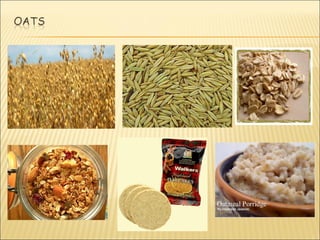
 Oats
 Rice
 Maize (Corn)
 Rye
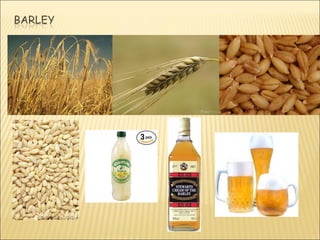
 Barley
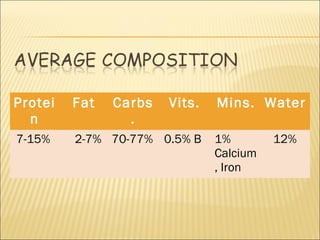
Protei
n
Fat Carbs
.
Vits. Mins. Water
7-15% 2-7% 70-77% 0.5% B 1%
Calcium
, Iron
12%
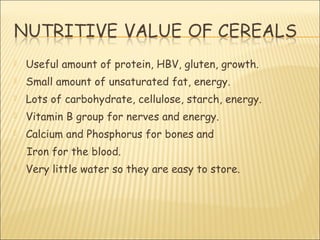
 Useful amount of protein, HBV, gluten, growth.
 Small amount of unsaturated fat, energy.
 Lots of carbohydrate, cellulose, starch, energy.
 Vitamin B group for nerves and energy.
 Calcium and Phosphorus for bones and
Iron for the blood.
 Very little water so they are easy to store.
 Nutritious, especially whole grain products.
 Cheap.
 Filling.
 Good sort of protein for vegans.
 No waste.
 Easy to store, prepare, cook.
 Over eating cereals can cause obesity.
 Insipid.
 Starch grains swell and burst.
 The starch grains absorb liquids and thicken them.
 Starch becomes digestible.
 Cellulose softens.
 Loss of vitamin B.
 Bran layer:
Fibre, Iron, Vit. B
 Endosperm:
Starch and Protein (gluten).
 Germ:
Fat, Vit. B, Iron, Protein
 Protein found in wheat
 Becomes stretchy when
wet
 Allows dough to stretch
when it is rising.
 At a certain temperature
it sets and the dough
keeps the risen shape
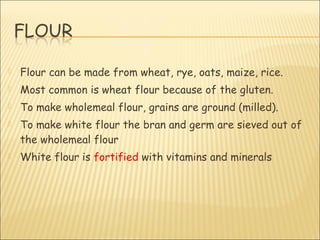
 Flour can be made from wheat, rye, oats, maize, rice.
 Most common is wheat flour because of the gluten.
 To make wholemeal flour, grains are ground (milled).
 To make white flour the bran and germ are sieved out of
the wholemeal flour
 White flour is fortified with vitamins and minerals
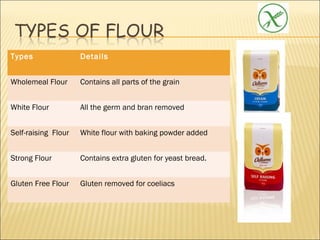
Types Details
Wholemeal Flour Contains all parts of the grain
White Flour All the germ and bran removed
Self-raising Flour White flour with baking powder added
Strong Flour Contains extra gluten for yeast bread.
Gluten Free Flour Gluten removed for coeliacs
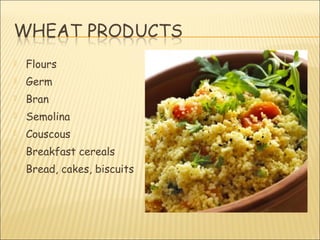
 Flours
 Germ
 Bran
 Semolina
 Couscous
 Breakfast cereals
 Bread, cakes, biscuits
 Made from the endosperm
(semolina) of durum wheat mixed
with water, shaped and then dried
 Sometimes eggs are added.
 Brown pasta made from wholemeal
flour
 Green pasta has spinach purée
added.
 Red pasta has tomato purée added.
 Black pasta has squid ink added
 Grown mostly in the Far East
 White “polished” rice loses fibre and vitamin B
 Other rice products:
krispies, flour, cakes, paper, wine, ground rice.
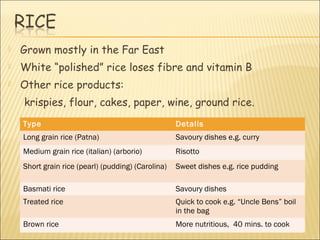
Type Detalis
Long grain rice (Patna) Savoury dishes e.g. curry
Medium grain rice (italian) (arborio) Risotto
Short grain rice (pearl) (pudding) (Carolina) Sweet dishes e.g. rice pudding
Basmati rice Savoury dishes
Treated rice Quick to cook e.g. “Uncle Bens” boil
in the bag
Brown rice More nutritious, 40 mins. to cook
 Rich in: Omega fatty acids, Fibre, Vitamin E.
 Sesame, linseed, pumpkin, sunflower

Cereals

  • 1.
  • 2.
     Wheat  Oats Rice  Maize (Corn)  Rye  Barley
  • 9.
    Protei n Fat Carbs . Vits. Mins.Water 7-15% 2-7% 70-77% 0.5% B 1% Calcium , Iron 12%
  • 10.
     Useful amountof protein, HBV, gluten, growth.  Small amount of unsaturated fat, energy.  Lots of carbohydrate, cellulose, starch, energy.  Vitamin B group for nerves and energy.  Calcium and Phosphorus for bones and Iron for the blood.  Very little water so they are easy to store.
  • 11.
     Nutritious, especiallywhole grain products.  Cheap.  Filling.  Good sort of protein for vegans.  No waste.  Easy to store, prepare, cook.  Over eating cereals can cause obesity.  Insipid.
  • 12.
     Starch grainsswell and burst.  The starch grains absorb liquids and thicken them.  Starch becomes digestible.  Cellulose softens.  Loss of vitamin B.
  • 13.
     Bran layer: Fibre,Iron, Vit. B  Endosperm: Starch and Protein (gluten).  Germ: Fat, Vit. B, Iron, Protein
  • 14.
     Protein foundin wheat  Becomes stretchy when wet  Allows dough to stretch when it is rising.  At a certain temperature it sets and the dough keeps the risen shape
  • 15.
     Flour canbe made from wheat, rye, oats, maize, rice.  Most common is wheat flour because of the gluten.  To make wholemeal flour, grains are ground (milled).  To make white flour the bran and germ are sieved out of the wholemeal flour  White flour is fortified with vitamins and minerals
  • 16.
    Types Details Wholemeal FlourContains all parts of the grain White Flour All the germ and bran removed Self-raising Flour White flour with baking powder added Strong Flour Contains extra gluten for yeast bread. Gluten Free Flour Gluten removed for coeliacs
  • 17.
     Flours  Germ Bran  Semolina  Couscous  Breakfast cereals  Bread, cakes, biscuits
  • 18.
     Made fromthe endosperm (semolina) of durum wheat mixed with water, shaped and then dried  Sometimes eggs are added.  Brown pasta made from wholemeal flour  Green pasta has spinach purée added.  Red pasta has tomato purée added.  Black pasta has squid ink added
  • 19.
     Grown mostlyin the Far East  White “polished” rice loses fibre and vitamin B  Other rice products: krispies, flour, cakes, paper, wine, ground rice. Type Detalis Long grain rice (Patna) Savoury dishes e.g. curry Medium grain rice (italian) (arborio) Risotto Short grain rice (pearl) (pudding) (Carolina) Sweet dishes e.g. rice pudding Basmati rice Savoury dishes Treated rice Quick to cook e.g. “Uncle Bens” boil in the bag Brown rice More nutritious, 40 mins. to cook
  • 20.
     Rich in:Omega fatty acids, Fibre, Vitamin E.  Sesame, linseed, pumpkin, sunflower