
Part I
 Meat is animal flesh that is eaten as food
 Humans are omnivorous
 Mainly composed of water, proteins and fats
 Refers to skeletal muscle and associated fat and other
tissues
 Colloquial use sometimes connotes red muscle food
(beef, pork, lamb)
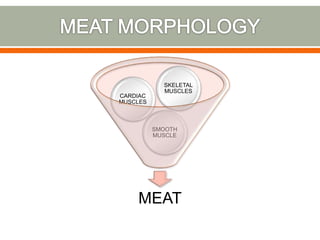
MEAT
SMOOTH
MUSCLE
CARDIAC
MUSCLES
SKELETAL
MUSCLES
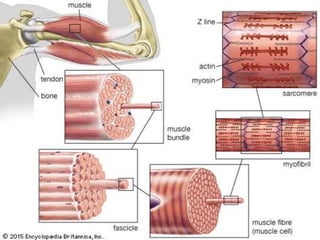
 Each organized skeletal muscle is made of a number of
muscle bundles or fascicles held together by a common
collagenous connective tissue layer called fascia.
 Each muscle bundle contains a number of muscle fibers lined
by the plasma membrane called sarcolemma enclosing the
sarcoplasm containing many nuclei.
 Sarcoplasmic reticulum of the muscle fibres is the store house
of calcium ions.
 A large number of parallelly arranged filaments in the
sarcoplasm called myofilaments or myofibrils
 Each myofibril has alternate dark and light bands on it due to
the distribution pattern of two important proteins – Actin and
Myosin arranged alternately
 The light bands contain actin and is called I-band or Isotropic
band, whereas the dark band called ‘A’ or Anisotropic band
contains myosin
 Actin filaments are thinner as compared to the myosin
filaments, hence are commonly called thin and thick filaments
respectively.
 In the centre of each ‘I’ band is an elastic fibre called ‘Z’ line
which bisects it.
 The thick filaments in the ‘A’ band are also held together in the
middle of this band by a thin fibrous membrane called ‘M’ line.
 The portion of the myofibril between two successive ‘Z’ lines is
considered as the functional unit of contraction and is called a
sarcomere.
 In a resting state, the edges of thin filaments on either side of
the thick filaments partially overlap the free ends of the thick
filaments leaving the central part of the thick filaments. This
central part of thick filament, not overlapped by thin filaments
is called the ‘H’ zone.
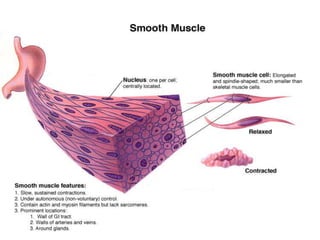
 Some smooth muscles (e.g., gizzard, stomach, and
intestine) are consumed as specialized organ foods
 The smooth muscle cells are distinguished by their
centrally located cell nuclei
 Optically uniform myofibrils which do not have cross
striation
 May be used as a food directly, or more commonly may
be minced and incorporated into processed meat
products such as sausages
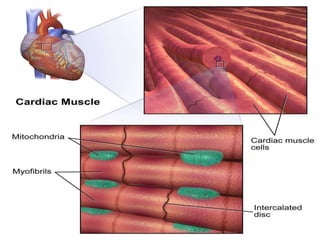
 Like skeletal muscle, cardiac muscle is striated, which
suggests an arrangement of the contractile proteins of
cardiac muscle which is similar to that of skeletal muscle.
 The fiber arrangement is somewhat less regular
 Cardiac muscle typically has only 1–2 nuclei that are
centrally located
 The proteins comprising the cardiac contractile
machinery are the same as skeletal, the isoforms are
often specific to cardiac muscle
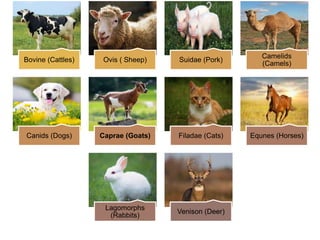
Bovine (Cattles) Ovis ( Sheep) Suidae (Pork)
Camelids
(Camels)
Canids (Dogs) Caprae (Goats) Filadae (Cats) Equnes (Horses)
Lagomorphs
(Rabbits)
Venison (Deer)
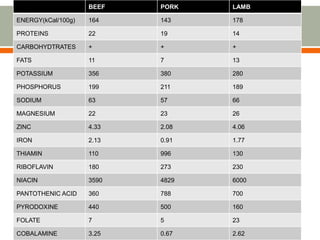
BEEF PORK LAMB
ENERGY(kCal/100g) 164 143 178
PROTEINS 22 19 14
CARBOHYDTRATES + + +
FATS 11 7 13
POTASSIUM 356 380 280
PHOSPHORUS 199 211 189
SODIUM 63 57 66
MAGNESIUM 22 23 26
ZINC 4.33 2.08 4.06
IRON 2.13 0.91 1.77
THIAMIN 110 996 130
RIBOFLAVIN 180 273 230
NIACIN 3590 4829 6000
PANTOTHENIC ACID 360 788 700
PYRODOXINE 440 500 160
FOLATE 7 5 23
COBALAMINE 3.25 0.67 2.62
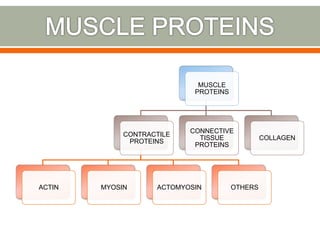
MUSCLE
PROTEINS
CONTRACTILE
PROTEINS
ACTIN MYOSIN ACTOMYOSIN OTHERS
CONNECTIVE
TISSUE
PROTEINS
COLLAGEN
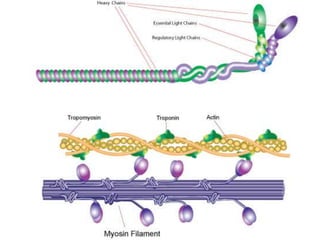
 Myosin: dominant protein of ‘A’ band and 45%
myofibrillar protein
 Forms thick filament
 Serves as molecular motor for muscle contraction
 Stabilized by titin during contraction
 Consist of 2 large and 4 small subunits
 Actin: main constituent of thin filament and 20% total
contractile proteins
 Consist of two fractions globular(G-actin) & fibriller(F-
actin)
 Binds myosin during contraction forming actomyosin
crossbridge
 Acts as backbone for binding tropomyosin % troponin
 Actomyosin: in vitro F-actin and myosin forms
actomyosin at high ionic strength
 Appears spike like having myosin embedded in F-
actinbackbone
 Stimulated by Mg2+
 Others: tropomyosin A, tropomyosin B, troponin C,
Troponin I, α actinin, β actinin, etc.
 Functions in holding and supporting contractile protein
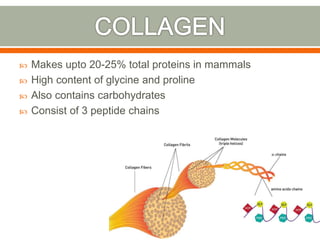
 Makes upto 20-25% total proteins in mammals
 High content of glycine and proline
 Also contains carbohydrates
 Consist of 3 peptide chains
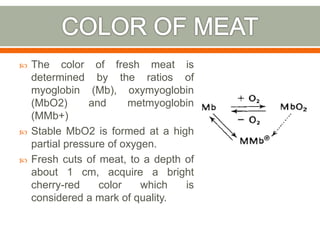
 The color of fresh meat is
determined by the ratios of
myoglobin (Mb), oxymyoglobin
(MbO2) and metmyoglobin
(MMb+)
 Stable MbO2 is formed at a high
partial pressure of oxygen.
 Fresh cuts of meat, to a depth of
about 1 cm, acquire a bright
cherry-red color which is
considered a mark of quality.
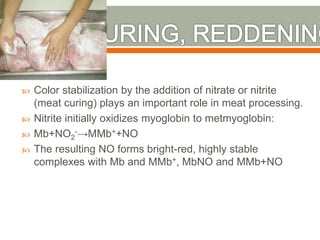
 Color stabilization by the addition of nitrate or nitrite
(meat curing) plays an important role in meat processing.
 Nitrite initially oxidizes myoglobin to metmyoglobin:
 Mb+NO2
-→MMb++NO
 The resulting NO forms bright-red, highly stable
complexes with Mb and MMb+, MbNO and MMb+NO
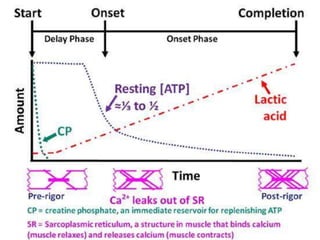
 Cessation of blood flow to muscle occurs at slaughter
 Various organs of body including muscle draw on
reserve mechanism to maintain cellular hemeostasis
 Myofibril utilizes myoglobin bound oxygen
 Anaerobic glycolysis becomes dominant
 Product accumulates and substrate exhausts
 ATP, ADP, Creatine degrades
 Lactic acid formed decreases pH from 6.5 to 5.8
 Soft and tender but losses its flexibility and extensibility
 Ca2+ distributes over intracellular matrix
 Resolved in 2-3 days of post mortem
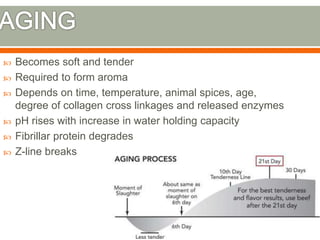
 Becomes soft and tender
 Required to form aroma
 Depends on time, temperature, animal spices, age,
degree of collagen cross linkages and released enzymes
 pH rises with increase in water holding capacity
 Fibrillar protein degrades
 Z-line breaks
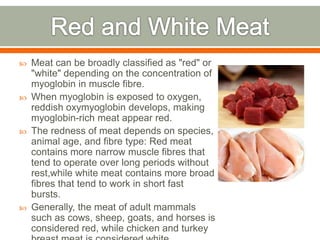
 Meat can be broadly classified as "red" or
"white" depending on the concentration of
myoglobin in muscle fibre.
 When myoglobin is exposed to oxygen,
reddish oxymyoglobin develops, making
myoglobin-rich meat appear red.
 The redness of meat depends on species,
animal age, and fibre type: Red meat
contains more narrow muscle fibres that
tend to operate over long periods without
rest,while white meat contains more broad
fibres that tend to work in short fast
bursts.
 Generally, the meat of adult mammals
such as cows, sheep, goats, and horses is
considered red, while chicken and turkey
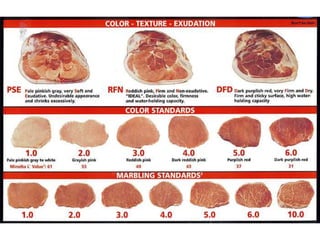
 In stress susceptible animals pH may fall very quickly to
5.8-5.6 while the carcass is still warm.
 It may be recognized as meat as a pale color, soft almost
mushy texture and very wet surface.
 It has lower binding properties and losses water rapidly
during cooking resulting in a decreased yield.
 PSE can be added to meat products where water losses
are desirable like dry-fermented sausages.
 For animals not been fed for a period before slaughter or
which have been excessively fatigued during
transportation and lairage.
 Muscle pH 2.4 do not fall below 6.0.
 This causes muscle proteins to retain most of their
bound water, the muscle remain swollen and they absorb
most of the light striking the meat surface, giving a dark
appearance.
 It remains tough and tasteless due to lack of acidity.
 It can be used for raw-cooked products where high waer
binding is required like frankfurter.
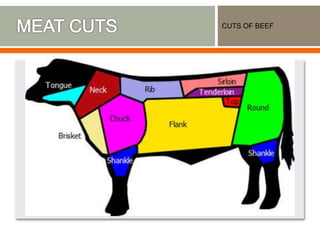
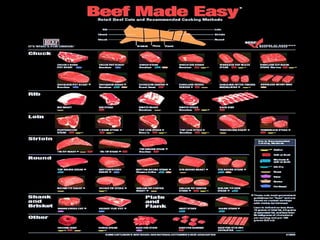
CUTS OF BEEF
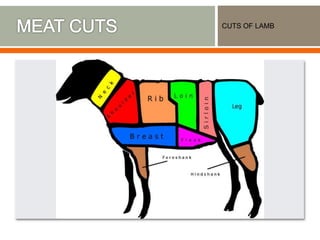
CUTS OF LAMB
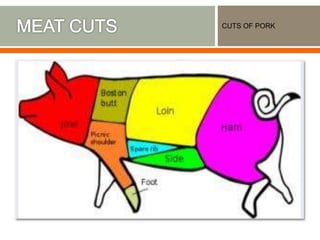
CUTS OF PORK

Part II

PART II/1
Develop or improve flavor, color, aroma.
 Make it delicious and appetizing to eat.
 Make it more tender.
 Make it easier to digest.
 Make it safe to eat - kill any harmful bacteria it may have
picked up during handling.
 Muscle proteins shrink and moisture is lost - As meat is
heated, muscle proteins coagulate and shrink, squeezing
out water. The longer you cook meat, the more water is
forced out.
 The loss of juices through drip, evaporation and cook-out
determines the meat’s juiciness, the amount of shrinkage
and thus the final cooked weight or portion yield.
 Prolonged cooking, or overcooking, results in meat that
has lost so much moisture that it becomes dry and tough
to eat.
MOISTURE
 The red color of uncooked beef changes to light pink,
and finally to a brown/grey shade as the 'degree of
doneness' increases.
COLOR
 During long, slow cooking, some of the connective tissue
softens, and gelatinizes.
TISSUES
 During long, slow cooking, some of the connective tissue
softens, and gelatinizes.
TISSUES
 Heat causes fat to melt. Slightly browning fat develops
flavor, the more you brown it, the more flavor is
developed.
 Browning the outer, lean surface of meat, usually at a
fairly high temperature, develops flavor and color
through caramelisation.
FLAVORS
 It is also true that meat toughened during processing can
never be made edible tender. However, less tender cuts can
be made more tender by the following means:
 CHEMICAL TENDERIZATION:
 Acids - Marinades containing a mild acid ingredient such
as lemon juice, wine or wine vinegar help to tenderize
meat, more effective on thinner cuts of meat.
 Enzymes - Some raw fruits contain protein-splitting
enzymes, which act on raw meat to tenderize it. Examples
include paw paw, kiwifruit, pineapple and figs.
 The tenderizing effect acts mainly at the surface, so a
marinade or powder works better on small, thin cuts of
meat.
 If left too long on raw meat, marinades containing these
tenderizing enzymes spoil the texture of meat, causing it to
become mushy on the surface.
 BLADE OR MECHANICAL TENDERIZERS
 Mincing, chopping or grinding - Break up connective
tissue and muscle tissue into small pieces.
 Batting out, or hammering - Meat is pounded with a
meat mallet to break down muscle and connective
tissue. This method is used for individual portioned
cuts, steaks or schnitzels, not whole joints.
 Cutting or needling by machine - Steaks can be
tenderized using a revolving machine with tiny blades,
which make very fine cuts in the meat, breaking up
less tender tissue. This may be used on boneless
beef steaks such as topside, silverside, thick flank or
blade.
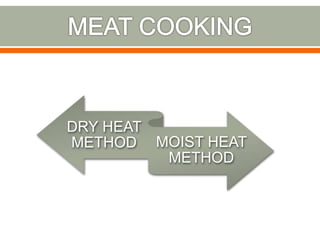
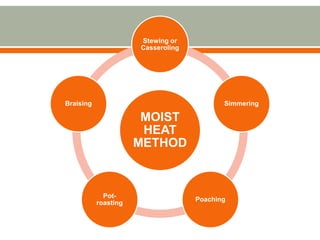
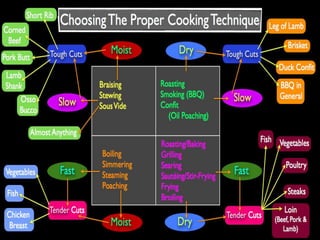
DRY HEAT
METHOD MOIST HEAT
METHOD
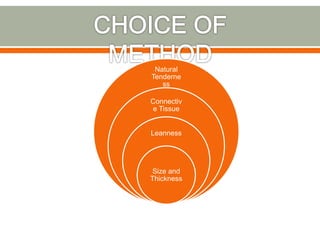
Natural
Tenderne
ss
Connectiv
e Tissue
Leanness
Size and
Thickness
MOIST
HEAT
METHOD
Stewing or
Casseroling
Simmering
Poaching
Pot-
roasting
Braising
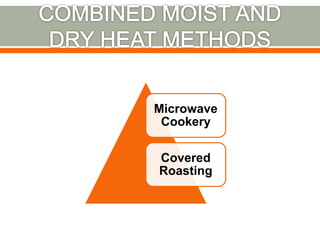
Microwave
Cookery
Covered
Roasting
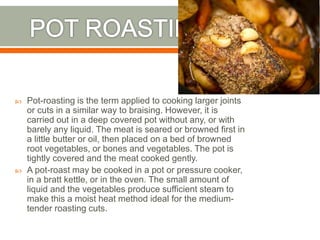
 Pot-roasting is the term applied to cooking larger joints
or cuts in a similar way to braising. However, it is
carried out in a deep covered pot without any, or with
barely any liquid. The meat is seared or browned first in
a little butter or oil, then placed on a bed of browned
root vegetables, or bones and vegetables. The pot is
tightly covered and the meat cooked gently.
 A pot-roast may be cooked in a pot or pressure cooker,
in a bratt kettle, or in the oven. The small amount of
liquid and the vegetables produce sufficient steam to
make this a moist heat method ideal for the medium-
tender roasting cuts.
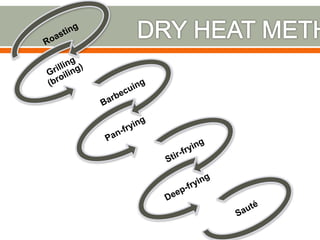
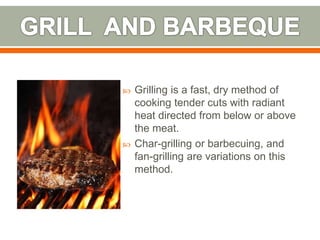
 Grilling is a fast, dry method of
cooking tender cuts with radiant
heat directed from below or above
the meat.
 Char-grilling or barbecuing, and
fan-grilling are variations on this
method.
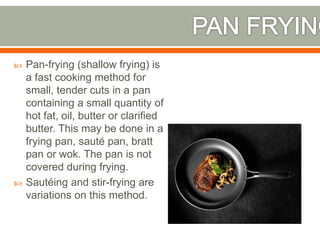
 Pan-frying (shallow frying) is
a fast cooking method for
small, tender cuts in a pan
containing a small quantity of
hot fat, oil, butter or clarified
butter. This may be done in a
frying pan, sauté pan, bratt
pan or wok. The pan is not
covered during frying.
 Sautéing and stir-frying are
variations on this method.
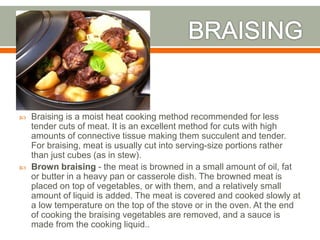
 Braising is a moist heat cooking method recommended for less
tender cuts of meat. It is an excellent method for cuts with high
amounts of connective tissue making them succulent and tender.
For braising, meat is usually cut into serving-size portions rather
than just cubes (as in stew).
 Brown braising - the meat is browned in a small amount of oil, fat
or butter in a heavy pan or casserole dish. The browned meat is
placed on top of vegetables, or with them, and a relatively small
amount of liquid is added. The meat is covered and cooked slowly at
a low temperature on the top of the stove or in the oven. At the end
of cooking the braising vegetables are removed, and a sauce is
made from the cooking liquid..
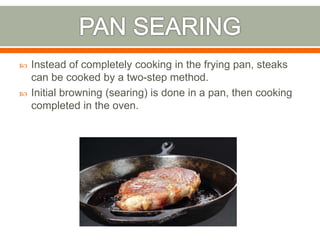
 Instead of completely cooking in the frying pan, steaks
can be cooked by a two-step method.
 Initial browning (searing) is done in a pan, then cooking
completed in the oven.
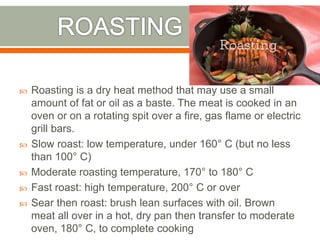
 Roasting is a dry heat method that may use a small
amount of fat or oil as a baste. The meat is cooked in an
oven or on a rotating spit over a fire, gas flame or electric
grill bars.
 Slow roast: low temperature, under 160° C (but no less
than 100° C)
 Moderate roasting temperature, 170° to 180° C
 Fast roast: high temperature, 200° C or over
 Sear then roast: brush lean surfaces with oil. Brown
meat all over in a hot, dry pan then transfer to moderate
oven, 180° C, to complete cooking
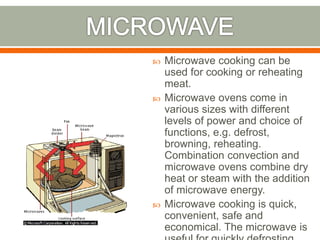
 Microwave cooking can be
used for cooking or reheating
meat.
 Microwave ovens come in
various sizes with different
levels of power and choice of
functions, e.g. defrost,
browning, reheating.
Combination convection and
microwave ovens combine dry
heat or steam with the addition
of microwave energy.
 Microwave cooking is quick,
convenient, safe and
economical. The microwave is
Steaming is a moist heat cooking process. The meat does
not come into contact with the cooking liquid but instead is
cooked by surrounding steam, sometimes under pressure.
Steaming results in tender, well flavored, juicy meat with
minimum weight loss or shrinkage. Steaming under
pressure is fast and easy, saves on energy and provides
accurate meat portioning and cost control.
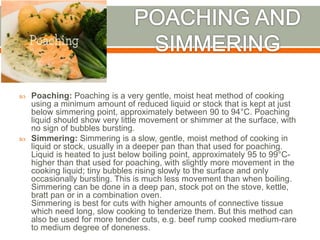
 Poaching: Poaching is a very gentle, moist heat method of cooking
using a minimum amount of reduced liquid or stock that is kept at just
below simmering point, approximately between 90 to 94°C. Poaching
liquid should show very little movement or shimmer at the surface, with
no sign of bubbles bursting.
 Simmering: Simmering is a slow, gentle, moist method of cooking in
liquid or stock, usually in a deeper pan than that used for poaching.
Liquid is heated to just below boiling point, approximately 95 to 99°C-
higher than that used for poaching, with slightly more movement in the
cooking liquid; tiny bubbles rising slowly to the surface and only
occasionally bursting. This is much less movement than when boiling.
Simmering can be done in a deep pan, stock pot on the stove, kettle,
bratt pan or in a combination oven.
Simmering is best for cuts with higher amounts of connective tissue
which need long, slow cooking to tenderize them. But this method can
also be used for more tender cuts, e.g. beef rump cooked medium-rare
to medium degree of doneness.
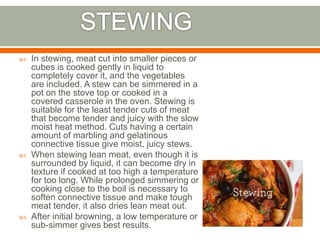
 In stewing, meat cut into smaller pieces or
cubes is cooked gently in liquid to
completely cover it, and the vegetables
are included. A stew can be simmered in a
pot on the stove top or cooked in a
covered casserole in the oven. Stewing is
suitable for the least tender cuts of meat
that become tender and juicy with the slow
moist heat method. Cuts having a certain
amount of marbling and gelatinous
connective tissue give moist, juicy stews.
 When stewing lean meat, even though it is
surrounded by liquid, it can become dry in
texture if cooked at too high a temperature
for too long. While prolonged simmering or
cooking close to the boil is necessary to
soften connective tissue and make tough
meat tender, it also dries lean meat out.
 After initial browning, a low temperature or
sub-simmer gives best results.

PART II/2
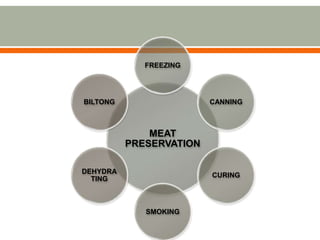
MEAT
PRESERVATION
FREEZING
CANNING
CURING
SMOKING
DEHYDRA
TING
BILTONG
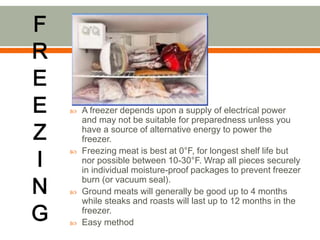
 A freezer depends upon a supply of electrical power
and may not be suitable for preparedness unless you
have a source of alternative energy to power the
freezer.
 Freezing meat is best at 0°F, for longest shelf life but
nor possible between 10-30°F. Wrap all pieces securely
in individual moisture-proof packages to prevent freezer
burn (or vacuum seal).
 Ground meats will generally be good up to 4 months
while steaks and roasts will last up to 12 months in the
freezer.
 Easy method
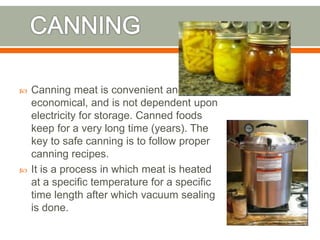
 Canning meat is convenient and
economical, and is not dependent upon
electricity for storage. Canned foods
keep for a very long time (years). The
key to safe canning is to follow proper
canning recipes.
 It is a process in which meat is heated
at a specific temperature for a specific
time length after which vacuum sealing
is done.
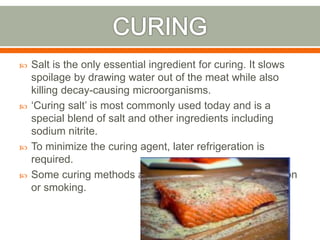
 Salt is the only essential ingredient for curing. It slows
spoilage by drawing water out of the meat while also
killing decay-causing microorganisms.
 ‘Curing salt’ is most commonly used today and is a
special blend of salt and other ingredients including
sodium nitrite.
 To minimize the curing agent, later refrigeration is
required.
 Some curing methods also employ sealing, fermentation
or smoking.
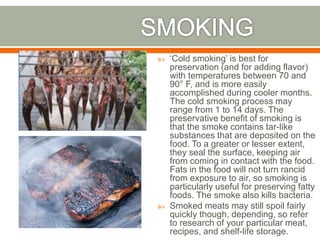
 ‘Cold smoking’ is best for
preservation (and for adding flavor)
with temperatures between 70 and
90° F, and is more easily
accomplished during cooler months.
The cold smoking process may
range from 1 to 14 days. The
preservative benefit of smoking is
that the smoke contains tar-like
substances that are deposited on the
food. To a greater or lesser extent,
they seal the surface, keeping air
from coming in contact with the food.
Fats in the food will not turn rancid
from exposure to air, so smoking is
particularly useful for preserving fatty
foods. The smoke also kills bacteria.
 Smoked meats may still spoil fairly
quickly though, depending, so refer
to research of your particular meat,
recipes, and shelf-life storage.
Dried dehydrated meat (jerky) has traditionally been made
by drying meat at low temperatures (140°F – 170°F) for a
long period of time. These processing conditions can make
it difficult to assure a safe end result, including using a
home dehydrator. It is important to reach a sufficient
temperature in the jerky drying process to kill pathogens
(e.g. Salmonella and E. coli O157:H7).
 Ideally the meat is marinated in a vinegar solution (grape
vinegar is traditional but balsamic and cider also works
very well) for a few hours, this being finally poured off
before the meat is flavored.
 The spice mix traditionally consists equal amounts of:
rock salt, barbecue spice, whole coriander slightly
roasted and roughly ground, black pepper and brown
sugar. This mix is then ground roughly together,
sprinkled liberally over the meat and rubbed in. The meat
should then be left for a further few hours (or refrigerated
overnight) and any excess liquid poured off before the
meat is hung in the dryer.

Part III
 Meat is produced by killing an animal and cutting flesh
out of it. These procedures are called slaughter and
butchery, respectively. There is ongoing research into
producing meat in vitro, that is, outside of animals.
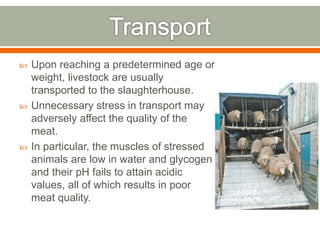
 Upon reaching a predetermined age or
weight, livestock are usually
transported to the slaughterhouse.
 Unnecessary stress in transport may
adversely affect the quality of the
meat.
 In particular, the muscles of stressed
animals are low in water and glycogen,
and their pH fails to attain acidic
values, all of which results in poor
meat quality.
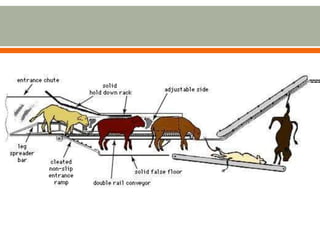
 Animals are usually slaughtered by being first stunned and
then exsanguinated (bled out). Death results from the one or
the other procedure, depending on the methods employed.
 Stunning can be effected through asphyxiating the animals
with carbon dioxide, shooting them with a gun or a captive
bolt pistol, or shocking them with electric current. In most
forms of ritual slaughter, stunning is not allowed.
 Draining as much blood as possible from the carcass is
necessary because blood causes the meat to have an
unappealing appearance and is a breeding ground for
microorganisms.
 The exsanguination is accomplished by severing the carotid
artery and the jugular vein in cattle and sheep, and the
anterior vena cava in pigs
 After exsanguination, the carcass is dressed; that is, the
head, feet, hide (except hogs and some veal), excess
fat, viscera and offal are removed, leaving only bones
and edible muscle.
 Cattle and pig carcases, but not those of sheep, are then
split in half along the mid ventral axis, and the carcase is
cut into wholesale pieces.
 The dressing and cutting sequence, long a province of
manual labor, is progressively being fully automated.
 Under hygienic conditions and without other treatment,
meat can be stored at above its freezing point (–1.5 °C)
for about six weeks without spoilage, during which time it
undergoes an aging process that increases its
tenderness and flavor.
 As the muscle pigment myoglobin denatures, its iron
oxidates, which may cause a brown discoloration near
the surface of the meat. Ongoing proteolysis also
contributes to conditioning. Hypoxanthine, a breakdown
product of ATP, contributes to the meat's flavor and odor,
as do other products of the decomposition of muscle fat
and protein
 Meat and meat products are likely to contain substances
such as dioxins, polychlorinated biphenyl (PCBs), and
cooked meat carcinogens, that are toxic to the
consumer, although any chemical's toxicity is dependent
on the dose and timing of exposure.
 Toxins may be introduced to meat as part of animal feed,
as veterinary drug residues, or during processing and
cooking.
 Salt imparts flavor but also inhibits microbial growth, extends the
product's shelf life and helps emulsifying finely processed products,
such as sausages. Ready-to-eat meat products normally contain
about 1.5 to 2.5 percent salt.
 Nitrite is used in curing meat to stabilize the meat's color and flavor,
and inhibits the growth of spore-forming microorganisms such as C.
botulinum.
 Phosphate,, normally alkaline polyphosphates such as sodium
tripolyphosphate are used to increase the water-binding and
emulsifying ability of meat proteins, but also limit lipid oxidation and
flavor loss, and reduce microbial growth.
 Erythorbate or its equivalent ascorbic acid (vitamin C) is used to
stabilize the color of cured meat.
 Tenderizers break down collagens to make the meat more
palatable for consumption. They include proteolytic enzymes, acids,
salt and phosphate.
 Antimicrobials
 Antioxidants
Thank
You for
Listening
…

Meat

  • 2.
  • 3.
     Meat isanimal flesh that is eaten as food  Humans are omnivorous  Mainly composed of water, proteins and fats  Refers to skeletal muscle and associated fat and other tissues  Colloquial use sometimes connotes red muscle food (beef, pork, lamb)
  • 4.
  • 5.
     Each organizedskeletal muscle is made of a number of muscle bundles or fascicles held together by a common collagenous connective tissue layer called fascia.  Each muscle bundle contains a number of muscle fibers lined by the plasma membrane called sarcolemma enclosing the sarcoplasm containing many nuclei.  Sarcoplasmic reticulum of the muscle fibres is the store house of calcium ions.  A large number of parallelly arranged filaments in the sarcoplasm called myofilaments or myofibrils  Each myofibril has alternate dark and light bands on it due to the distribution pattern of two important proteins – Actin and Myosin arranged alternately  The light bands contain actin and is called I-band or Isotropic band, whereas the dark band called ‘A’ or Anisotropic band contains myosin
  • 6.
     Actin filamentsare thinner as compared to the myosin filaments, hence are commonly called thin and thick filaments respectively.  In the centre of each ‘I’ band is an elastic fibre called ‘Z’ line which bisects it.  The thick filaments in the ‘A’ band are also held together in the middle of this band by a thin fibrous membrane called ‘M’ line.  The portion of the myofibril between two successive ‘Z’ lines is considered as the functional unit of contraction and is called a sarcomere.  In a resting state, the edges of thin filaments on either side of the thick filaments partially overlap the free ends of the thick filaments leaving the central part of the thick filaments. This central part of thick filament, not overlapped by thin filaments is called the ‘H’ zone.
  • 8.
     Some smoothmuscles (e.g., gizzard, stomach, and intestine) are consumed as specialized organ foods  The smooth muscle cells are distinguished by their centrally located cell nuclei  Optically uniform myofibrils which do not have cross striation
  • 10.
     May beused as a food directly, or more commonly may be minced and incorporated into processed meat products such as sausages  Like skeletal muscle, cardiac muscle is striated, which suggests an arrangement of the contractile proteins of cardiac muscle which is similar to that of skeletal muscle.  The fiber arrangement is somewhat less regular  Cardiac muscle typically has only 1–2 nuclei that are centrally located  The proteins comprising the cardiac contractile machinery are the same as skeletal, the isoforms are often specific to cardiac muscle
  • 12.
    Bovine (Cattles) Ovis( Sheep) Suidae (Pork) Camelids (Camels) Canids (Dogs) Caprae (Goats) Filadae (Cats) Equnes (Horses) Lagomorphs (Rabbits) Venison (Deer)
  • 13.
    BEEF PORK LAMB ENERGY(kCal/100g)164 143 178 PROTEINS 22 19 14 CARBOHYDTRATES + + + FATS 11 7 13 POTASSIUM 356 380 280 PHOSPHORUS 199 211 189 SODIUM 63 57 66 MAGNESIUM 22 23 26 ZINC 4.33 2.08 4.06 IRON 2.13 0.91 1.77 THIAMIN 110 996 130 RIBOFLAVIN 180 273 230 NIACIN 3590 4829 6000 PANTOTHENIC ACID 360 788 700 PYRODOXINE 440 500 160 FOLATE 7 5 23 COBALAMINE 3.25 0.67 2.62
  • 14.
    MUSCLE PROTEINS CONTRACTILE PROTEINS ACTIN MYOSIN ACTOMYOSINOTHERS CONNECTIVE TISSUE PROTEINS COLLAGEN
  • 15.
     Myosin: dominantprotein of ‘A’ band and 45% myofibrillar protein  Forms thick filament  Serves as molecular motor for muscle contraction  Stabilized by titin during contraction  Consist of 2 large and 4 small subunits
  • 16.
     Actin: mainconstituent of thin filament and 20% total contractile proteins  Consist of two fractions globular(G-actin) & fibriller(F- actin)  Binds myosin during contraction forming actomyosin crossbridge  Acts as backbone for binding tropomyosin % troponin
  • 17.
     Actomyosin: invitro F-actin and myosin forms actomyosin at high ionic strength  Appears spike like having myosin embedded in F- actinbackbone  Stimulated by Mg2+  Others: tropomyosin A, tropomyosin B, troponin C, Troponin I, α actinin, β actinin, etc.
  • 19.
     Functions inholding and supporting contractile protein
  • 20.
     Makes upto20-25% total proteins in mammals  High content of glycine and proline  Also contains carbohydrates  Consist of 3 peptide chains
  • 21.
     The colorof fresh meat is determined by the ratios of myoglobin (Mb), oxymyoglobin (MbO2) and metmyoglobin (MMb+)  Stable MbO2 is formed at a high partial pressure of oxygen.  Fresh cuts of meat, to a depth of about 1 cm, acquire a bright cherry-red color which is considered a mark of quality.
  • 22.
     Color stabilizationby the addition of nitrate or nitrite (meat curing) plays an important role in meat processing.  Nitrite initially oxidizes myoglobin to metmyoglobin:  Mb+NO2 -→MMb++NO  The resulting NO forms bright-red, highly stable complexes with Mb and MMb+, MbNO and MMb+NO
  • 24.
     Cessation ofblood flow to muscle occurs at slaughter  Various organs of body including muscle draw on reserve mechanism to maintain cellular hemeostasis  Myofibril utilizes myoglobin bound oxygen  Anaerobic glycolysis becomes dominant  Product accumulates and substrate exhausts
  • 25.
     ATP, ADP,Creatine degrades  Lactic acid formed decreases pH from 6.5 to 5.8  Soft and tender but losses its flexibility and extensibility  Ca2+ distributes over intracellular matrix  Resolved in 2-3 days of post mortem
  • 27.
     Becomes softand tender  Required to form aroma  Depends on time, temperature, animal spices, age, degree of collagen cross linkages and released enzymes  pH rises with increase in water holding capacity  Fibrillar protein degrades  Z-line breaks
  • 29.
     Meat canbe broadly classified as "red" or "white" depending on the concentration of myoglobin in muscle fibre.  When myoglobin is exposed to oxygen, reddish oxymyoglobin develops, making myoglobin-rich meat appear red.  The redness of meat depends on species, animal age, and fibre type: Red meat contains more narrow muscle fibres that tend to operate over long periods without rest,while white meat contains more broad fibres that tend to work in short fast bursts.  Generally, the meat of adult mammals such as cows, sheep, goats, and horses is considered red, while chicken and turkey
  • 30.
     In stresssusceptible animals pH may fall very quickly to 5.8-5.6 while the carcass is still warm.  It may be recognized as meat as a pale color, soft almost mushy texture and very wet surface.  It has lower binding properties and losses water rapidly during cooking resulting in a decreased yield.  PSE can be added to meat products where water losses are desirable like dry-fermented sausages.
  • 31.
     For animalsnot been fed for a period before slaughter or which have been excessively fatigued during transportation and lairage.  Muscle pH 2.4 do not fall below 6.0.  This causes muscle proteins to retain most of their bound water, the muscle remain swollen and they absorb most of the light striking the meat surface, giving a dark appearance.  It remains tough and tasteless due to lack of acidity.  It can be used for raw-cooked products where high waer binding is required like frankfurter.
  • 32.
  • 33.
  • 34.
  • 35.
  • 36.
  • 37.
    Develop or improveflavor, color, aroma.  Make it delicious and appetizing to eat.  Make it more tender.  Make it easier to digest.  Make it safe to eat - kill any harmful bacteria it may have picked up during handling.
  • 38.
     Muscle proteinsshrink and moisture is lost - As meat is heated, muscle proteins coagulate and shrink, squeezing out water. The longer you cook meat, the more water is forced out.  The loss of juices through drip, evaporation and cook-out determines the meat’s juiciness, the amount of shrinkage and thus the final cooked weight or portion yield.  Prolonged cooking, or overcooking, results in meat that has lost so much moisture that it becomes dry and tough to eat. MOISTURE
  • 39.
     The redcolor of uncooked beef changes to light pink, and finally to a brown/grey shade as the 'degree of doneness' increases. COLOR
  • 40.
     During long,slow cooking, some of the connective tissue softens, and gelatinizes. TISSUES
  • 41.
     During long,slow cooking, some of the connective tissue softens, and gelatinizes. TISSUES
  • 42.
     Heat causesfat to melt. Slightly browning fat develops flavor, the more you brown it, the more flavor is developed.  Browning the outer, lean surface of meat, usually at a fairly high temperature, develops flavor and color through caramelisation. FLAVORS
  • 43.
     It isalso true that meat toughened during processing can never be made edible tender. However, less tender cuts can be made more tender by the following means:  CHEMICAL TENDERIZATION:  Acids - Marinades containing a mild acid ingredient such as lemon juice, wine or wine vinegar help to tenderize meat, more effective on thinner cuts of meat.  Enzymes - Some raw fruits contain protein-splitting enzymes, which act on raw meat to tenderize it. Examples include paw paw, kiwifruit, pineapple and figs.  The tenderizing effect acts mainly at the surface, so a marinade or powder works better on small, thin cuts of meat.  If left too long on raw meat, marinades containing these tenderizing enzymes spoil the texture of meat, causing it to become mushy on the surface.
  • 44.
     BLADE ORMECHANICAL TENDERIZERS  Mincing, chopping or grinding - Break up connective tissue and muscle tissue into small pieces.  Batting out, or hammering - Meat is pounded with a meat mallet to break down muscle and connective tissue. This method is used for individual portioned cuts, steaks or schnitzels, not whole joints.  Cutting or needling by machine - Steaks can be tenderized using a revolving machine with tiny blades, which make very fine cuts in the meat, breaking up less tender tissue. This may be used on boneless beef steaks such as topside, silverside, thick flank or blade.
  • 45.
  • 46.
  • 48.
  • 49.
  • 50.
     Pot-roasting isthe term applied to cooking larger joints or cuts in a similar way to braising. However, it is carried out in a deep covered pot without any, or with barely any liquid. The meat is seared or browned first in a little butter or oil, then placed on a bed of browned root vegetables, or bones and vegetables. The pot is tightly covered and the meat cooked gently.  A pot-roast may be cooked in a pot or pressure cooker, in a bratt kettle, or in the oven. The small amount of liquid and the vegetables produce sufficient steam to make this a moist heat method ideal for the medium- tender roasting cuts.
  • 51.
     Grilling isa fast, dry method of cooking tender cuts with radiant heat directed from below or above the meat.  Char-grilling or barbecuing, and fan-grilling are variations on this method.
  • 52.
     Pan-frying (shallowfrying) is a fast cooking method for small, tender cuts in a pan containing a small quantity of hot fat, oil, butter or clarified butter. This may be done in a frying pan, sauté pan, bratt pan or wok. The pan is not covered during frying.  Sautéing and stir-frying are variations on this method.
  • 53.
     Braising isa moist heat cooking method recommended for less tender cuts of meat. It is an excellent method for cuts with high amounts of connective tissue making them succulent and tender. For braising, meat is usually cut into serving-size portions rather than just cubes (as in stew).  Brown braising - the meat is browned in a small amount of oil, fat or butter in a heavy pan or casserole dish. The browned meat is placed on top of vegetables, or with them, and a relatively small amount of liquid is added. The meat is covered and cooked slowly at a low temperature on the top of the stove or in the oven. At the end of cooking the braising vegetables are removed, and a sauce is made from the cooking liquid..
  • 54.
     Instead ofcompletely cooking in the frying pan, steaks can be cooked by a two-step method.  Initial browning (searing) is done in a pan, then cooking completed in the oven.
  • 55.
     Roasting isa dry heat method that may use a small amount of fat or oil as a baste. The meat is cooked in an oven or on a rotating spit over a fire, gas flame or electric grill bars.  Slow roast: low temperature, under 160° C (but no less than 100° C)  Moderate roasting temperature, 170° to 180° C  Fast roast: high temperature, 200° C or over  Sear then roast: brush lean surfaces with oil. Brown meat all over in a hot, dry pan then transfer to moderate oven, 180° C, to complete cooking
  • 56.
     Microwave cookingcan be used for cooking or reheating meat.  Microwave ovens come in various sizes with different levels of power and choice of functions, e.g. defrost, browning, reheating. Combination convection and microwave ovens combine dry heat or steam with the addition of microwave energy.  Microwave cooking is quick, convenient, safe and economical. The microwave is
  • 57.
    Steaming is amoist heat cooking process. The meat does not come into contact with the cooking liquid but instead is cooked by surrounding steam, sometimes under pressure. Steaming results in tender, well flavored, juicy meat with minimum weight loss or shrinkage. Steaming under pressure is fast and easy, saves on energy and provides accurate meat portioning and cost control.
  • 58.
     Poaching: Poachingis a very gentle, moist heat method of cooking using a minimum amount of reduced liquid or stock that is kept at just below simmering point, approximately between 90 to 94°C. Poaching liquid should show very little movement or shimmer at the surface, with no sign of bubbles bursting.  Simmering: Simmering is a slow, gentle, moist method of cooking in liquid or stock, usually in a deeper pan than that used for poaching. Liquid is heated to just below boiling point, approximately 95 to 99°C- higher than that used for poaching, with slightly more movement in the cooking liquid; tiny bubbles rising slowly to the surface and only occasionally bursting. This is much less movement than when boiling. Simmering can be done in a deep pan, stock pot on the stove, kettle, bratt pan or in a combination oven. Simmering is best for cuts with higher amounts of connective tissue which need long, slow cooking to tenderize them. But this method can also be used for more tender cuts, e.g. beef rump cooked medium-rare to medium degree of doneness.
  • 59.
     In stewing,meat cut into smaller pieces or cubes is cooked gently in liquid to completely cover it, and the vegetables are included. A stew can be simmered in a pot on the stove top or cooked in a covered casserole in the oven. Stewing is suitable for the least tender cuts of meat that become tender and juicy with the slow moist heat method. Cuts having a certain amount of marbling and gelatinous connective tissue give moist, juicy stews.  When stewing lean meat, even though it is surrounded by liquid, it can become dry in texture if cooked at too high a temperature for too long. While prolonged simmering or cooking close to the boil is necessary to soften connective tissue and make tough meat tender, it also dries lean meat out.  After initial browning, a low temperature or sub-simmer gives best results.
  • 62.
  • 63.
  • 64.
     A freezerdepends upon a supply of electrical power and may not be suitable for preparedness unless you have a source of alternative energy to power the freezer.  Freezing meat is best at 0°F, for longest shelf life but nor possible between 10-30°F. Wrap all pieces securely in individual moisture-proof packages to prevent freezer burn (or vacuum seal).  Ground meats will generally be good up to 4 months while steaks and roasts will last up to 12 months in the freezer.  Easy method
  • 65.
     Canning meatis convenient and economical, and is not dependent upon electricity for storage. Canned foods keep for a very long time (years). The key to safe canning is to follow proper canning recipes.  It is a process in which meat is heated at a specific temperature for a specific time length after which vacuum sealing is done.
  • 66.
     Salt isthe only essential ingredient for curing. It slows spoilage by drawing water out of the meat while also killing decay-causing microorganisms.  ‘Curing salt’ is most commonly used today and is a special blend of salt and other ingredients including sodium nitrite.  To minimize the curing agent, later refrigeration is required.  Some curing methods also employ sealing, fermentation or smoking.
  • 67.
     ‘Cold smoking’is best for preservation (and for adding flavor) with temperatures between 70 and 90° F, and is more easily accomplished during cooler months. The cold smoking process may range from 1 to 14 days. The preservative benefit of smoking is that the smoke contains tar-like substances that are deposited on the food. To a greater or lesser extent, they seal the surface, keeping air from coming in contact with the food. Fats in the food will not turn rancid from exposure to air, so smoking is particularly useful for preserving fatty foods. The smoke also kills bacteria.  Smoked meats may still spoil fairly quickly though, depending, so refer to research of your particular meat, recipes, and shelf-life storage.
  • 68.
    Dried dehydrated meat(jerky) has traditionally been made by drying meat at low temperatures (140°F – 170°F) for a long period of time. These processing conditions can make it difficult to assure a safe end result, including using a home dehydrator. It is important to reach a sufficient temperature in the jerky drying process to kill pathogens (e.g. Salmonella and E. coli O157:H7).
  • 69.
     Ideally themeat is marinated in a vinegar solution (grape vinegar is traditional but balsamic and cider also works very well) for a few hours, this being finally poured off before the meat is flavored.  The spice mix traditionally consists equal amounts of: rock salt, barbecue spice, whole coriander slightly roasted and roughly ground, black pepper and brown sugar. This mix is then ground roughly together, sprinkled liberally over the meat and rubbed in. The meat should then be left for a further few hours (or refrigerated overnight) and any excess liquid poured off before the meat is hung in the dryer.
  • 70.
  • 71.
     Meat isproduced by killing an animal and cutting flesh out of it. These procedures are called slaughter and butchery, respectively. There is ongoing research into producing meat in vitro, that is, outside of animals.
  • 72.
     Upon reachinga predetermined age or weight, livestock are usually transported to the slaughterhouse.  Unnecessary stress in transport may adversely affect the quality of the meat.  In particular, the muscles of stressed animals are low in water and glycogen, and their pH fails to attain acidic values, all of which results in poor meat quality.
  • 73.
     Animals areusually slaughtered by being first stunned and then exsanguinated (bled out). Death results from the one or the other procedure, depending on the methods employed.  Stunning can be effected through asphyxiating the animals with carbon dioxide, shooting them with a gun or a captive bolt pistol, or shocking them with electric current. In most forms of ritual slaughter, stunning is not allowed.  Draining as much blood as possible from the carcass is necessary because blood causes the meat to have an unappealing appearance and is a breeding ground for microorganisms.  The exsanguination is accomplished by severing the carotid artery and the jugular vein in cattle and sheep, and the anterior vena cava in pigs
  • 75.
     After exsanguination,the carcass is dressed; that is, the head, feet, hide (except hogs and some veal), excess fat, viscera and offal are removed, leaving only bones and edible muscle.  Cattle and pig carcases, but not those of sheep, are then split in half along the mid ventral axis, and the carcase is cut into wholesale pieces.  The dressing and cutting sequence, long a province of manual labor, is progressively being fully automated.
  • 76.
     Under hygienicconditions and without other treatment, meat can be stored at above its freezing point (–1.5 °C) for about six weeks without spoilage, during which time it undergoes an aging process that increases its tenderness and flavor.  As the muscle pigment myoglobin denatures, its iron oxidates, which may cause a brown discoloration near the surface of the meat. Ongoing proteolysis also contributes to conditioning. Hypoxanthine, a breakdown product of ATP, contributes to the meat's flavor and odor, as do other products of the decomposition of muscle fat and protein
  • 77.
     Meat andmeat products are likely to contain substances such as dioxins, polychlorinated biphenyl (PCBs), and cooked meat carcinogens, that are toxic to the consumer, although any chemical's toxicity is dependent on the dose and timing of exposure.  Toxins may be introduced to meat as part of animal feed, as veterinary drug residues, or during processing and cooking.
  • 78.
     Salt impartsflavor but also inhibits microbial growth, extends the product's shelf life and helps emulsifying finely processed products, such as sausages. Ready-to-eat meat products normally contain about 1.5 to 2.5 percent salt.  Nitrite is used in curing meat to stabilize the meat's color and flavor, and inhibits the growth of spore-forming microorganisms such as C. botulinum.  Phosphate,, normally alkaline polyphosphates such as sodium tripolyphosphate are used to increase the water-binding and emulsifying ability of meat proteins, but also limit lipid oxidation and flavor loss, and reduce microbial growth.  Erythorbate or its equivalent ascorbic acid (vitamin C) is used to stabilize the color of cured meat.  Tenderizers break down collagens to make the meat more palatable for consumption. They include proteolytic enzymes, acids, salt and phosphate.  Antimicrobials  Antioxidants
  • 80.